


Let’s put an end to dullness and gloom! Let’s stop being so downbeat. Yes, cars can make us smile, bring us pleasure, entertain us and, above all, fulfil much more than their basic function: getting us from A to B. Today, I saw the ELO concept car and as I left, I wondered: what if this was the new Deuche?! This vehicle that meets the simplest desires of a couple, a family or friends? The 2CV, that icon whose specifications from Auvergne were simple and pragmatic, to say the least…

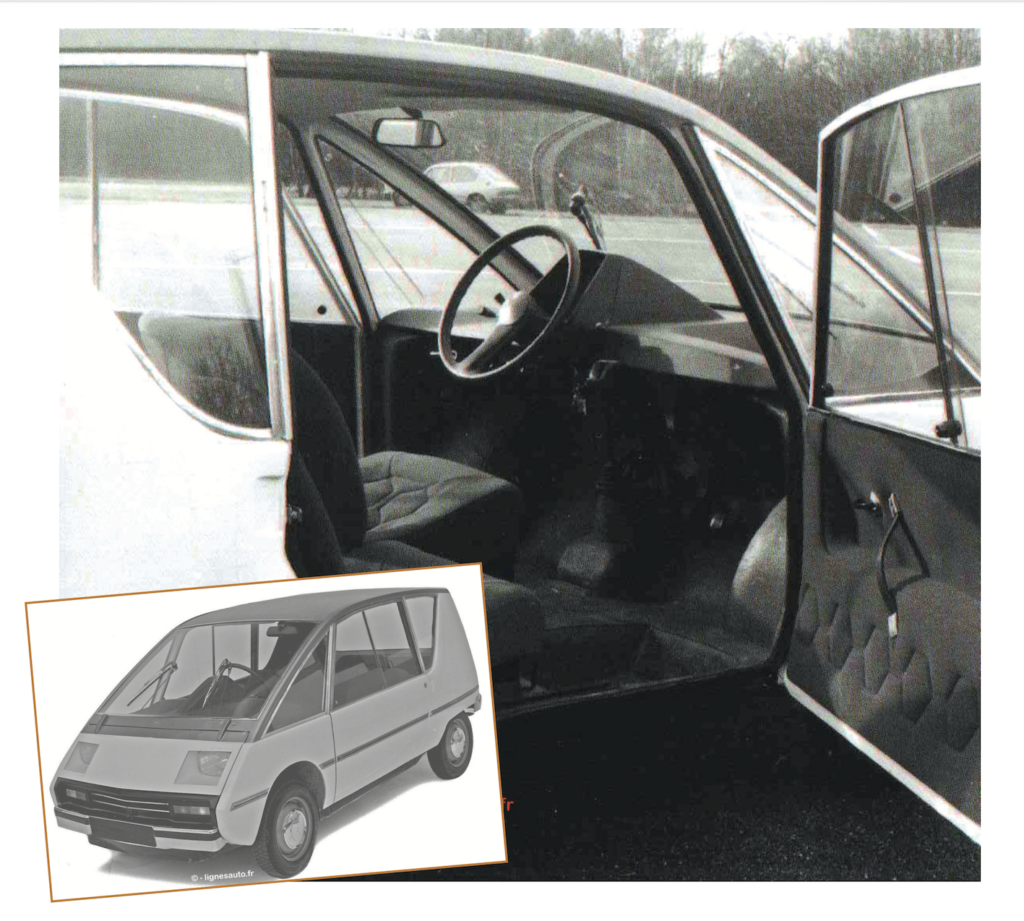
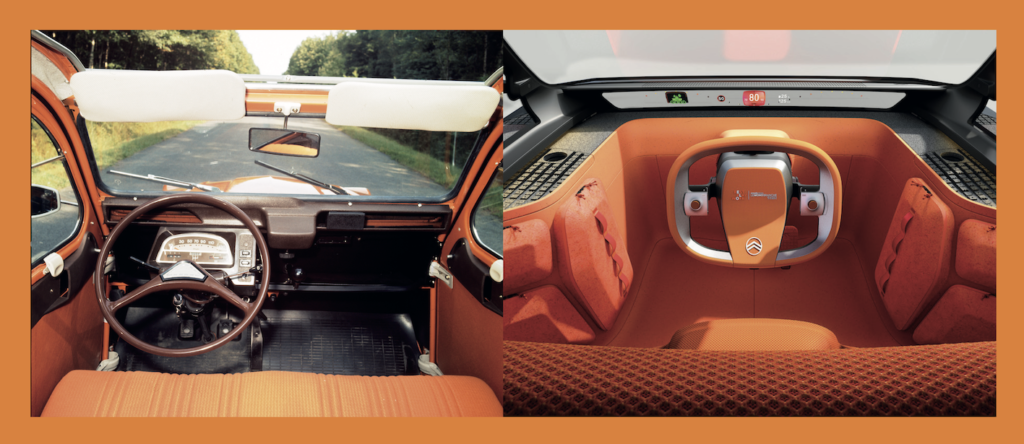
Please note: Citroën is not marketing ELO as a 2CV of the future. The brand is looking further ahead. But it hasn’t forgotten its history. For example, ELO has a central driver’s seat, and the manufacturer is entirely justified in using this design, because in the 1960s, it didn’t hesitate to test this formula, as we can see below in the famous concept car designed during the Robert Opron era in the mid-1960s.
So, in the absence of a 2CV, the official line leads us to the correct conclusion that the ELO concept is a laboratory… of ideas, a Swiss Army knife that can carry up to six people with a footprint identical to that of a C3. Bold, clever, creative, focused on well-being.

‘True to more than a century of innovation in the service of freedom of movement and easier living, Citroën reaffirms its pioneering role in an era of rapidly changing lifestyles.’ It is undoubtedly 4.10 metres of ingenuity and colour. 4.10 metres is only 20 cm longer than a 2CV! 4.10 metres of imagination and clever features. But also seriousness and loyalty, like a pet. Like a second home.

Because in ELO, you can work, sleep, take your siblings on holiday or simply go and fill your trolley at the supermarket. This laboratory of ideas inspires movement, entertains children, reinvents remote working, multiplies leisure opportunities, offers a place to sleep under the stars and can even provide energy (air and electricity). A compressed air inlet allows the mattresses concealed on board to be inflated (see below).
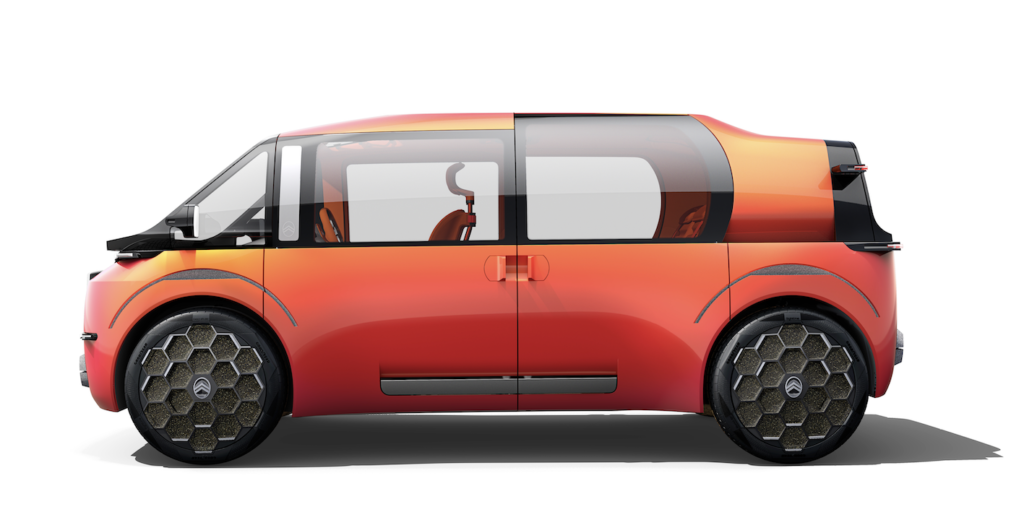
Above all, it marks a significant milestone in the automotive industry: the return of a somewhat abandoned formula, with a one-box style and interior design that reinterprets ‘the spirit of the minivans and leisure vehicles that shaped the brand’s history,’ as Citroën points out. Will the return of MPVs calm the SUV wave? Are we at a turning point? (drum roll…)

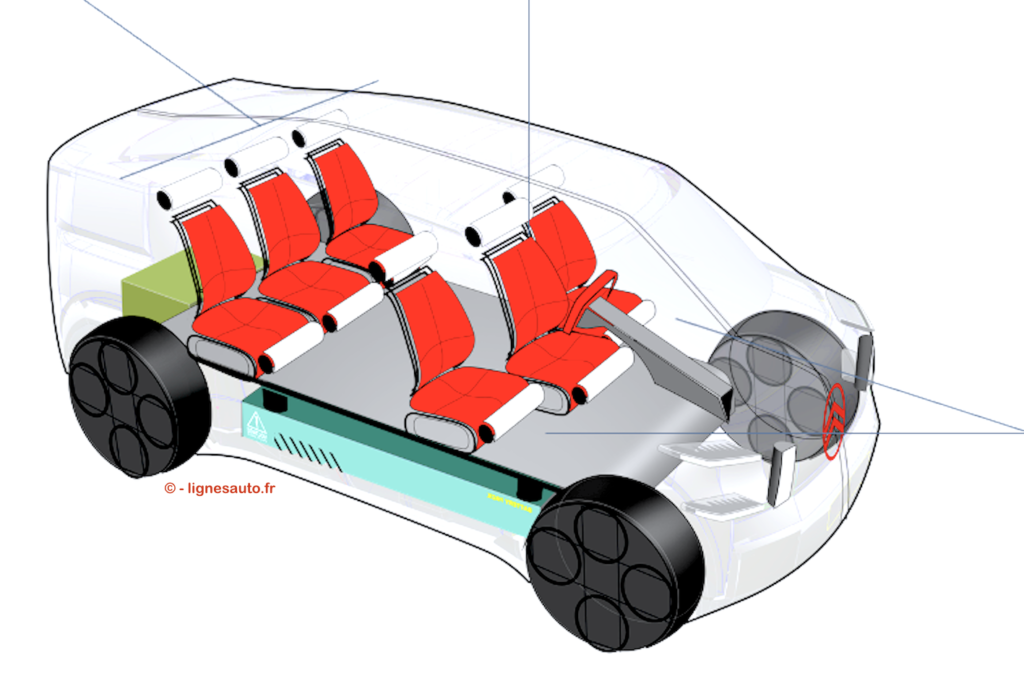
ELO benefits from a 100% electric platform without which it would never have seen the light of day, because how could it have optimised such a small space with a combustion engine and its bulky drivetrain? Impossible. The EV motor is pushed back onto the rear axle. The original seating layout does the rest. The boot space is never affected by the different configurations available on board.
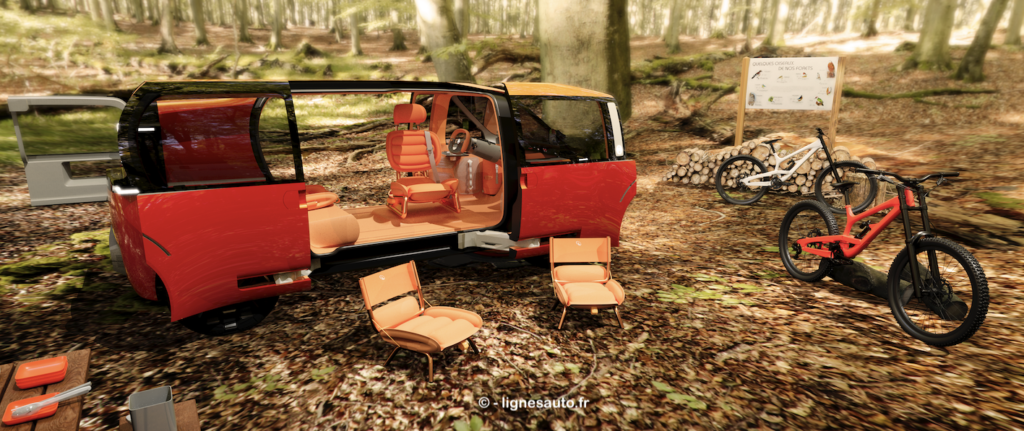
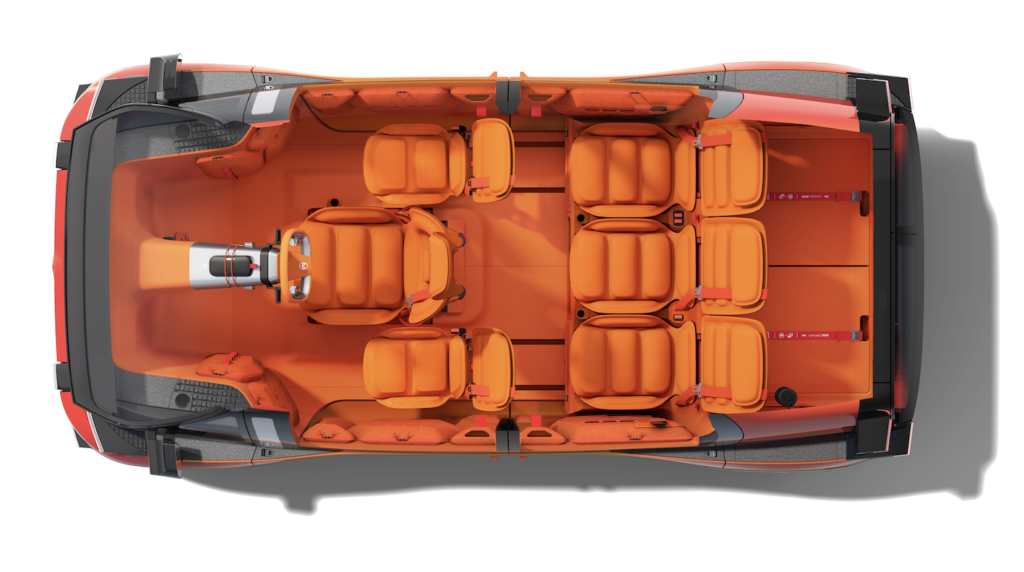
Open the four side doors, which open in opposite directions. The absence of a centre pillar provides easy access with a width of 1.92 metres. The completely flat floor makes it easy to move around on board, regardless of the configuration chosen. The driver’s seat rotates 360° to adapt perfectly to the different configurations available on board.
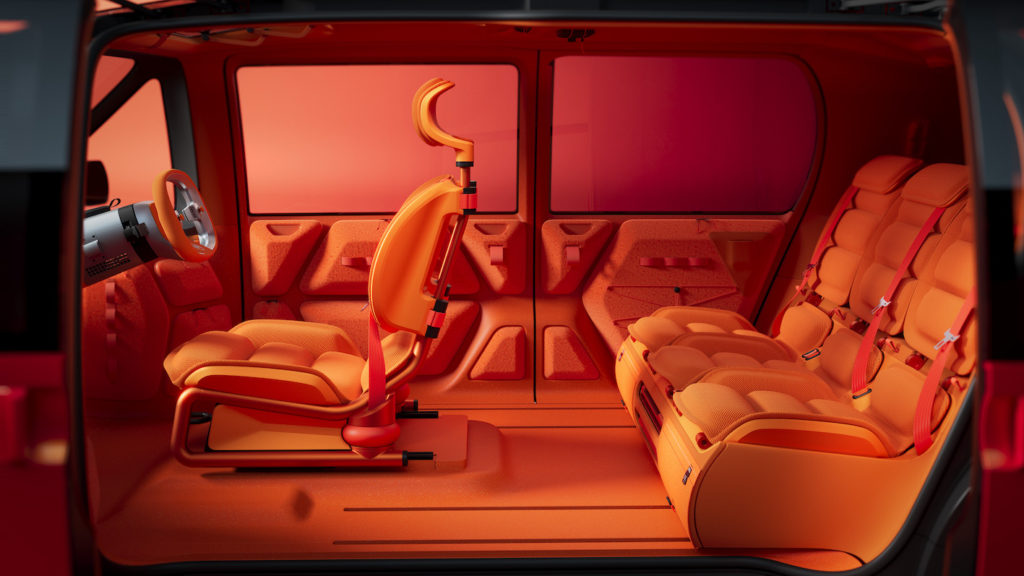
Row 2 offers three seats, all of the same width. Their backrests recline and the two outer seats can be removed and converted into easily removable folding seats for an impromptu picnic. Two additional seats are concealed under the outer seats in row 2. They unfold with a simple movement to nestle slightly behind the driver’s seat on either side. These two additional seats offer generous legroom.
Citroën’s design teams worked alongside those at Decathlon to develop materials, accessories and scenarios to ensure that this laboratory of ideas perfectly meets your outdoor leisure needs. This collaboration goes far beyond simply designing sustainable accessories that are suited to the vehicle.
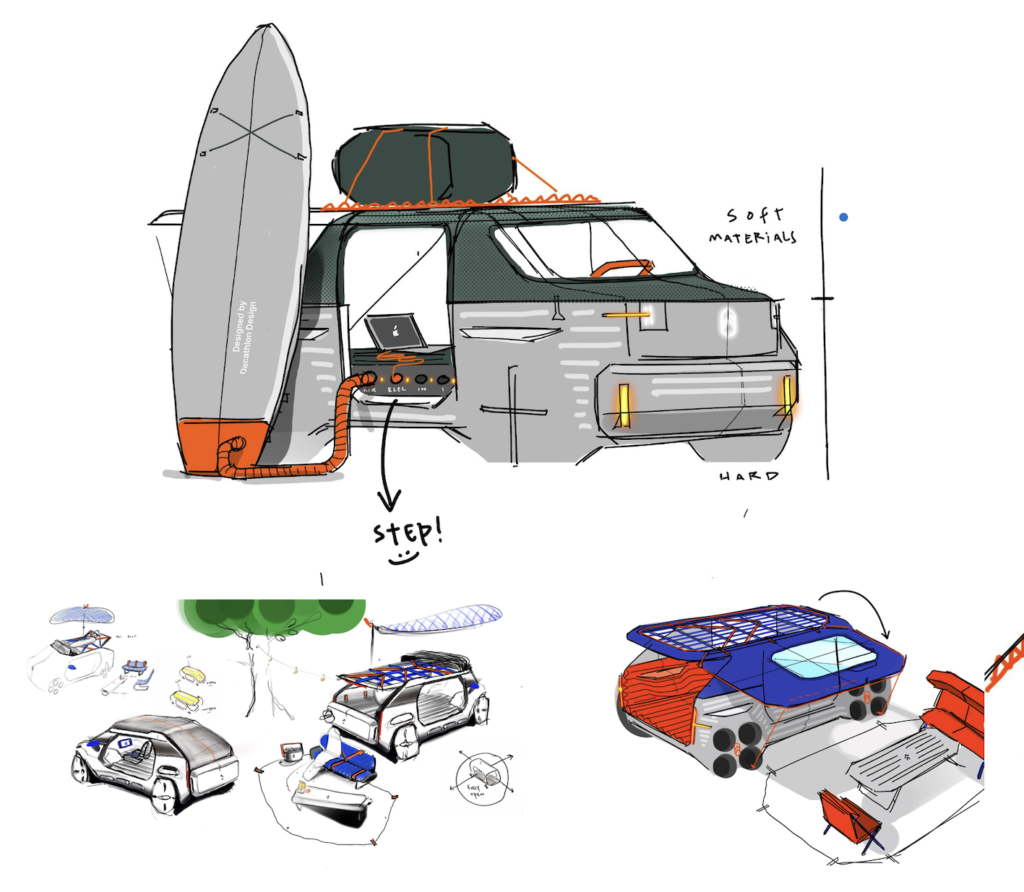
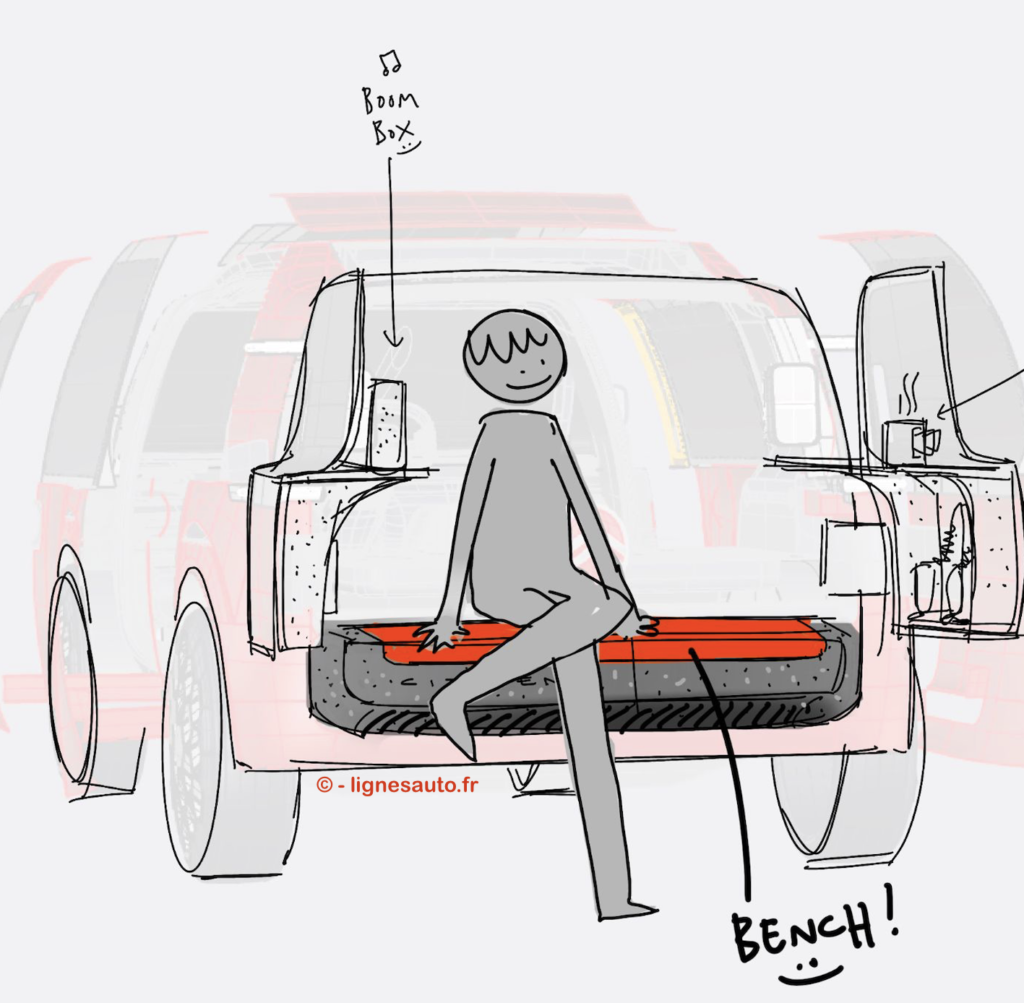
Additional bags have been designed to be easily stored at the front, and hooks have been added to all four doors so that an awning can be stretched out on either side of ELO. This awning allows you to extend your outdoor experience while protecting yourself from the sun or bad weather. The designers have made use of all the storage areas according to the activities they had in mind. For example, the design of the boot opening has been reworked to provide a seat on the threshold for changing shoes after a hike.
The driver benefits from a new generation of information display. On the previous Oli concept from 2022, information was projected onto the ‘Smartband’, a wide horizontal band positioned at the bottom of the windscreen. With ELO, flat screens are reflected on a transparent screen equipped with a reflective film, creating a magical effect: colourful information appears to float transparently across the entire width of the windscreen.
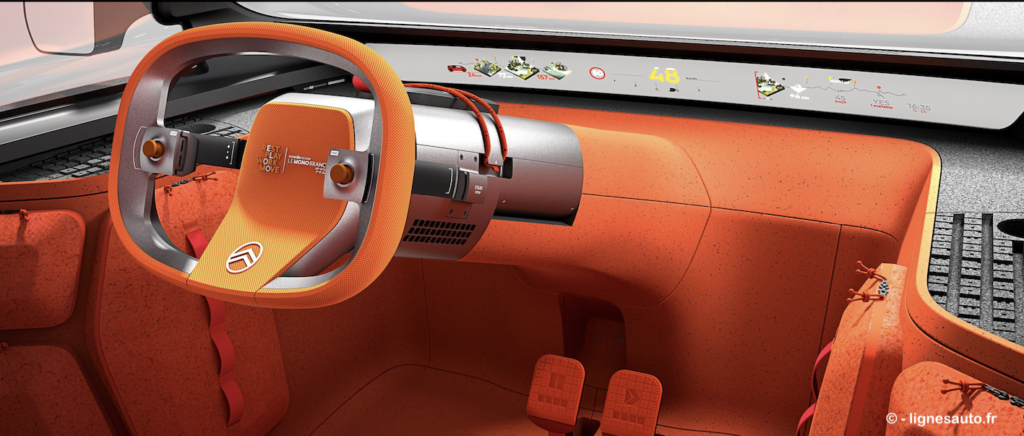
This new display requires technology that is much less expensive in terms of development and potential production than a conventional head-up display. This idea will fuel the creativity of designers and architects for the products of tomorrow.
Work on board, drive, relax… And even sleep, as we’ve seen. The concept includes two mattresses folded away in dedicated storage compartments in the boot. These mattresses are made from DECATHLON’s Dropstitch material, which is also used for surfboards, kayaks and paddleboards.
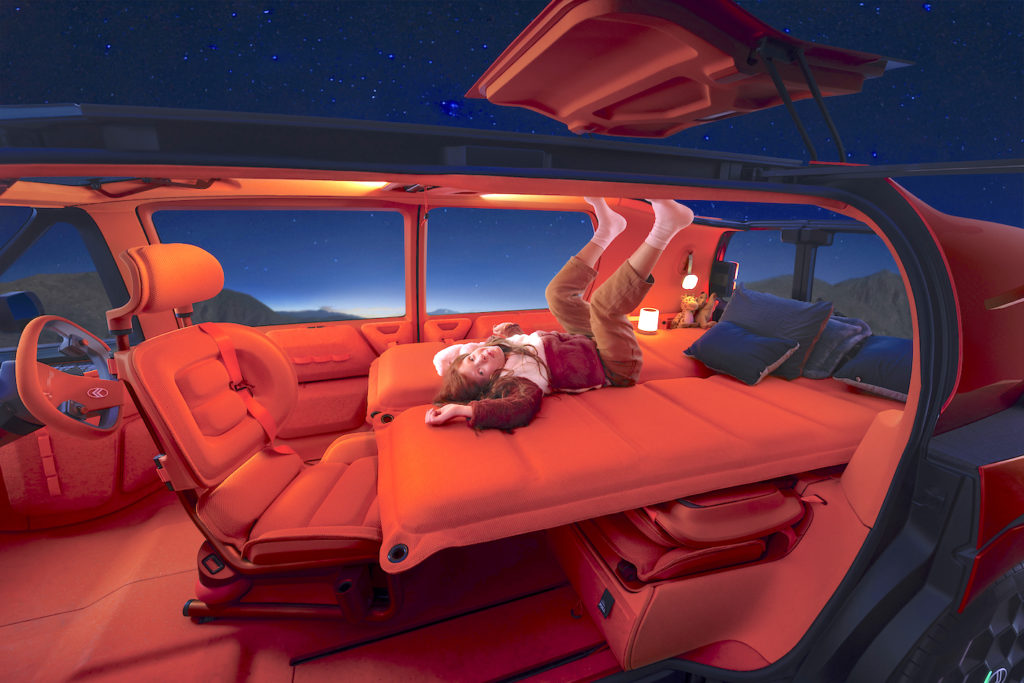
The two mattresses are removed from their storage compartments, unfolded and inflated using compressed air stored on board the vehicle and accessible via a nozzle located in the vehicle’s underbody. The Dropstich material gives these two beds sufficient rigidity that they do not require any special reinforcement to hold them in place once installed in the passenger compartment.

And after a good nap, we’ll finally talk about the ‘style’ of this concept car. It’s a ‘one-box’ as designers say. A concrete block. But the difference lies in the treatment of the volumes of this cube-shaped car. The atypical silhouette of this concept is in total harmony with the unconventional approach of its architecture. It is practically a minivan and displays simplicity in terms of its design language. ELO bears a resemblance to OLI with its flat windows, except for a slight curve at the bottom of the front for greater fluidity.
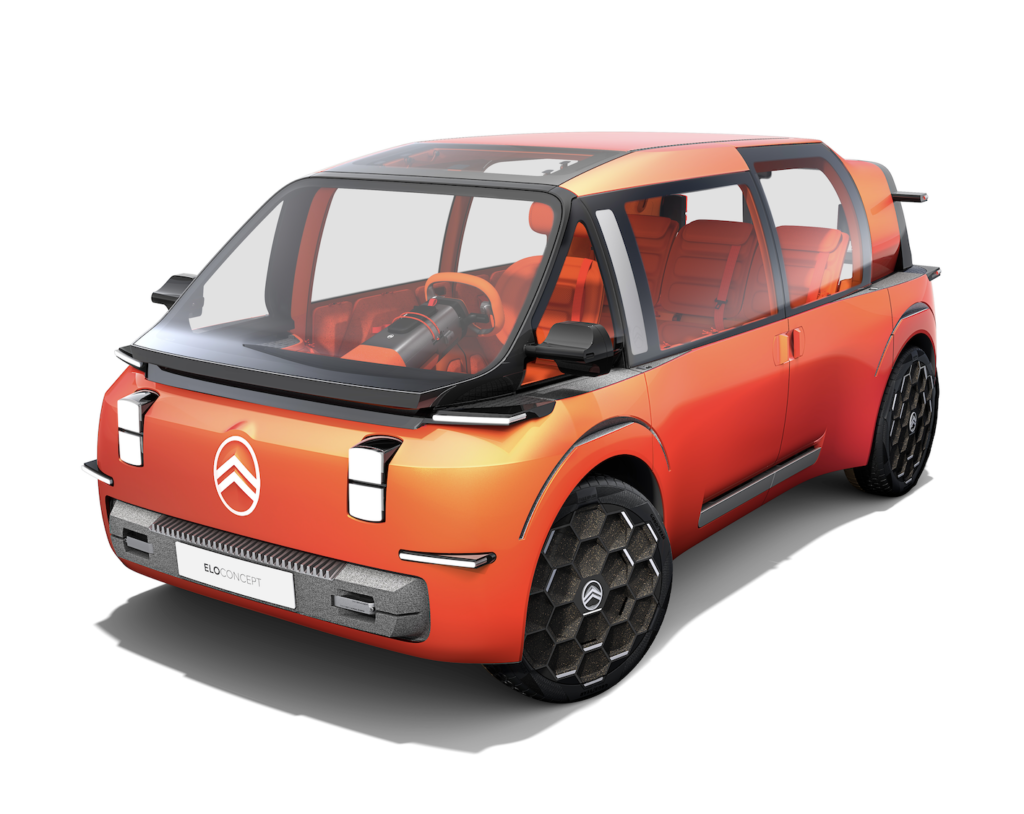
The overall design is very graphic, with wheel arches elegantly highlighted by an arch, solid, flat shoulders that can be used to support various objects during breaks, and a waistline that has been lowered as much as possible to maximise light. The side window at row 2 is larger, improving visibility to the outside. With their semi-rounded shape, the rear doors extend up to the roof, optimising the amount of light inside (4.5 m2 of glazing). Behind the passenger compartment, the boot area stands out with its soft, elegant and structured roofline.
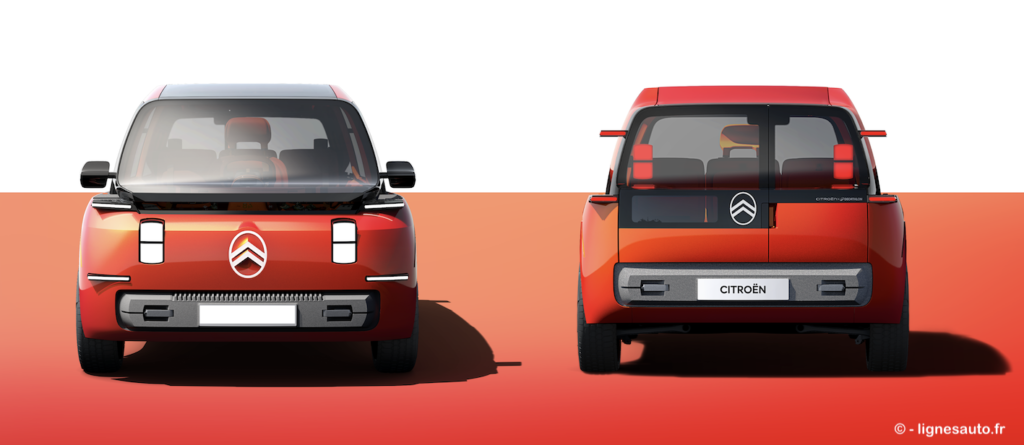
At the front, the light signature echoes the current design, slightly revamped with vertical capsules split into two elements. The logo is proudly displayed. At the bottom, the protective shield is made of expanded polypropylene. Inspired by the protective helmets designed by DECATHLON for cyclists, this material is composed of 30% recycled materials and is 100% recyclable. It is very lightweight and can be found on the flat surface of the four wings.

This protection – identical in shape and material – is also found on the rear shield, thus limiting the number of parts making up the bodywork. On this rear section, the light signature is similar to that of the C5 Aircross, with a floating upper element. The boot lid is composed of two asymmetrical flaps, allowing for a small additional window on the left door. In the upper part of the roof, a large opening (below) unfolds to reveal part of the roof, increasing the loading height or allowing you to enjoy the starry night sky in the sleeping configuration. This unique shape confirms the design’s desire to create new experiences. It dresses up the functions with simplicity and efficiency.
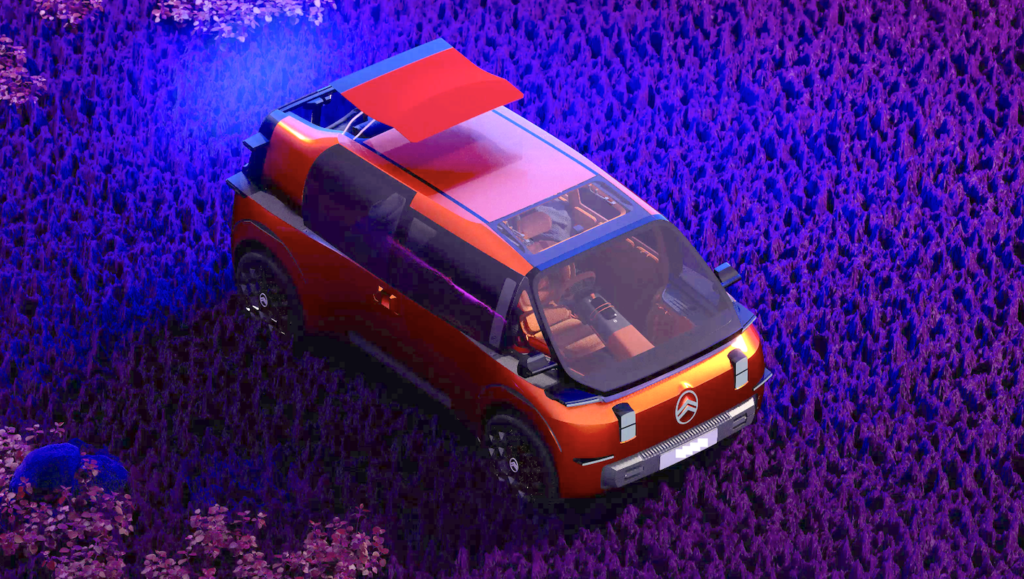
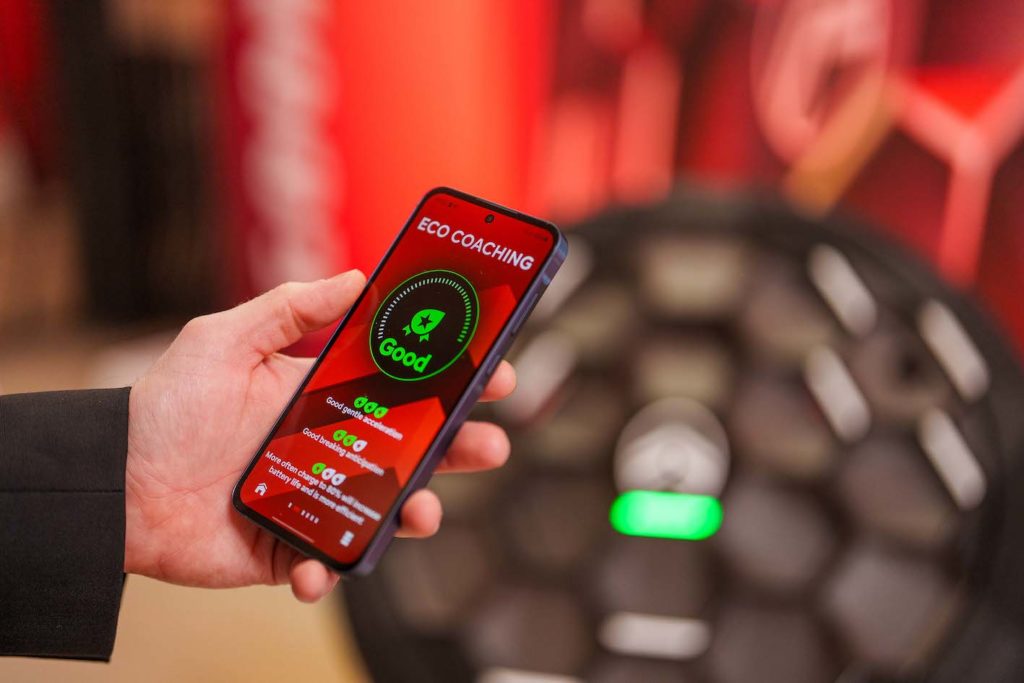
In keeping with its purpose, this concept features tyres designed for leisure and outdoor activities. It continues the partnership with Goodyear and is Citroën’s fourth concept car to feature smart tyres since the 19_19 centenary model. These new tyres maintain the correct pressure depending on the vehicle’s load. Whatever the type of terrain, it is equally suited to everyday use and occasional excursions. Intelligent, it measures its pressure and wear in real time, all monitored via a dedicated app.
This is an invigorating concept car. One month after Peugeot’s Polygon concept, it is clear that the two manufacturers’ visions are diametrically opposed. There is a blend of simplicity and conceptual richness aboard the ELO, while the recent Polygon below features cutting-edge technology. Both are reinventing the one-box formula.
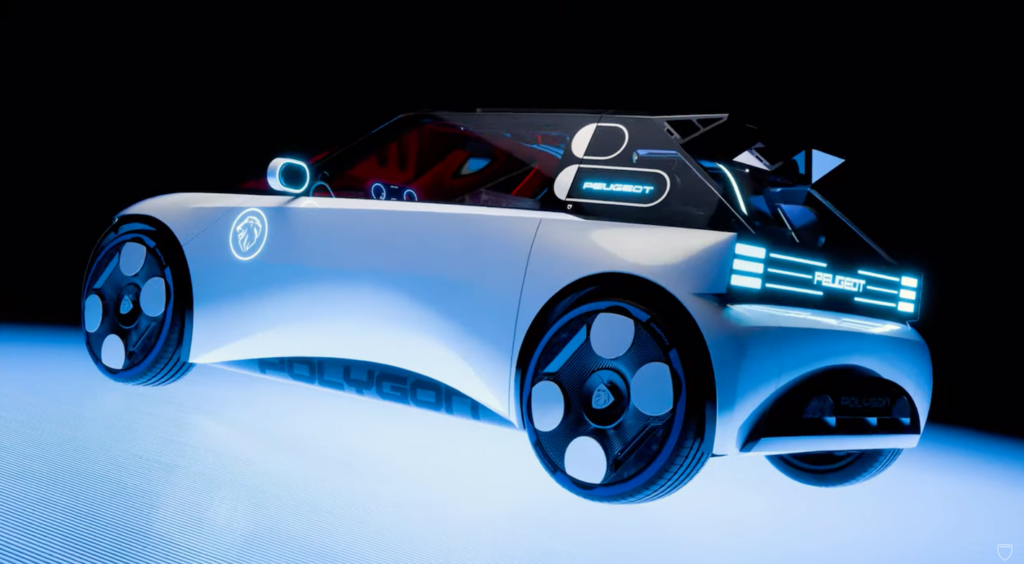
A coherent concept on the Citroën, as it contributes to the interior space, which is incredible. A more surprising theme on the Peugeot concept, which features a sporty two-door silhouette. But a great designer recently told me that ‘the one-box concept is modern, a constant. The rear windscreen with a more generous bonnet is certainly more classic, but it’s more about history.’
In less than two months, Peugeot and Citroën have demonstrated that their research and design departments are still buzzing with activity. This bodes well ahead of the unveiling of the plan presented by Antonio Filosa, CEO of Stellantis, in the first half of 2026, which will concern the future of Stellantis.
