The current Clio, launched in April 2019 and restyled in April 2023, bears the hallmarks of Gilles Vidal’s time at Renault (below). The restyling has enabled this Renault to gain the upper hand over its long-standing rival: the Peugeot 208, also launched in 2019. The new and sixth generation that has just been unveiled will remain the designer’s farewell gift to Renault. Since then, Vidal has celebrated his leaving party and is preparing his briefcase for his return to Stellantis on October 1. Read (or reread) the “letter to Gilles Vidal” here: https://lignesauto.fr/?p=41927

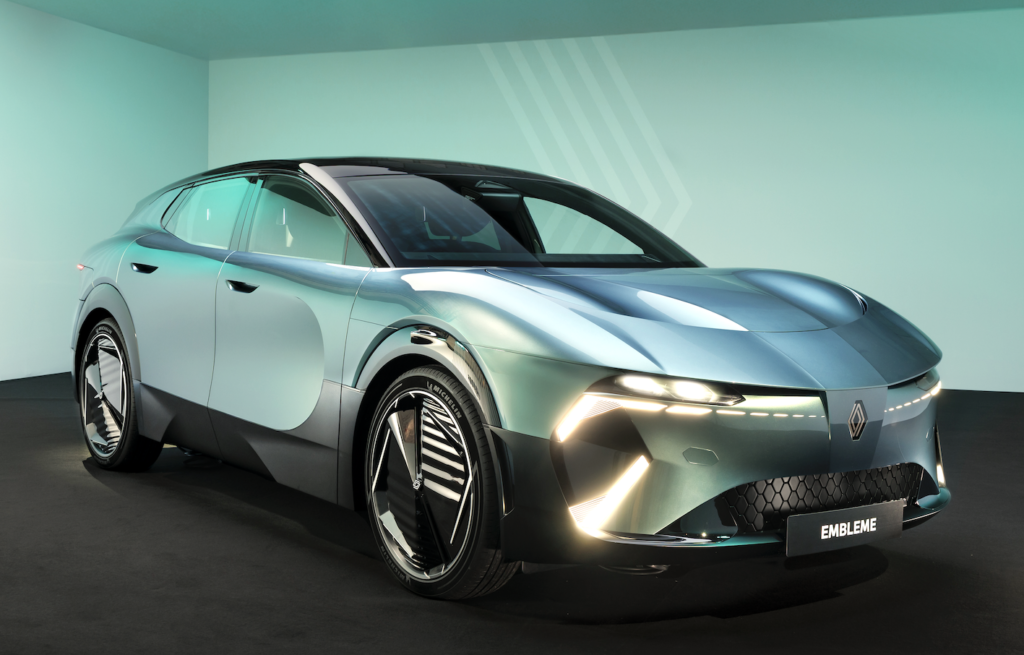
Before his departure, Gilles Vidal worked with his teams and the Emblème concept car to define the major design themes for Renault’s future, which are now being unveiled in the new generation of Clio. As we have just mentioned, the previous generation was a huge success, with sales figures in France and Europe exceeding those of the 2019 208, designed under the leadership of… Gilles Vidal!
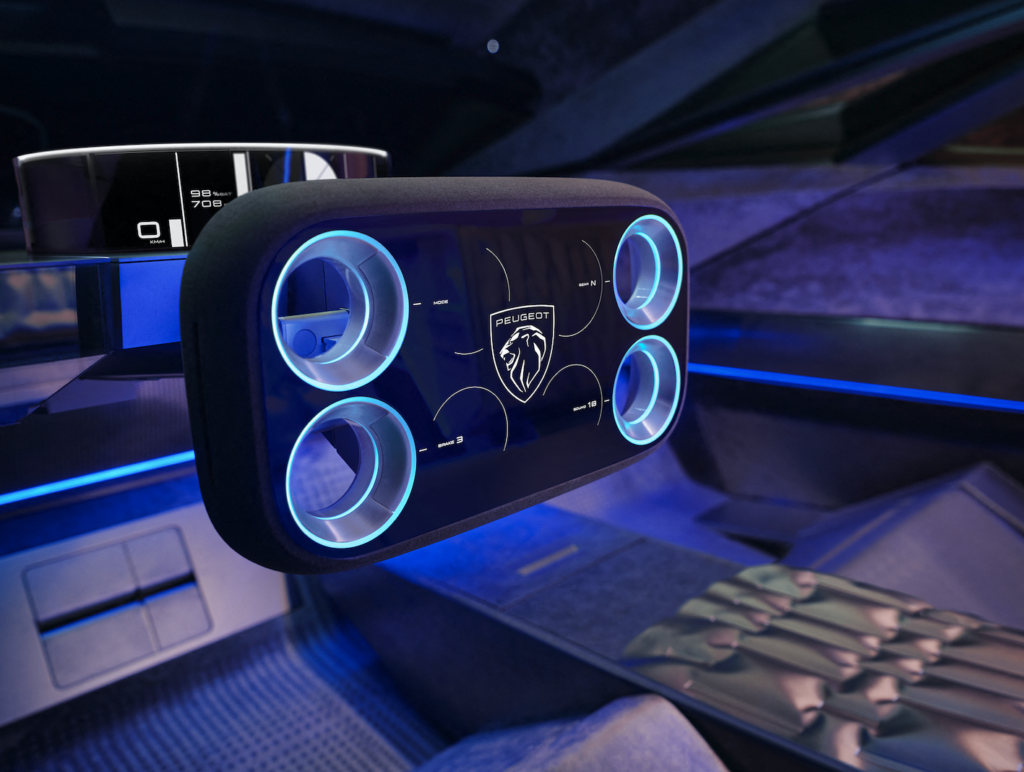
We will see by 2026-2027 whether the new 208, with its Hypersquare steering system (rectangular steering wheel and steer-by-wire technology, with no mechanical connection below), will overtake the new Clio. The goal of Renault’s new boss, François Provost, is to focus on “value rather than volume.” That’s going to make Carlos Ghosn choke! Renault wants to move upmarket to distance itself from Dacia… At what cost for the Clio? We’ll find out soon.
For now, the advantage lies with the new model, as they say. And so Renault has the edge over Peugeot… Paradise is also the goal of the new generation of Clio, which changes (almost) everything. Admittedly, the platform is almost identical to that of the Clio 5, but the new model is slightly larger (4.12 m long, 1.77 m wide and 1.45 m high) without compromising on interior space, which remains more or less the same, give or take a few centimeters or even millimeters.
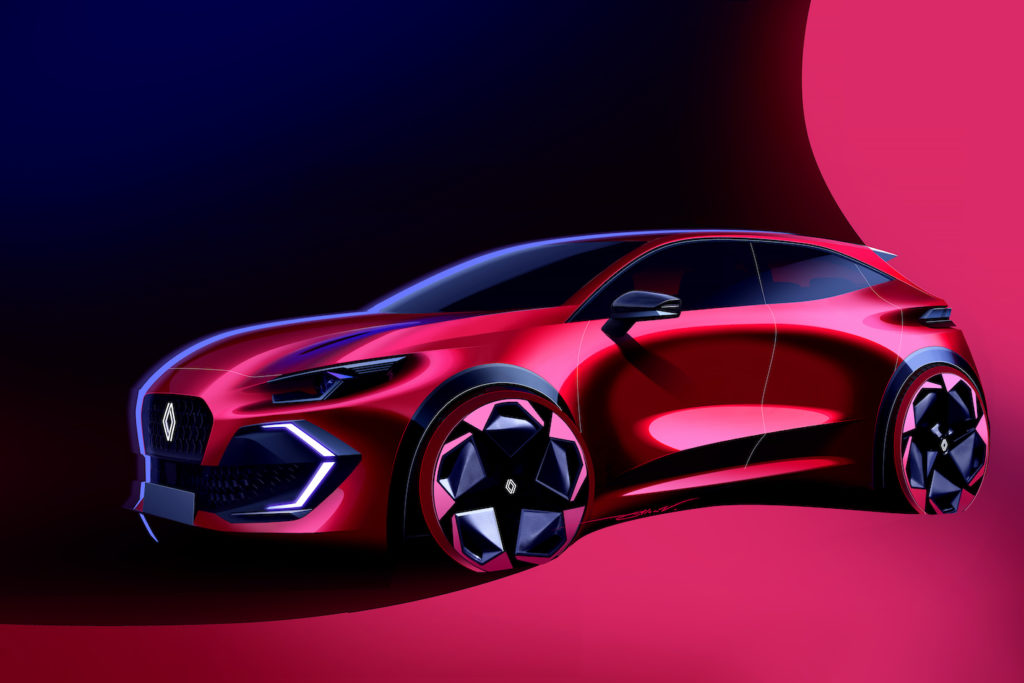
First and foremost, the trunk has gained a little extra capacity, thanks in particular to an extension of the rear section and the bulging tailgate. The latter has a fairly vertical sheet metal front end with a slight resemblance to the 3008. Before talking about design, which is what interests us here, let’s quickly mention the arrival of the new-generation E-Tech hybrid powertrain with a 1.8-liter combustion engine and 160 hp in hybrid mode, instead of the 1.6-liter and 145 hp of the current generation.
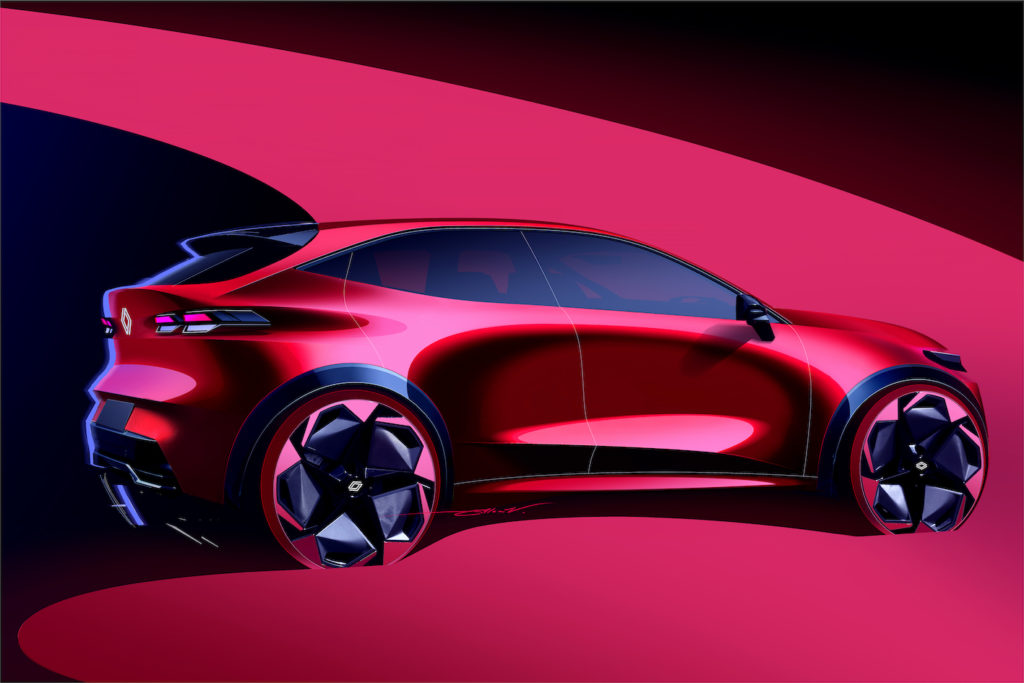
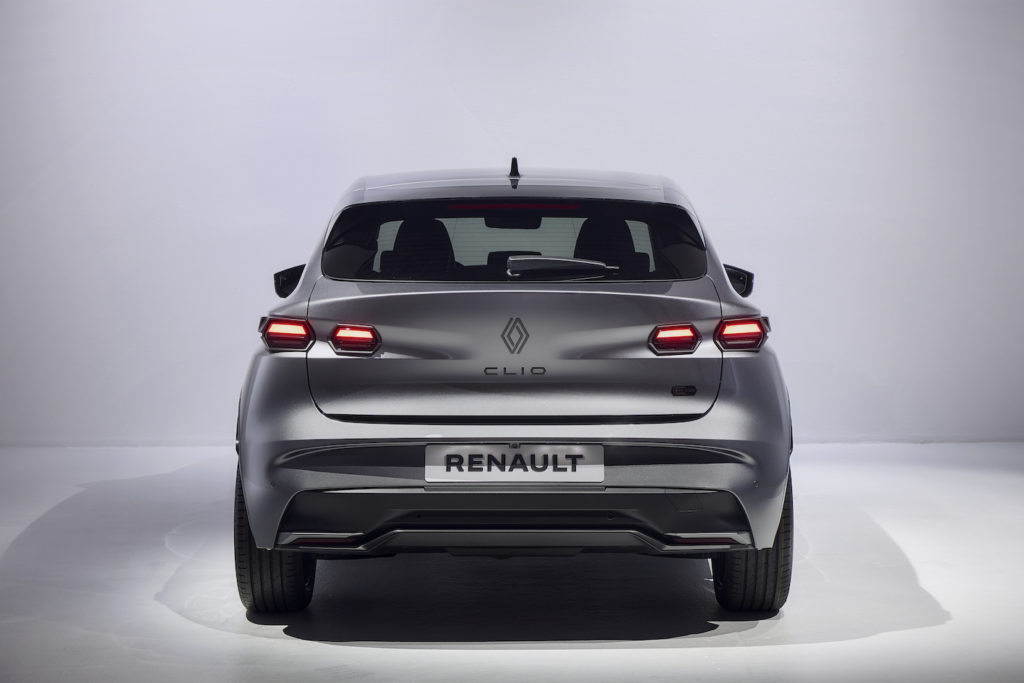
In terms of design, it must be acknowledged that this is truly a new generation, not just a major facelift. Laurens van den Acker says that “the Clio was a hero, the new generation is a superhero, with superpowers!” He adds that the design is “sensual, pushing the boundaries of a new design language.” The wheelbase of the sixth generation has changed little (+8 mm), but the length has increased by 6.7 cm compared to the current generation, allowing for a complete redesign of the rear.
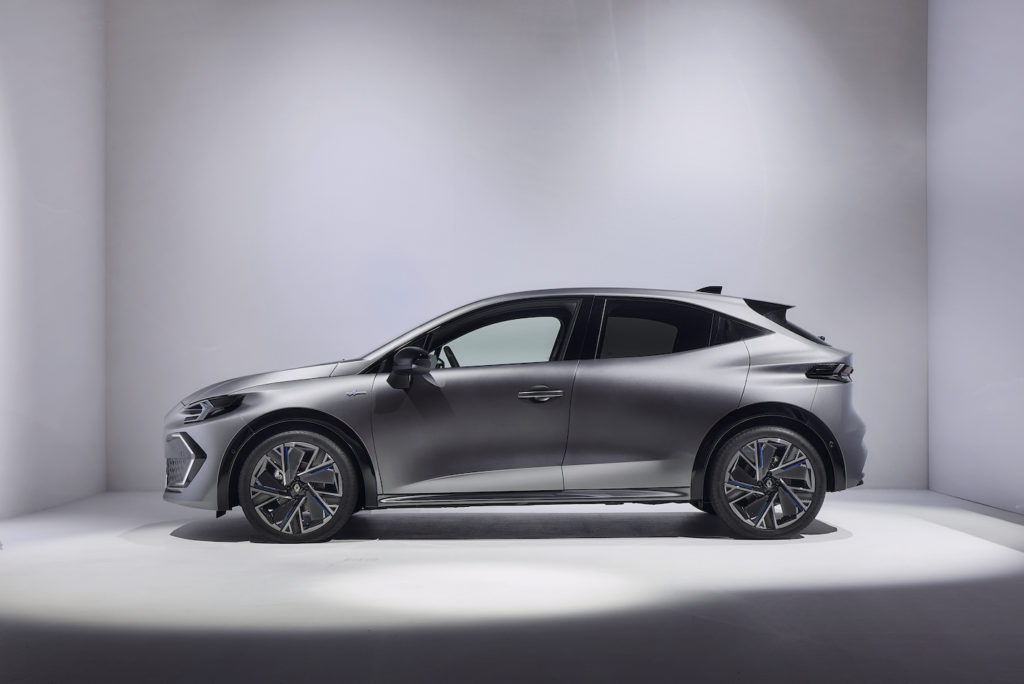
It is more dynamic and even aerodynamic. It contributes to the increased trunk volume (390 dm3 in the thermal version). The rear window is more sloped and topped with a more generous spoiler, giving this area a very sporty look. The spirit is that of a compact, spacious coupe that can do just about anything in the city, on the road, or on the highway.
The tailgate features a new rear light signature split into two elements in the shape of an irregular hexagon with the same appearance, but the one integrated into the side of the body has a surprising design. The light is no longer flush with the bodywork, but sits directly on the concave curve of the rear wing, with a very geometric cutout. Speaking of the rear fender, we once again applaud the stampers and quality control personnel for this undulating door cutout that seems to have mastered the game. To be seen in large-scale production.
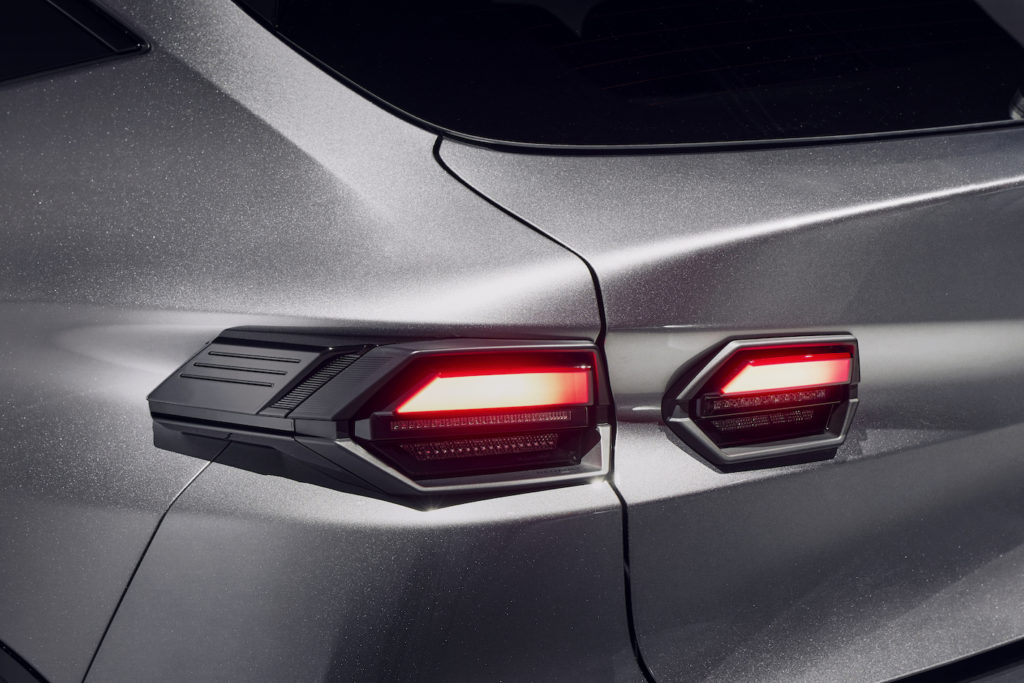
The rear door handles are still concealed, but the triangle that follows the dynamic rise of the window line extends to the end of the side panel. This is in stark contrast to the perceived solidity of a VW Golf, whose design is based on a very thick quarter panel in this area. On the other hand, the upper line of the window slopes down rapidly in this area, while the roofline remains slender and more horizontal to preserve headroom inside.
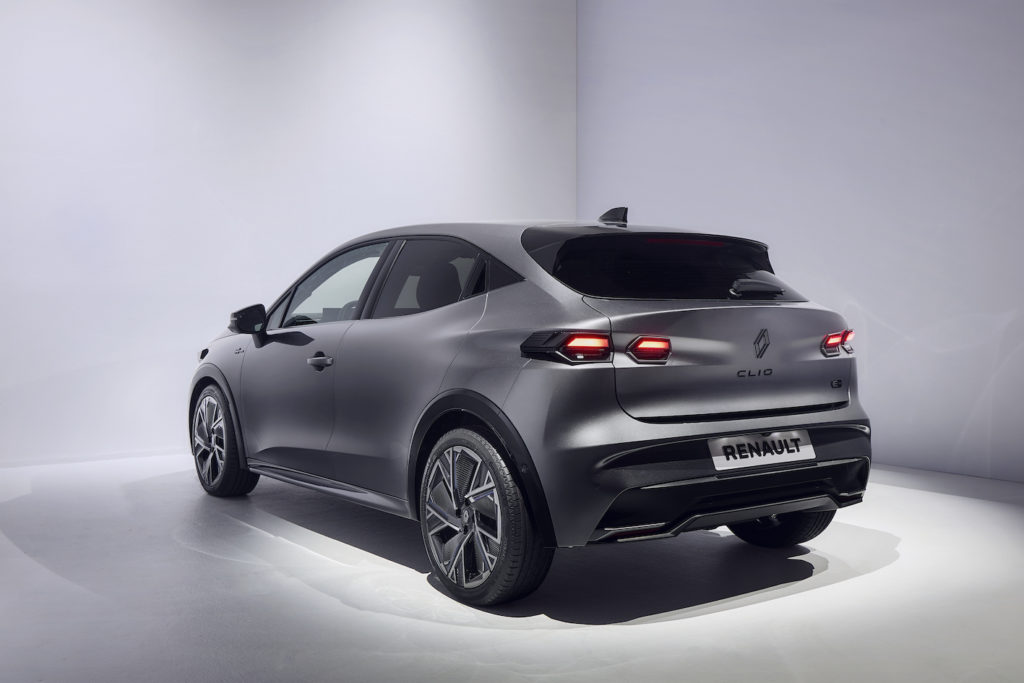
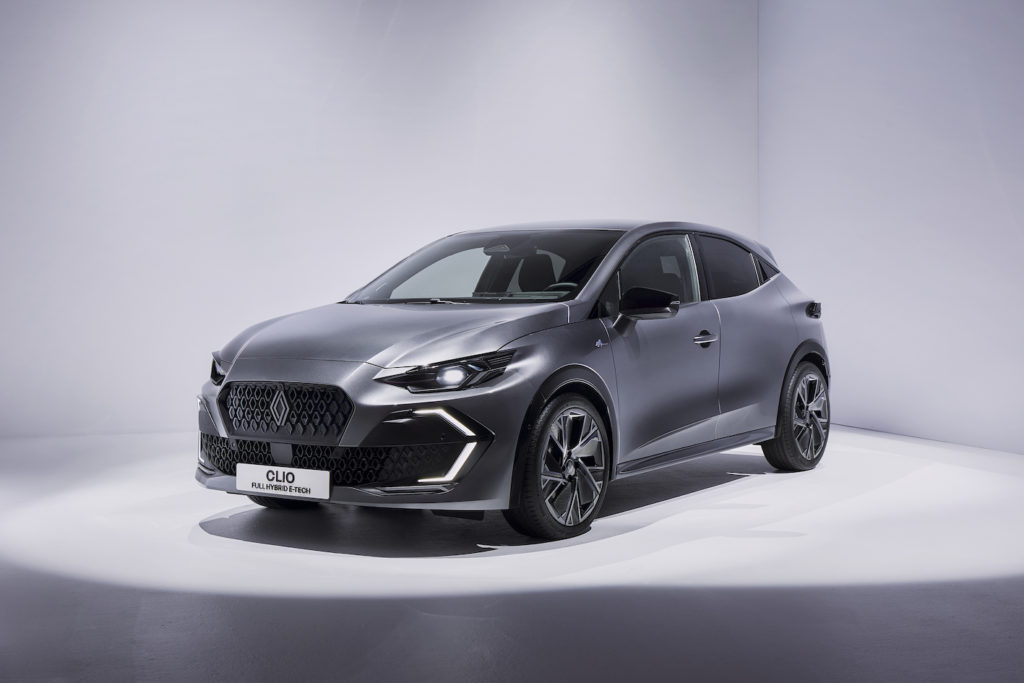
From the rear three-quarters view, the new Clio appears much more dynamic than the current generation. The latter was dynamic in its front end, but for the new Clio, the change is radical in this frontal area. So much so that it reminds older viewers of the snout of a certain Citroën Visa born in 1978! There it is, our little snout of paradise!
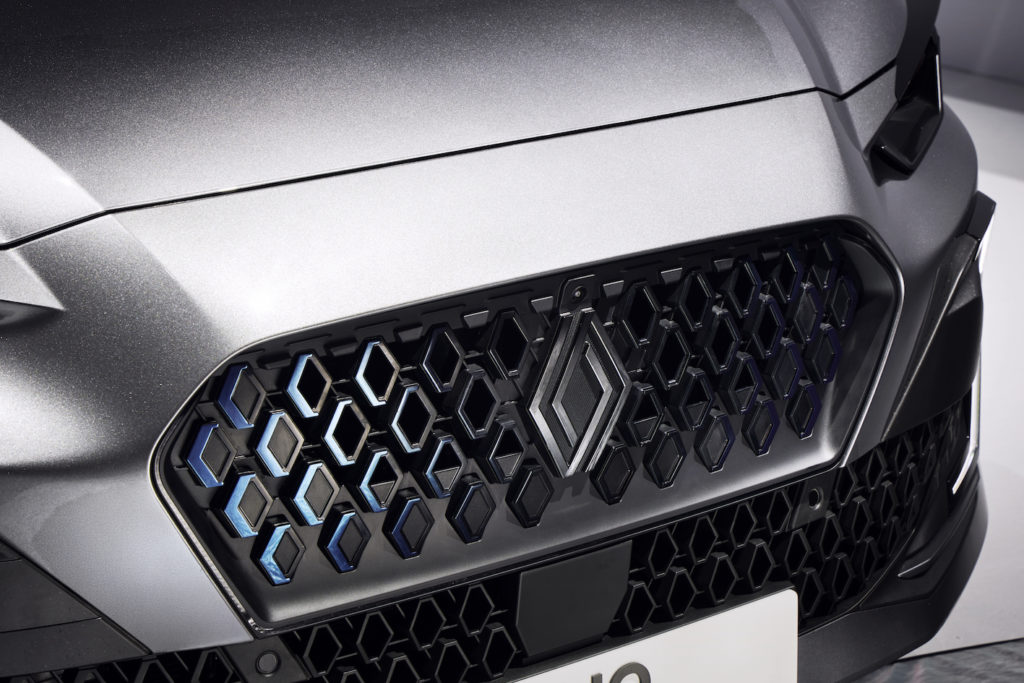
The grille is beautifully enhanced by the sculpting of the hood, “which pushes the grille down,” says Laurens… And what a front end: I counted no fewer than 40 interlocking diamonds in this new grille, not counting the logo. Well, the restyled Austral gave us a heads-up with its 46 diamonds integrated into the grille!
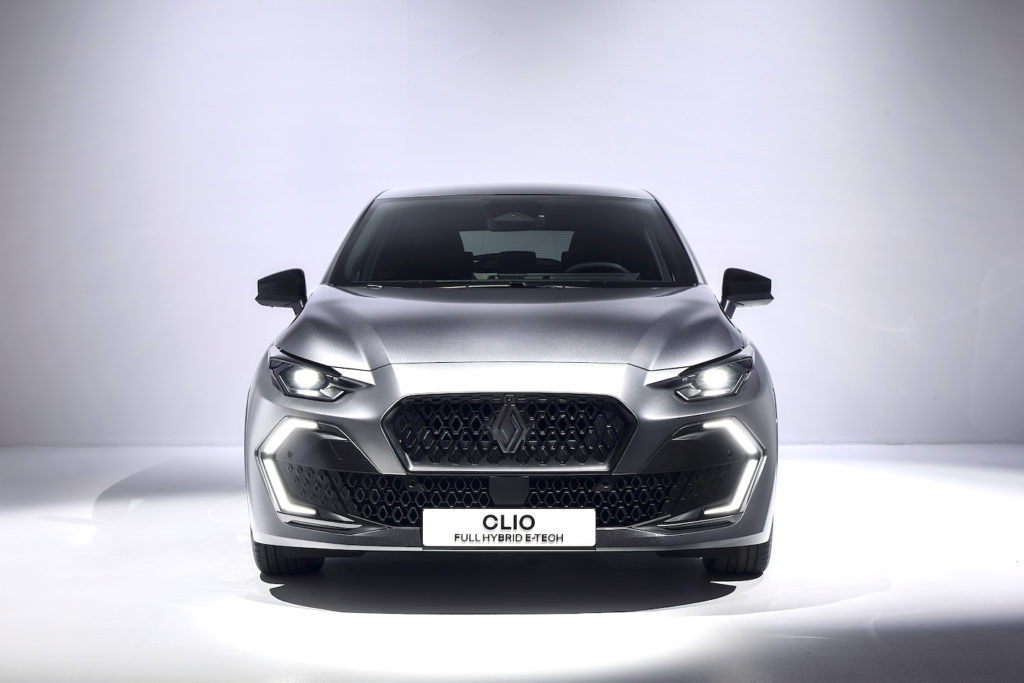
But on the 2026 Clio, you have to add 72 (!!) of these diamonds housed in the lower air intake, which visually widen the car and give it a certain presence. In total, no fewer than 113 “Renault logos” are housed in the front of the new Clio. If your neighbor doesn’t know what new car you’ve just bought, change… neighbors. This prominent snout is the talk of the town, and as they say in the business, “if the design gets people talking, it means it’s striking, and that’s its role!”
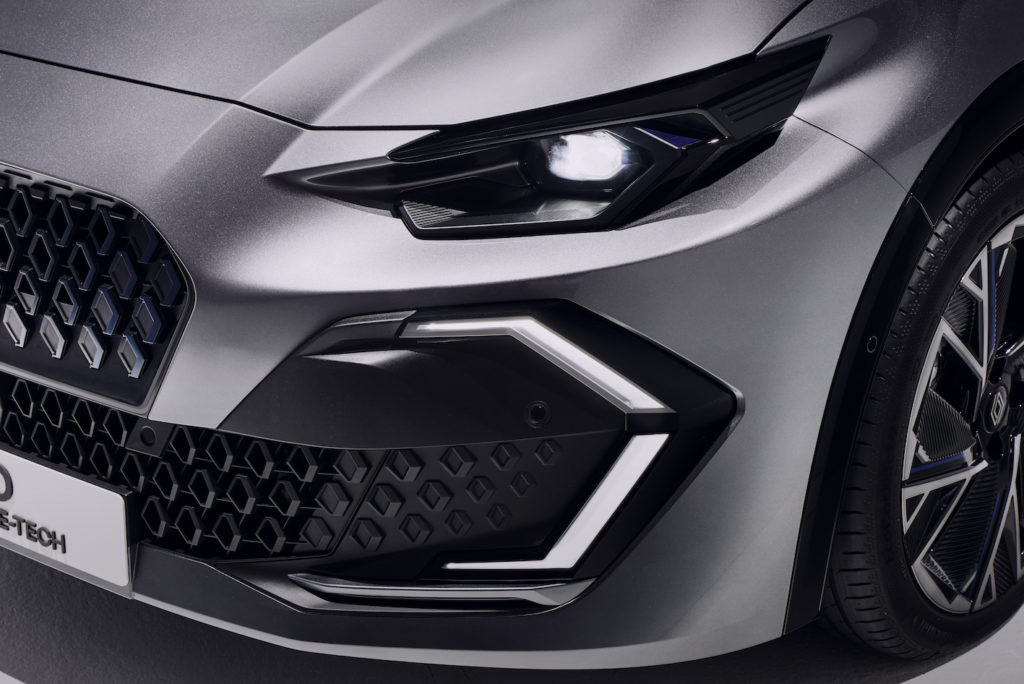
The grille is encased in the soft nose, which joins the fairly high engine hood. It is always very complex for designers to draw this area, where impact constraints somewhat limit creativity. One final thought: the LED lighting on either side of the lower grille echoes the signature lighting of the Emblème concept car in the form of a half-diamond. I didn’t count this diamond cut in two…
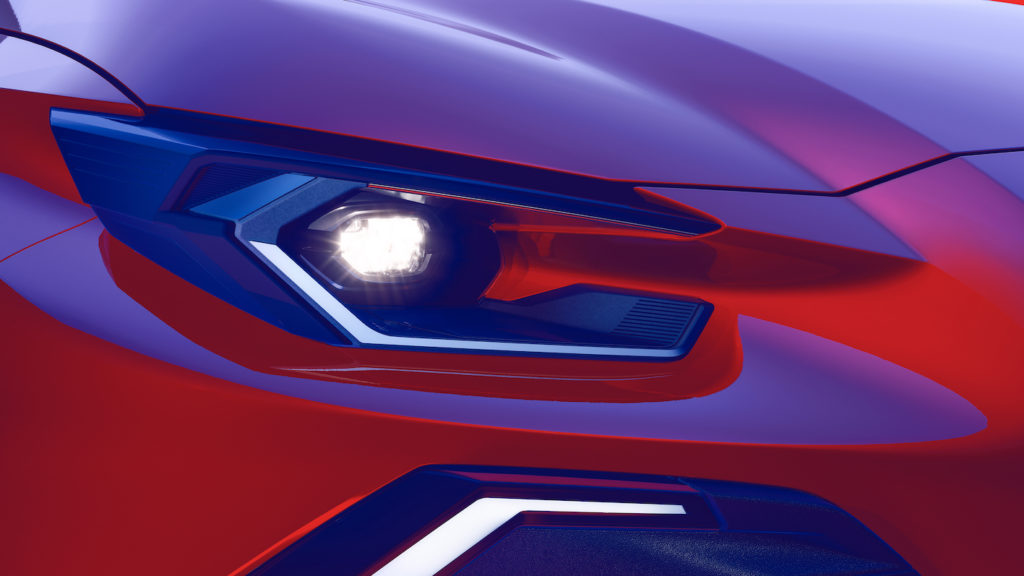
The headlights, like the taillights, are a design feature in themselves, highly crafted and non-flush. They are integrated into a black plate, like a showcase. They are hexagonal in shape to accommodate the technology, echoing the shape of the taillights. Like the Peugeot 208, the Clio has black lacquered wheel arch trims, while the embossing on the two doors is fairly understated, with just a hint of a pinched line at the bottom that gives the profile a certain dynamism. This simplicity contrasts with the sides of the Rafale. Renault clearly intends to change its style!
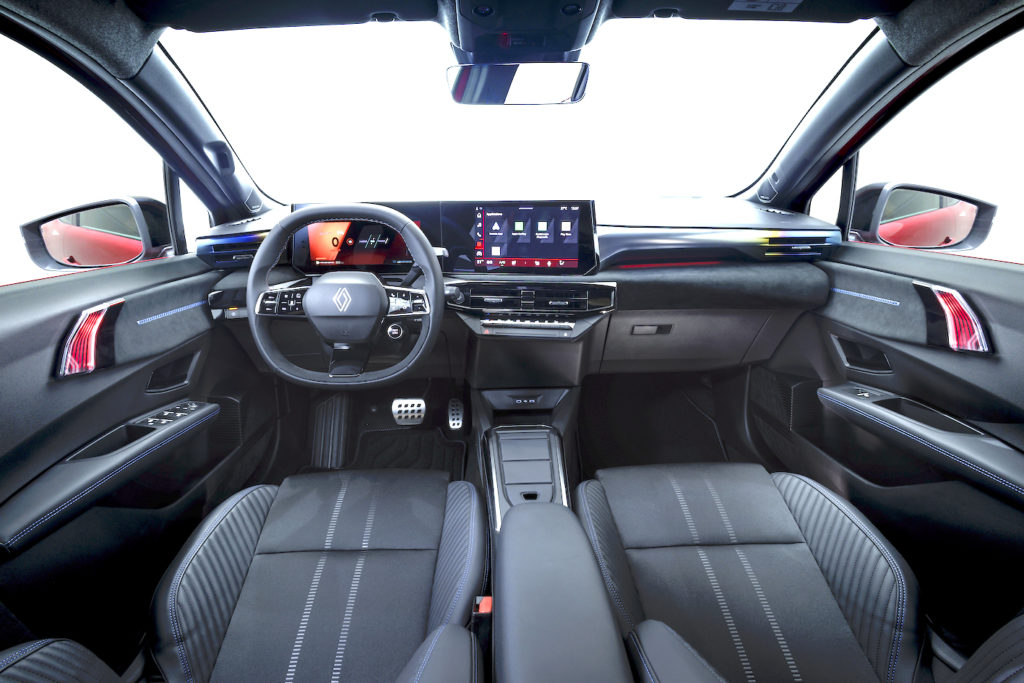
On board, it’s a revolution, as the classic dashboard architecture with the instrument cluster/visor facing the driver has been replaced by a horizontal layout, flanked by the double V-shaped OpenR screen and the OpenR Link multimedia system with integrated Google, which is a first in this vehicle category. The aesthetic theme is similar to that of Renault’s electric vehicles (4 and 5).
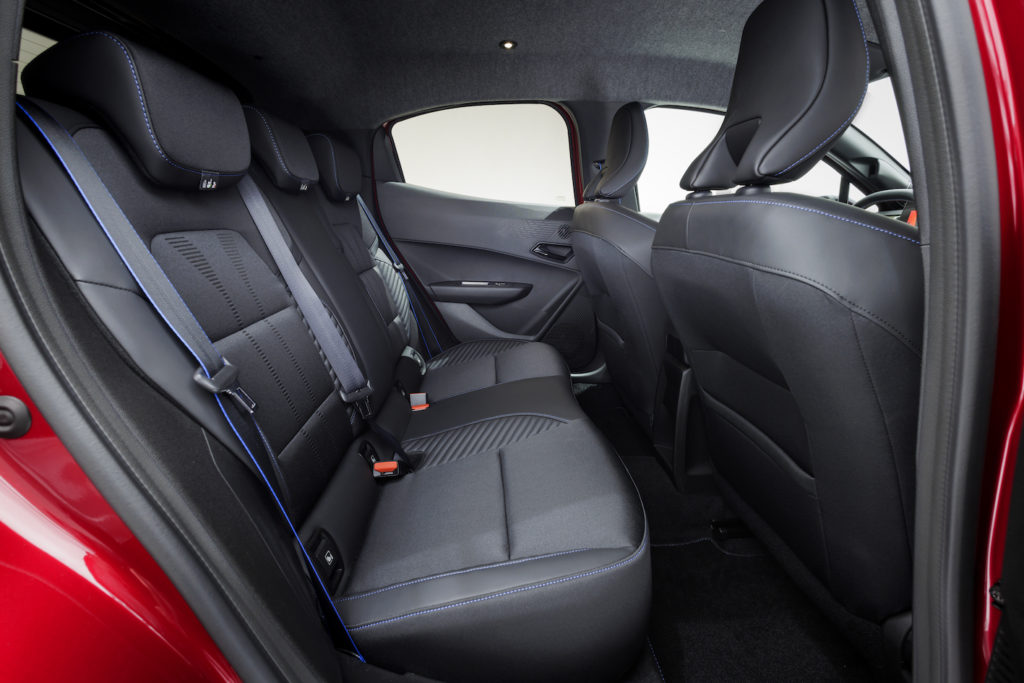
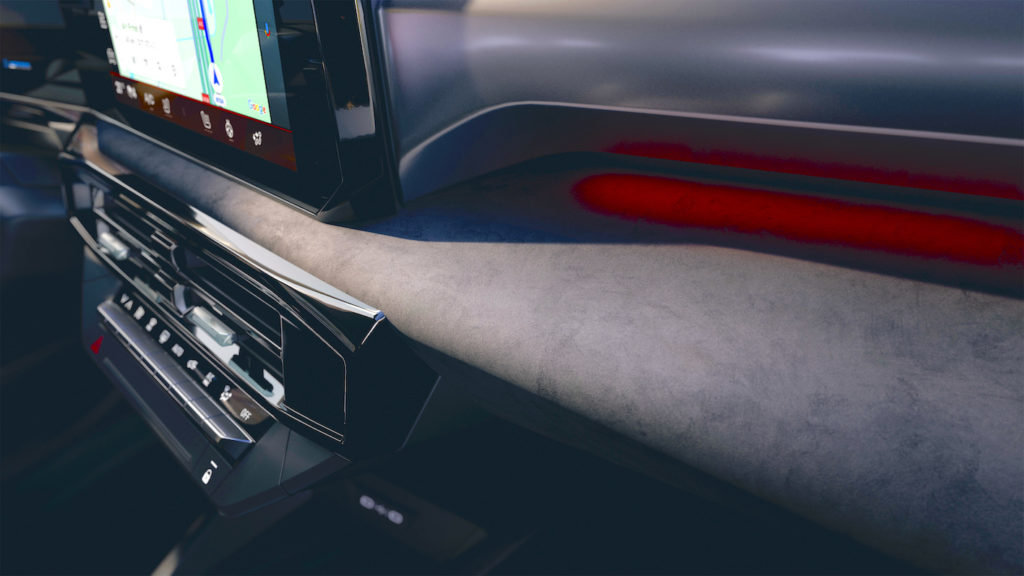
The gearshift on the E-Tech version has been moved to the steering wheel, freeing up space on a console that is much less intrusive than the current one, which is a good thing. The console also no longer features the illuminated trim that used to adorn it, which was distracting when driving at night. The interior features trim that anticipates Renault’s desire to now design (almost) everything with a single word in mind: circular economy.
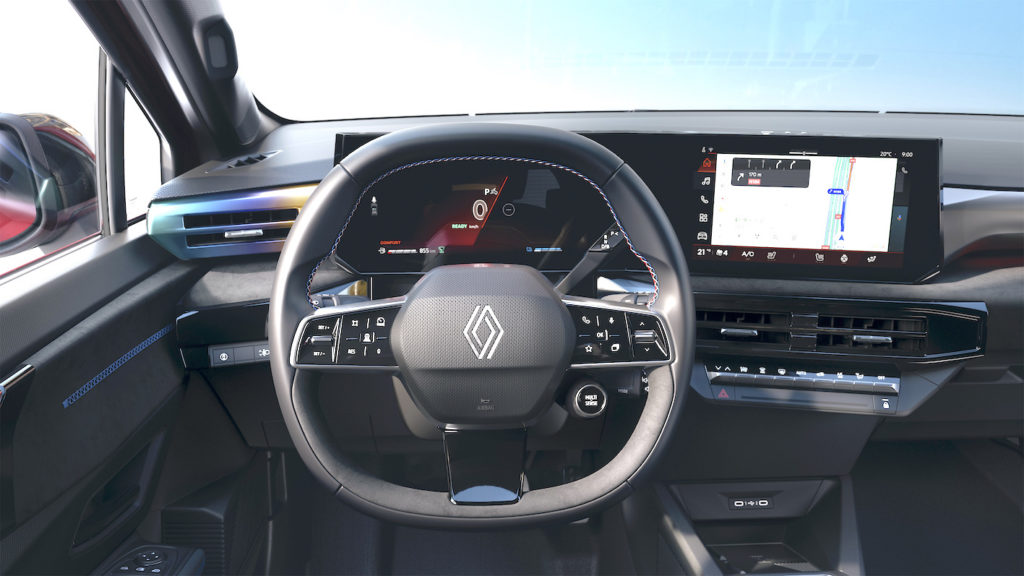
Sustainability and recycling are emphasized. Finally, let’s end on a positive note: the Clio 6 is not only available in gray. Its seven colors are delightful: “Absolu” red and green, classic white, the famous Rafale gray, a deeper gray (Schiste), Étoilé black, and Iron blue.
The Clio’s trump card is its rapid arrival on the European market in early 2026, well ahead of its rival Peugeot. It also strikes a fine balance between preserving the image of the Clio (the brand’s best-seller) and a relevant and modern redesign. And, no doubt, a modest budget. The third advantage is its hybrid powertrain, leaving 100% electric to the R4 and R5. Renault intends to persevere with this clear strategy for its customers, as alongside its 100% electric R4, Renault will be offering a replacement for the Captur hybrid crossover in less than two years, which is soon to go into production.