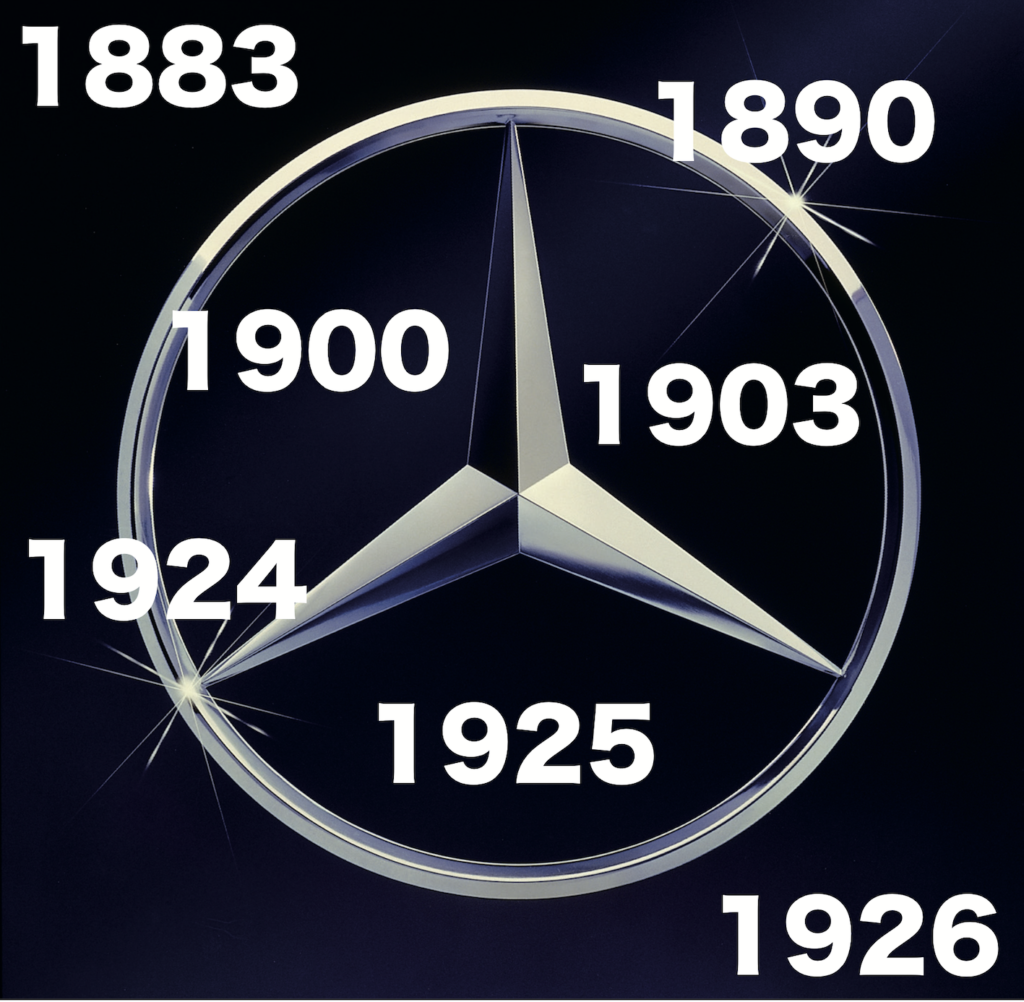
In 2026, you will hear about Mercedes-Benz celebrating its anniversary: 140 years of innovation. This is somewhat misleading, as Mercedes-Benz was officially founded in 1926. However, the brand’s DNA took root well before that date and owes its existence to three men: Carl Benz, Gottlieb Daimler and Wilhelm Maybach. And in 1900, 126 years ago, the name Mercedes was mentioned. Yes, with accents…
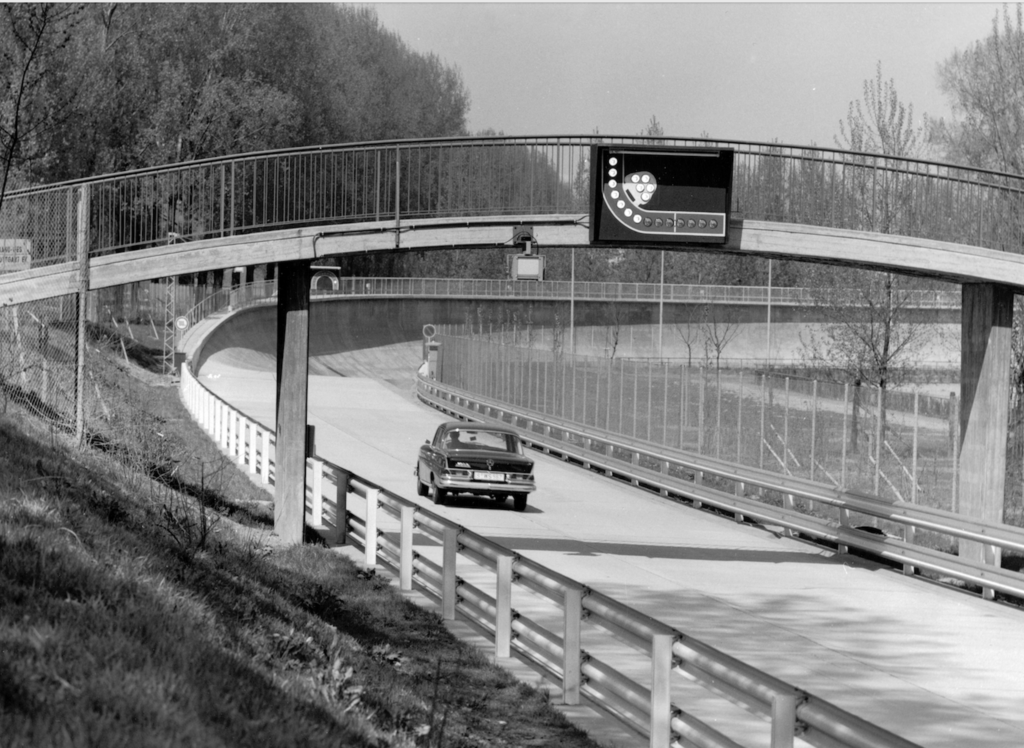
Let’s take a look at this fabulous history in a few dates. Mercedes’ iconic and historic factory is located in Stuttgart: it is the famous Untertürkheim industrial site, where you can visit the fabulous museum, but also see the first test tracks, above. Its origins date back to 1883 – 143 years ago – when Gottlieb Daimler and his partner Wilhelm Maybach were working on several projects, one of which involved the first high-speed petrol engine.
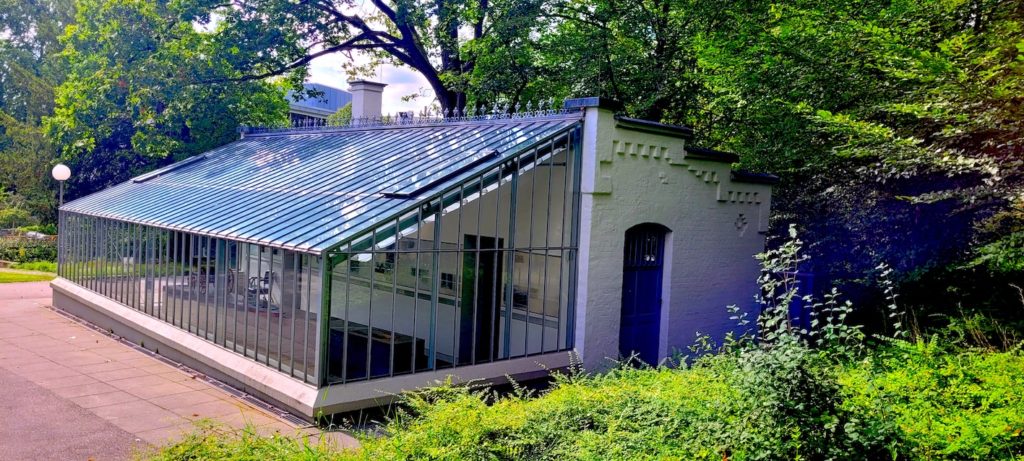
The restored memorial (above) remains in the exact spot where Daimler carried out his work. It was a gardener’s greenhouse that allowed him to work discreetly on major innovations. This greenhouse still exists today and can be visited free of charge, less than two kilometres from the Mercedes Museum in Stuttgart itself. A visit to the workshop is a moving experience. The tools are still there, restored of course. You can even pop over to Maybach’s house, located a few hundred metres from Gottlieb Daimler’s workshop. And thus walk in the footsteps of these two inventors who changed the world of mobility. But they are not alone…
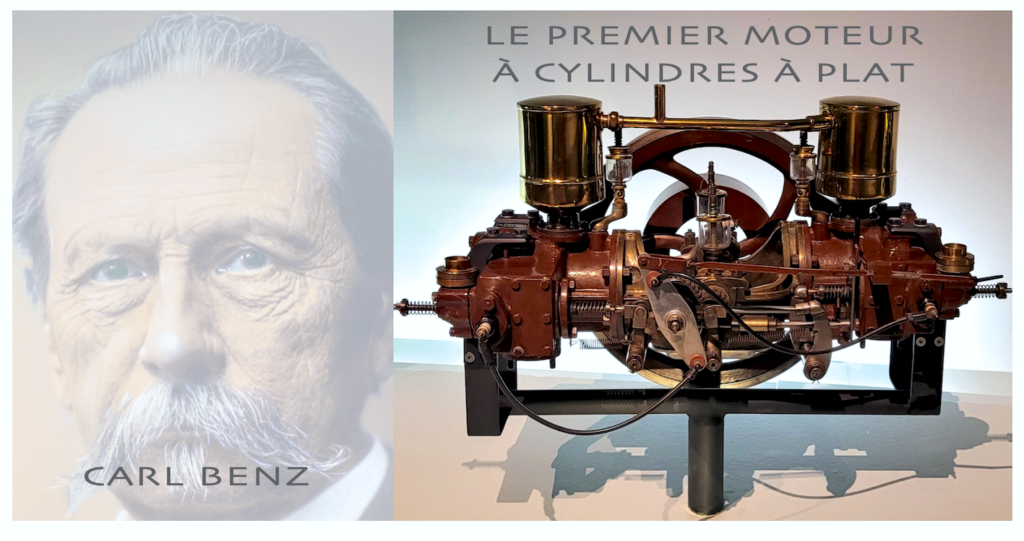
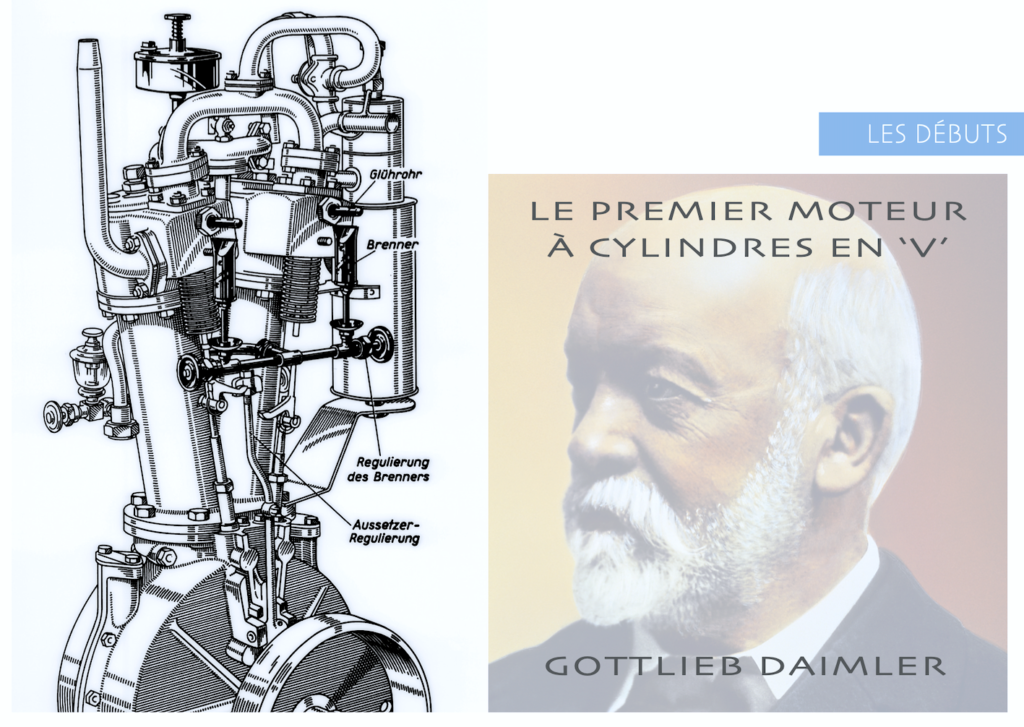
What is incredible is that at the same time, Carl Benz was working on an internal combustion engine similar to Daimler’s, just a few kilometres away in Mannheim. After creating a single-cylinder engine that was identical in almost every detail to that of the Daimler-Maybach duo, Carl Benz invented the flat two-cylinder engine architecture shown above. Daimler, meanwhile, invented the first V-twin engine, shown below. Benz created his own three-wheeled car, while Daimler did the same but with a four-wheeled horse-drawn carriage.
Of course, the industrial building in Stuttgart-Untertürkheim, established by Gottlieb Daimler a stone’s throw from his greenhouse workshop, was not called Mercedes when it was first built. At the time, it was known as Daimler-Motoren-Gesellschaft (DMG), which produced the creations of the Daimler-Maybach duo, before the former joined forces with Carl Benz in 1926. That was exactly 100 years ago. Here we recount the different stages in the creation of Mercedes-Benz and its iconic logo.
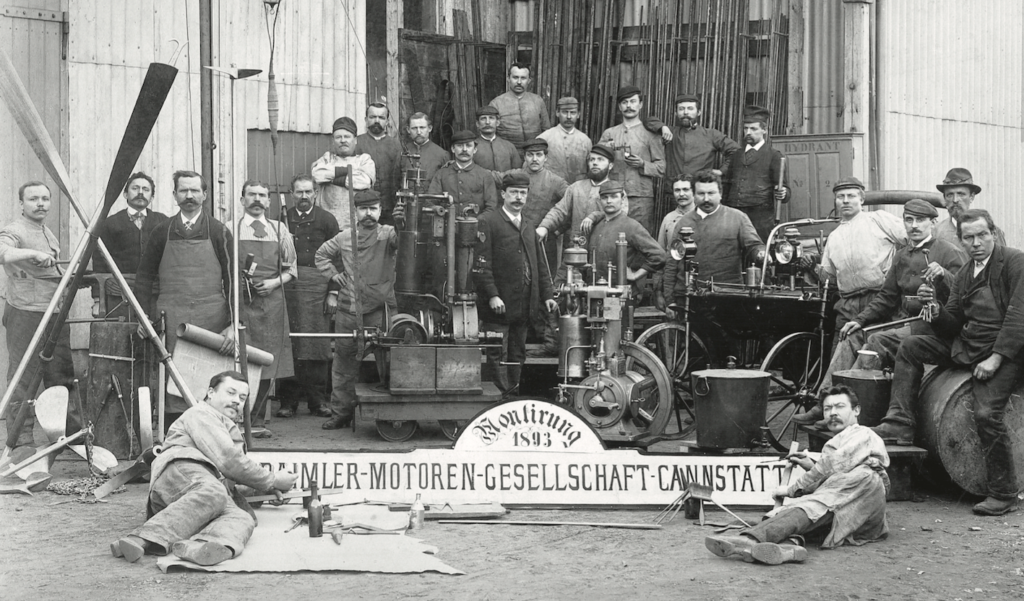
On 14 March 1890, seven years after starting work in a simple gardener’s greenhouse, Gottlieb Daimler signed an agreement with investors Max Wilhelm Heinrich von Duttenhofer and Wilhelm Lorenz to found the Daimler-Motoren-Gesellschaft, ‘whose purpose is to fully exploit G. Daimler’s inventions in the field of petroleum and gas engines in all directions’.
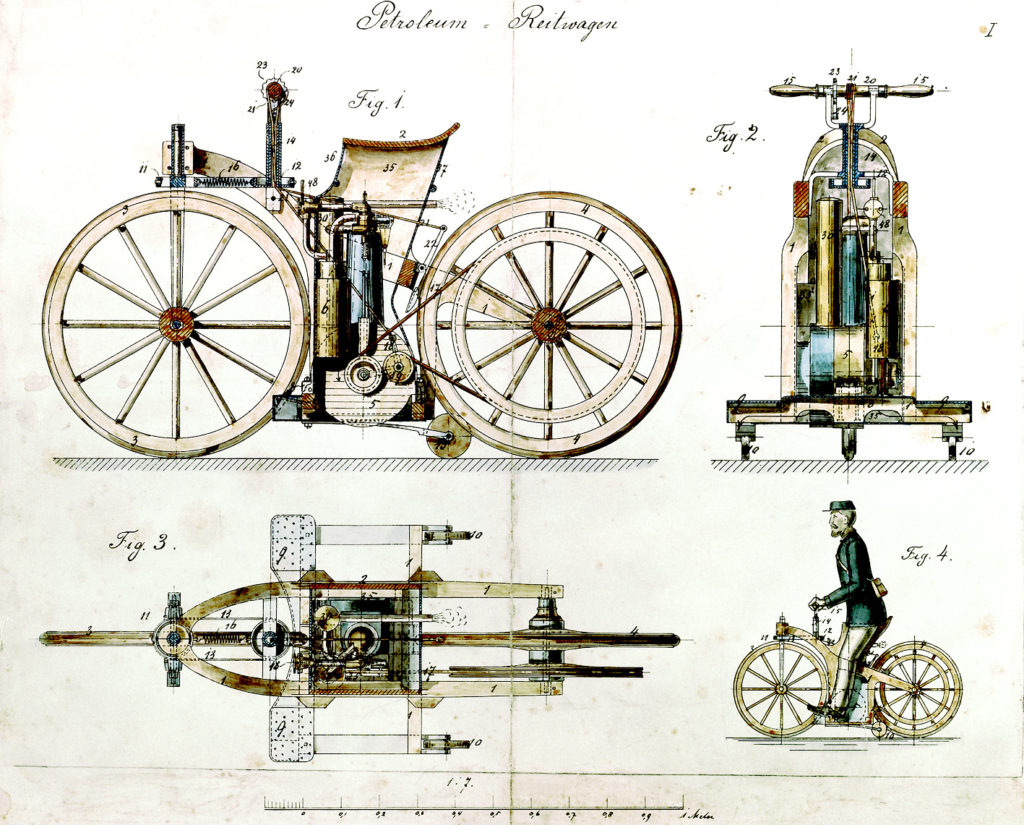
These inventions include engines capable of powering a boat, a type of flying machine, a tramway, and even the ancestor of the motorbike: the ‘riding car’ of 1885 shown below. On 28 November 1890, a notarised deed sealed the creation of this company in Stuttgart. Max Wilhelm Heinrich von Duttenhofer and Wilhelm Lorenz each contributed 200,000 marks to the capital of the new joint-stock company. Gottlieb Daimler contributed his production facilities, patents and stocks.
Ten years later, in April 1900, an industrialist named Emil Jellinek, a major customer of Gottlieb Daimler’s automotive products, signed an agreement with Daimler-Motoren-Gesellschaft for the sale of the company’s cars and engines. He named his commercial organisation after his daughter: Mercédès, which was then spelled with accents. This name was used to designate the vehicles sold by the company. It was even announced on that day that a new engine would be developed by DMG and that it would be named Daimler-Mercédès. The first vehicle equipped with this new engine was a 35 hp car from 1900 intended for competition, as shown below. It was delivered on 22 December 1900 for the 1901 competitions.
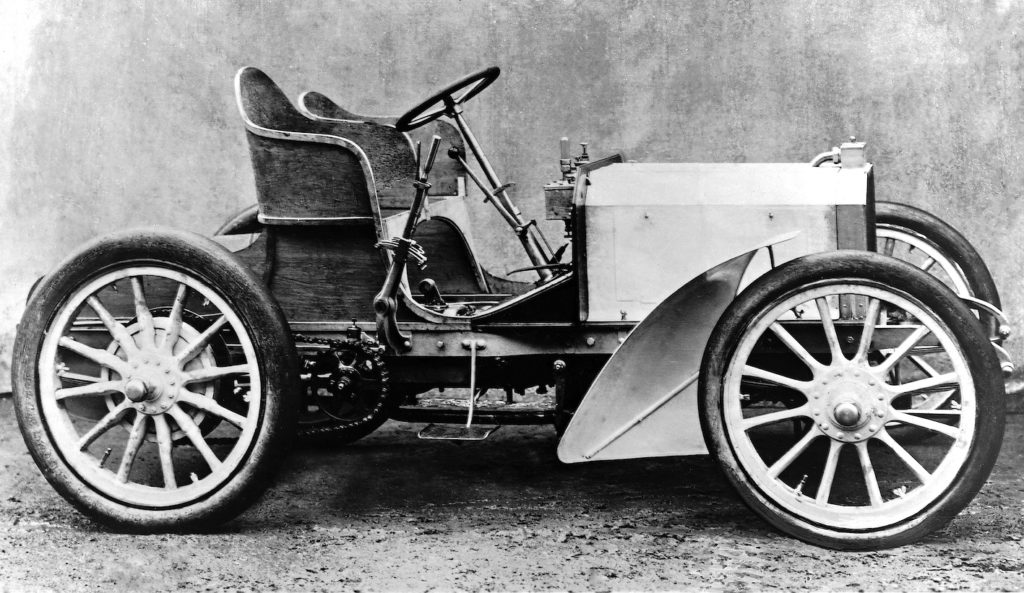
This first true Mercédès, developed by Wilhelm Maybach (then chief engineer at Daimler-Motoren-Gesellschaft), caused a sensation at the beginning of the new century. With its low centre of gravity, pressed steel chassis, light and powerful engine, and honeycomb radiator, it introduced numerous innovations and is now considered the first modern automobile.
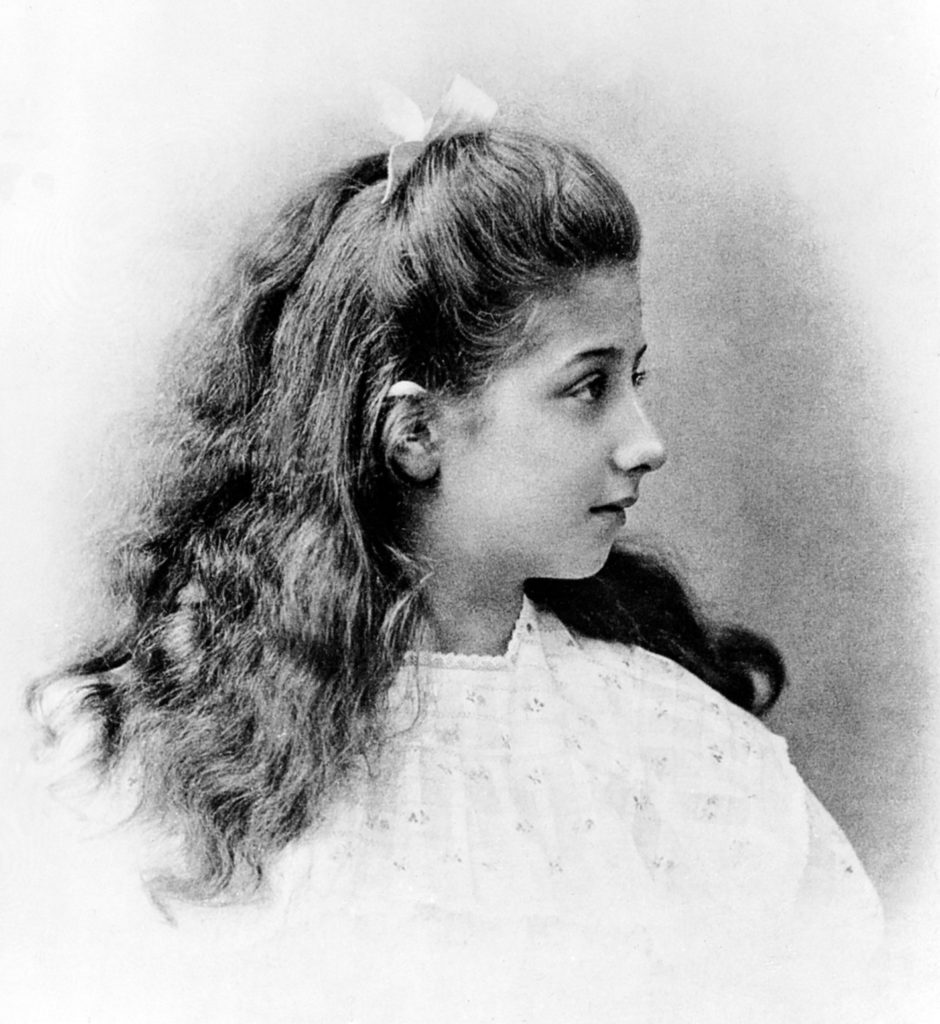
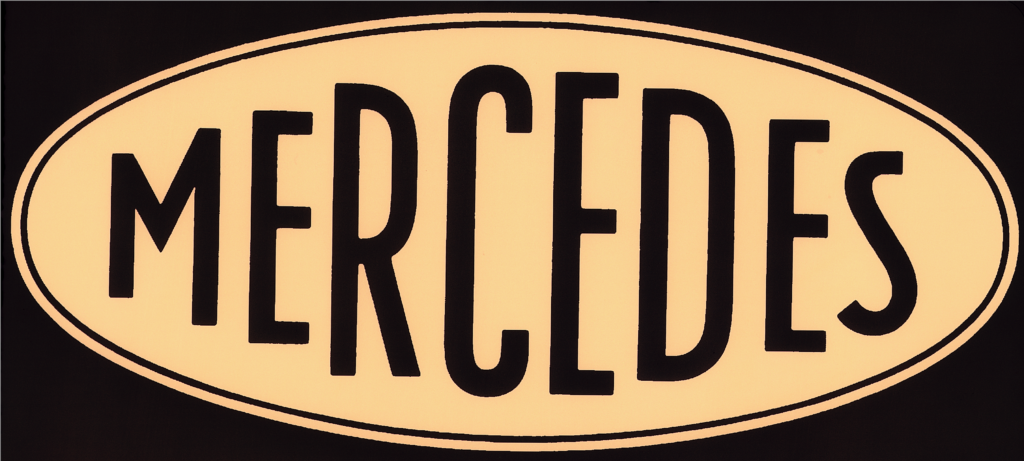
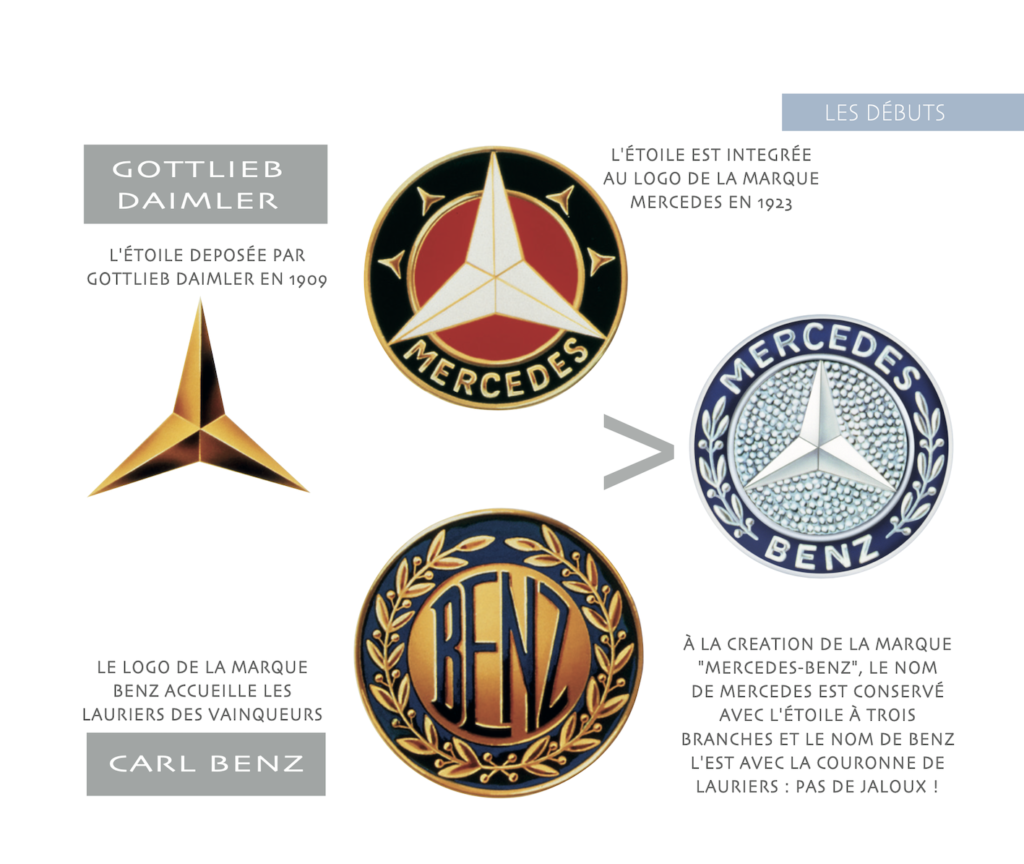
The year 1901 was one of success in virtually every discipline in which Mercédès cars competed. Due to Jellinek’s incessant orders, the production capacity of the Daimler factory in Cannstatt (Stuttgart) was fully utilised. On 23 June 1902, the name ‘Mercedes’, without accents, was announced as a registered trademark and was legally registered on 26 September. In June 1903, Emil Jellinek obtained permission to change his name to Jellinek-Mercedes, still without accents. “This is probably the first time a father has taken his daughter’s name,” commented Emil Jellinek at the time. For his part, Gottlieb Daimler registered the famous three-pointed star in 1909, which would be associated with the name Mercedes… but not until 1923.
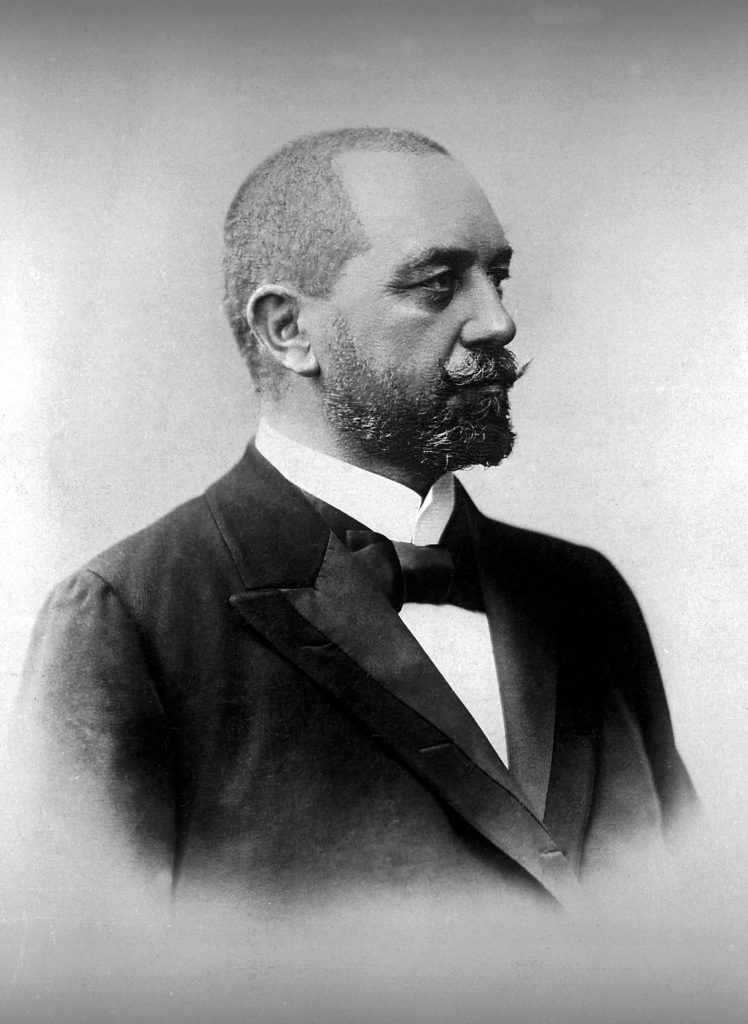
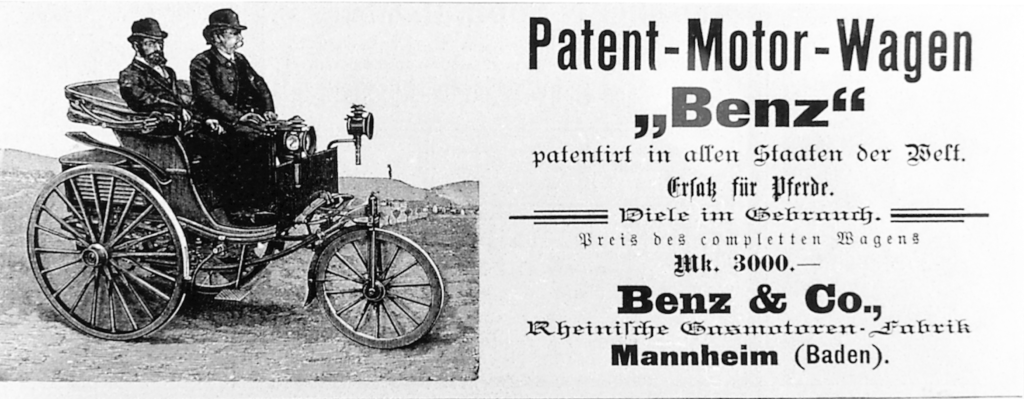
Gottlieb Daimler’s neighbour, Carl Benz, founded his own company in Mannheim. It was called Benz & Cie. On 1 May 1924, Benz and Daimler joined forces and formed a community of interests. The new company, Mercedes-Benz Automobil GmbH, was then created on 30 May 1924, 102 years ago, and took over joint sales activities for the Mercedes and Benz brands.
On 18 February 1925, an application was made to the Patent Office to protect the design of the three-pointed Mercedes star, which had been registered in 1923 by Gottlieb Daimler. The star was surrounded by the laurel wreath from the Benz logo, combining the DMG and Benz & Cie brands. The Mercedes-Benz logo followed on 25 April.
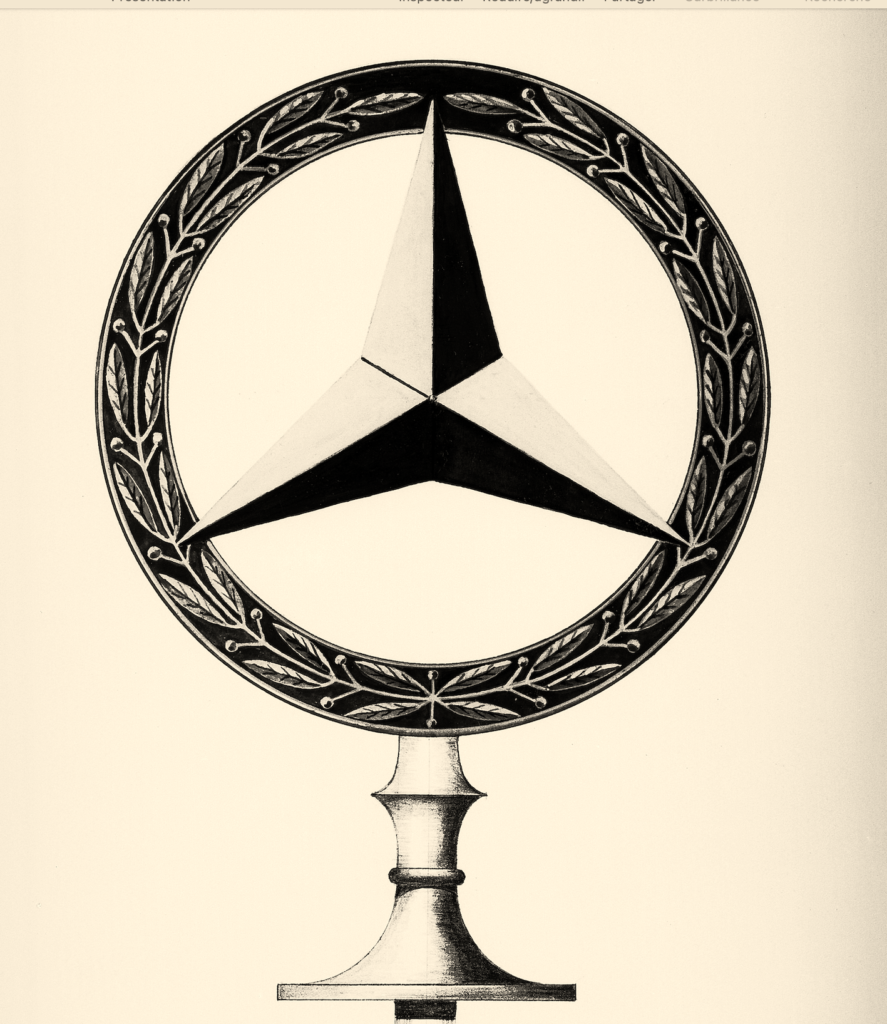
More than a year later, on 29 June 1926, Daimler-Motoren-Gesellschaft and Benz & Cie, which had been cooperating for two years as a community of interests, merged to form Daimler-Benz AG. The company had its headquarters in Berlin and its central administration in Untertürkheim. This was where it all began for Gottlieb Daimler in the mid-1880s.
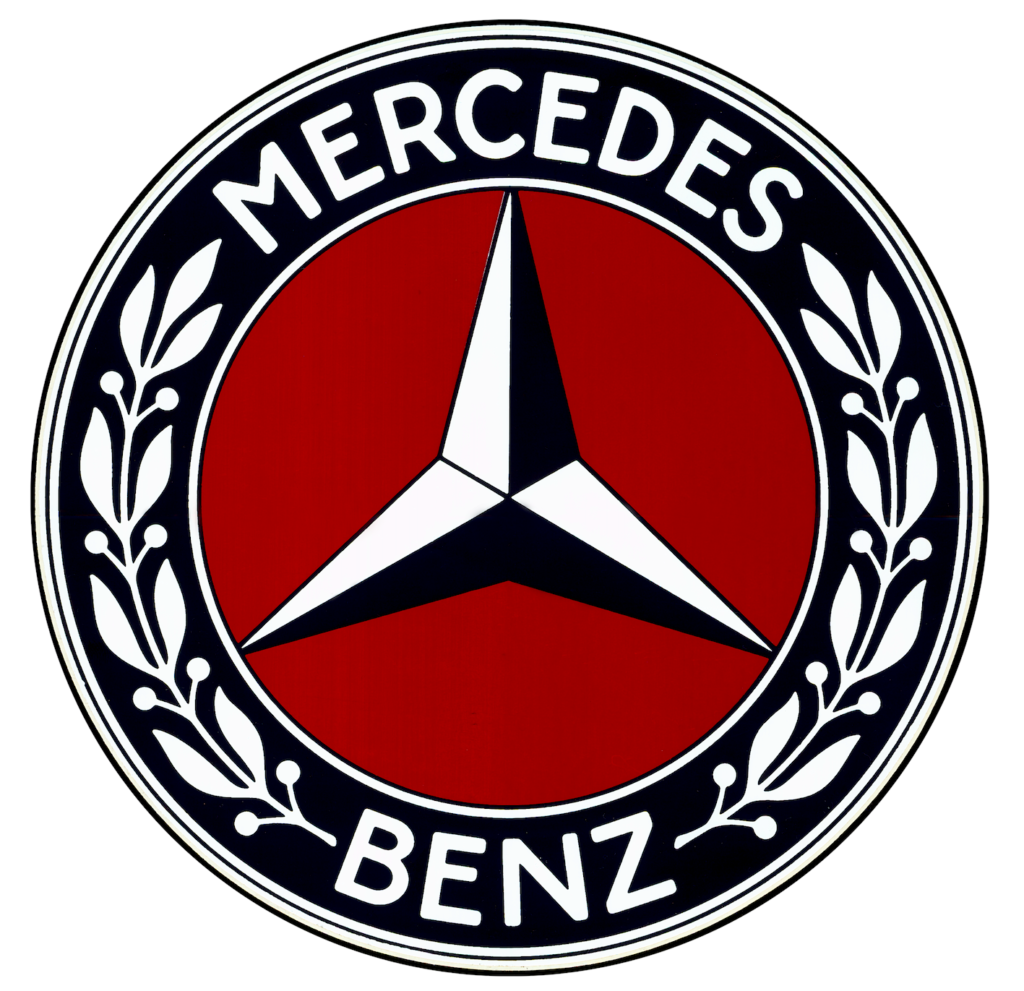
On 21 August of the same year, 1926, Daimler-Benz AG submitted the finalised version of the brand logo, with the names Mercedes and Benz integrated into the laurel wreath and retaining the three-pointed star. In order not to offend either Benz or Daimler, each retained its coat of arms in a single logo. To complete this new association under the name Mercedes-Benz, the first joint Daimler and Benz range was presented at the Berlin Motor Show from 29 October to 7 November 1926. This marked the beginning of a story that, at the time, was already a long one! Mercedes is therefore 100 years old as an officially created car brand, but its roots can be traced back to the work of Carl Benz (and his wife Bertha, who promoted her husband’s products), Gottlieb Daimler and Wilhelm Maybach in the 1880s.
Evolution of the logo combining the distinctive features of the brands of Gottlieb Daimler, his partner Jellinek, his daughter Mercédès Jellinek and Carl Benz.
Les archives Mercedes (textes) et les images de Mercedes Classic ont permis de rédiger et d’illustrer ce sujet. Un grand merci aux services de Mercedes-Benz concernés