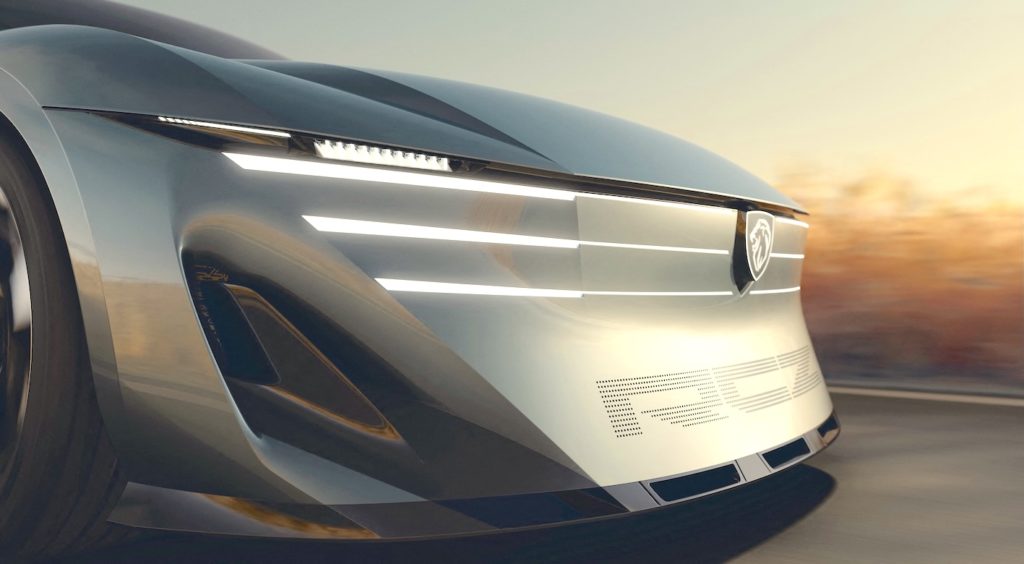
At the Paris Motor Show, Peugeot is riding the same wave as its French rivals: that of positive nostalgia! Citroën is putting the finishing touches to the successor to the legendary 1948 2CV, whilst DS, with its Fever concept, is recalling that it all began for the brand with the 2010 DS3, and Renault is considering reviving the 1984 Espace. Peugeot, for its part, is drawing inspiration from a little gem from its past: the 2009 RCZ coupé. Just seventeen. Seventeen years already!
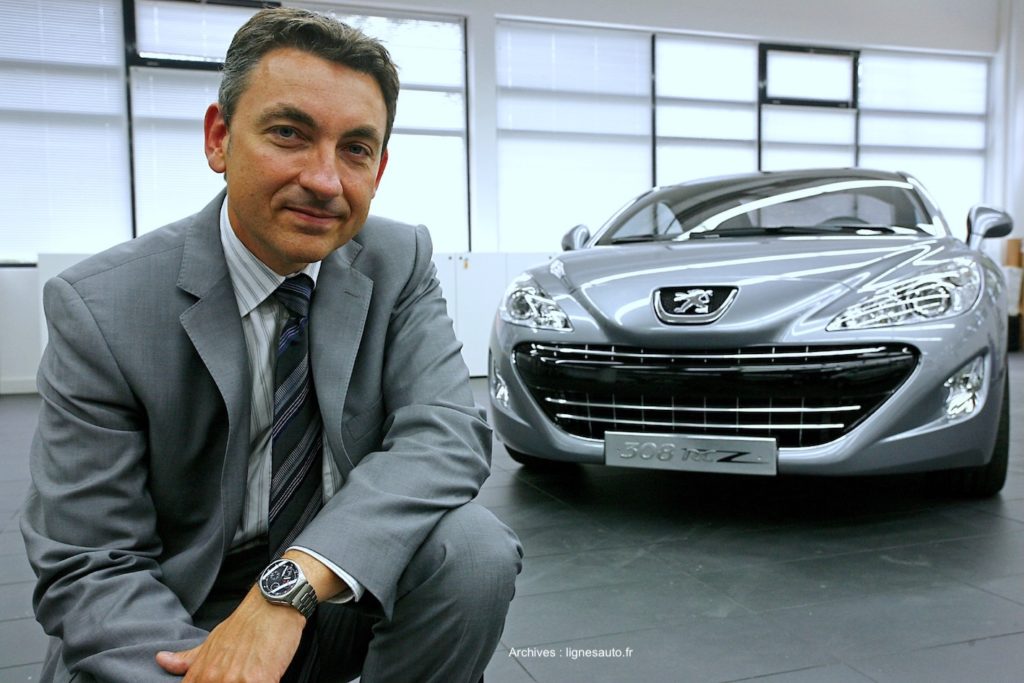
This coupé, which was developed on the basis of the 308, and the first 3008 SUV, were two projects led by Jérôme Gallix, who succeeded Gérard Welter as head of Peugeot design in 2007. We also owe these two models to the foresight of PSA’s then-CEO, Christian Streiff. Not to mention one of the leading product managers at the time, Bruno de Guibert.
For two all-too-short years, Philippe Streiff drove his teams towards this kind of boldness, including at Citroën, where he wanted even more premium features for the fledgling DS range, starting with the DS3. So this October, the French have clearly wiped their rear-view mirrors clean. Peugeot, like its competitors Citroën, DS Automobiles and Renault, has brilliantly executed this concept, which is both forward-looking and deeply rooted in the collective memory.
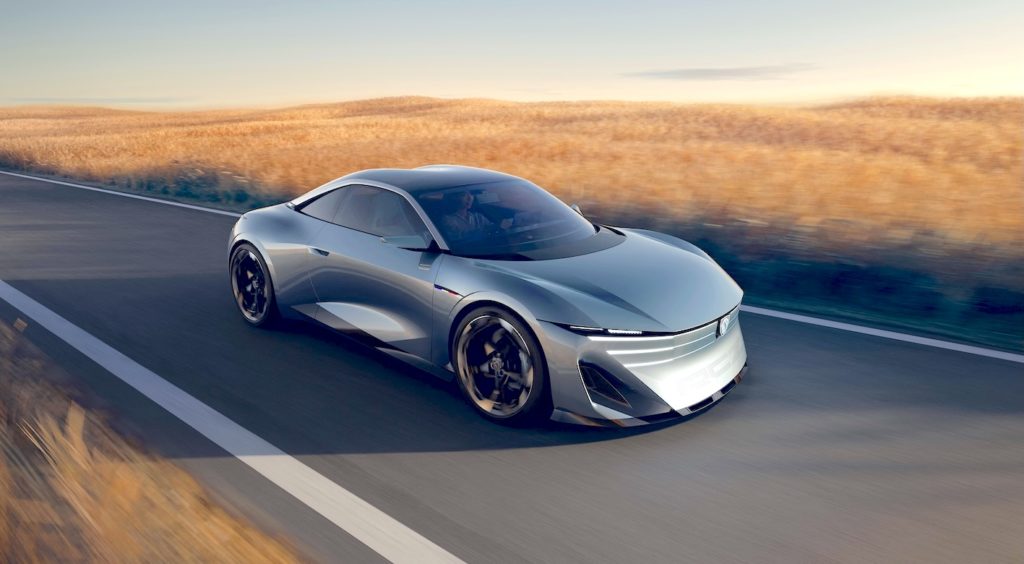
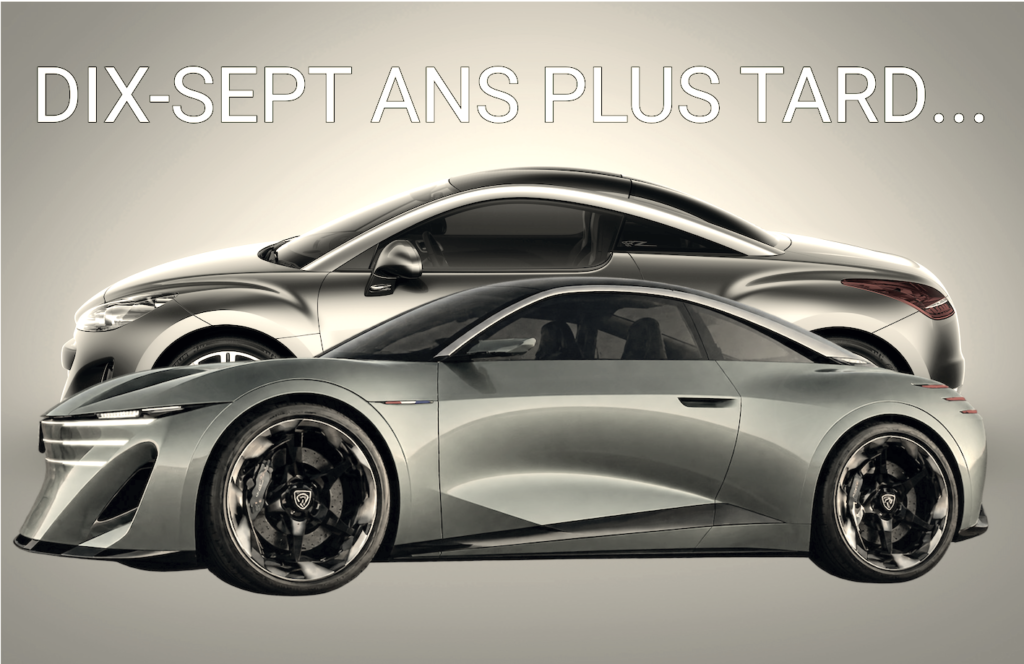
It is immediately clear that this is a tribute to the 2009 RCZ coupé. And yet it does not share its proportions. The most striking feature is, of course, the roof with its two bulges, typical of Zagato’s style. It is more than just a roof, as the bulges extend down onto the rear window below. As for the rest, it is a fine line drawn between our memories and the future that Peugeot has already hinted at with the Polygon for Europe and the two concept cars, the 6 (a shooting brake) and the 8 (an imposing SUV) for China, where the French brand is aiming to make a comeback.
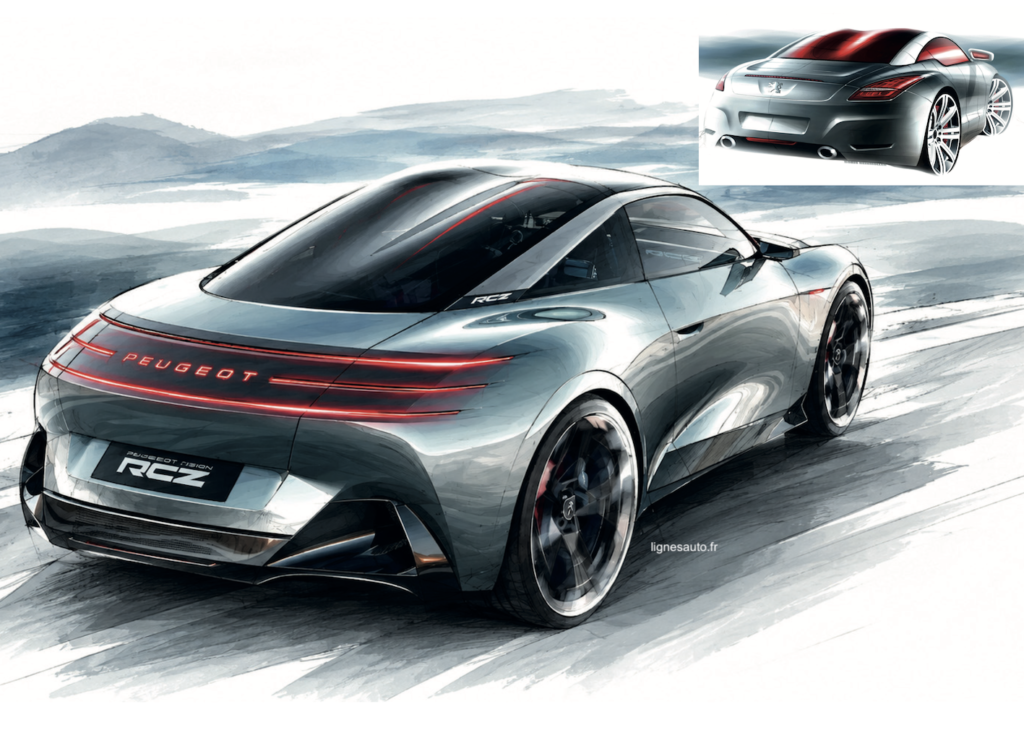
Well done to Matthias Hossann’s teams for this tribute, which hints at a return to the coupé. But is that really the only aim? We’ve picked out this sentence from the manufacturer’s press release, which focuses more on the interior design and perhaps opens up other possibilities: “this concept illustrates what the interior of a future Peugeot flagship model might look like.” ” And if this is a potential future interior, it should logically be housed within a body to complete the package. Will this flagship be this coupé, or a large saloon? Both silhouettes are deeply rooted in the brand’s DNA (see our Bonus section at the end of this post)
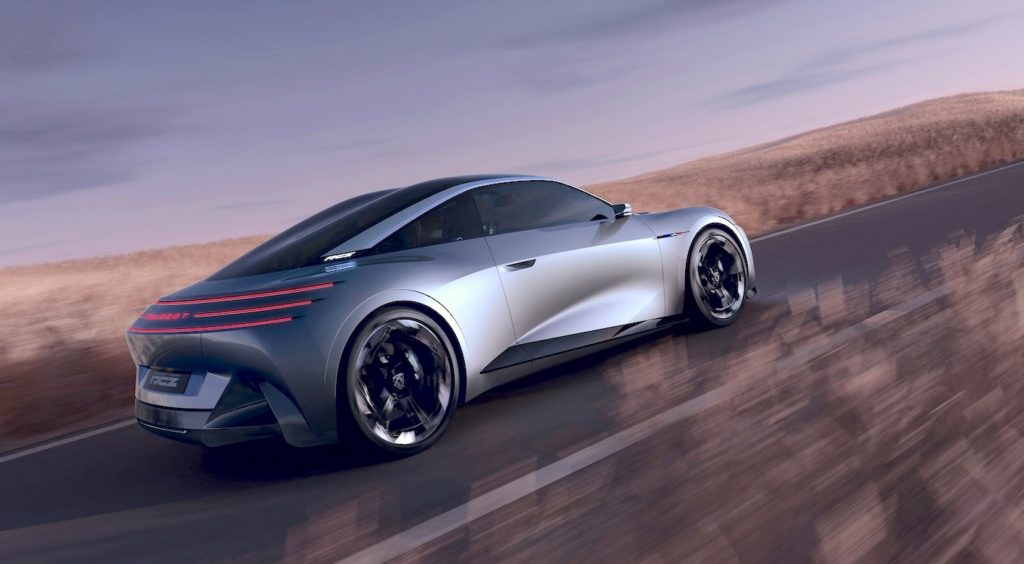
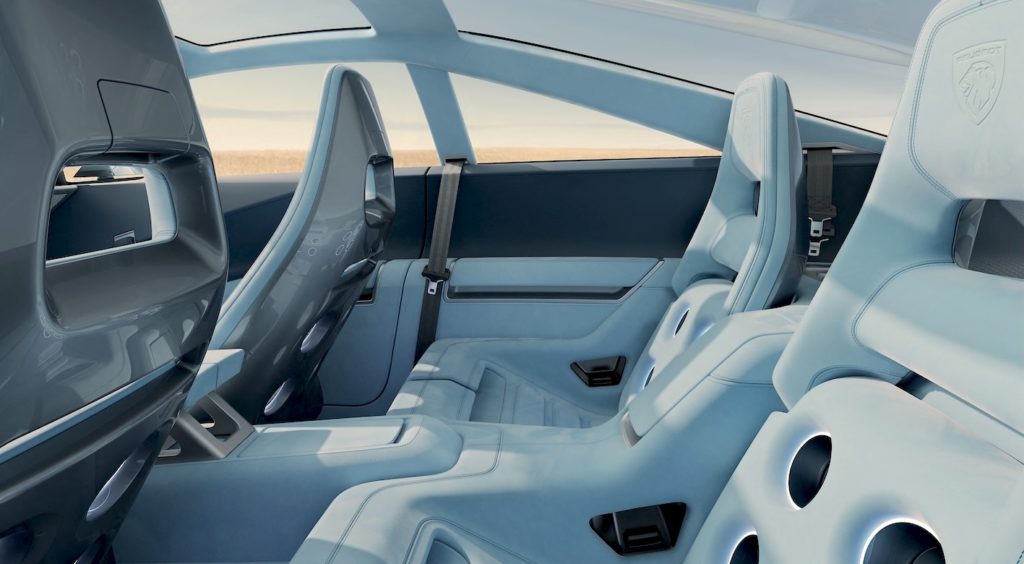
We’re talking about a coupé, but this RCZ Concept is a genuine four-seater, unlike the original RCZ, which was configured more as a 2+2. The concept therefore retains the ‘Bubble Roof’ as well as the original coupé’s wheel arches, which on the RCZ Vision are much slimmer and appear to float; they are no longer made of aluminium but are coated with paint derived from recycled aluminium. This new design language, dubbed ‘Feline Future’, is based, according to Peugeot, on the concepts of “freedom, courage, elegance, strength and instinct.” All of this is apparently contained within the creative team’s computer mouse. Today, we’ll focus on the term “courage.” Because it certainly took courage back in 2009 to dare to launch the original RCZ.
Will boldness become the norm? Peugeot is now part of Stellantis’ vertical brand pyramid, among the four leading brands selected by Antonio Filosa for innovation and investment, alongside Fiat, Jeep and RAM. And when it comes to innovation – setting aside the silhouette and exterior design – the RCZ Vision concept makes a strong statement, offering a preview of the next generation of driving experience. The Hypersquare takes centre stage in a completely redefined cockpit.
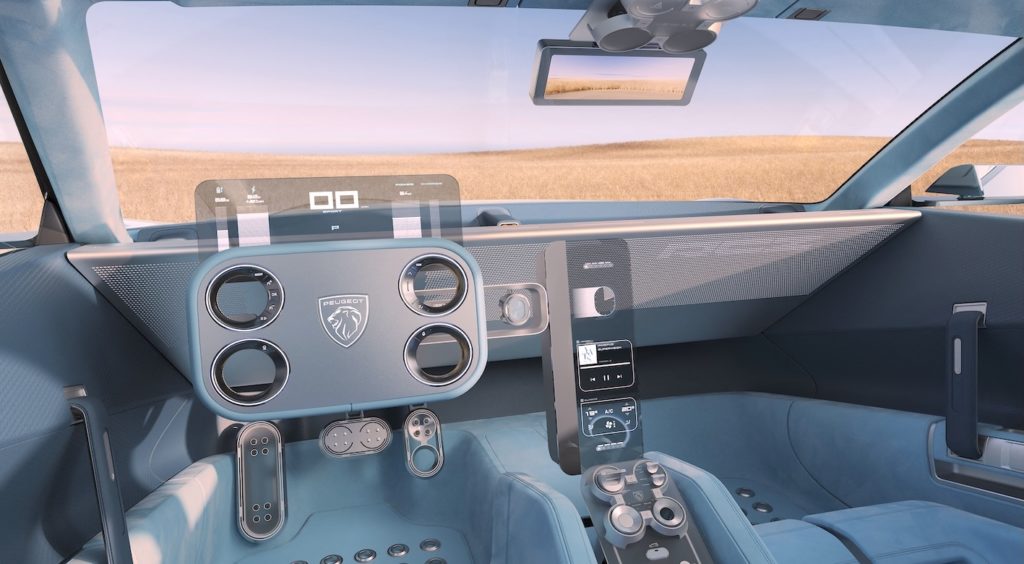
Peugeot even claims that the driving module (i.e. the rectangular ‘steering wheel’) is the one that the future 2027 E-208 will feature. So here’s a glimpse of your future E-208 right before your eyes, below! This module isn’t the only innovation on board, as it forms part of a thoroughly revamped and redesigned cockpit. Transparent micro-LED screens are combined with the Hypersquare, completely transforming the dashboard’s design with a second central screen. This, too, is floating and transparent, just like the one situated directly above the ‘steering wheel’. The central screen allows the driver to configure it or disconnect it from the display feed to restore that rather incredible transparency.
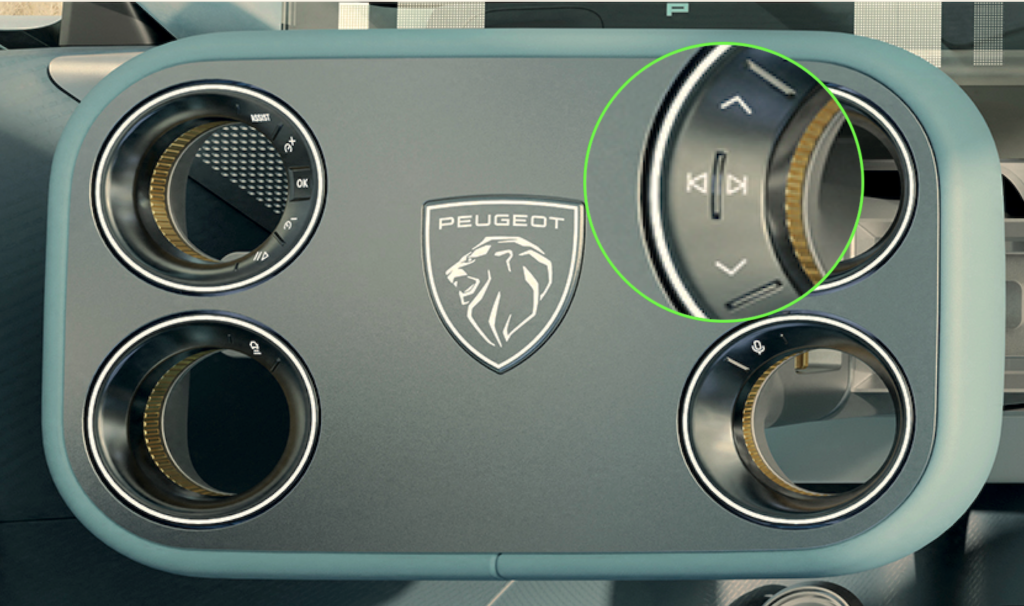
The steering module stems from the integration of ‘by-wire’ steering – with no mechanical link – into the vehicle. This technology is featured on the RCZ Vision concept, alongside a braking system in which the hydraulic link has been replaced by an electronic control system. In terms of the electric powertrain, this concept is based on the new STLA One platform, which is designed to handle (almost) everything, from the B-segment of small saloons – such as the future E-208 – to the D-segment of large saloons and crossovers.
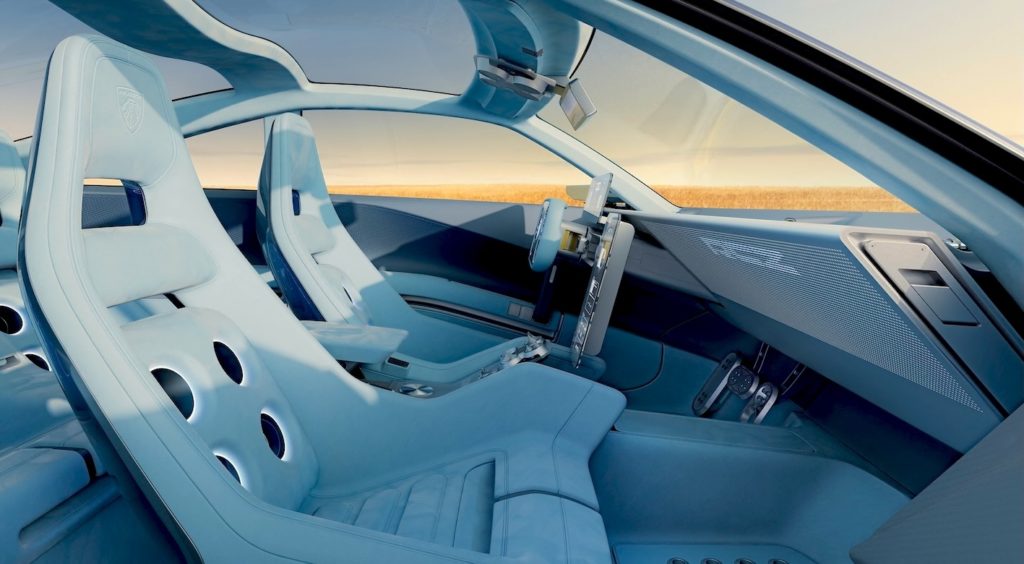
Here, it features a solid-state battery, which significantly reduces the vehicle’s height (to just 11 cm) and therefore allows the four seats shown above to be positioned as close as possible to the road. It is no longer a 400- or 800-volt system, but a full 1,000-volt system, enabling the battery to be charged from 10 per cent to 80 per cent capacity in 10 minutes. The RCZ Vision delivers 500 ch and has a claimed range of 600 km.
But you won’t find any technical explanations on this website. Instead, let’s use this very elegant coupé as an opportunity to discuss design once again. Matthias Hossann explains that the “RCZ Vision gives new expression to our Feline Future design language. ’ A new language that continues to evolve from concept to concept, as can be seen below with the front end of the Chinese Concept-6 and that of the RCZ Vision: the three light strips now run the full width of the front end. The same applies to the rear, where we also note that the logo has been replaced by the brand name…
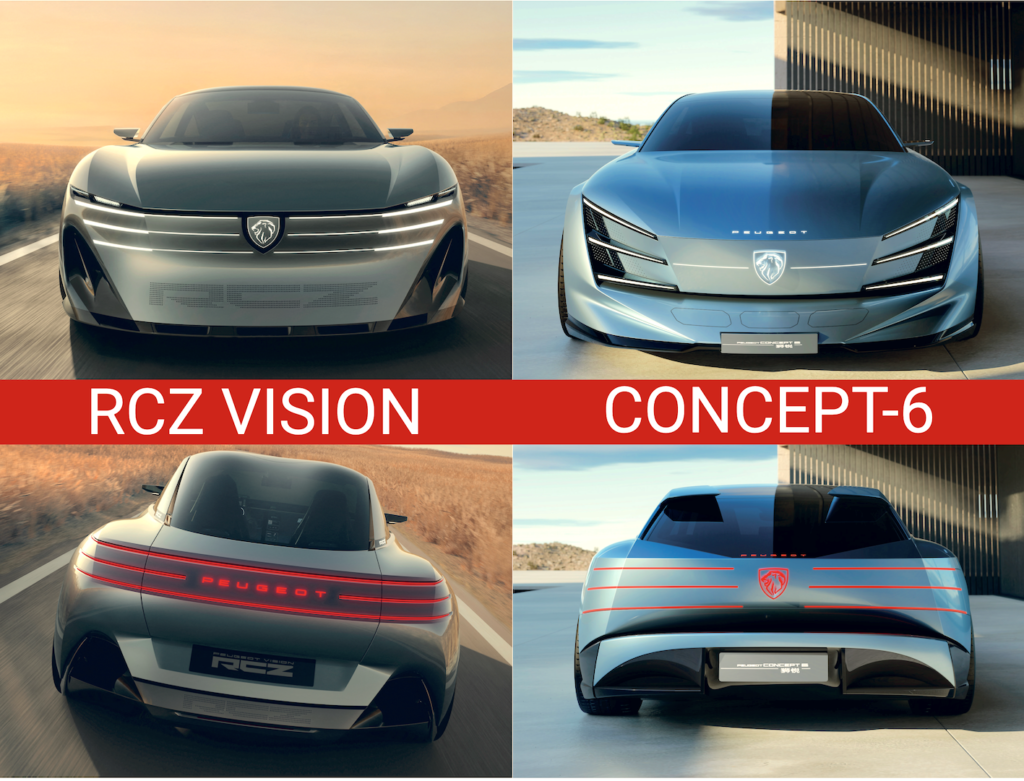
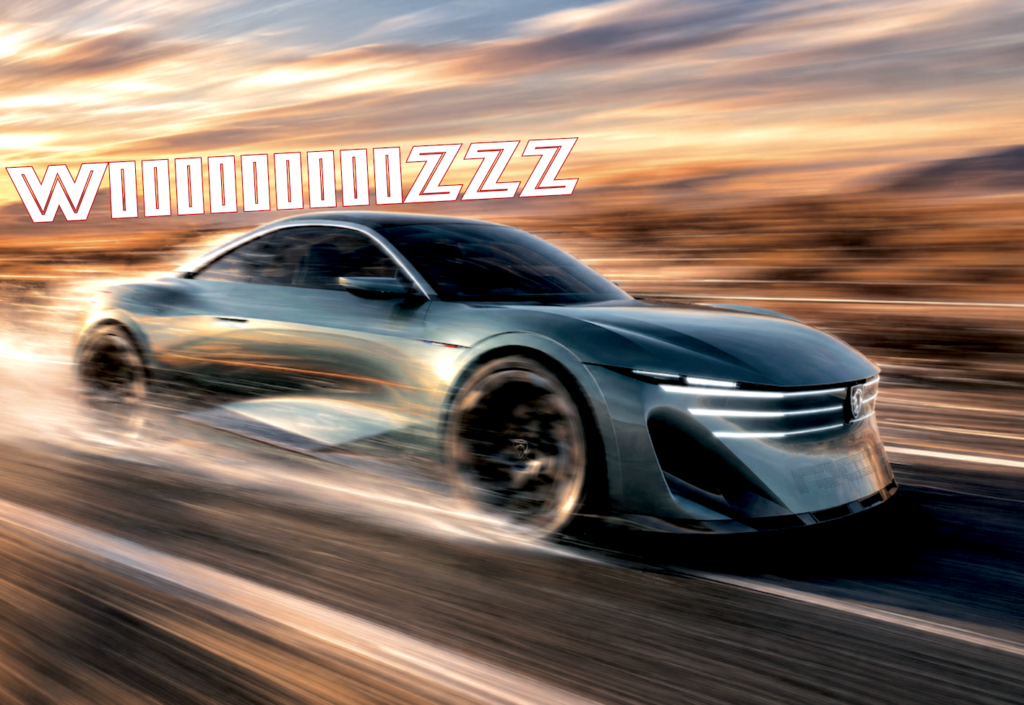
Matthias Hossann goes on to explain that “this formal language stems from the tension between the power of the feline and the precision of the material. It is an instinctive and sensual design that harnesses technology to evoke emotion and driving pleasure.” A driving pleasure that Peugeot’s CEO, Alain Favey, considers to be “ultimate”! Vroooaaaa…. Oh no, sorry, Wiiiiiiizzzzz….
BONUS: THE BODY STYLES ADORED BY PEUGEOT
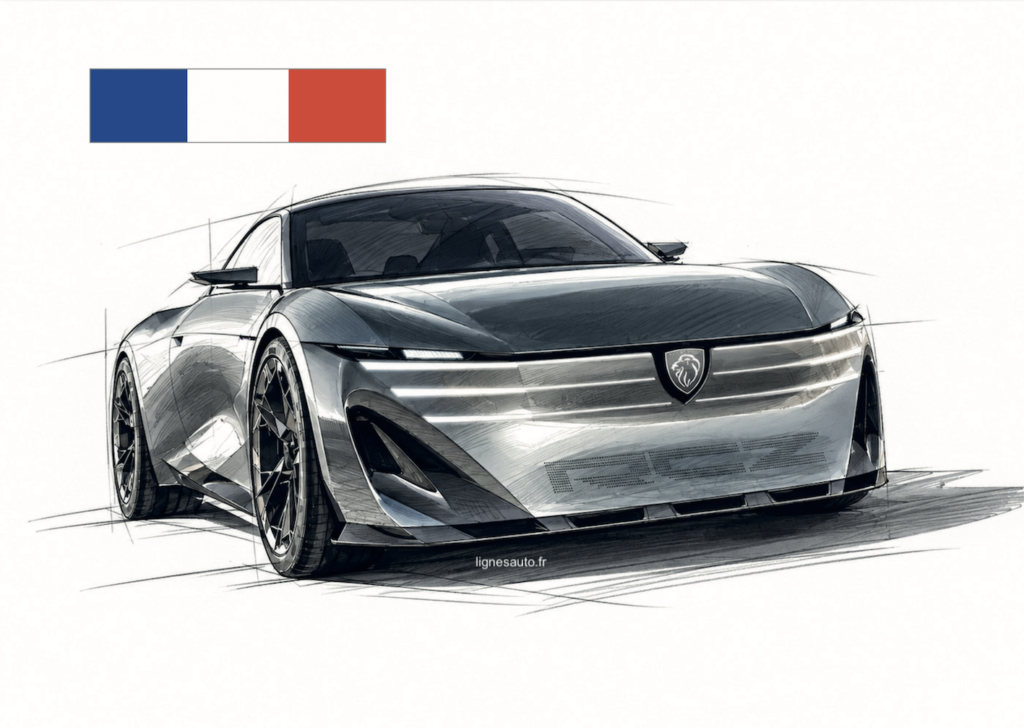
With a shooting brake brought to life by the Concept-6 unveiled in China and a four-seater coupé unveiled this week at the Paris Motor Show (4), Peugeot is returning to body styles it has always mastered to perfection. As for the RCZ (2), we have seen that the duo of Jérôme Gallix and Christian Streiff gave it its ‘raison d’être’ – and brought it to life. This was not the case for a four-door variant (1), work on which began in 2007 and which was heavily influenced by the then-current trend for ‘four-door coupés’.
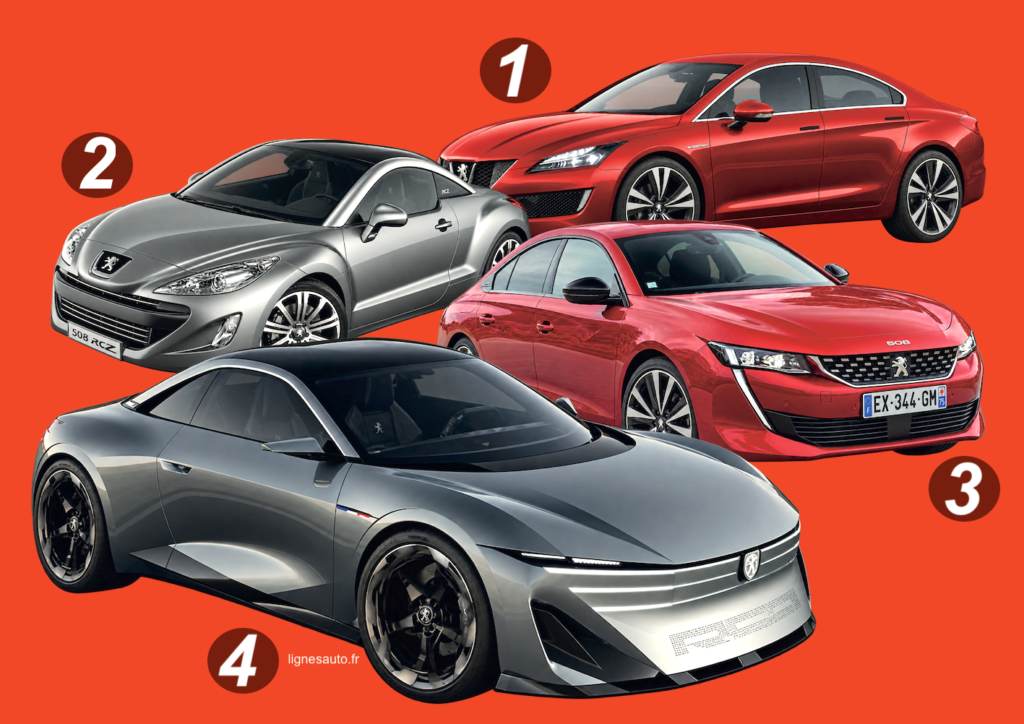
A trend pioneered mainly by the 2004 Mercedes CLS. This silhouette, depicted here in a faithful illustration (1), was not selected. It must be said that at that time, Jean-Pierre Ploué, then head of design at Citroën, was also entrusted with responsibility for Peugeot’s design. He quickly appointed Gilles Vidal to head up the Peugeot design team and, together, they launched a new design language with the SR1 concept car. The ‘CLS’-style silhouette of the RCZ (1) would not be forgotten, however, as it laid the foundations for what would much later become the 2018 508: a low-slung five-door saloon (3).