Do you believe in miracles?
No, not always, because our lives would no doubt be different if they existed.
Yet Citroën does believe in them, and its future will no doubt be transformed in 2028…
Because, yes, a miracle has taken place: Citroën has dared to open the doors to its vast heritage. As far as the eye can see, historic models, some of them iconic. And from this Aladdin’s cave, the 40 thieves – sorry, designers – have unearthed the 2CV. Dusty but spirited, it has shown itself in the best light and inspired the entire brand to bring it back to life…
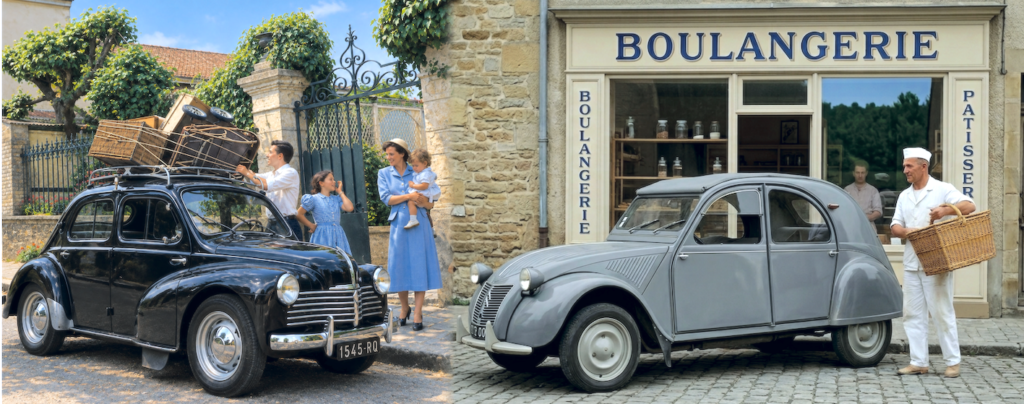
Let’s rewind a bit… There are two of them. Two iconic cars, pictured above, which got France back on the road after the Second World War. First of all, the Renault 4CV, which made its debut at the very first post-war motor show in 1946. Then the Citroën 2CV, two years later. What incredible stories these two models have – technically and conceptually worlds apart, yet both played a vital role in bringing motorisation to the countryside, which had not yet been motorised.
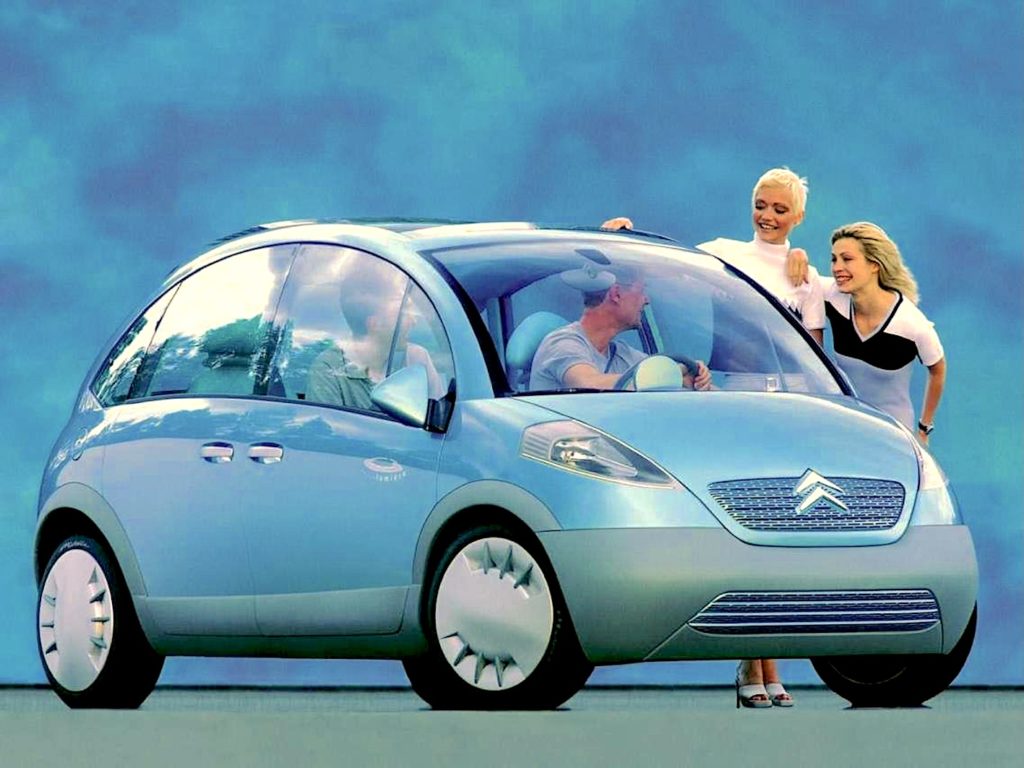
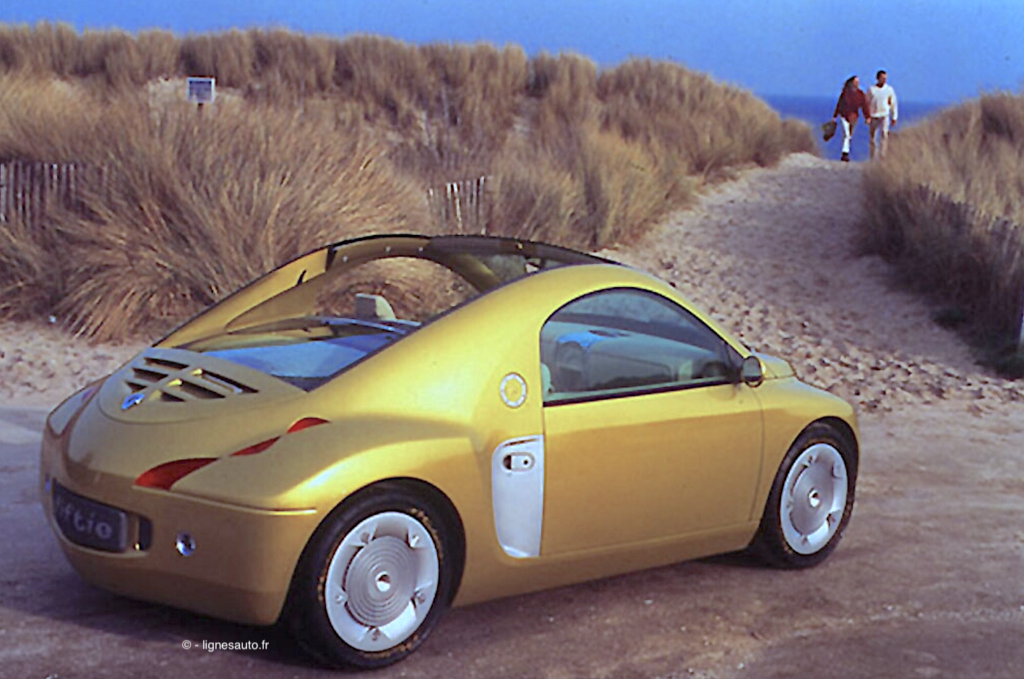
Since then, neither manufacturer has so much as touched upon the idea of drawing on these models to create a credible revival. Not even when J. Mays designed Volkswagen’s New Beetle in 1998. Nor when MINI reinvented its own legend. Of course, there was the Renault Fiftie pictured below, unveiled as a concept car in 1996 to mark the 50th anniversary of the 4CV. But its Renault Spider platform ruled out any possibility of mass production. There was also the 2002 Citroën C3, a sort of bubble saloon with a faint resemblance to the Deuche, heralded by the C3 Lumière concept car pictured above. But there was nothing that clearly demonstrated a desire to draw on these two iconic models with legitimacy and pride.
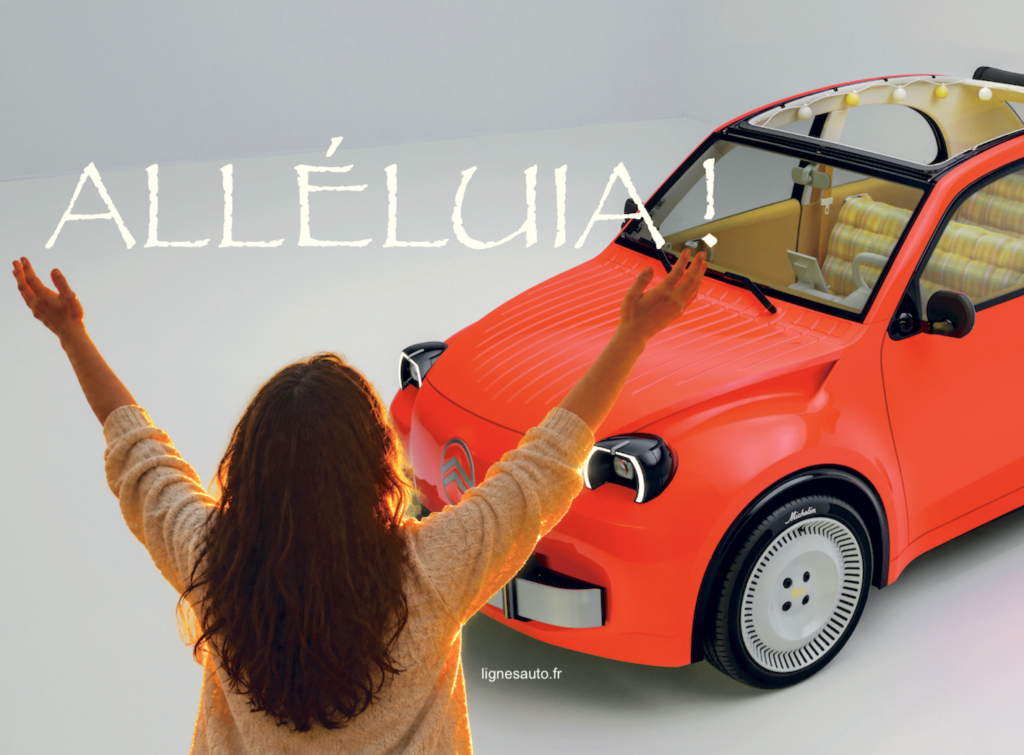
At Renault, it wasn’t until 2020 and the arrival of Luca de Meo that he gave the green light to a ready-made model at the design centre: the electric Renault 5. At Citroën, it took the efforts of the new boss – Xavier Chardon – but also, and above all, the determination of John Elkann*, chairman of the Stellantis board of directors, for the design team to finally decide to dust off its rear-view mirrors and discover that the past is not dusty, but radiant. And thus the 2CV Concept pictured below was born, whilst we await the production version in 2028…
*John Elkann, chairman of the board of directors of the global Stellantis group, is the grandson of Giovanni Agnelli II – or Gianni Agnelli. The latter attempted to take over Citroën outright through the agreements signed in 1968 between Fiat and the French carmaker, before abandoning the plan in the face of resistance from the French government of the time. It’s quite a twist of fate, and one that takes on a whole new dimension with the return of the 2CV!
2CV PRESENTATION VIDEO
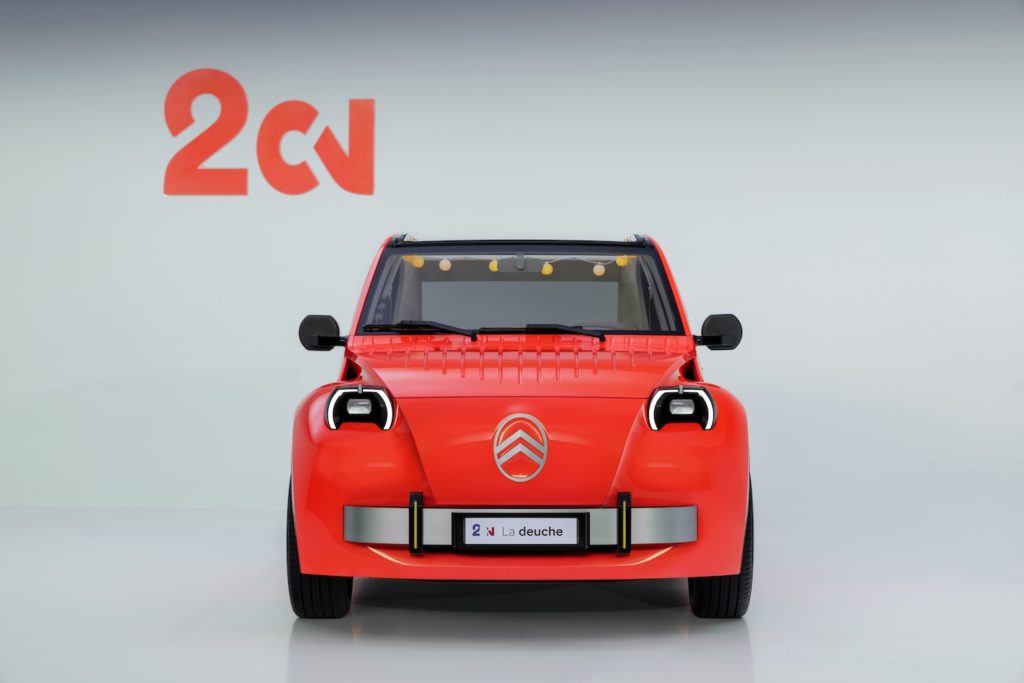
So, in two years’ time, if all goes well, you’ll be able to buy a ‘Deuche’ again. And it won’t be too expensive, as it’s expected to be priced at around €15,000. But of course, it’ll be a 100 per cent electric 2CV, no doubt fitted with a small battery, designed for urban range, and featuring basic but not spartan equipment. Because from the 2026 2CV concept to the 2028 production model, every penny will have to be carefully counted, just as the people of Auvergne at Michelin did when they created the 2CVs of 1939 and 1948.
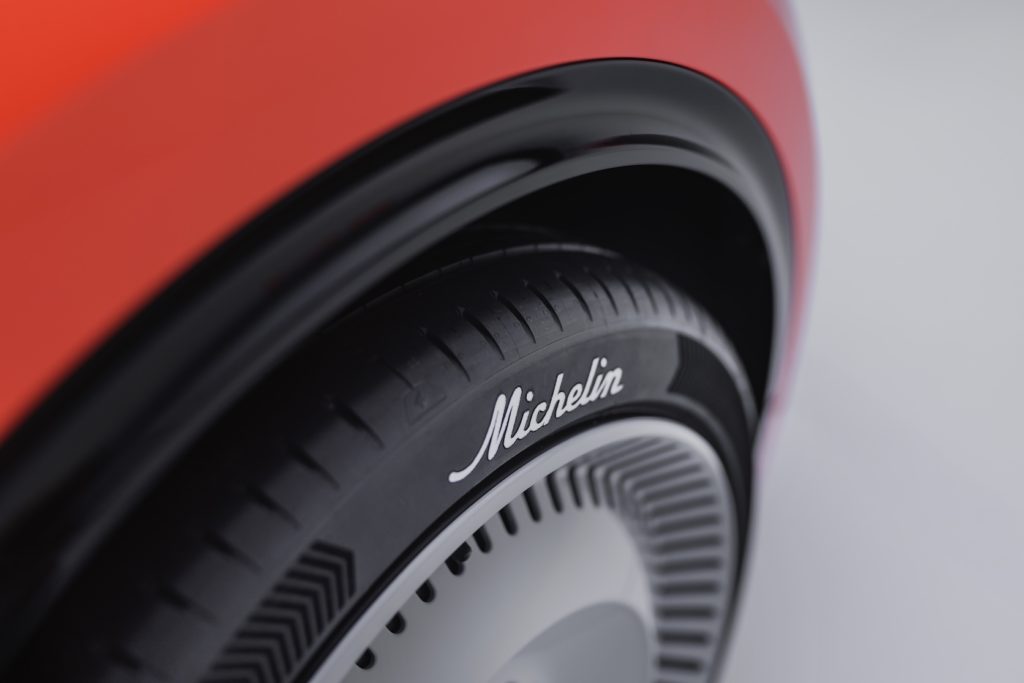
A quick aside, since we’re on the subject of Michelin: the Citroën concept car is fitted with tyres from the Clermont-Ferrand-based brand. After a whole host of concept cars that relied effectively on GoodYear tyres, the Clermont-based brand is finally making a comeback on a Citroën. This is a symbol as powerful as the 2CV legend itself, given Citroën’s history: the company was bought by Michelin in 1934, a year before the death of its founder, André Citroën…
So why did it take so long to create this 2CV revival? Antoine Gaillot-Devron, head of forward planning and concept cars, explains that “we’d been exploring the 2CV theme for a long time using different body styles, but we weren’t yet convinced.” Xavier Chardon’s arrival at the helm of Citroën changed everything. “When he arrived, we shifted the focus of our research to draw inspiration from the 1939 TPV. What interested us about it was the radical approach its designers had taken in the design study. In every instance, they designed the parts to be simpler, lighter and more affordable. This is a Citroën philosophy that we maintained throughout the development of the 2CV Concept.”
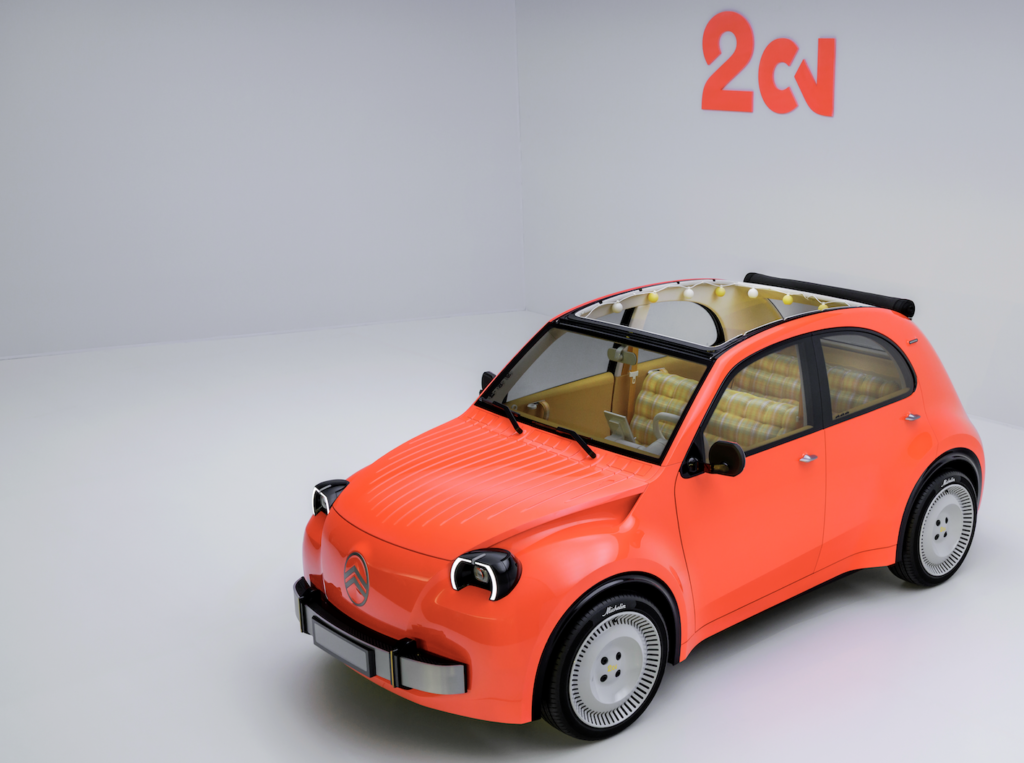
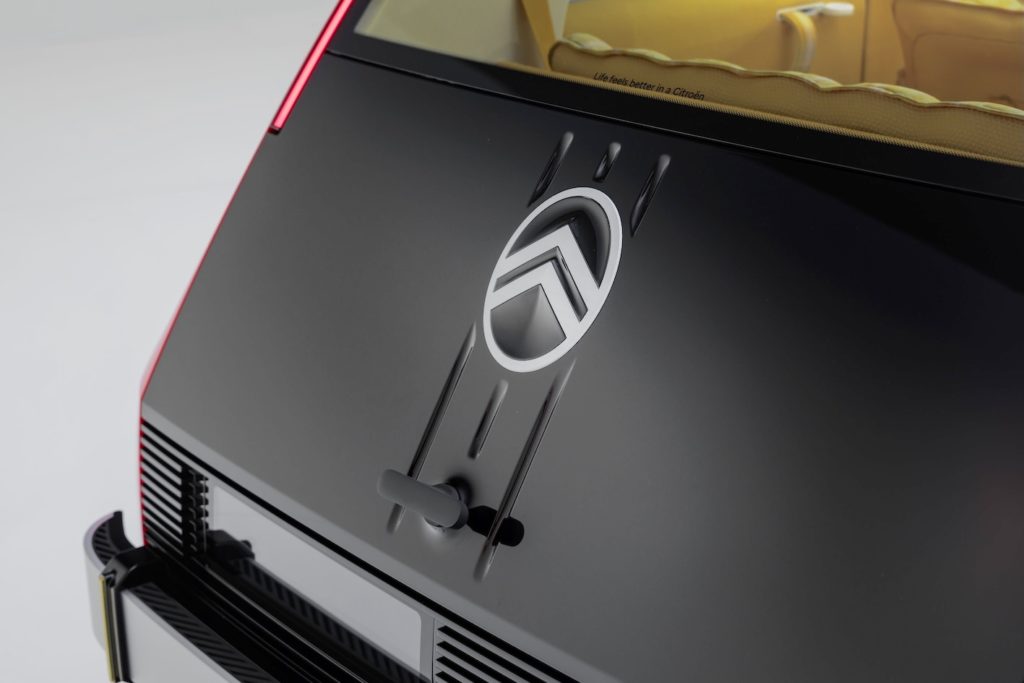
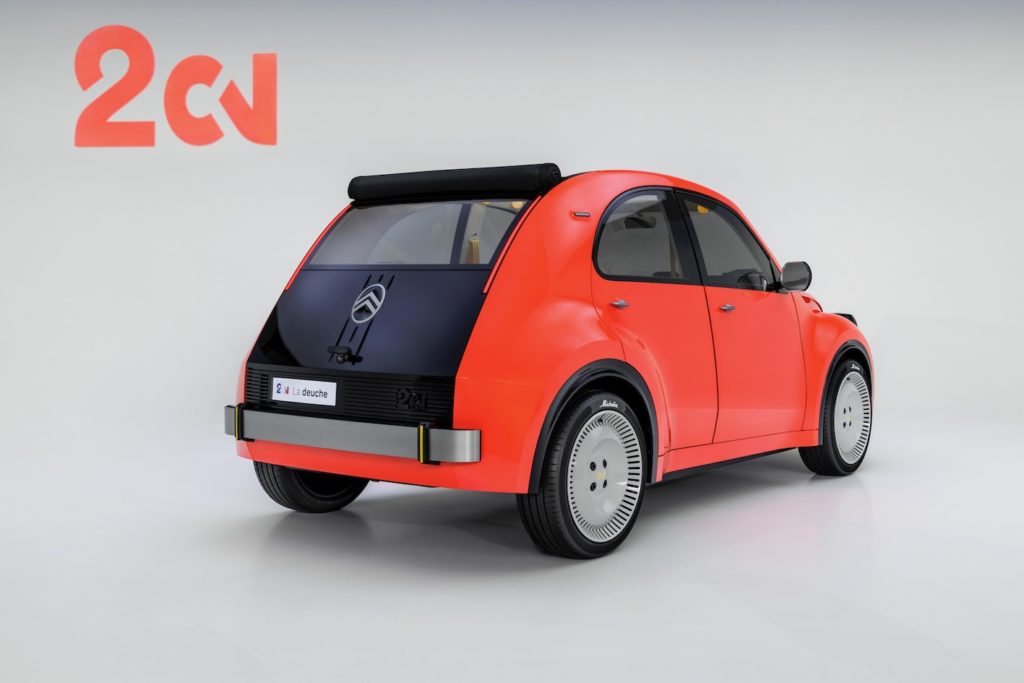
The ribbed bonnet and headlights are reminiscent of the original 2CV. The rounded profile is there, the windscreen is as flat as Tutankhamun’s EEG (and therefore far cheaper to produce), the canvas soft top is very much present, and the rear tailgate is black to mimic said soft top, which, on the TPV models and early 2CVs, was not mimicked. The Infra Red shade – a blend of orange with yellow highlights – could almost have matched the orange ‘Spot’ decals of the 1976 special edition. But in white instead!
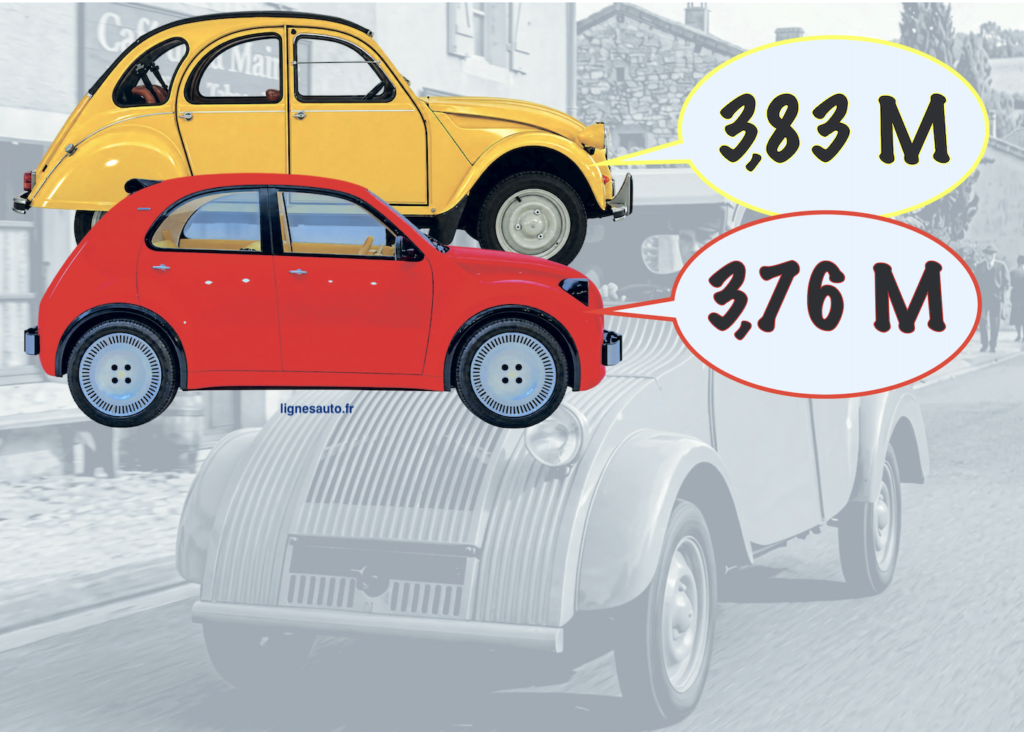
At 3.76 m, the Citroën concept is slightly more compact than the 2CV, which, in its final versions, measured 3.83 m. Whilst the manufacturer states that “the starting point was not to recreate a 2CV, but to envisage the small electric car of the future – practical and desirable – that would rekindle the magic of mobility for short, everyday journeys”, everything about this concept car is reminiscent of the French icon.
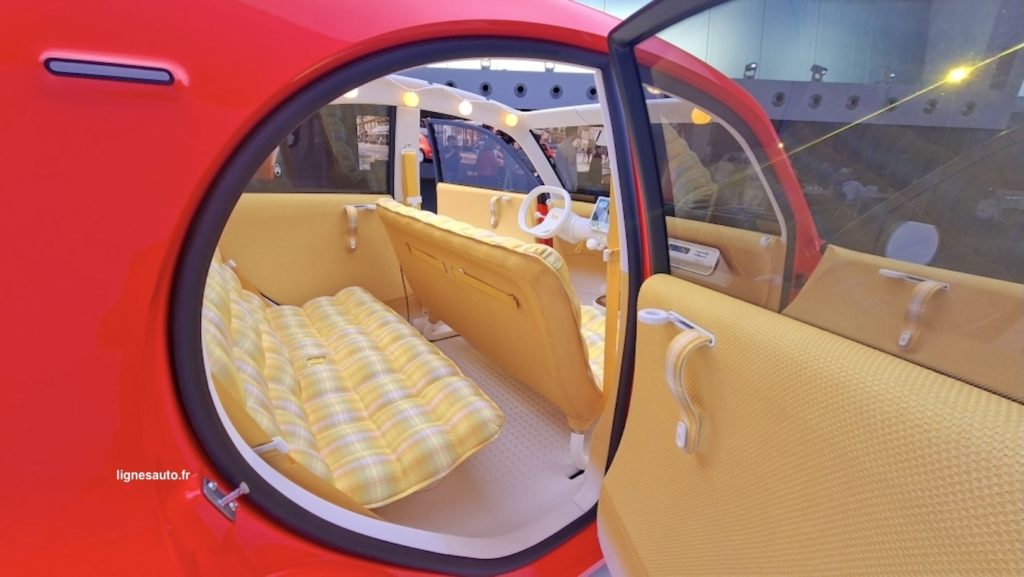
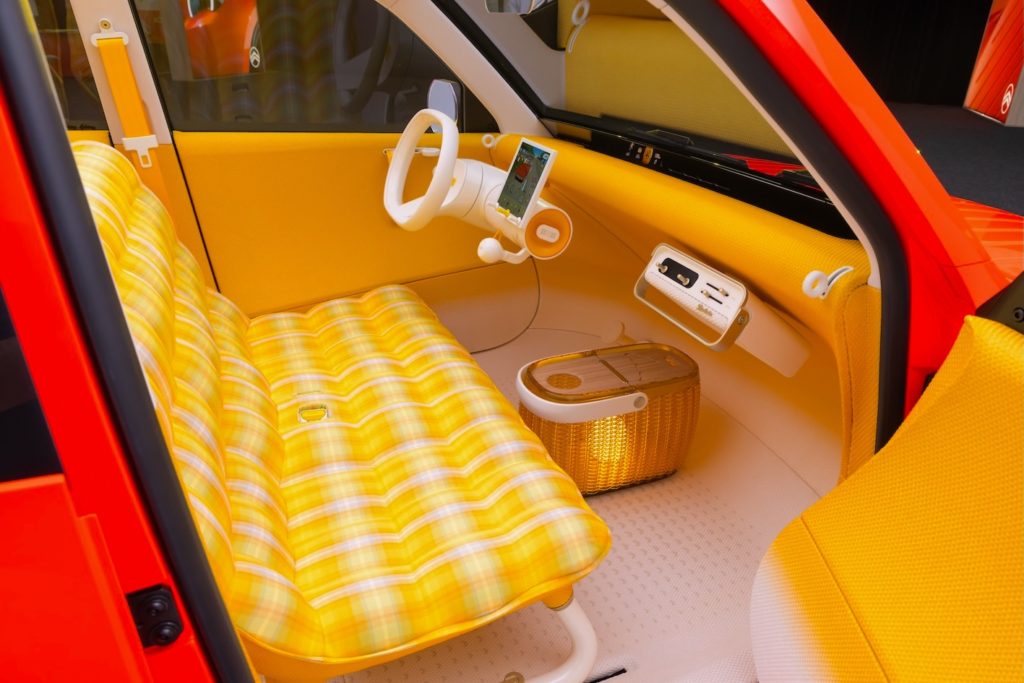
It is worth noting, however, that the interior of this concept car is a thousand times more cheerful than the spartan, even austere, interiors of the early ‘Deuches’. The concept sparkles, whereas the 1948 2CV offered just the bare minimum in a frankly dull atmosphere. “The world has changed, but the idea remains the same,” says the manufacturer. Opening the concept car’s doors reveals seats upholstered in a tartan-style pattern in bright yellow tones – a pattern emblematic of certain generations, and reinterpreted here.
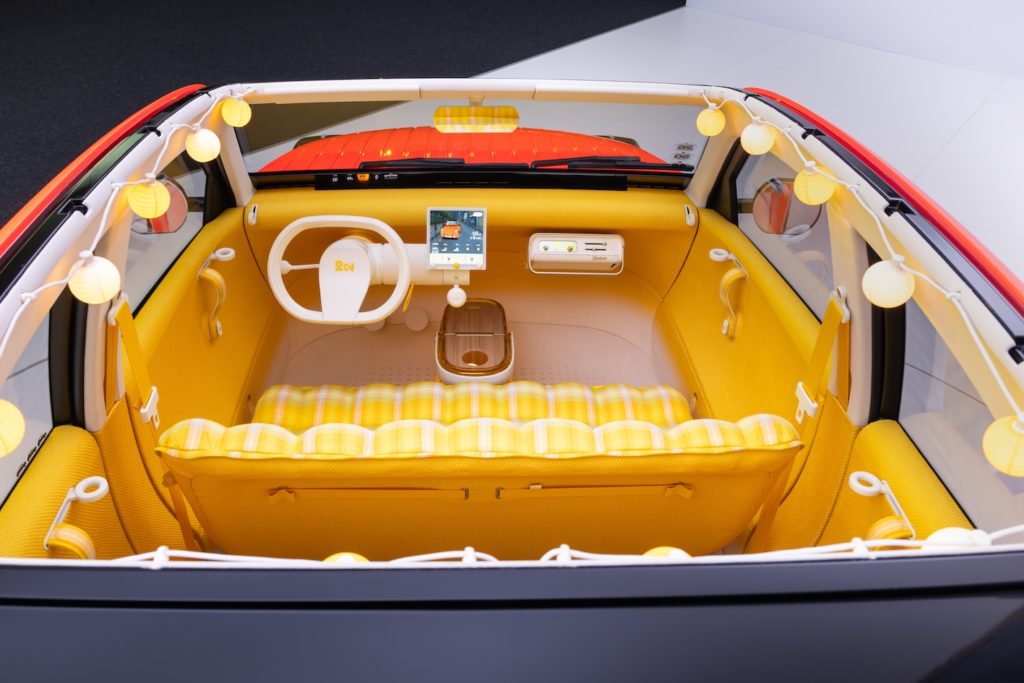
Because the 2026 2CV has two bench seats, one of which – at the front – can be pulled out for picnics on the grass. We’ll be able to dig out that old Nougaro song, ‘the two of us were having lunch on the grass, and I’d had a bit of a smoke…’, whilst gazing with bloodshot eyes at the beige accents on the controls, the instrument panel and the seat piping, and even the steering wheel. These buttons are reminiscent of Bakelite, that old-fashioned material from the 1950s and 1960s.
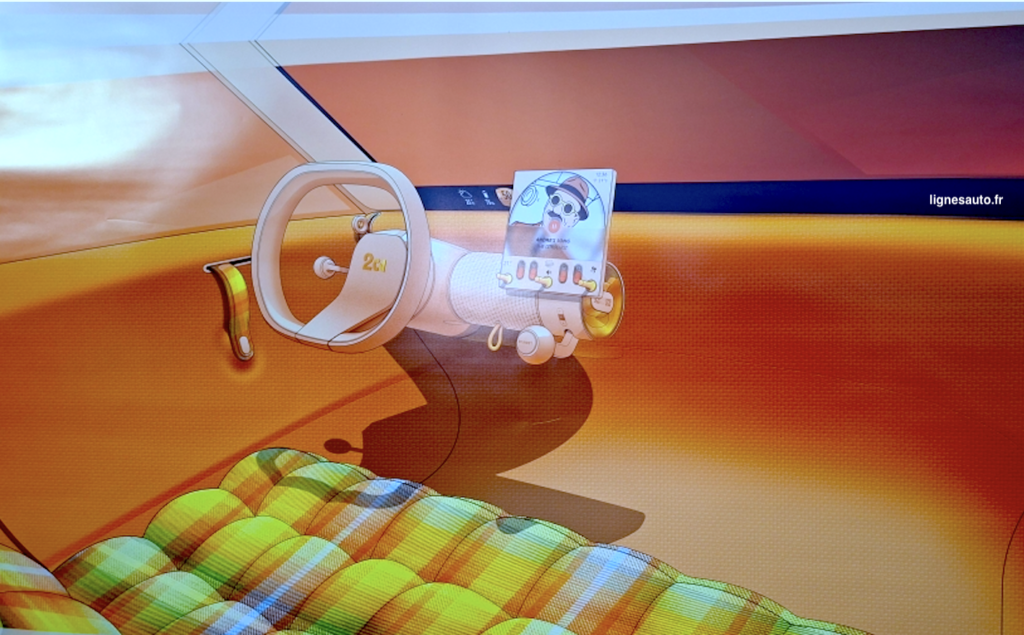
On the floor, as well as on the dashboard cylinder and the door panels, a textured fabric inspired by cane weaving and the world of basketry reinforces this colourful, cheerful and relaxed atmosphere. A nod to the first Berlingos, a basket – this time made of wood and bio-based plastic and 3D-printed – completes the look. It’s clear that the designers have had a field day and have delved into some of the many catalogues of the original 2CV. The dashboard is a simple cylindrical element to which the single-spoke steering wheel, a single control lever, a paddle-shift gear selector and a display strip are attached, organising the information within the happy driver’s field of vision.
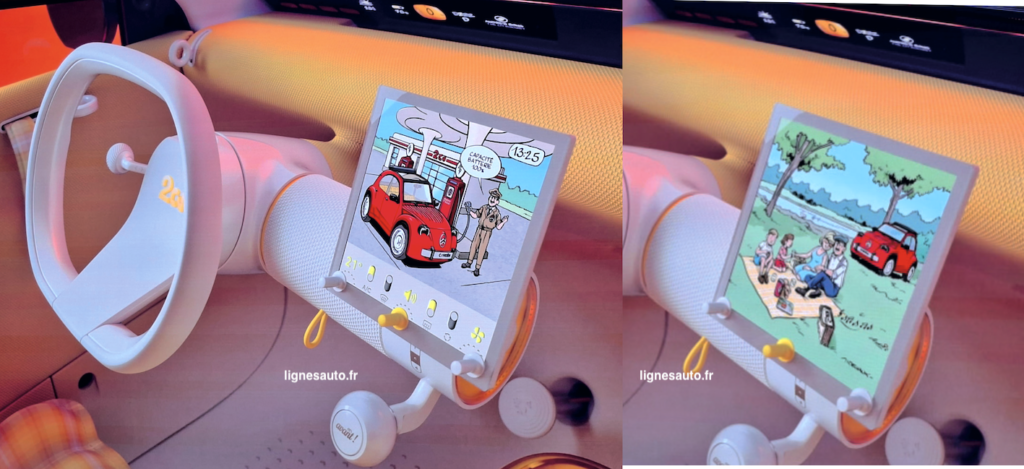
An 8-inch touchscreen completes the look with comic-book-inspired graphics. Another nod to the past is the return of the removable Radioën radio, so you can listen to Nougaro – or Nicki Minaj, depending on your taste… – whether you’re inside or outside this 2CV revival. It’s fitted, just as on the 2CVs from 1960 to 1963 (an optional extra at the time), in front of the front passenger. The pedals feature a turtle embossing for the brake and a rabbit embossing for the accelerator. This is more whimsical than those on the Volkswagen ID.Polo, with their ‘play-stop’ symbol reminiscent of video or audio devices.
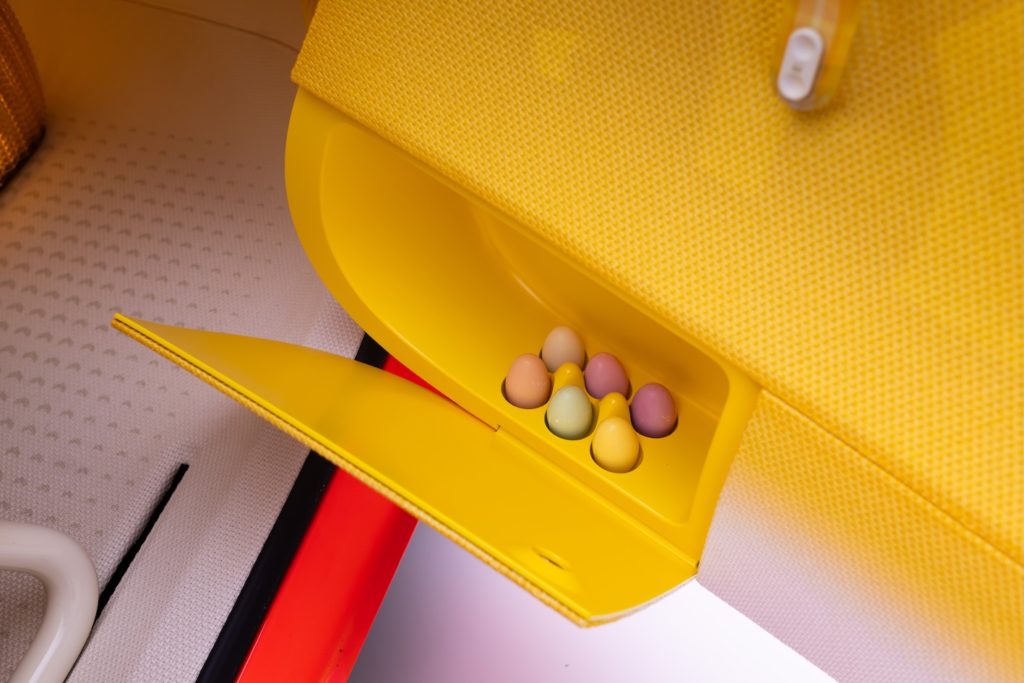
The door storage compartments, meanwhile, are designed to hold… eggs, thus paying homage to the original specifications and the ingenuity of the 2CV. And to avoid breaking them whilst driving, sound your horn to warn of your arrival. The sound is identical to that of the first ‘Deuches’, and the electric motor makes the same noise as the twin-cylinder petrol engine when starting up. But I imagine that, behind the wheel, the driving experience will be a world away from that of the original 2CV.
Antoine Gaillot-Devron, Pierre Icard (pictured below), the designer behind the winning entry, and the design team explain the challenge of bringing this new 2CV to life, almost 80 years after the production model was unveiled. “The 2CV is a pre-war vehicle; it’s not like a Mini or a Fiat 500, which are as smooth as a bar of soap! It has a central body with attached wings. The whole challenge was to reinterpret the 2CV’s architecture for the modern world.”
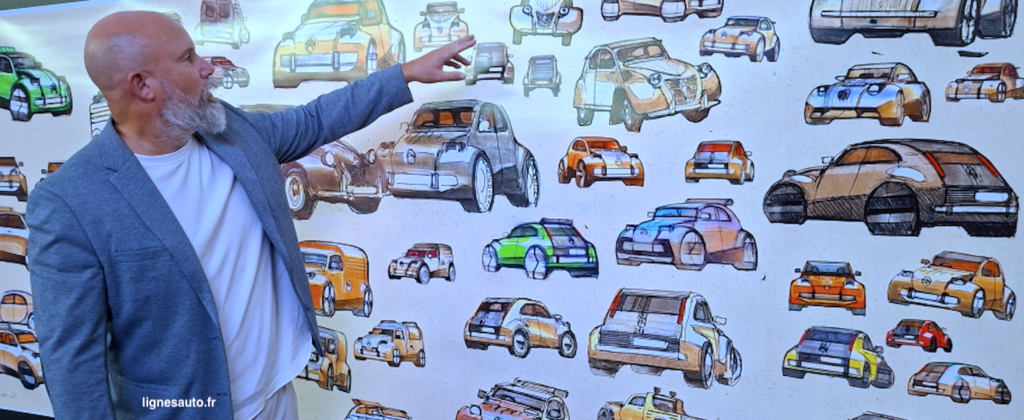
“We spent a great deal of time during our work ensuring we preserved the car’s soul,” explains Antoine Gaillot-Devron. “Obviously, it’s all about the proportions first and foremost, so that you can recognise a 2CV straight away. It’s the very distinctive slope of the roofline that took us a long time to get just right. ” And Pierre Icard adds that if this line had been poorly executed – “too rounded or too flat – it wouldn’t have been a 2CV any more. It was essential that the 2CV be recognisable from every angle.”
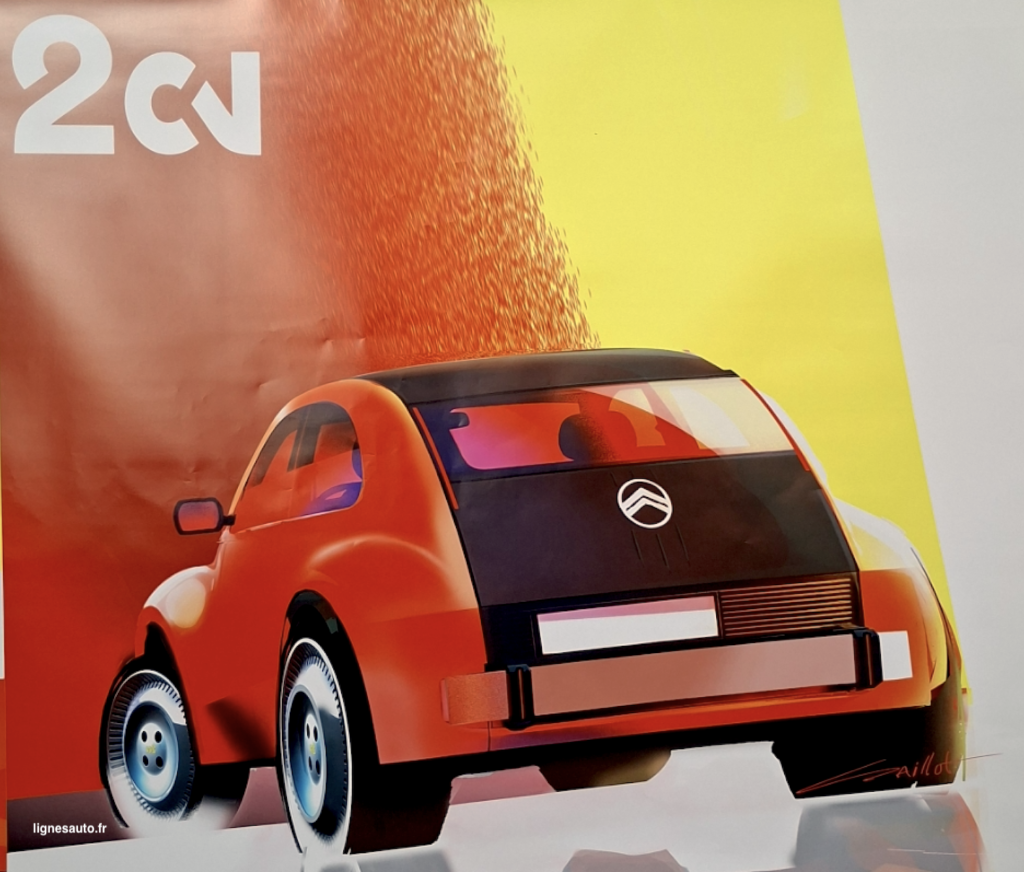
This rear wing, shown below, is not the only tricky part of the car to draw, confirms Pierre Icard: “We also spent a lot of time fine-tuning the wheel arches – particularly the wings – and the way they integrate with the bodywork.”
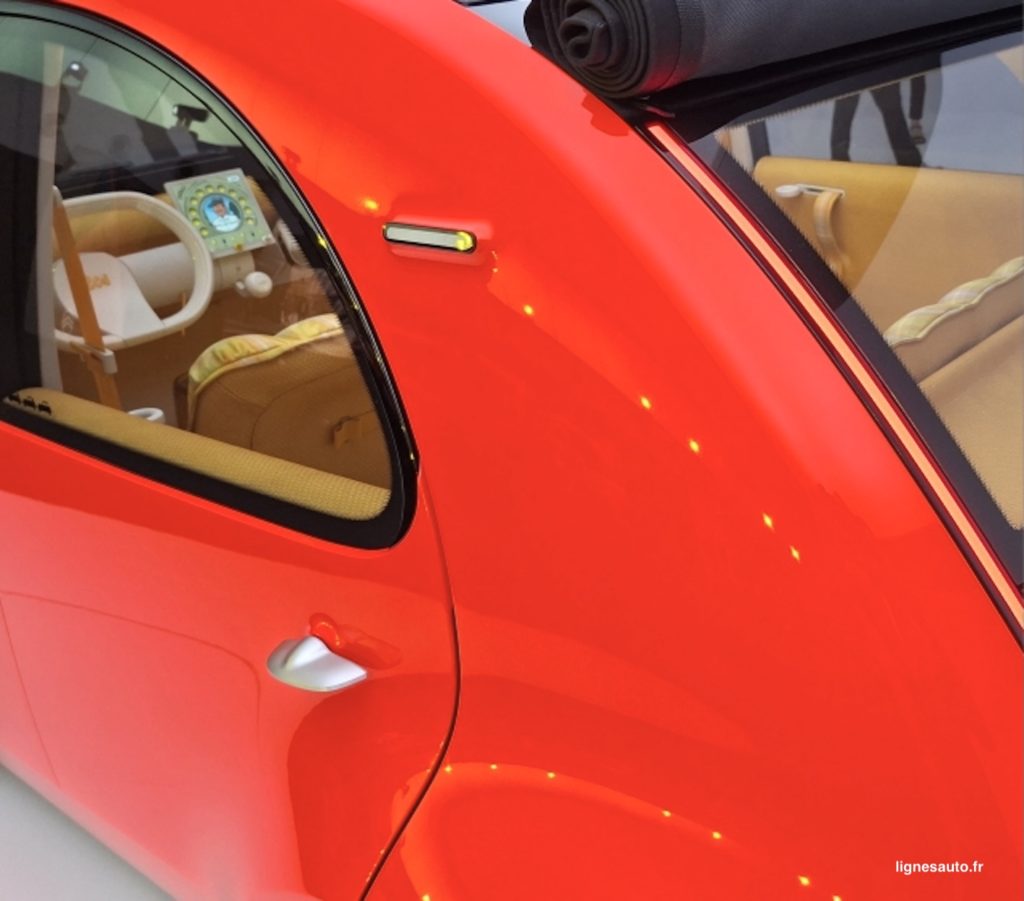
The front end is iconic, particularly the headlights, which have once again been meticulously crafted. As for the rear end, “it took on its shape very quickly. A shape so simple that it’s obvious,” says Antoine with a smile. He adds, “We wanted to present a credible, realistic car, ready to hit the roads in two years’ time. We see it as a precursor to a production car rather than a concept car.”
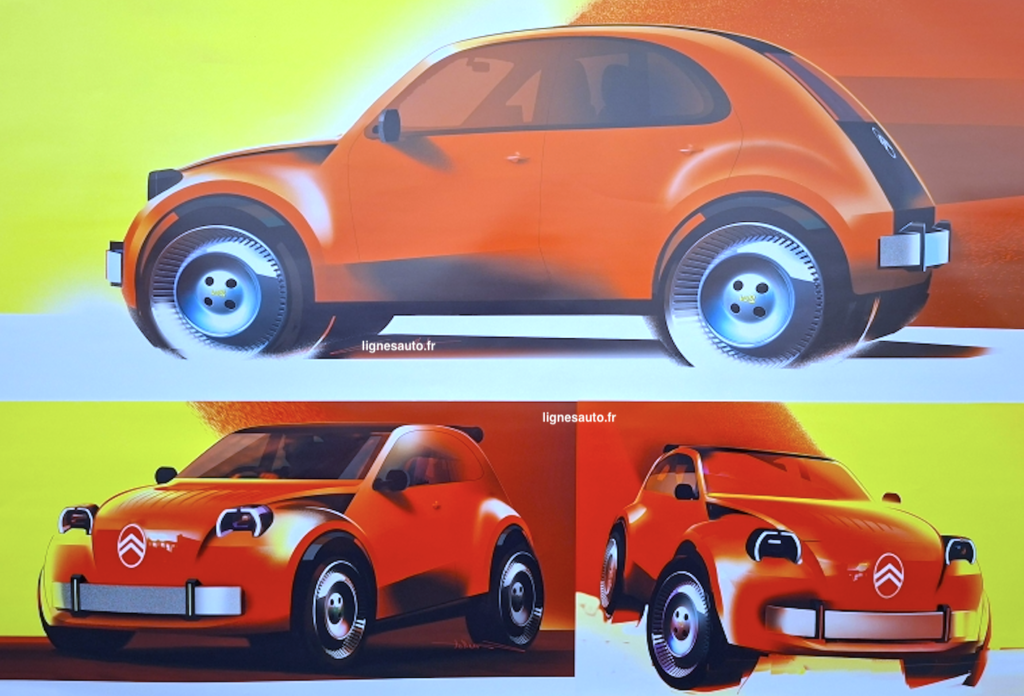
When did the idea of finally tackling a 2CV revival project first come about? Pierre Icard tells us that this concept car was actually launched last year. “It was on returning from holiday in September 2025 that we realised we were going to go ahead with it. We’d just come through several long months during which we’d put a great deal of work into the 2CV revival. We’d invested a lot of effort into the car’s various sizes.”
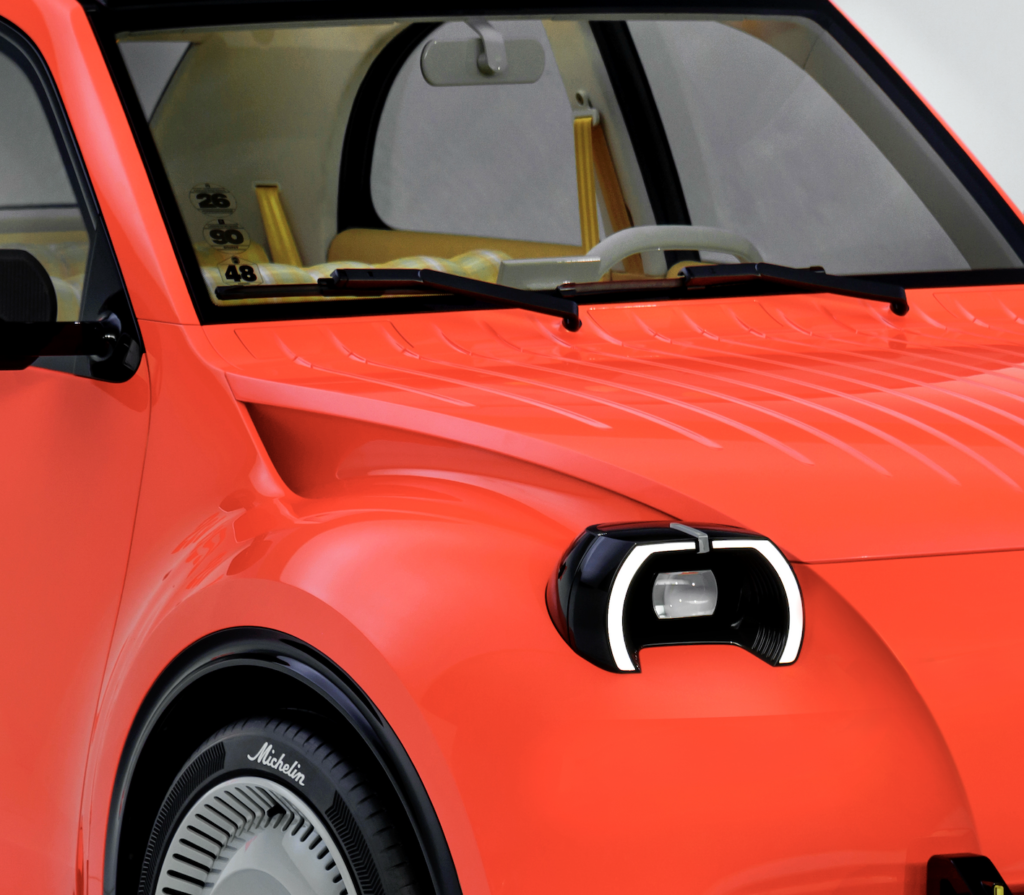
The challenge with this project, in terms of design, is striking the right balance between modernity and staying true to the original saloon’s DNA. “If you stick too closely to the real 2CV, purists will love it, but everyone else will say it looks too old-fashioned. And if you push the balance towards something more futuristic, 2CV enthusiasts won’t be happy! ”
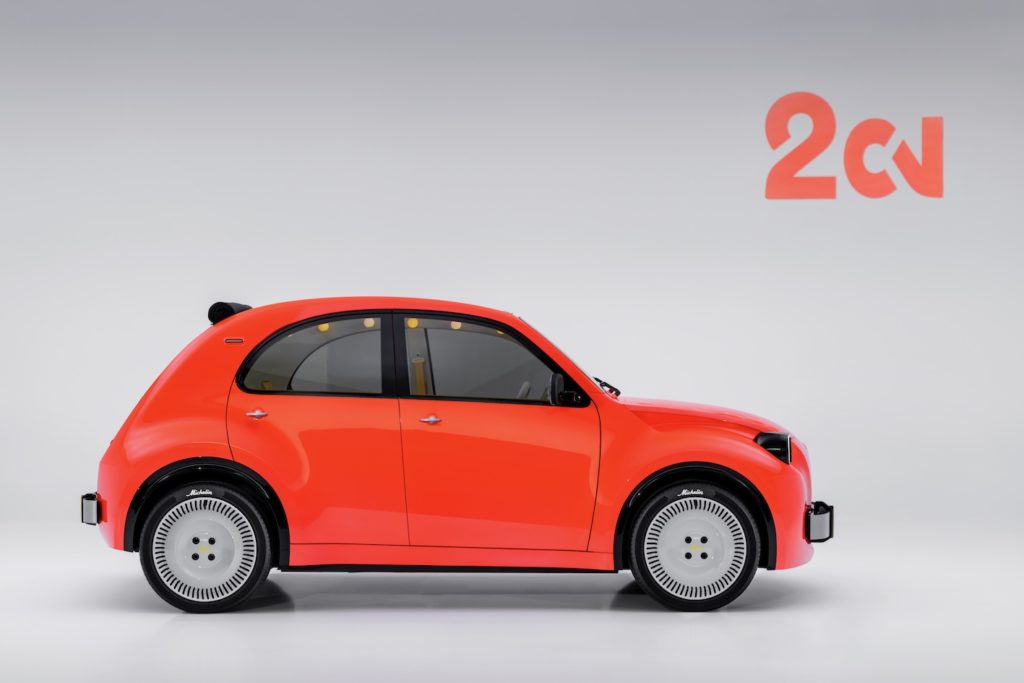
The philosophy of simplicity in design is reflected in the interior. “What comes across is a certain joie de vivre; you feel happy when you sit inside. A great deal of thought has gone into the materials and colours. ” The screen is unique, firstly because of its square shape and its interface. “To bring a fresh touch to the cabin, we called on Jean-Luc Delvaux.”
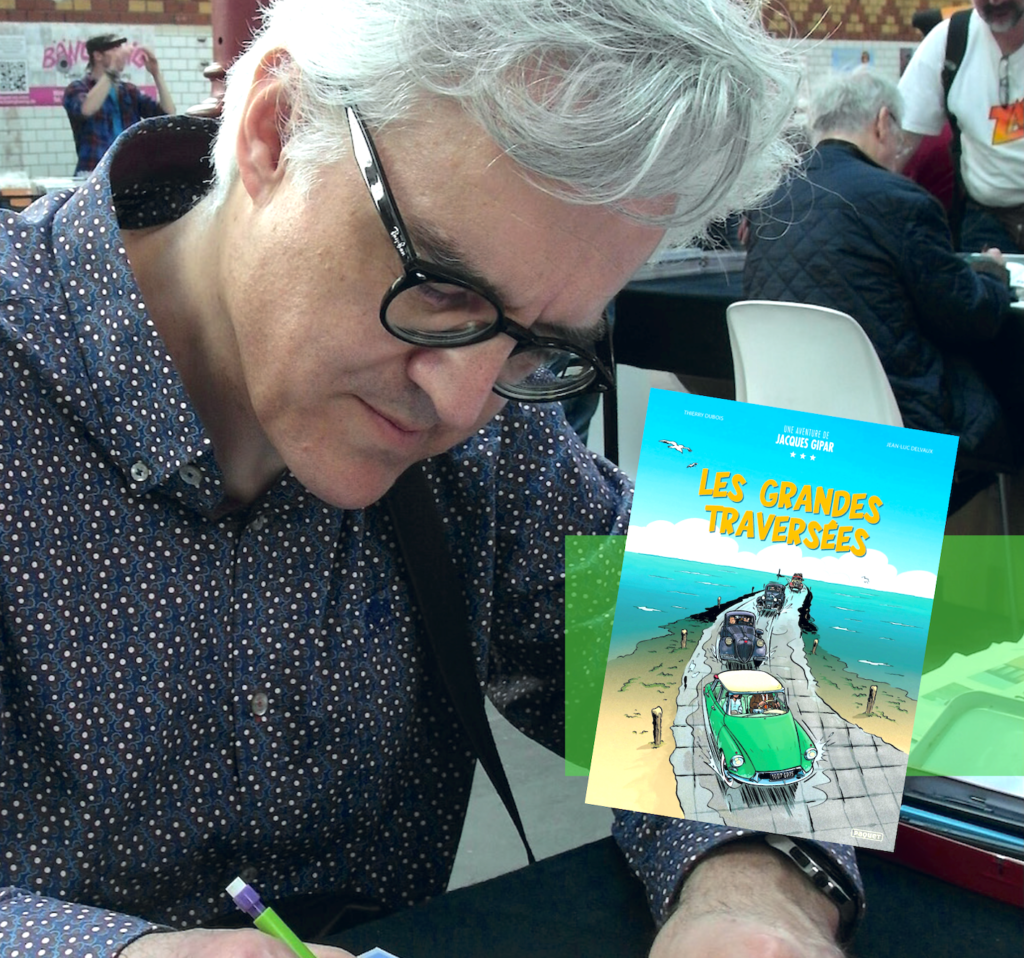
This illustrator (pictured above) is well known amongst fans of motoring comics, alongside his collaborator Thierry Dubois. For the 2CV Concept, he created a comic-book-style interface that is completely unprecedented in the motoring world. Just as unique are the fairy lights running along the edge of the headliner, pictured below, inspired by those found in traditional French open-air cafés. A touch of poetry!
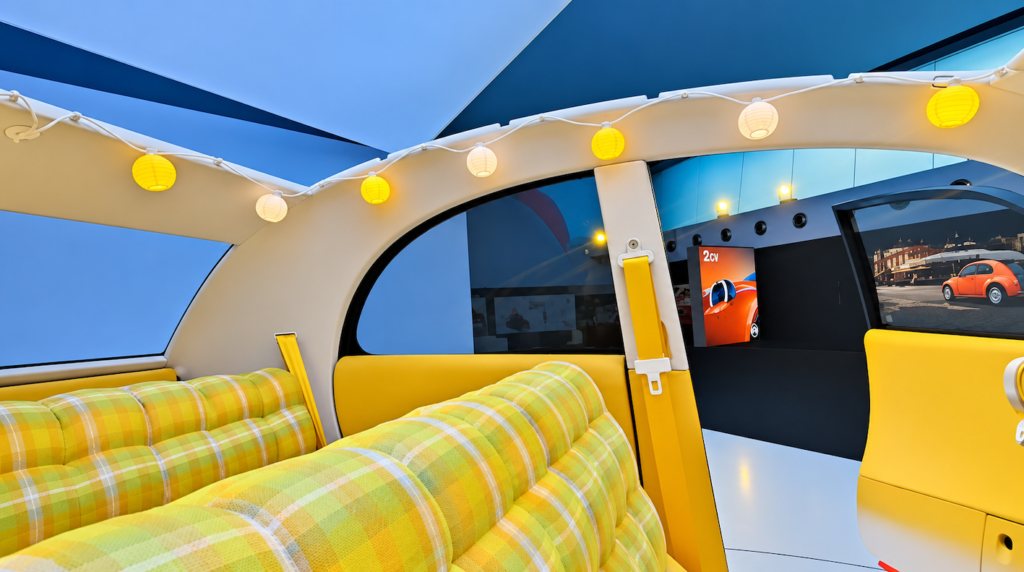
In the end, we were probably mistaken in thinking that redesigning a 2CV in 2026 would be very easy. Far from it! “As the original 2CV is a very old design, with wings attached to a central body, it was difficult to recreate that stylistic language whilst meeting today’s constraints. ” But all that is now history. The team even states that “the 2028 model is currently under development. We’re working on it every day.”
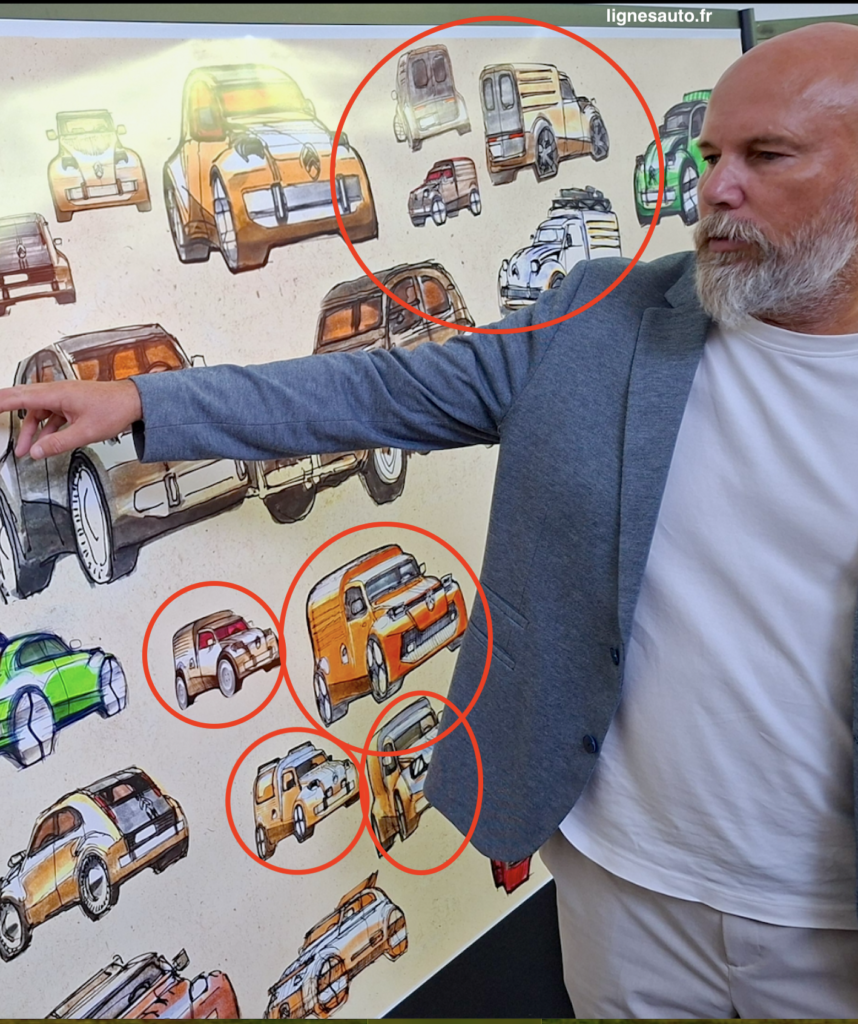
So why settle for working ONLY on the sedan? Will the numerous designs for a 2CV van (pictured above with Pierre Icard) be turned into a production electric vehicle, capable of effectively solving the famous ‘last kilometre’ challenge of urban deliveries? Are you up for it? The 2CV simply cannot be reborn without its utility-style silhouette. “Hello, Mr Xavier Chardon?!” ….Beep. Beep. Beep….
BONUS #1: The 2CV logo – a clever design!
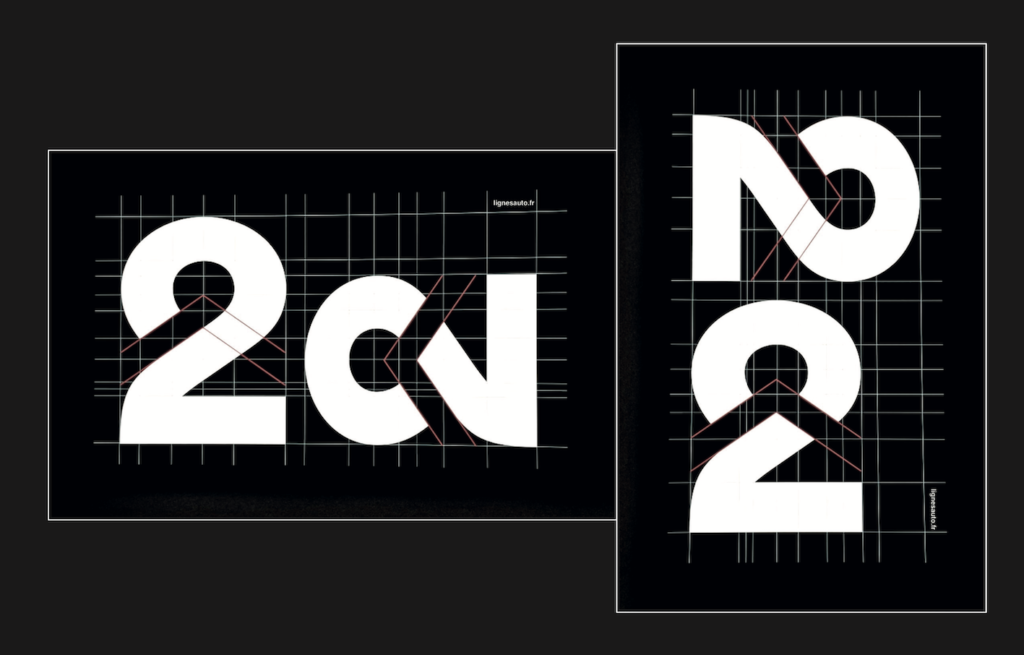
You probably didn’t notice the 2CV logo on the concept car, and that’s proof that it’s very well executed, legible, graphic and expressive. Right? So what? Well, the graphic designer(s) behind this logo – whom we applaud with both hands – had the brilliant idea of spelling out the name ‘2CV’ using just two ‘2’s’…
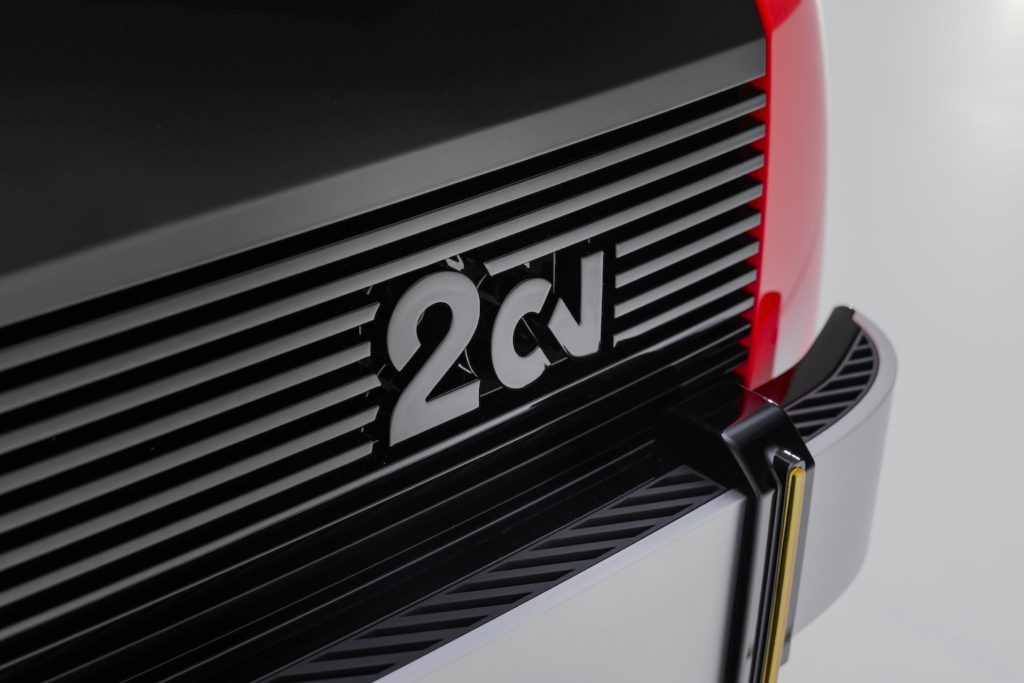
One of the two ‘2’s is vertical and represents the tax power of the first model… 2 chevaux. The second ‘2’ is positioned horizontally and is split into two parts by a virtual Citroën chevron (see below), to form the two letters C and V. This certainly isn’t what people will be talking about at the Paris Motor Show in front of the Citroën 2CV Concept, but if you want to impress your neighbour whilst visiting the Citroën stand, tell them this – it’ll make an impression. Or not…
BONUS #2: a lovely book for Christmas!
You can also find the 2CV Concept in this book, “CITROËN DESIGN: FROM THE STYLE WORKSHOP TO THE DESIGN STUDIOS, FROM 1950 TO THE 2020s.” Eight decades of style and design as told by those who lived through them… ‘Over forty years as a journalist, the author has interviewed everyone from the most renowned to the most low-key designers who have worked for Citroën, including Dan Abramson, Nuccio Bertone, Marc Deschamps, Jean Giret, Michel Harmand, Pierre Leclercq, Alexandre Malval, Thierry Métroz, Carl Olsen, Robert Opron, Sergio Pininfarina, Jean-Pierre Ploué, Gilles Vidal, and many others.’
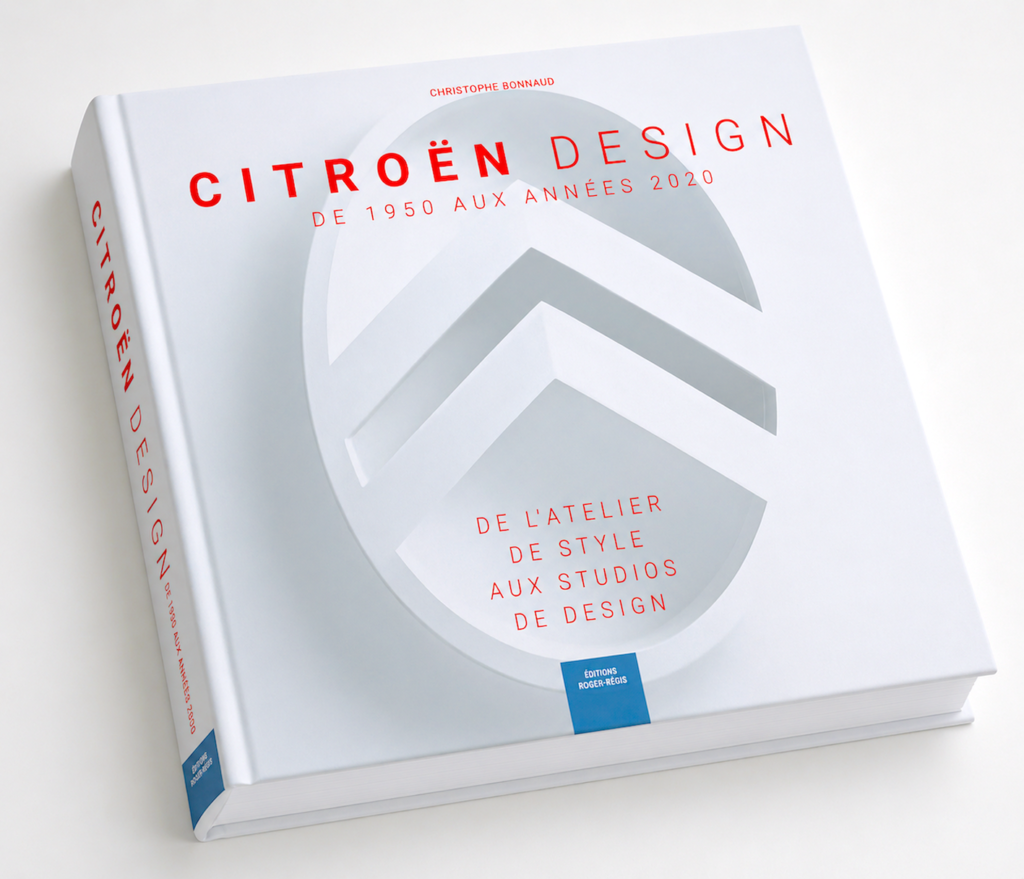
“This book provides an overview of the history of Citroën design, from Bertoni’s design studio to today’s design studios. Through the words of these great designers and their sometimes delightful anecdotes, you will feel the heartbeat of this historic company. This book highlights a certain vision of the dreams held by these designers, who worked in atmospheres that were at times joyful and at times sombre… Read it as an intimate journey in the company of daring creatives and images, some of which have never been seen before.”
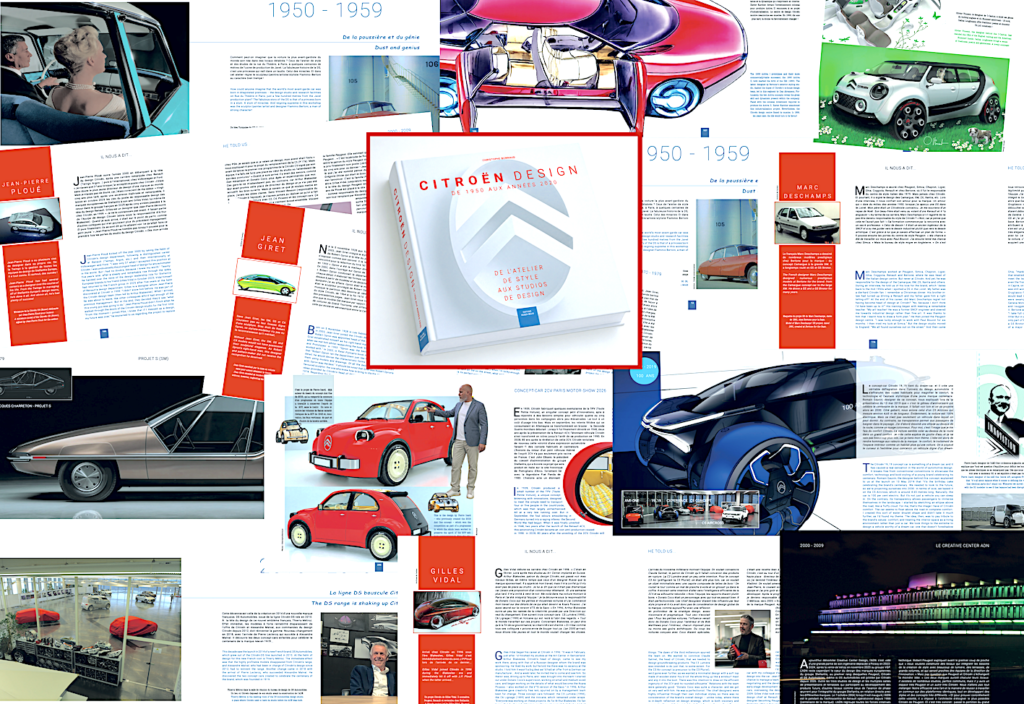
A 260-page book, size 280 x 240, published by Éditions Roger-Régis, bilingual (French/English), €55 excluding postage, author: Christophe Bonnaud. This book will be available from mid-November from the publisher (01 42 50 41 62) and also at the Passion Automobiles bookshop on Rue de Rennes in Paris, and at the L’Aventure Peugeot Citroën DS shop. Further stockists to be confirmed in the meantime…
BONUS #3: RADIOËN, the Citroën radio station
In 1959, all eyes were on the 2CV AZL model, with its boot lid on the version that, for the first time, featured a remarkable piece of equipment: the Radioën. This was a radio – a ‘transistor’ radio, still rather bulky at the time – with two uses: a car radio when installed in the vehicle, taking care to connect the antenna lead to the side of the unit, and a portable radio to be placed on the Formica worktop in the kitchen the rest of the time.
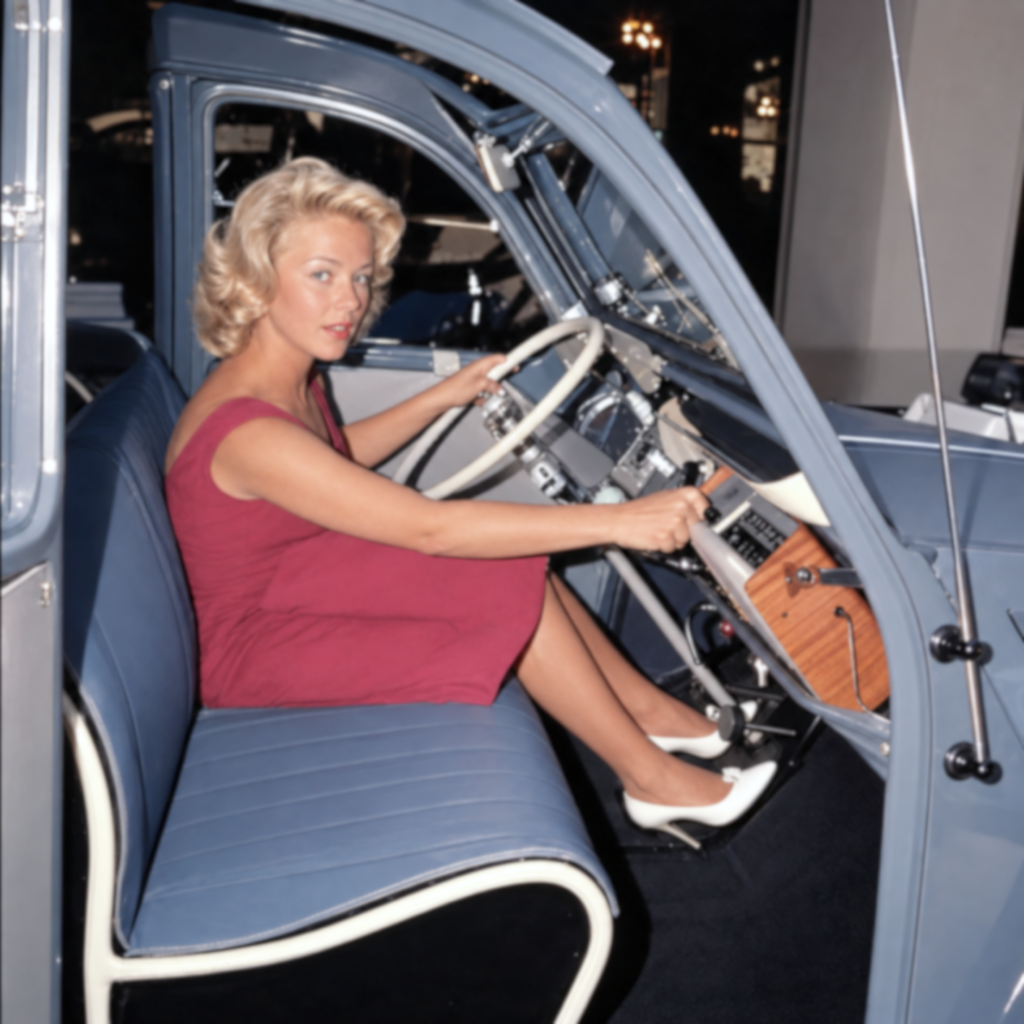
This accessory, designed and manufactured by Continental Edison, is powered by a 9-volt battery, which enables it to perform this dual function. Introduced in 1959 for the 1960 models, the Radioën option was only available for three years. As can be seen from the colour photograph above, the finish of this radio, made from varnished wood, is rather luxurious, with its stylishly designed grille speaker housed beneath the base of the unit.
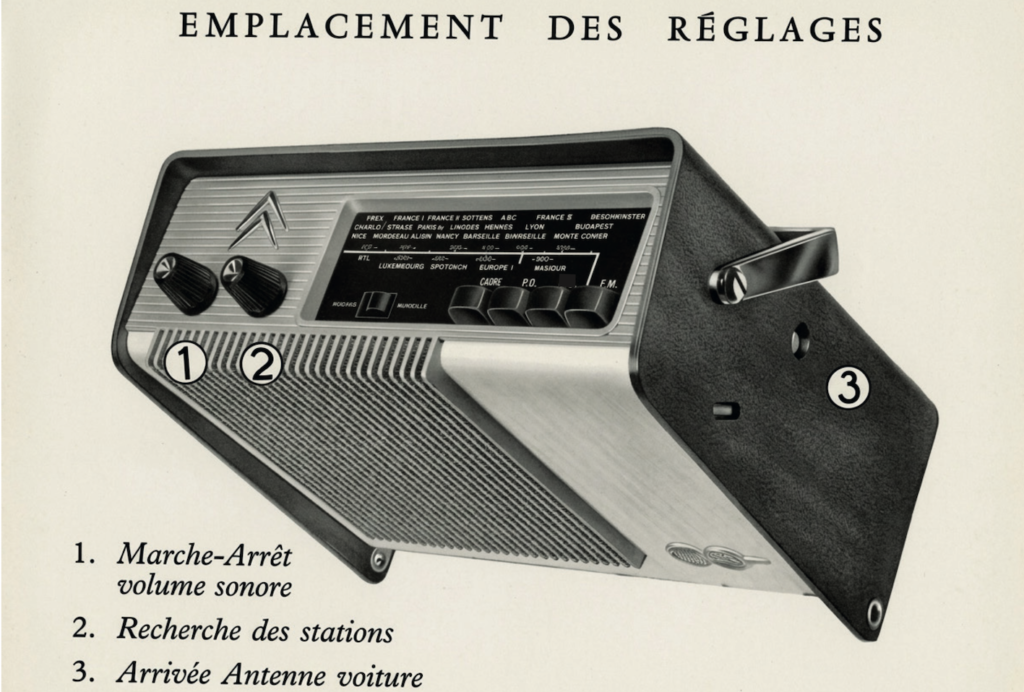
To be able to listen to the radio in a 2CV, you therefore had to use an external aerial secured by two brackets on the right-hand side of the car. At that time, the 2CV’s doors were of the so-called ‘suicide’ or ‘against-the-wind’ type. Whilst the idea of a car radio was a good one, it was hardly effective on board, as the small speaker struggled to compete with the noise of the air-cooled flat-twin engine. But on board the ‘Deuche’, it certainly made quite an impression!
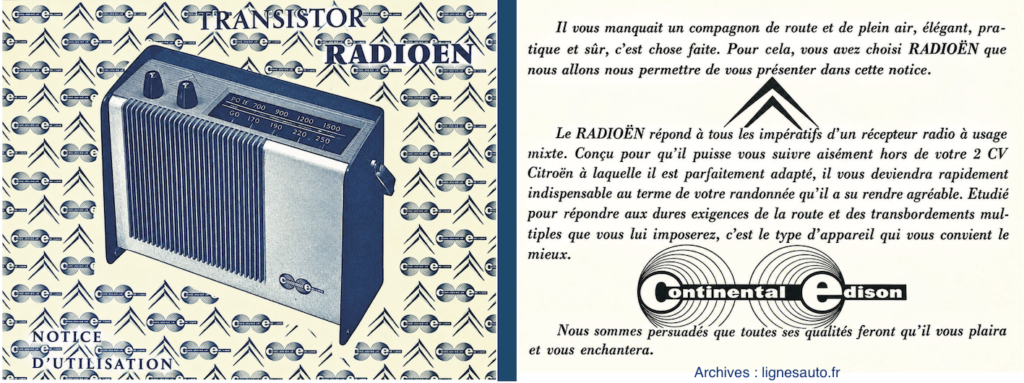
This high-quality unit, available in three front-panel colours and measuring almost 30 cm in length, took up the entire space in the storage compartment opposite the passenger. To purchase it, one had to pay an additional 8 per cent of the price of the 2CV AZL, which sold for 4,730 francs at the time – that is, around 380 francs. Naturally, there was no question of frequency modulation; only long-wave and short-wave were available.