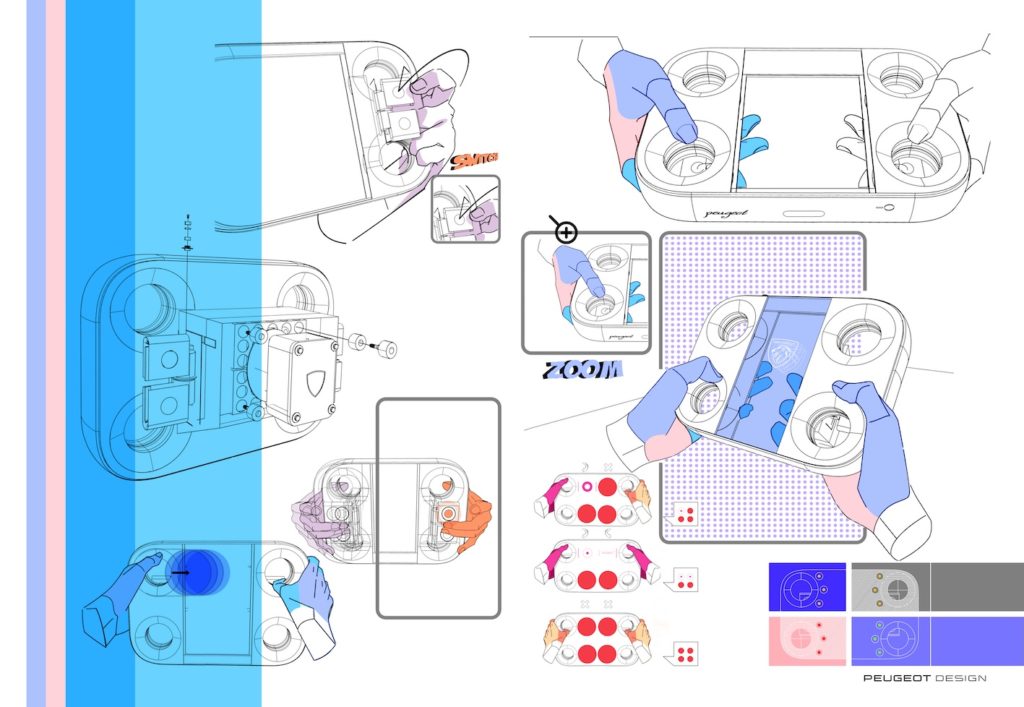
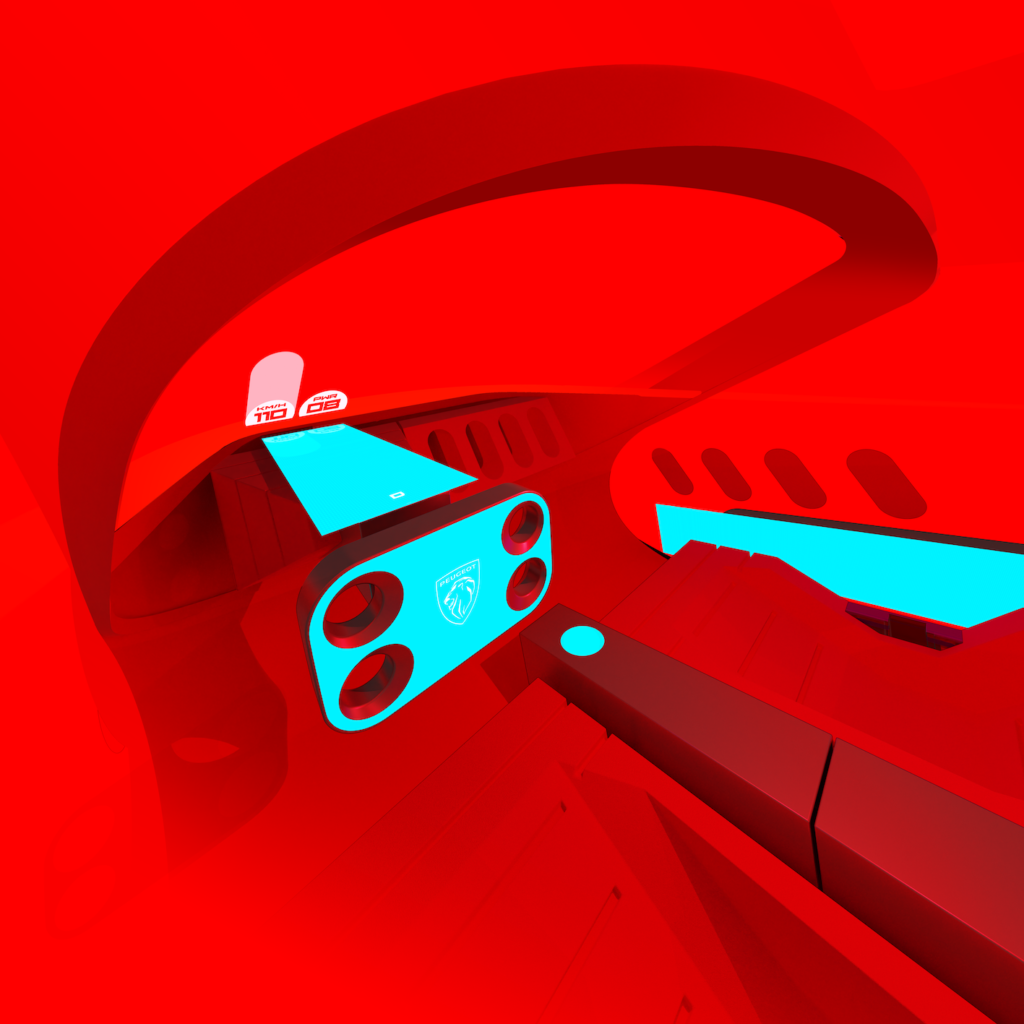
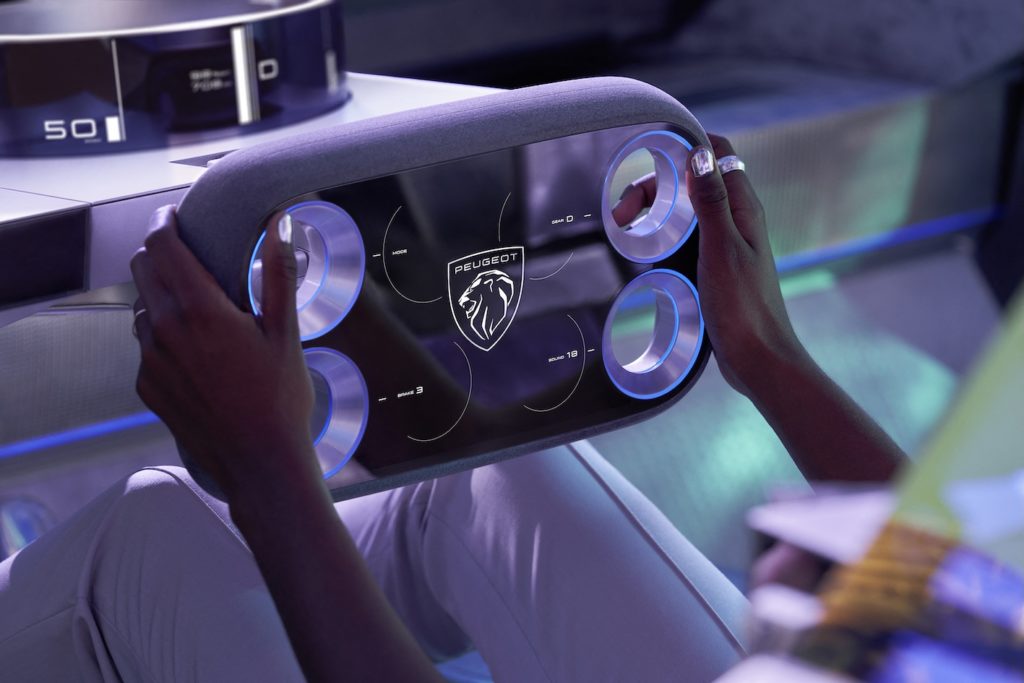
Next year, Peugeot will be the first within the Stellantis Group to introduce the 100 per cent electric, ‘by-wire’ steering system in its new-generation 208 and the forthcoming 2008. This major technological advance, currently featured on certain models from brands in the upper and even premium segments (Lexus, Infiniti, Nissan, etc.), will significantly and positively transform the driving experience and enjoyment – an area close to the French brand’s heart.
However, within the former PSA Group, Peugeot’s rival – and yet cousin – Citroën had developed this concept before Peugeot did, notably in two of its concept cars, which we’re looking at again today. Let’s set the scene: in the early 2000s, the seeds of a revolution were being sown in the market – that of those rather odd SUVs, designed very often for urban use! Citroën anticipated this massive surge in SUVs with a concept car, the C-Crosser shown below, unveiled in 2001. It featured an innovation that the future 208 would adopt.
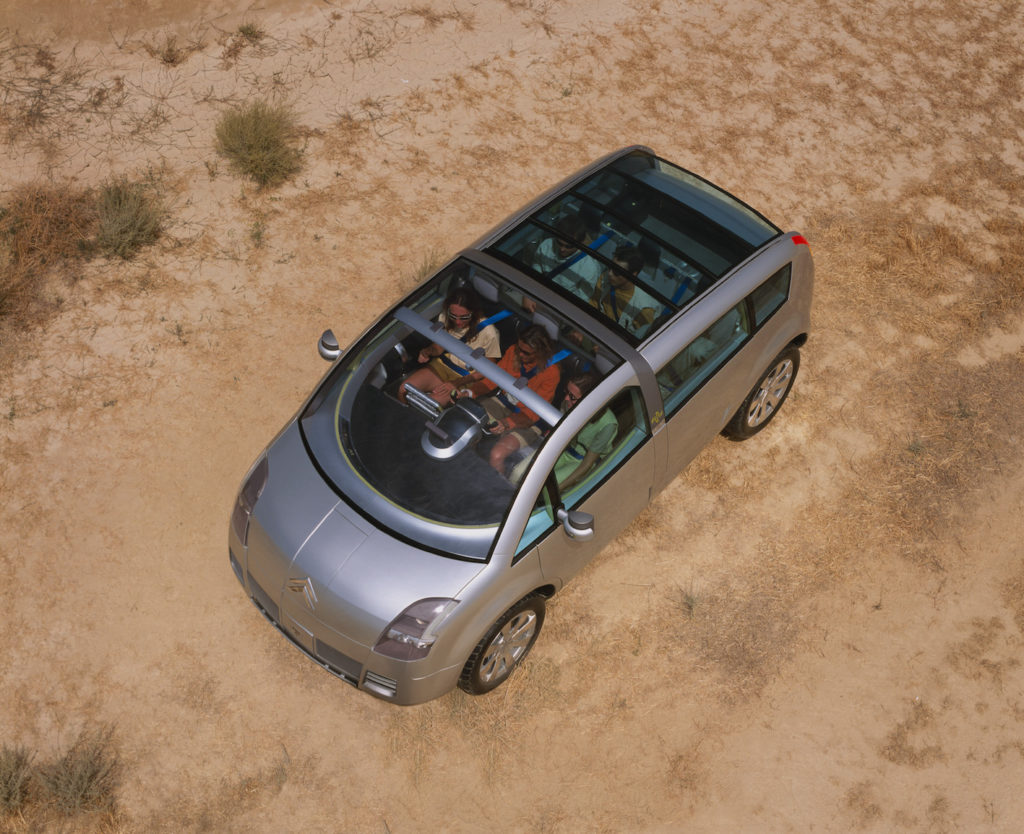
Sandwiched between a small, avant-garde Osmose from 2000 and the sublime C-Airdream concept from 2002, the C-Crosser did not leave a lasting impression. Nevertheless, it remains the first futuristic SUV designed by the young team led by Jean-Pierre Ploué. Like certain other concept cars, it features highly futuristic technology, such as the ability to slide the driver’s seat from left to right – or even with the driver in a central position – an architectural feature dear to Citroën!
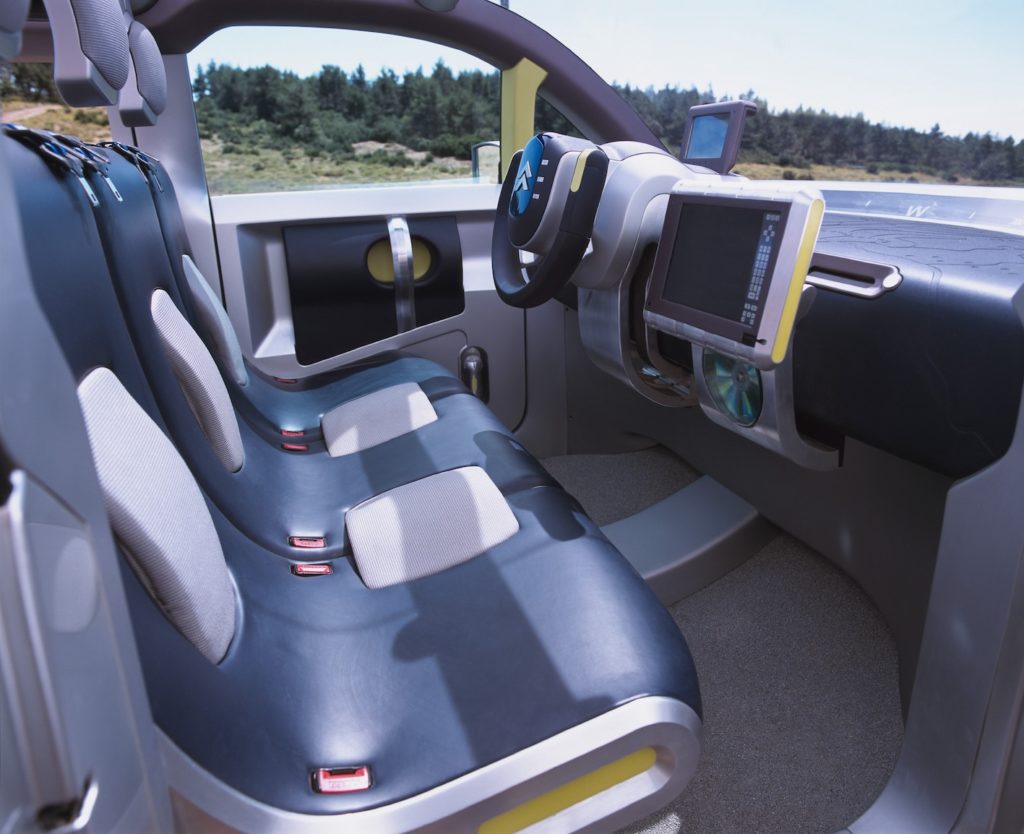
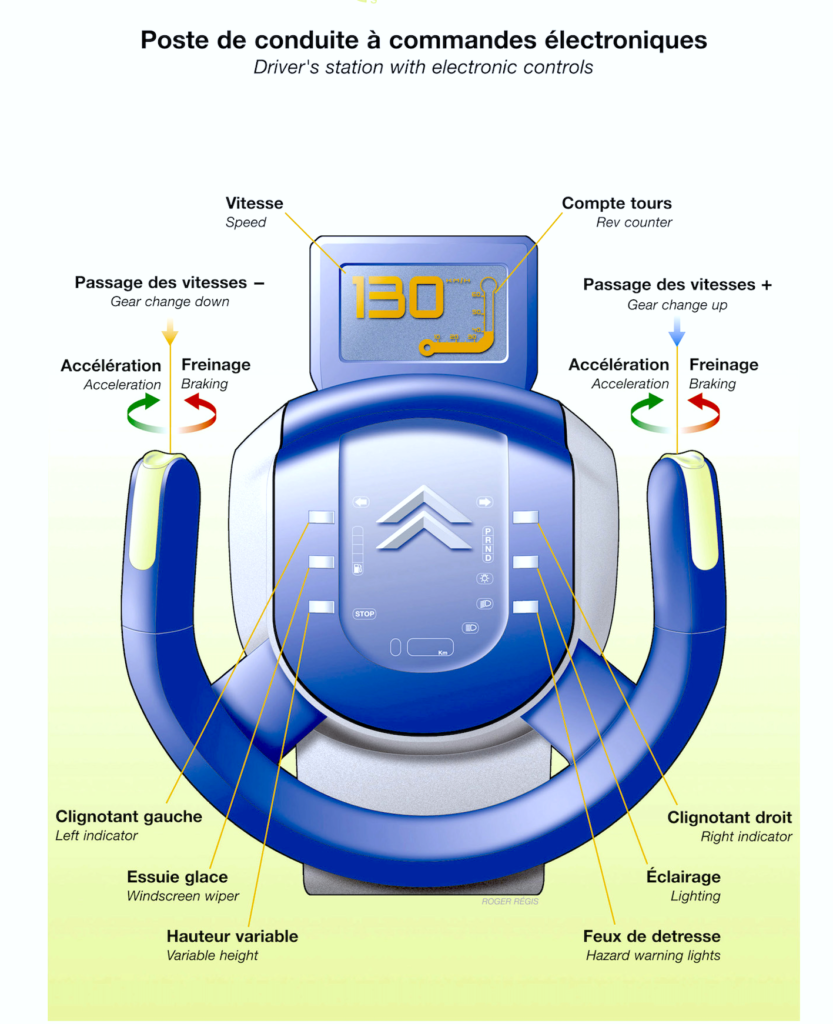
The C-Crosser features electric control technology not only for the driver but also for managing the Hydractive hydraulic suspension. Inside, the driver has a ‘joystick’-style double-spoke steering wheel, which allows them to change gear at the touch of a button located at the top. By rotating the ends of these spokes, the driver can also control the vehicle’s acceleration or braking. It is also worth noting that all four wheels are steerable, as shown below.
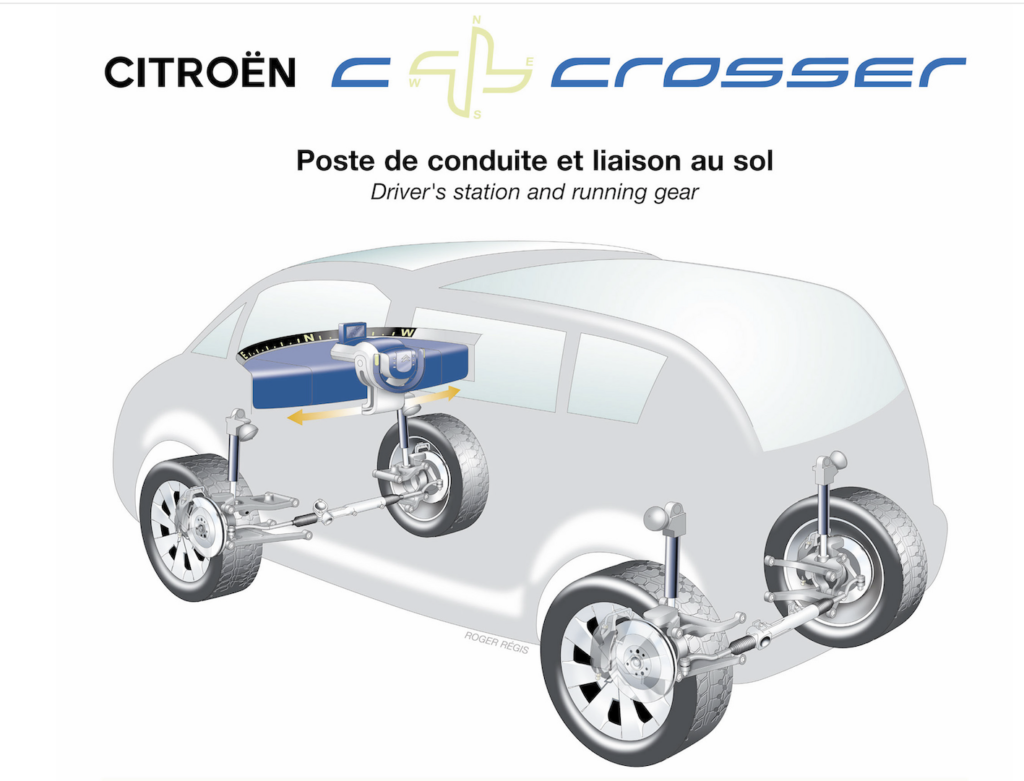
‘Drive-by-wire’ technology was already in the spotlight at the time, but European standards had not yet approved it. Today, Europe has finally opened the door to this electric architecture, and a French car manufacturer has adopted it for some of its models towards the end of this decade. It is not Citroën, but Peugeot.
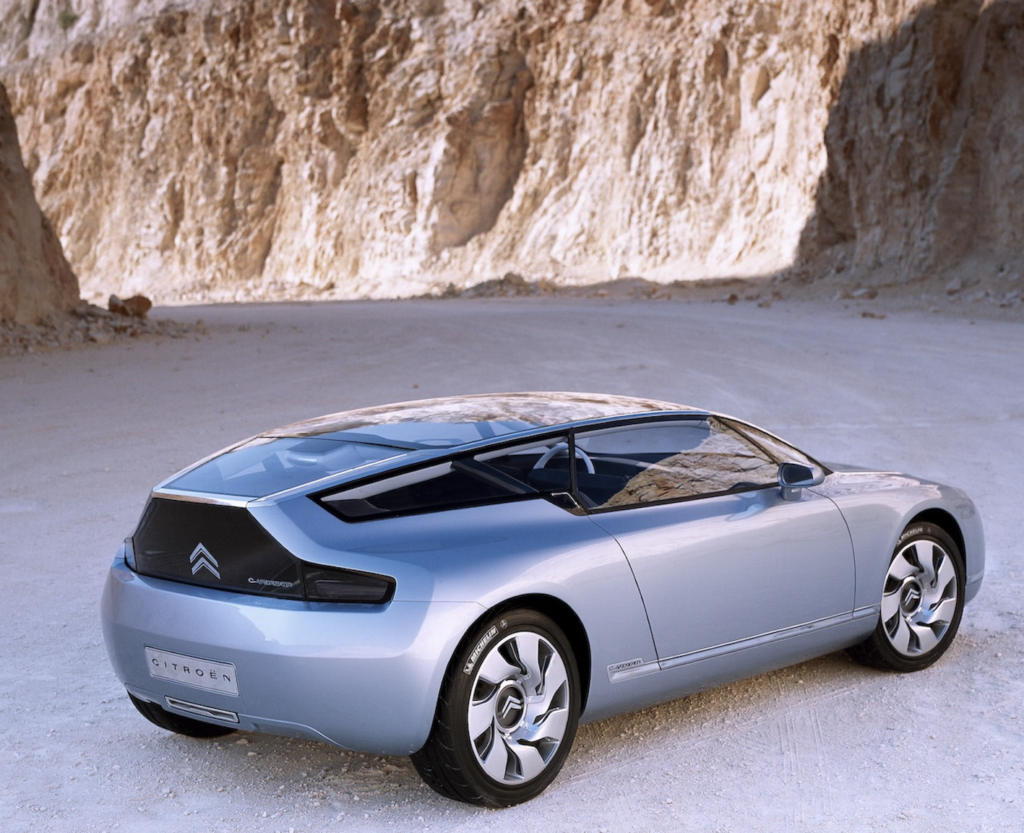
A year after the C-Crosser, the 2002 Citroën C-Airdream concept pictured above really hammered home the point with this ‘by-wire’ architecture. It is indeed featured in this stunning coupé designed by Alexandre Malval, now head of design at… Renault. At Peugeot, in 2002, the design team led by Gérard Welter produced the magnificent RC Pique and RC Carreau concepts, a sort of modern-day Alpine berlinette. At the time, Peugeot had no hesitation in fitting one of them (the red RC Carreau) with a turbodiesel engine. Those were different times…
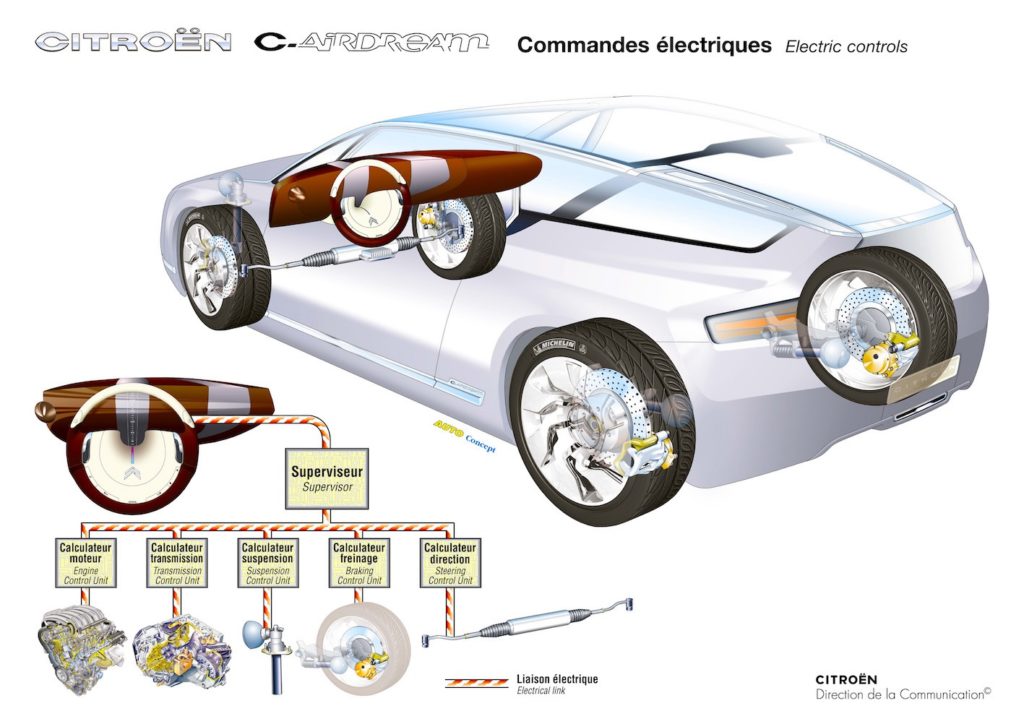
C-Airdream marks the start of an extraordinary chapter in a long series of concept cars that would in turn inspire production models (in this case, the C4 coupé) and fuel an ever-growing sense of fantasy. This 2002 concept heralded the brand’s new design language. Inside, the designers worked closely with their engineering colleagues to equip the cabin with the latest ‘by-wire’ driving technologies, fitting the steering wheel with electric controls that manage both braking and steering.
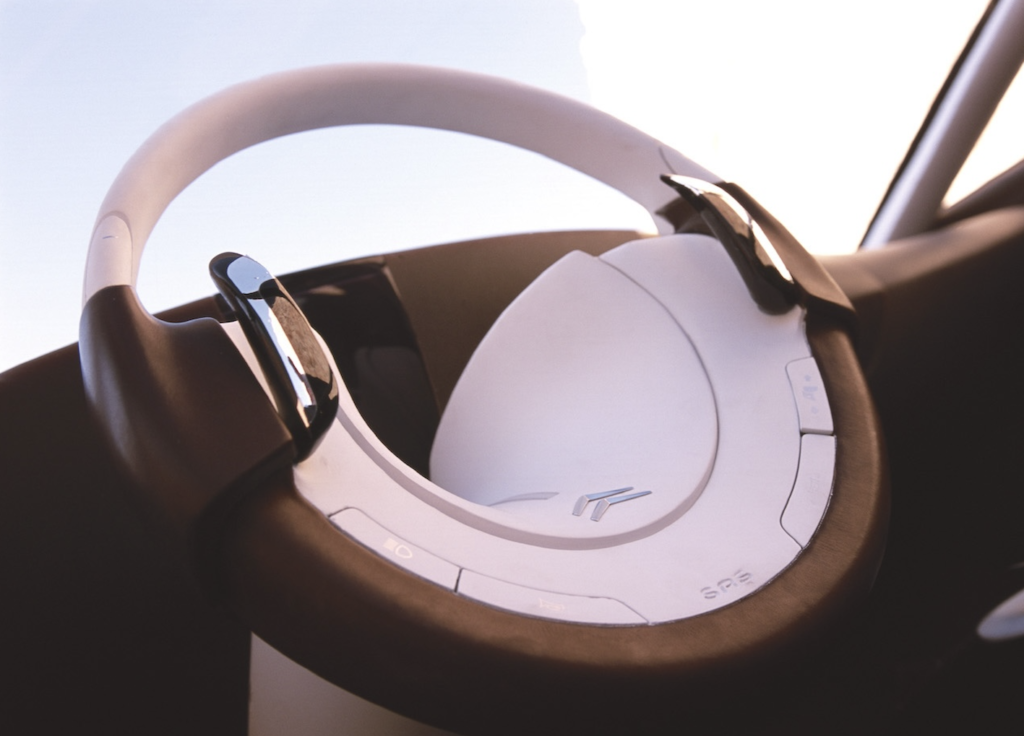
The steering wheel pictured above also offers a glimpse of the fixed-hub design that was to be fitted to the C4, C5 and C4 Picasso, before the group abandoned it when it became necessary to standardise ‘modules’ across both the Citroën and Peugeot brands. Can we therefore imagine that this sharing of the ‘by-wire’ steering module might also be continued between Peugeot and Citroën? No, it is unlikely that we will see this architecture on future Citroën models, even though the manufacturer had mastered the technology nearly a quarter of a century ago.
Since then, in 2012, Peugeot has developed its i-Cockpit, which has continued to evolve. With the Hypersquare concept, it will soon become a module that goes far beyond simply adopting an electric architecture: a rectangular steering wheel, a modified platform around the windscreen, more space for the cockpit, a new driving experience, and so on.
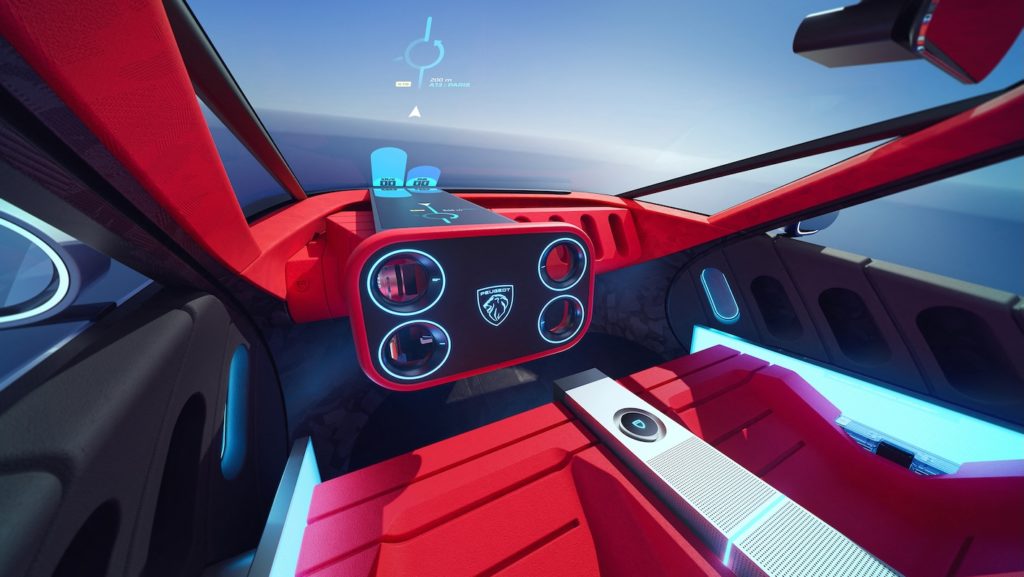
In this respect, the French brand is more innovative than, say, a Lexus RZ, which incorporates this architecture without altering the layout of its dashboard, which remains conventional… One of the main reasons for this lack of standardisation with Citroën stems from a difference in platform in this segment. Citroën’s platform (known as ‘Smart’) cannot accommodate this steering module without requiring very costly modifications. And for a brand (Citroën) that aims to be accessible to all, the cost of production is far more important than the media hype surrounding a driving revolution… Citroën will therefore do without this innovation. For now, at least?