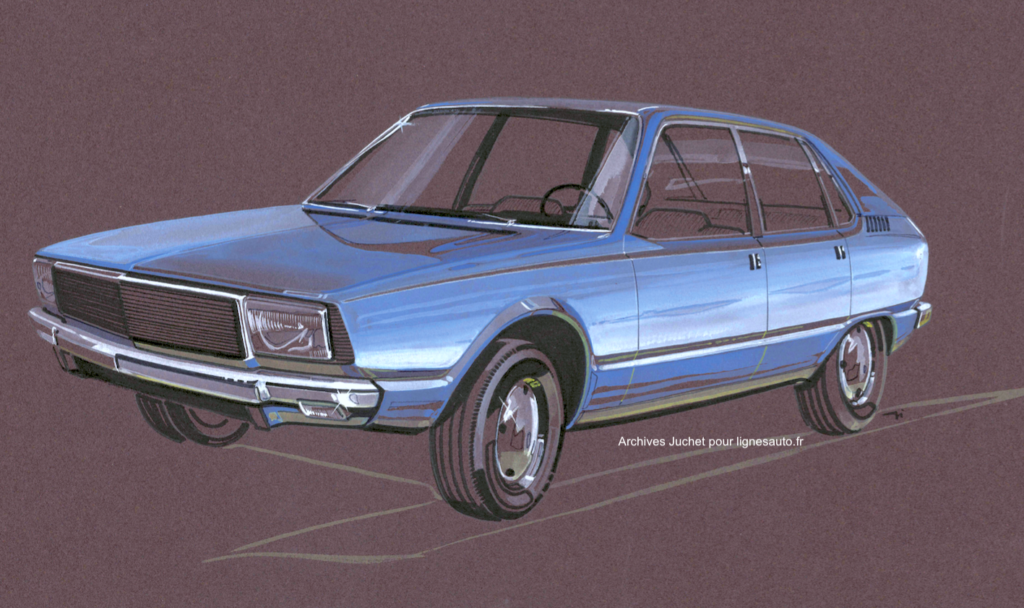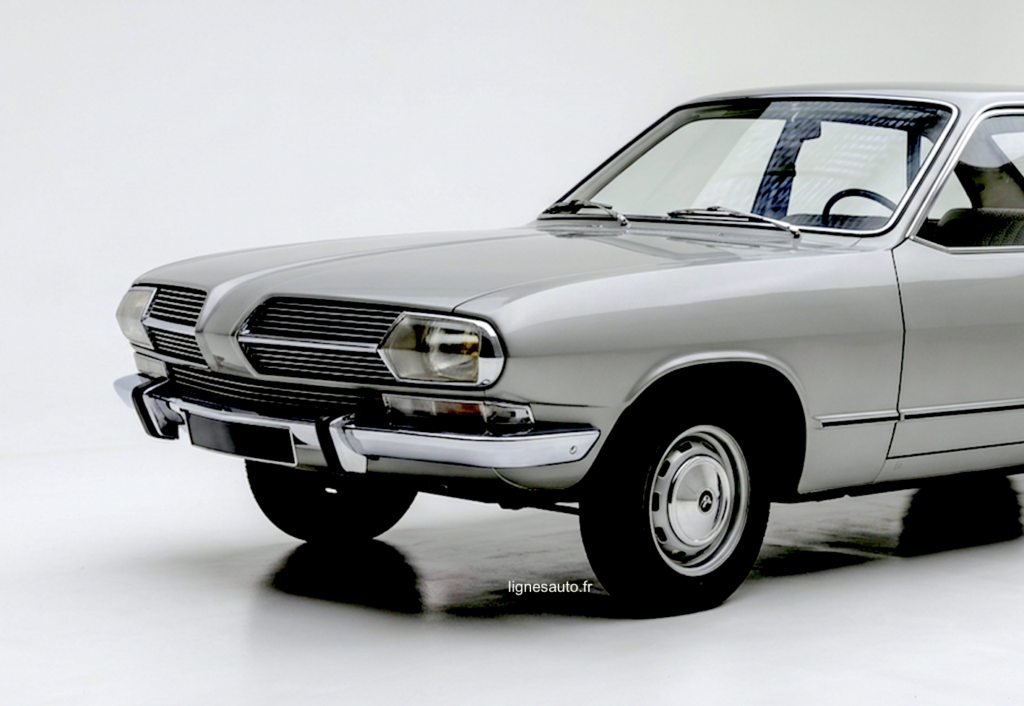
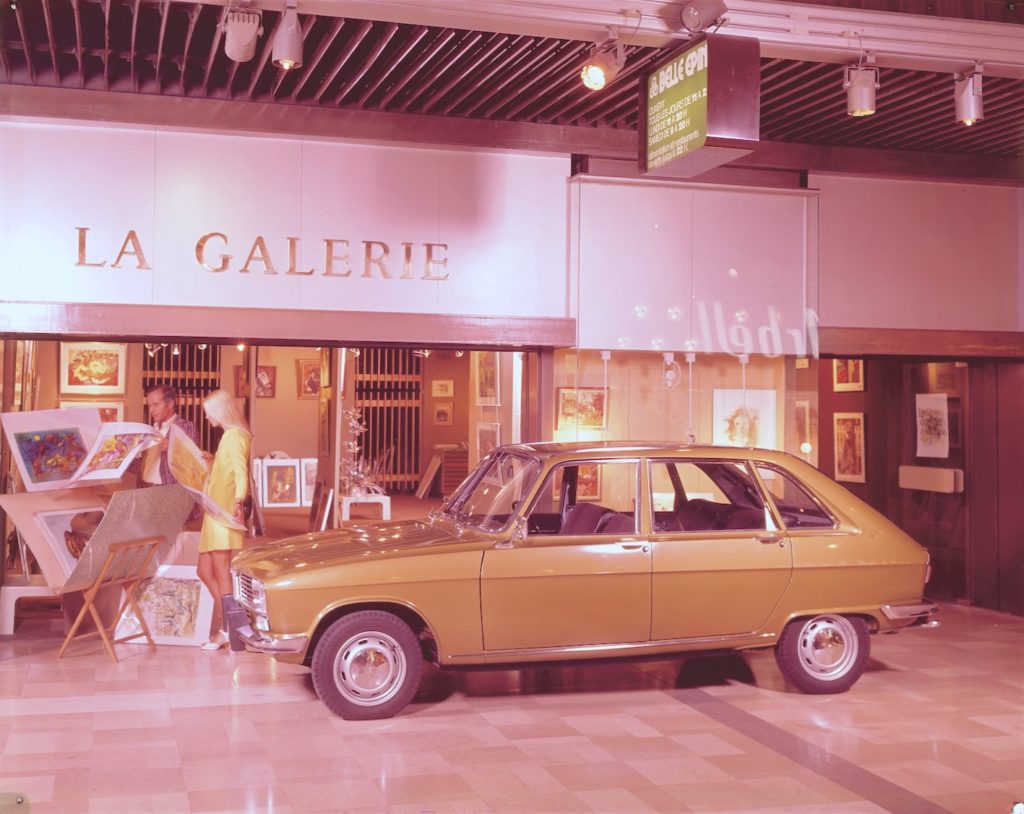
In December 1964, almost 62 years ago, Gaston Juchet – then Renault’s head of design – sketched several views of a project on a large drawing, which he labelled the ‘Super 115’. Before becoming the ‘Super 115’, the ‘115’ project was quite simply that of the revolutionary Renault 16 (above), which would be launched in 1965.
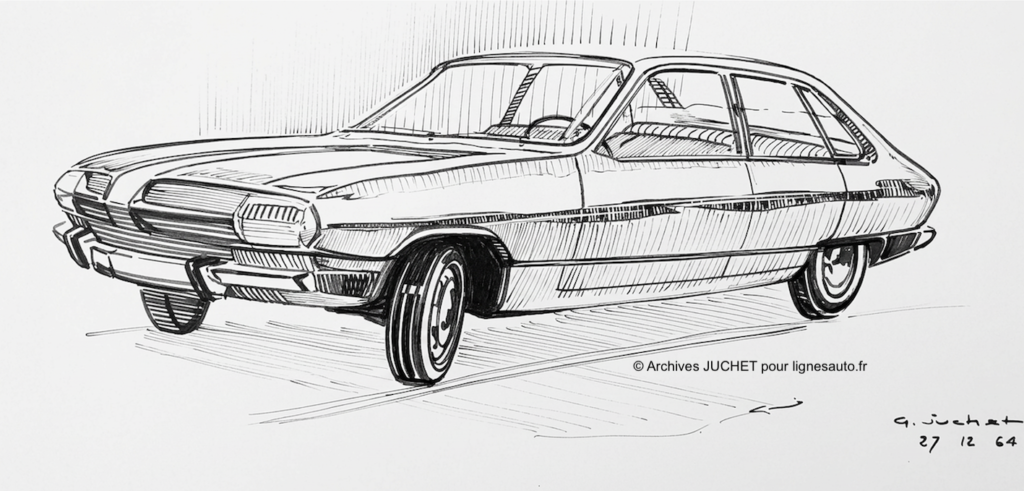
The head of Régie Renault at the time was Pierre Dreyfus, who, unlike his counterpart at Citroën (Pierre Bercot), now wanted to design cars tailored to societal changes, rather than products devised by engineers – even though the latter would, of course, play a part in this revolution that was Programme 115, namely the Renault 16.
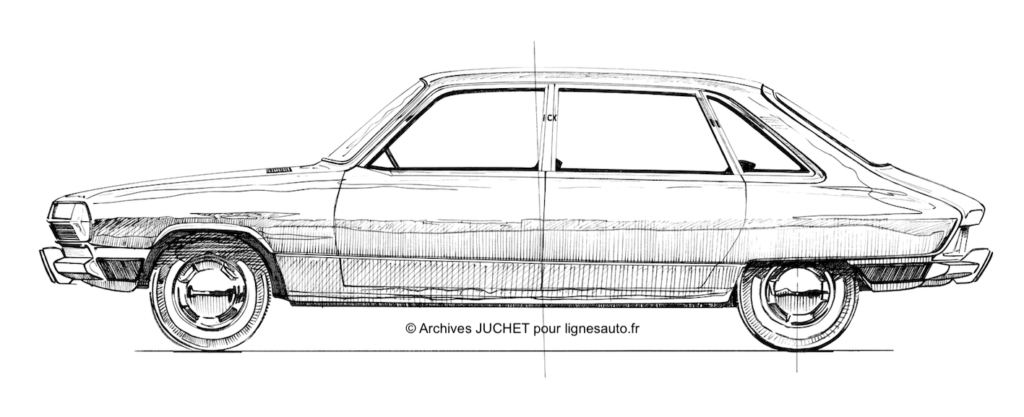
And so, a team of young designers and engineers set to work. Gaston Juchet (1930–2007) was in his thirties when he sketched the Renault 16. Most of these men had children and wanted to redefine the overly technical specifications. Yes to the fifth door – which Pierre Bercot had rejected – yes to front-wheel drive, yes to interior modularity.
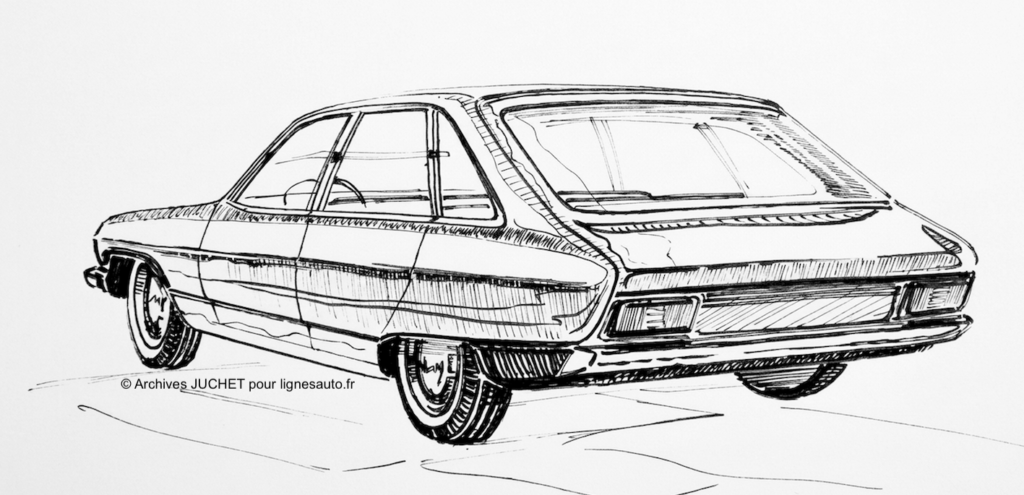
A 1500 that doesn’t dress up in the tailored guise of a posh, upper-class car, but takes on a variety of forms to appeal to families at every stage of their lives. And, first and foremost, at every stage of their week: work, shopping, leisure or weekend DIY.
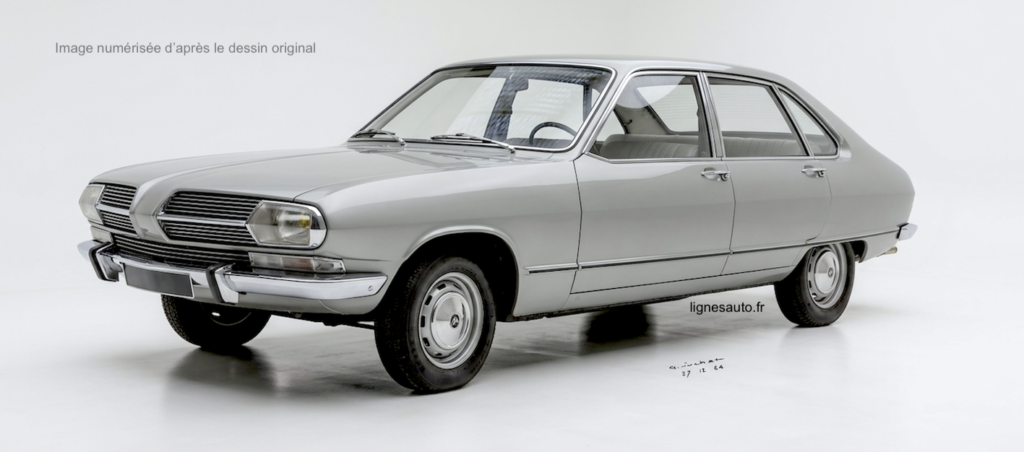
By December 1964, for Gaston Juchet, the Renault 16 was almost a thing of the past, even though the production model had not yet gone into production. He realised that with the new R16, Renault would appeal to a wider audience than with the Frégate, which it was replacing.
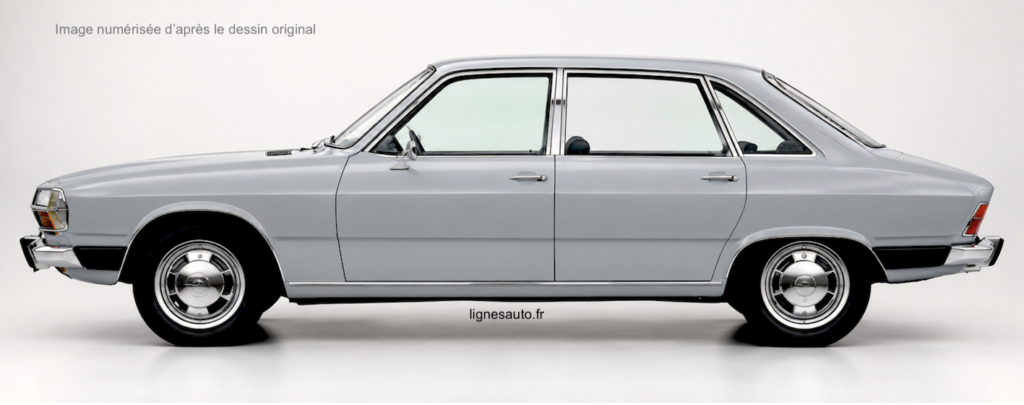
But there is still room for a ‘large’ Renault. 1964 was a year before the Renault 16 went on sale, and two years before the launch of the ‘Y’ programme – the counterpart to Peugeot’s ‘H’ project – aimed at jointly developing a top-of-the-range saloon with a V8 engine. Below is one of the proposals for the large Renault under the joint programme between the two French manufacturers.
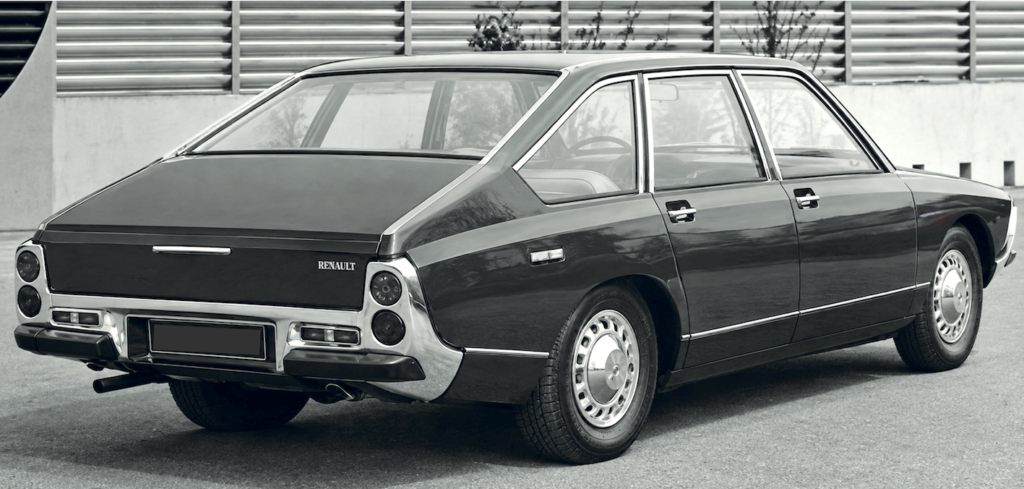
This project follows on from the agreements signed between the two French manufacturers in 1966. The ‘Super 115’ shown below was therefore ahead of the brand’s product planning decisions, but it remained at the design stage; we have taken the liberty of transforming these drawings into digital illustrations whilst remaining faithful to Gaston Juchet’s original work. This large Renault may well have paved the way for Project H, launched in 1966 by the Peugeot-Renault partnership…
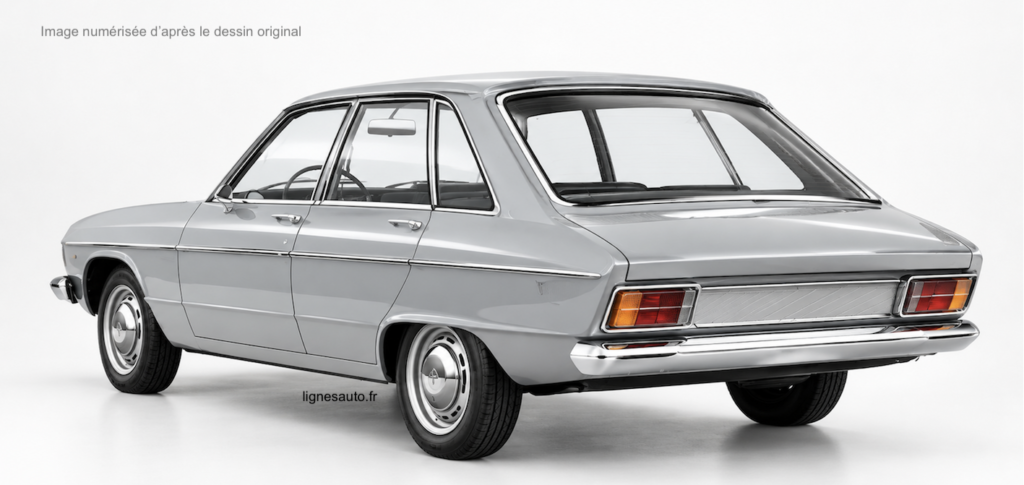
What we must unfortunately (?) take away from this is that neither the ‘Super 115’ designed by Gaston Juchet nor the large saloon car from the joint Renault-Peugeot programme ever saw the light of day. Only the work carried out on the V8 engine, which was derived into a V6, resulted in the Peugeot-Renault-Volvo V6 (the PRV). However, the agreements did give rise to a new four-cylinder engine, as seen in the Renault 14, and to the development of a family saloon which, after numerous changes, evolved into the Renault 30 and Renault 20. Perhaps these are the ‘granddaughters’ of the ‘Super 115’.
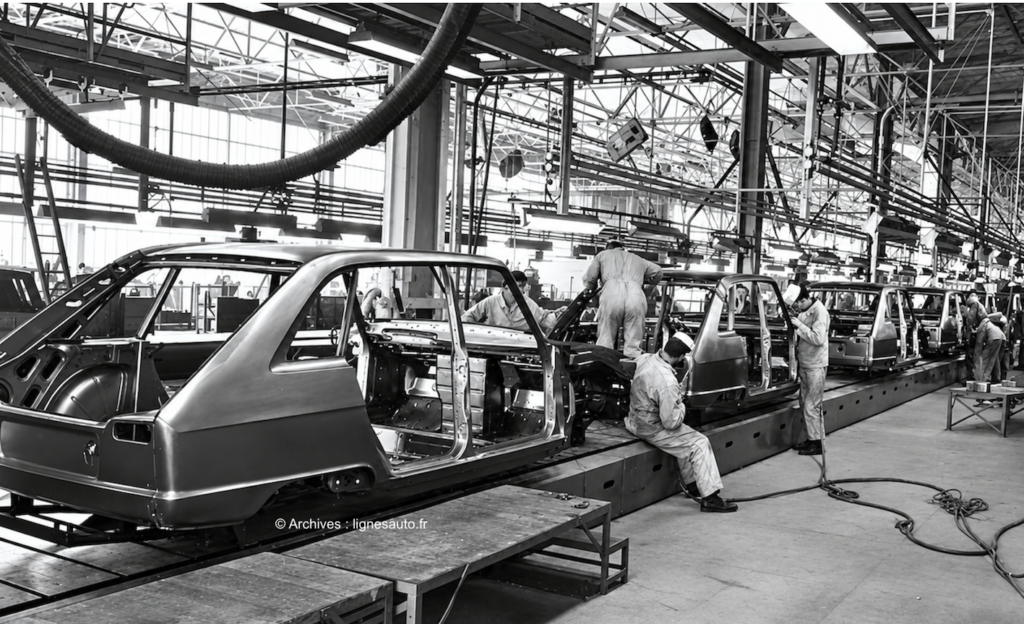
Pictured above, mass production of the Renault 16’s Project 115 began in Sandouville in 1965, one year after the designs for the “Super 115” were drawn up and one year before the launch of a major Renault project carried out in collaboration with Peugeot. The Renault 16 was set to make a splash with its five-door design and modular interior. It would compete with all the “1500” models, and it would be another 10 years, in 1975, before it was replaced by the Renault 30, a preliminary study of which by Gaston Juchet is shown below.