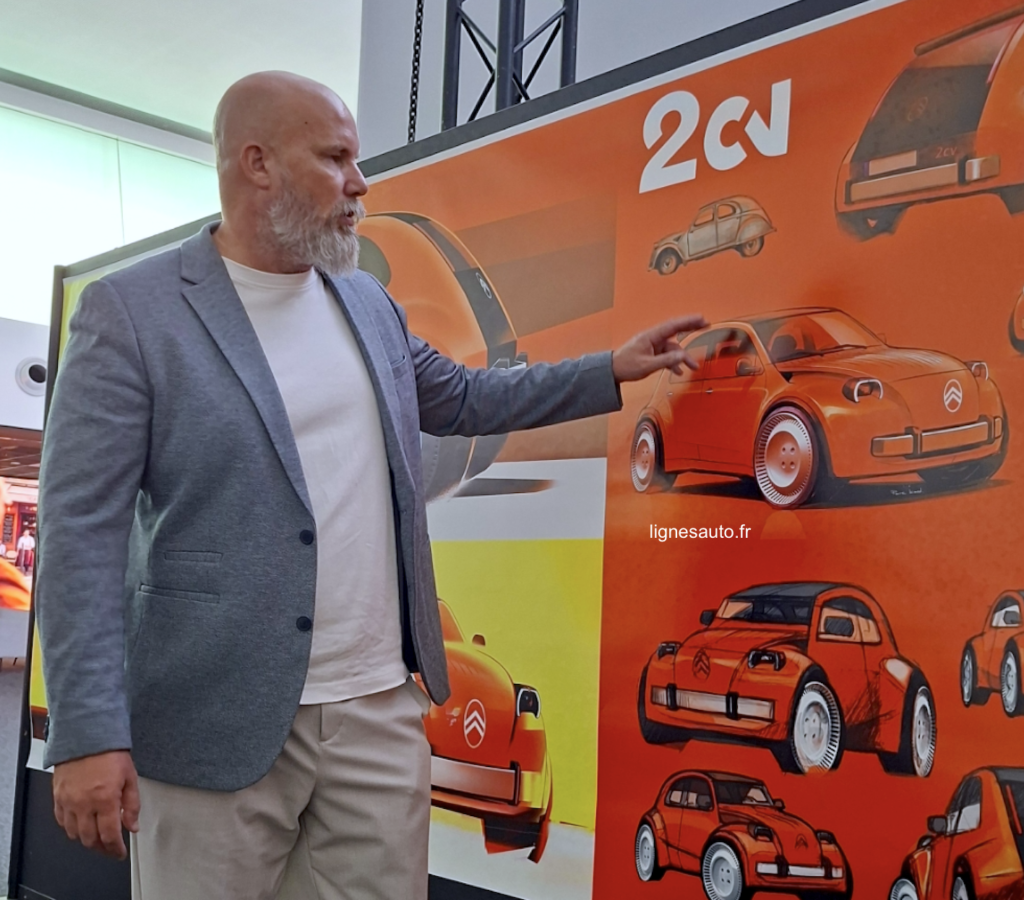
Don’t have the inclination, the time or the means to watch Prime Video? LIGNES/auto breaks down the design aspects of the excellent documentary on the origins of the 2CV, broadcast by the channel (https://www.primevideo.com) to help you understand that it was no easy task to reinvent this Citroën icon nearly 80 years after its launch.
LIGNES/auto was invited to take an in-depth look at the Paris concept car ahead of its display at the Paris Motor Show, and one question remains unanswered for the time being: on which platform will the 2028 production model be built? There are two possibilities: the Stellantis Smart platform (ëC3, C3, etc.) or the platform for the future small Leapmotor model that will succeed the T03, shown below in its current version.
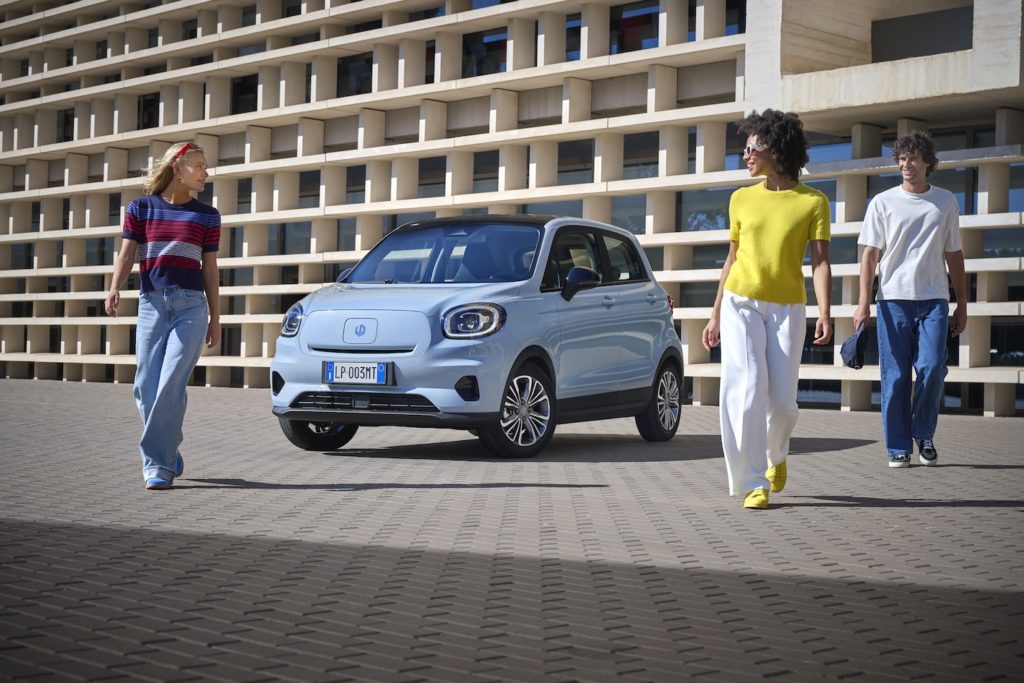
This issue of the platform is crucial. Even though LIGNES/auto is a website dedicated to design, it is important to bear in mind that the 2CV of 2028, which is currently undergoing industrialisation studies, will see its design either approved or modified depending on the platform chosen. If it is based on the platform of the next-generation Leapmotor T03, this design would likely make it easier to achieve the target retail price of around €15,000. To visualise this potential choice, we have superimposed the current Leapmotor T03 (red lines) and the 2CV concept model (green lines) below.

It is therefore a “feasible” project, as the Italians say. The Italians are the ones most directly affected, as the 2CV will be produced at the Pomigliano d’Arco plant. This industrial site was designated in May 2026 as the pilot plant for Stellantis’s E-Car programme. Another clue might confirm the choice of the Leapmotor platform: the very first mock-up of the 2CV revealed in the documentary “The Legend Returns” (make sure you spell the title correctly if you’re searching for it on Prime Video…) is considerably larger than the show car. This might be explained by the choice of the Stellantis Smart platform, which is more spacious.
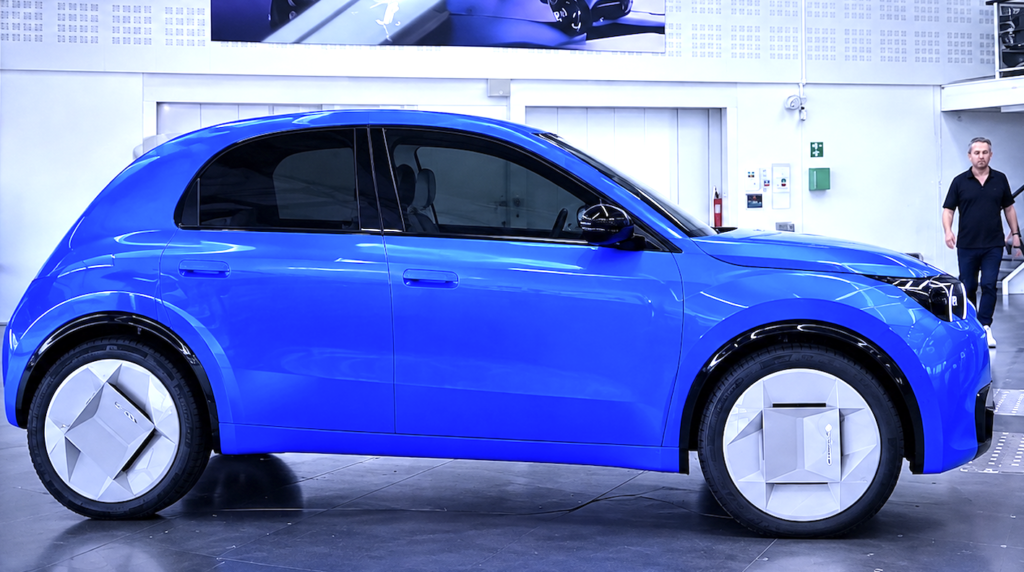
Pierre Leclercq, the brand’s head of design, recently explained to us that the Citroën design studio wasn’t just working on projects approved by the product division but was also on standby – with physical or digital models – to respond to every possible and imaginable project. This was certainly the case with the 2CV, which was already ready when the new boss, Xavier Chardon, arrived. However, this model featured a long, wide car, which the Citroën boss rejected in the Prime Video documentary, remarking: “It doesn’t stir any emotion.” The model in question is shown above. The photos of the first two models are all taken from this video report. The photos of the first two models are all taken from this video report.
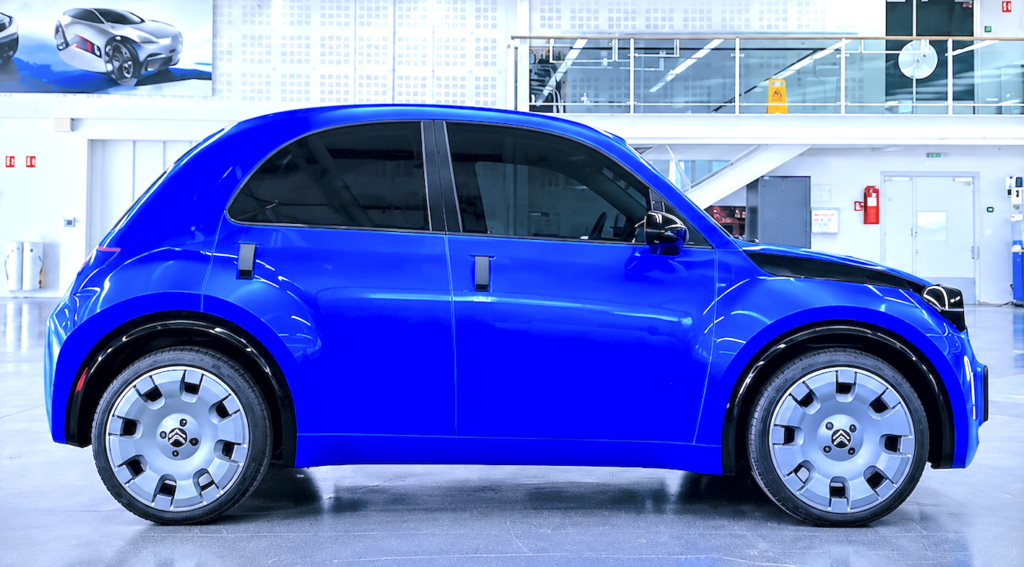
Then came the second model, shown above, which adopted a much more compact design that would be retained throughout the programme. This proposal, still painted blue, still failed to win over the management, but the concept adapted to this new size was approved. Was the smaller Leapmotor platform then chosen? It remains a mystery…
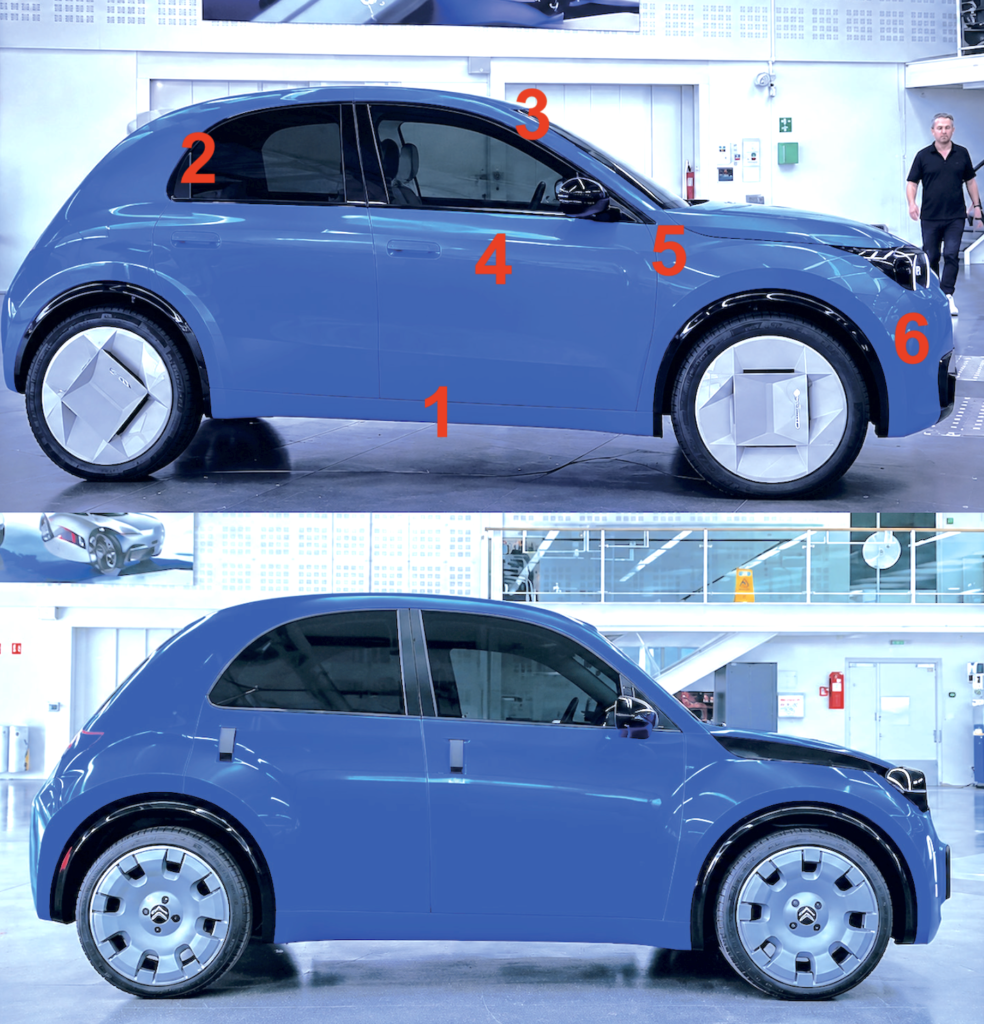
Above, we can see the differences in dimensions between the first two blue scale models presented to Xavier Chardon. In 1, the wheelbase has been considerably reduced. In 2, the design of the roofline needs to be revised as the body side is now narrower above the rear wheel. In 3, the roofline extends further back above the driver’s compartment. In 4, the door handles have now been replaced by straps cut from seatbelts, as shown below. In 5, the joint at the windscreen cross-member is completely different, allowing the section between the bonnet and the front wing to more closely resemble that of the original 2CV. In 6, there is a noticeable reduction in the overhang.
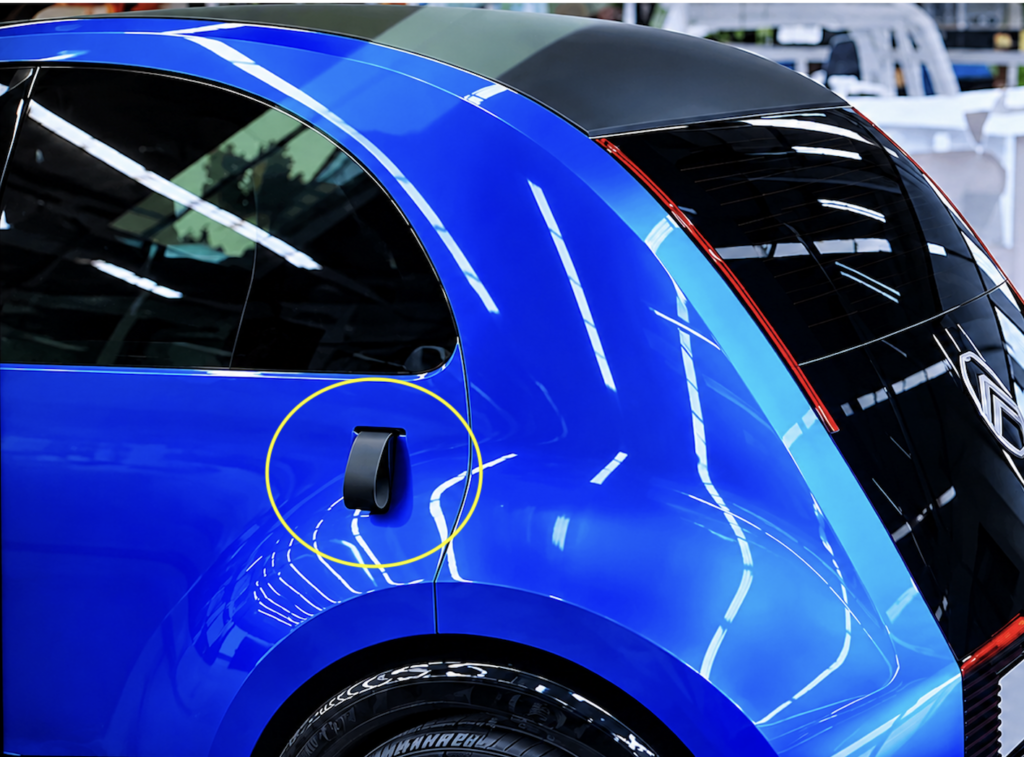
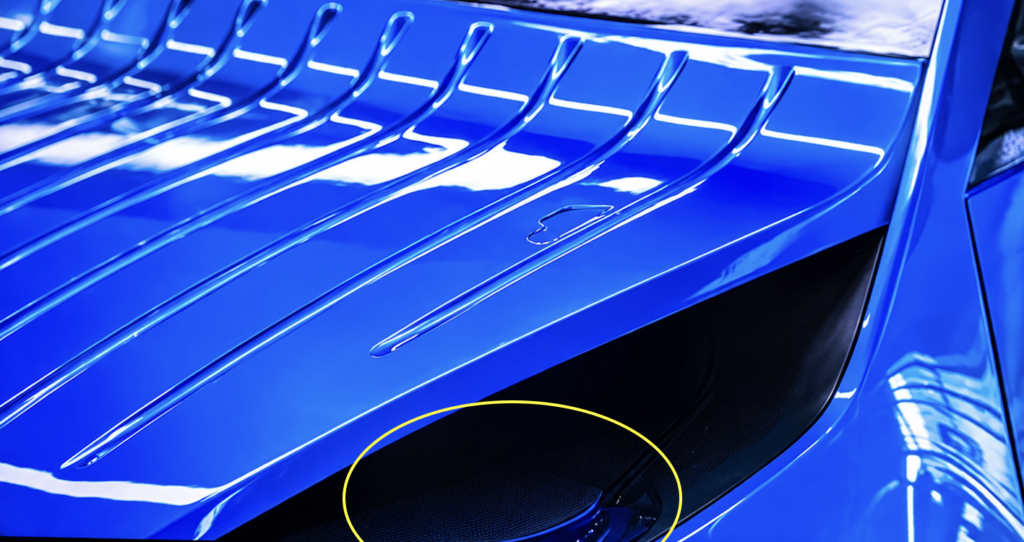
Below is a close-up of the famous gap between the bonnet and the front wing, which the designers are trying to blend in as smoothly as possible, whilst on the original model it is practically detached from the bodywork. Circled in yellow: is this a suggested component of the platform’s front suspension or a support for the model? This aspect of the design (the narrowed junction between the wing and bonnet) seems to have caused the designers and architects a few sleepless nights!
Working quickly, as time was of the essence (just over a year between the start of work and the presentation of the concept in Paris), a third model was produced by the Citroën design studio. This time, all the elements were designed, both for the exterior and the interior. For the time being, the interior can only be viewed digitally and virtually, thanks to the headsets that let you step inside the future 2CV! Below, Pierre Leclercq and Xavier Chardon are inside the 2CV. Yes, really…
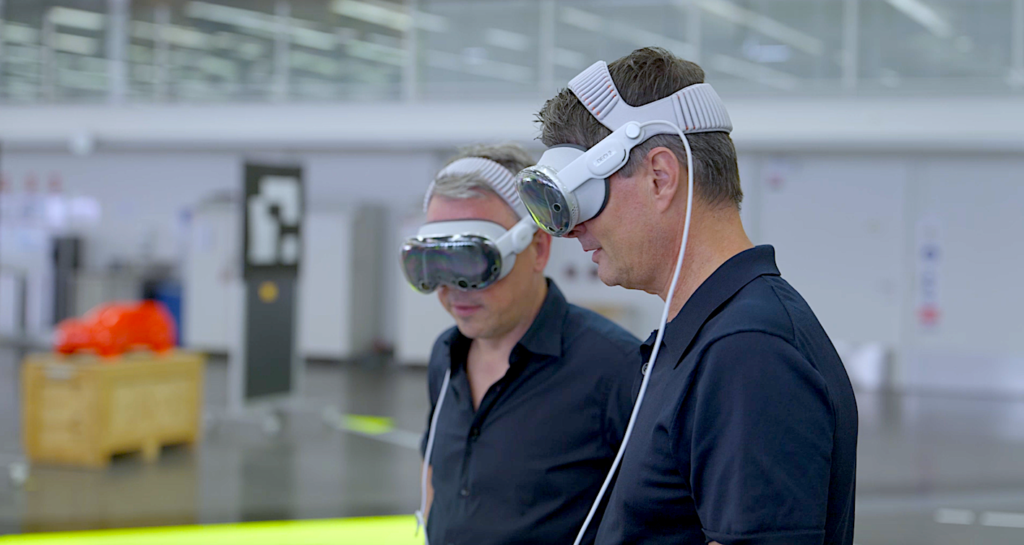
But before presenting the latest prototype of the programme for bringing the concept to fruition, we must bear in mind what went wrong with the first two. So let’s go back to the very first prototype, which the Citroën boss saw on his arrival and which failed to evoke the expected emotion. It is the rather bulky one – too bulky, in any case, for the market it was ultimately intended for – shown below.
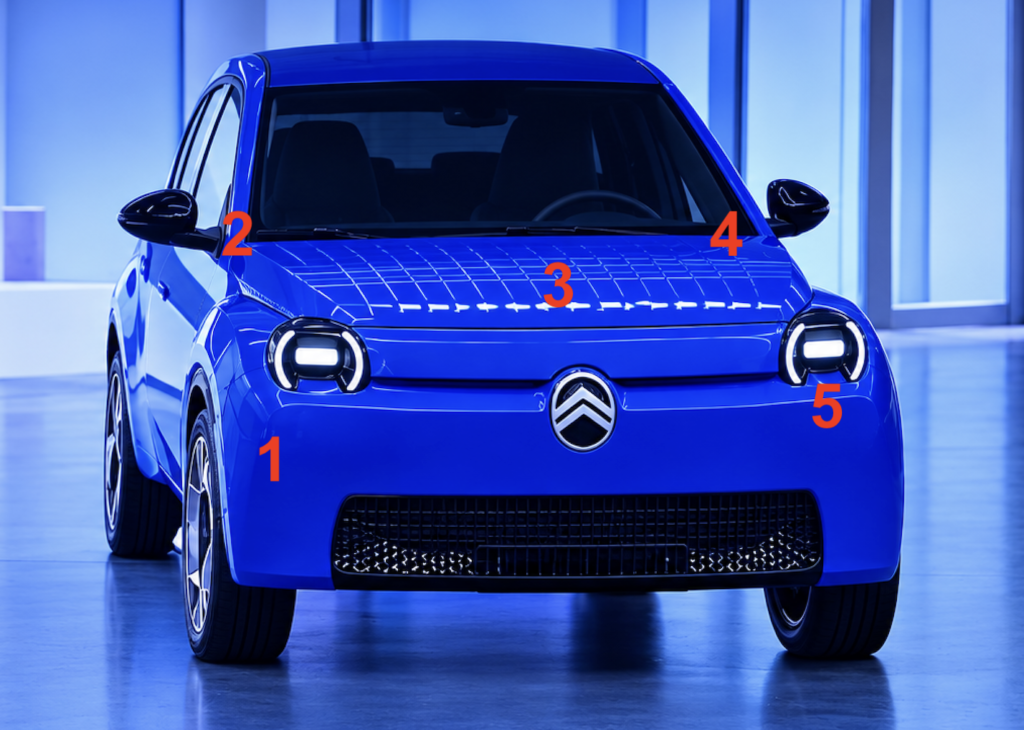
Above, in 1, the car is very wide and bulky. It’s also very horizontal. There’s nothing 2CV-like here, but rather an interpretation of a “2CV-style C3”. In 2, the windscreen area is dictated by the chosen platform and does not seem to allow for the famous triangle that exists on the real 2CV between the bonnet and the front wing. In 3, the bonnet is wide; its overly rectangular shape does not, either, fit with the 2CV spirit. In 4, the bonnet does not rise towards the windscreen as on the TPV. In 5, whilst the headlights have found their theme, they do not yet have their final design. Let us now examine the second model, which was also rejected, shown below.
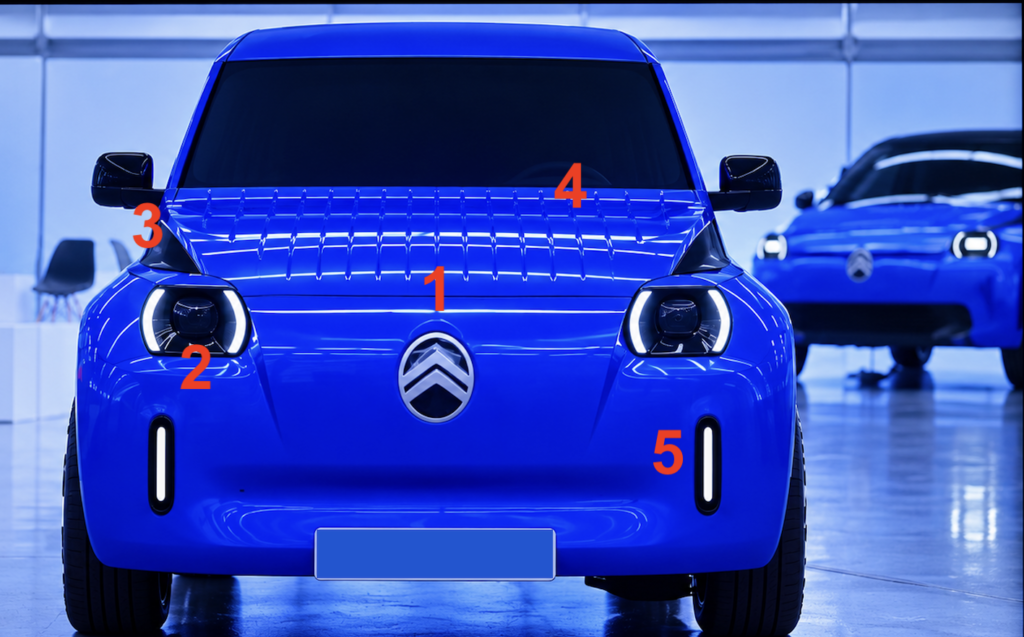
There are significant changes made by the Citroën design team to this second proposal. As we saw earlier, the car has changed in size. Smaller and narrower, it now features in 1 the tapered bonnet of the 2CV. The headlights in 2 have changed shape again. Above all, they are less protruding, sit closer together and are in keeping with the Deuche’s style. In 3, the platform allows for greater scope to increase the space between the wing and the bonnet. In 4, the bonnet extends up towards the windscreen but does not yet feature the hatches that can be opened from the inside. In 5, the bumper is rounder and features the famous clips found on modern Citroëns.
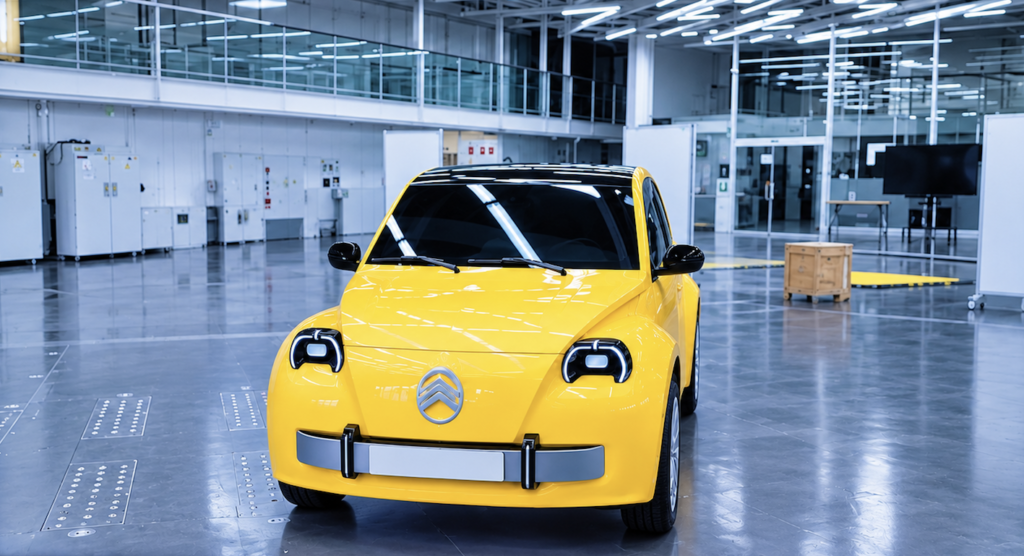
These two models led to the final proposal, shown in yellow above. They also made it possible to get as close as possible to what the management – and no doubt the market – wanted for the revival of the 2CV. It was always a tightrope walk, and every change to a line, a stylistic theme or the overall proportions could tip the design in either the right or the wrong direction: it could be interpreted as a fine take on the 2CV or, conversely, fail to capture the spirit of the ‘Deuche’… Finally, below is the concept car that emerged from these three models.
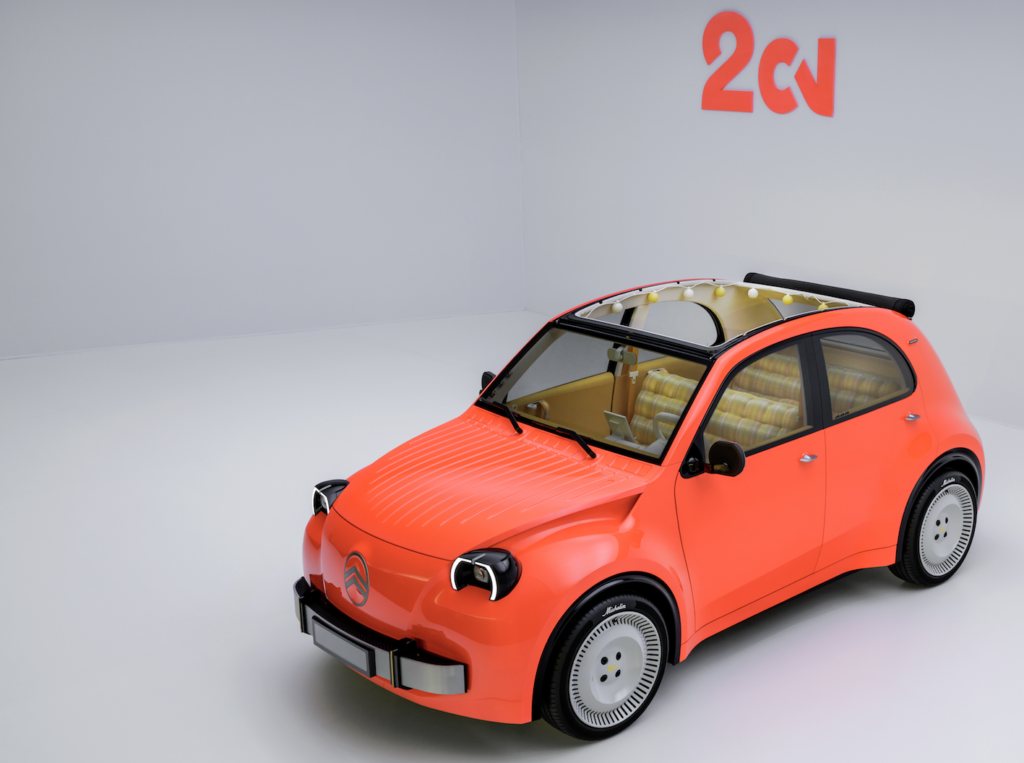
The extensive design work carried out on these three prototypes certainly proves that this is not merely a concept car, but rather a preview of the next production 2CV due in 2028. This is something that neither Head of Design Pierre Leclercq nor the designer of this 2CV, Pierre Icard (pictured below), make any secret of.