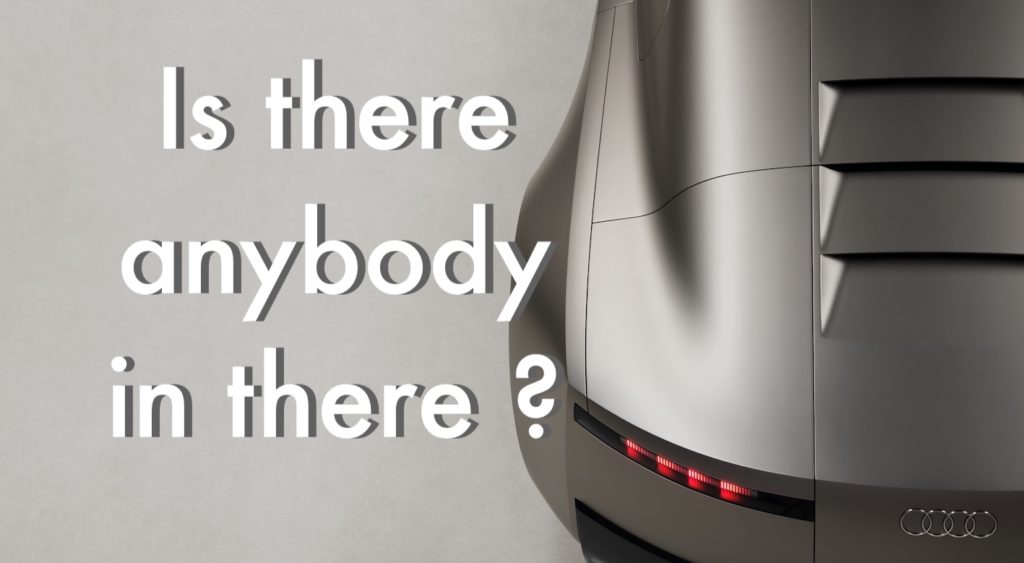
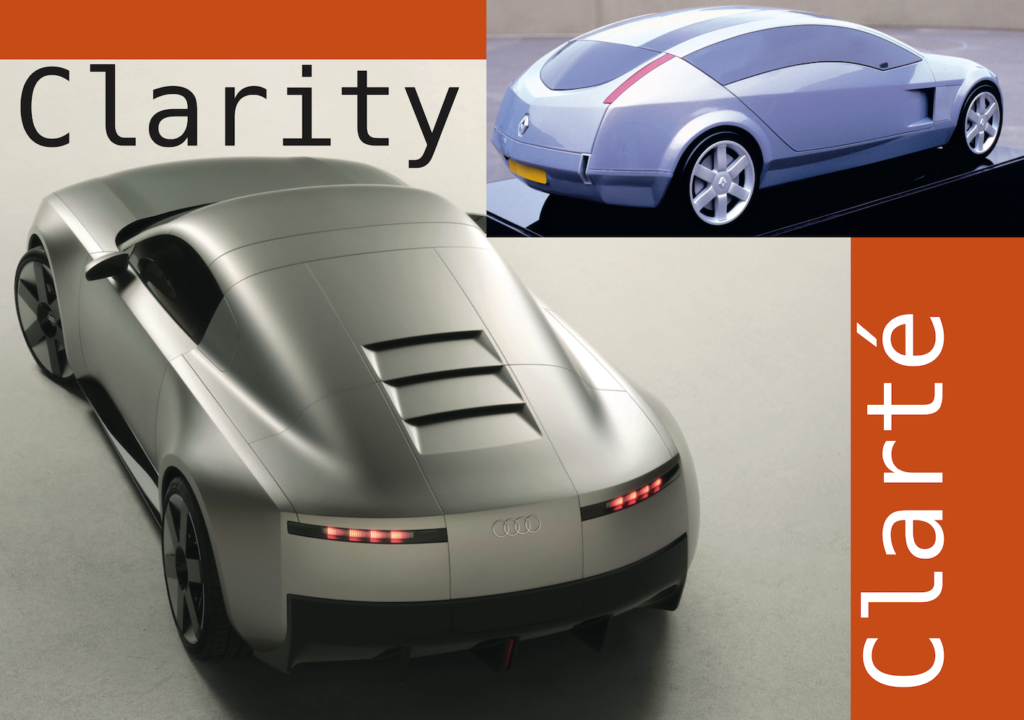
LIGNES/auto is delighted to discover Audi’s Concept “C” concept car, which is neither an SUV nor a crossover! This concept is a real car, but it is not universally popular. There is indeed something to be said about the absence of a rear window and the techno look of the interior, which lacks sensuality, and we will address all of that. But its simplicity contrasts with the brand’s latest creations, where sometimes unnecessary stylistic excesses were beginning to seriously weigh down the design of a brand renowned in the 1980s and 1990s for its lightness and fluidity. The “C” concept puts a stop to this escalation, and we dream that others will follow suit…
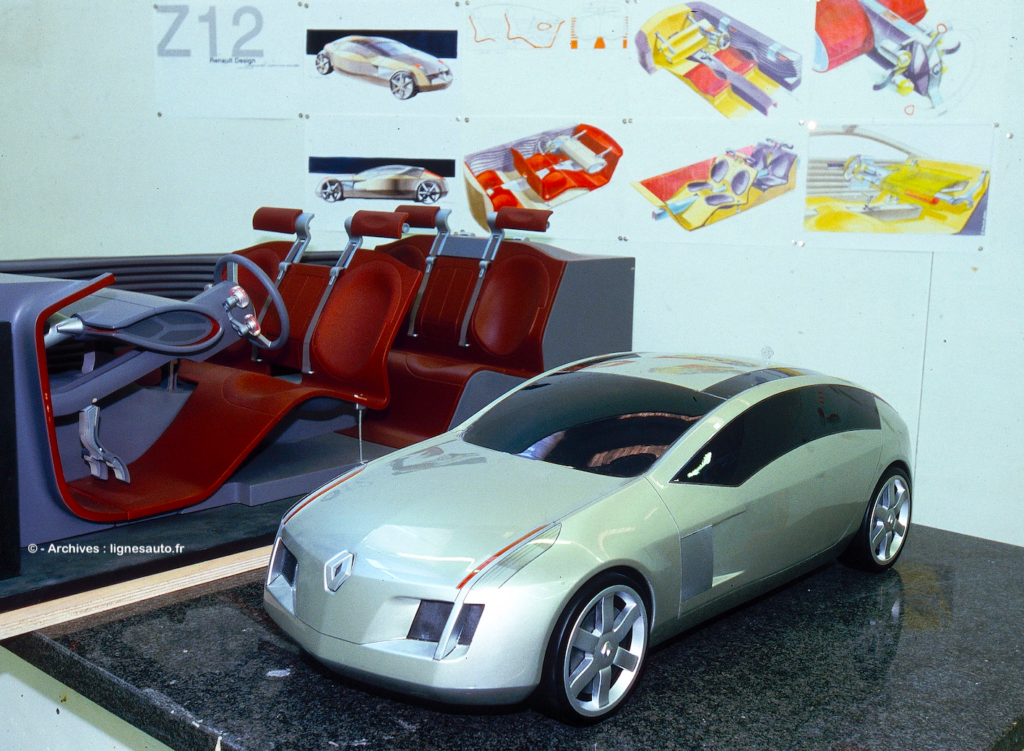
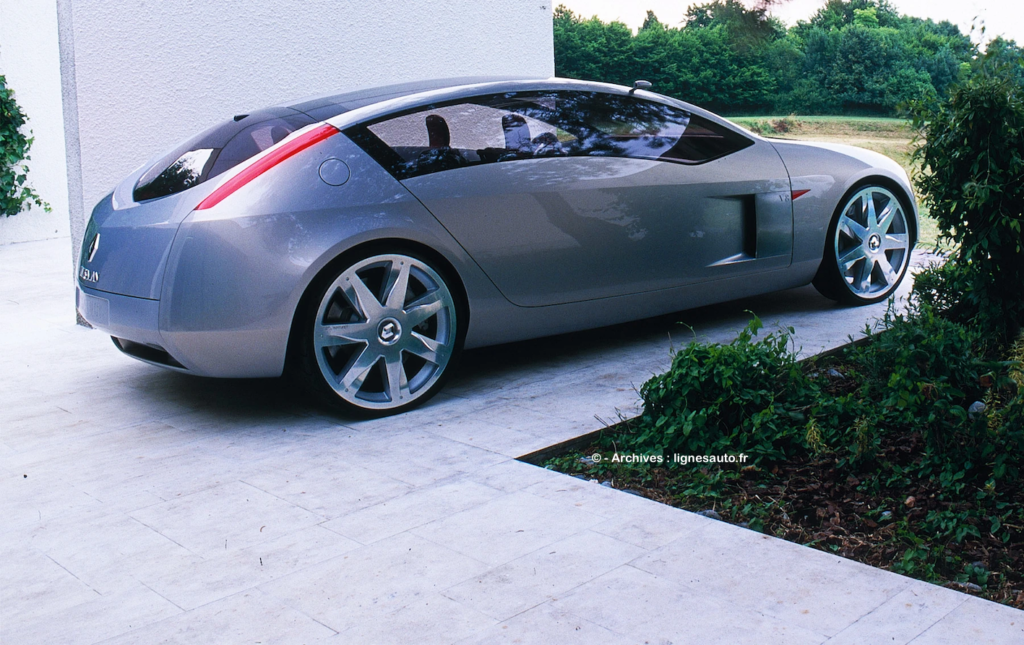
However, let’s not be fooled: Audi’s efforts are commendable, but the German manufacturer’s design strategy is nothing new, as it is very reminiscent of the one adopted by Renault at the beginning of the 2000s! At the time, it was given the appealing name ‘Simplexity’, which attempts to simplify what is technologically complicated. The concept car that laid the foundations for this was the 2001 Talisman (below), designed entirely by Stéphane Janin (exterior and interior) in collaboration with Nathalie Dugauquier for colours and materials.
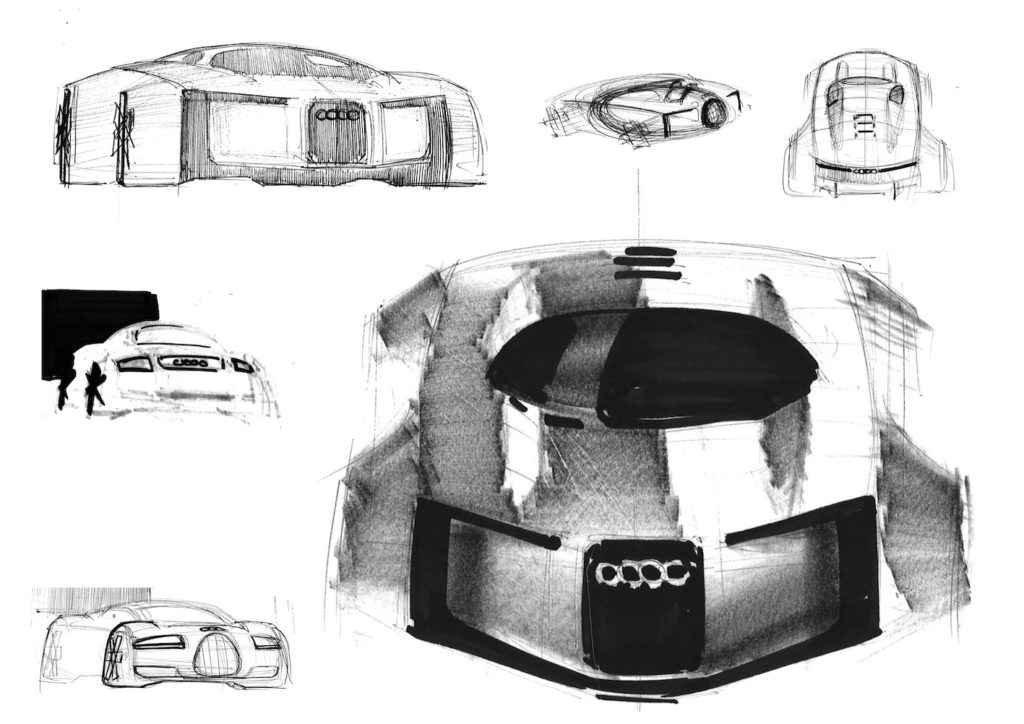
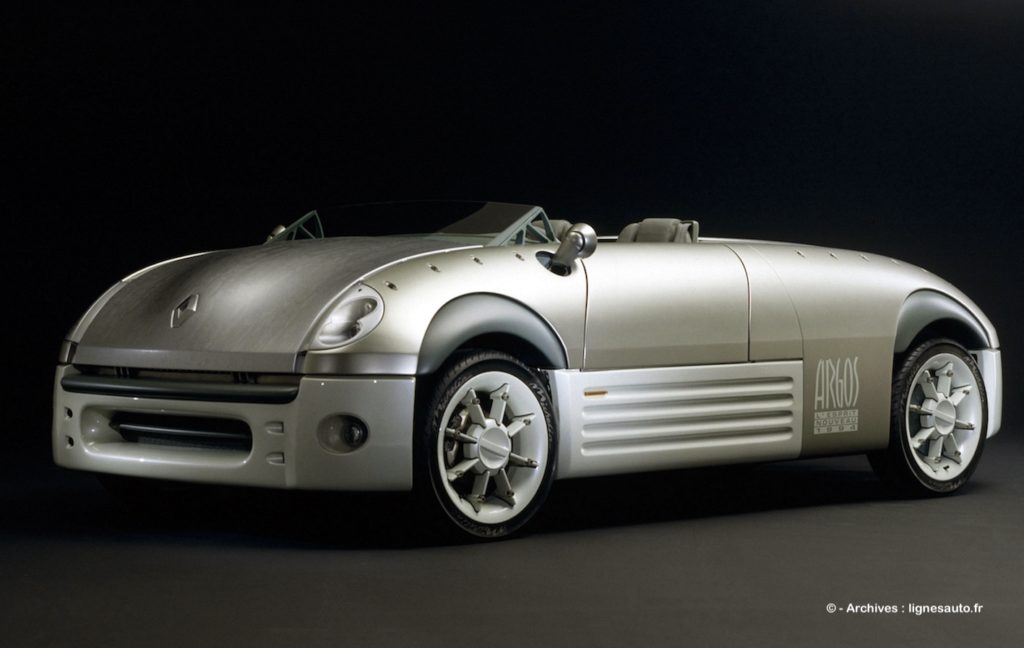
This comparison between Renault and Audi’s design strategies is all the more amusing given that in the mid-1990s, Audi’s design team made no secret of the fact that they had taken inspiration from Renault’s Argos concept car (1994, below, designed by Jean-Pierre Ploué) to create the TT coupé, the very model that served as inspiration for the new “C” concept for 2025. Both the Renault Argos and Talisman were created under the leadership of Patrick Le Quément.
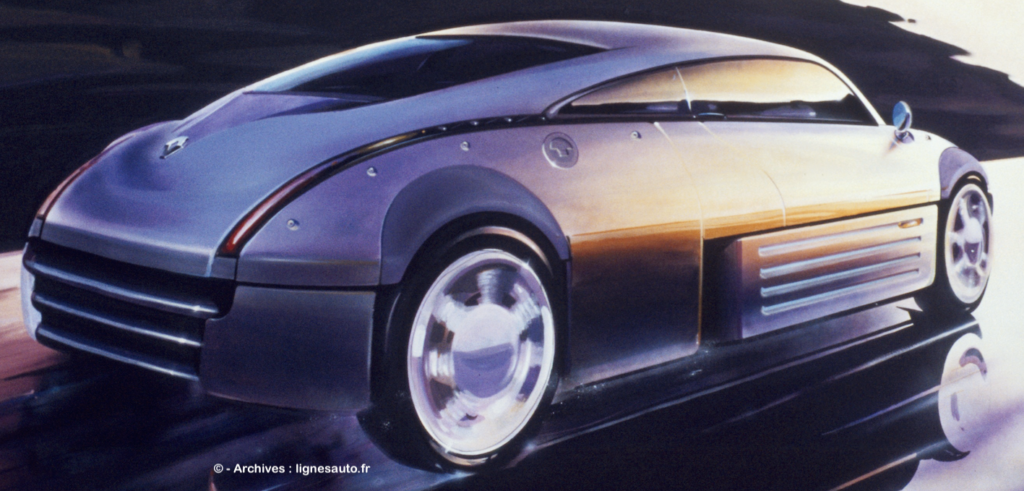
The Argos inspired Audi, but internally the ‘Argos coupé’ existed only as a drawing and a model. Axel Breun, then a designer at Renault, developed the coupé shown below and told us that “this project could have become something spectacular. Based on the Argos, I designed this coupé version well before the Audi TT. What is certain is that we – like the German designers – were working on the same ideas in terms of architecture and formal language… But the arrival of the Audi TT showed us the need to exploit a strong concept design as quickly as possible.” Audi beat Renault to the punch, which had other more important projects to deal with at the time.
The Talisman concept car is based on the theme of ‘Touch Design’, which incorporates this notion of ‘simplexity’. Patrick le Quément explained at the time that “the Talisman concept is a remarkable concept. We are now pursuing what I call “simplexity”, a concept that I first mentioned in 1999 in a text explaining this notion of simplifying what is technologically complicated.”
A statement that could be put almost word for word into the mouth of Audi’s current head of design, Massimo Frascella, who explains that “technology is a means to progress, not an end in itself. We don’t want to hide it or put it forward: it should inspire without being dominant. For Audi, technology is a given, discreet but functional and present when the customer wants it.”
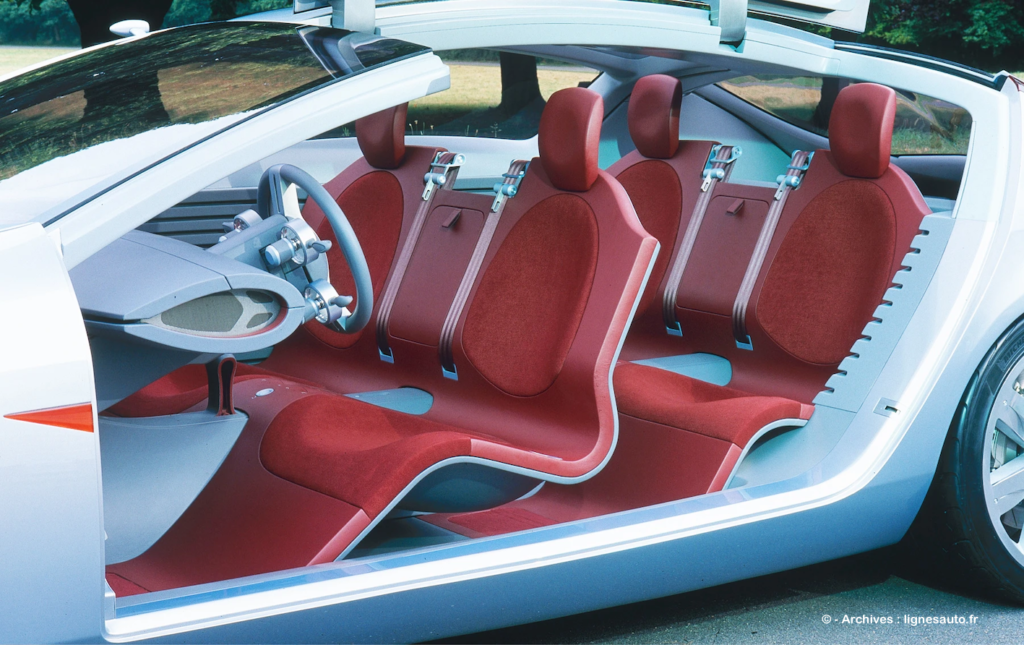
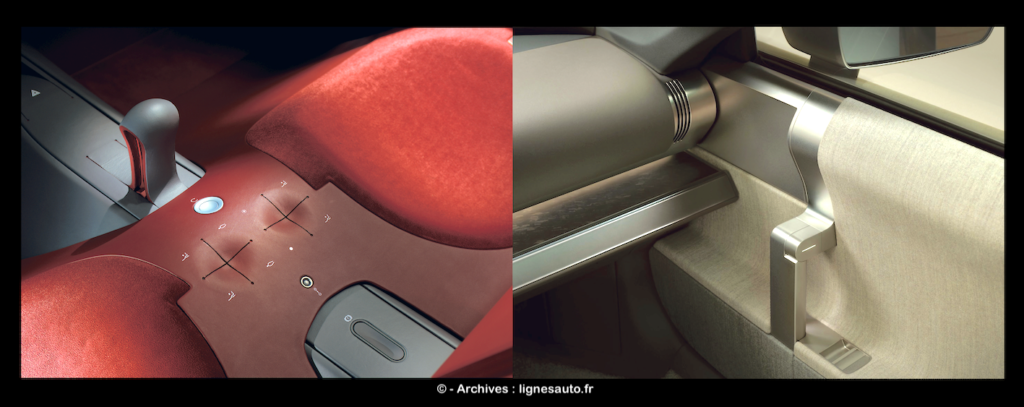
Above, the interior of the 2001 Renault Talisman concept car celebrates emptiness and lightness to provide an unprecedented feeling of comfort and well-being, as Patrick le Quément pointed out in 2020 when writing the book ‘Renault Concept Cars and Prototypes’: “We had to go against what was becoming increasingly complicated, with technology that was sometimes not very intuitive. Each control must invite use and suggest its function. To achieve this result, the materials used must be soft to the touch, the shape must be interpreted as an invitation, and their handling must be perfectly in line with their mechanism. I am struck today by Apple’s updates, which make things increasingly complex. The idea with Talisman is therefore to showcase the simplicity of the various controls.”
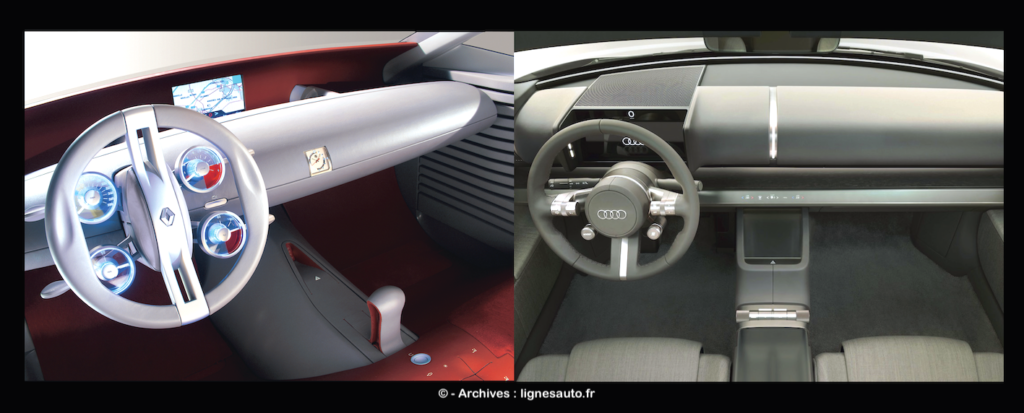
In its 2001 communication, the manufacturer elaborates further on this Touch Design concept, explaining that “it is not just a question of appearance. It is also about the tactile appeal of the object, which encourages action.“ For Quément, “the Talisman concept car is, for me, a very beautiful object that we wanted to be extremely simple to understand.“
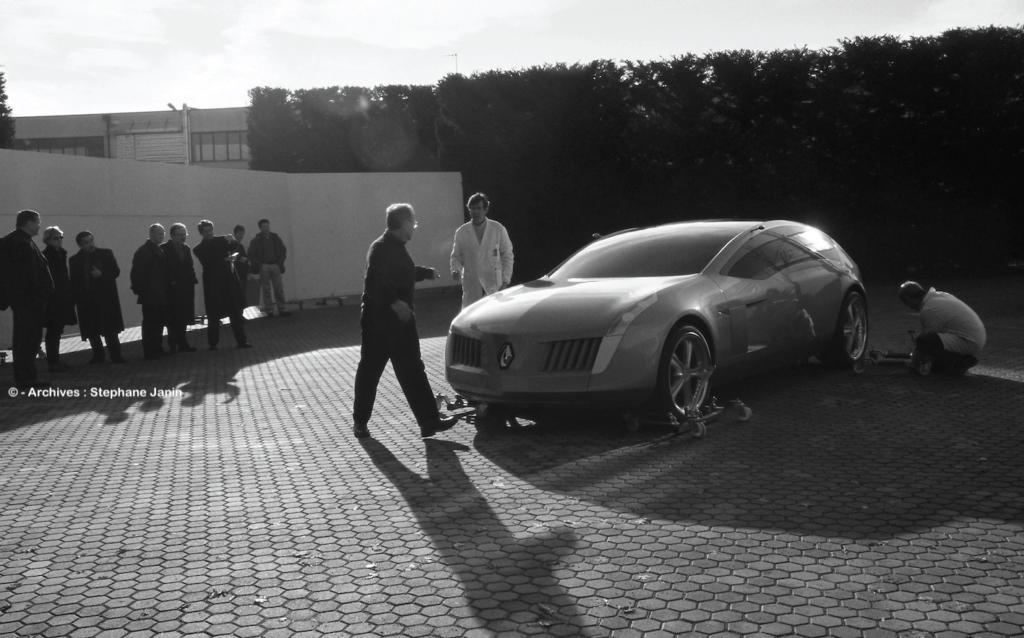
But the strength of Talisman, released in the same year as the VelSatis series (a high saloon car), is that it offers an extremely low four-seater coupé: 1.38 m, which is 20 cm lower than the large saloon car, which is no small feat! Was this an attempt to prove that the design team was capable of designing a very low car in the luxury car market? Patrick le Quément smiles and tells us that “yes, if you want to interpret it that way… but that wasn’t the official line!” As for the Audi Concept “C”, the simple fact that it is based on the theme of a fairly compact and low coupé/cabriolet is a revolution in itself in the automotive world, which is mainly focused on raised, crossover-type silhouettes.
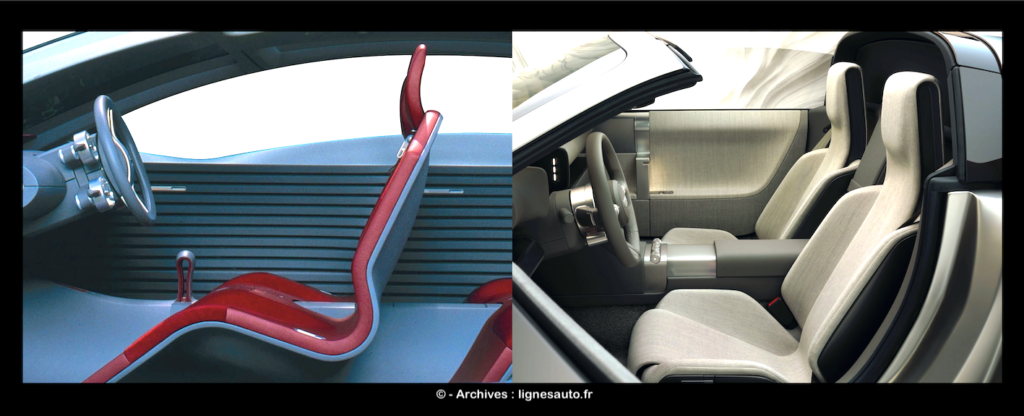
The two concept cars, Renault’s Talisman and Audi’s Concept “C”, side by side, embody a quarter of a century of developments in the quest for simplicity in design. The French concept wins the day when you open the doors…
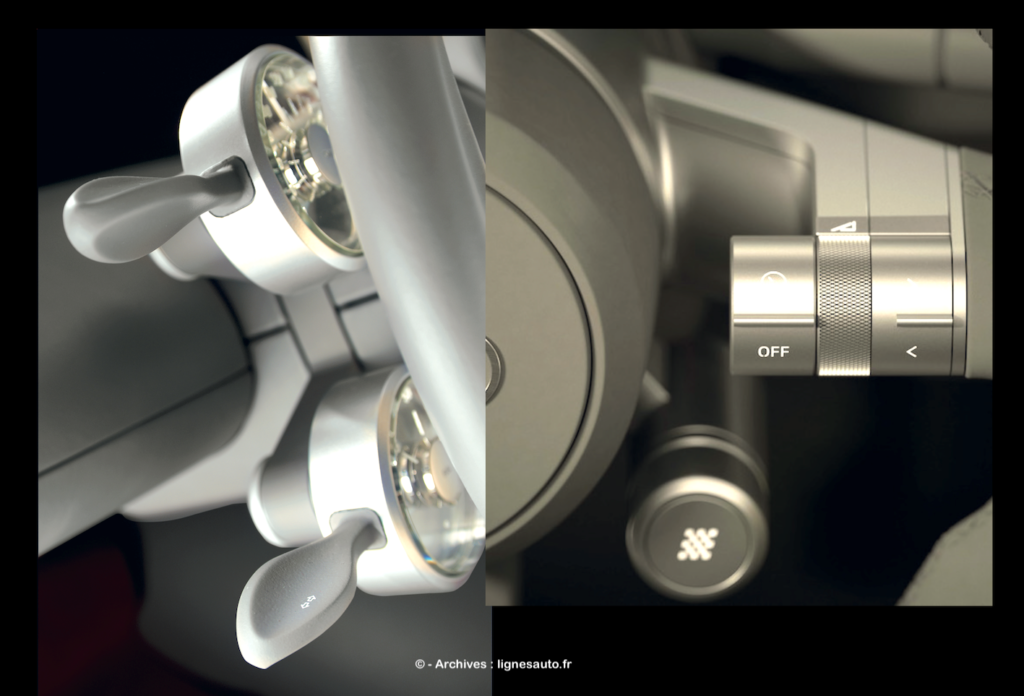
On board the Talisman, simplicity goes hand in hand with genuine sensuality, both in terms of the shapes and materials required by the Touch Design theme. I wouldn’t want to handle the angular, high-tech door handles of the Audi (below right) several times a day, whereas its French rival offers soft materials that are truly comfortable to grip.
In defence of the Audi concept, it would appear that the manufacturer intends to unveil a 100% electric sports coupé within the next two years, meaning that the Concept “C” would be close to a production-ready vehicle. However, Massimo Frascella’s philosophy is identical to that pursued by Renault’s designers nearly a quarter of a century ago: “Simplicity is the essence of my approach to design,’ says Audi’s new head of design. ‘I am passionate about creating models that are free of superfluous embellishments and do not simply follow trends. On the contrary, we will rely on a timeless and sophisticated design language.”
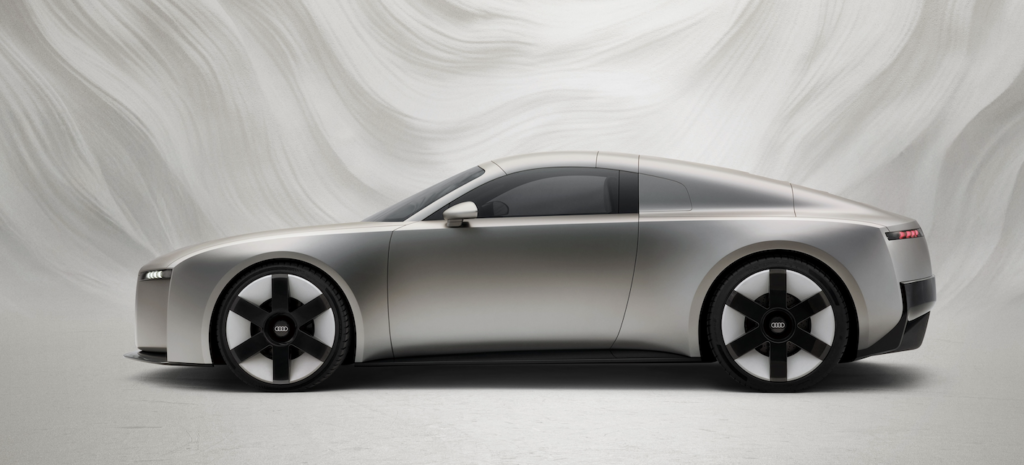
According to the head of the German brand, Gernot Döllner, “Massimo Frascella will ensure that Audi vehicles embody the brand’s identity through an unmistakable and emotional design language. Clarity, precision and perfect proportions are at the heart of his design philosophy – qualities that are perfectly in tune with the Audi brand image.” So the future sports coupé will be no exception in the future Audi range and will, on the contrary, be the manifesto that will plunge the brand into a new, more serene era, aesthetically speaking…
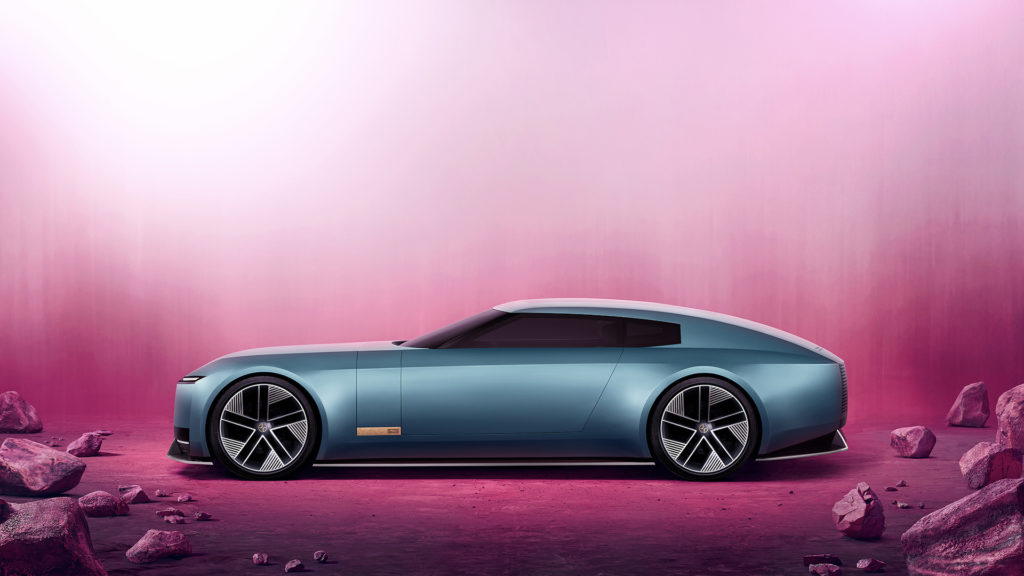
Another striking feature of the “C” concept is its relative similarity to recent designs, particularly the Jaguar Type 00 concept shown above. Apart from its air conditioning unit in place of the boot, the latter can be considered an unconventional and interesting approach. If we are willing to set aside one aspect that is important, to say the least: whether or not it will be accepted by Jaguar’s loyal customer base, a Jaguar that has, incidentally, disappeared from the logo…
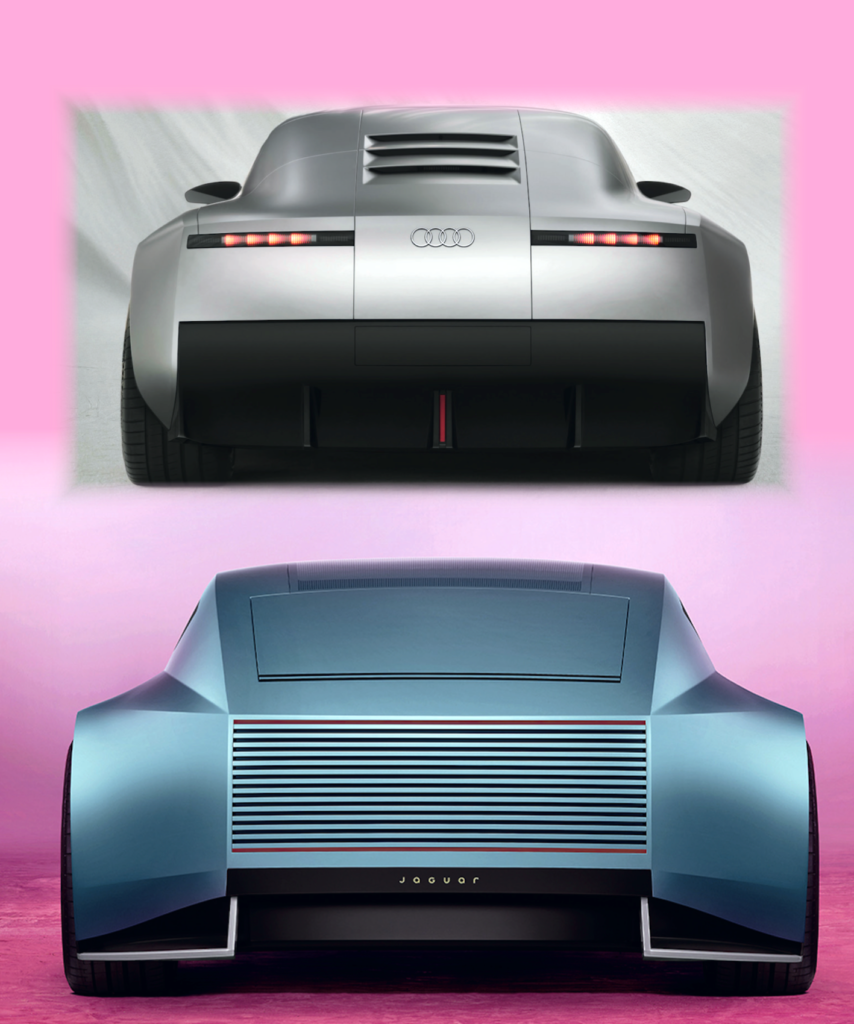
With this issue swept under the carpet, it must be acknowledged that the Audi Concept “C” is reminiscent of the British car. And the question arises all the more frankly given that Massimo Frascella, pictured below, was a designer at JLR, the group that brings together Jaguar and Land Rover within the Tata giant. Massimo joined Audi in 2024. This was just one year before the unveiling of the Jaguar Type 00 concept car. Did he participate in its design?
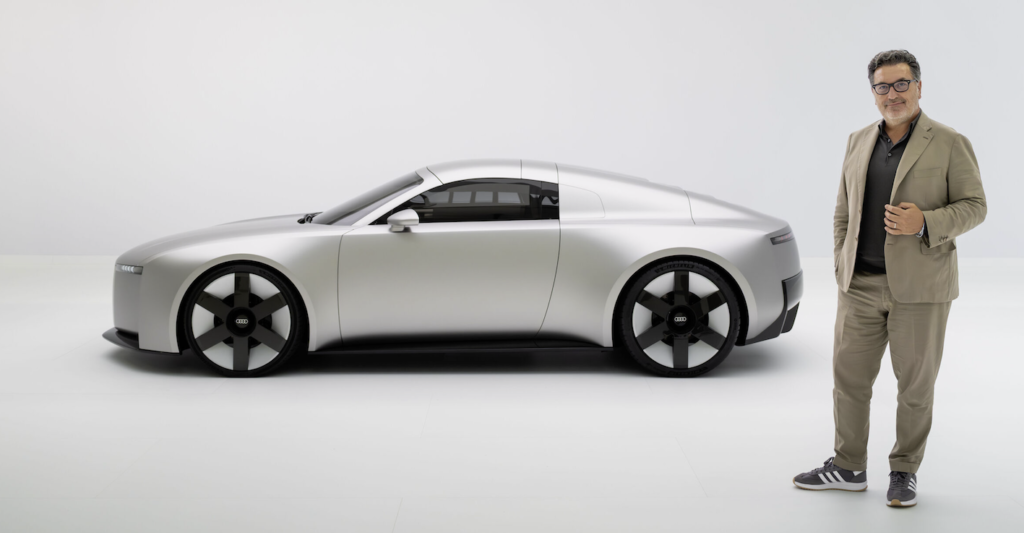
At Jaguar, the tone remains very corporate when discussing the concept’s exterior designer, Constantino Segui Gilabert. During the presentation of the Type 00, he even explained that “its bold proportions reflect the unique spirit of British creativity and originality. It celebrates art and embodies the essence of Exuberant Modernism.” The great Gerry McGovern, the firm’s current Chief Creative Officer, confirmed that this exuberant side would have no impact on the brand’s loyal customers, as it was rumoured at the time that ’Jaguar plans to retain only 15% of its current customer base.”
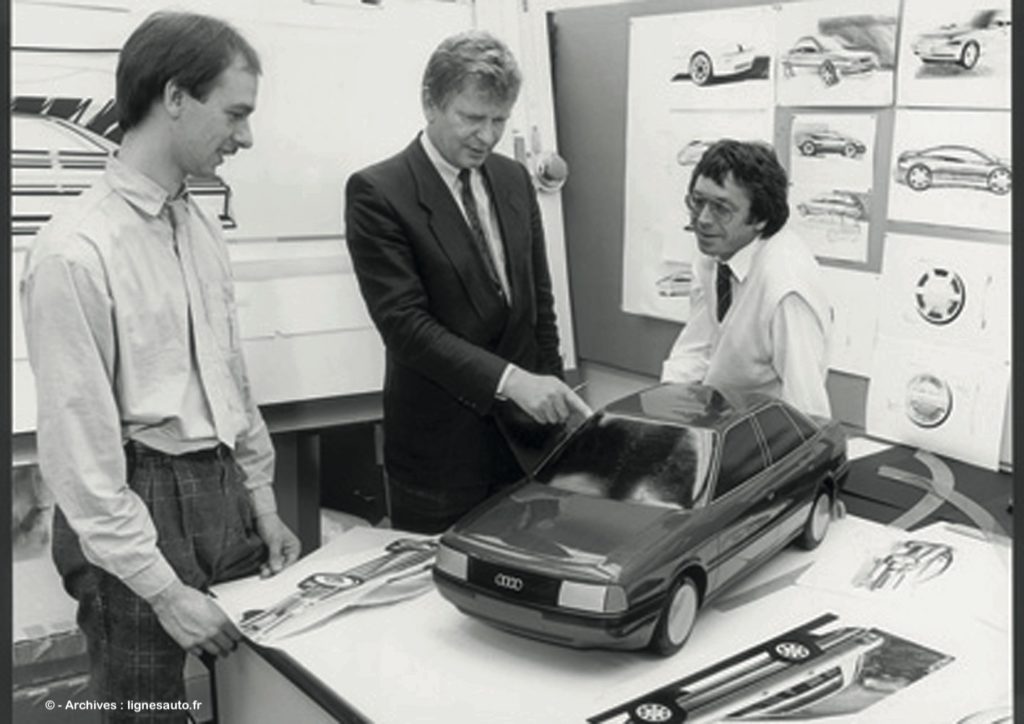
For Audi, the approach is quite different, as the Concept C anticipates a design that embodies the brand’s DNA 100%: simplicity and technology. Will we return to the golden age of the 1980s and 1990s with a sleek design dictated by technology (notably flush windows)? A period overseen by Hartmut Warkuß (above). This is partly the message conveyed by this concept. We will find out in a few years’ time whether this understated but still expressive design will have been in tune with a new era… The new Audi era.
THE END OF REAR WINDOWS?
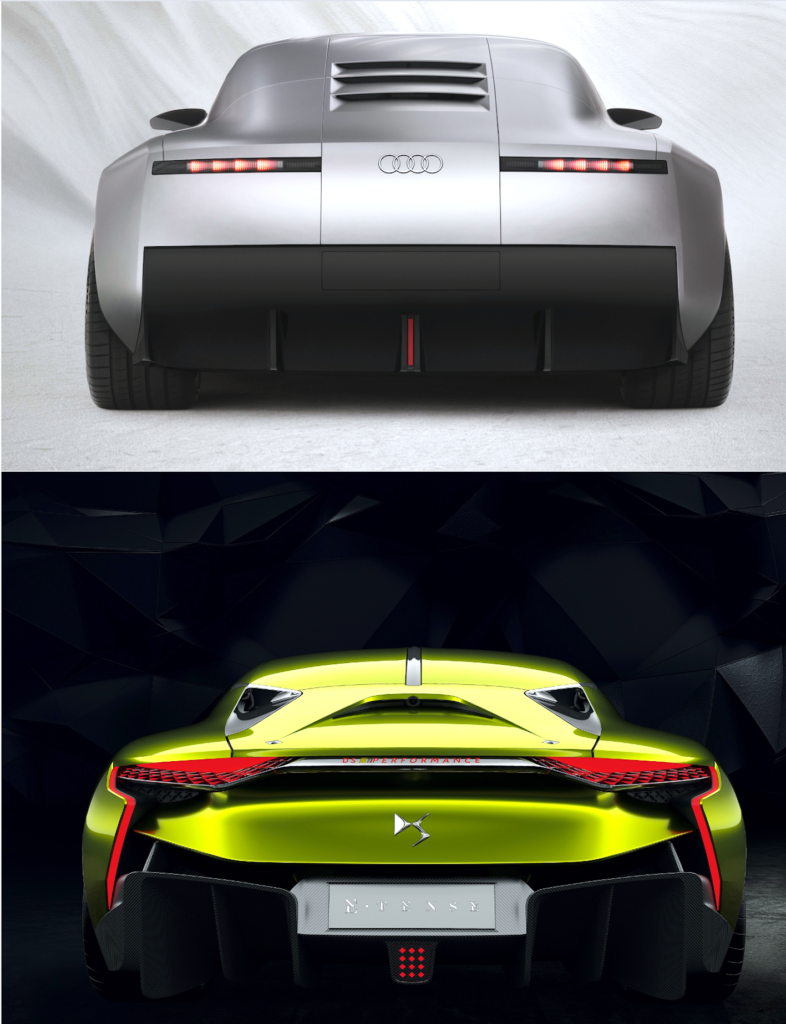
The absence of rear windows on certain concept cars is nothing new. Closer to home, in 2016, DS Automobiles unveiled the E-Tense, which stood out for its lack of a rear window. The same goes for the recent Jaguar Type 00 concept car and Audi’s brand new Concept “C”. The latter is a far cry from one of its inspirations, the Avus concept car, shown below.
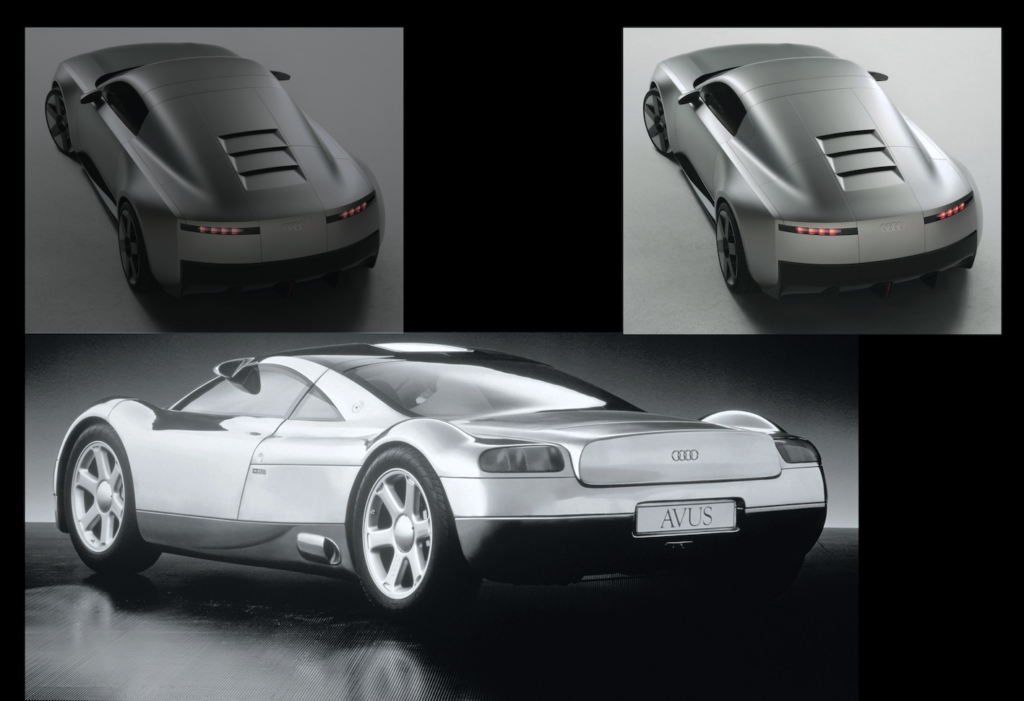
There are three reasons for this: the presence of electric motors in 2025, which we prefer to hide, unlike the W12 that Audi highlighted behind a large window. The second reason is the proliferation of sensors and cameras capable of alerting you when parking and even warning you of a pedestrian or child suddenly darting out from behind you. And finally, let’s not forget that glass is much heavier than sheet metal. And in vehicles that carry several hundred kilograms of batteries, every little bit of weight savings counts!