

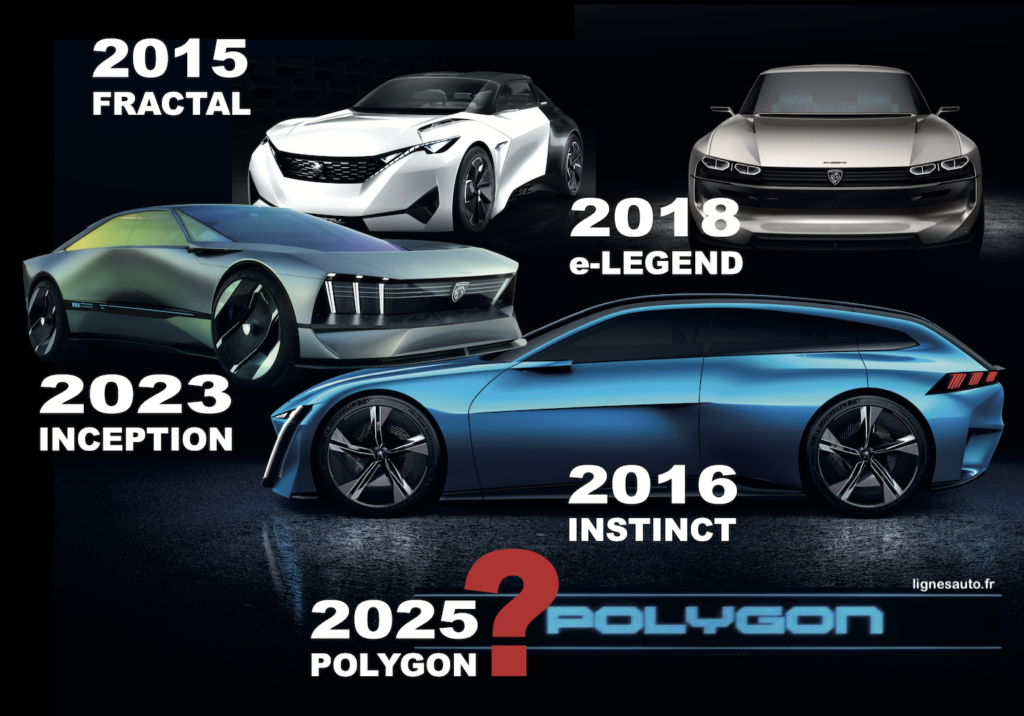
The pressure is mounting. The Peugeot Polygon concept car for 2025, heralding innovations and a bold design language for future Peugeot models, will be unveiled in mid-November. It has taken more than two years since the Inception in January 2023 for the French manufacturer to unveil a new manifesto. Let’s take a look back at a decade of Peugeot concept cars, from 2015 to 2025. Fractal, Instinct, e-Legend and Inception have each left their mark on this decade in their own way. Their designers talk about them again!
2015: FRACTAL – Awakening the senses
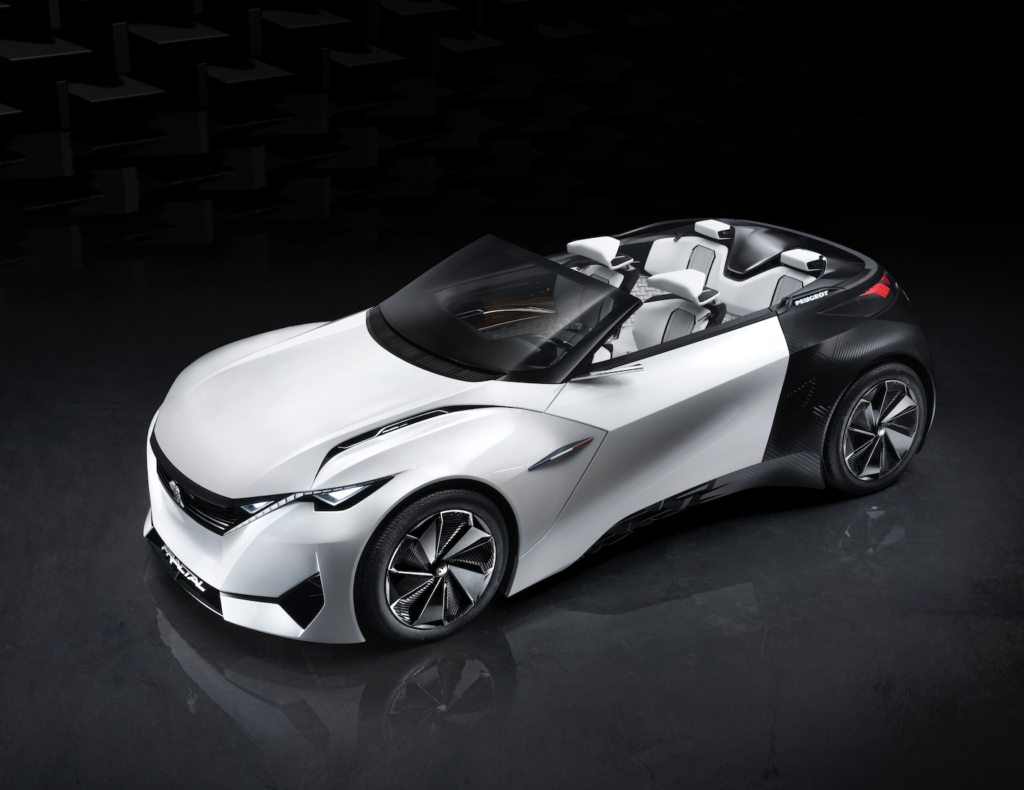
A year before the launch of the second generation of the 3008 (2016), which would go on to be a commercial success, and four years before the launch of the second generation of the 208, the 100% electric Fractal concept car revealed some of the aesthetic themes of the latter. One of our senses is particularly awakened on board: hearing. Let the music play! Matthias Hossann, now Peugeot’s design director, explained to us at the time, “In 2014, I was in charge of “advance phase” projects alongside concept car studies. We were starting to work on the second generation of the 208 and were looking for new proportions. With Fractal, we pioneered a new, more dynamic look with a distinctive bonnet, and all this work was used on the 2019 208.”
Fractal designer Sébastien Criquet has since become head of advance development, succeeding Matthias, who is now the brand’s design director. Kevin Gonçalves, meanwhile, designed the 2019 208 series and explained to us during the presentation of the small Peugeot that “there are similarities in style between the two products, but the concept car was travelling from show to show rather than sitting in the design office when the 208 was being designed!“
Matthias Hossann confirmed that “our concept cars are designed and modelled in the same studio as the production vehicles. This creates a self-sustaining cycle: we show all the designers what’s happening, both in terms of exterior and interior design. We have dedicated areas where we bring together all the different disciplines, colours and materials, physical and 3D modellers. It’s practically a laboratory that operates like a start-up! We have to be efficient and fast for both products: concept and production.“
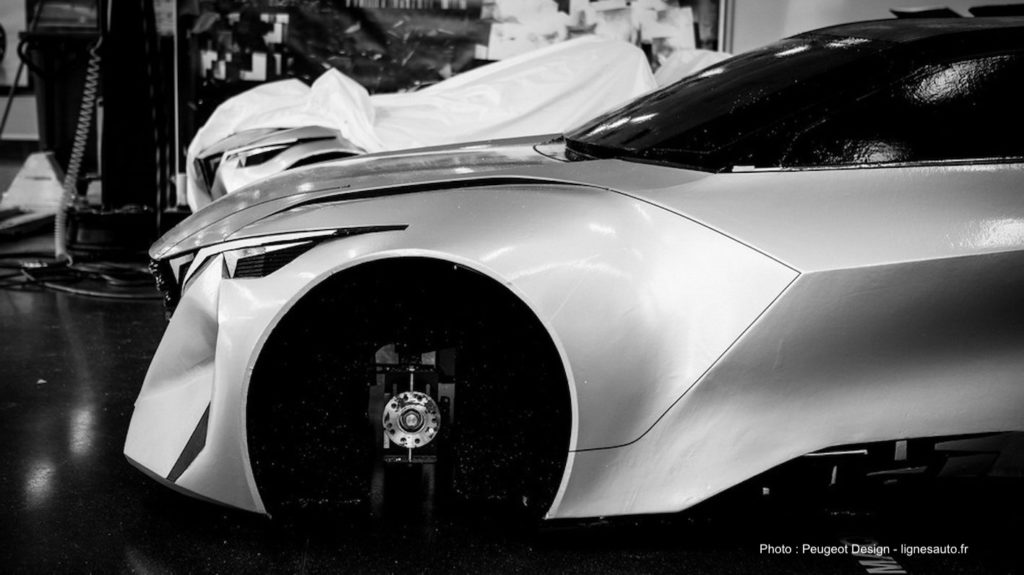
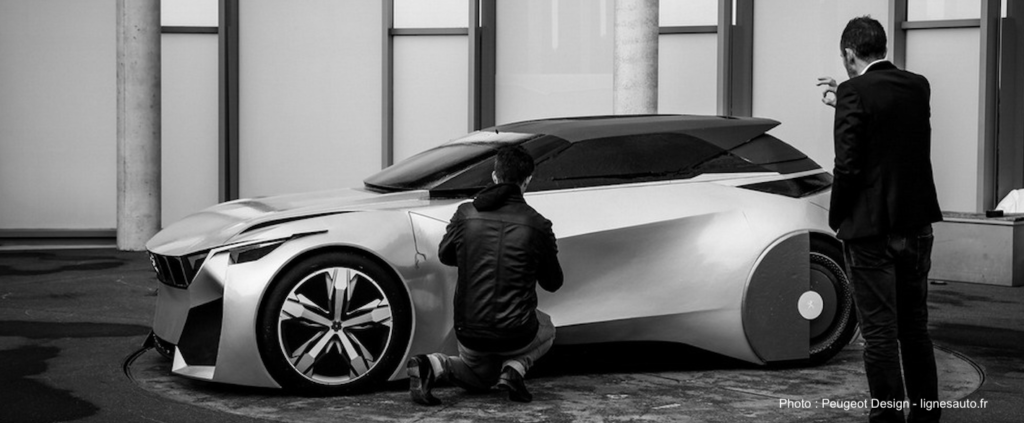
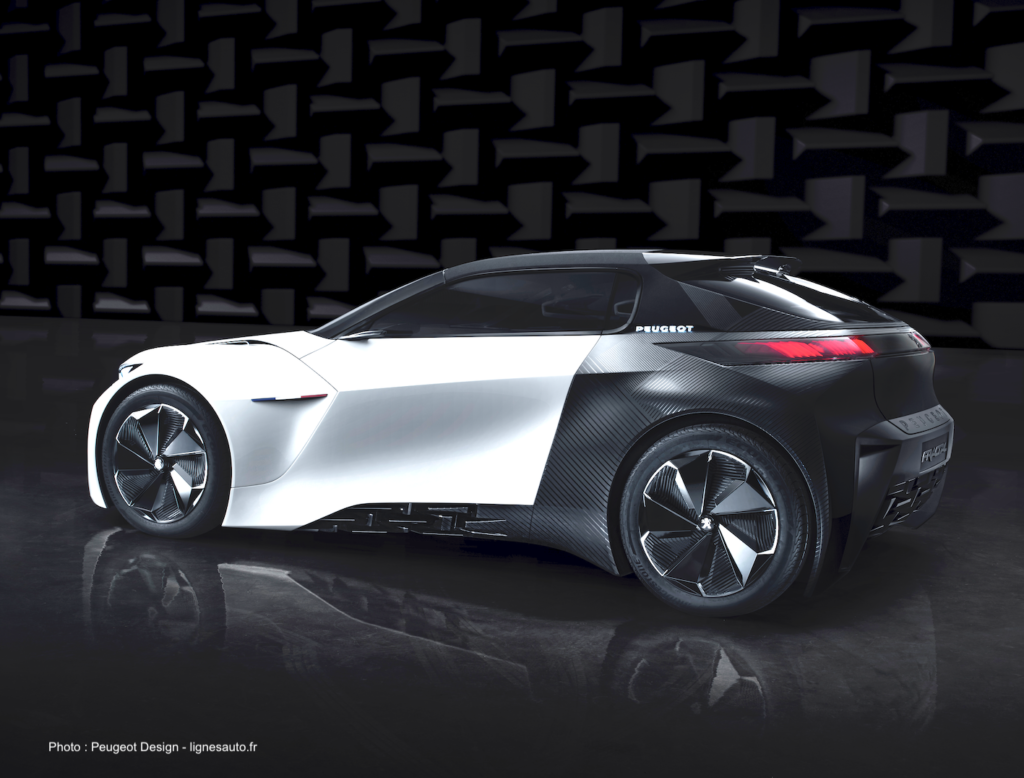
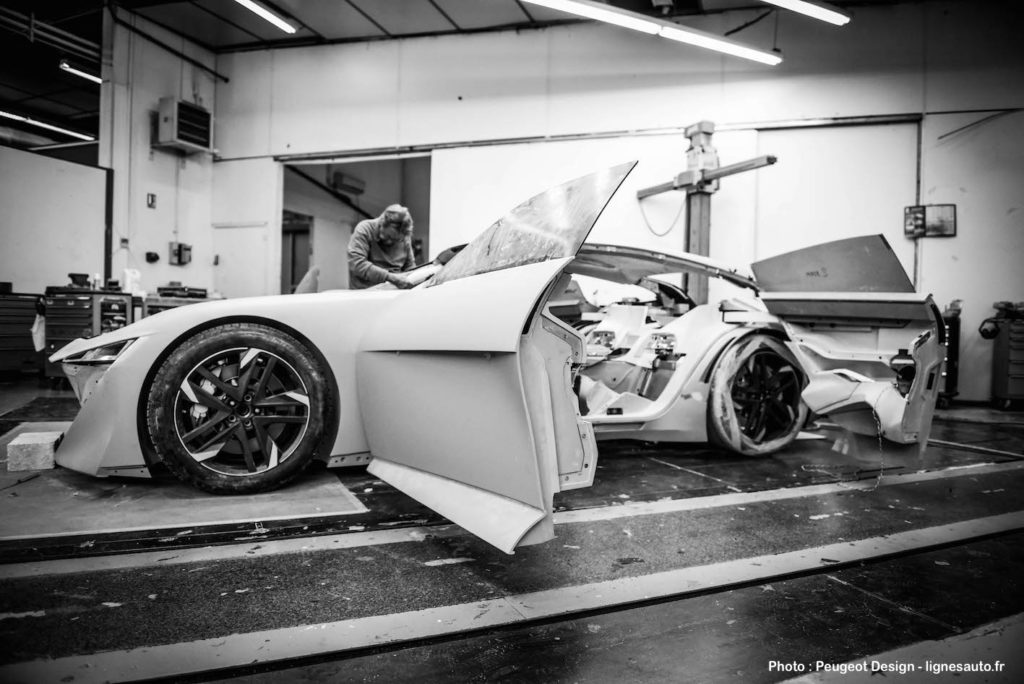
Fractal embodies this new formal language that emerged with the Quartz concept (2014), with new stylistic themes such as faceted sides, marked by a triangular embossing that will also feature on the 2008. This theme can be seen in the photo of a Fractal model above. This showroom prototype particularly showcases the i-Cockpit®, which caters to certain senses, such as sight and touch. Fractal adds hearing to the mix through a collaboration with StelLab, a PSA research entity, and Focal, the French leader in Hi-Fi electroacoustics. Fractal features no fewer than thirteen speakers, plus subwoofers built into the back of each seat.
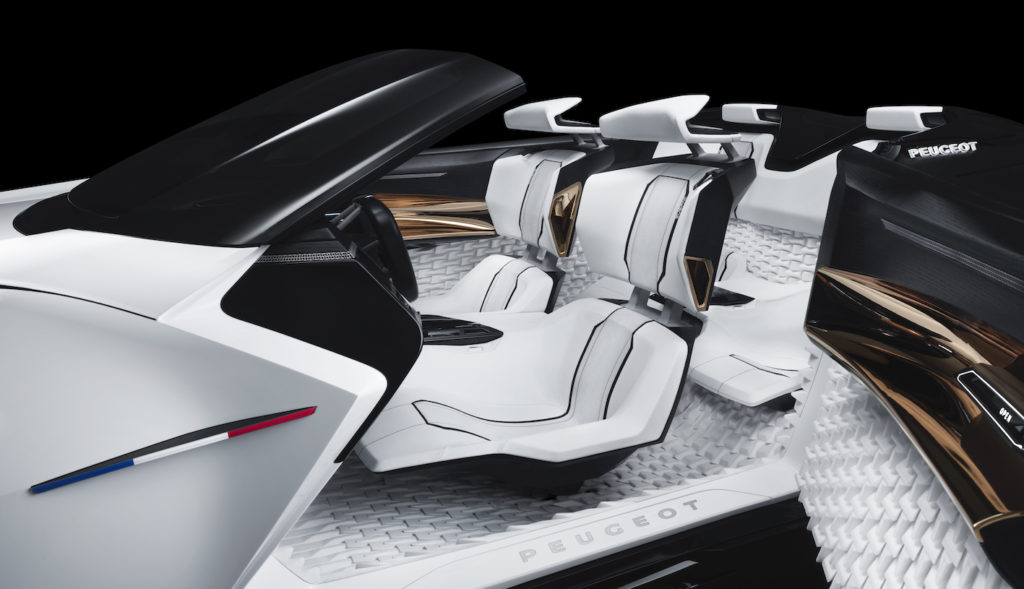
This concept car also features a signature sound dedicated to the world of electric cars, created by designer Amon Tobin, musician and sound designer: “Fractal is the result of an encounter between artists exploring new avenues of expression. We combined our inspirations with those of the designers. The style is inspired by sound, and my creation is inspired by the lines and materials of the concept car.” The interior design is the result of this collaboration. Created by designer Matthieu Hagnere with help from Élodie Roux for C&M, it features materials inspired by auditoriums and recording studios.
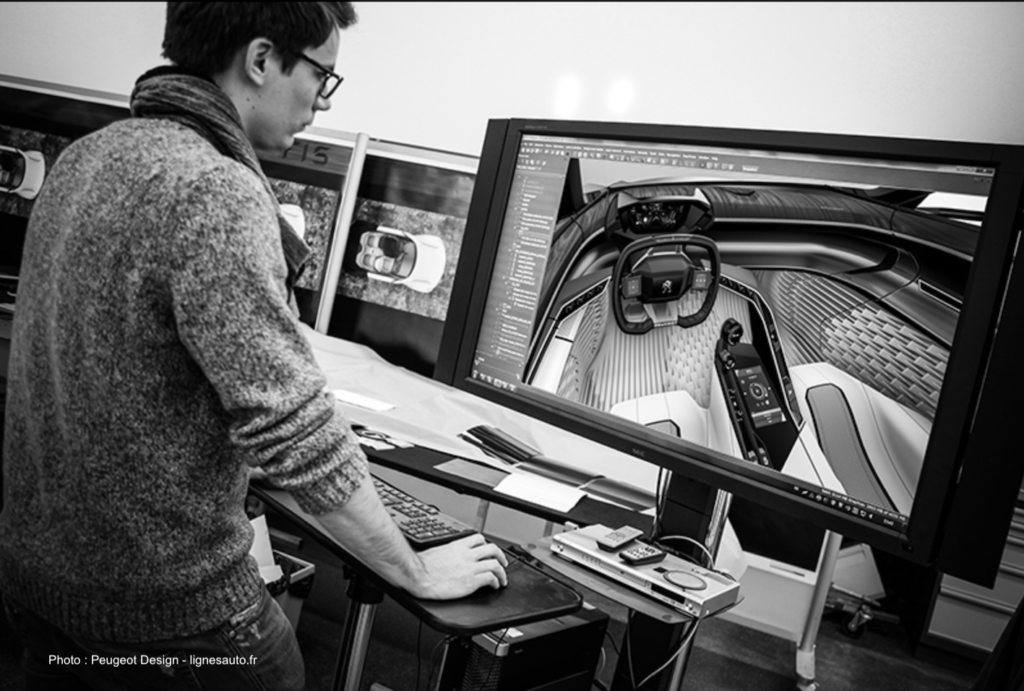
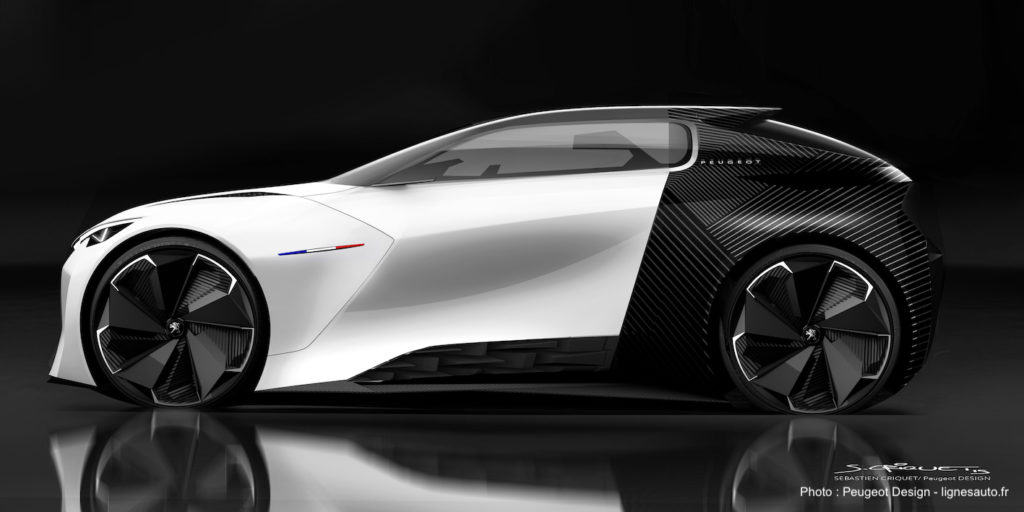
Technically, the Peugeot Fractal uses two electric motors, one on each axle, delivering a combined power output of 204 hp. The lithium-ion batteries are housed in the central tunnel, giving the concept car a relatively compact size: 3.81 m in length. Another unique feature is that this concept car offers two body styles: coupé and convertible. Focal and StelLab have taken both architectures into account and offer the Fractal different sound spatialisation in each case.
2016: INSTINCT – Autonomous pleasure
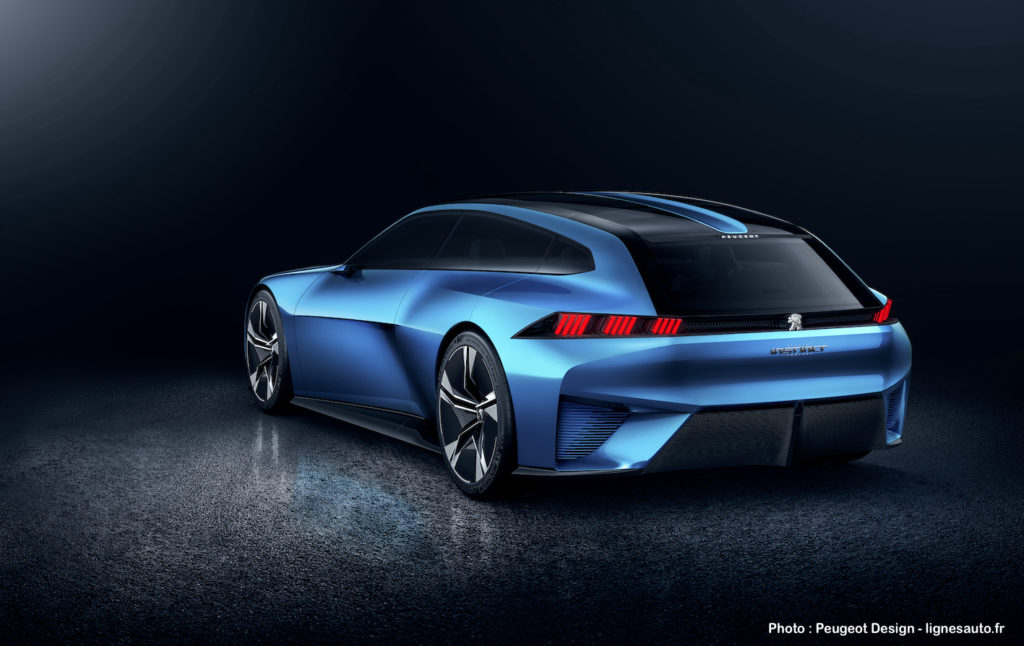
Peugeot has just launched the second generation of the 3008 with a design inspired by the Quartz concept car, proving that concept cars are not just ‘free’ objects. Instinct was unveiled in 2016 at a time when autonomous cars were dominating design and engineering offices, with sometimes radical solutions. With this new concept, Peugeot wants to prove that delegating driving does not detract from the pleasure of driving. The concept was created by Sylvain Henry below, a long-standing designer for the brand. He joined Peugeot at the age of 18, like his mentor Gérard Welter, and is now a master designer at Citroën.
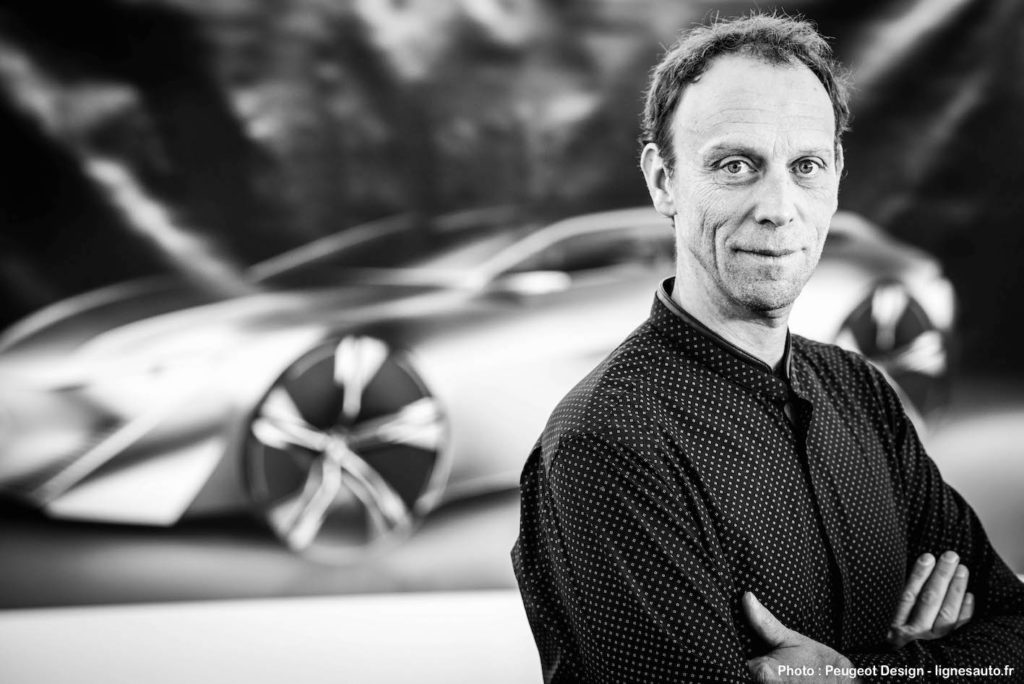
Designing the Instinct concept car was Sylvain’s last major project for Peugeot. Arthur Coudert assisted him with the interior design, while Élodie Roux took charge of the increasingly influential area of colours and materials. Instinct opened the door to a future that, at the time, was still believed to be focused on autonomous cars. European legislation on CO2 emissions would soon put a halt to the development of these vehicles capable of delegating driving, in favour of the development of hybrid and electric vehicles requiring heavy investment.
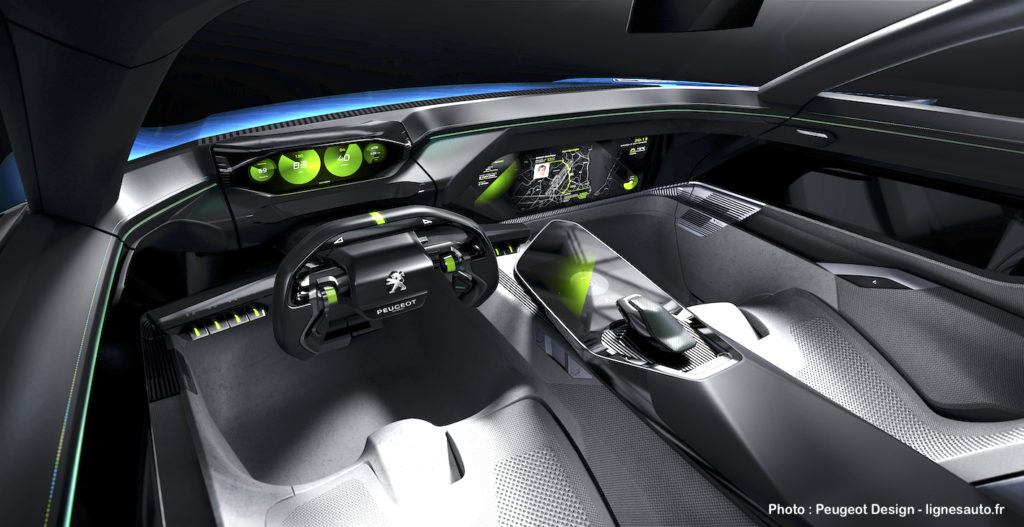
In the mid-2010s, the solutions chosen for autonomous cars seemed to deprive drivers of the pleasure of driving, relegating them to the role of mere spectators. Peugeot wanted to banish this image, as driving dynamics remain one of the key elements of its DNA, as confirmed by Peugeot’s design director at the time, Gilles Vidal. “To design an autonomous car, you have to bring together two opposites: active driving and autonomous mode, with one clear objective: to always be a source of pleasure. The Instinct concept is the first autonomous car concept that does not sacrifice driving pleasure.“
The concept features the world’s first Samsung ARTIK Cloud platform, which connects the car to the user’s cloud. In short, the Instinct concept provides on-board access to data that the user wishes to share, including data from their smartphone, smartwatch and even their home automation system. Delegating driving responsibilities leads us to think differently about the interior, as autonomous cars open up a new field of creativity created by new uses.
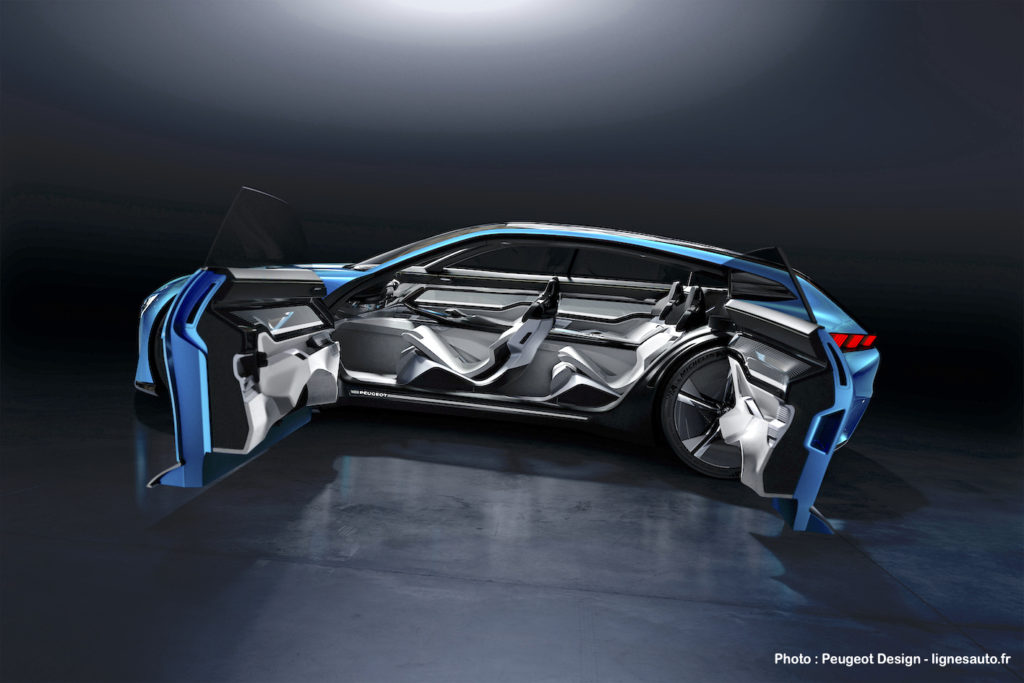
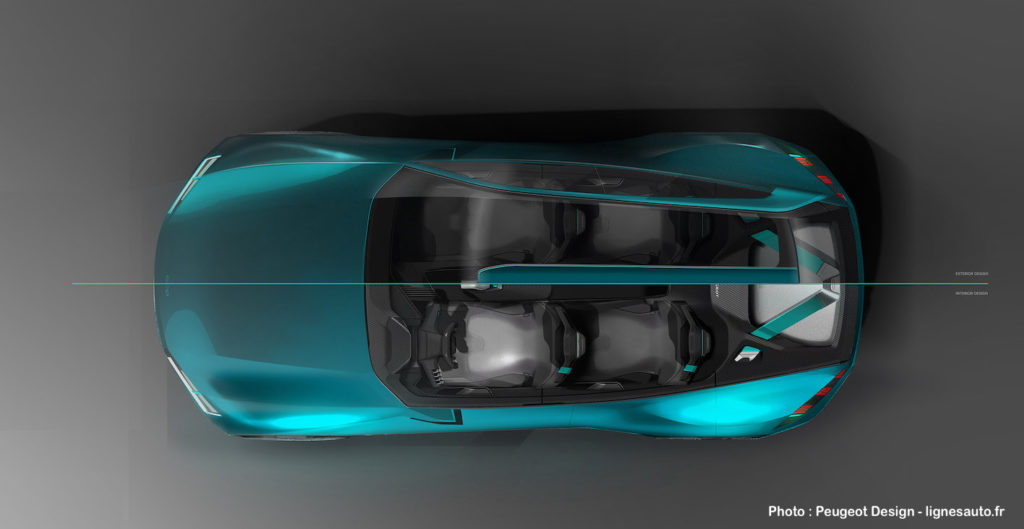
In addition to its connectivity and hybrid driving mode (via the driver or via delegated driving), the Instinct offers an evolution of the i-Cockpit® called ‘Responsive i-Cockpit.’ Matthias Hossann, then head of concept cars before succeeding Gilles Vidal in 2020, explains that “with this i-Cockpit®, we are creating new ways to enjoy the car, whether through the interfaces, the architecture or the style.” The exterior design adopts the ‘shooting brake’ theme with four doors whose opening mechanism always plays a spectacular role.
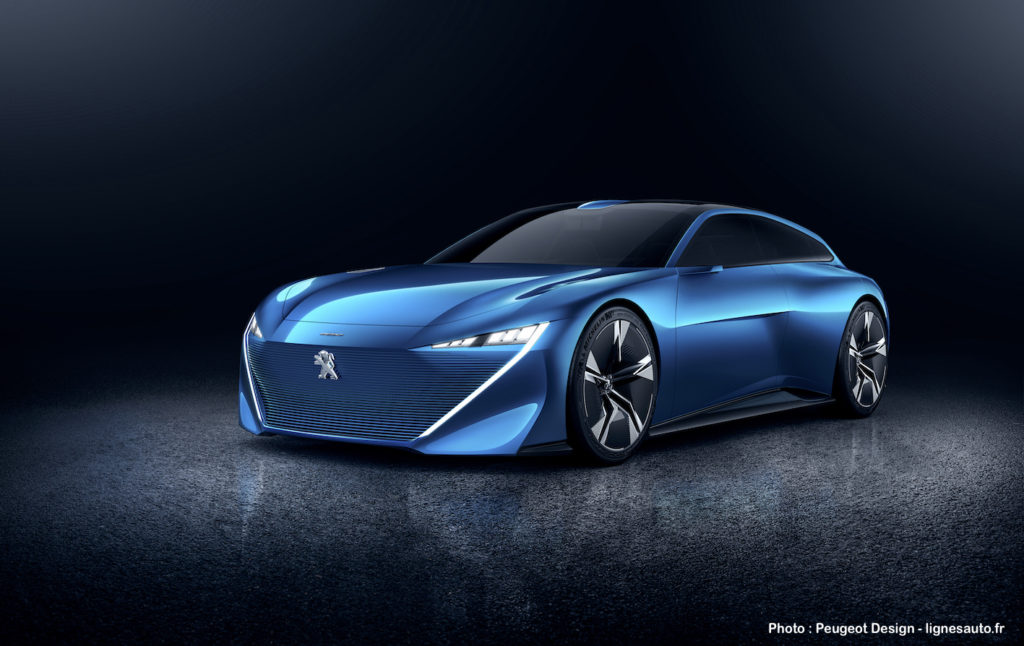
The rear rests on generous wing shoulders, while the elongated cabin tapers towards the rear in a dynamic movement. The roof is almost entirely glazed (above), while the vehicle retains a very automotive-style bonnet, long and bodywork-like, an architectural feature dear to Peugeot. The front end is new and heralds the signature lighting of future products, notably the two long fangs below. The brand logo appears for the last time in its 2010 design. The grille is no longer really a grille, as it blends into the overall soft-nose design, again heralding what will come to life on production vehicles.
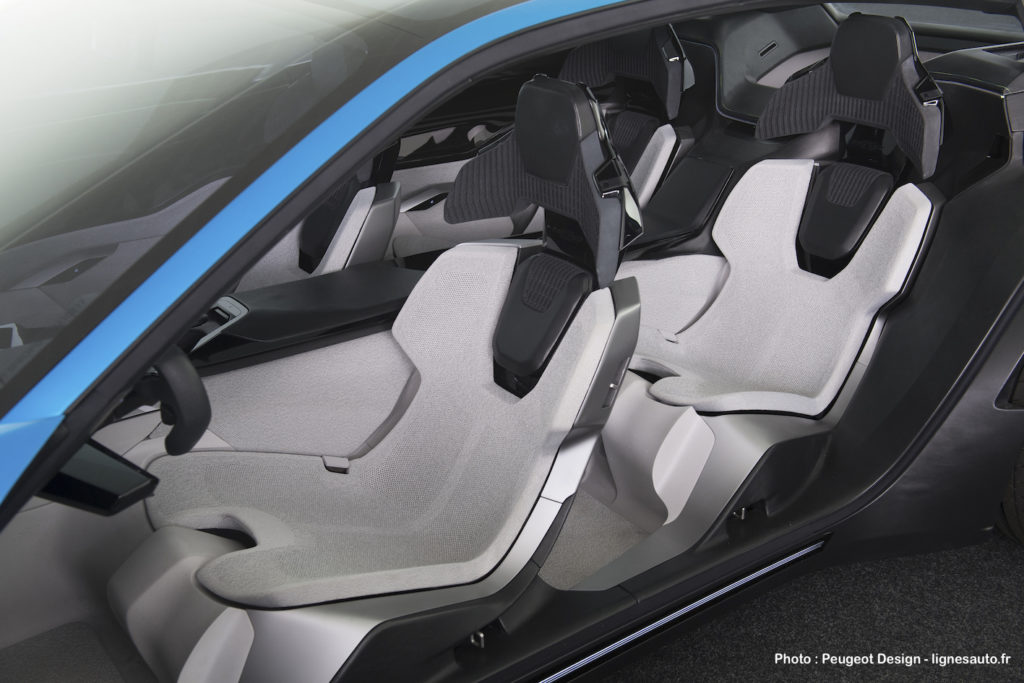
On board, the seats are inspired by aeronautics and each passenger can communicate with the car via a personal voice assistant that provides access to a range of services. In driving delegation mode, the steering wheel retracts, as do the pedals, while a giant screen appears in front of the front passenger under the dashboard. Benoit Morin, head of colours & materials, explains that “the integrated screens bring new light and new graphics. We are in constant contact with UX (User Experience) designers, a collaboration that didn’t exist just 10 years ago!“
However, Bertrand Rapatel, Peugeot’s interior design manager, points out that “technology is evolving rapidly and integrating screens is becoming increasingly easy. There is no disagreement between the different departments on this issue; it is we who decide on the integration, shape and size of these screens.” The Instinct is Peugeot’s latest concept car with a combustion engine.
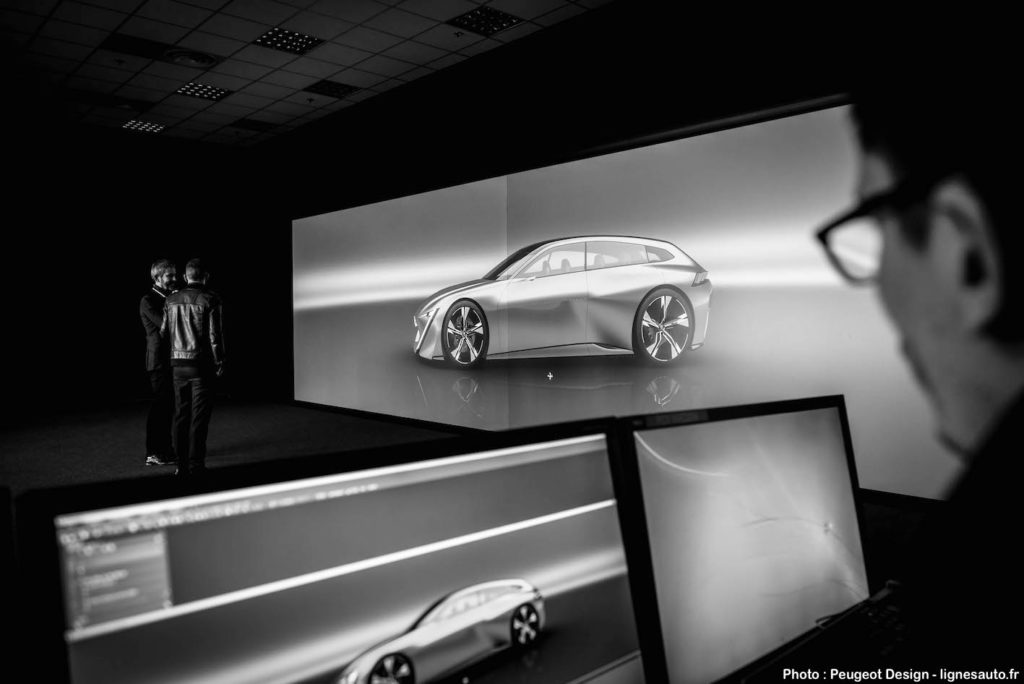
It is equipped with a rechargeable hybrid powertrain developing 300 hp. After that, it will be time for electric vehicles: the two concept cars, e-Legend (2018) and Inception (2023), will bring to an end a period of more than 60 years of designing models based on combustion engine platforms. The design will be permanently impacted by this paradigm shift.
2018: e-LEGEND – Desirable and desired
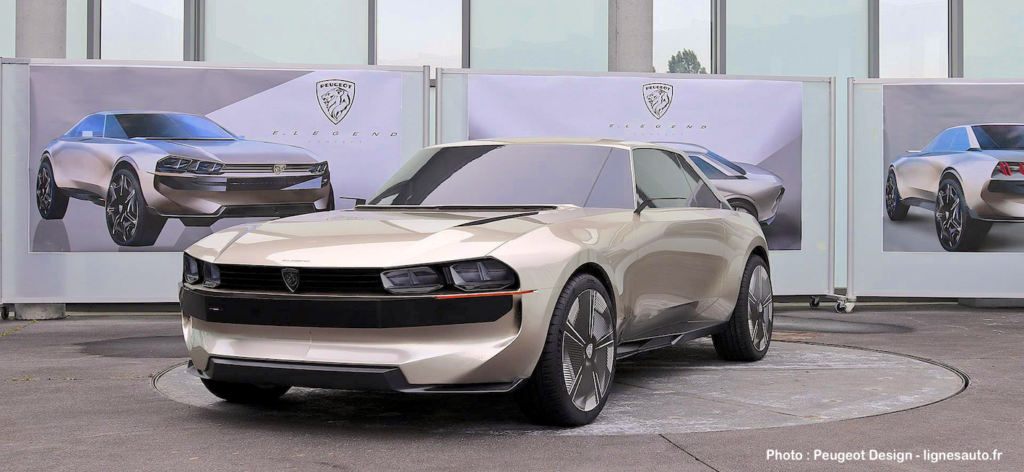
A petition was signed by more than 50,000 enthusiasts calling for the e-Legend concept car to be brought to market. Jean-Philippe Imparato, then head of the Peugeot brand, responded to this request by saying that once “500,000 signatures are collected, we will have to seriously consider it…” But this hope, shared by some at Peugeot, was dashed by a round figure: more than €250 million to industrialise an electric coupé was not one of PSA’s priorities.
Peugeot was nevertheless able to market the RCZ coupé, a true image vehicle. Such a car still seems to be lacking today. Gilles Vidal, still head of design for the brand in 2018, confirmed that “we make credible proposals, but it is the company that decides whether or not to go ahead, depending on its priorities. Some manufacturers have this image car, but is it necessary and vital? No one can quantify what it brings.“
Before taking charge of Peugeot’s design, Matthias Hossann had a more pragmatic view: “I continue to look to the future, and what we are asked to do is to please people not with a dedicated silhouette, but with each of the models we work on. For the group, it is necessary to industrialise products that are desirable, but also profitable. That wasn’t the case with the e-Legend.” End of discussion.
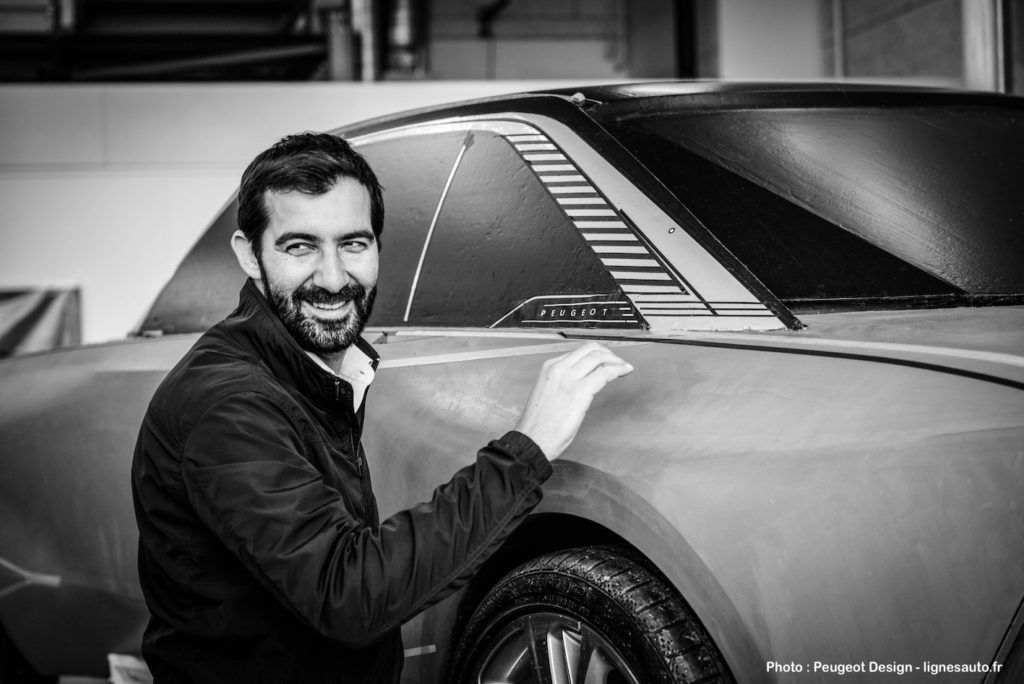
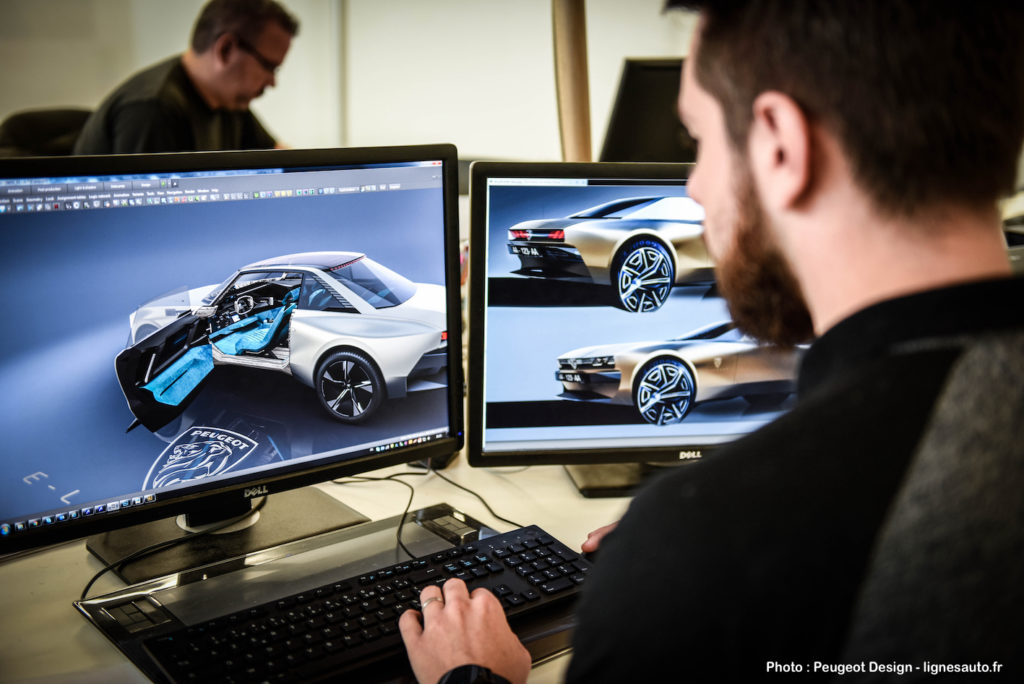
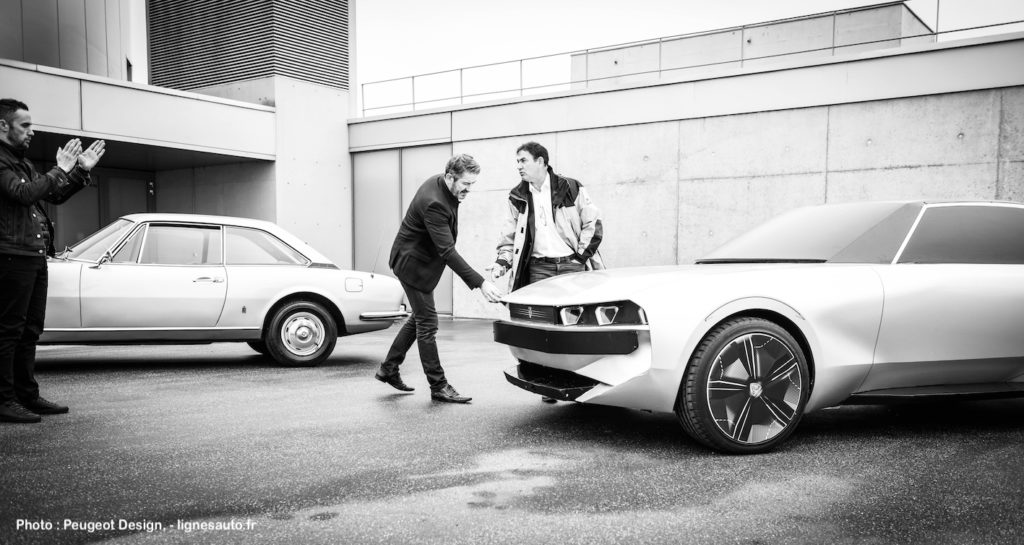
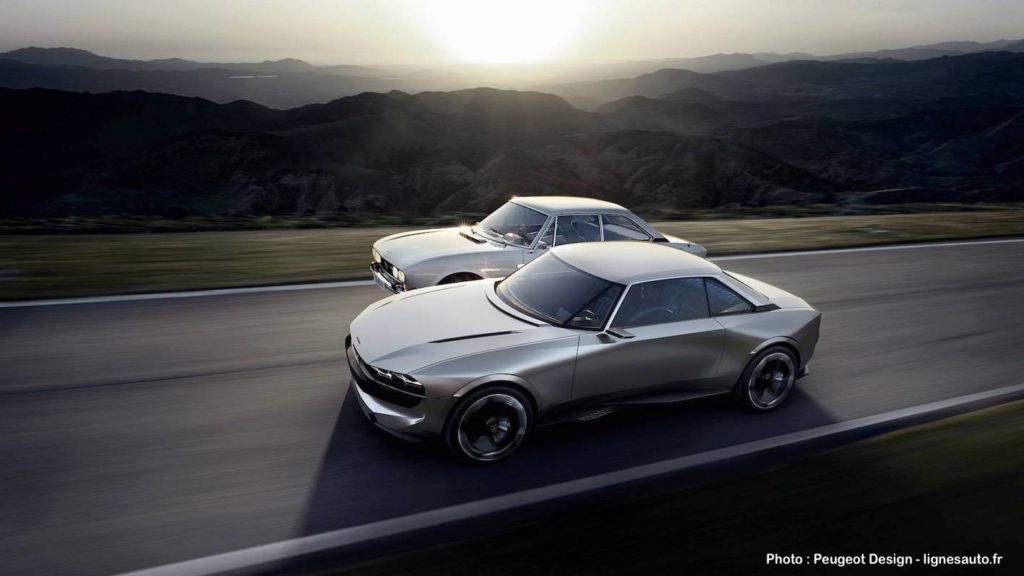
This prototype therefore has some prestigious creators, including designer Nicolas Brissonneau, pictured above: “This e-Legend concept represents the car I loved most at Peugeot, the 504 coupé. It’s quite fantastic, because my role today is no longer really to design, so ending up with a modern expression of the car we admire is very emotional.” If we rewind the film of the e-Legend’s genesis, we can see that it followed a different path from other concept cars, as Nicolas points out.
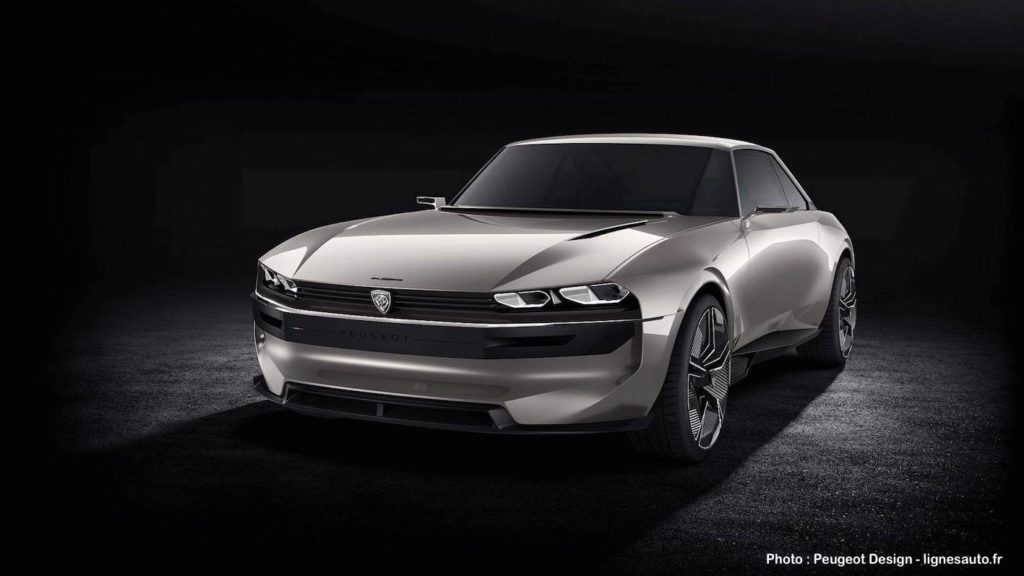
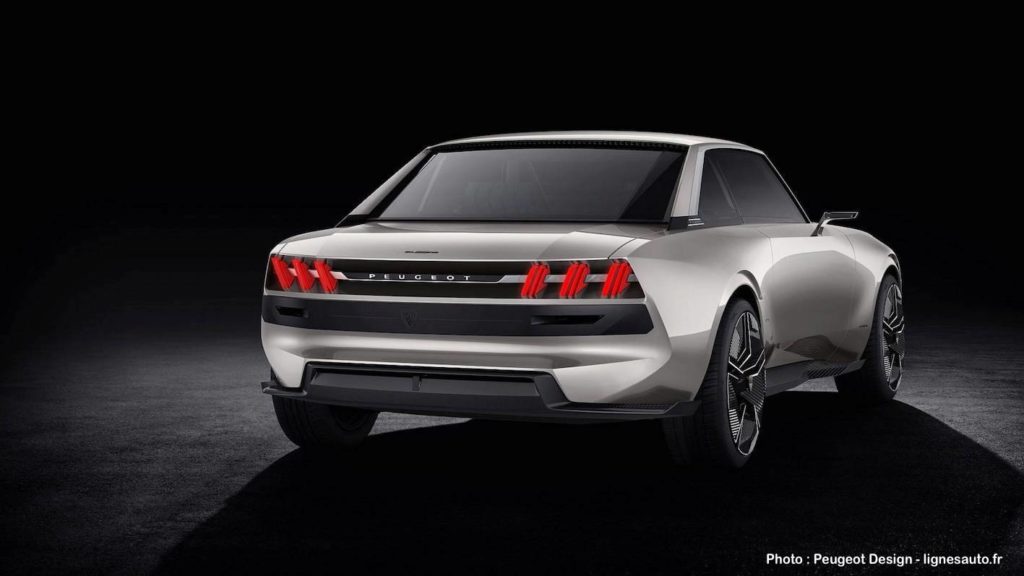
“We took a completely different approach to that of a traditional concept car. We used it as a laboratory. It has incredible proportions, sleek sides like those of a feline, and a springy, athletic look. This concept has a nervous rear end. These are immutable codes borrowed from our history. I happened to take on the role of exterior designer for this project, because this car embodies the quintessential Peugeot codes.” And this loyal fan of the brand had all the credentials for this masterful work.
As always, it’s all about proportions, and “we try to refine them for as long as possible and as far into the project as possible.” Designers Christophe Pialat and Sébastien Floutier have succeeded in combining the past and the future without heavy nostalgia. The seats are reminiscent of those in the 504 coupé, particularly with their integrated headrests. Another nod to the 504 is the return of velvet upholstery, but this time it is silk velvet mixed with digitally woven technical mesh.
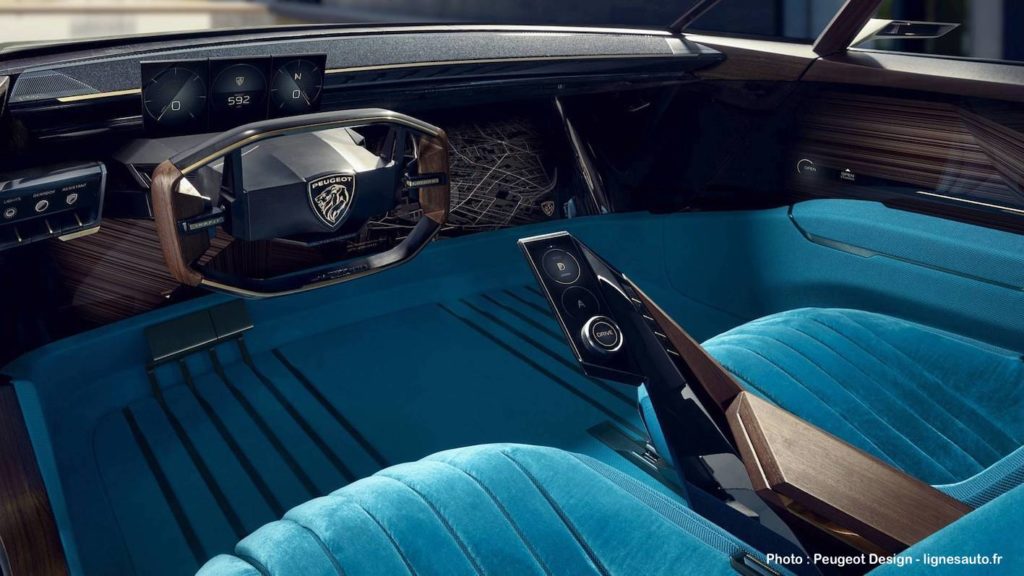
The dashboard, like that of the Instinct, is designed for dynamic or autonomous driving. This highly convincing showroom prototype heralds the dawn of the 100% electric car era and boasts 340 kW (462 hp) of power, powered by a 100 kWh battery. This is a figure that will be found in mid-2020 on Peugeot’s electric production models.
2023: INCEPTION – Visionary current
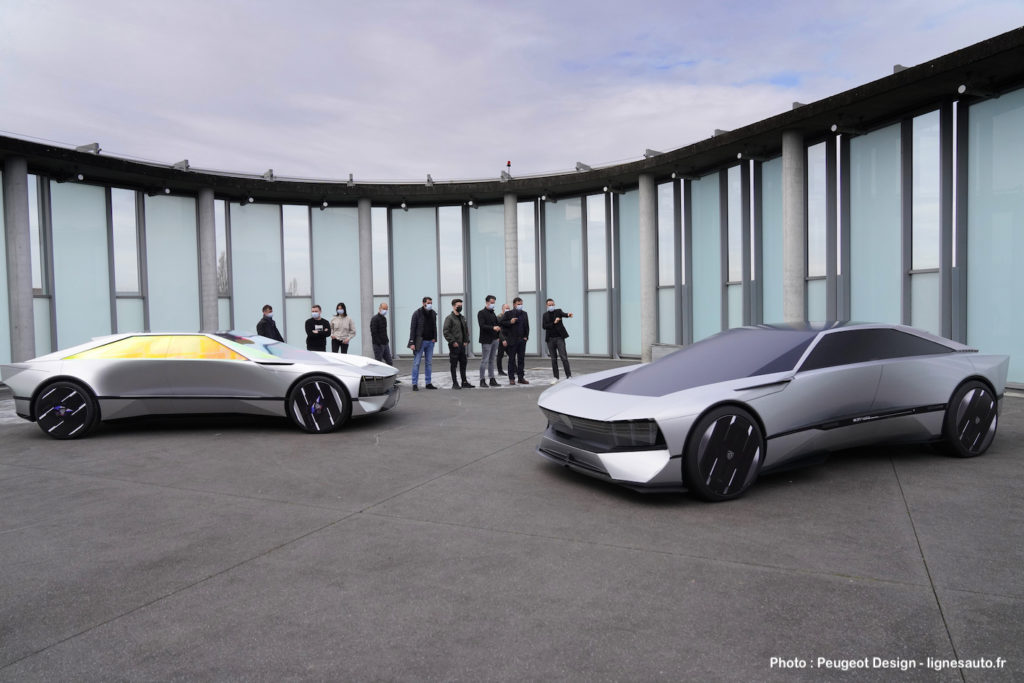
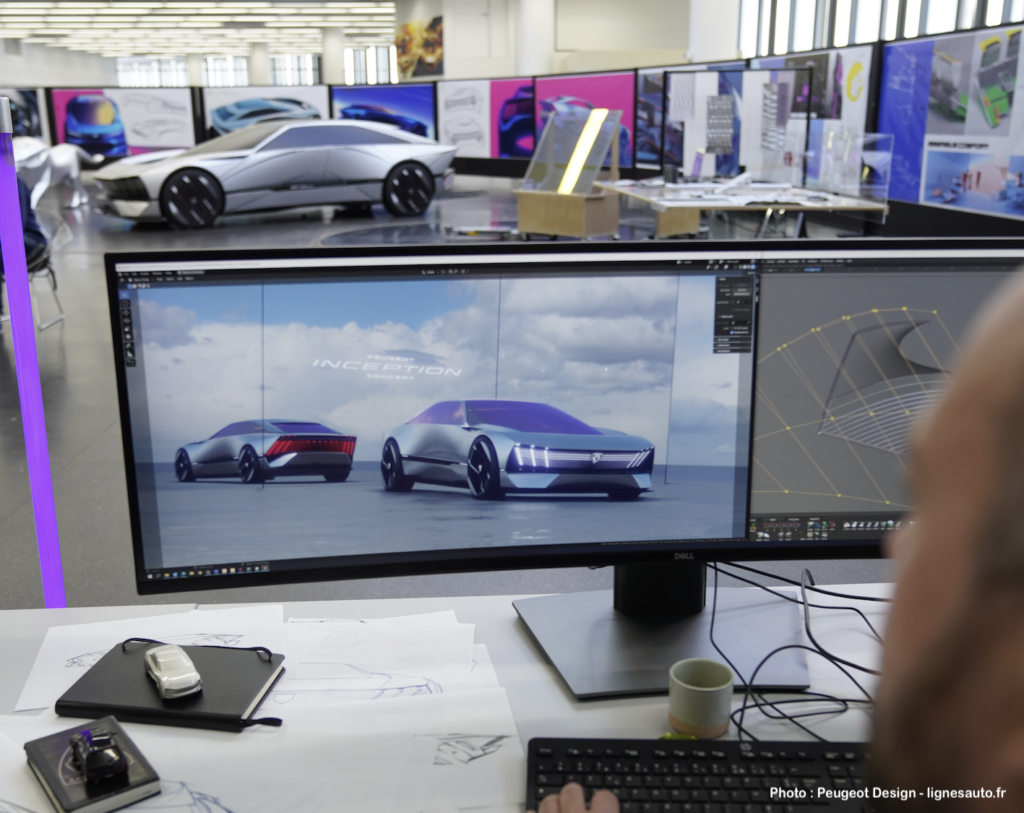
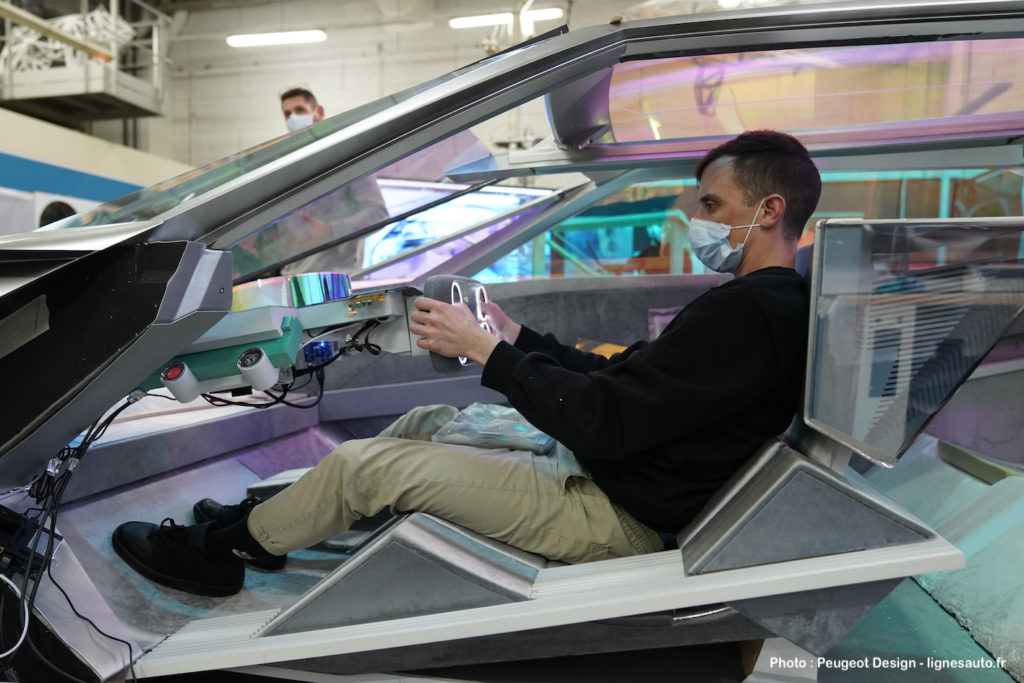
Designed during the Covid pandemic (note that everyone is wearing a mask on the terrace where the design is presented, above…), the Inception concept car is more than a manifesto. It is a vision of the future of motoring and a new formal language that marks a new era for Peugeot. Here it is described by those who conceived, designed and created it. “This concept is the embodiment of the brand’s complete transformation,” explained Matthias Hossann in January 2023. This manifesto is the first of the Hossann era…
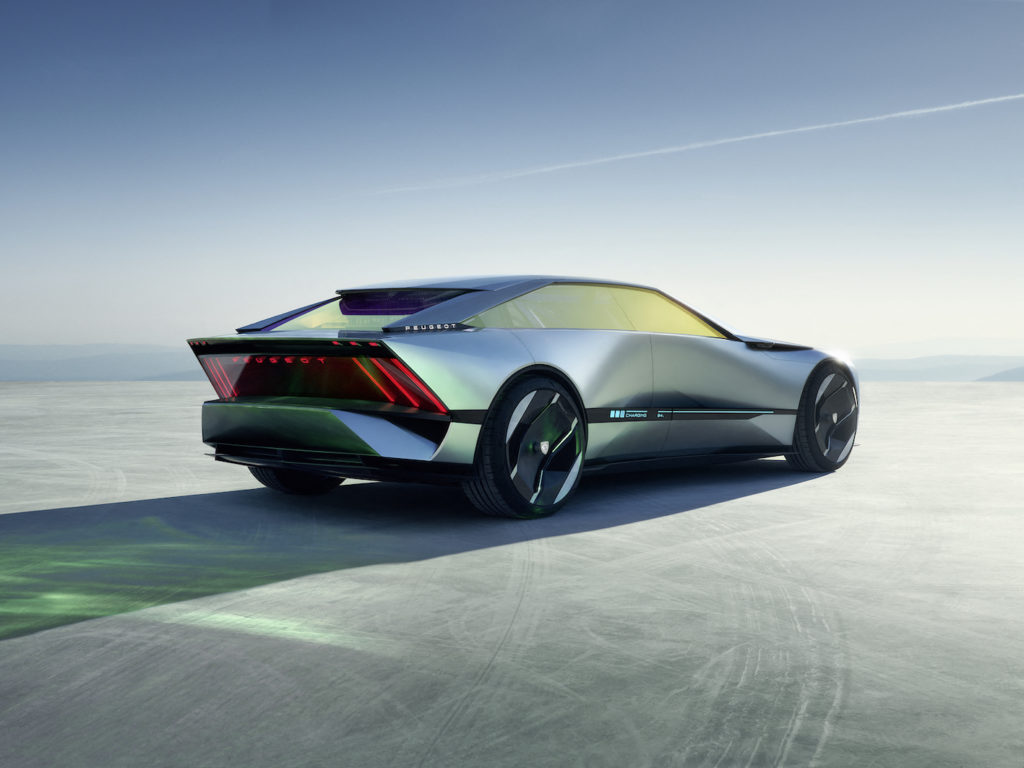
“Nevertheless, the Inception undeniably resembles a Peugeot. It expresses timeless feline appeal through athletic curves, sensual lines and a powerful stance, ready to pounce. The Inception shows what our future Peugeot models will look like from 2025 onwards.” This concept car, almost five metres long, is not a preview of a future large saloon, but rather of a new design language. The concept is based on the STLA Large* platform and opens up new horizons in terms of colours and materials.
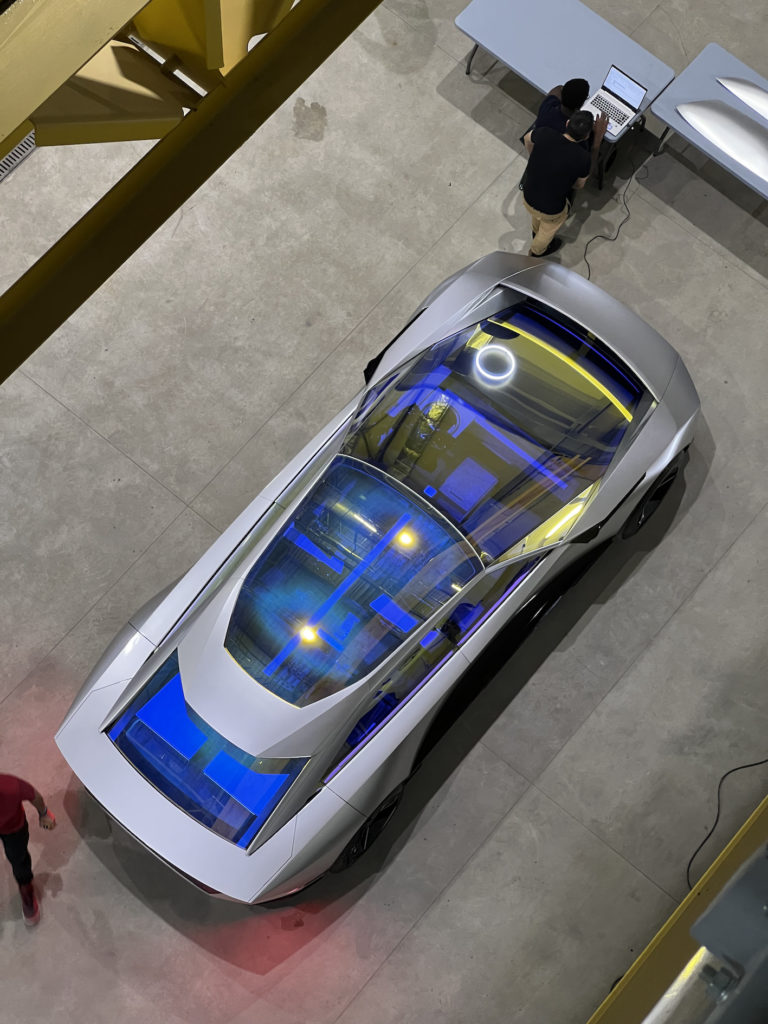
It offers new travel perspectives thanks to its huge glass surface above, the highlight of which is a windscreen that extends to the feet of the two front occupants. In driving delegation mode, the view of the road is spectacular and made possible by no less than 7m2 of glass surface area. Maud Rondot, colour and materials designer and also head of advance development for this same universe, sought out a multichroic glass (treated with metal oxide baths): “This glass has a rather warm reflection, in shades of yellow, and a rather bluish transmission. The idea was to create a dialogue between the exterior and the interior.“
Guillaume Lemaître, below, head of interior design development, explained during the Inception presentation that “all the proportions on board have been reworked. Occupants sit in a more reclined position where they are better supported, and the entire seat structure is adjusted to the body.” The evolution of the i-Cockpit® is radical (see our recent post on this subject). Combined with the impressive glazing and the reclined posture of the occupants, this new Hypersquare environment offers passengers a new spatial experience.
Philippe-Emmanuel Jean, strategic concept project manager, emphasised that “this concept is important in that it heralds a new era for Peugeot. It foreshadows all vehicles that will be based on new 100% electric platforms, with major differences in terms of architecture.” Some of these famous 100% electric platforms have since become multi-energy! The design of Inception was led by Sébastien Criquet, Head of Advanced Exterior Design, and designer Maxime Blandin, pictured below.
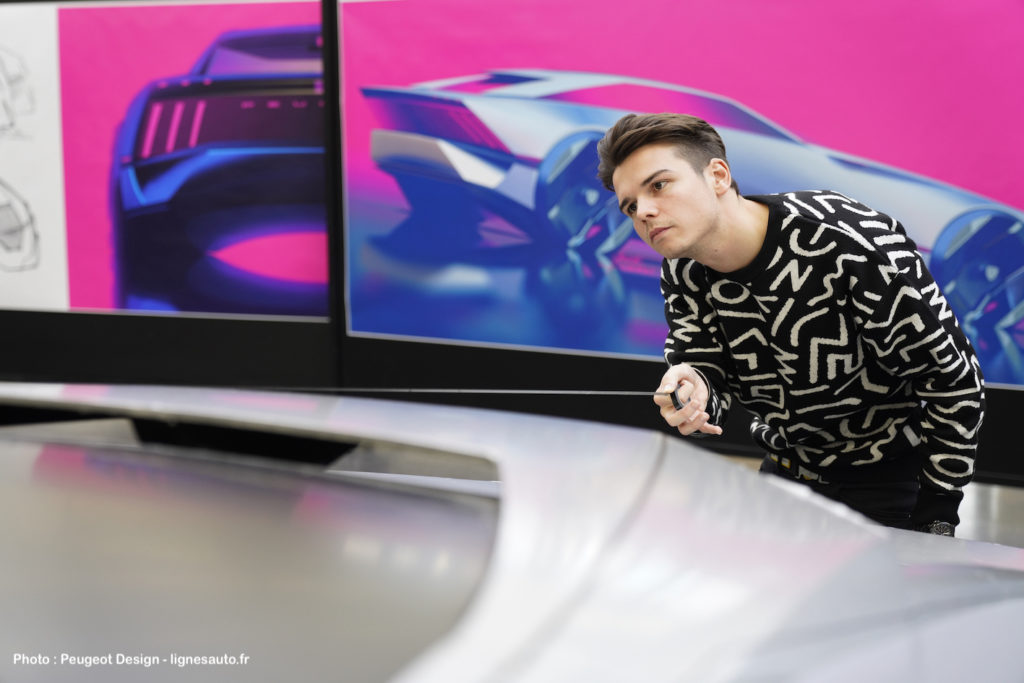
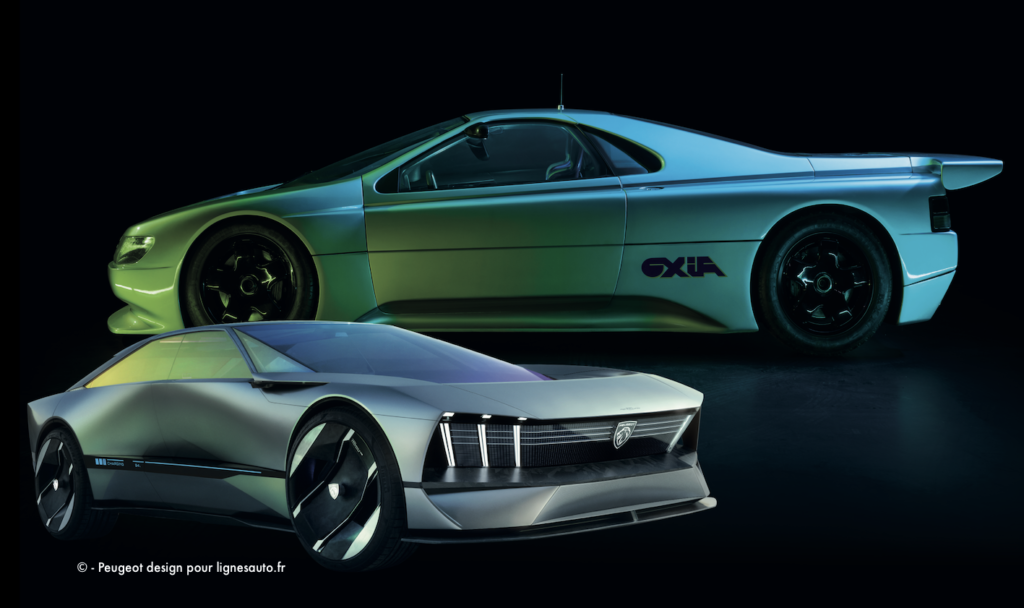
And everything happened quickly, without going through a clay model, as Sébastien Criquet confirmed in 2023: “Everything was done digitally, except for the polystyrene models. Digital technology helped us in our work between the exterior and interior, because everything is linked in this concept. As for the new formal language, we moved towards greater purity, simplicity and feline characteristics. We brought this sensual and carnal aspect back into the design for greater emotion. When we started working on the project, we thought a lot about the 505 and the Oxia (below), with its aerodynamic features. That’s why the front end borrows from the 505.” Inception does not mark the end of Peugeot’s 2015-2025 decade of concept cars, as the Polygon manifesto will be unveiled in November. We’ll talk about it again then.
*STLA Large platform. Will Peugeot have access to this platform designed for Stellantis’ high-end vehicles, particularly for the United States? This remains to be seen, and we will know more when Stellantis’ roadmap is released in the first half of 2026. We doubt it, because for the replacement of the 308, Peugeot will be abandoning the STLA Medium platform in favour of the more compact and less expensive STLA Small…
