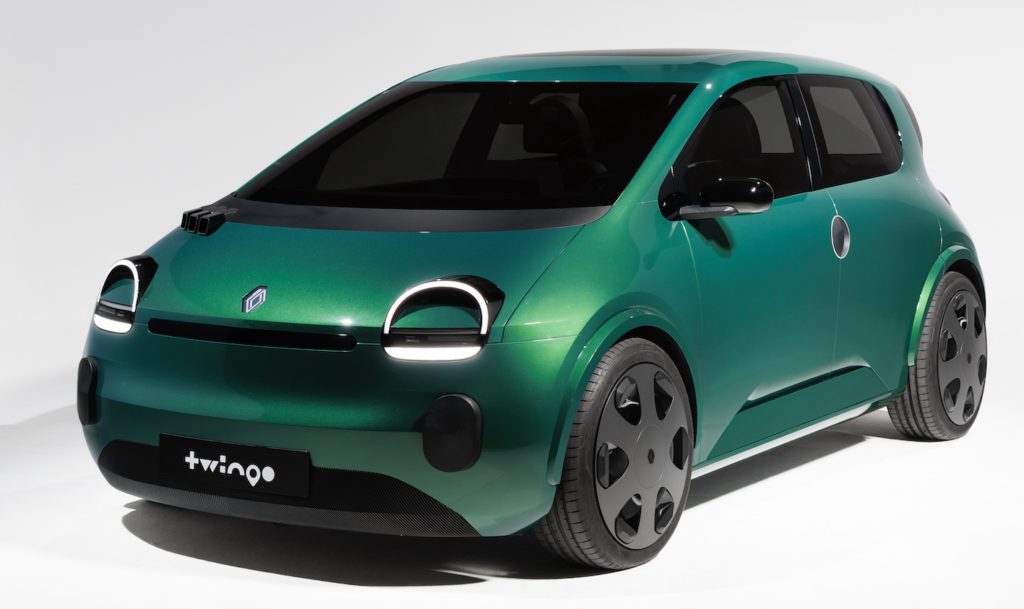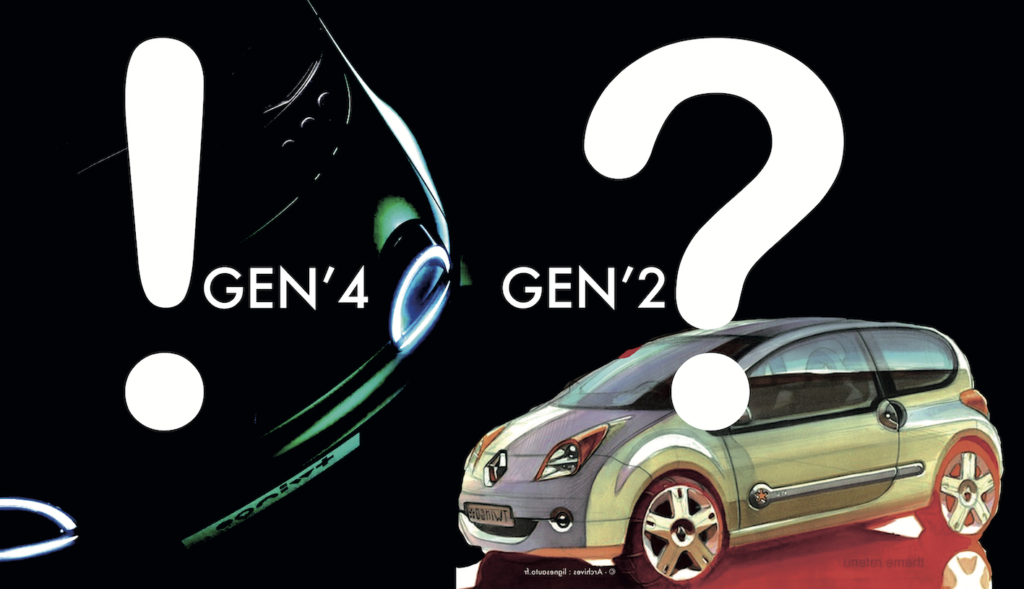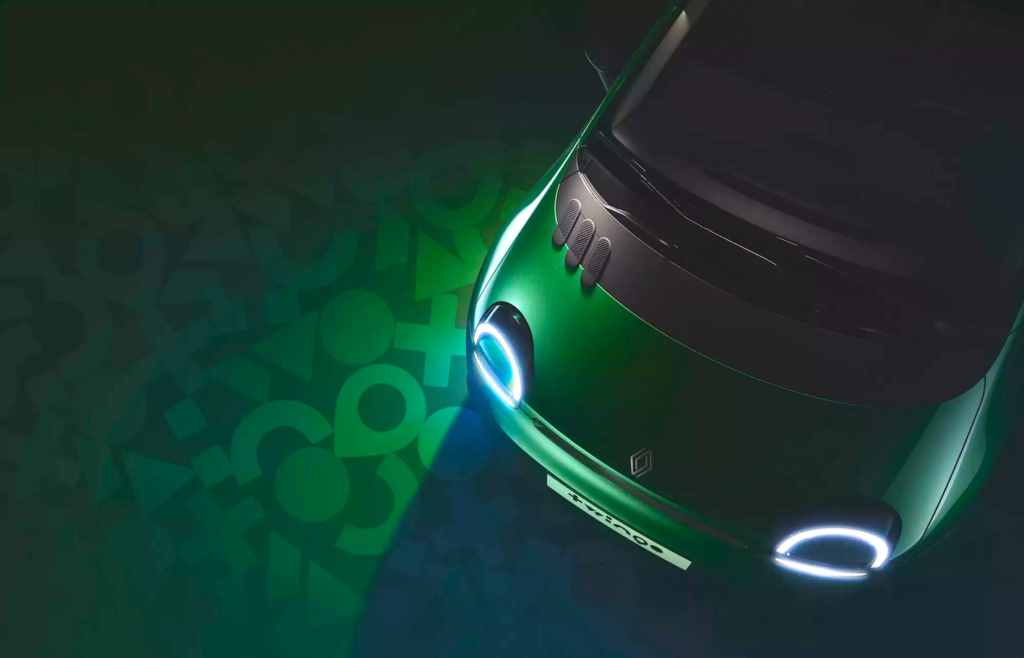
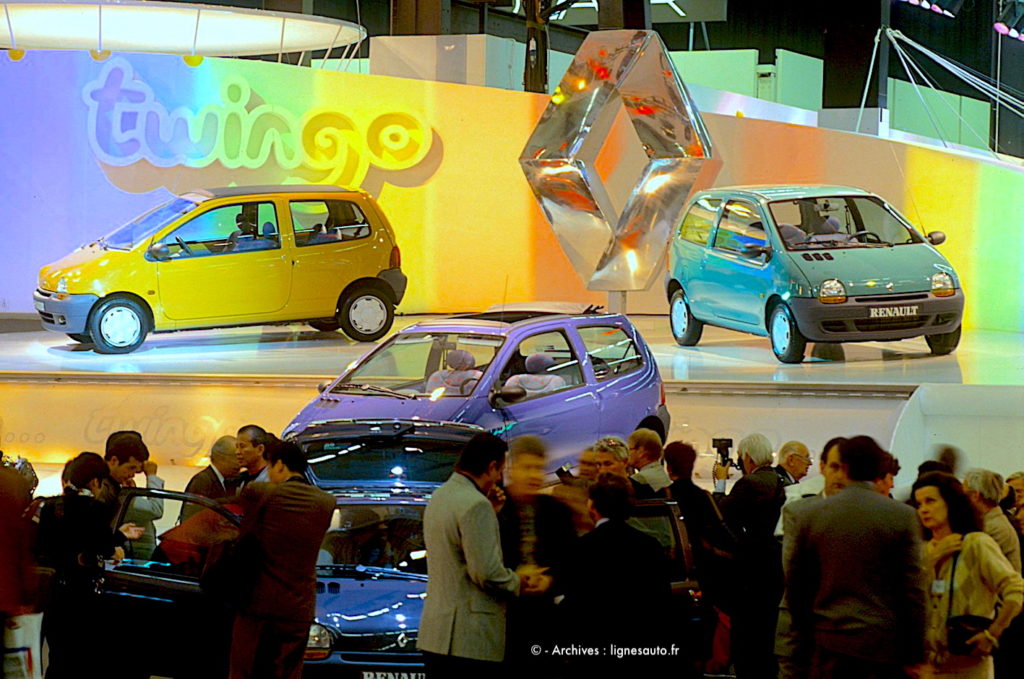
On 6 November, Renault will unveil the fourth generation of the Twingo (above), which will retain the aesthetic and minivan theme of the first model, launched in 1992, but in a 100% electric version. Those who witnessed the presentation of the first Twingo at the 1992 Paris Motor Show below will no doubt remember the jubilation that accompanied it. So much so that some compared this presentation to that of the DS in October 1955: the crowd was dense and everyone wanted to touch this funny little car.
It is doubtful that the 4th generation will have the same impact, simply because the context is different and the Twingo 4 will be launched outside of a motor show. However, the connection between the first and fourth generations is clear, which was not the case with the two generations in between. While the third generation sought to resemble a small R5 Turbo with its widened rear wings (but with its rear engine, it lost ALL of its legendary modularity), the second generation remains the most criticised.
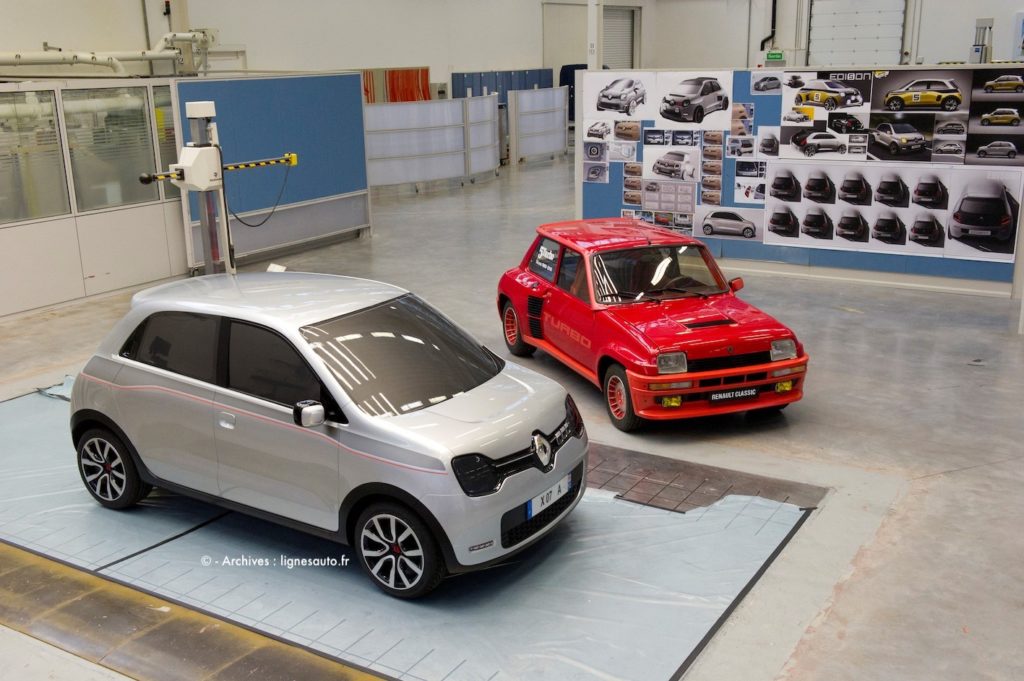
And since we love ugly ducklings at LIGNES/auto, we’re going to tell you about its gestation during a complicated period for Renault: the 2000s. Renault had just celebrated its centenary in 1998 with the splendid VelSatis concept car designed by Florian Thiercelin.
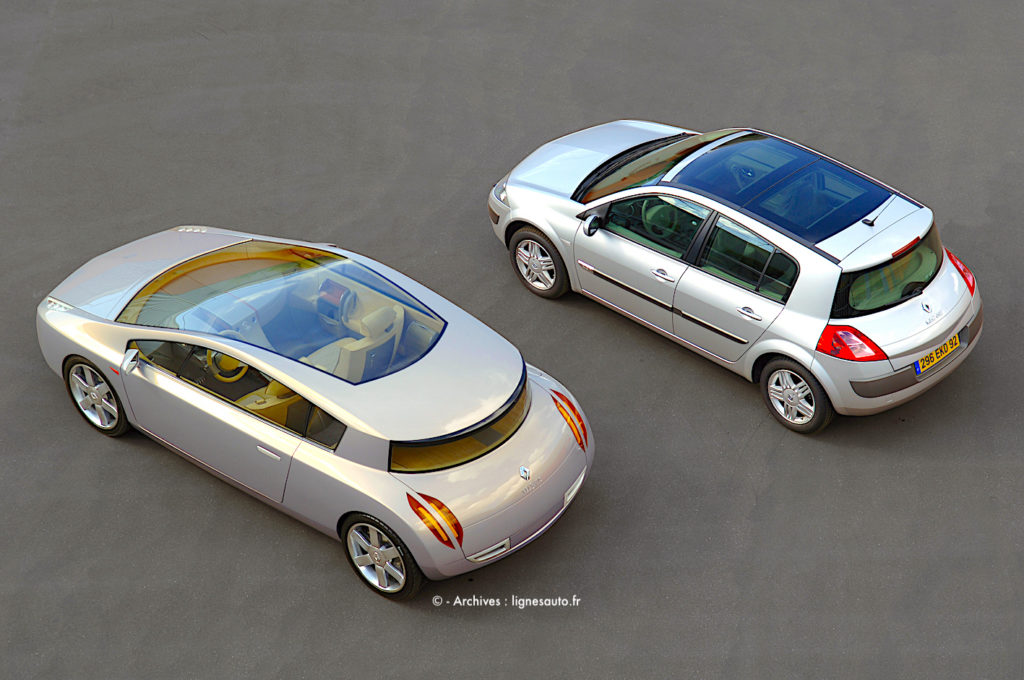
The theme of its vertical, panoramic rear window was repeated on the Mégane saloon in 2002 (see above) and on the Avantime in 2001. It was also at this time that the large VelSatis saloon was launched. For another four years, until 2005, Renault was under the leadership of Louis Schweitzer, and it was he who chose the design of the much-maligned Twingo 2.
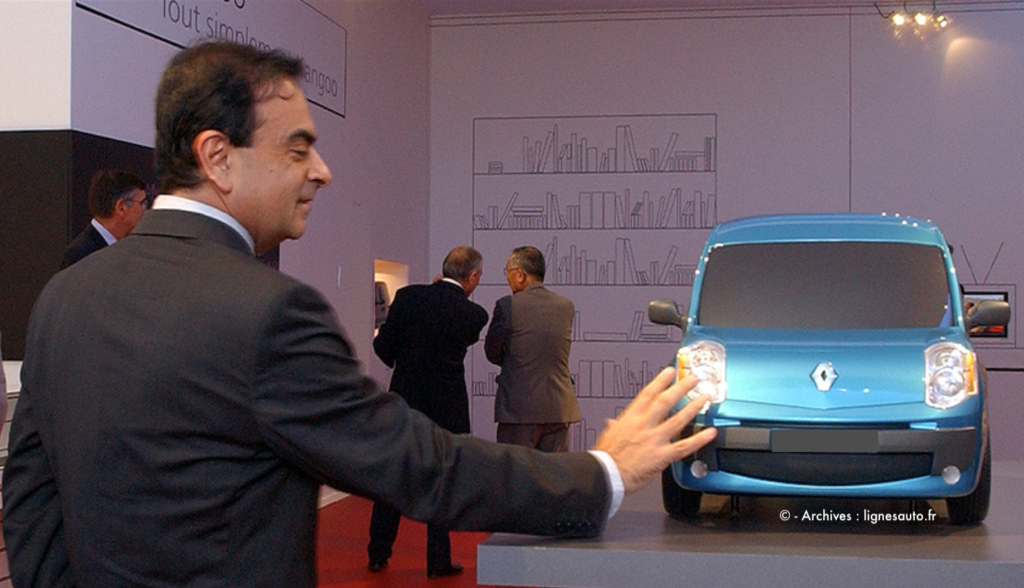
Although Carlos Ghosn would indeed take over as head of the French manufacturer in 2005, he was in Japan working on Nissan when the W89 programme for the second generation of the Twingo was launched, notably at Renault’s brand new design centre in Barcelona, pictured below. Located in an industrial building on Trafalgar Street, the Barcelona Design Centre was the brand’s first in Europe outside France. Opened in 1999 and inaugurated in May 2000, it has since closed its doors when Laurens van den Acker took over as Director of Renault Industrial Design.
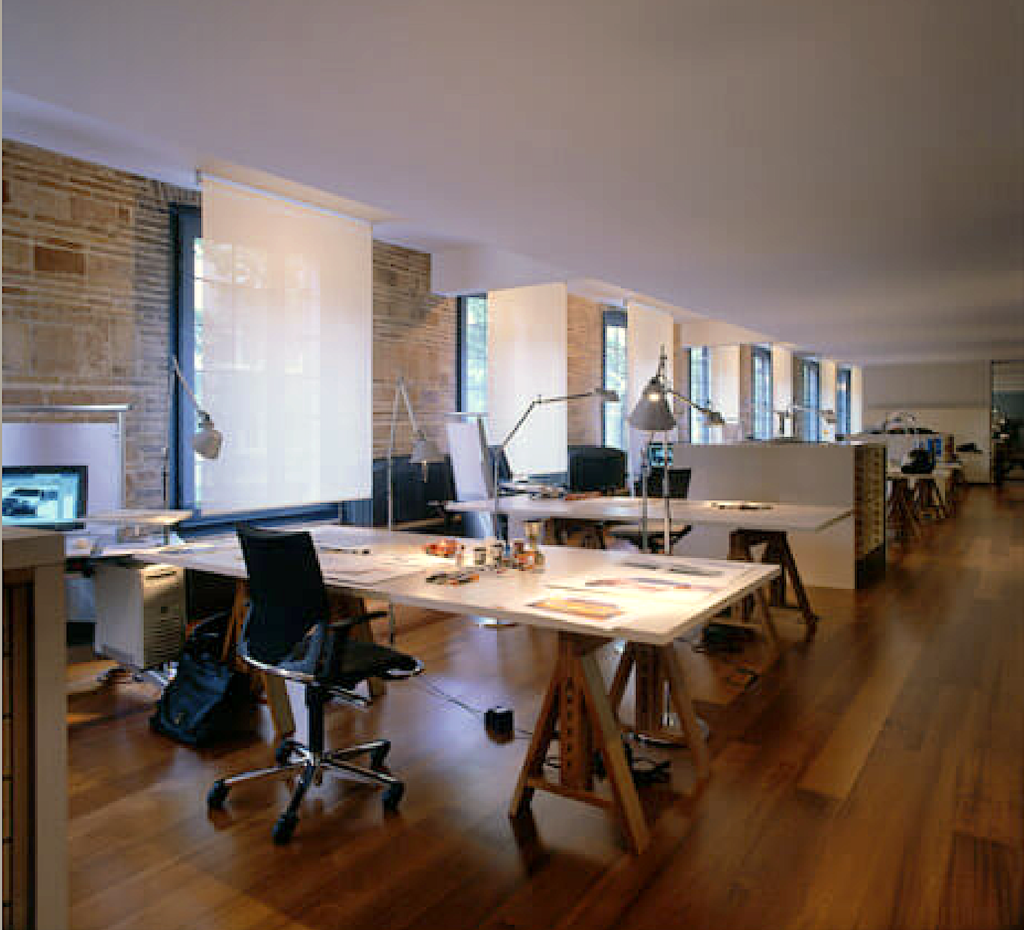
This Spanish centre was followed by another in the Bastille district of Paris. Both centres worked on the future of the Twingo 2, as we shall see. In 1999, the Barcelona studio worked mainly on the Scénic 2 project (J84 programme), which was launched in June 2003. The designers working in Spain at the time were Vincent Pedretti, who arrived in March of that year, and Florian Thiercelin, who arrived in May. Both came from the DDI design centre in Guyancourt on a ‘ressourcing’ assignment.
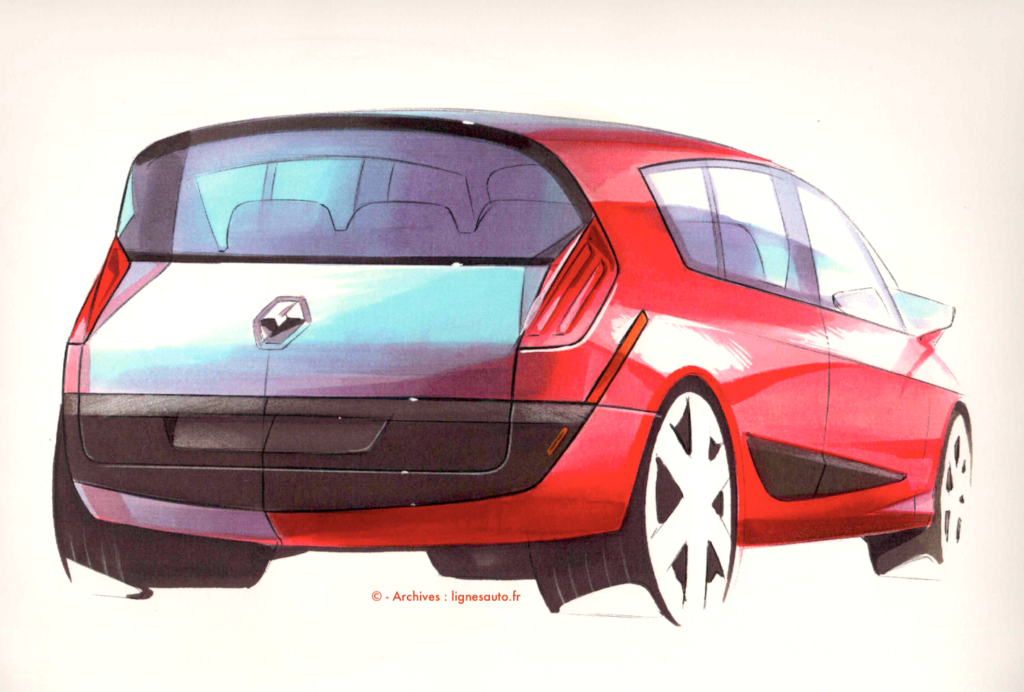
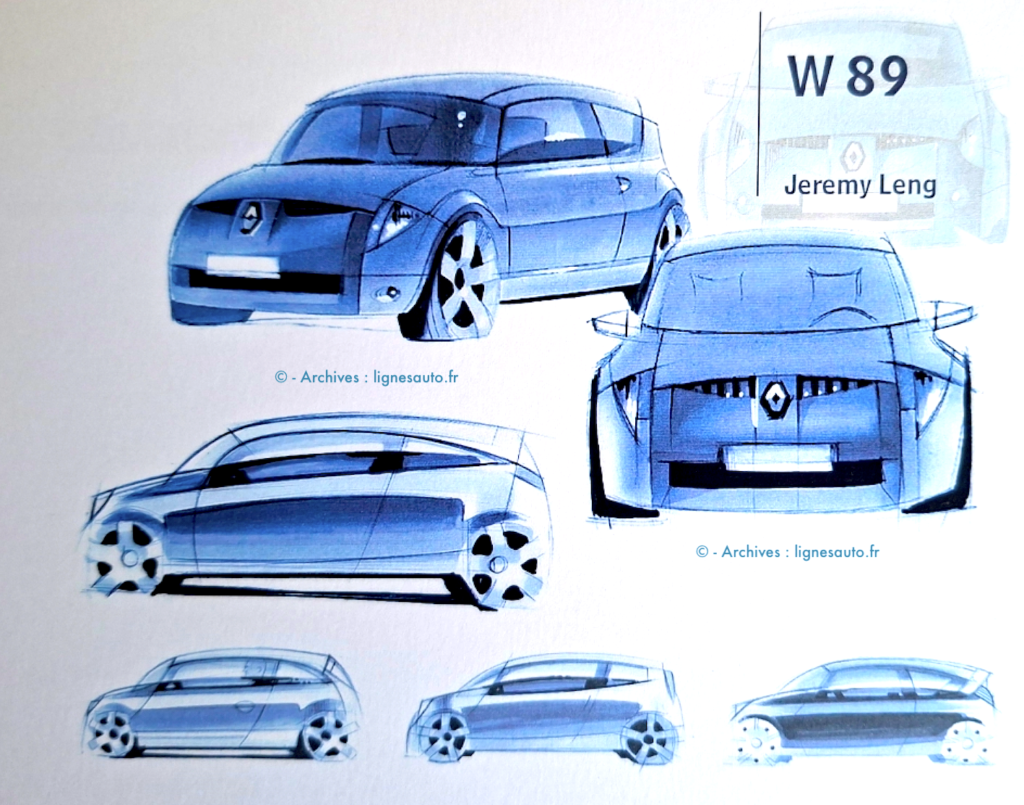
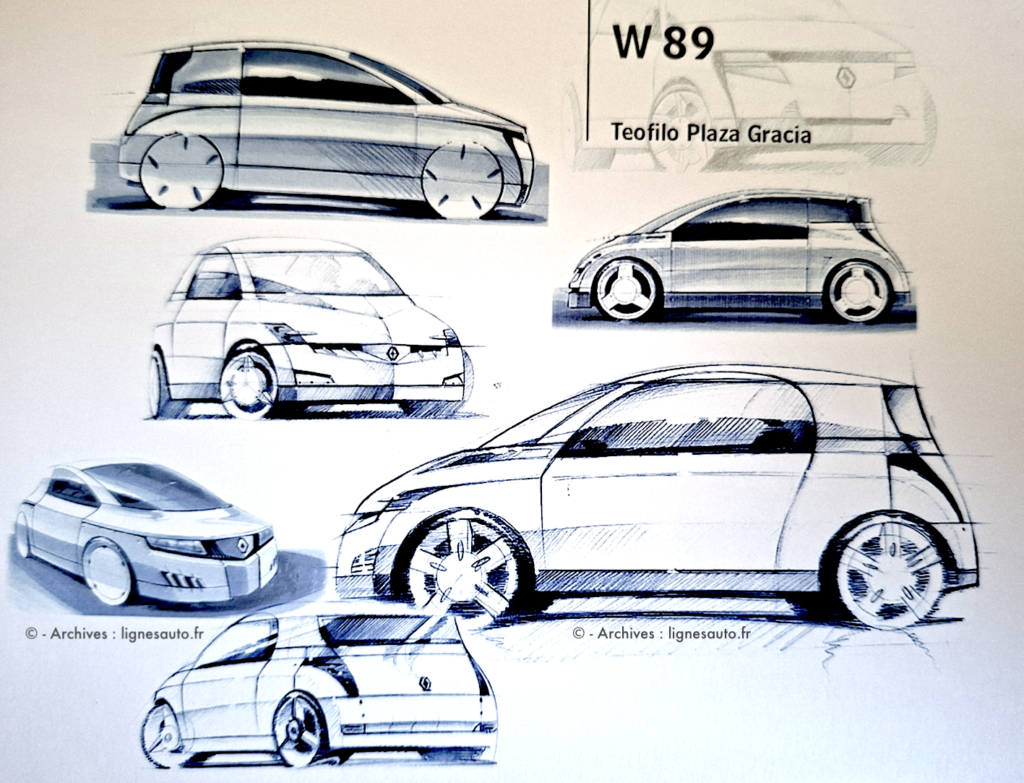
Added to this is designer Ulfert Janssen, designer at FASA (Renault’s Spanish subsidiary). On 1 September, Florian Thiercelin returns to the Guyancourt headquarters and is replaced by Jérémy Leng, who will work on the interior design of the Scénic 2, as well as on the initial studies for the Twingo 2, shown below. A second FASA designer, Teofilo Plaza, joined the team. All these talented individuals worked under the direction of Thierry Metroz. The Barcelona commando unit did a remarkable job. Vincent Pedretti’s Scénic project, which was in competition with the Guyancourt project, was selected.
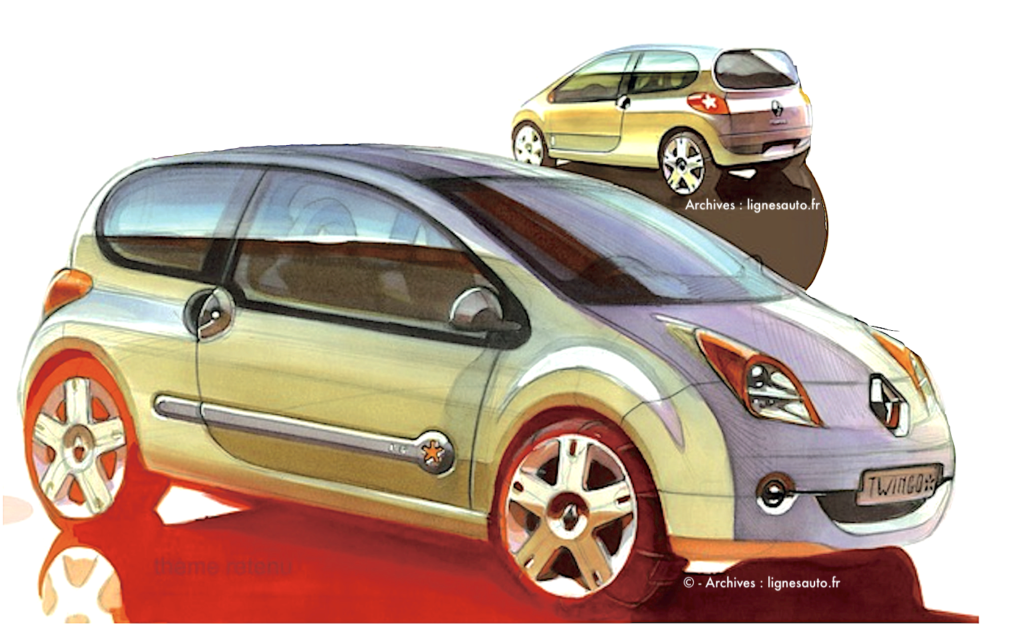
At the same time, the second external studio in Guyancourt was set up in Paris in the Bastille district. It was inaugurated in June 2003 and placed under the responsibility of Fabio Filippini. For Patrick le Quément, Director of Renault Industrial Design, “the aim is to ensure a rich offering, with small teams based in the heart of cultural capitals such as Barcelona and Paris.” The Twingo renewal programme then took a second direction: the project became the W44 and, after Barcelona, Paris became a new internal competitor on this programme. It was here that François Leboine designed the appealing proposal below, which frankly deserved to be selected. Some have written that Carlos Ghosn rejected this model, but that is not true.
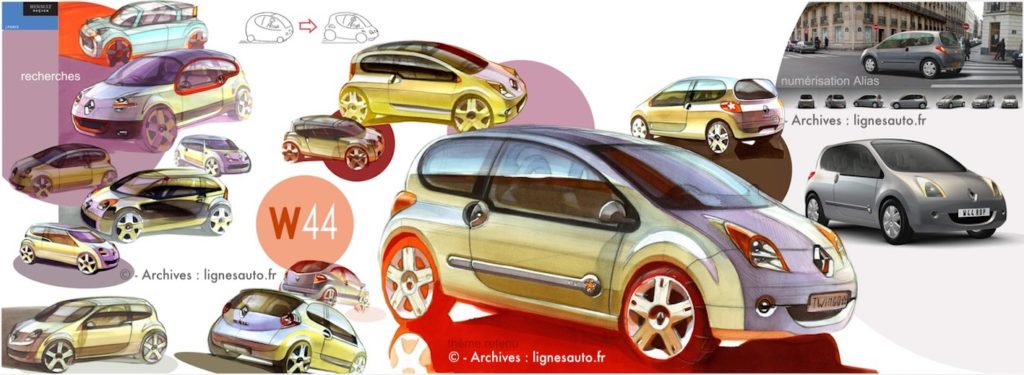
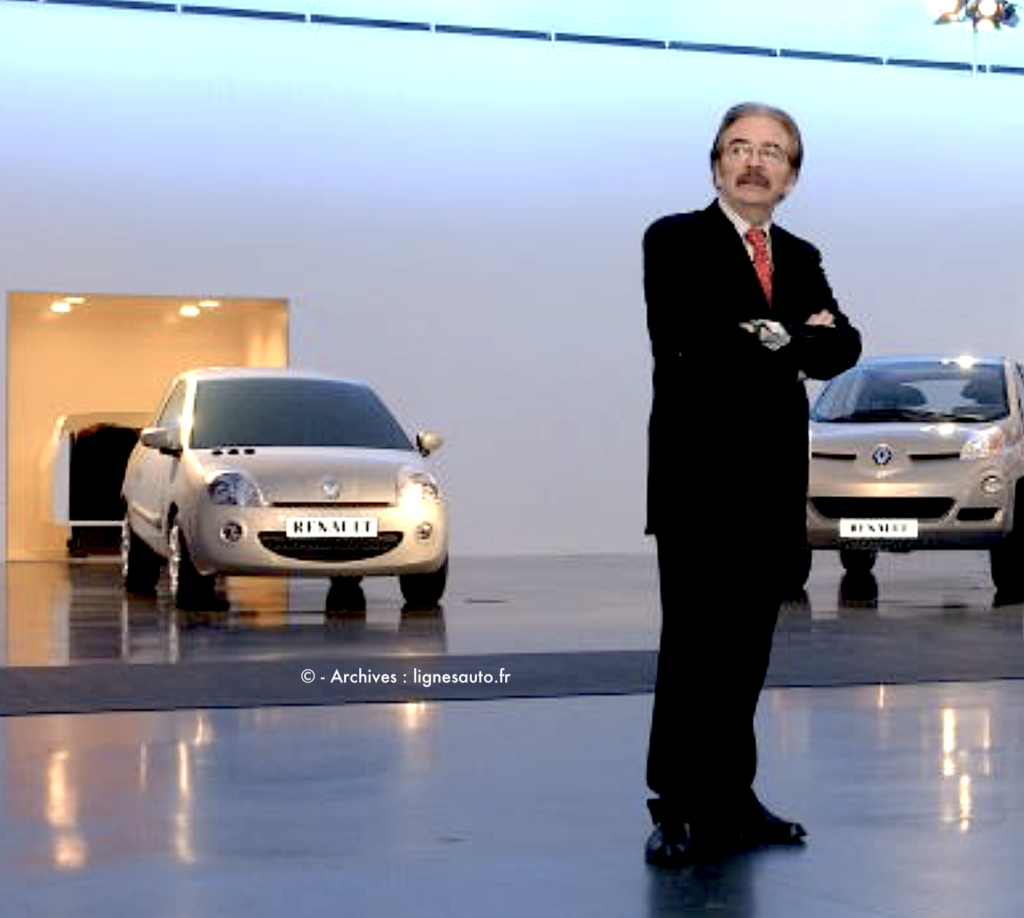
As mentioned above, it was Louis Schweitzer who made this decision, as confirmed by Patrick le Quément: “Carlos Ghosn was not involved in the Twingo 2 project; at the time, he was not involved in the development of Renault products. The Design Department’s favourite model was designed by François Leboine, who was then part of Fabio Filippini’s team in Paris. This project was largely inspired by the first-generation Twingo. It was our favourite.“
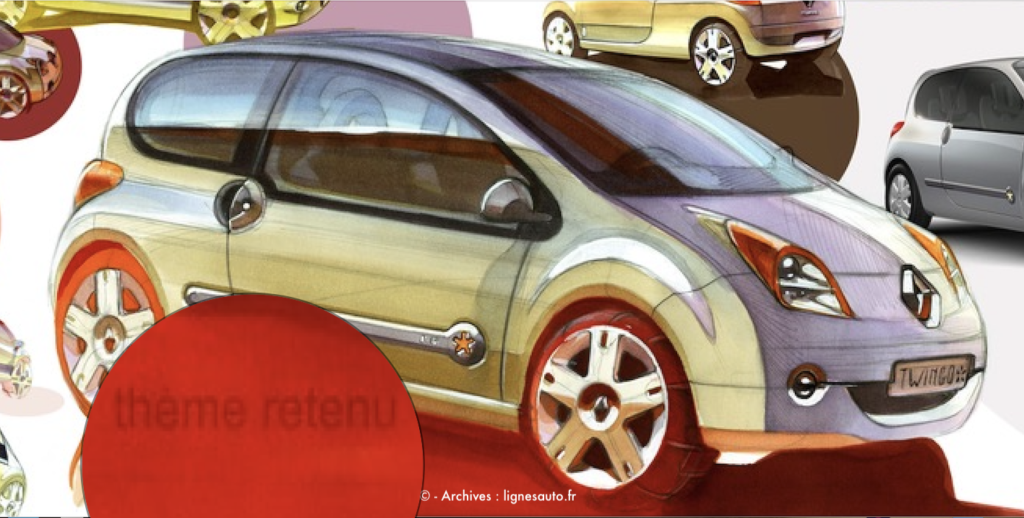
Unfortunately, the model ultimately chosen internally will follow the vision of Rémi Deconinck, who reportedly asked for inspiration to be drawn from the Citroën Saxo and Peugeot 106! Patrick le Quément emphasises that, regarding the final choice of style theme, “the model chosen represented the stylistic direction desired by the product planning department, headed by Rémi Deconinck. CEO Louis Schweitzer chose to follow this approach, and thus the legacy of a great car was destroyed.“
Designed under the supervision of Fabio Filippini, François Leboine’s proposal projected the optimism of the first Twingo into a bright and cheerful future… before being rejected in favour of the model that was ultimately chosen. The latter was designed by Stéphan Barral, a proposal that was modified by designer Satoshi Tanaka, who had previously created another proposal inspired by the Citroën C2, shown below. At the same time, Stephan Barral was responsible for developing the Modus.
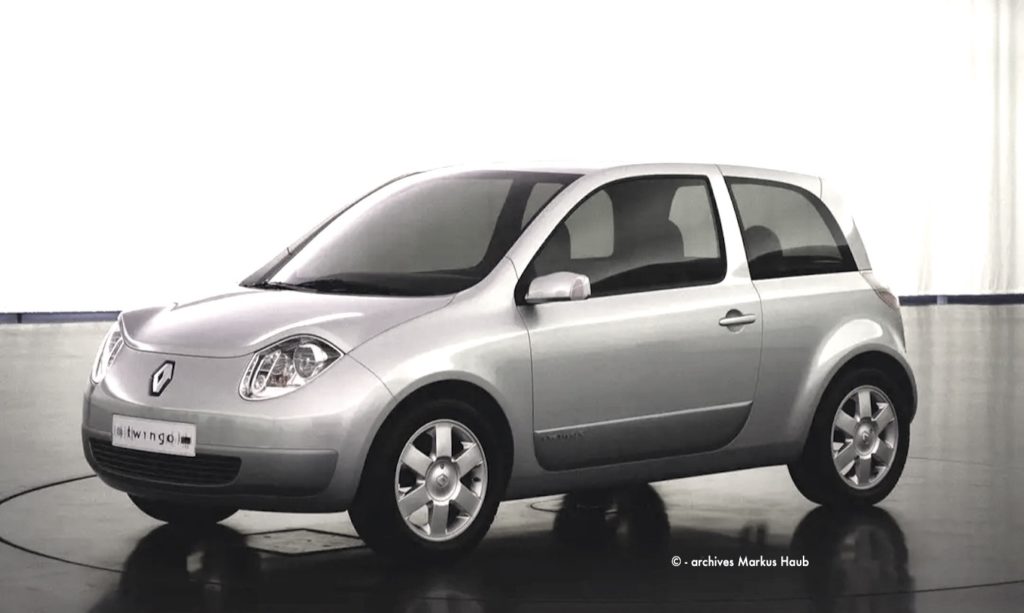
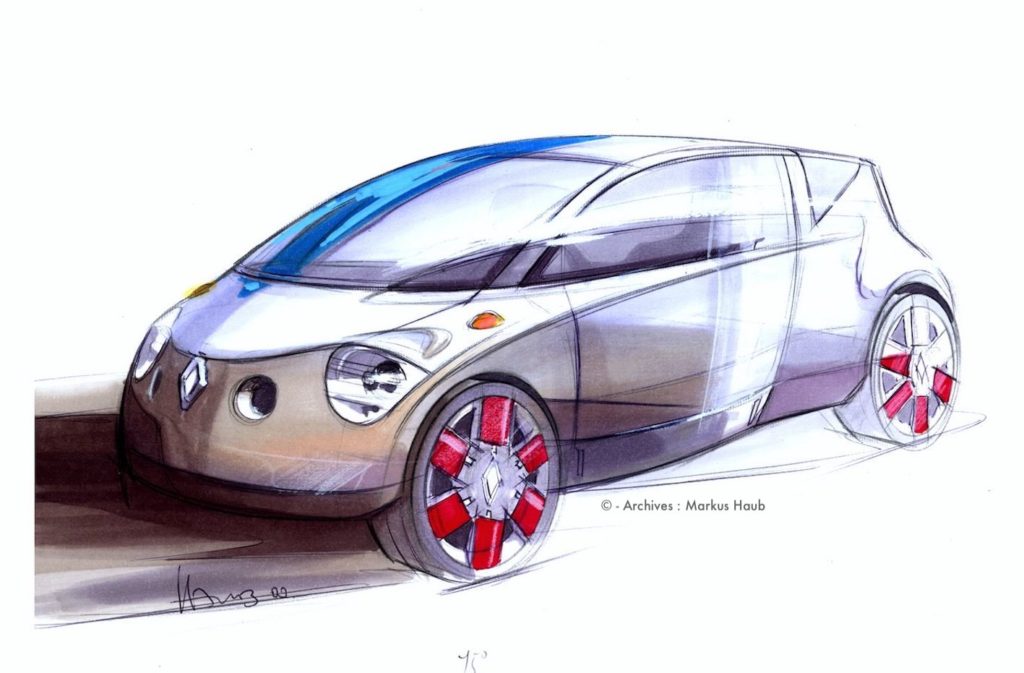
To these multiple projects, we would like to add another one below, from the early days of this programme in Barcelona. At that time, it was not yet called W44 but W89. Its creator, Markus Haub, “was one of the designers in Barcelona,” recalls Patrick le Quément, “and he also spent some time in Guyancourt. He left that job to become an artist, and I really like his paintings. I’ve bought a number of them! ” Markus explains that this project was the first one he worked on in 2000 in the Spanish studio, with a 1:1 scale model, before the programme became the X44.
And what about François Leboine’s famous – beautiful – model, which should have won everyone over? Unfortunately, there is clearly no trace of it left. Only these sketches published today. During an interview for LIGNES/auto, we asked François how he felt after his project was not selected. “How you feel is proportional to the time you spend on the project. Disappointment is proportional to commitment. And commitment means time. The more time passes, the more the model evolves, the closer we get to the production phase and the Holy Grail of seeing your vehicle on the road one day, the greater the disappointment at not being selected! So yes, clearly, that evening, I went home in a bad mood!”
“But designers work on their ability to bounce back. It’s a bit like falling off a motorbike for the first time: if you don’t get back on it very quickly, there’s little chance you’ll feel confident enough to get back on it later.” To recharge his batteries, François Leboine joined the Barcelona design studio in April 2007. There, he created a pioneering urban mobility programme with a range of vehicles, from scooters to four-seater cars.
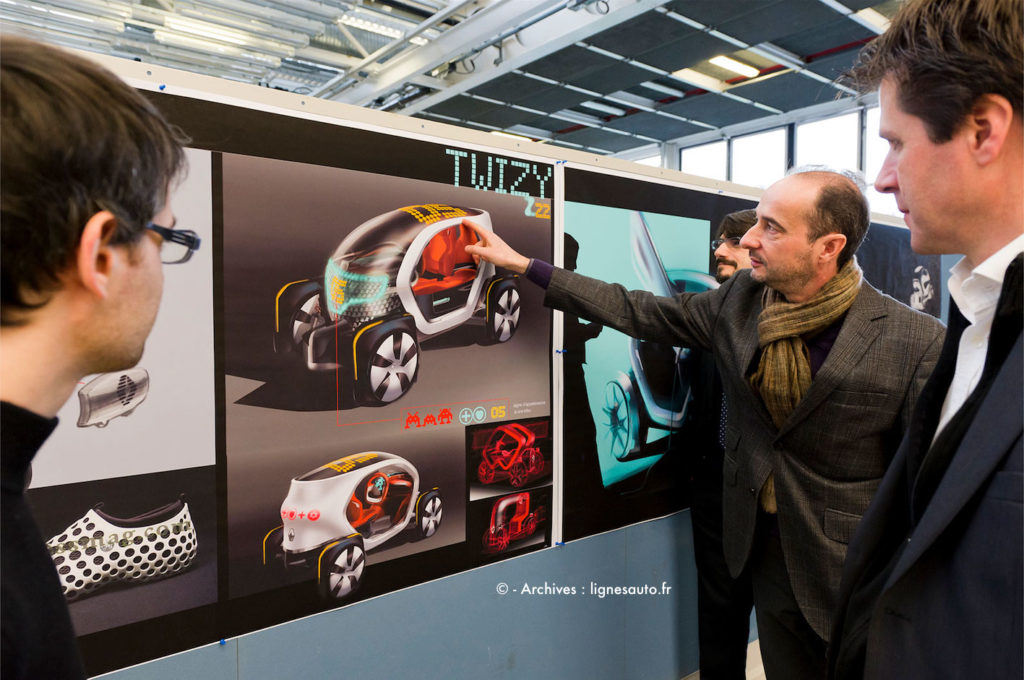
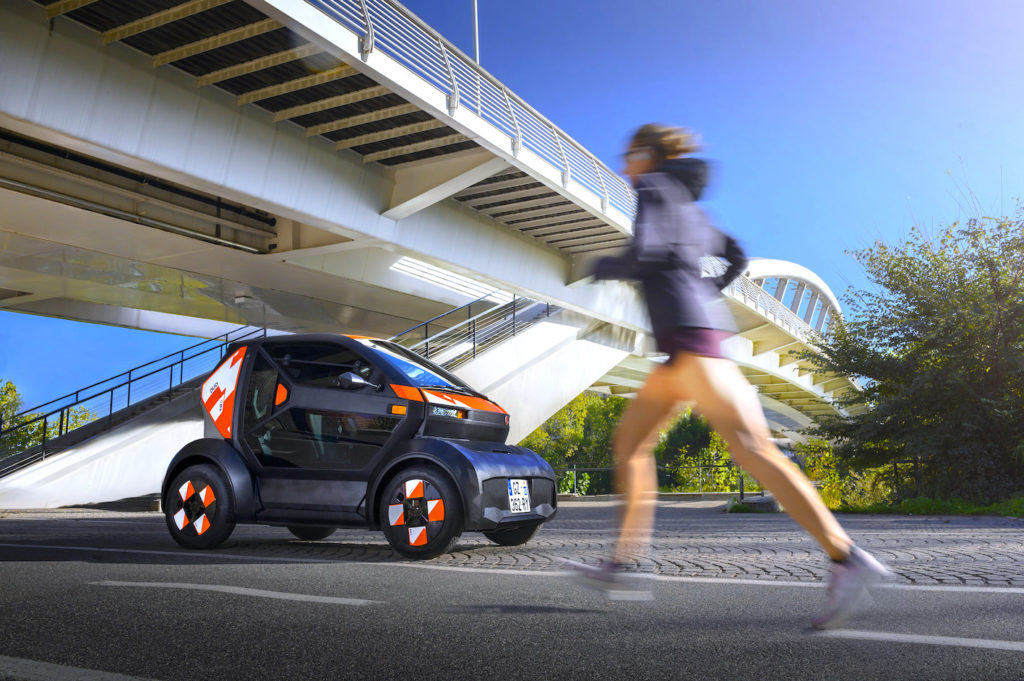
“In these projects,” recalls François, “there is the car that carries the Twizy genes. In September, we resumed the project and I took charge of the two-seater, four-wheel proposal (at the time, there was a one-seater, three-wheel proposal). We started working on this theme with a model maker and Éric Diemert. We developed the ergonomics using foam blocks, designed the chassis and measured the curvature of the windscreen on a BMW C1 scooter. We went far beyond strictly automotive knowledge.” Another story dedicated to smart urban mobility began, which found a worthy successor in the Mobilise Duo below. As for François Leboine, he is now head of design at Fiat. You can (re)read his interview here: https://lignesauto.fr/?p=41301
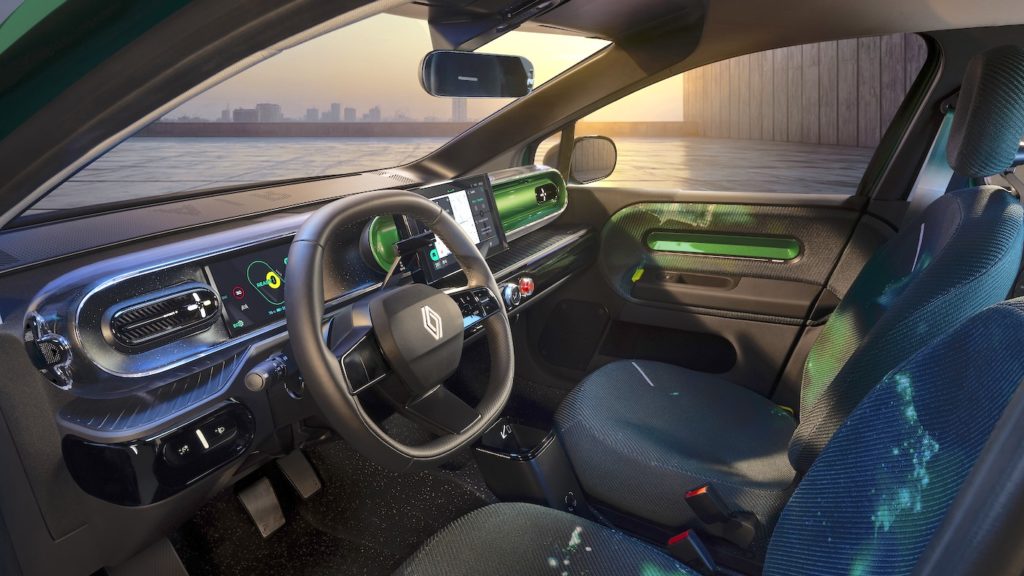
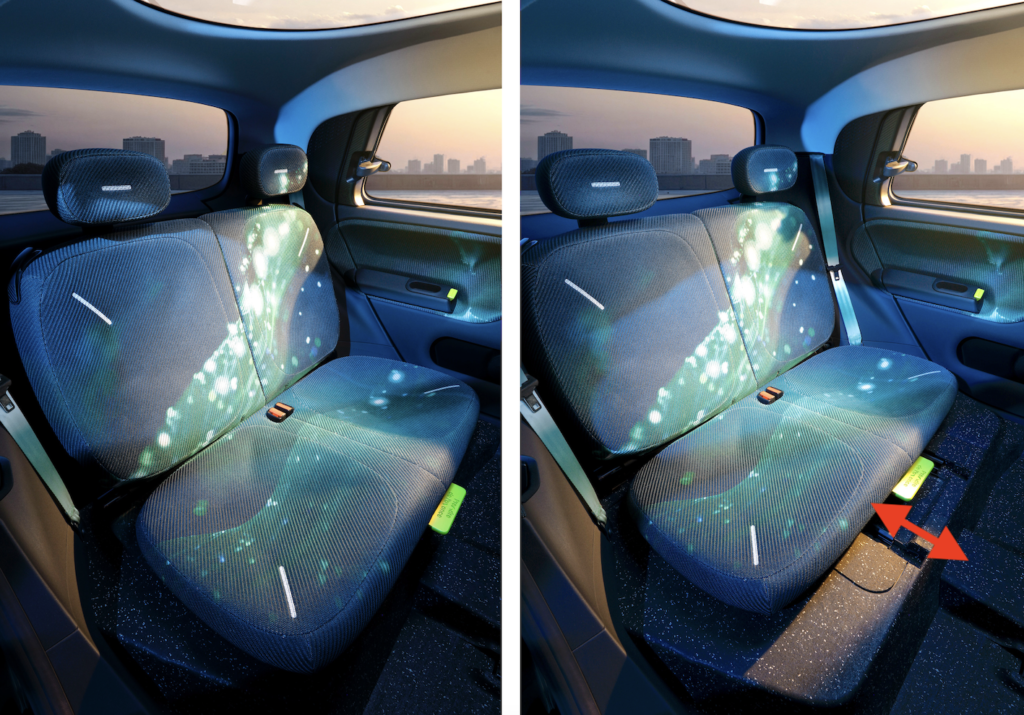
As for the Twingo 4 – whose interior can be seen below – by reinterpreting the concept of the 1992 Twingo, it already has a strong card to play. Will this be enough to pave the way for real success? Today, it is primarily a question of price. With a price tag of €20,000, does this new generation have another unbeatable asset up its sleeve?
BONUS: THE TWINGO IN DATES
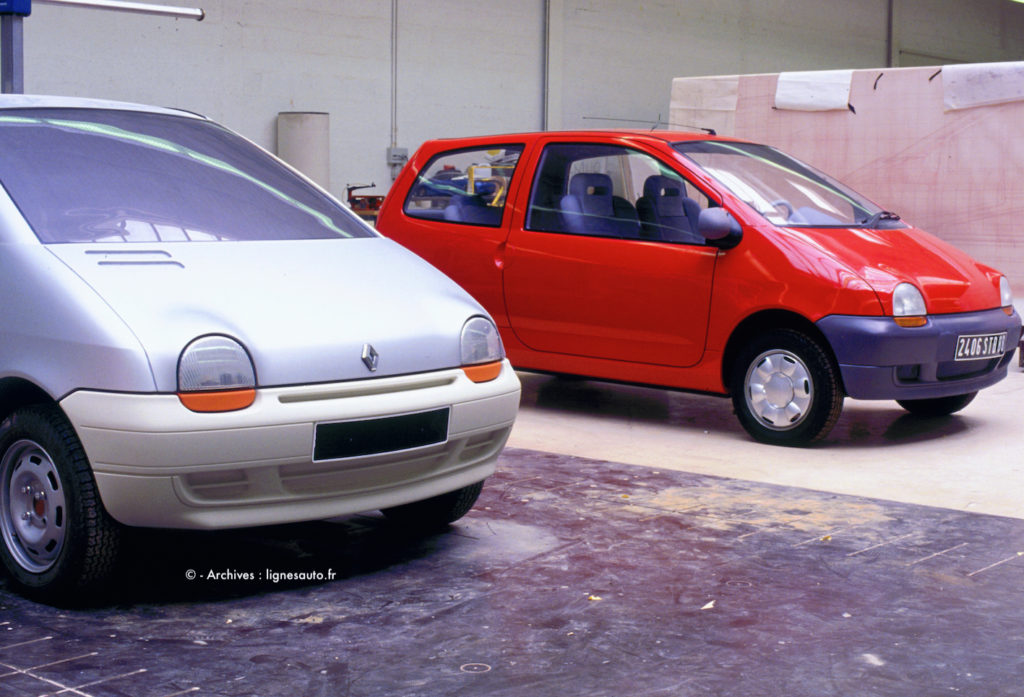
TWINGO 1: first model: W60 by Jean-Pierre Ploué – 1988, extensively modified with widening and increase in size as shown below. Presentation: Paris Motor Show 1992. Three-door vehicle.
TWINGO 2: initial designs (below, designer Mark Haub): W89 – 1999, then programme name changed to X44. Presentation: 2007 Geneva Motor Show. Three-door vehicle.
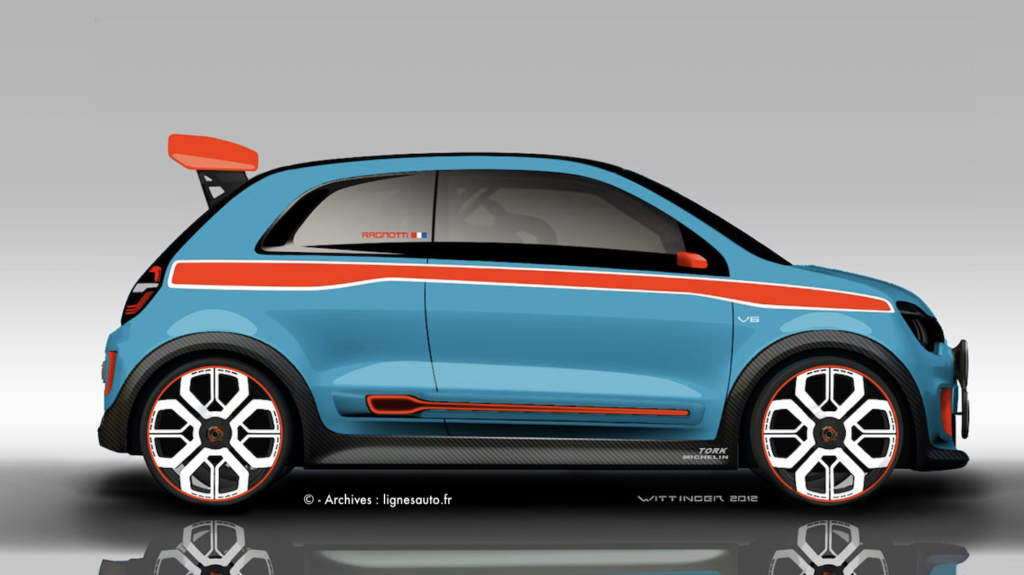
TWINGO 3: Announced in 2013 with the two concept cars Twin’Z and Twin Run shown below. Mercedes/Smart rear-engine platform. Presentation: 2014. Four-door vehicle.
TWINGO 4: announcement on 15 November 2023 of the rebirth of the Twingo with the Twingo Legend concept below. Reveal of the production model: 6 November 2025. Launch in 2026. Four-door vehicle.