LIGNES/auto accompanies you throughout your holidays, discussing the future without neglecting the past. However, we cannot rewrite history. But we can recount it without resorting to simplistic ‘what ifs’. And we can provide new insights by putting it into context. Today, we delve into unpublished archives to take you back to the turning point of the 1980s and 1990s at Opel, with a unique project.
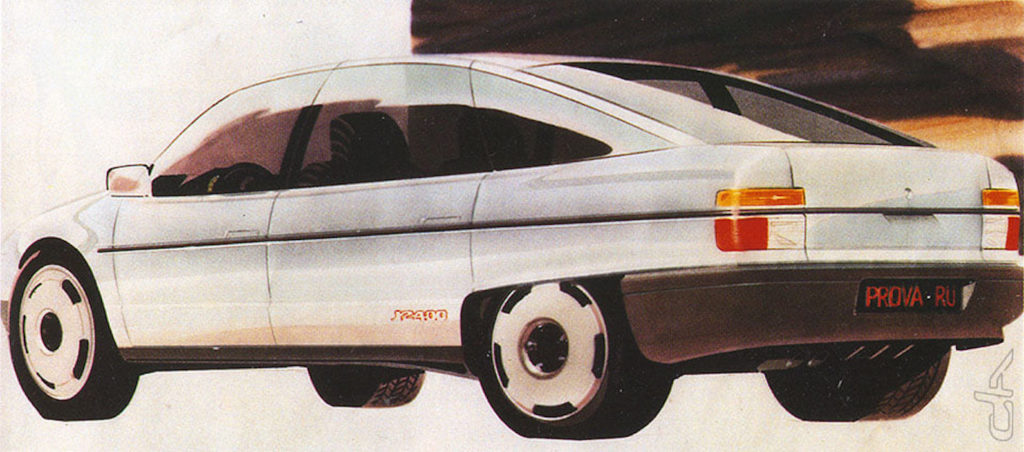
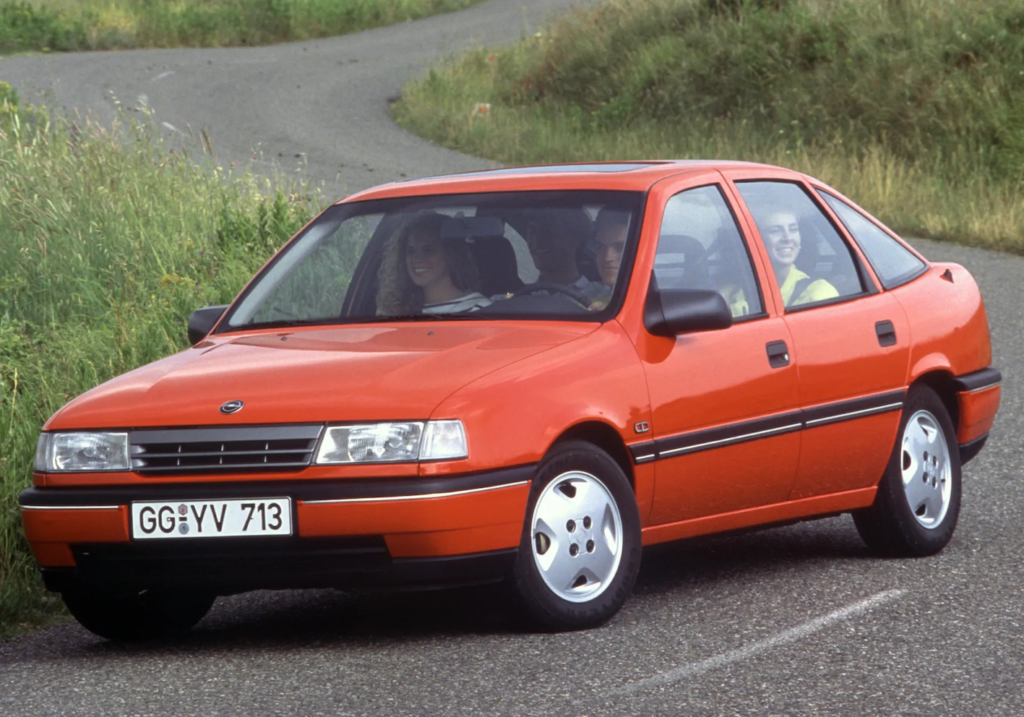
At the end of the 1980s, the German manufacturer was expanding rapidly with its Vectra saloon, launched in 1988 (above in sketch form, CDA archives), and even though the new Peugeot 405 pipped it to the post for the 1989 Car of the Year award, the Vectra was well received by customers who were still loyal to mid-range saloon cars. The Vectra was also one of the first saloon cars to offer a small engine with a wide range of equipment! It was available in two body styles: 4 and 5 doors (below).
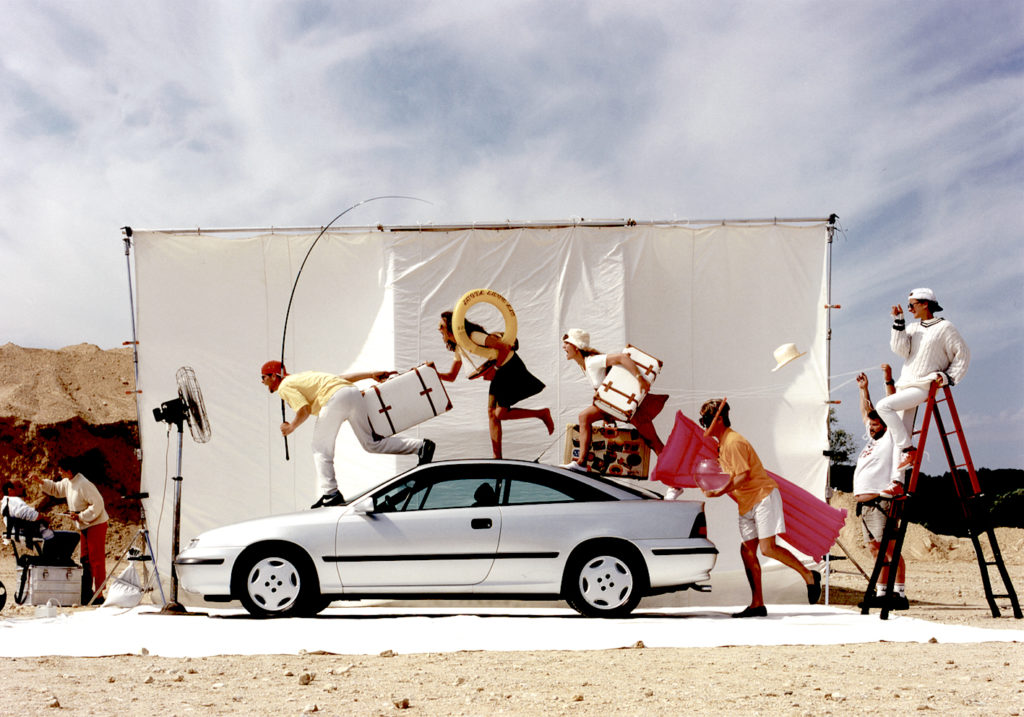
A year later, Opel launched a beautiful two-door, four-seat coupé on the Vectra platform, with a striking design and slim headlights: the Calibra (below) was the spiritual successor to the Manta, but with front-wheel drive. Its slim headlights were very much in vogue at the time and were also featured on the Citroën XM, which was launched in the same year (1989). The Calibra was produced at the Rüsselsheim plant near Opel’s headquarters. A symbol.
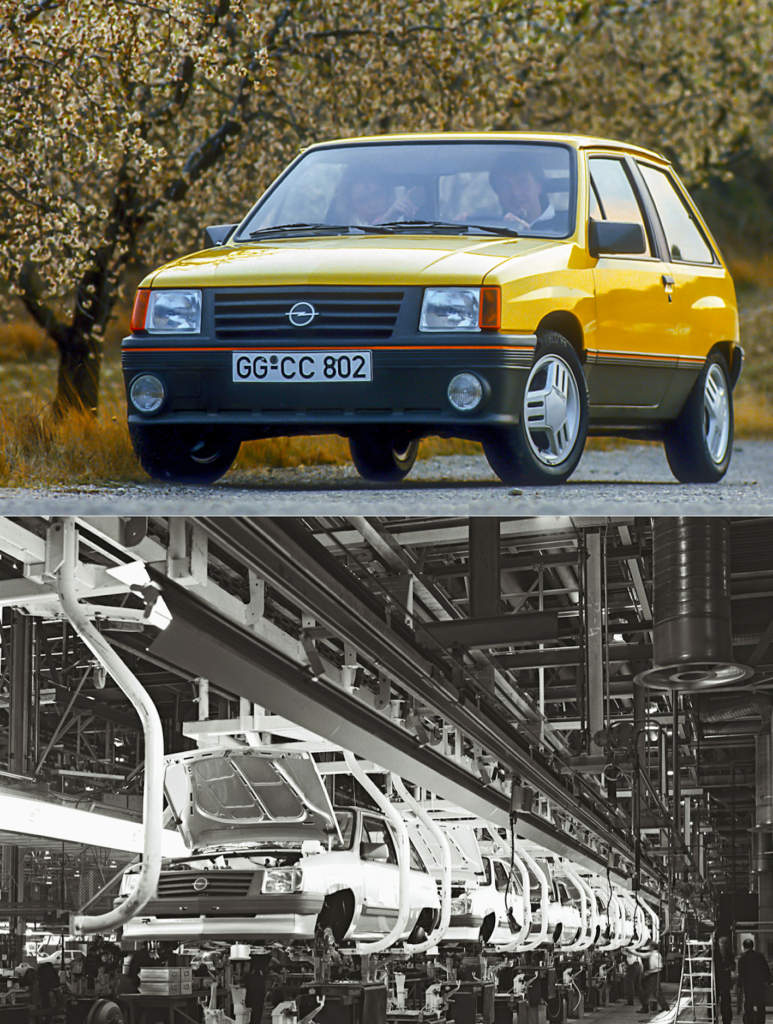
In the Opel catalogue, the Vectra and Calibra didn’t have to wait long to welcome their new little sister, the Astra, in 1991. The latter replaced the Kadett E, launched in 1984, itself the successor to the Kadett D from 1977, which was Opel’s first front-wheel drive model. And at the bottom of the Opel range, the little Corsa, launched in 1982 (below), was revamped in 1993, two years after the arrival of the Astra. So, in less than six years, from 1988 to 1993, the entire Opel range was renewed. That’s the background…
Behind the scenes, the manufacturer’s ambitions were even greater, because when the Calibra coupé arrived on the market, plans for a ‘small Calibra’ were already underway. This was a strict two-seater convertible that was to use the platform of the future 1991 Astra. At least, that is what emerges from the profile photo unveiled today (below), with a huge wheelbase considering that there were only two seats!
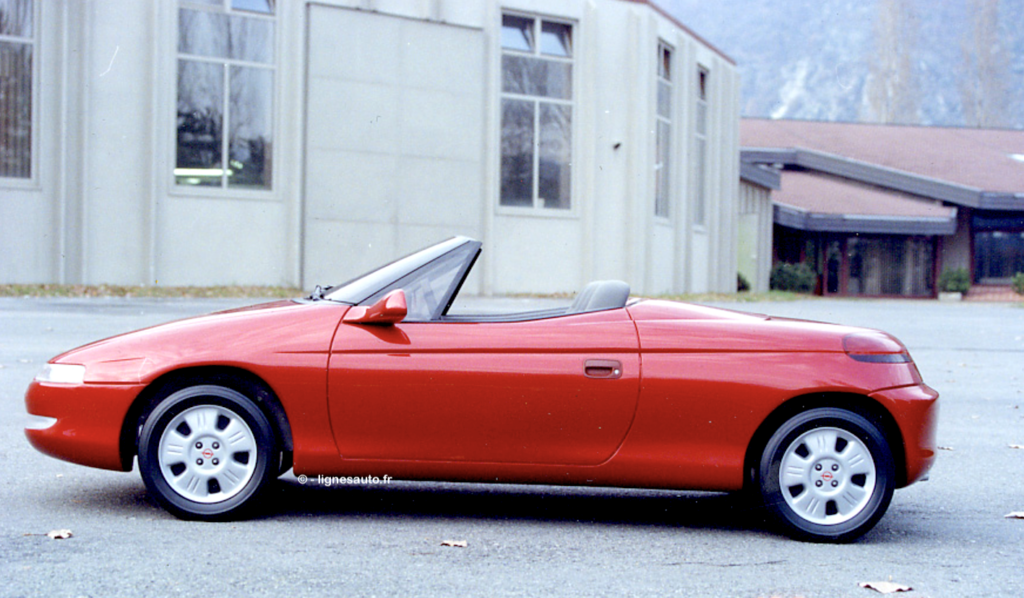
The design of the project published here comes from consultant Bertone, as can be guessed from the Italian styling studio and its distinctive roof in the background. Let’s be honest: if it weren’t for the small logo on the bonnet and the wheel rims, it would have been difficult to identify the brand! Perhaps the only contribution this design makes to the series is the positioning of the rear-view mirrors, which will undoubtedly inspire Opel’s designers when they develop the second generation of the Vectra. Overall, with its long bonnet and wide wheelbase, the proportions are a little out of balance.
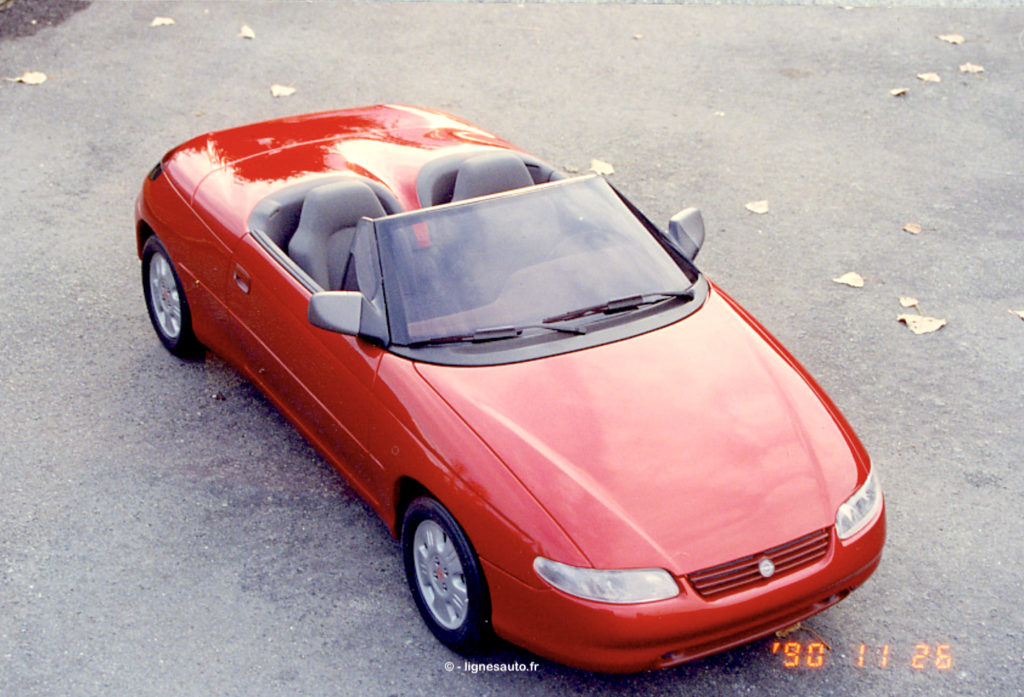
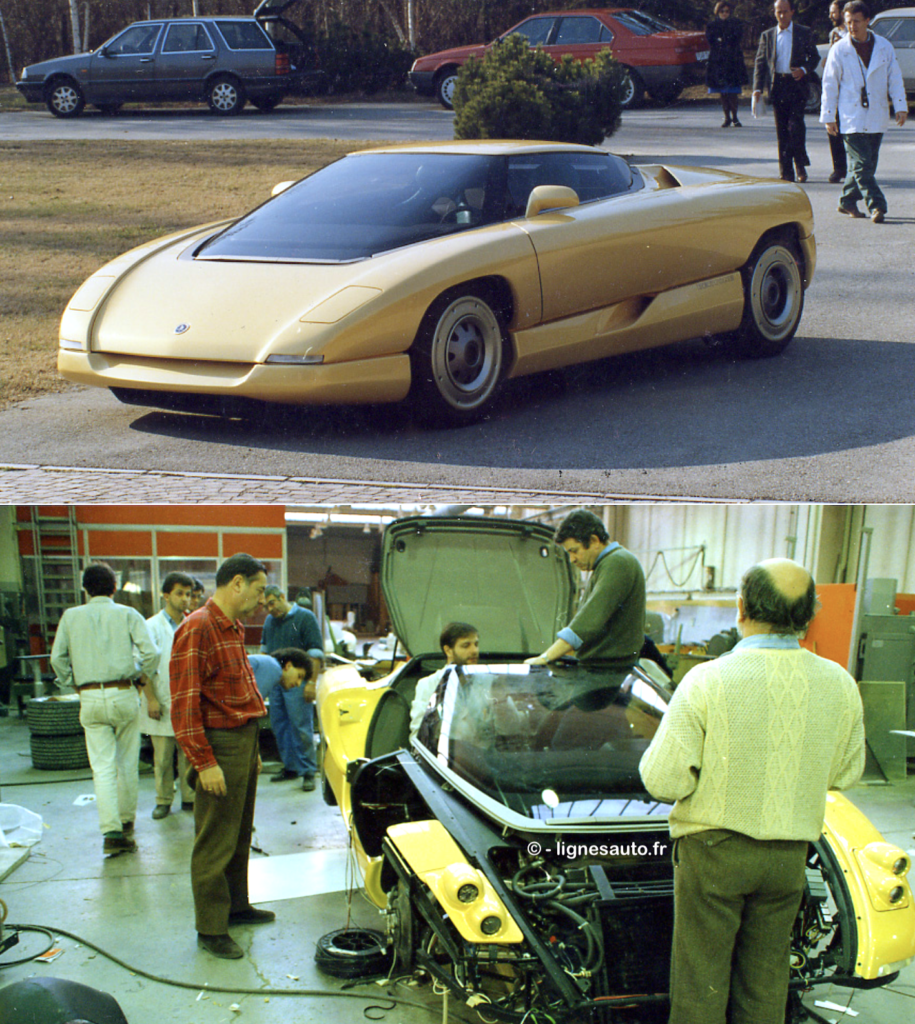
For the rest, we should point out that this Bertone model above is the work of Marc Deschamps, then head of design at the Italian carrozzeria. In addition to the Opel Spider, in 1990 the French designer also created the Chevrolet Nivola concept car (below) and a plaster model for the Bugatti revival project.
Why did Opel decide to develop this small two-seater spider? It should not be forgotten that the market had just welcomed the extraordinary Mazda Miata roadster in 1989. Unfortunately, the project for this ‘mini Calibra’ did not enjoy the same success as the Japanese model, as it never saw the light of day. It’s a shame, as this Opel was ten years ahead of the Peugeot 206 CC coupé-cabriolet, which went on sale in 2000. However, the latter benefited from a retractable hardtop patented by Heuliez, while the Opel had to make do with a canvas roof…
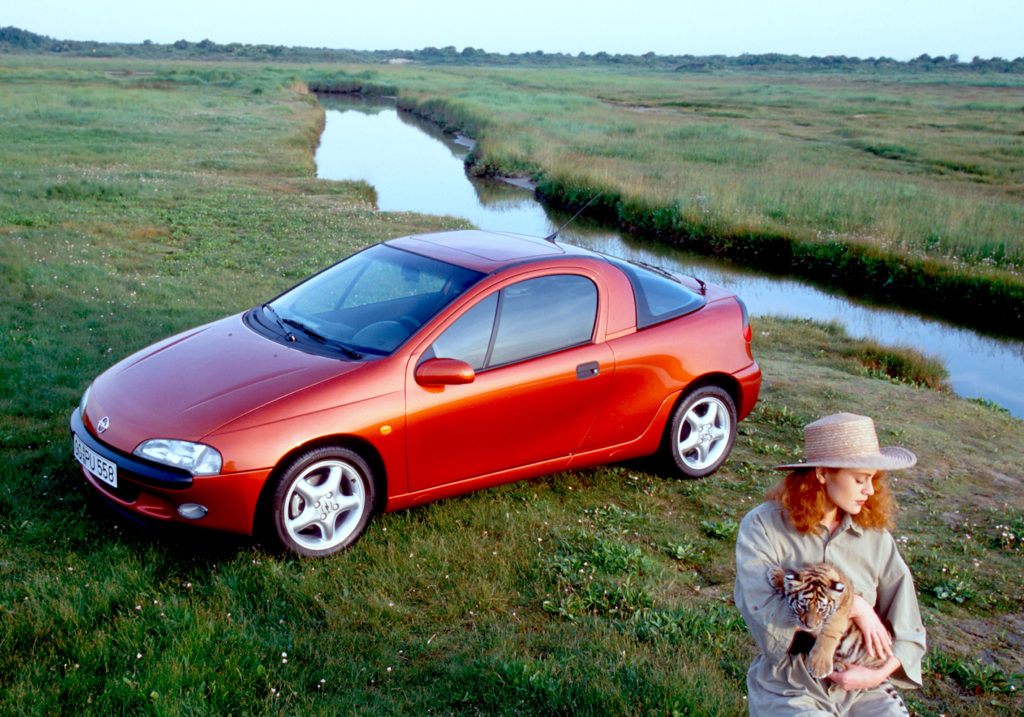
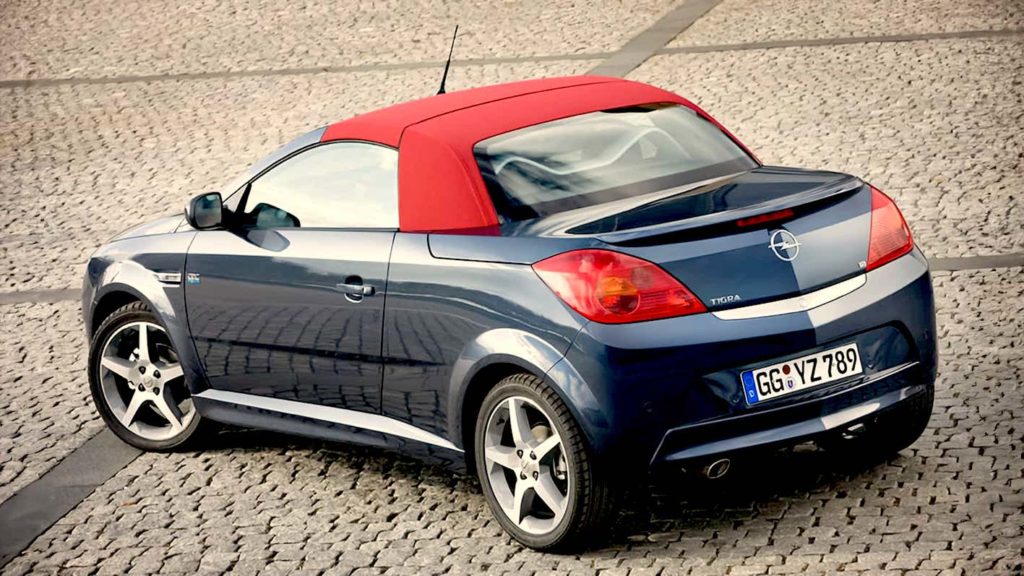
So it was ultimately the little Opel Tigra above that arrived on the small coupé market in 1993, a much more sensible design than the two-seater spider designed by Bertone. But the Tigra was no match for the charm of the Peugeot 206 CC. It wasn’t until 2004 that the Tigra Twin-Top below, with its retractable roof, arrived on the scene. Heuliez produced this convertible Opel from 2004 to 2009, but unfortunately, production never reached its targets, contributing in part to the French coachbuilder’s downfall. Ironically, it was Heuliez that designed and produced the retractable roof fitted to the Peugeot 206 CC, of which more than 370,000 were produced. History can sometimes be cruel…