Peugeot will unveil its Polygon concept car before the end of the year. More than two years after the Inception concept, this second Peugeot manifesto of the Matthias Hossann era (Peugeot design director) will announce the styling themes for the 208/2008 duo of 2026/2027. Above all, the upcoming Polygon will reveal new information about the steer-by-wire concept, without mechanical linkage, already seen on the Inception where it was unveiled. In 2023, Peugeot was not talking about a steering wheel but a ‘new driving control.’ During the presentation of the Inception concept car, a manager told us that “design language elements will appear as early as 2026 and others around 2030… or later.” Peugeot is thinking long term.
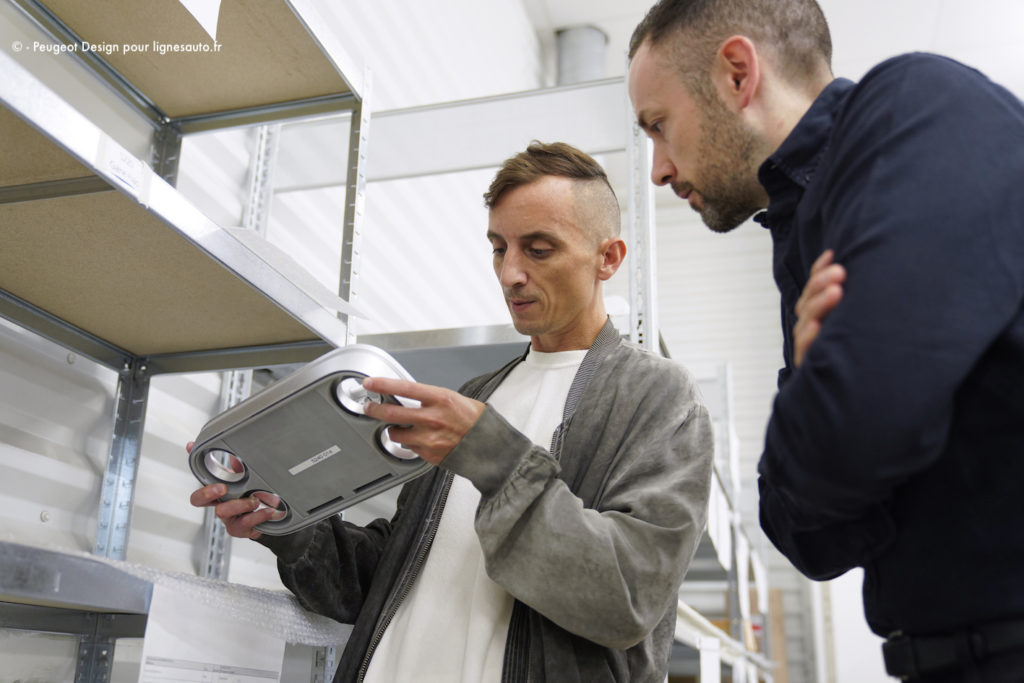
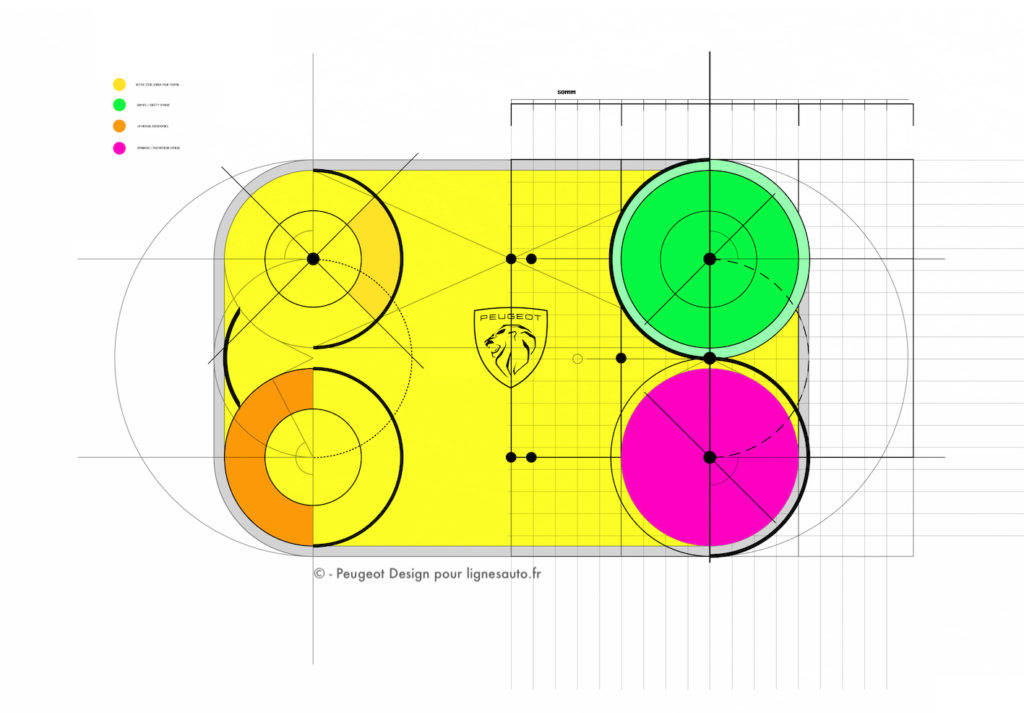
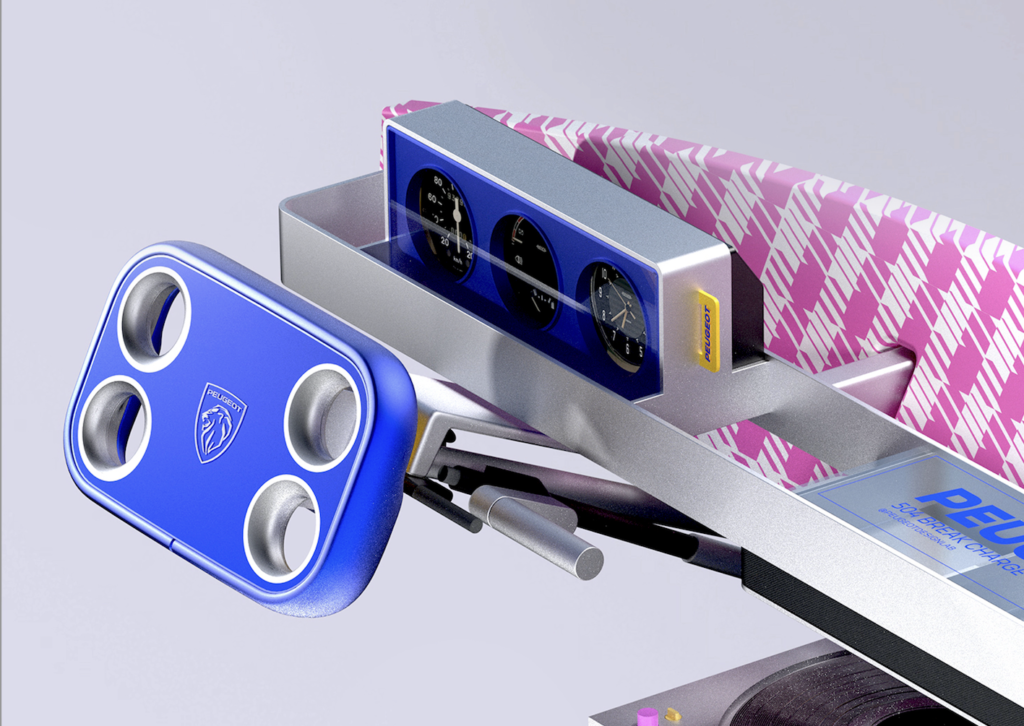
This architecture steer by wire will enable the Polygon concept – and the future Peugeot 208/2008 – to benefit from a brand new generation of revolutionary i-Cockpit®, featuring a ‘new driving control’, a “steering wheel” that can no longer really be called that, as it is rectangular. It resembles a (thick) tablet and has four round holes in which you can control functions with a simple movement of your thumbs.
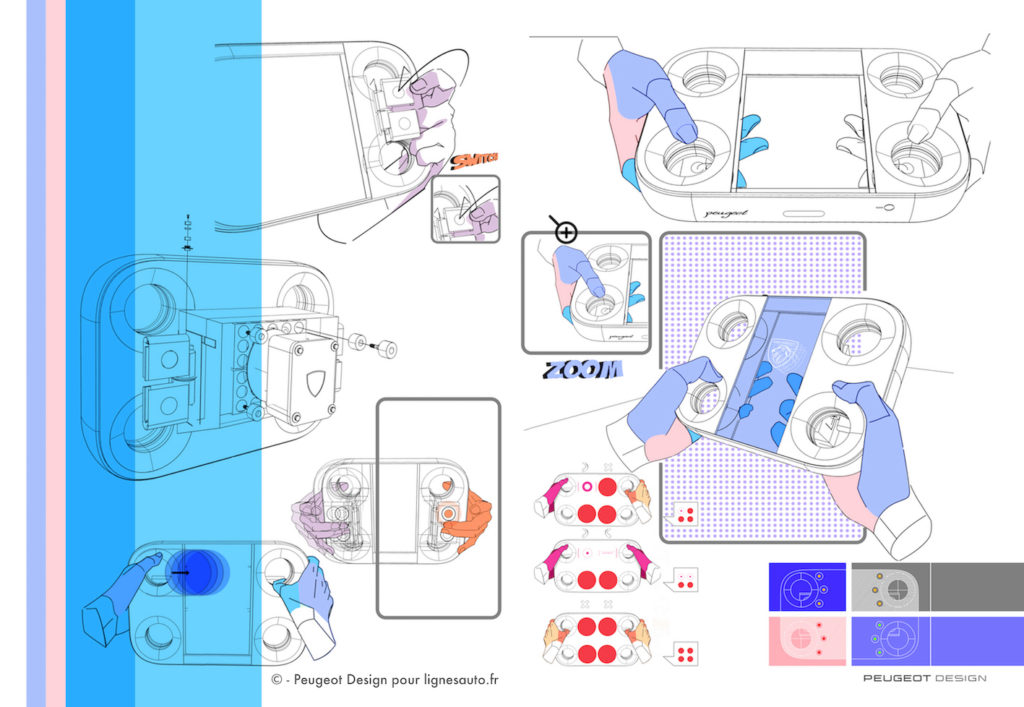
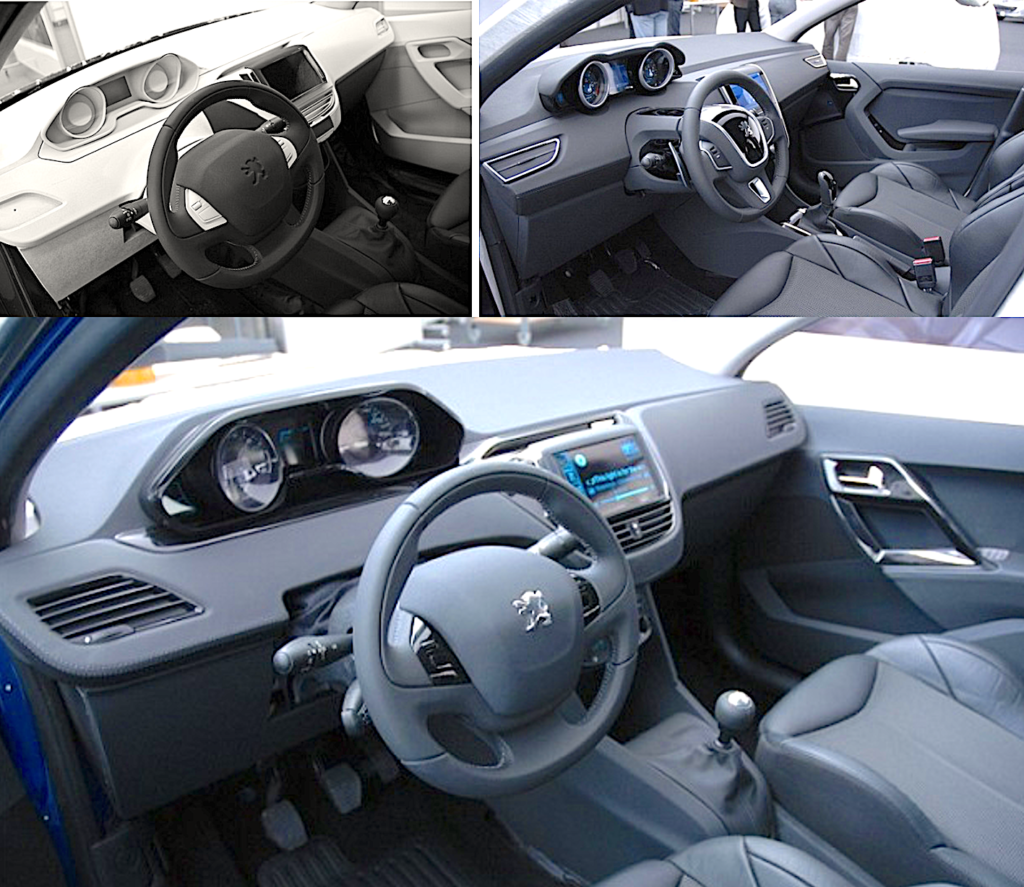
What stands out about this new steering system is that it requires virtually no effort to achieve maximum steering angle (see below) and that several thousand kilometres have been covered with prototypes equipped with this system. If all goes well, Peugeot could make an even bigger splash than it did with the introduction of the first generation of i-Cockpit®, shown above. That was in 2012, when the first 208 was launched.
This will undoubtedly give them the upper hand in terms of communication, now that their rival Clio and its sixth generation are on sale… This is a concept that is particularly relevant to the manufacturer’s communication plan! For the 208, we will probably have to wait until late 2026 or early 2027 to see it on the networks and then on the road. The presentation of the next Polygon concept car will therefore put the spotlight on the Sochaux-based brand, at a time when its rival Renault is already hitting the road.
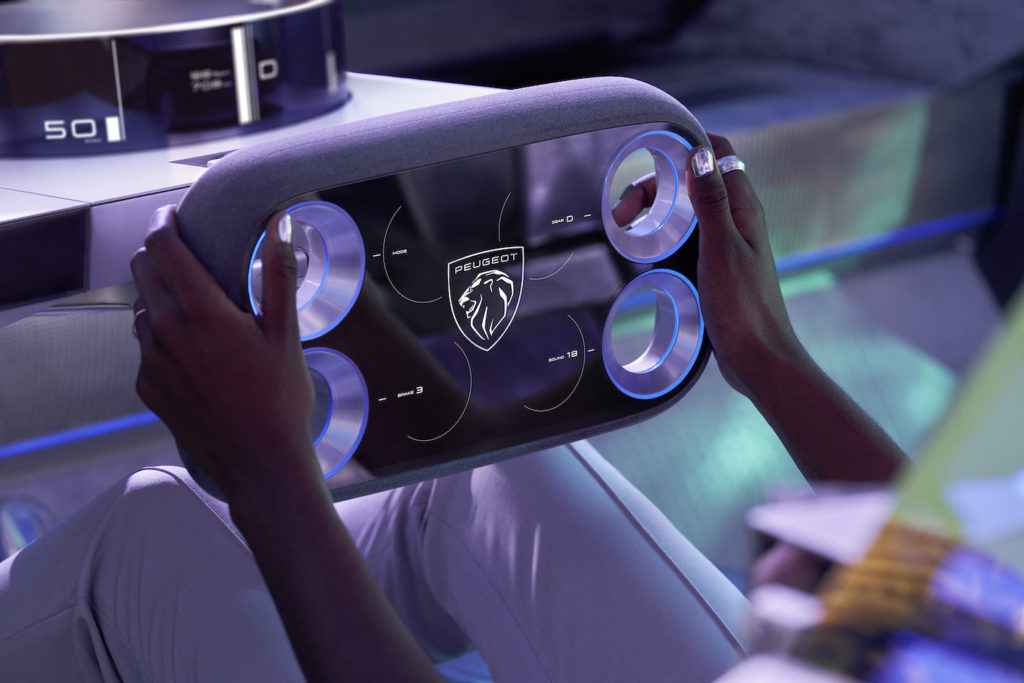
Polygon, still unknown, gives us the opportunity to look back at the incredible development of the famous Hypersquare control, which, in its basic concept, goes hand in hand with the information cluster located in front of the driver’s gaze. This will not be the case in the production version. When referring to Hypersquare, the French manufacturer talks about “disruptive technology inspired by the digital world. This innovation radically transforms the driving experience and pleasure by replacing the traditional steering wheel with digital electric controls, using steer-by-wire technology to create new gestures for more intuitive, simpler and more ergonomic driving.”
The evolution of the i-Cockpit® is radical. Philippe-Emmanuel Jean, concept strategy project manager, revealed to us during the development of the Inception concept that this new architecture “completely changes the ergonomics of control. The Hypersquare steering module controls all of the vehicle’s commands, spelling the end of the steering wheel controls!” Remember that the steering wheel controls are the controls integrated under the steering wheel, along the steering column. This new technology from Peugeot will therefore contribute to a new driving experience. Philippe-Emmanuel Jean told us that “all of this has already been tested (since 2022) and everything works very well. The adaptation time is short, with very natural movements. It’s a new set of gestures that is easy to learn.“
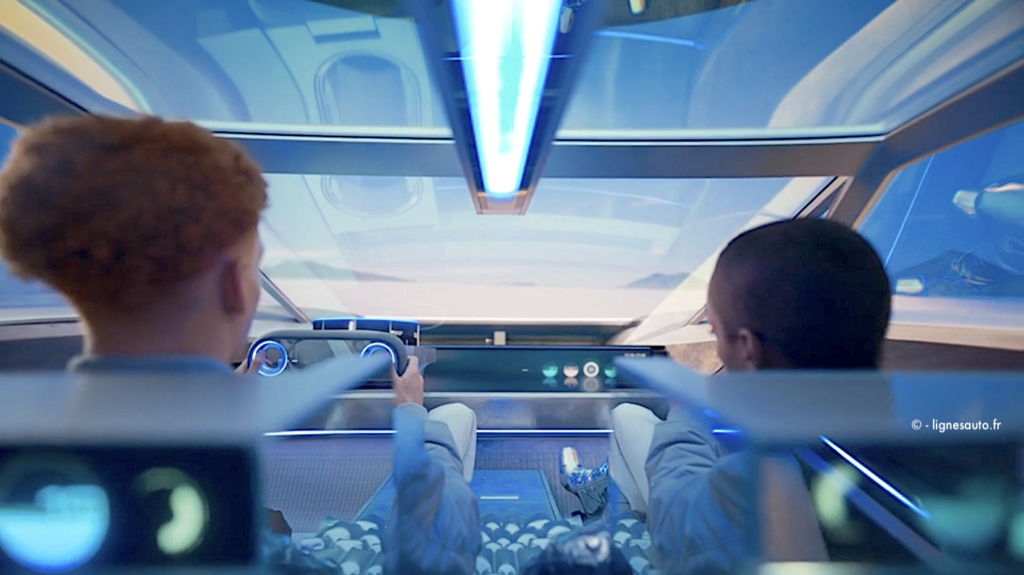
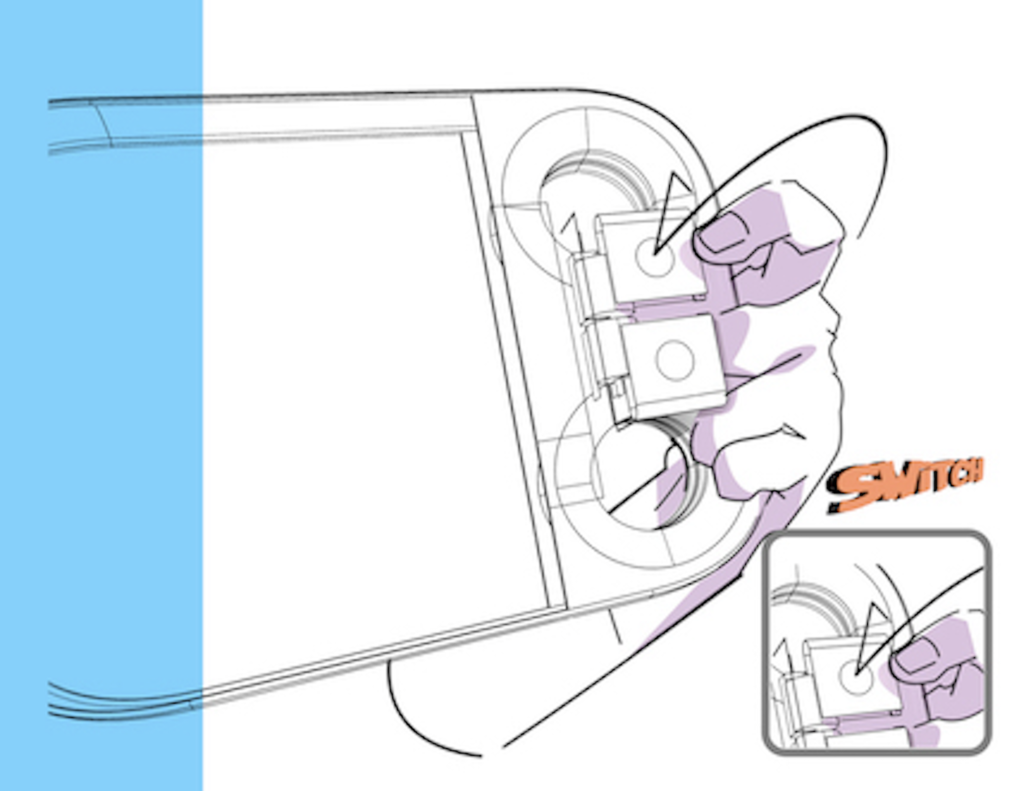
Guillaume Lemaître, head of interior design development whom we met during the genesis of Inception, explained that “traditional controls and those for driver assistance and aids are accessible with a simple movement of the thumb.” They are located on the inner edge of the recesses at the four corners of the Hypersquare module. “We are offering a new gesture that is similar to that used on a smartphone or game console. This is an advantage in terms of safety, as the driver does not need to take their hand off the steering wheel.”
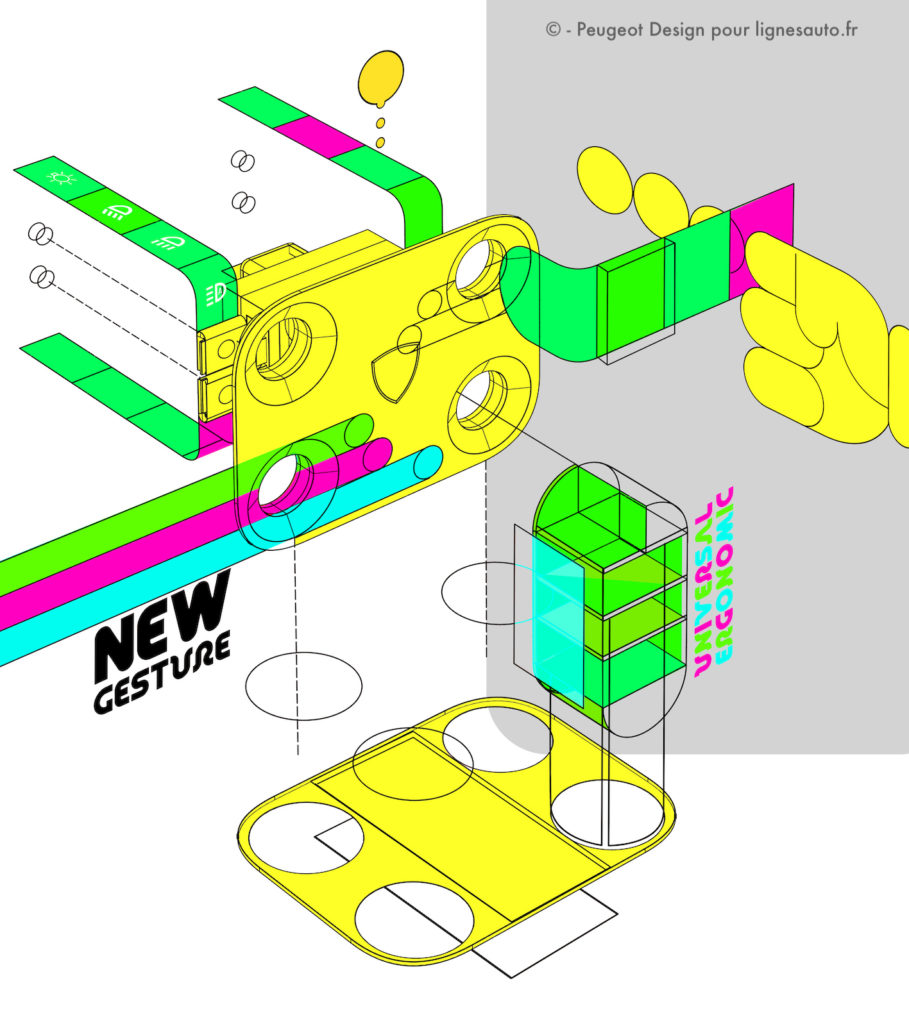
As we have read, road tests have already been carried out to validate this system, particularly the diameter of the cells. This is not so easy to determine, depending on each person’s morphology. The steering module angle is only 150° at maximum rotation, which means that this movement will no longer be counted in terms of the number of turns of the steering wheel, but rather in terms of an extremely small angle. Add to this the speed-dependent gear ratio, and you’ll never have to cross your hands again when driving your future 208/2008!
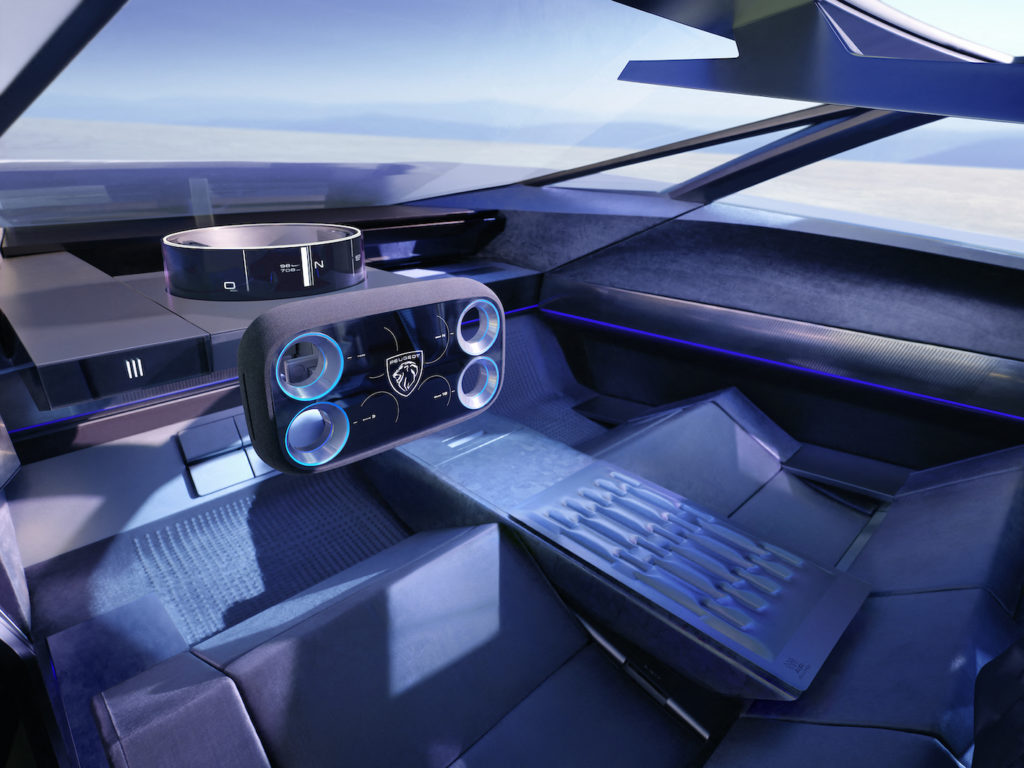
Guillaume Lemaître adds that “thanks to the electrical architecture of the steer-by-wire system, we started from scratch and reinvented everything! We completely redesigned the driving experience with this new i-Cockpit® package. It’s a whole new approach to driving with new gestures.” To complement the Hypersquare steering wheel, a circular information screen called the Halo Cluster retracts in driving delegation mode. But that was on the Inception concept…
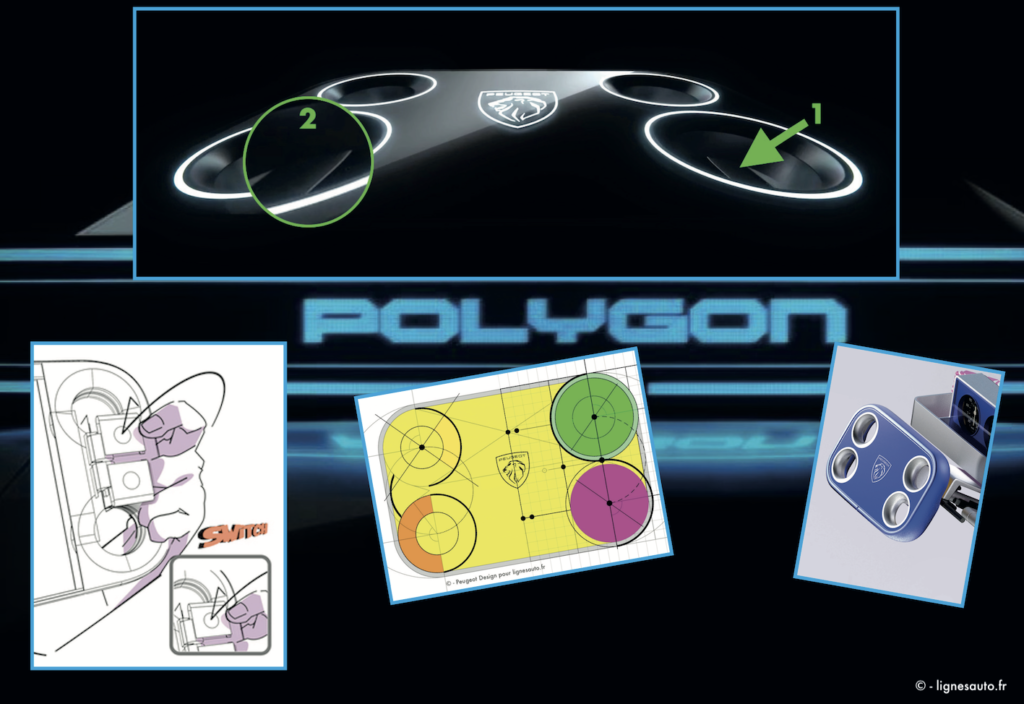
While Hypersquare will feature in the Polygon concept car and future 208/2008 models, the Halo Cluster, which is linked to full driving delegation, is unlikely to go into production in the near future. On the upcoming Polygon concept car, Hypersquare will take on a slightly less futuristic form than on board the Inception, as can be seen below in this screenshot from the first Polygon promotional video clip.
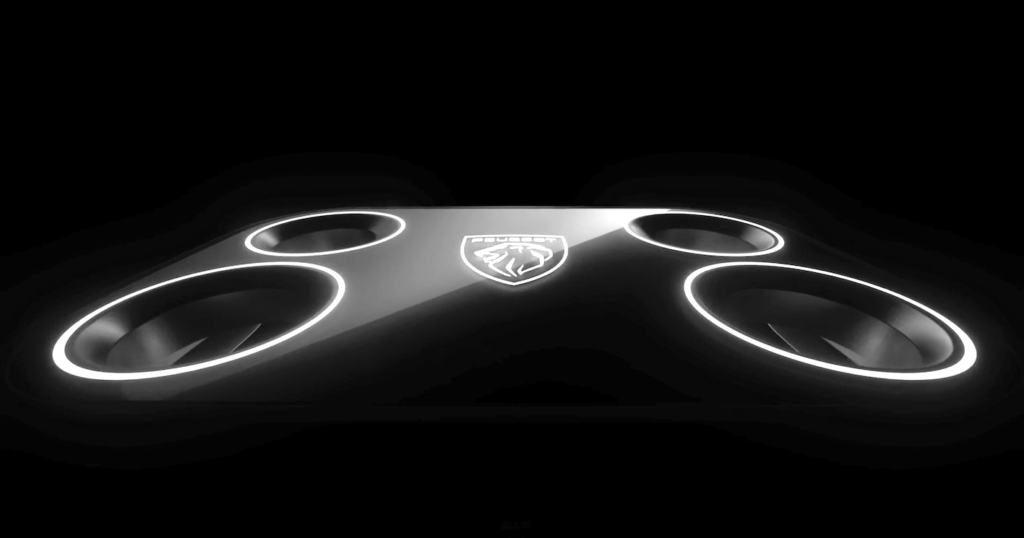
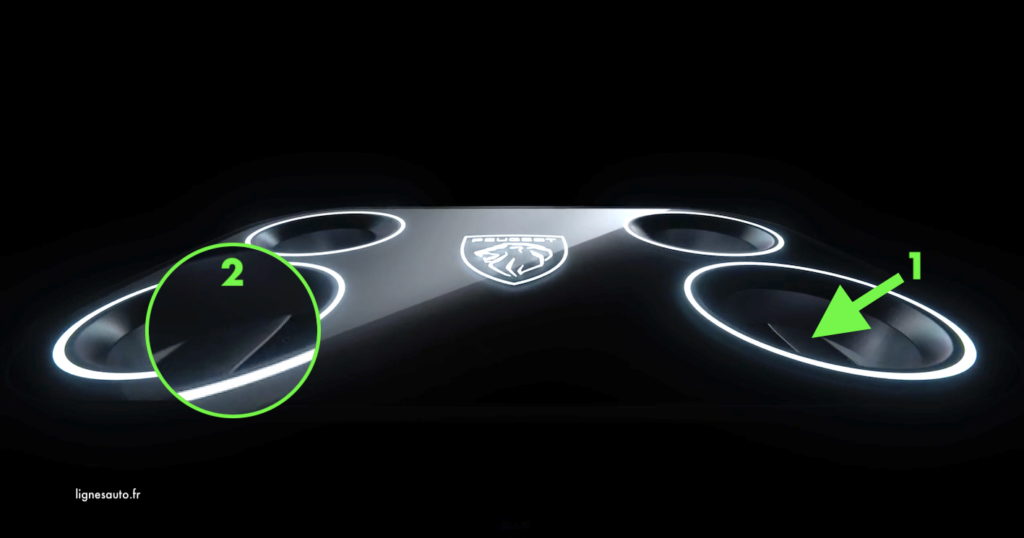
We can see a module that still has its four cells, but the information screen located in the centre of the Inception concept car has disappeared, probably to make room for the airbag. Its colour is also similar to that of a current steering wheel, but fortunately it retains its (very) thick tablet shape, slightly curved compared to the Hypersquare in the Inception, and offers a glimpse of the controls accessible in the cells, shown below in 1. Control magnified with a magnifying glass, in 2.
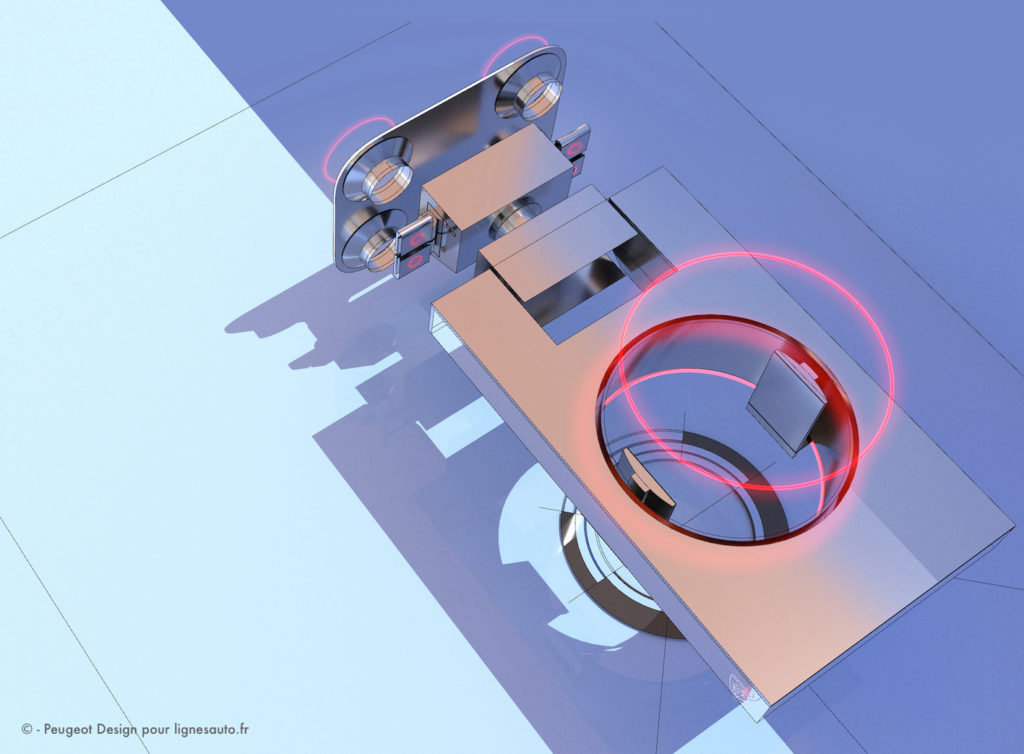
One question remains until Polygon is unveiled: will the controls located behind the Hypersquare seen on the Inception concept car (below) be partially retained? They could provide access to regenerative braking management, for example. If the concept is taken to its logical conclusion, it should eliminate the control stalks on your next 208/2008.
Another important aspect of the arrival of the steer-by-wire system is that it goes far beyond the integration of Peugeot’s revolutionary new i-Cockpit®. It has an impact on other areas, such as passive safety (no more physical steering column in the event of a crash), compatibility with the STLA Small platform of the future 208/2008 models, and the development of the STLA AutoDrive module architecture towards more advanced driving delegation. In short, this is a breakthrough that, like the first generation of the i-Cockpit® in 2012, will divide France between those who love it and those who hate it. An atmosphere that the French know all too well today in certain hemicycles!
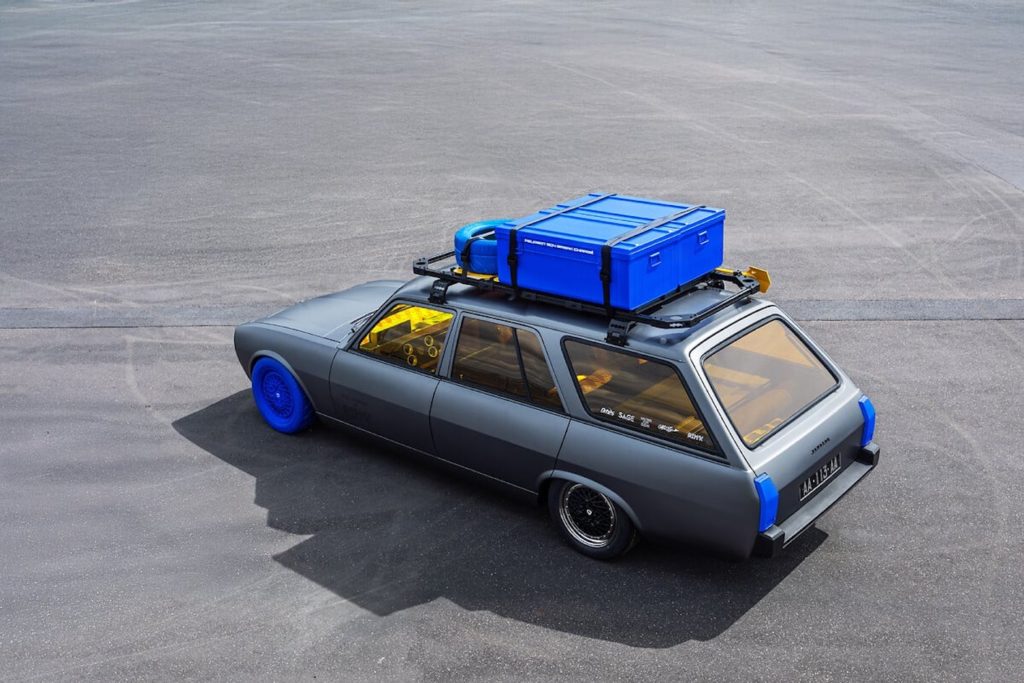
Since 2023 and the presentation of the Inception concept car, the Hypersquare concept has matured. Will it be offered on all versions of the future 208/2008? We’ll have to wait and see… But one of its developments appeared in the recent tribute to the 504 estate car by rapper Rim’K (above), founding member of the group 113 and the song Tonton du bled, where the Hypersquare appears in its conceptual form but without a central screen (below).
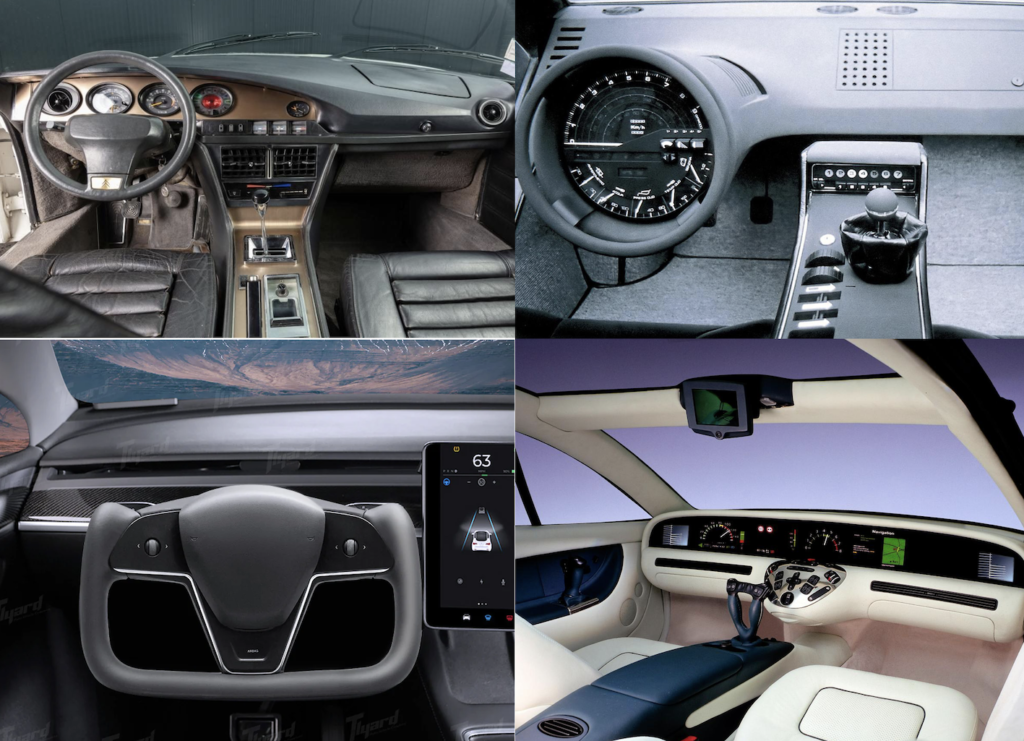
PS: No, Polygon will not be the first vehicle with a steering wheel that is anything but round. There are many examples, from the oval steering wheel of the Citroën SM (1970) to the fixed hub steering wheel of Giugiaro’s Maserati Boomerang concept car in 1971. You could add the Tesla steering wheel or the joystick in the Mercedes F200 (1996), the steering wheel in the Citroën C4… and many others. In short, there have been numerous revolutions in the field of steering wheels, but the move to mass production of the Hypersquare concept is unprecedented.