

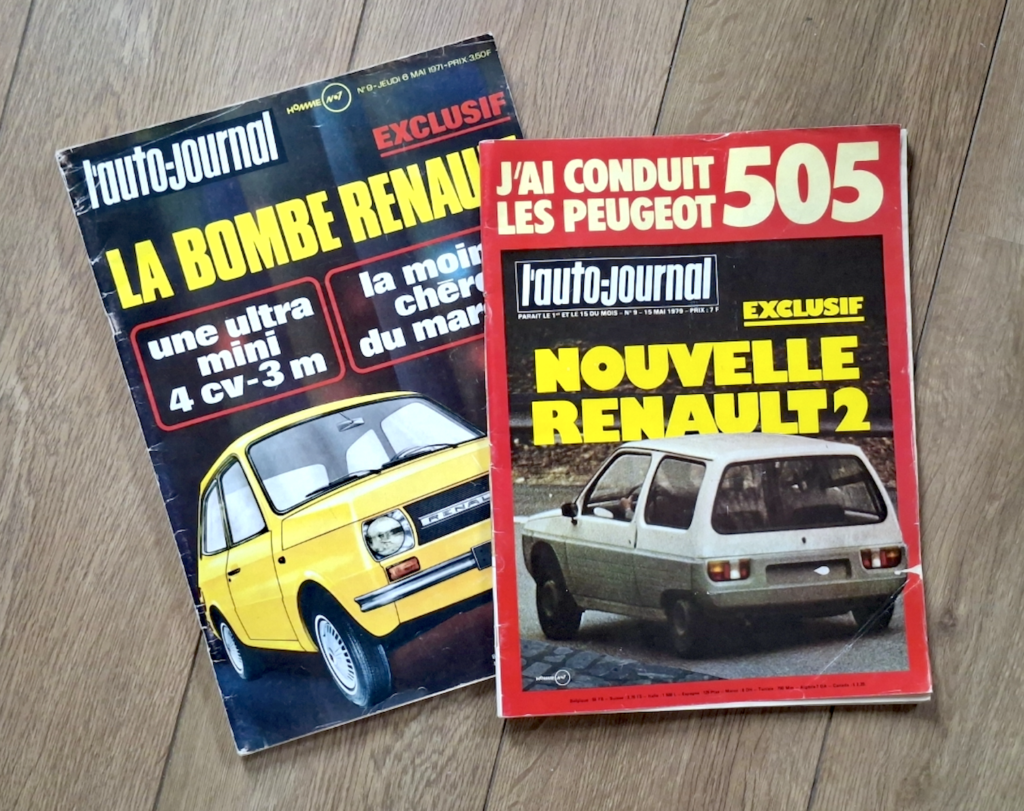
Through two issues of l’auto-journal dated 1971 and 1979, we take a look behind the scenes at these two scoops on the Renault 2, putting them back into context. Thanks to our archives, we can detail what was really happening behind the scenes at Renault at the very moment when specialist journalist Gilles Guérithault was writing his articles. A fascinating story supported by documents from the period. And, incidentally, an insight into the difficult job of a journalist hunting for ‘scoops’! Here is the second episode: the 1979 R2.
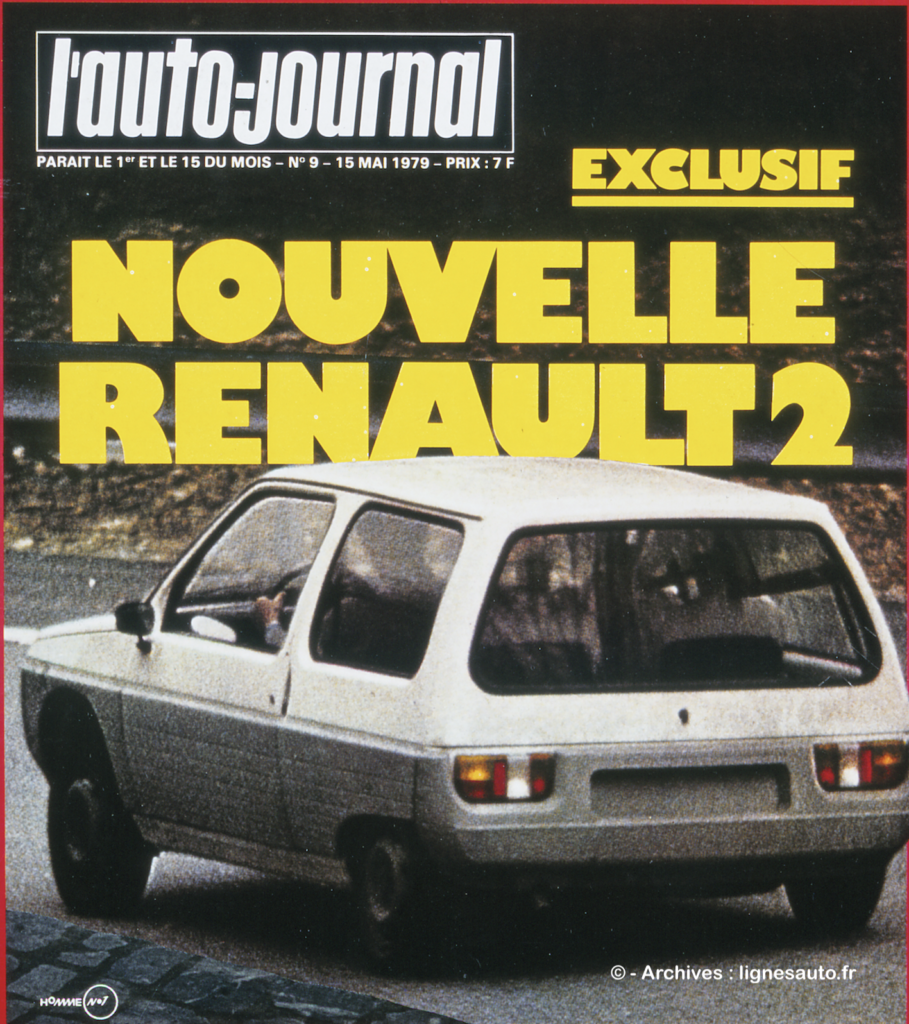
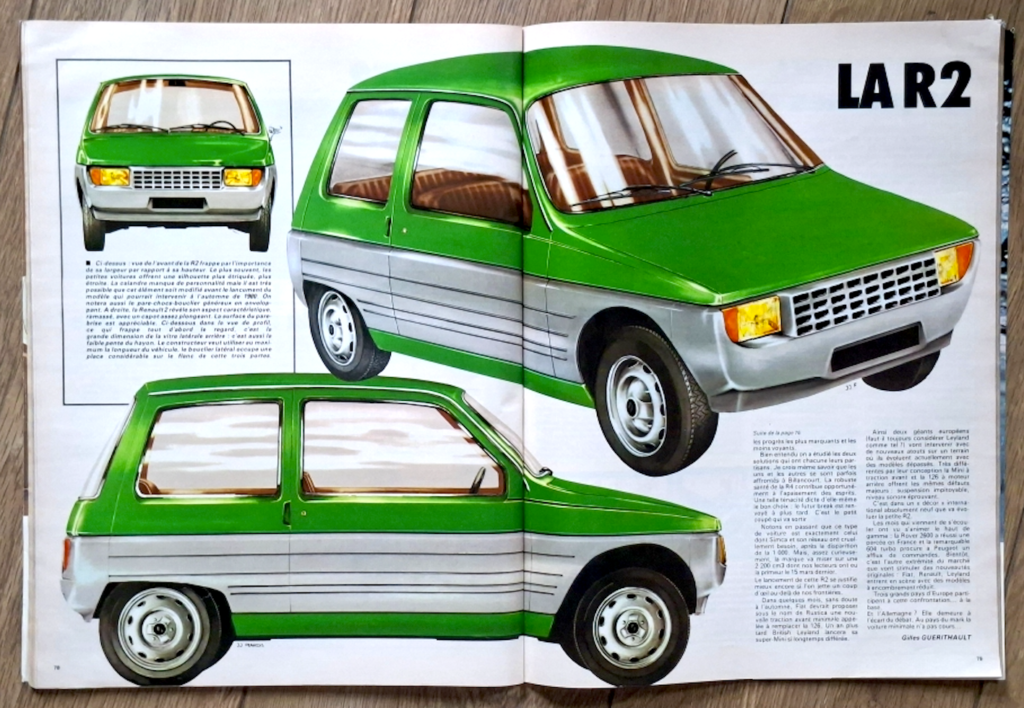
Gilles Guérithault’s article was published on 15 May 1979. Unlike the 1971 article, it seems much more serious and exclusive, as it is based on photos of a prototype spotted on the tracks of Renault’s test centre in Lardy. It can be considered one of the big scoops of the 1970s. Except that, as we shall see below, this Renault 2 never saw the light of day, despite every effort to the contrary! Let’s first look at the dates: the prototype was photographed in 1979. Is this credible in relation to the Renault project?
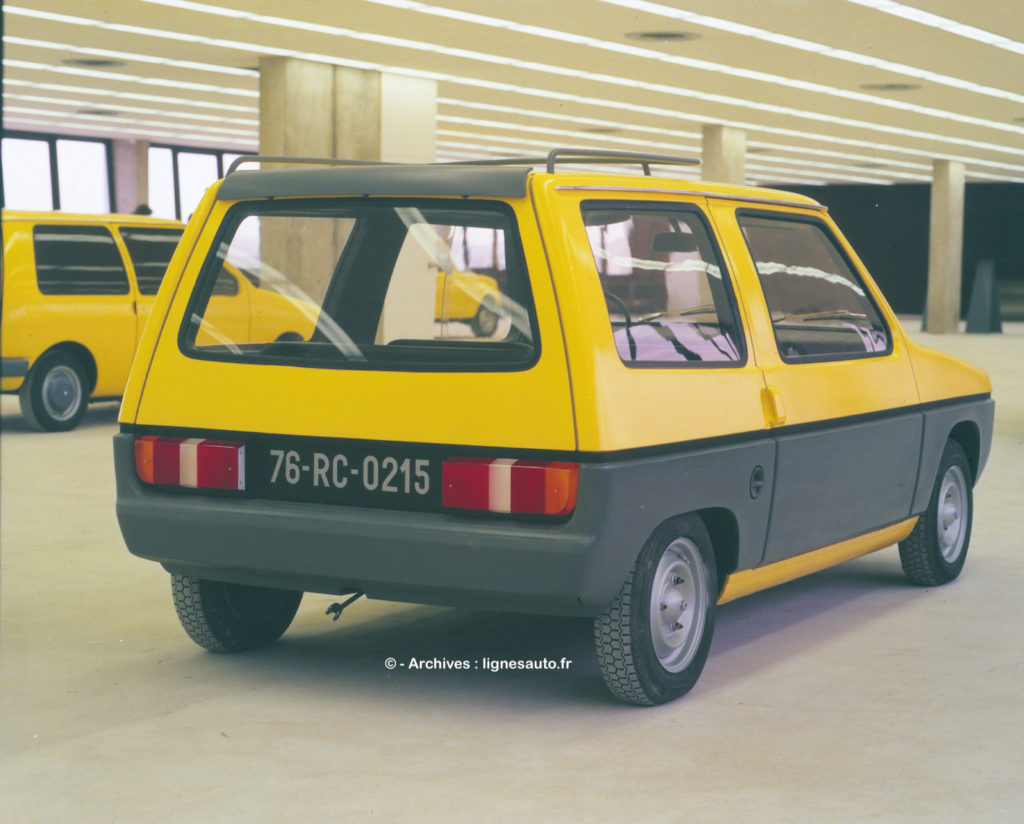
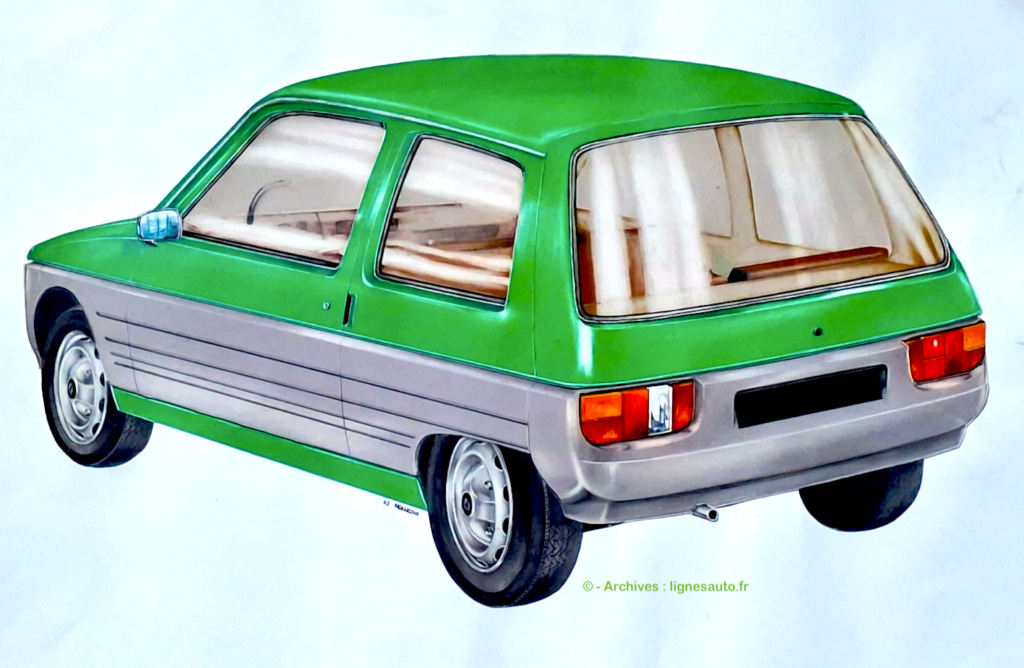
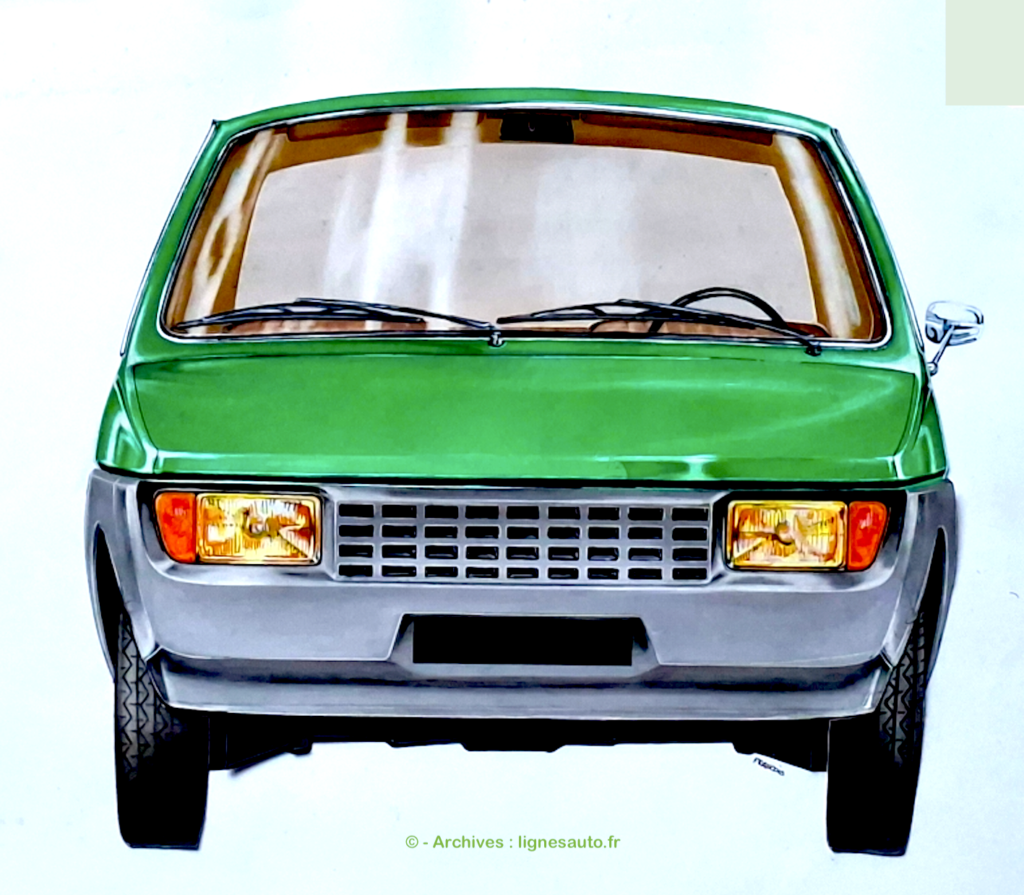
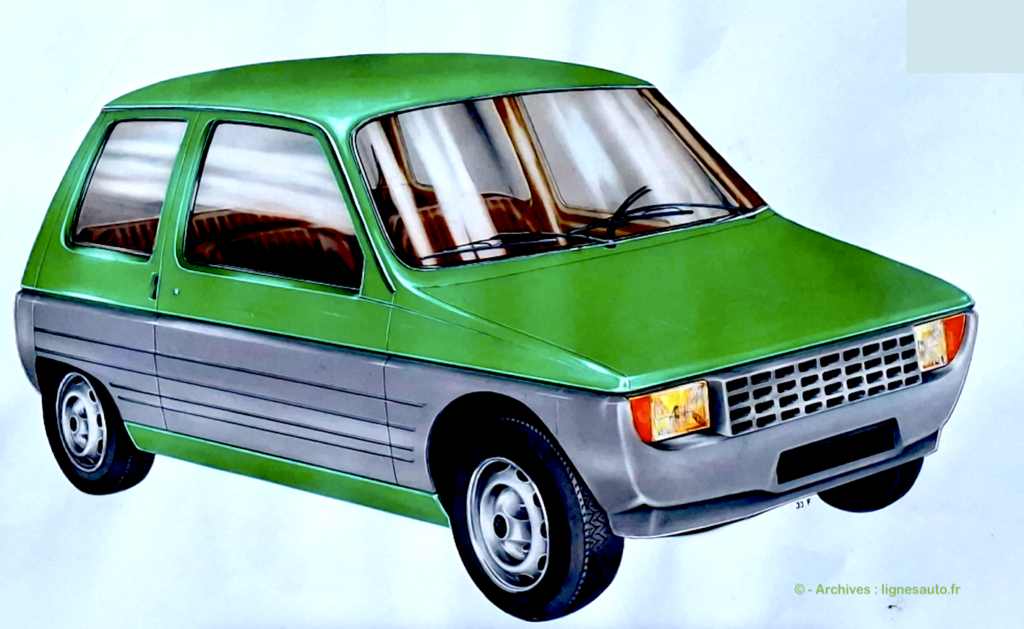
In the first episode, we read that the VBG programme for a ‘small’ Renault, capable of replacing both the Renault 4 and the Renault 5 with a modern vehicle, was launched in June 1975. By 1976, the first models were produced on a scale of 1:1. And there were dozens of them! Above is the model that provided the styling theme for the first phase of the VBG programme, designed by the team of Gaston Juchet and Jacques Nocher. Everything was consistent in terms of development times for the era. Unlike the article on the Renault 2 published in 1971, this time l’auto-journal had something concrete to go on!
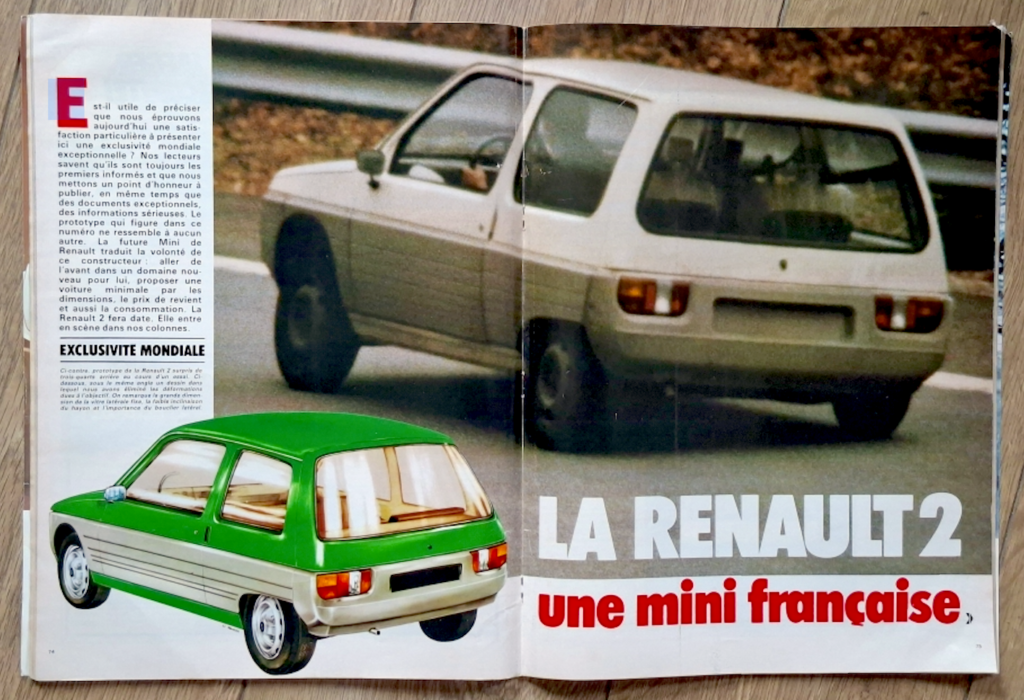
Gilles Guérithault was very well informed about the scope of the VBG programme. This was quite an achievement, as in the 1970s it was extremely rare to have access to such information. But Gilles had no idea just how ambitious this programme was. In May 1979, he referred to “a French mini“, no doubt still eager to see a Renault that could one day compete with the British Mini! He even went so far as to write in the caption of the drawing below: “we have eliminated lens distortion.” This was to demonstrate that the new Renault really was a mini! And the auto-journal announced a length of 3.25 m for this Renault 2. Yes, but…
However, Gilles Guérithault continues writing his article, omitting a piece of information in his possession that is nevertheless very important. “To replace the Renault 4,” he writes, “Renault is hesitating between two irreconcilable options: either a relatively long small estate car playing the same role as the R4, or a small, very short coupé with a more urban appearance and use.“
He ends his article by saying that he no longer really believes in a larger VBG: “Of course, Renault has studied both formats (estate and small coupé) and I even believe that the two sides have sometimes clashed at Billancourt. But the robust health of the Renault 4 is helping to calm things down. Such tenacity dictates the right choice: the future estate car has been postponed, and it is the small coupé that will be released.“
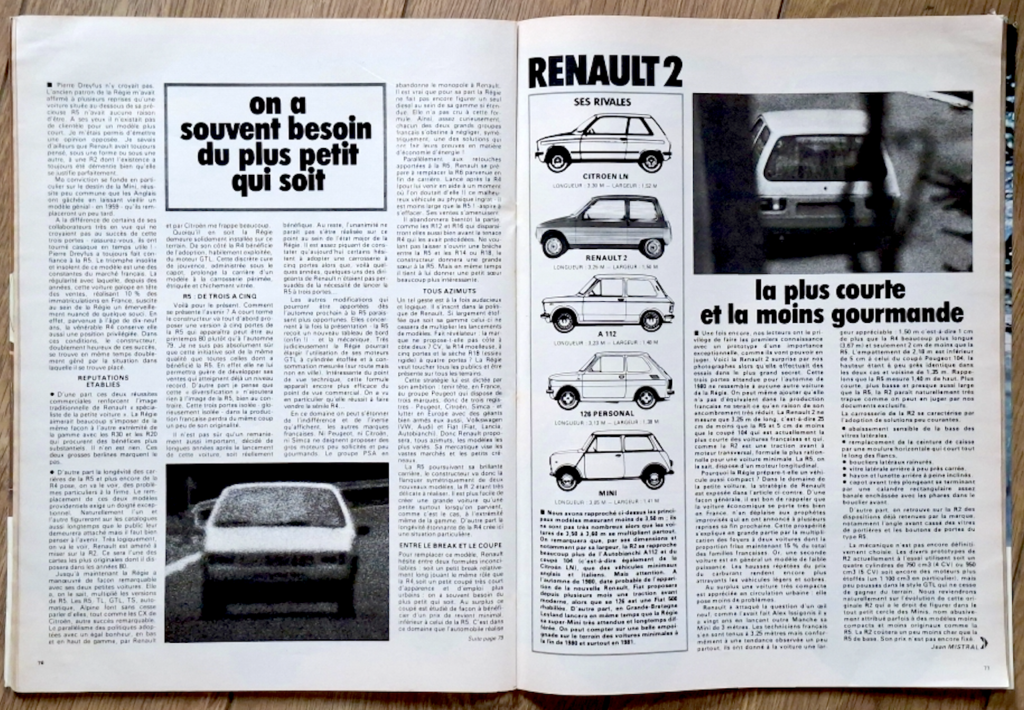
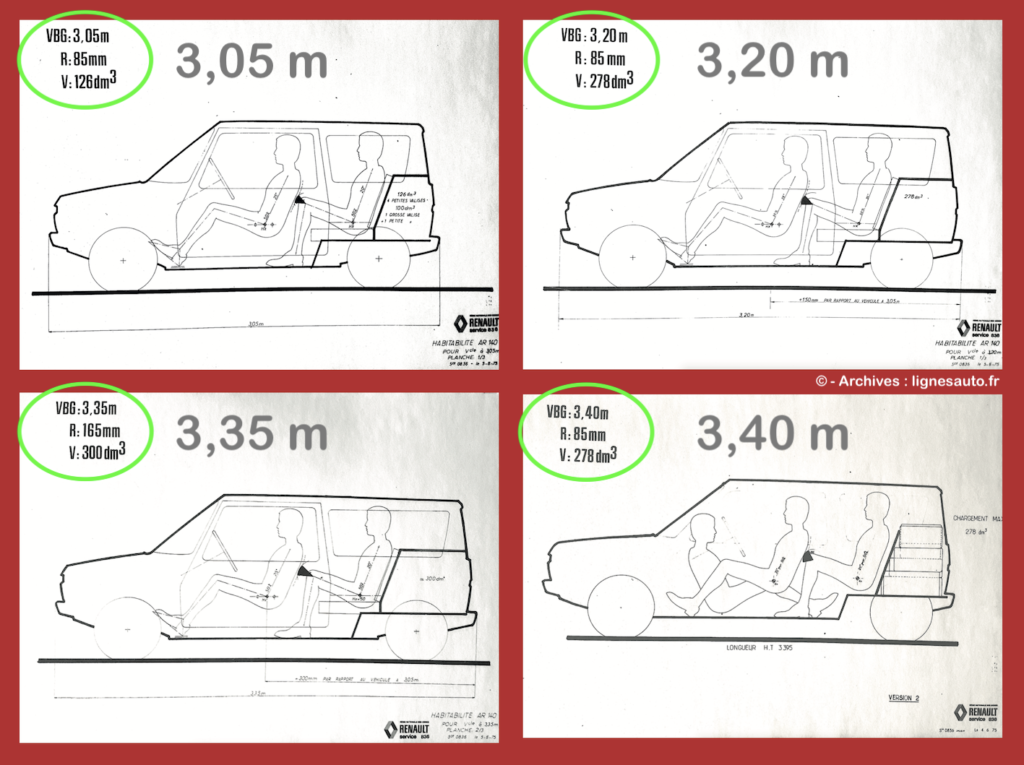
Well informed, Gilles Guérithault has no idea that Renault has not only two silhouettes in its plans, but twice as many (!), as can be seen below with the exclusive profiles of four VBG models. They are 3.05 m long (a 1976 Citroën LN measures 3.30 m), 3.20 m, 3.35 m and 3.40 m respectively.
And don’t imagine that Renault intended to choose between these four sizes. They were all designed to be produced! Gaston Juchet wrote in his notes that “we could stack and add sections to change the length.” And l’auto-journal couldn’t have known that, because it was simply unimaginable in the late 1970s! The idea was to incorporate as much of the innovative modularity designed for the VBG project (see episode 1: https://lignesauto.fr/?p=42611) as possible into the different variants.
In 1977, two years before the publication of the sensational article in l’auto-journal, a new design (below) by Jacques Nocher was chosen for the first rolling prototype of the VBG programme. It incorporated all the stylistic innovations of the VBG programme, starting with the imposing side protection that extended well beyond the sides of the body to encompass the entire front and rear bodywork protection. It was nothing short of revolutionary for its time! And what incredible brightness, making today’s innovations look like tanks!
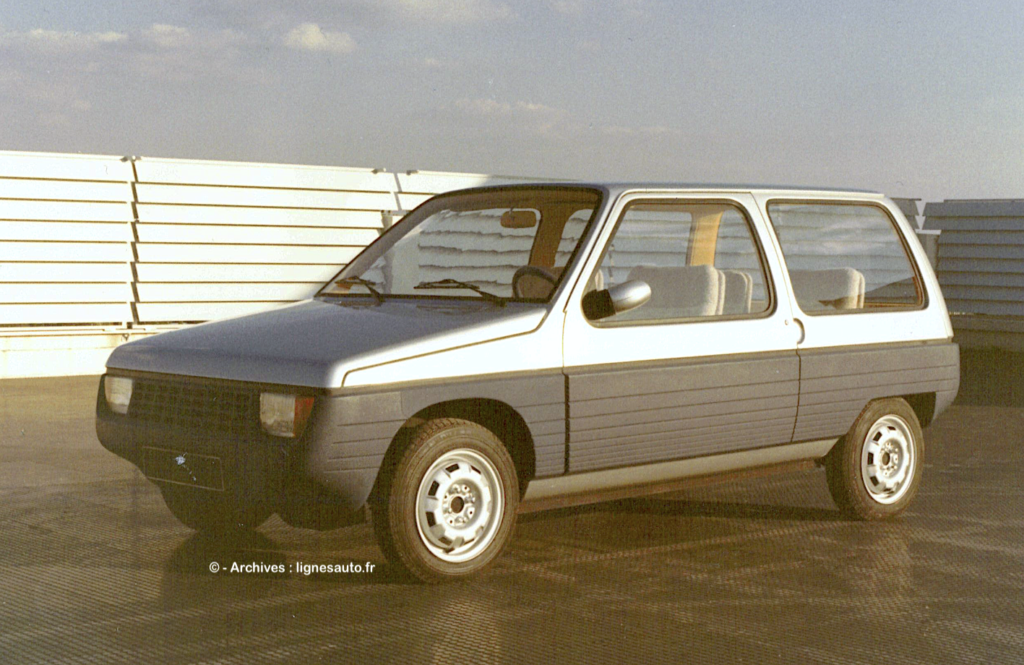
But the running prototype also features new suspension and a brand new three-cylinder engine. Robert Opron, who had been head of design for the Renault group since 1975, told me about this project after leaving the Régie, “We couldn’t reuse existing oversized components for these VBG vehicles. We needed a small three-cylinder engine and everything had to be specifically designed for this vehicle.“
The cost price spiralled out of control and the project ended up being tortured in every possible way until the end of the 1980s, when it became the embryo of the Twingo. On the pricing front, Gilles Guérithault was mistaken when he wrote that “this coupé has been designed to have a minimum cost price lower than that of the R5.“
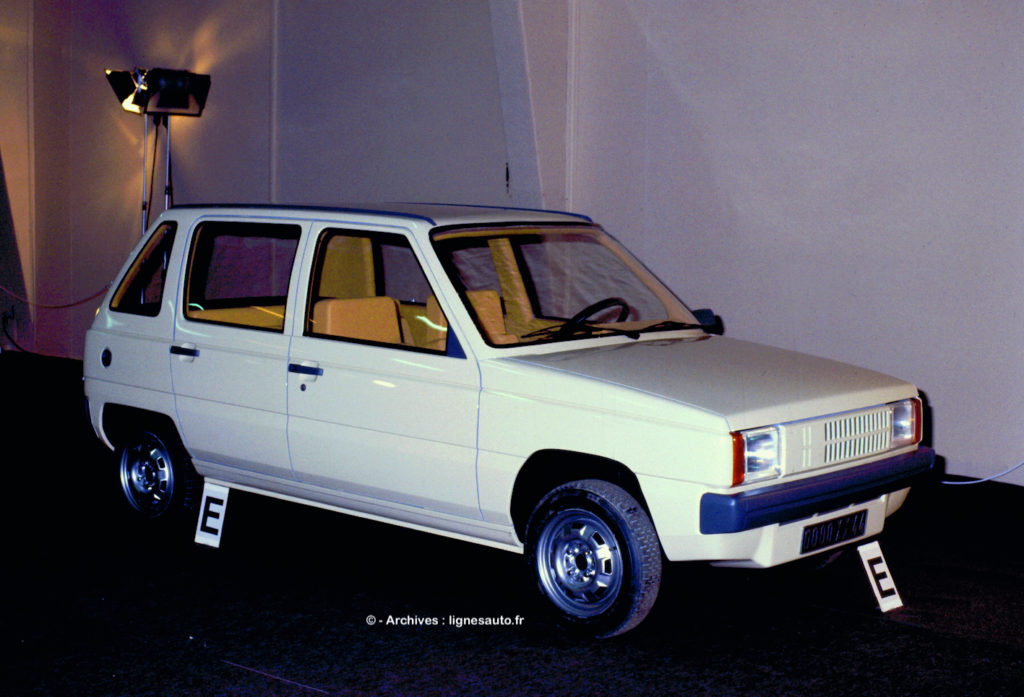
Just when l’auto-journal had finally caught up with the Renault 2 after an attempt in 1971, the car was ultimately abandoned by the manufacturer. Abandoned? Not quite, because once again, Gilles Guérithault was right about one thing: Renault did indeed consider a ‘station wagon’ version during the development of the VBG project. There were even several versions until 1982, two years before the Supercinq was unveiled. Renault wanted to reinterpret the R4/R5 duo of the 1970s with the Supercinq (1984) and this estate car silhouette. Above is one of them, dating from 1982 – project X44 – which is reminiscent of the Fiat Panda launched in 1980. Gilles announced this Fiat in his 1979 article, referring to it by another name: the Rustica!
BONUS: NOTHING IS LOST!
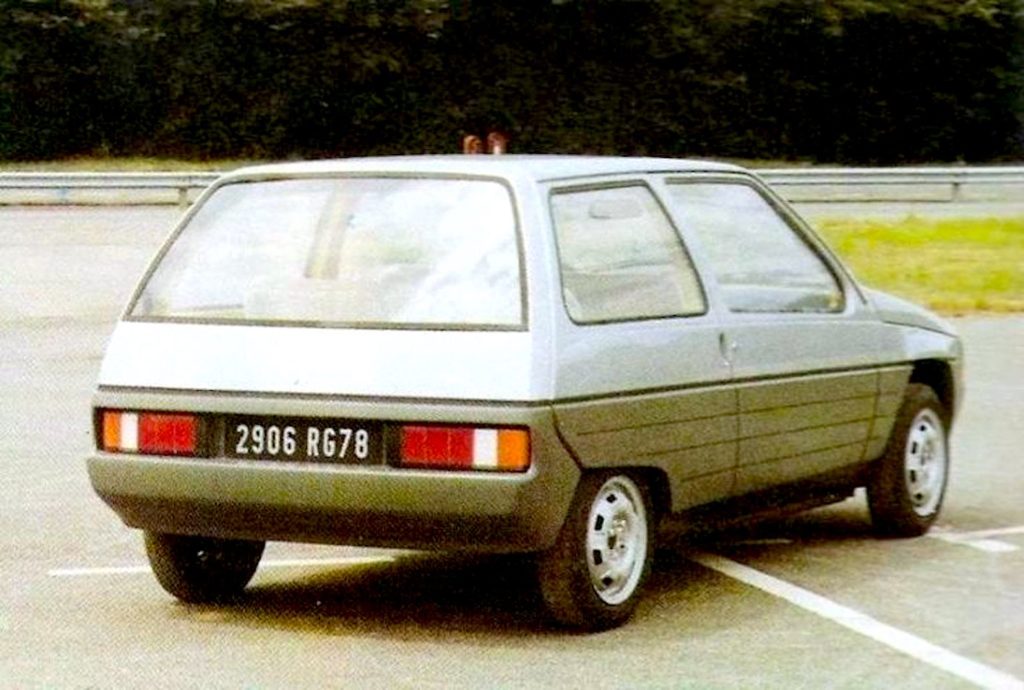
In 1978, a year before the publication of l’auto-journal article on the Renault 2, the manufacturer was working on the famous VBG estate car. But a programme of great importance arrived on the designers’ desks: the renewal of the R5, which would give rise to the Supercinq designed by Marcello Gandini in 1984. The model above from the Supercinq programme was created by Marc Deschamps. It largely echoes the style of the VBG photographed by Auto-Journal in 1979. At Renault, as elsewhere, nothing is ever lost!