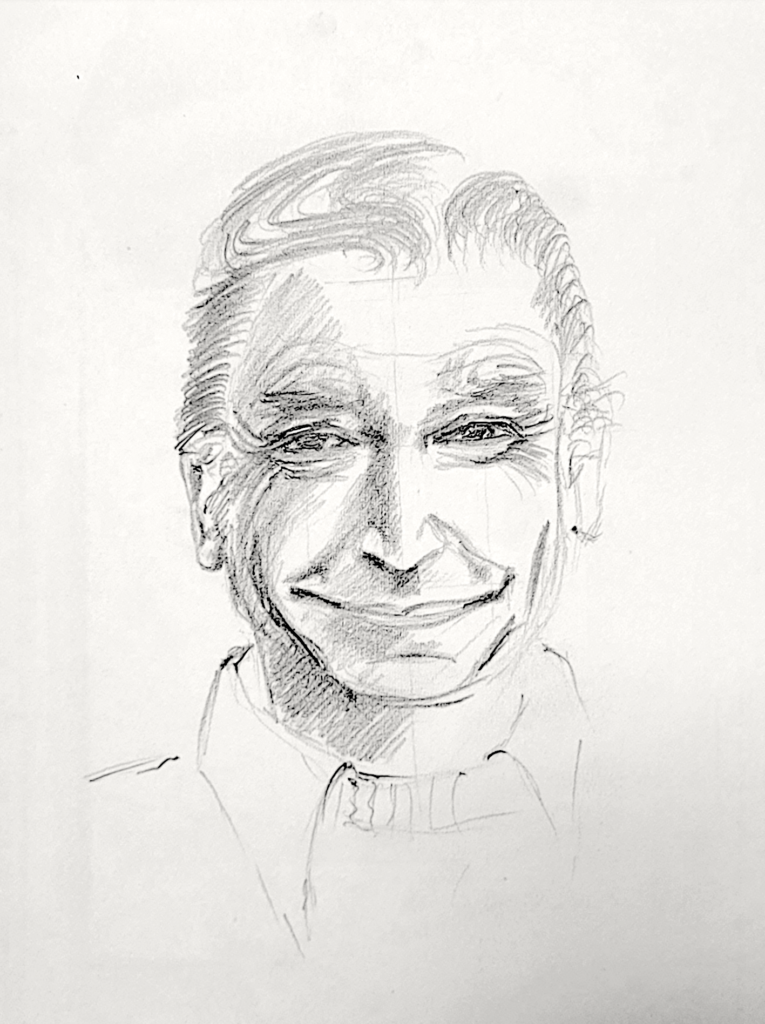
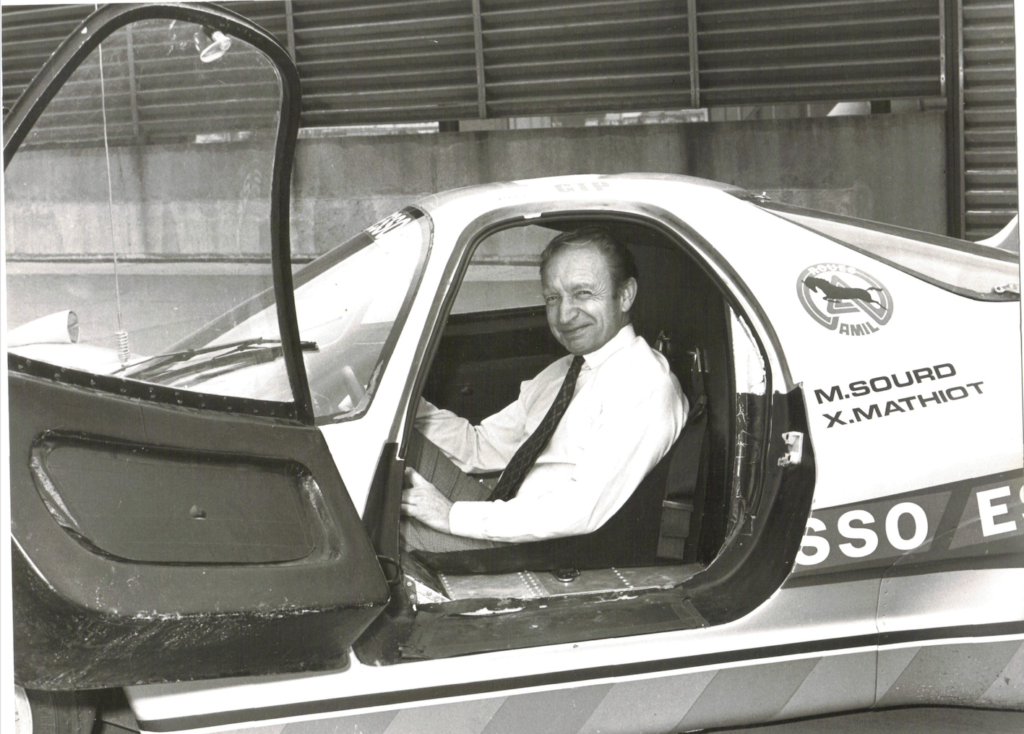
When Paul Bouvot, born in 1922, joined Peugeot in 1956, the brand-new 403 – launched at the same time as the ‘sensational’ Citroën DS at the 1955 Paris Motor Show – was the first saloon car from the Sochaux-based manufacturer to bear the Pininfarina badge.
The contract between the Italian design studio and Peugeot was signed in 1951. At the time, Henri Thomas was in charge of the design and styling department at Peugeot. He is notably credited with the ‘fusée’ design. Paul Bouvot succeeded Thomas in 1960 and realised that his battle against Pininfarina would be a difficult one, particularly as Georges Boschetti, the head of design who had brought him into Peugeot, was a lover of Italian designs.
Bouvot then expanded his small team and, in 1960, hired a young bodywork technician named Gérard Welter. Welter was just 18 at the time… Together with their colleagues, the two gradually took control of the projects carried out in collaboration with Pininfarina. First came the oval headlights of the 204, insisted upon by Paul Bouvot, followed by the triangular ones of the 504, adapted to the Pininfarina style.
The real turning point came in 1983 with the launch of the 205. Nevertheless, Pininfarina continued to work on Peugeot projects until the arrival of Jean-Pierre Ploué, who severed ties between the PSA Group and the Italian design houses (Bertone, Pininfarina and Giugiaro).
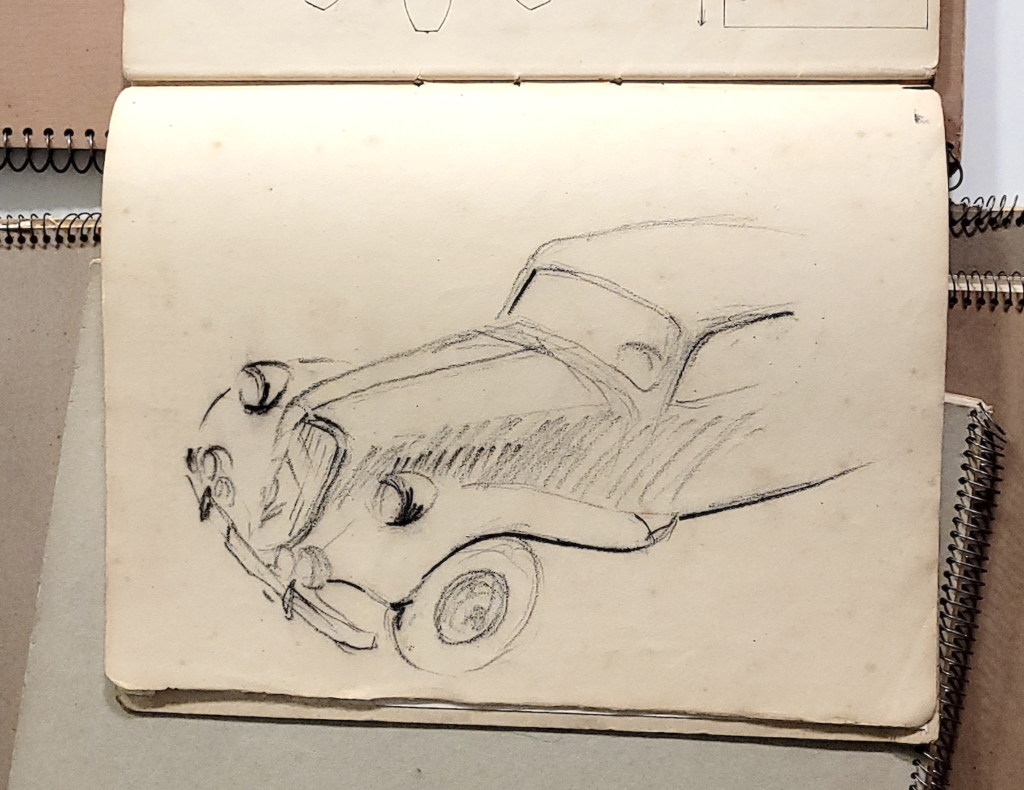
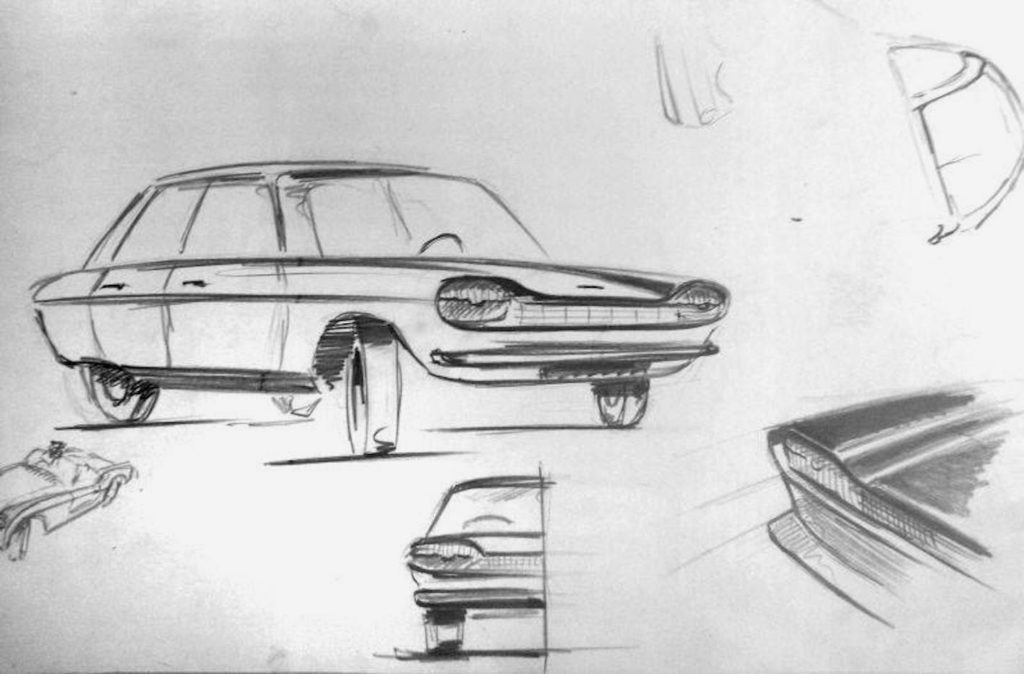
Paul Bouvot handed over the reins of the design department to Gérard Welter and left the manufacturer in the early 1980s. He then devoted himself to his passion for painting and drawing. His early sketchbooks feature, in particular, the Traction shown above (his father was a Citroën sales representative), whilst his passion for Ferrari was greatly heightened by his numerous professional encounters with Sergio Pininfarina.
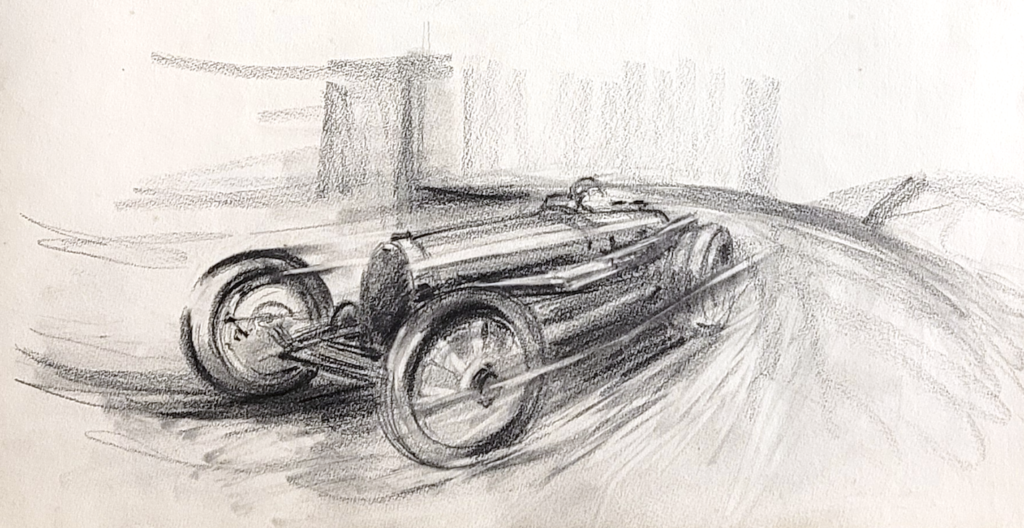
And then there is also his passion for Bugattis, and with that in mind, we have chosen to highlight one of his most flamboyant sketches today, shown below. It depicts a Bugatti fitted with two inline-eight engines placed end-to-end beneath an enormous bonnet, with a body featuring dynamic, low-slung, sweeping lines.
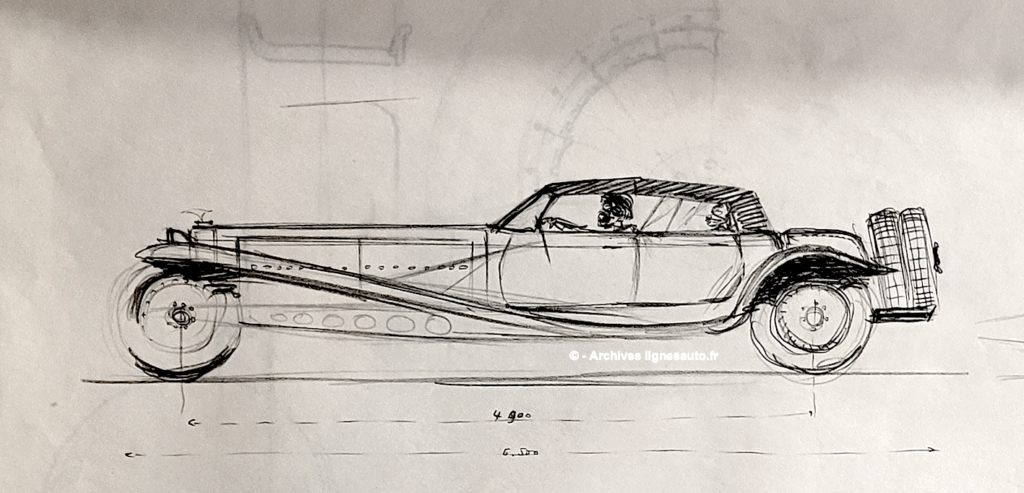
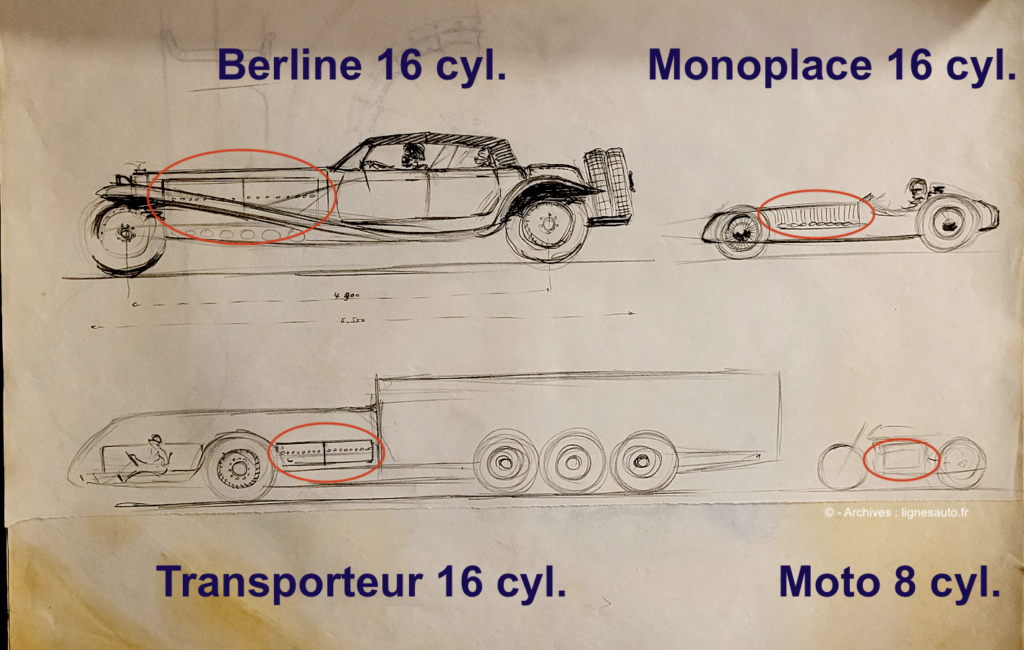
Technically, we can imagine the complexity of the mechanical architecture behind this unlikely combination, but when Paul Bouvot sketches this 16-cylinder coupé in a single stroke, he pays no heed to such constraints. Better still, he creates a whole family with this twin-row eight-cylinder engine, featuring a highly futuristic transporter and a single-seater. He also fits the eight-cylinder engine, on its own, into… a motorbike below.
We wanted to bring this extreme Bugatti to life, to capture its extraordinary blend of elegance and power. To achieve this, we used AI, not as a creative tool, but simply as a means of enhancing what already exists.
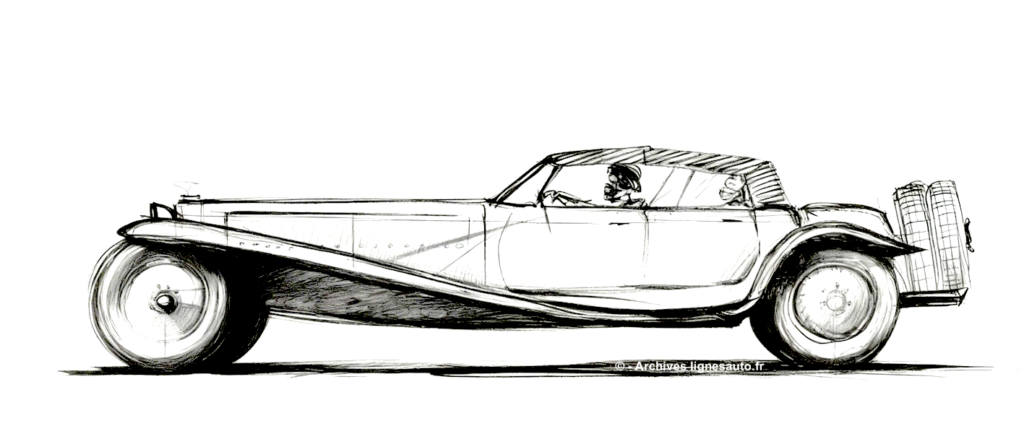
We began by cleaning the original artwork so that we could transform it into a fully-fledged rolling sculpture. These steps enhance the artist’s vision without distorting it. You can put your six-shooter away…
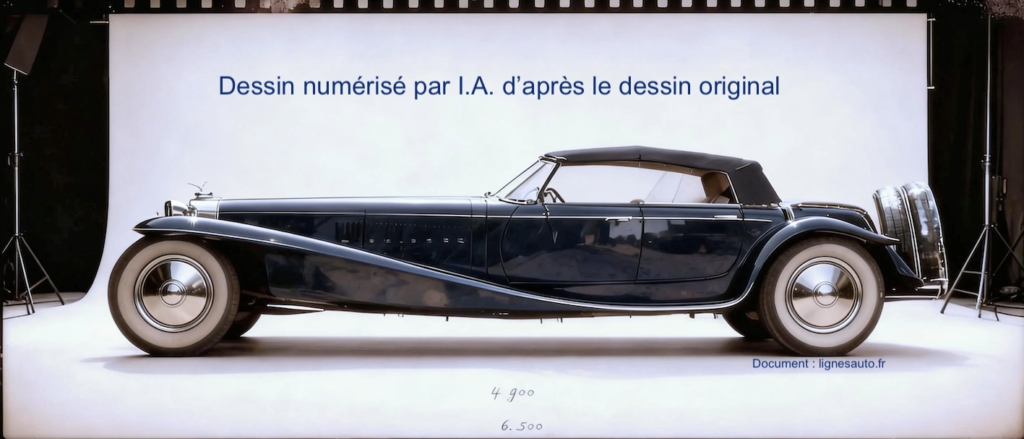
The result is a flamboyant and highly dynamic Bugatti, even by the brand’s own standards. Its power lies in its faithful adherence to a design that would have done credit to the French creations of Jean, the son (1909–1939), and Ettore, the father (1881–1947).
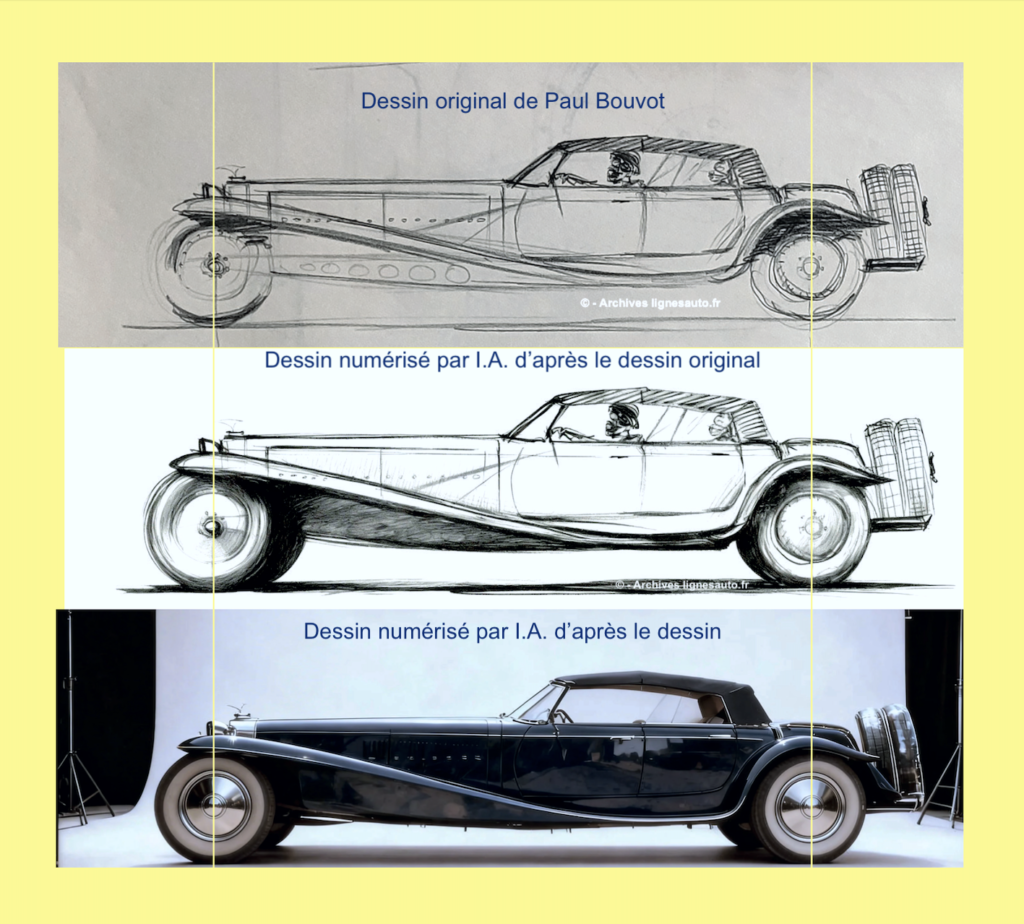
The thrill of seeing these archive drawings and using them to step back into a bygone era is immense. The thrill of breathing new life into them, without betraying the artistic spirit of their creator, is just as powerful.