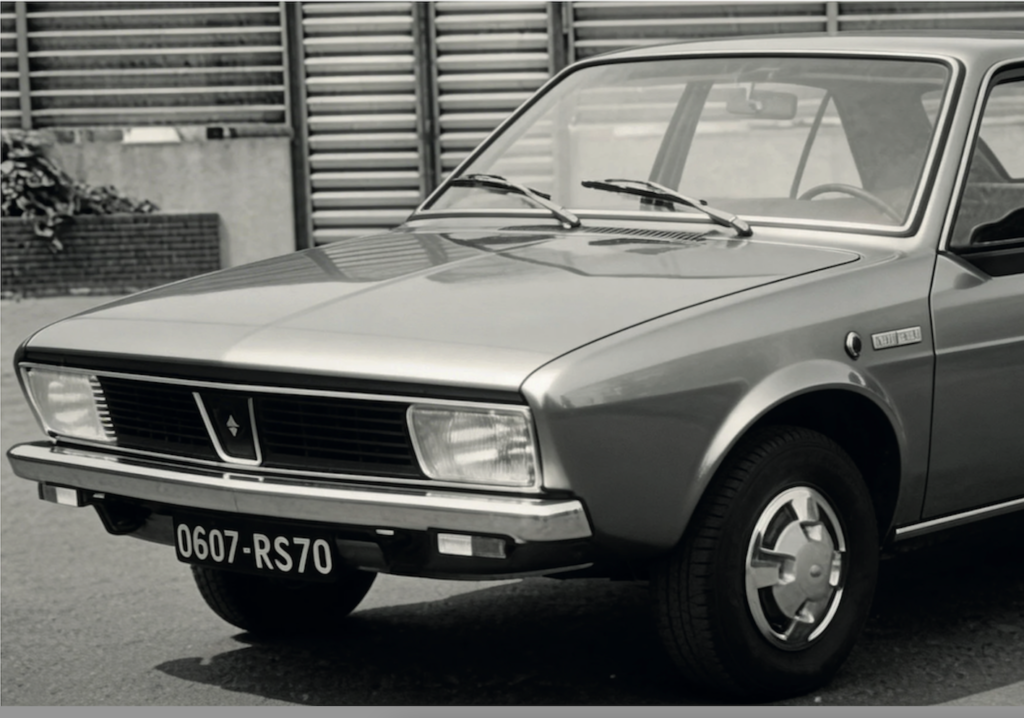
The scale model of the R project pictured below is a Renault. Yet here it is on the terrace of Peugeot’s design centre in La Garenne-Colombes. This makes sense, given that for the past four years the two manufacturers have had agreements that go far beyond simply sharing logistics: there are three model families that share numerous mechanical and architectural components: the Project H, a large V8-engined saloon from both French manufacturers (quickly abandoned); the Peugeot 104 and Renault 14; and finally, in the saloon segment, Peugeot’s Project J, which competes with Renault’s 120.
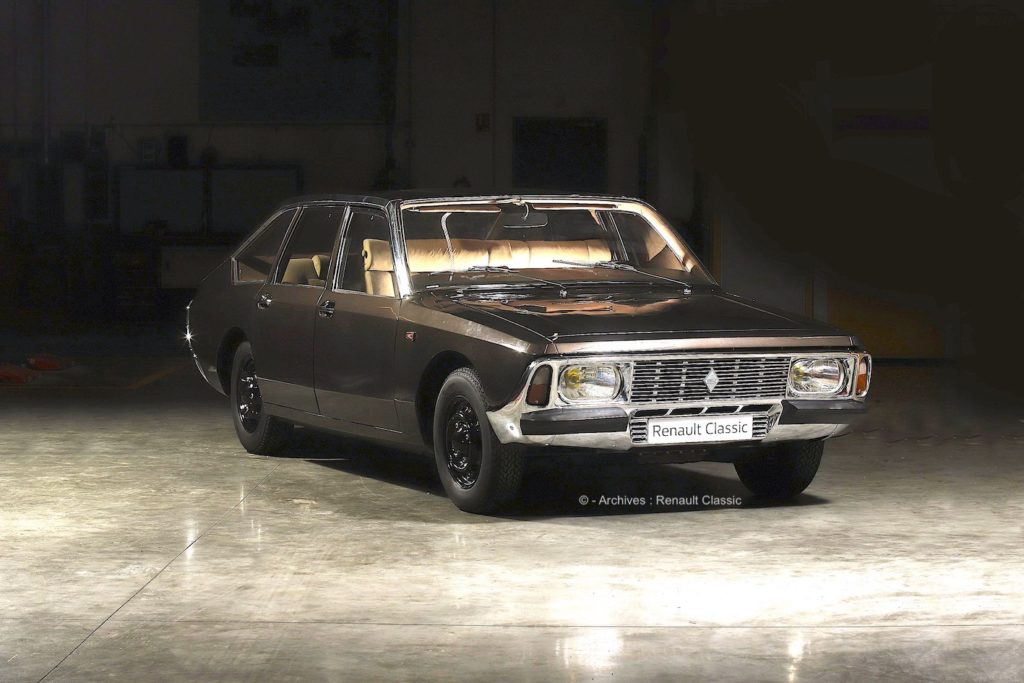
The model pictured below was launched in 1968. At the time, it was a fairly large saloon. Alongside this five-door hatchback, Peugeot offered its ‘J’ range featuring a conventional boot, which was just as extensive – not in terms of size, but in terms of the number of body styles and engine options available. Both manufacturers were familiar with both ranges.
Bernard Hanon, representing the Régie Nationale des Usines Renault, nevertheless charted a new course for the 120 model following a meeting concerning the development of the Peugeot and Renault ranges. Hanon noted in his report that “the 120 model has been scaled up. It will be 4.65 metres long and weigh 1,160 kg. Its price will be 14,800 francs for the 4-cylinder version and around 16,000 francs for the 6-cylinder version.” This famous 6-cylinder engine would be partly derived from the large V8 of the previous Project H, hence its 90° valve opening rather than 60°.
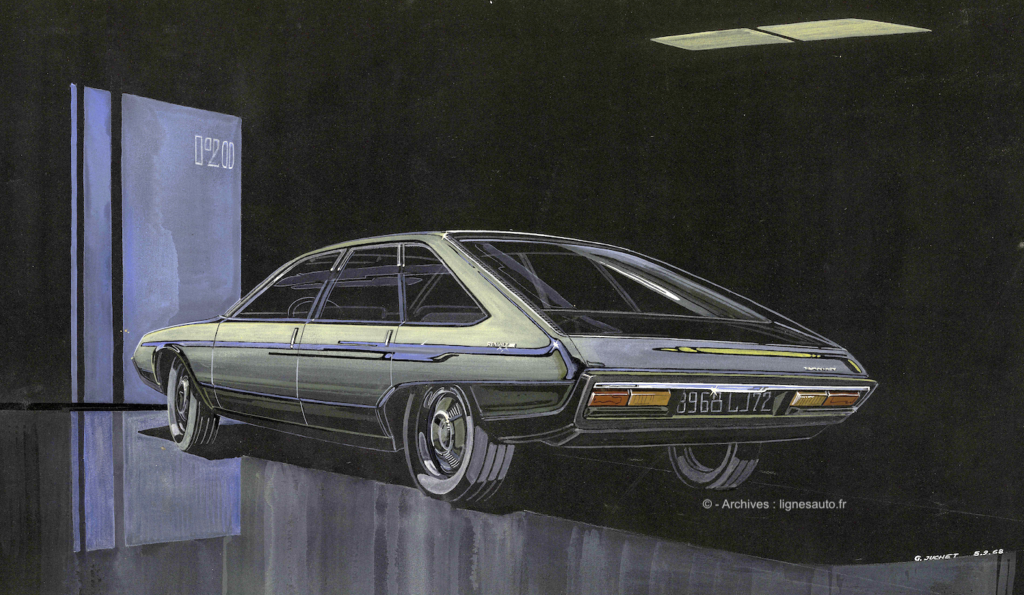
In his memo, Bernard Hanon compares the prices of the 120 programme with those of the Renault 16, as estimated for 1970. The price of the Renault 16 was then put at 12,500 francs. At Renault, it quickly became clear that the 120 project outlined below was paying the price for its ambitions. Hanon states this clearly in the memo, writing that ‘consequently, the replacement of the Renault 16 by the 120 will only be partial, due to the latter’s higher price. “At that point – that is to say, in 1969 – the successor to the Renault 16 was therefore in the design phase with two 120 variants: a 4-cylinder and a V6. With a base price higher than that of the Renault 16.”
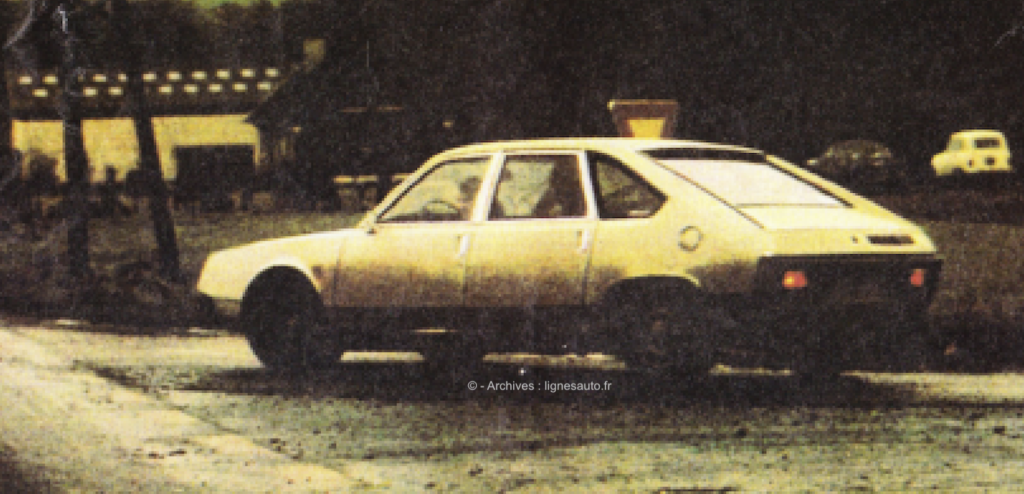
Bernard Hanon’s response was therefore immediate: a new model needed to be launched that could satisfy Renault 16 customers at a more affordable price. The memo refers to this new model as the 124. “We need to consider a new 124 model (R-series vehicle) to be launched in 1974, with styling similar to that of the Renault 16 (semi-estate). Design work on this vehicle is underway, and two main possibilities are now emerging: a vehicle based on the Renault 17 architecture (then known internally under project code 117) with a longitudinal engine, which could be fitted either with the R16 engine or with the new Douvrin 4-cylinder engine, at a price premium of 150 francs over the R16 engine.”
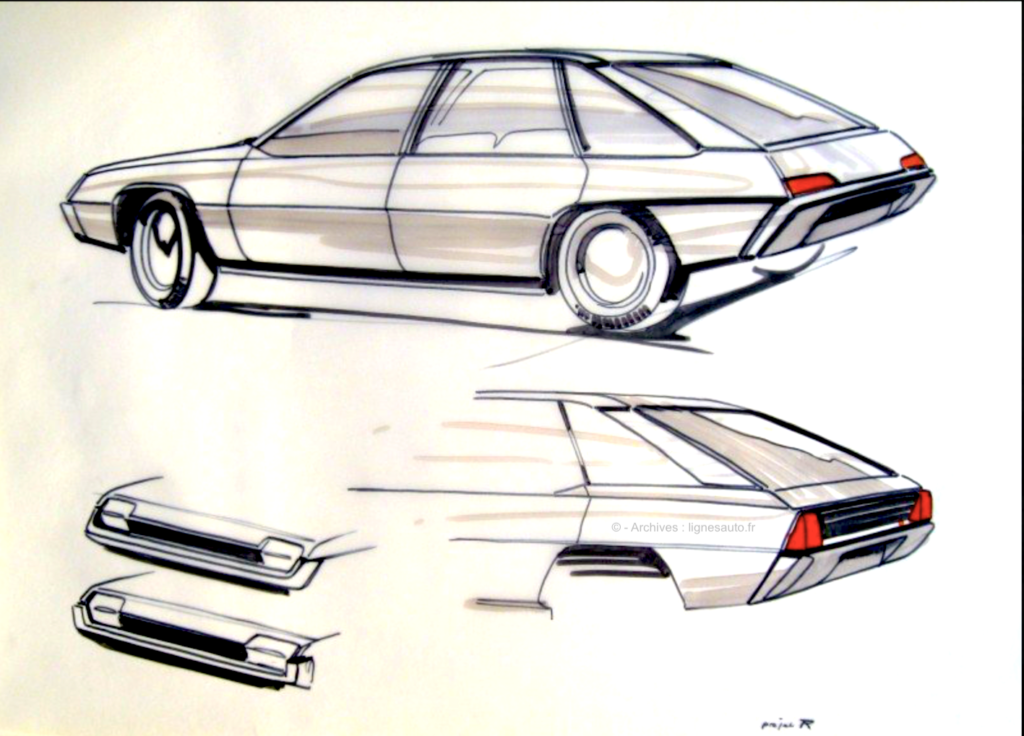
This engine is the famous joint engine resulting from the Peugeot-Renault agreements. This initial design, intended to replace the R16 at a reasonable price, is more compact than the 120: “a length of 4.25 m to 4.30 m, i.e. 3 to 4 cm longer than the R16, and a width 4 cm greater than that of the R16. Its price would be 12,700 francs with the R16 engine and 13,300 francs with the Douvrin 4-cylinder engine.” The second proposal for this Project 124 (or Project R) is “a vehicle with a J-type architecture (Peugeot’s rival project originally designed to replace the 404 below) with a transverse engine. The additional cost due to this transverse architecture is approximately 100 francs.”
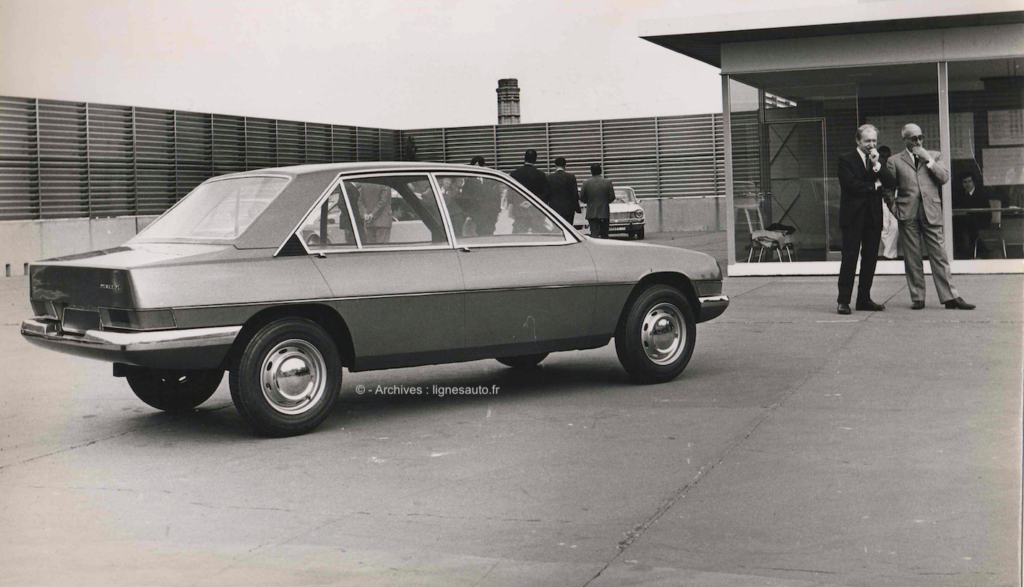
“The advantages of this solution would be that it could potentially allow the vehicle to be shortened – something the first solution does not permit – and, from an industrial perspective, to create a complete mechanical twin for the J car (Peugeot, ed.).” Ultimately, before the end of the 1960s, Project 120 was abandoned, but not the idea of offering two engine options: a 4-cylinder and a 6-cylinder. This time, however, both would share the same bodywork and the same length. Project R, described below, therefore took over, this time positioning itself within the dimensions of what would become the future Renault 30 and 20.
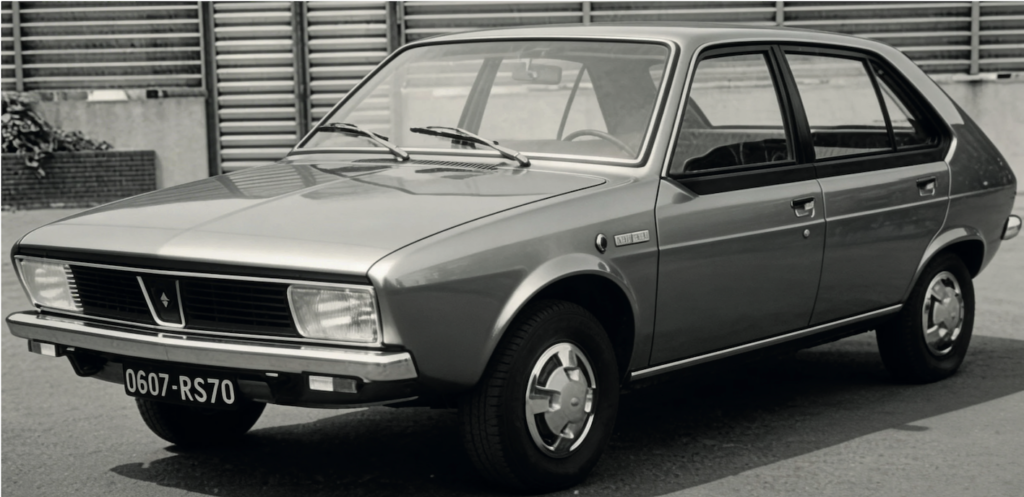
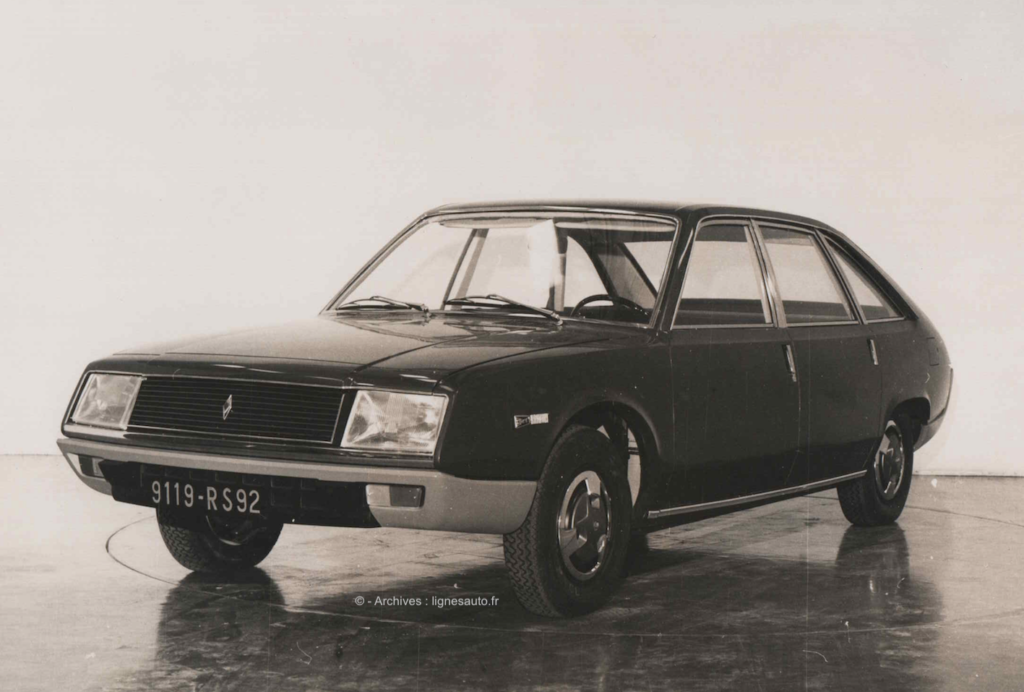
The first model was launched in 1975 with the PRV V6 engine (the R30), whilst the second followed a year later with a few styling changes – notably a new grille and front wings – and was powered by a four-cylinder engine. Gaston Juchet was then head of design at Renault, and he was keen to give this project a generous side window area. Once the project’s dimensions had been finalised, the initial designs significantly lowered the body panel line below the side windows. But Juchet’s bold stylistic choice was rejected (!) because the engineering team explained that “glass is too expensive, too heavy – use sheet metal instead…”
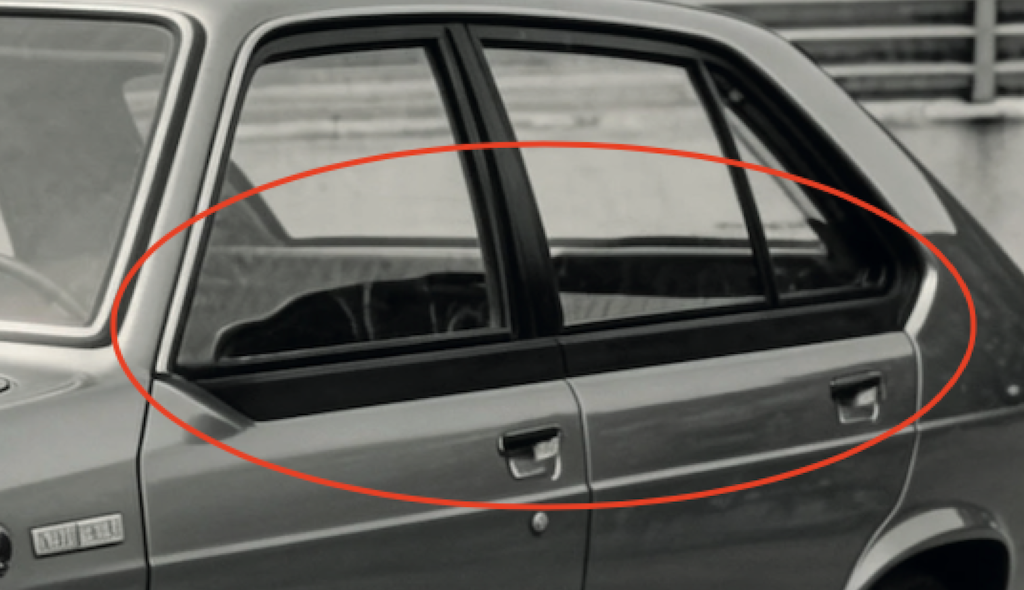
Gaston Juchet then employed a visual trick by retaining, on the scale model of the R project displayed on the Peugeot design studio terrace at La Garenne-Colombes, the door panels with the lowered waistline and simply painting them black, as shown above. Here we can see the first signs of the all-black waistline strip on the future Fuego, which would be launched ten years later!
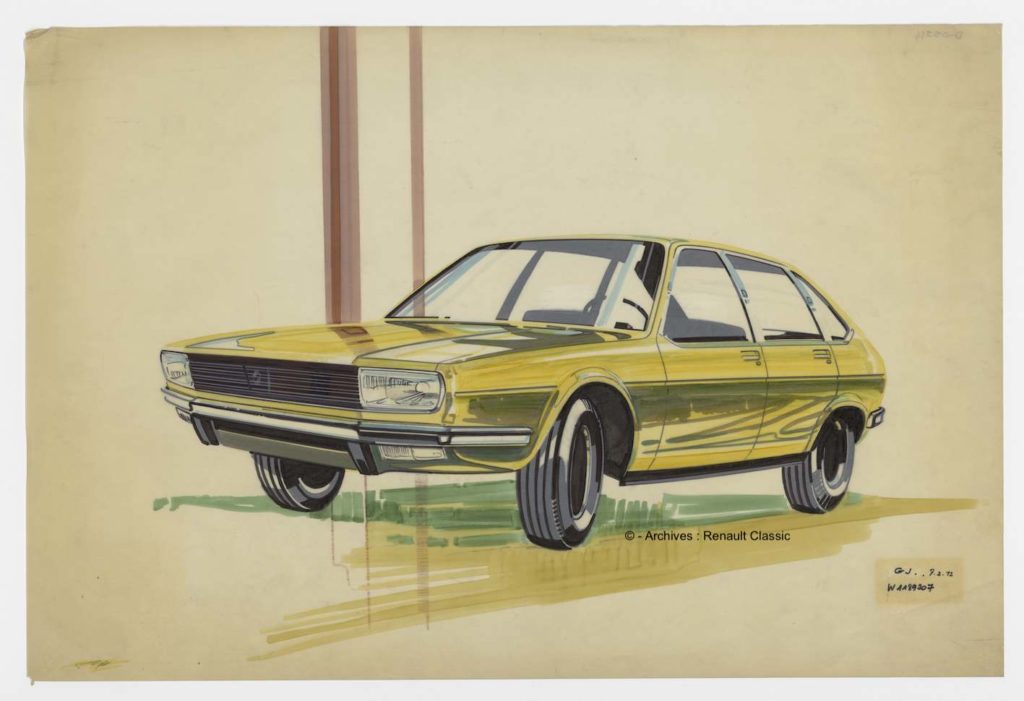
The R project evolved in terms of design, eventually becoming the Renault 30 V6 in 1975, then the Renault 20 in 1976. In the meantime, relations between Peugeot and Renault had cooled. The surprise unveiling of the Peugeot 604 V6 at the Geneva Motor Show in March 1975 – when Renault was supposed to have the honour of revealing its top-of-the-range model, the R30 – did little to improve relations between the two rivals.
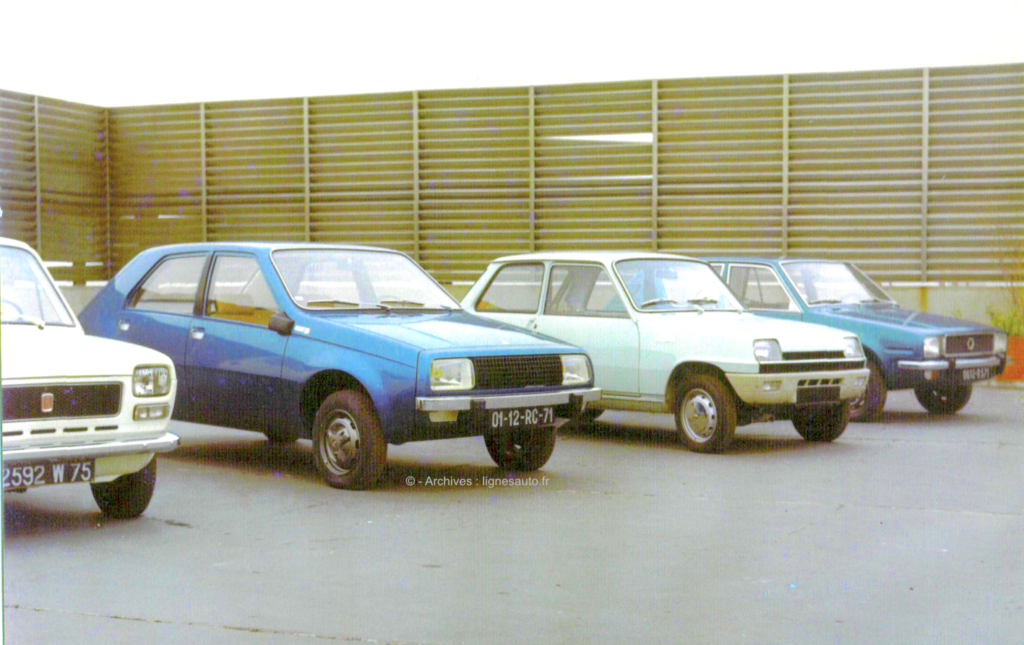
In 1976, the year the R20 was launched and a year after the R30 hit the market, the R14 – with its Peugeot 104 front end and a few other shared structural components – proved that the collaboration had generally been a success; unfortunately, however, the Renault dealership network shunned Renault’s new compact car, preferring to sell the R12. But that is another story.
The author would like to thank Gilles Colboc, whose archives made it possible to write part of this article