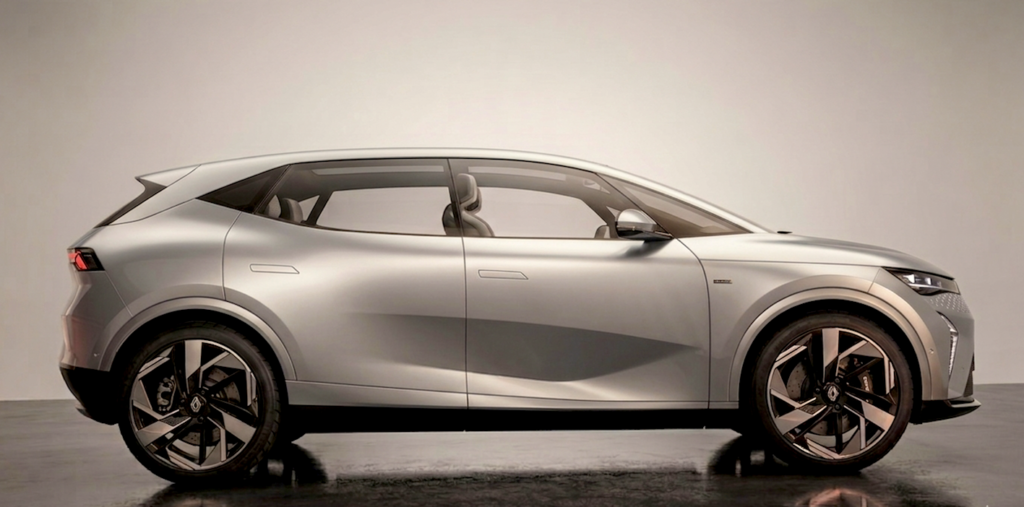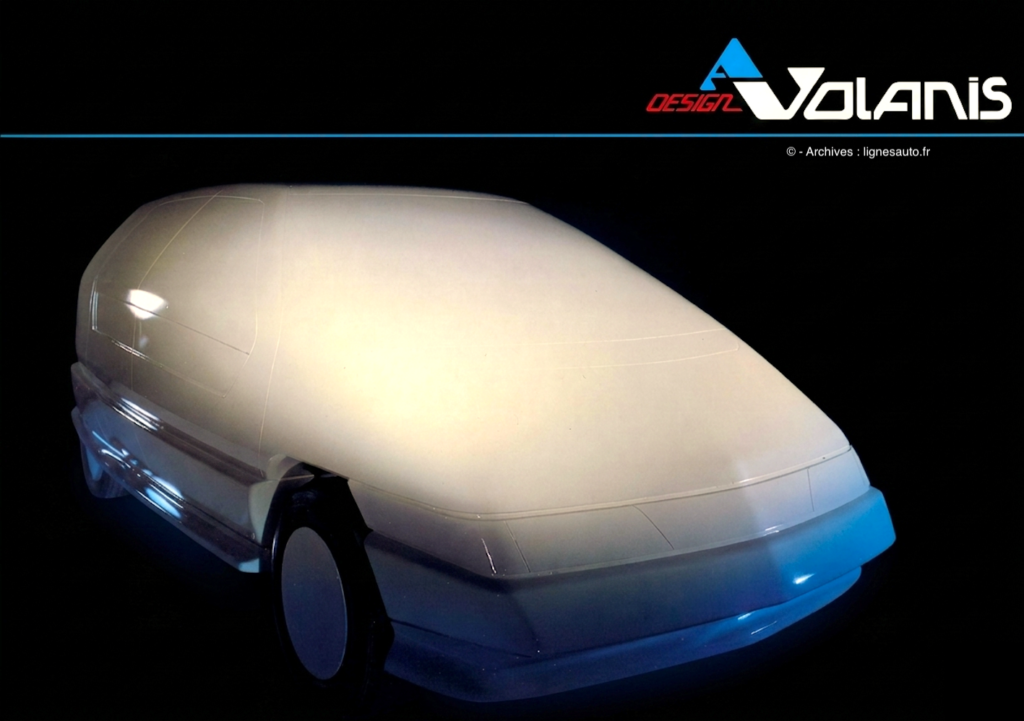

As the 1991 Renault Scénic concept car pictured above celebrates its 35th anniversary this year, Renault used its Futuready conference on 10 March to unveil a new generation of 5-seater MPVs for 2038 with its R-Space Lab concept car. It is the direct descendant of the 2011 R-Space concept car, which gave rise to the 4th generation of the Scénic in 2016. LIGNES/auto is taking this opportunity to bridge the gap between past and future with this feature on the future 2028 Scénic, as foreshadowed by the concept car.
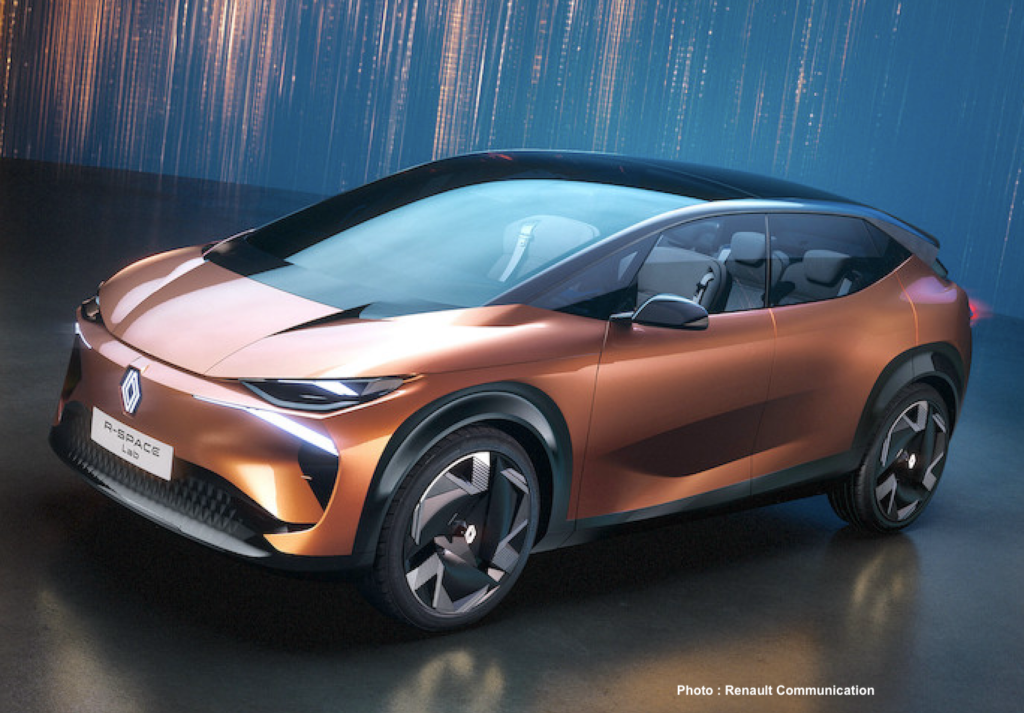
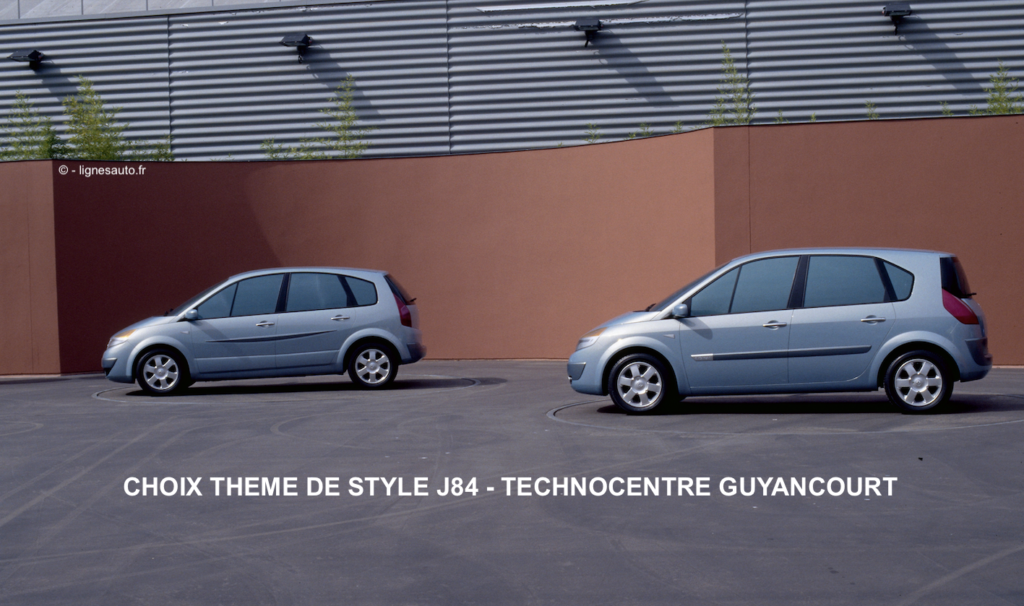
The latter could be 100% electric (with a range of 750 km) or electric with a range-extender capable of recharging its batteries whilst driving, offering a range of 1,400 km. Another 100% electric configuration could feature two motors to create a four-wheel-drive vehicle. But did you know that the 1991 concept car was already a four-wheel-drive vehicle? LIGNES/auto treats you to a feature on all the four-wheel-drive Scénic models that were studied – but never developed – during the development of the second generation of the French MPV, shown below, which was launched in 2004. From the archives to the future: welcome to this anniversary celebrated ‘in the style’ of LIGNES/auto!
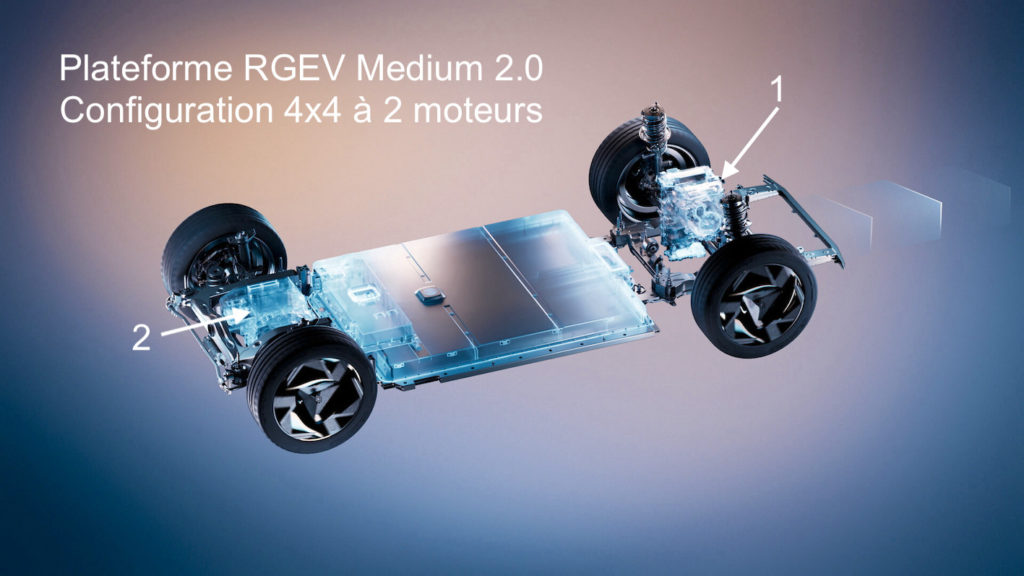
Renault has announced its plan for its future products, which, in the B+ and D segments (from the Symbioz and Scenic to the Rafale), will be based on a platform known as RGEV Medium 2.0, as shown below. This platform will bear little resemblance to the one on which the current all-electric Renault Scenic, amongst others, is based. The new platform will feature an 800-volt charging architecture and will be available in three versions: all-electric, all-electric with four-wheel drive, and electric with a range extender, as shown below.
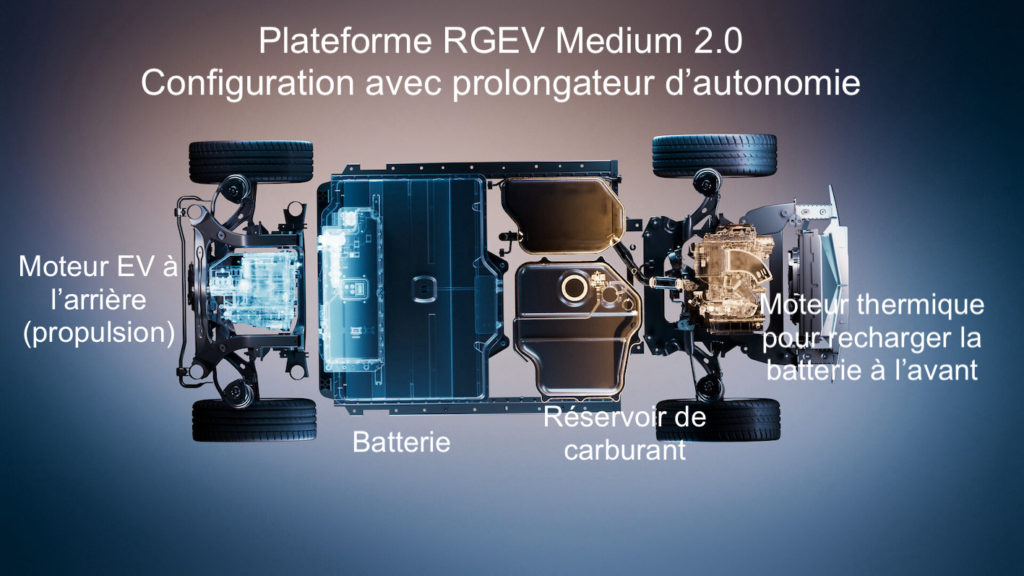
This term refers to a vehicle equipped with an internal combustion engine used solely to recharge the battery, with no connection to the wheels, thereby extending the range to 1,400 km. In this case, there is a single electric motor (always in drive mode) located at the rear and a small internal combustion engine at the front. Renault also states that the current E-Tech powertrain for lower-segment models will remain in use beyond 2030. Below is the sporty four-wheel-drive version, which, according to our colleagues at Automobile Magazine, will be capable of up to 500 hp, compared to 250 hp in the basic two-wheel-drive version.
But let’s turn to the real advances in the area that particularly interests us: the basic concept behind the R-Space Lab concept car. It is a compact MPV, and it is clearly a preview of what the next Scénic might look like, even if the manufacturer hasn’t confirmed this. Firstly, the efforts made to make the battery pack more compact appear to be paying off, with a slimmer pack allowing the floor to be lowered significantly and, consequently, the car itself, which stands at just 1.50 m high compared to 1.64 m for the first-generation Scénic.
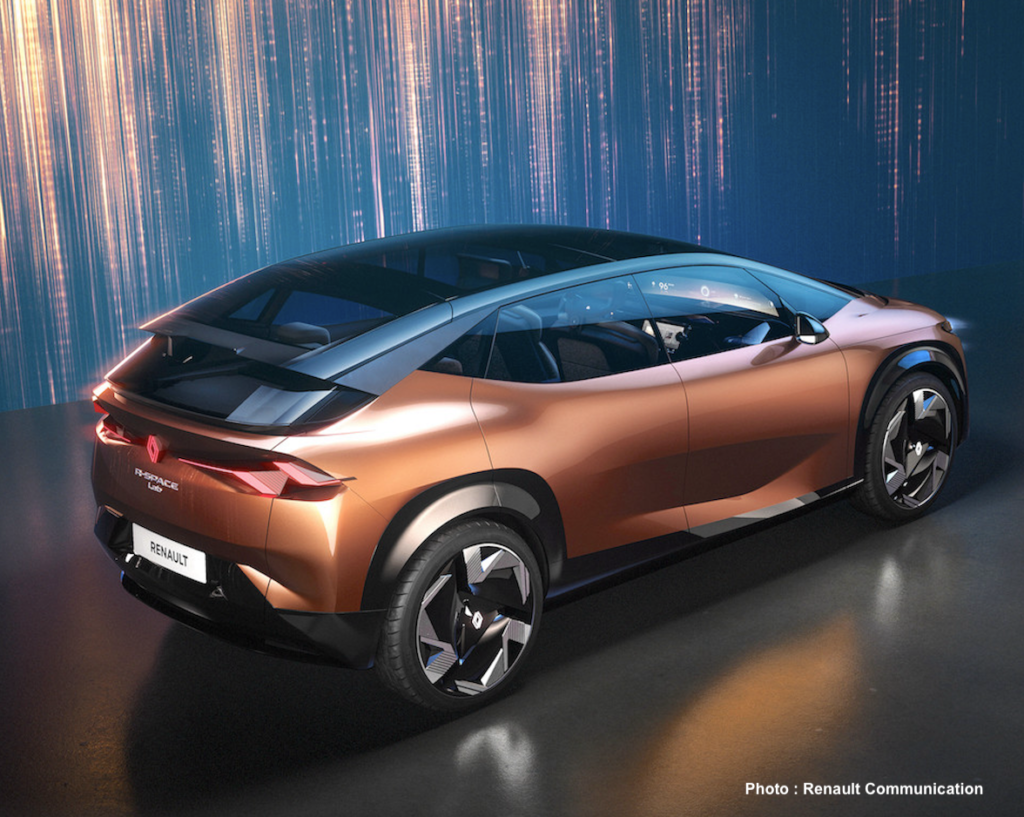
Nowadays, the battery pack housed in the floor is becoming increasingly optimised. In the past, the least efficient manufacturers typically used packs 10 to 13 cm thick. Today, we’re moving towards packs of 8 to 9 cm. The lower this dimension gets, the more design freedom the designer gains. A second strength of the R-Space Lab concept is its carefully crafted interior space and modularity. The second row features three seats of the same width, which was not the case in the first-generation Scénic. The front passenger seat incorporates side and front airbags, freeing up space in the dashboard.
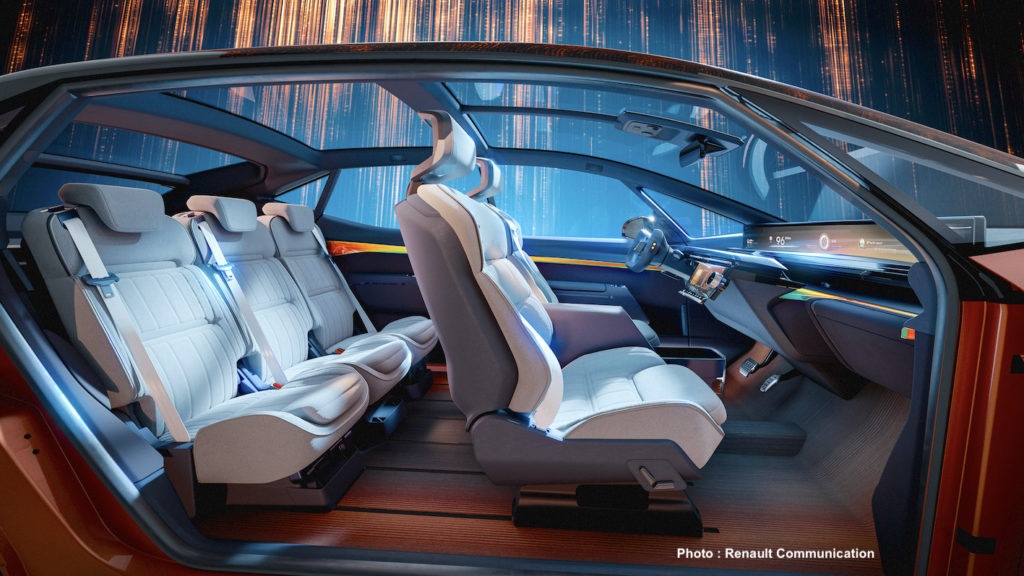
This reflects Renault’s innovative approach to interior layout. As the manufacturer puts it, we could be heading towards a second generation of the ‘car to live in’. However, the batteries housed beneath the floor are likely to rule out the inclusion of storage compartments under the passengers’ feet, as was the case in the first-generation Scénic. On the other hand, the new platform is designed to accommodate every conceivable body shape, and the future Scénic should benefit greatly from this, with a windscreen bay positioned as far forward as possible. Below, the silhouettes of the R-Space Lab compared to that of the current Renault Scénic: in green, the current Scénic; in yellow, the R-Space Lab concept car.
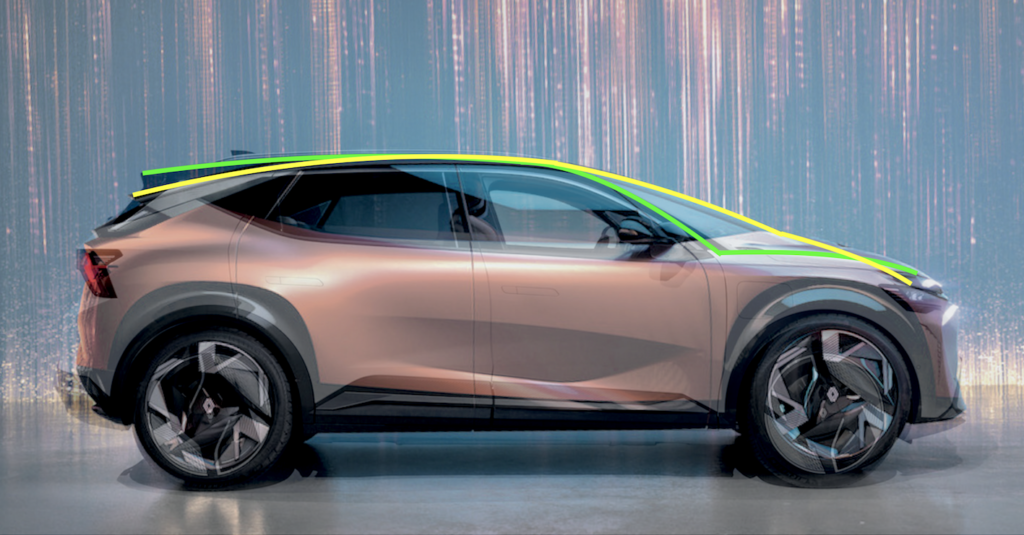
Ultimately, it is simply a return to the roots of the monovolume design, which manufacturers have favoured for their MPVs. This move towards a monocoque design is, in the words of a leading design executive, “ a trend of modernity. Look at the Toyota Prius or the Mercedes EQ saloons. Designers will always be keen to move towards forward-set windscreens.” The team at Renault, now led by Alexandre Malval (formerly of Citroën and Mercedes), have clearly understood this.
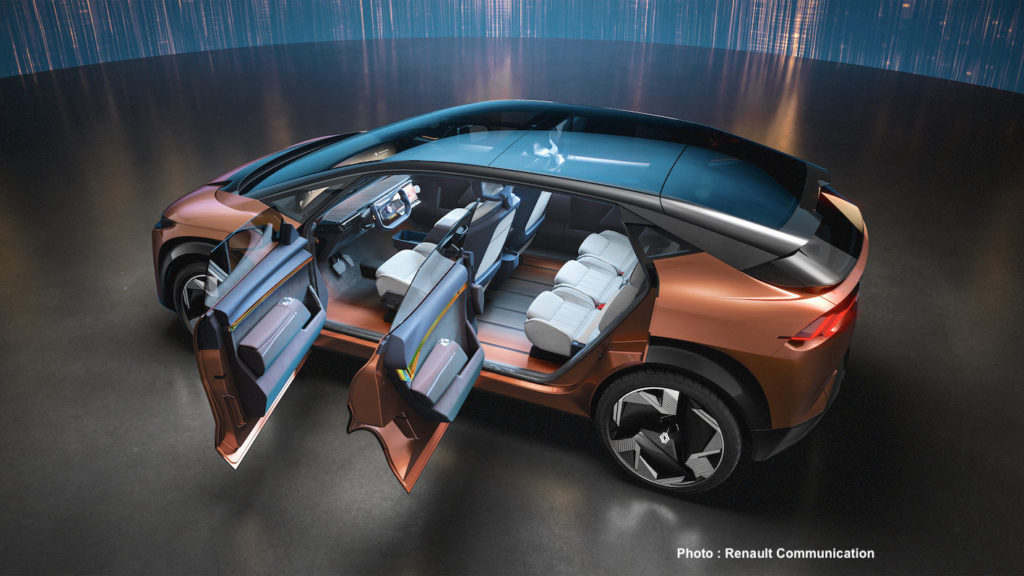
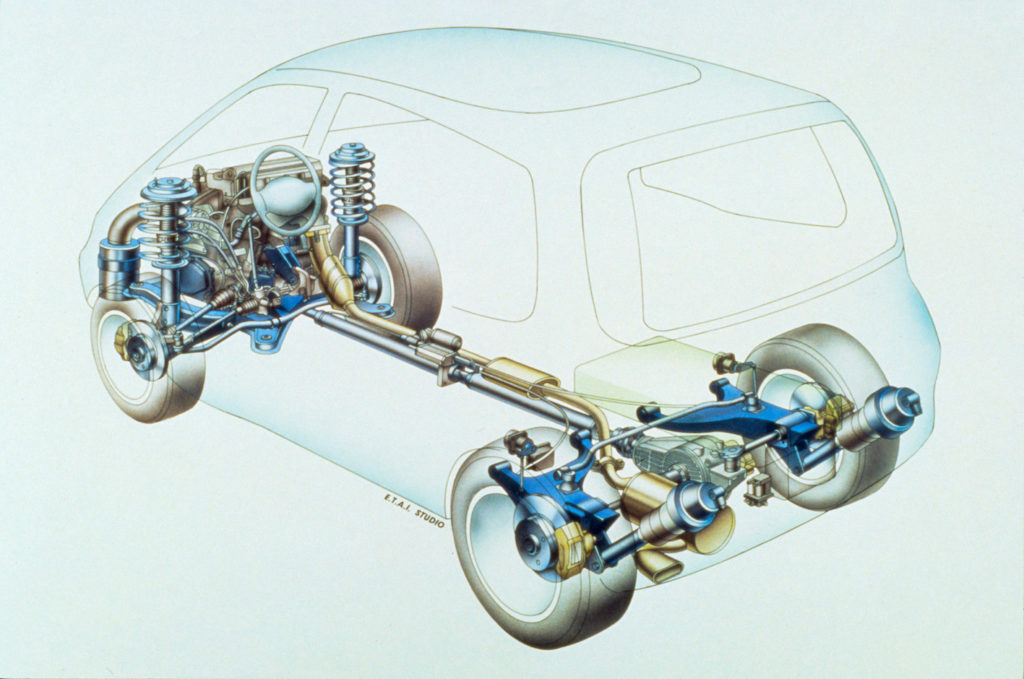
It becomes clear at this stage that most of the innovations in the brand’s future compact MPV are borrowed from previous generations. That makes sense. We’ll obviously set aside everything to do with the electric architecture, which has, after all, made progress and allowed the MPV concept to be rethought. At last, families will be able to enjoy proper MPVs again. But what might raise a smile is also the return of four-wheel drive on this new platform. To this we can add the rear-wheel steering on the R-Space Lab concept. Naturally, the more compact EV motors and the absence of a transmission running along the floor are a dream come true for the designers. So it’s worth remembering that the very first Scénic also had four-wheel drive (below).
Once again, we’ll set the technical details aside to focus on the styling of this version, designed for off-road enthusiasts. Whilst the RX4 version of the first-generation Scénic was indeed produced between 2000 and 2003, the model intended to succeed it never saw the light of day. It wasn’t for lack of trying. Here is a small collection of projects from the J84 4×4 programme, with designs dating back to 1999 (the Scénic J84 was launched in 2003).
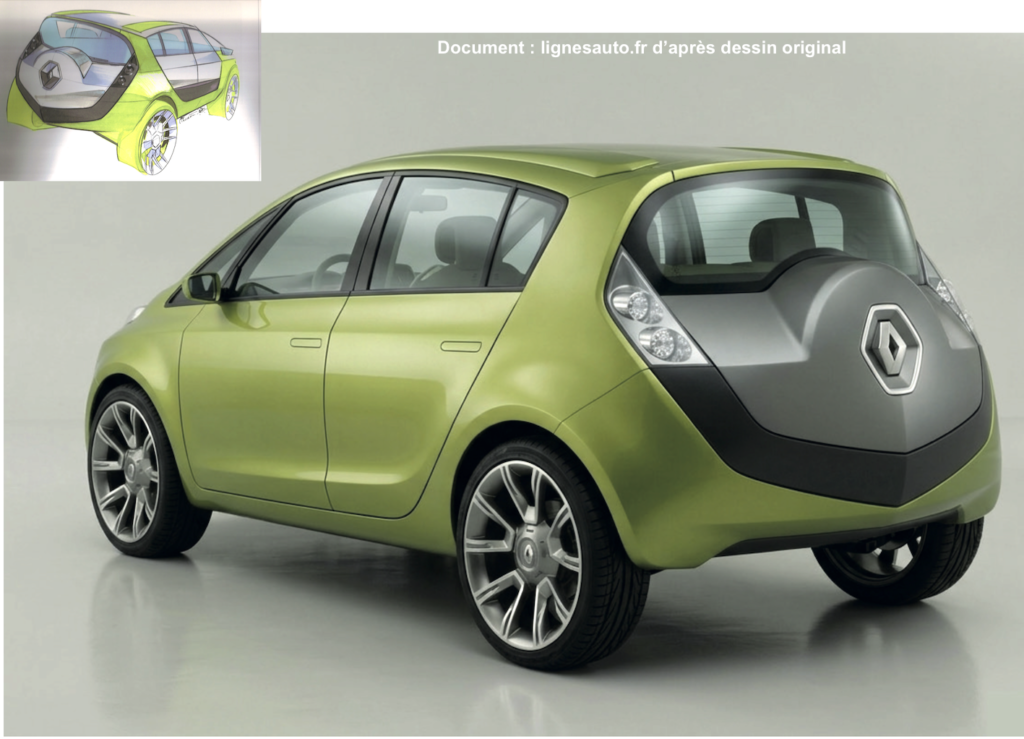
These drawings have a distinctive feel to them. Firstly, because they have been digitised in a way that stays true to the original. Secondly, because they were created by a very small team of Renault designers who had set up shop in the brand’s brand-new design centre, based in Barcelona. In January 1999, this Renault design studio in Barcelona began its work. In March, the very small team was formed, notably comprising Vincent Pedretti and Florian Thiercelin. Both had arrived from the design centre in Guyancourt, on the outskirts of Paris, for a period of “resourcing”. They were then under the supervision of Thierry Metroz.
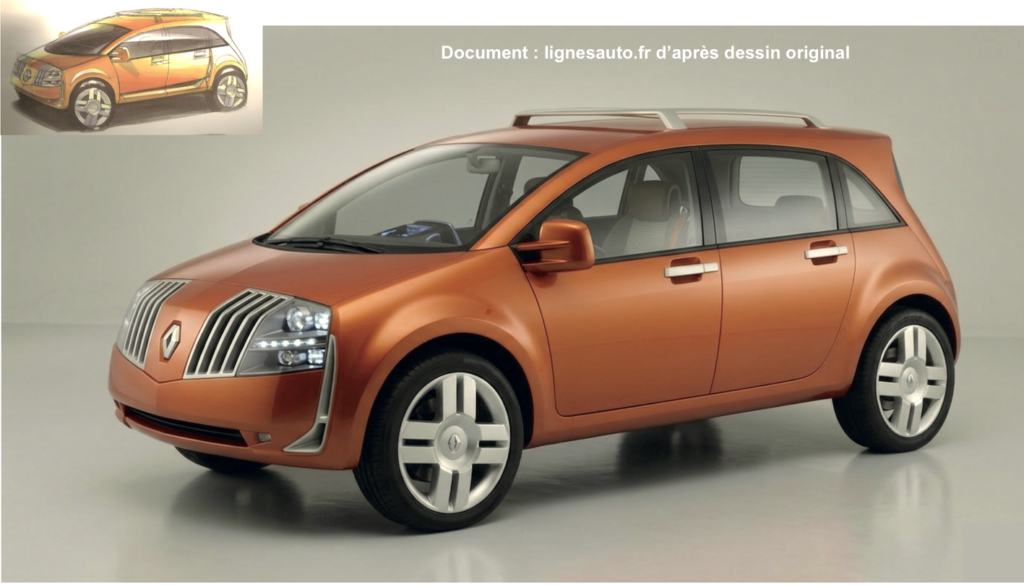
Very soon, the team strengthened its model-making department with the arrival of a second model-maker, Fabrice Desenne. The first designer from FASA (Renault’s Spanish subsidiary) also joined the company in June. His name was Ulfert Janssen. Pedretti and Thiercelin both became involved in the J84 programme for the future Scénic. At the same time, work began on the W89 programme for the future Twingo.
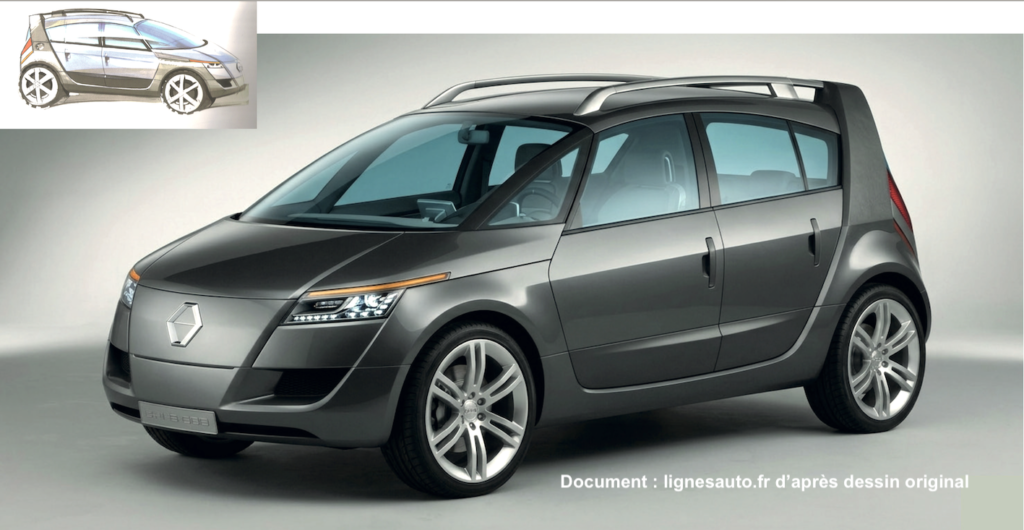
From October onwards, Thierry Métroz could also count on a second FASA designer (Teofilo Plazza). The first drawings of the J84 were produced by Vincent Pedretti as early as April 1999. Ulfert Janssen, meanwhile, began work on his interior sketches. In September of that same year, Patrick le Quément travelled to Spain for a project review, during which he discovered the first interior design work by designer Jérémy Leng. Leng replaced Florian Thiercelin*, who had returned to Guyancourt. The Barcelona team was officially in competition with the Guyancourt team.
* Florian Thiercelin, best known as the designer of the Initiale Paris and VelSatis concept cars, passed away in December 2023. Read the tribute from his wife Caroline here: https://lignesauto.fr/?p=37274
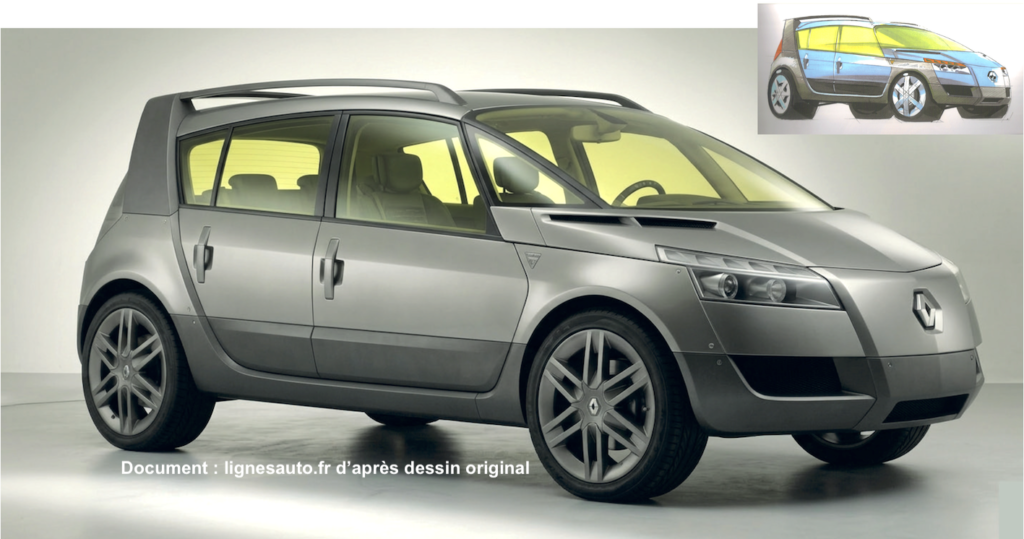
In November, an initial clay model on a milled polystyrene frame was produced. Vincent Pedretti’s design was chosen for this crucial phase. It is worth noting the speed with which the Spanish project is being carried out. At the same time, work begins on the 4×4 version of the Scénic with several designs, some of which are published today with their digitised versions to provide a better understanding of the designers’ intentions. It is true that the first Scénic RX4, based on the first generation, is in the pipeline for launch. Plans for its renewal are already being considered.
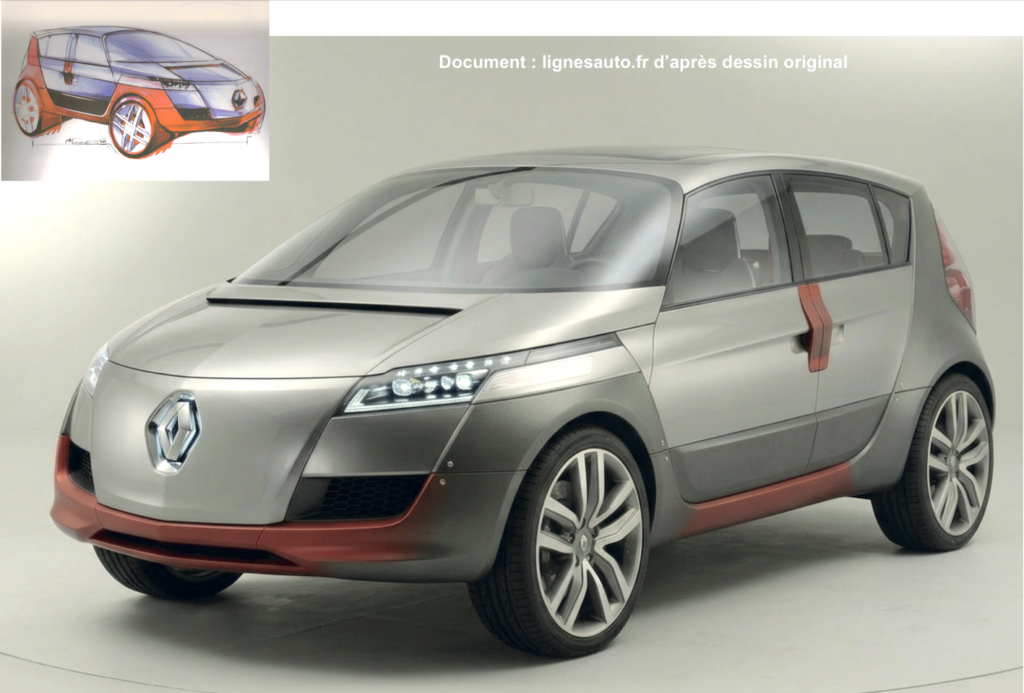
Vincent Pedretti’s proposals for the 4×4 version (see the drawings above) were also selected for the transition to a 2:5 scale model in November 1999. Ulfert Janssen, meanwhile, continued to work with Jérémy Leng to propose new designs for the Scénic’s dashboard. Below is one of Ulfert Janssen’s drawings. Ultimately, the Scénic proposal was pitted against the Guyancourt one and was selected. However, the 4×4 version was dropped from the product line-up…
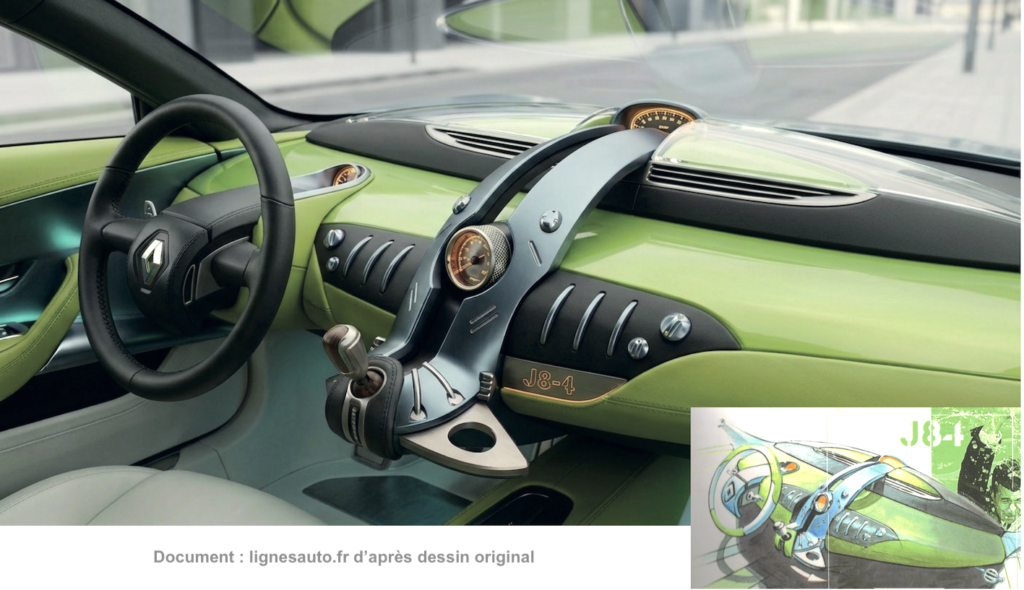
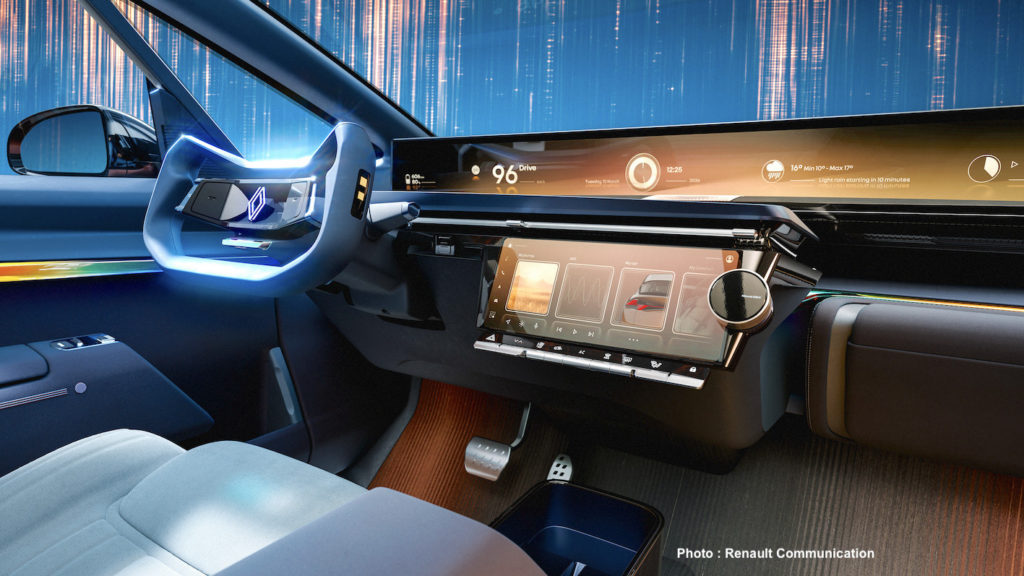
Above and below, the evolution of dashboards over almost a quarter of a century. Above, a drawing by Janssen enhanced by digitalisation, and below, the interior of the 2026 concept car with its Open R panorama screen spanning the entire width of the cabin. As for the steering wheel, it has been designed with ‘by-wire’ steering in mind, without any mechanical linkage. Much like that of the future Peugeot 208 with its Hypersquare…
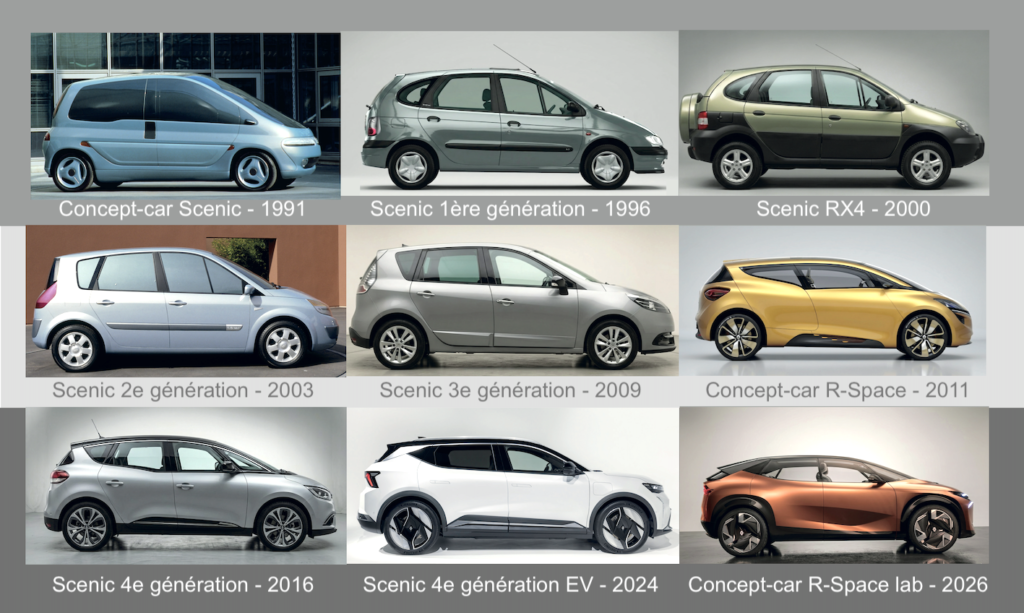
Below, before wrapping up this anniversary post, here’s a quick guide to help you become an expert on the Scénic generations. And to think that its success is also down to the boss at the time, Louis Schweitzer, who decided during the design phase that the Scénic would be made from sheet metal, rather than composite materials as had been envisaged for a while. With sheet metal tooling and pressings, the Scénic was able to ramp up production at an extraordinary rate. Something it wouldn’t have been able to do with composite moulding tooling. Phew!
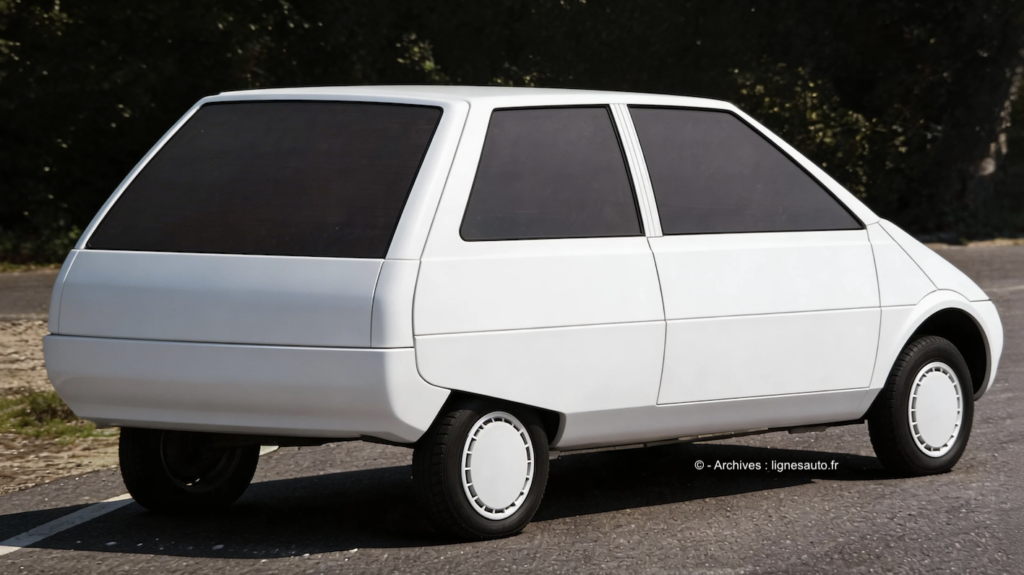
In conclusion, the announcement that the MPV concept will be making a comeback before the end of the decade is excellent news. This is particularly true for Renault, which remains a pioneer in this sector – not only thanks to the 1984 Espace, but also, and above all, thanks to the small 1993 Twingo, featuring a monocoque design that Citroën had tested in the late 1970s but ultimately abandoned, as shown below.
Renault believed in it. Not necessarily the whole company, but Patrick le Quément’s team in particular. And we also owe this pioneering spirit to the Scénic concept car, which designed the car’s interior before its exterior. A car for passengers. Quite simply. It was about time. And it’s about time we revisited it! Below is a completely free interpretation of what this famous future Scénic of 2028 might look like… Enjoy the journey.