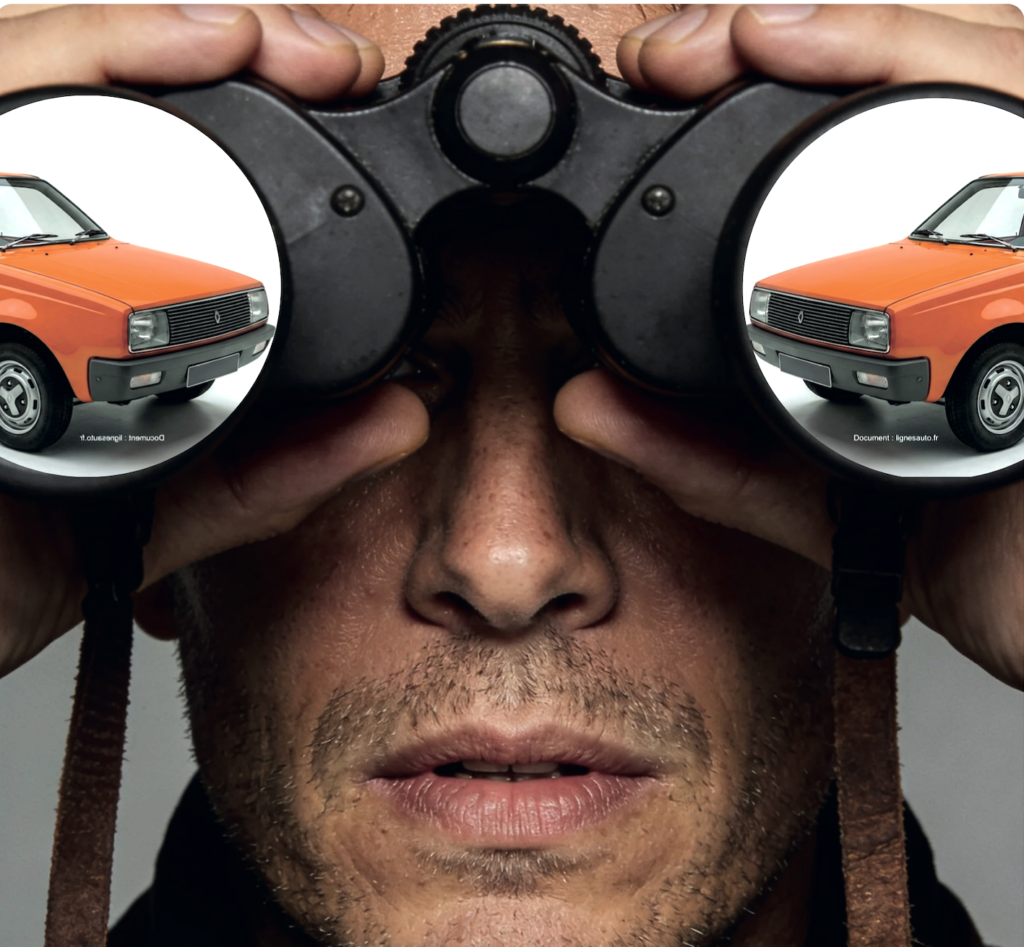
Welcome to 1971. Welcome to the Régie Nationale des Usines Renault, or RNUR! Across the network, the Renault 12 is brand new, having been launched just two years earlier. The Renault 5 is still unknown to the general public, and plans for a compact saloon resulting from technical collaboration between Peugeot and Renault follow on from the agreements signed between the two French manufacturers in 1966.
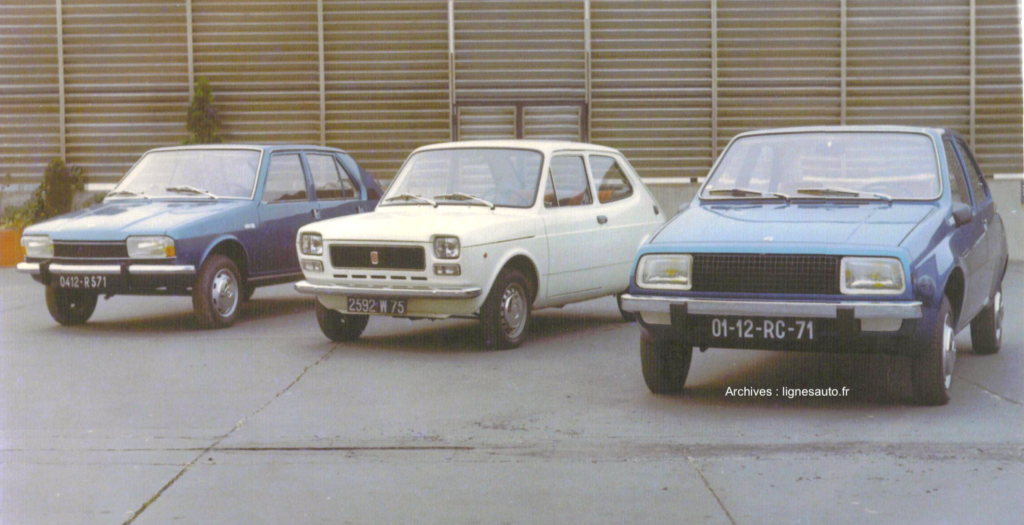
Project 121 for this compact car would become the Renault 14 five years later, in 1976 – 50 years ago. This saloon was fitted with the engine as well as other components from the Peugeot 104, which was also still under wraps. As stipulated in the agreements, Renault was able to test its own prototypes at… Peugeot. This is the case here with the major meeting to decide on the styling theme for Project 121, which took place (below) on the terrace of the Peugeot design centre, then based in La Garenne-Colombes, in the Paris suburbs.
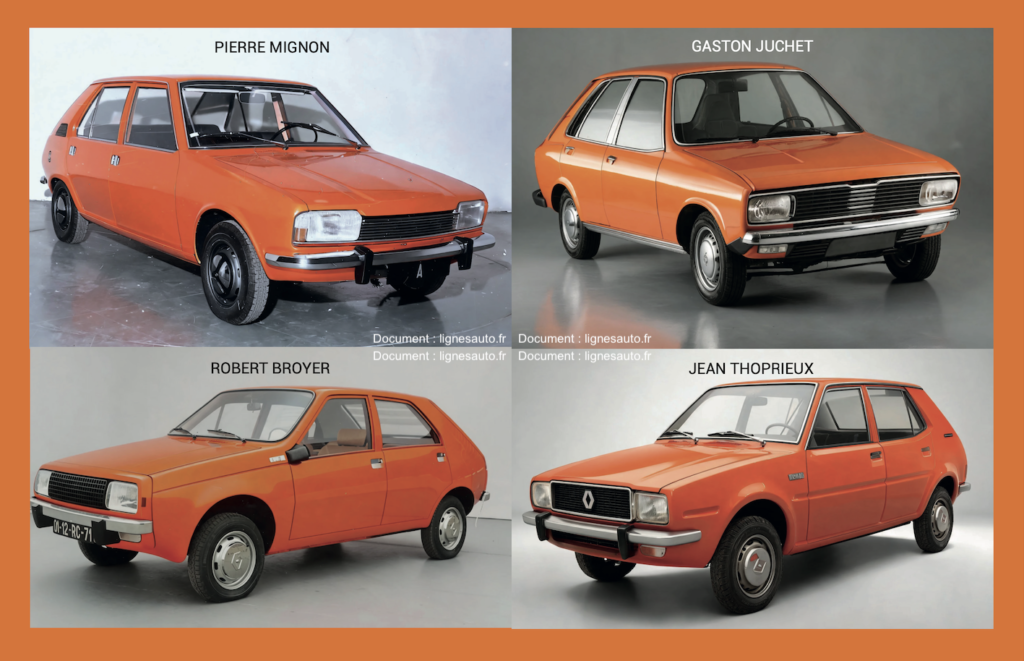
You’ll have the chance to step into the shoes of Renault’s management and decide which model should become the R14. To guide you through this delicate process, we’ve enlisted the help of Robert Broyer, who was interviewed a while back about this unique development story. You’ll also be able to draw on authentic documents, some of which have been remastered using AI whilst remaining faithful to the original photograph or drawing.
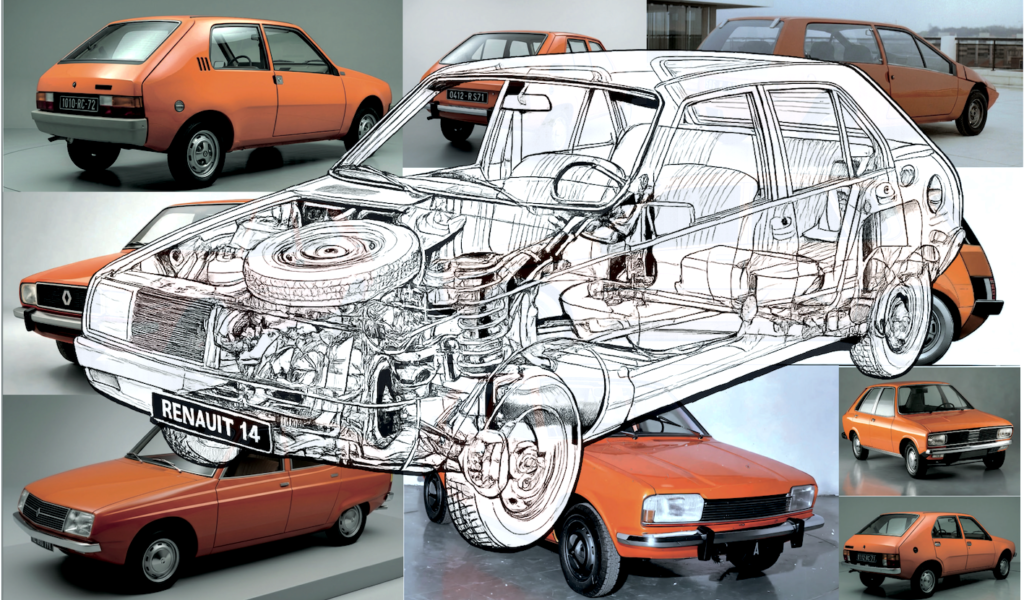
We’ve deliberately chosen the launch colour (Andalusian orange) to colour all the photos, so you can make your choice in the best possible setting! The whole world is counting on you to choose Renault’s first compact saloon with a transverse engine… Naturally, the Peugeot team aren’t present that day; only the decision-makers from Renault are there. And you, of course! Let’s hear from Robert Broyer, pictured below with his ‘clog’ design and creator of the R14 model that was ultimately selected.
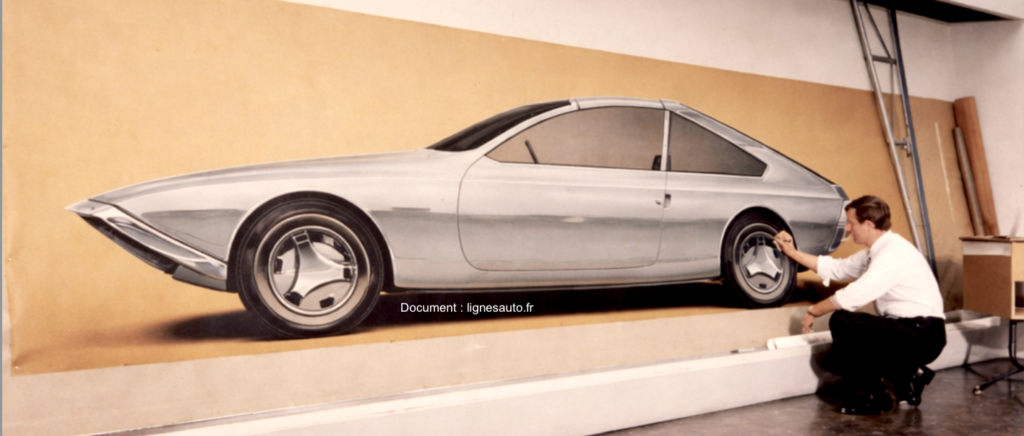
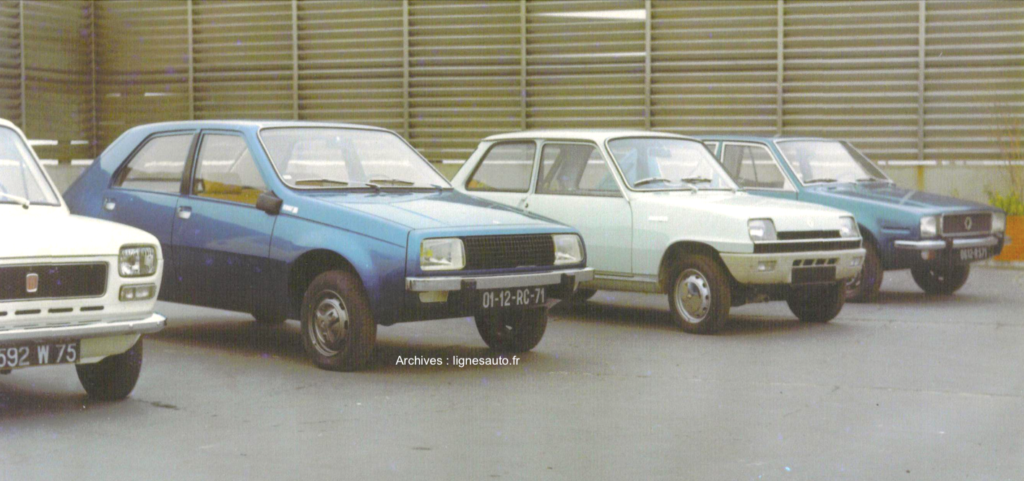
“I remember that first presentation very well. There were three Renault-style prototypes on display, positioned alongside the Renault 5 and a Fiat 127. They were actually exhibited at Peugeot’s Garenne Colombes site, as we didn’t go to our test tracks at Lardy as we usually did.“
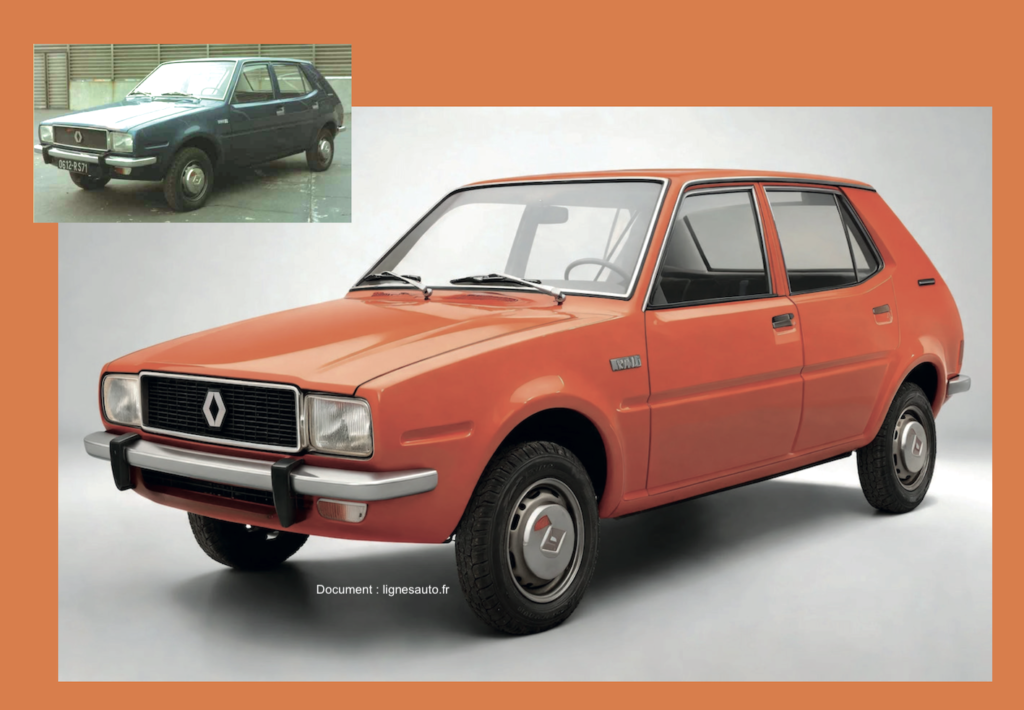
“Here is Thoprieux’s model (above) with its large rear quarter panels. This designer came from the Simca school and later moved to Matra. The other, very classic model is that of Pierre Mignon (below)” It is true that at the time, as Robert Broyer recalls, “we worked on the front, we worked on the rear, and then a template was used to shape the side of the body. It was a tradition of the old, balanced style that we had carried over from the days of the Peugeot 404 or the Fiat 1500…“
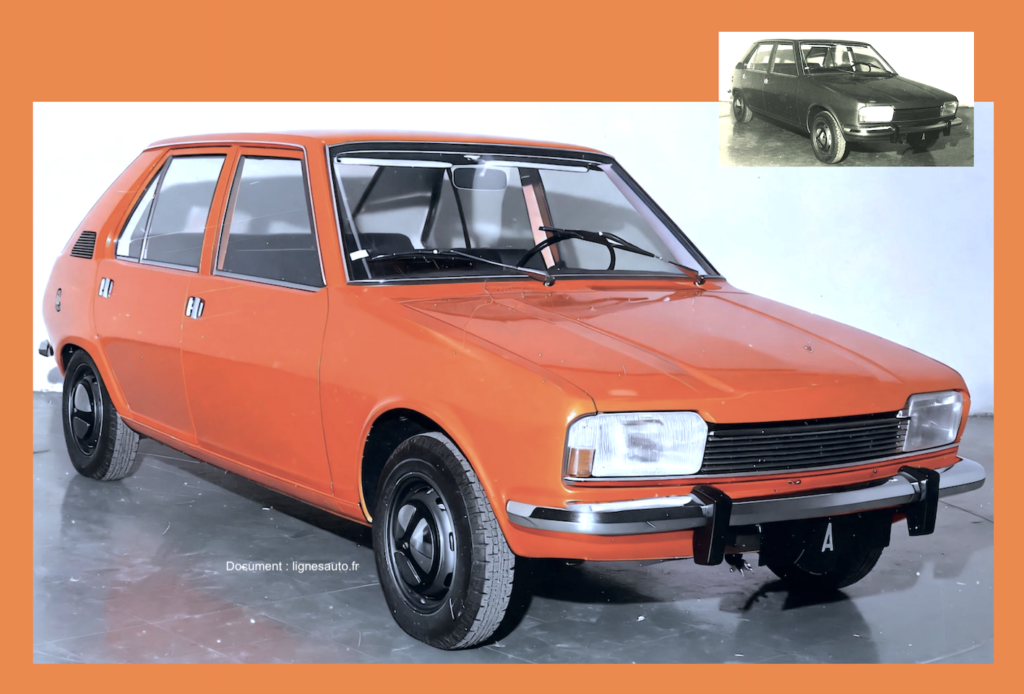
“The third model presented that day was mine (below). I had chosen those proportions because I started from the idea that the new models of the time were always quite angular. I thought that if the appeal of a car lay in always being viewed from a three-quarter front or rear angle, very little attention was paid to the sides. I told myself that, on the contrary, we needed to make the sides interesting.“
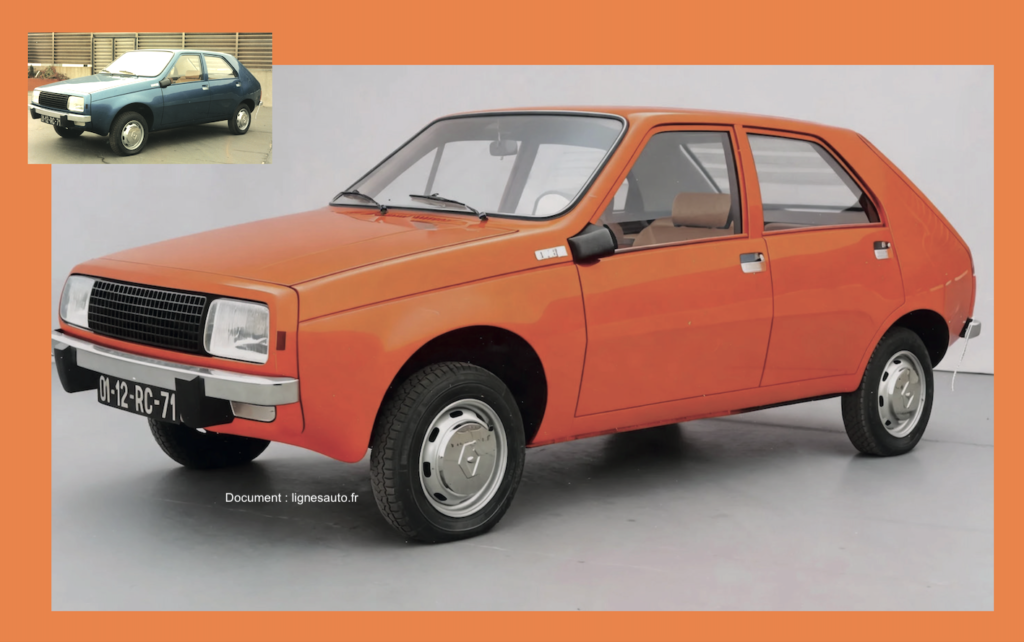
“With my design, I wanted to bring the car to life, hence the bolder shape of the flanks. Bold enough, at any rate, for my model to be selected. The other two models presented that day were quickly rejected. From then on, by choosing mine, Renault entrusted me with the responsibility of overseeing the styling. You then became the point of contact for everything relating to the project’s design. I carried out this role until I left the Régie in 1973.”
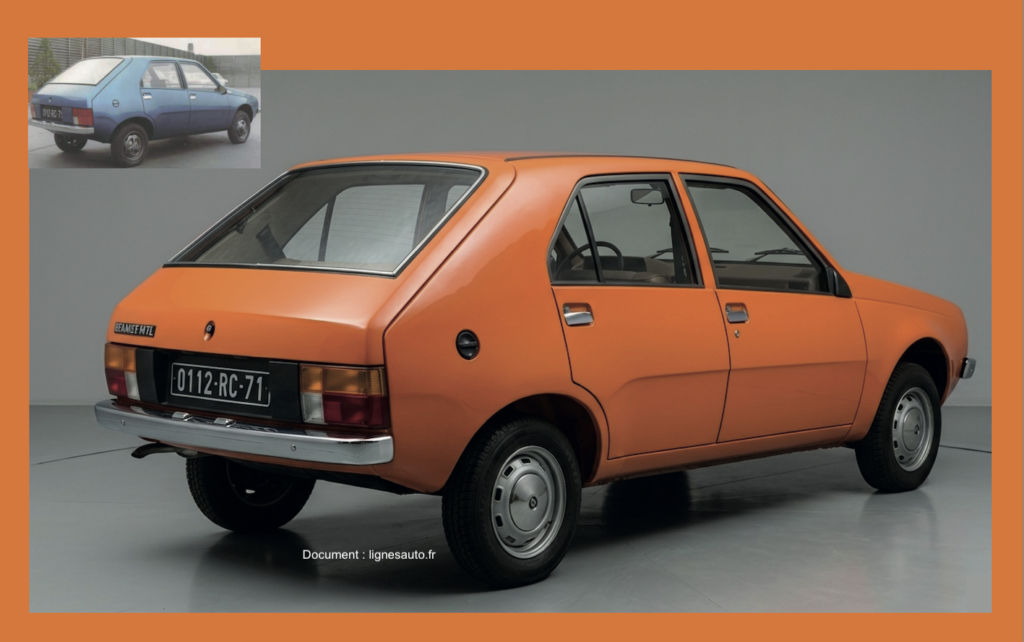
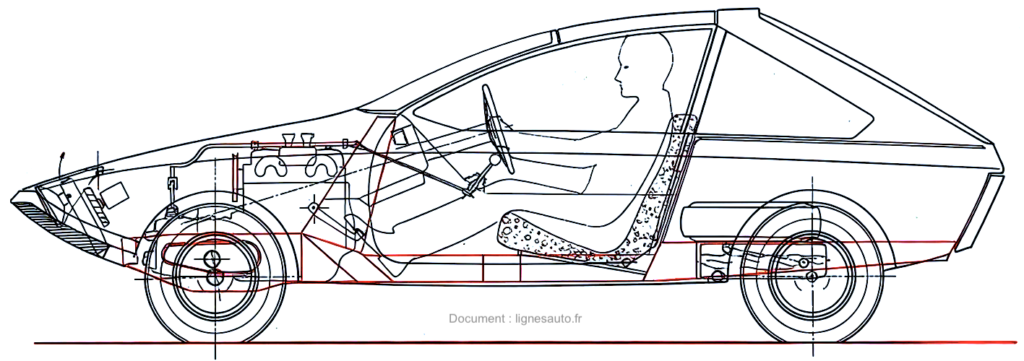
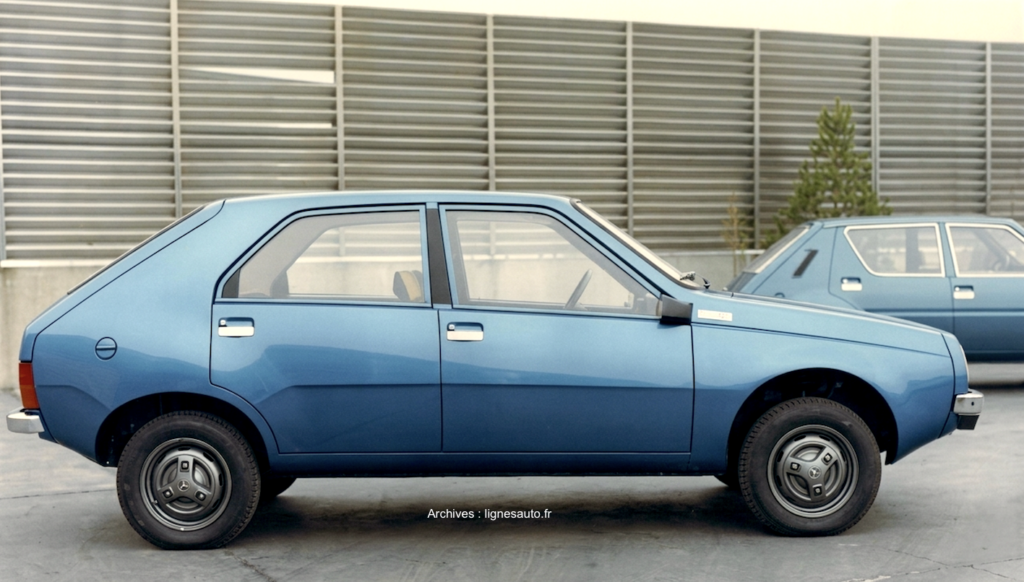
In Robert Broyer’s model above, it is clear that the bumpers then under consideration for the Renault 5 (and which appeared in part on the Renault 17 in the year the R14 models were unveiled…) have not yet been incorporated into the design. And if you look closely at the rear door, the bulge in the wing is rendered with more character than on the production version: the panel beaters were unable to reproduce the design of the time… This is even more apparent in the side view below. In the background, Thoprieux’s design on the right-hand side, which differs from the left-hand side shown above.
“When I left Renault on 31 December 1973, before the R14 went on sale, my design still featured conventional bumpers. After I left, Gaston Juchet had them modified because he very cleverly decided to incorporate the ingenious bumpers so highly regarded on the R5 and requested by Prost-Dame into the programme. But in my opinion, these bumpers were poorly integrated into the 14. Because, in fact, the front wing is very poorly protected.“
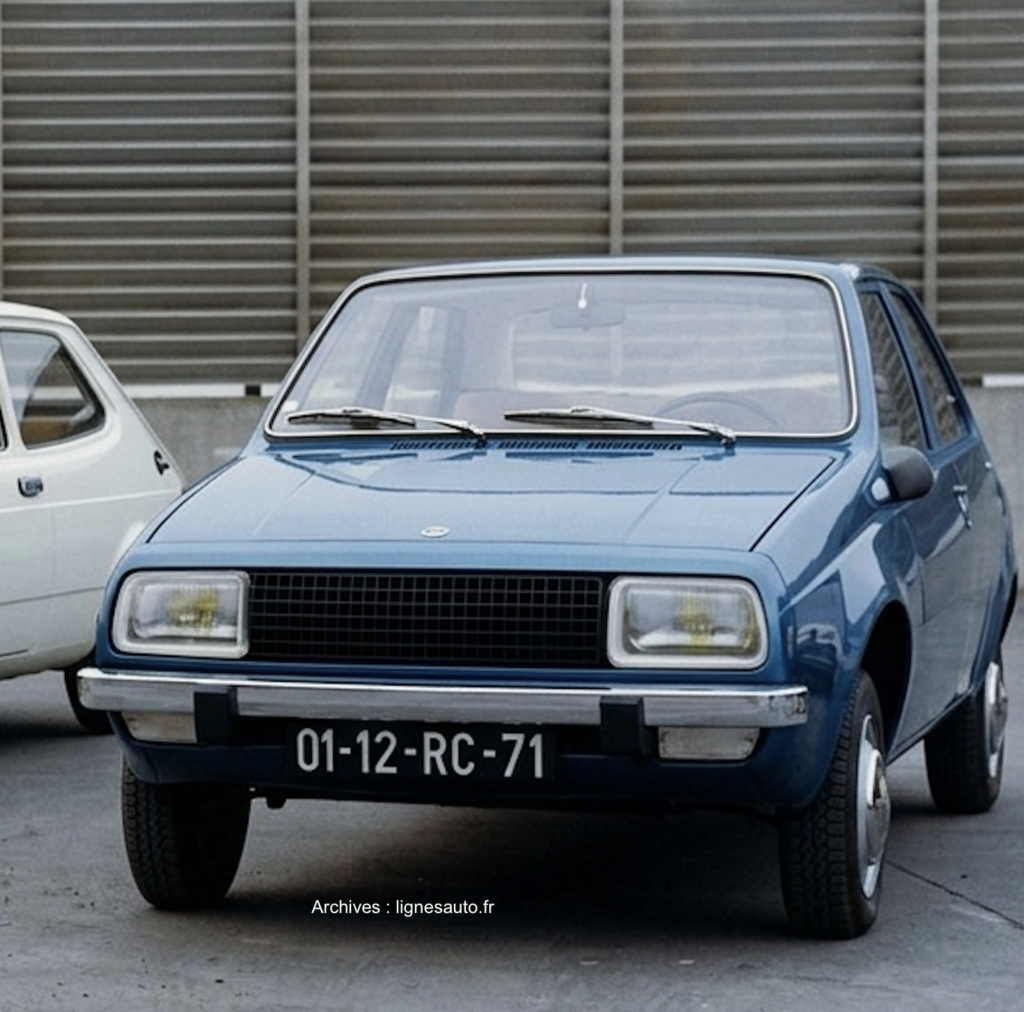
“They mainly modified the front end by removing the grille ring (clearly visible below, running the full length of the car’s front end). This was a brilliant idea because the ring was made of pressed sheet metal and concealed all the joints between the wings, the bonnet, the headlights and so on. It offered a huge advantage during the assembly phase. I know that Renault revisited this concept in the Renault 18 design, but just as with the 14, the ring was never put into production. It’s a shame, especially as it would also have allowed the car’s styling to be updated for a low-cost facelift!”
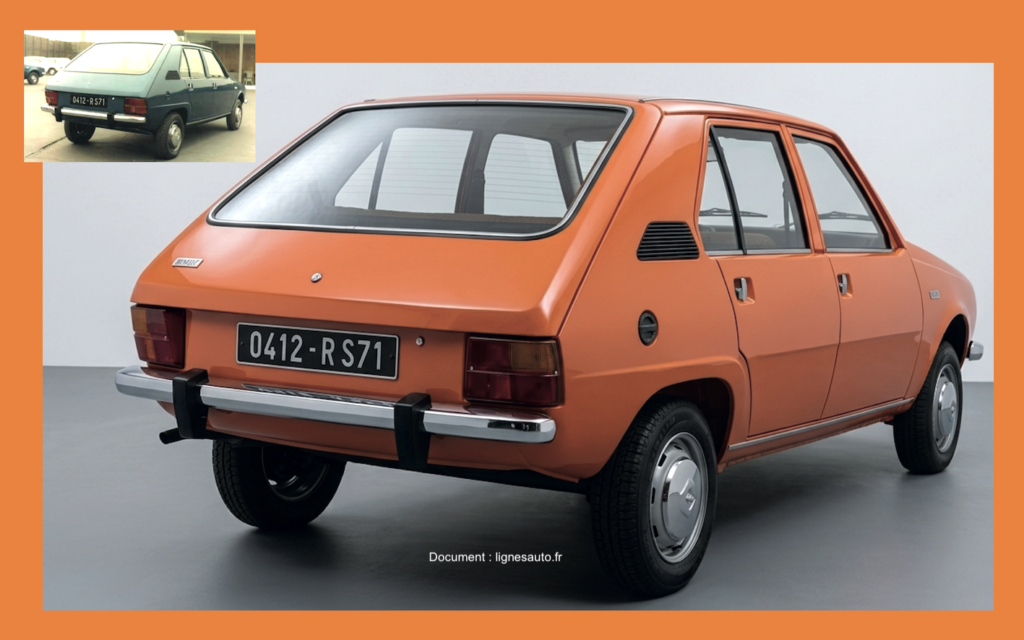
“I’d like to return to this presentation of the first scale models. On that occasion, at the top of the Garenne terrace, the number of people present was relatively small because Pierre Dreyfus, then head of Renault, didn’t want to hear a word from the dealers. Only Bernard Hanon and François Wasservogel were there. Alongside them were the project managers, notably Gaston Juchet and Prost-Dame. It was December 1971 and the models bore registration numbers indicating their origin. The two models produced by the Renault design team were registered RS (the one by Mignon is shown above), whereas mine came from Coggiola and was registered RC.”
“Mine is made of plaster and painted. It’s hollow, with moulded windows, and, all in all, it’s beautifully crafted. Coggiola worked with plaster in a different way. We used to make our models using pairs of plywood panels. We drew up the sections, everything was fixed in place, and then we filled it with plaster. The plywood would warp with the moisture from the plaster and the car would end up all crooked! At Coggiola’s, it was carved from a single block! That made all the difference, as you can imagine. That first model below was made from a small study on a 1/5e scale.”
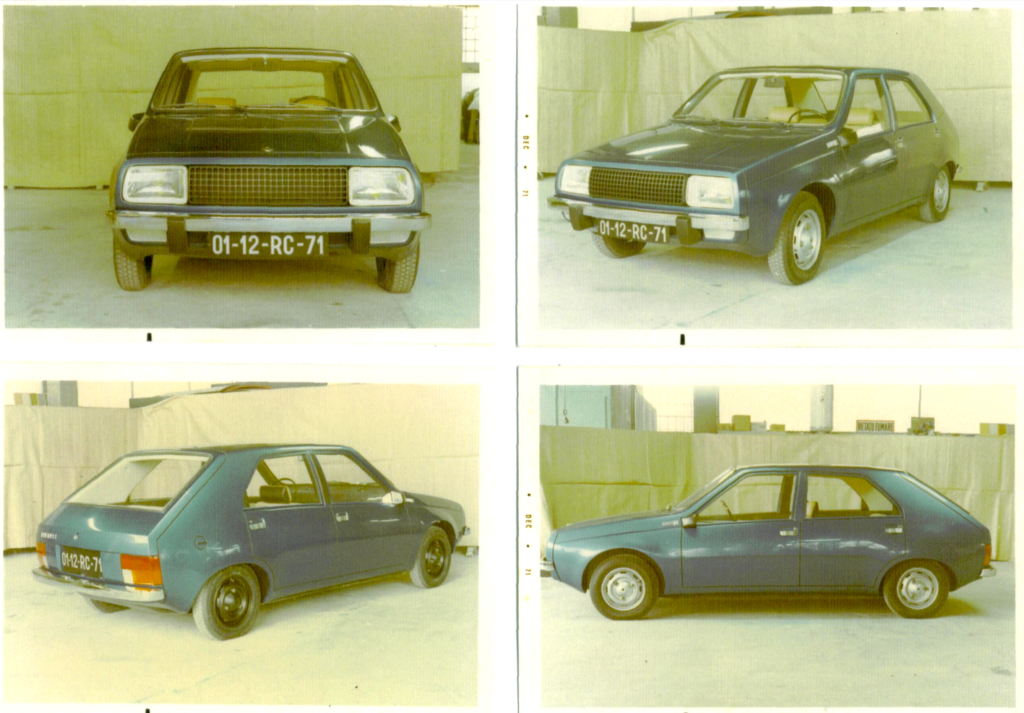
“Coggiola always took photos just before dispatch (above, Broyer’s model ready to be sent to France). I would go there to follow the project, just as I had done during the Renault 12’s development at Ghia. In fact, it was during the development of the R12 at Ghia that I met Coggiola, who was the technical manager there at the time. I had the opportunity to work with him from the mid-1960s onwards. In the photos published here, the Renault 14 model has been flattened to fit into a crate, as prototypes like these didn’t just travel covered with a tarpaulin: they were crated!”
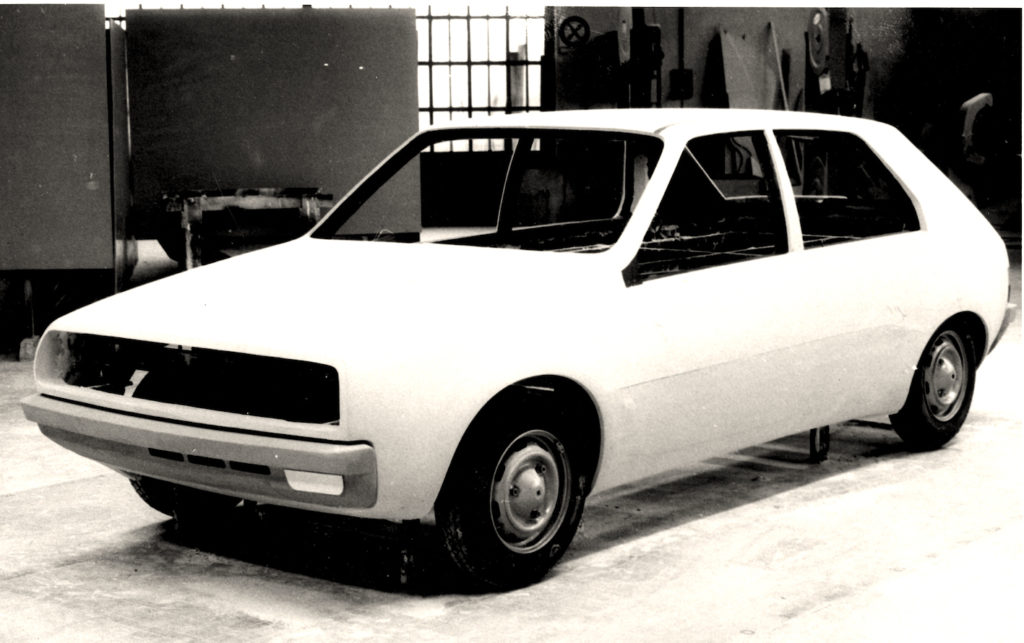
“I remember how we used to assess the alignment of the scale models: the axles were mounted on two jacks; we would raise or lower the body relative to the chassis and then gauge the body’s position compared to the loaded version, because we had relatively large suspension travel at Renault, which could cause problems.” Above, a stage in the plaster construction of Robert Broyer’s model at the Coggiola consultancy.
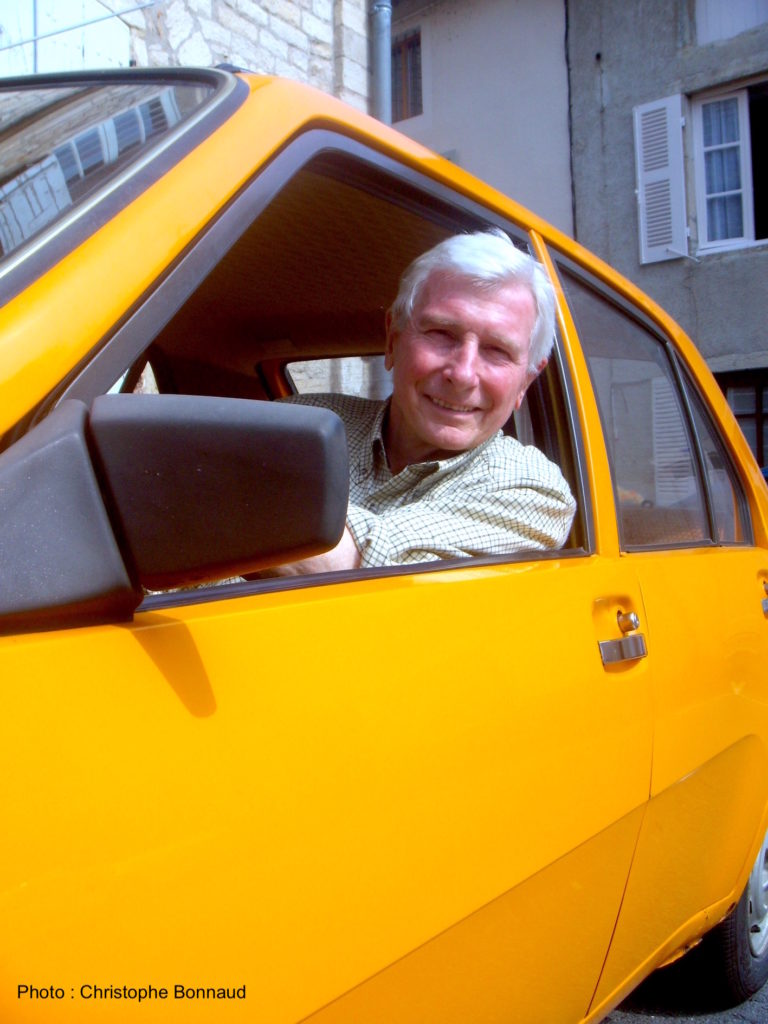
Robert Broyer, pictured above in a Renault 14, explains regarding the 1/5 scale models of the time that “this scale is designed to provide a clear representation of the 1:1 model. This approach requires complete mastery on the part of the designers. I had worked on large-scale drawings at Chausson. I knew how to read lines: in particular, I had produced the main drawing for the Floride. It’s all about subtlety, then, in the way you draw a line. A millimetre too much here or there, a line that’s too flat or too sharp, could ruin the final result. You had to know how to interpret that plan in three dimensions. It required real bodywork skills. Gaston Juchet and I had them. You have to admit that the R14 had complex volumes, and at Rueil we didn’t have enough perspective to assess the work, and taking the model to Lardy for the test tracks was out of the question – it was far too heavy.“
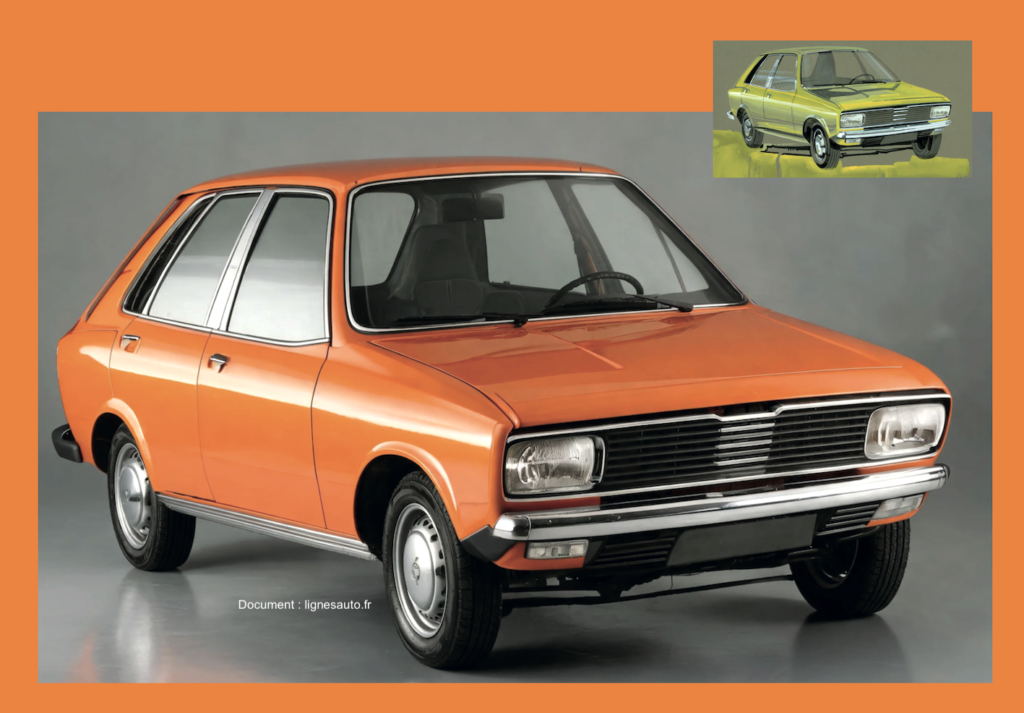
And since Robert Broyer mentions the leading designer of the era, Gaston Juchet, what was his role in this project? Juchet was coming off a successful period, notably with the design of the Renault 15 and 17 duo. He was also overseeing the production launch of the R5, designed by Michel Boué for the exterior and Robert Broyer for the interior. So, for the 121 programme, he produced this particular sketch in January 1971. We’ve taken the liberty of imagining it as an actual car, still in the launch colour ‘Andalusian orange’. For the purists, let’s add the other launch colour, which was ‘copper’…
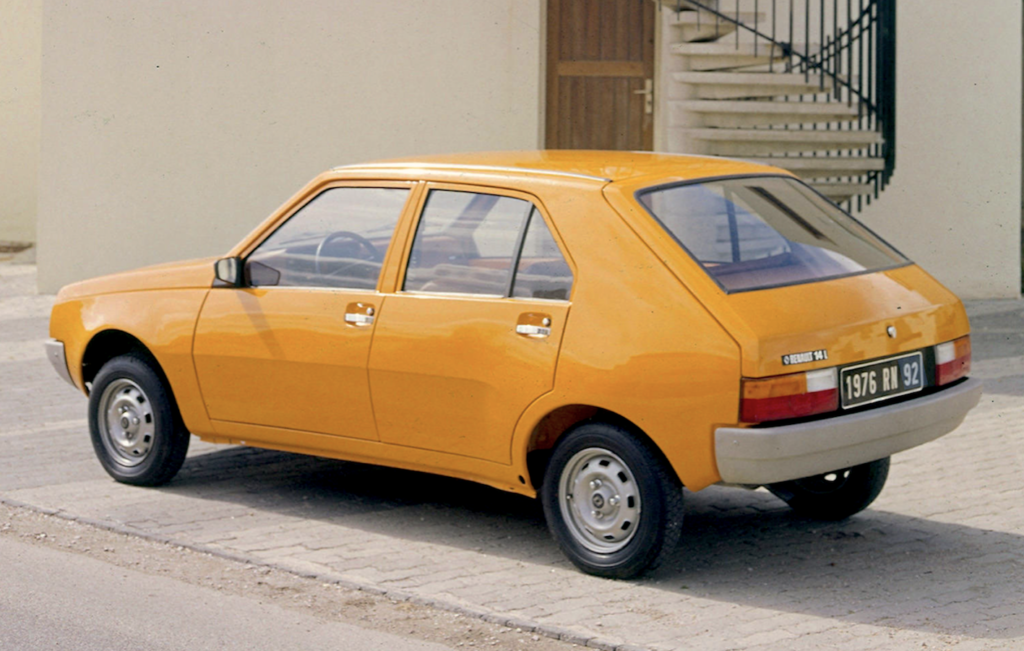
The 7CV of happiness was unveiled in a single photograph in January 1976. But during those five years of development, and despite the departure of designer Robert Broyer, the 121 programme underwent numerous design studies, which you are about to (re)discover. Before that, we have chosen to showcase one of the very first models of the Renault 14’s 121 project, shown below.
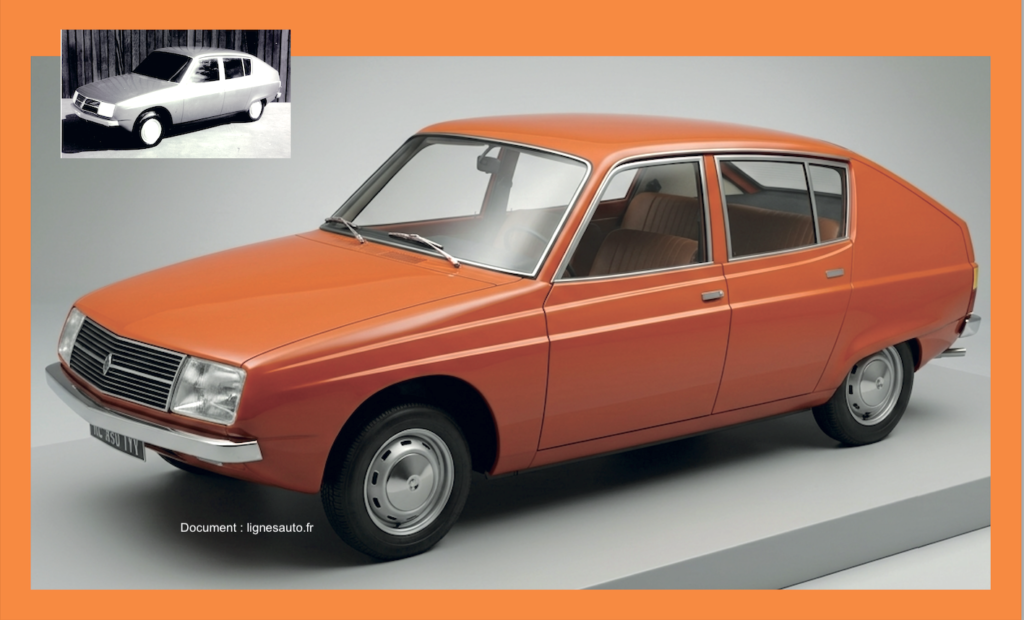
This model, the designer of which is unknown to us, bears little resemblance to what the 14 would eventually become. Nevertheless, it is based on an architectural theme that is not unlike that of the Citroën GS, which appeared in 1970, just as Renault’s 121 programme was being launched. And at that time, Giorgetto Giugiaro – who did not create this small model – had just launched his company Ital Design and was collaborating with Renault, notably on the R17. Robert Broyer recalls this collaboration with the Italian: “Yes, the Renault 14 project was not carried out solely in-house, as Giorgetto Giugiaro was consulted from the outset. But nothing came of it.” A little-known fact…
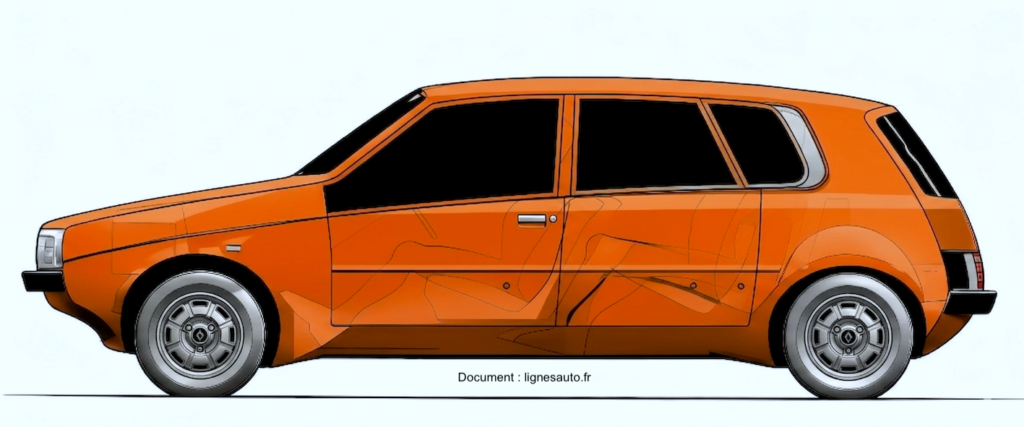
Another model from the 121 programme is also little known: the Renault 14 estate shown above! This design remained at the stage of a simple sketch by Robert Broyer. ‘I was one of the first to champion the different body styles. And specifically for the 14. Once my saloon design had been selected, I took the liberty of creating a new estate body style with an innovative rear layout: the seats slid back to create an extraordinary amount of headroom, and they were independent and slid separately.’
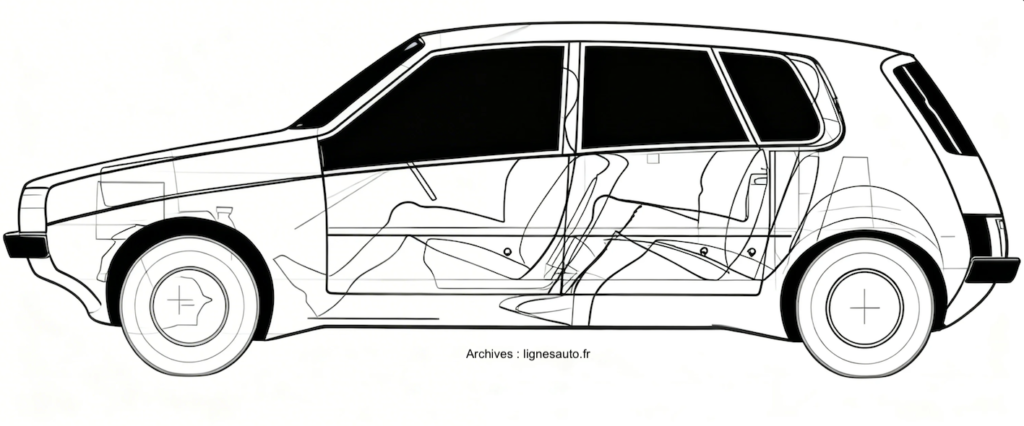
“It was to show what we were capable of. I’d lengthened the wheelbase. This estate version was developed after the saloon’s design had been finalised, but Renault didn’t simply shelve the idea after I left.” This concept car did indeed highlight the interior modularity that went on to feature in a number of models, from the Espace right through to the Twingo.
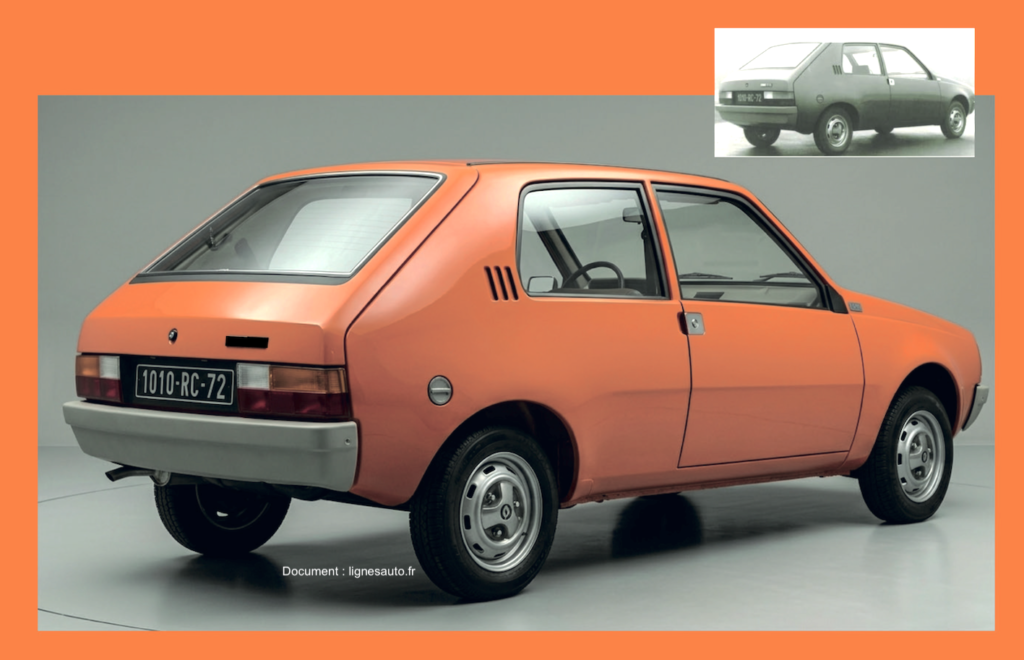
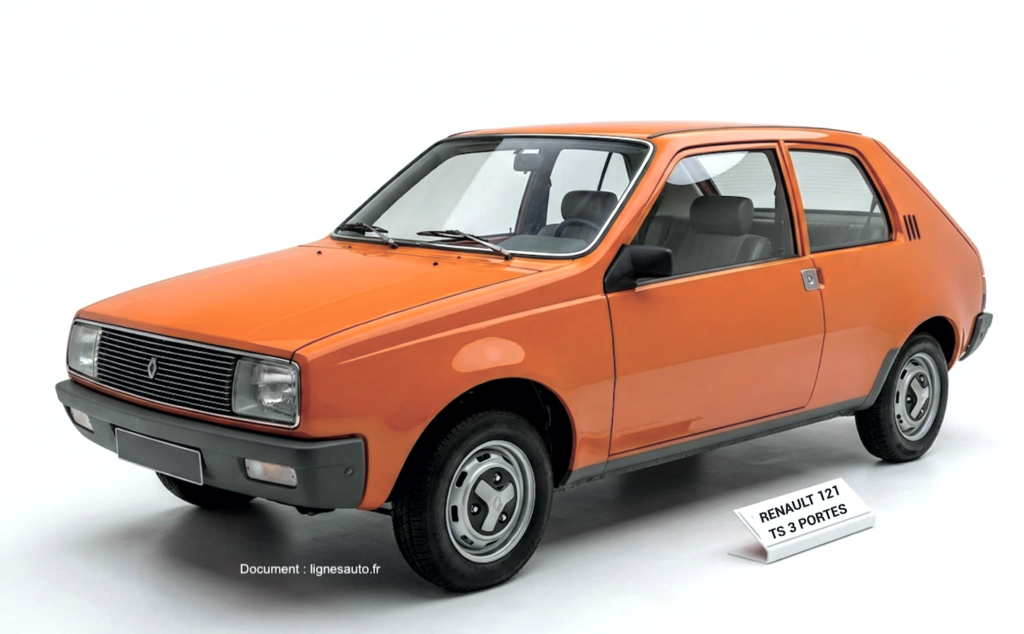
During the development of the Renault 14, the design team also worked on a three-door variant, pictured above, which was very much in vogue at the time. “It was on the initiative of design director Gaston Juchet that the project for a three-door variant of the R14 came to fruition within the 121 programme. The idea was not merely to produce a version with two fewer doors, but to propose to senior management a more dynamic and sporty variant. On the body panel, there are three small slits behind the rear window designed to ventilate the passenger compartment. This model had two versions, one of which (below) was sportier and was to be called the R14 TS.“
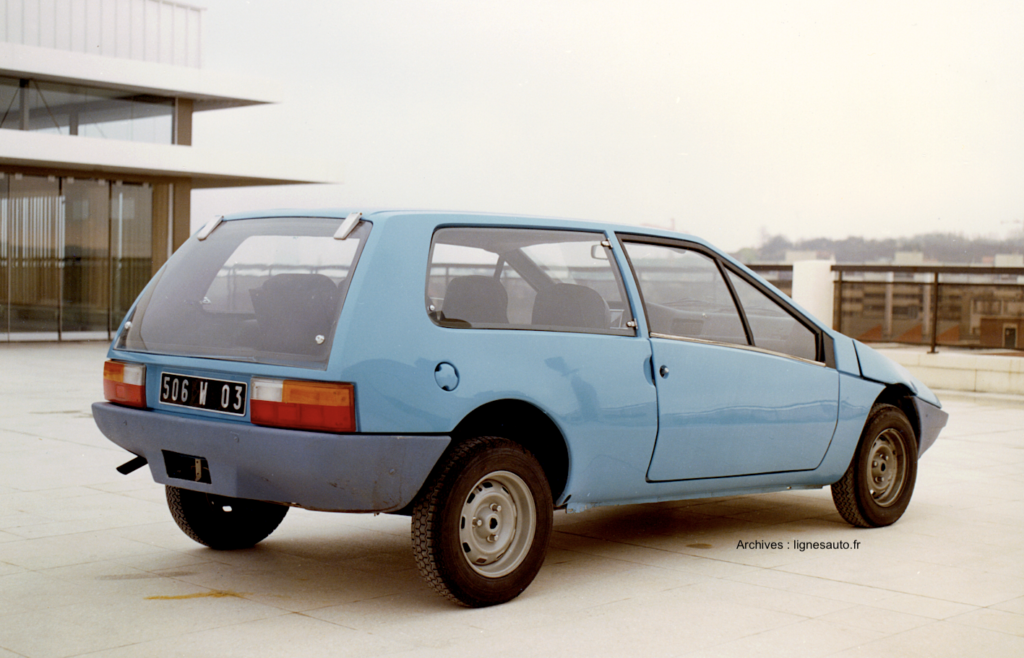
In the end, neither the three-door version nor the estate model ever saw the light of day… Nor did the concept for a shooting brake coupé, an idea once again conceived by Robert Broyer after he had left Renault’s design department. Broyer presented this highly modern design to Ligier, to help keep the latter’s workshops—which had been manufacturing the final SM models—up and running. The R14 coupé project took shape on 17 July 1974, with production planned for 1977, a year after the saloon went on sale.
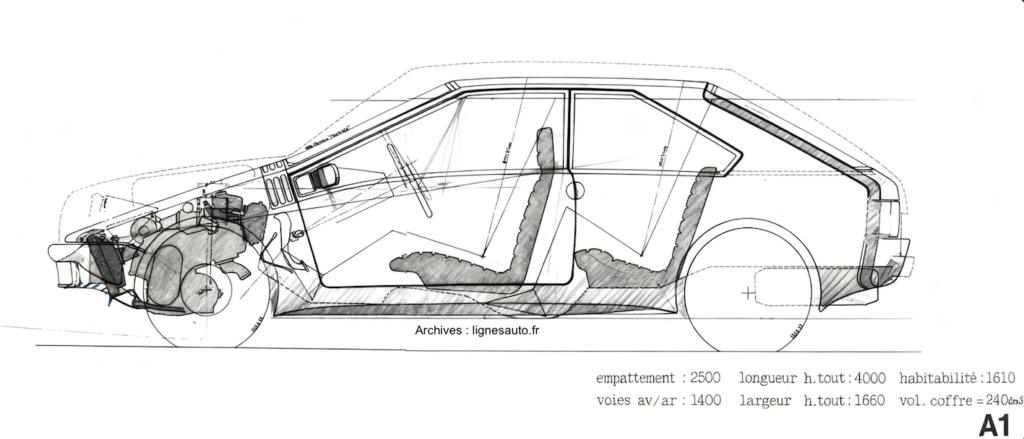
Whilst the sole prototype was being fine-tuned on Renault’s test tracks at Lardy (below), production managers began planning the commercial launch. A very gradual ramp-up was scheduled at Guy Ligier’s workshops, with four pre-production vehicles due by March 1977, two of which were to be used for the world premiere at the Geneva Motor Show. A further twenty-four vehicles were to follow in April, whilst series production was planned for May 1977, with 64 vehicles, 119 in June, 227 in July and 407 in September. The market launch was then scheduled for September 1977.
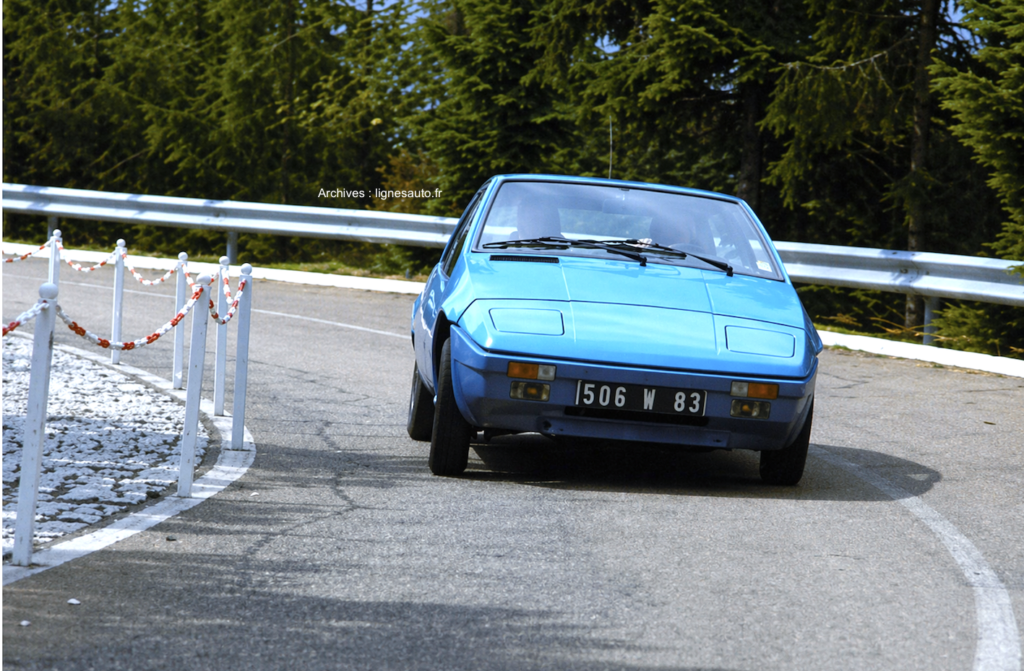
Although the R14 coupé was close to going into production, the project was abruptly halted because Renault did not want to put itself in a difficult position with its friend Lagadère of Matra, who was producing the Bagheera. And who would later go on to manufacture the Espace! Furthermore, the restyling of the Renault 15 and 17 duo was scheduled for 1976, a year before the planned launch of Broyer’s coupé. Renault feared cannibalisation in a niche market. The R14 coupé project was therefore shelved, much to the despair of Ligier and Robert Broyer.
And so ends the long story of the Renault 14, which had the merit of pioneering new digital tools (the famous UNISURF system) and benefiting from a brand-new factory in Douai, automated ‘in the Japanese style’ (19 robots – no laughing matter…). In 1976, the ‘7CV of happiness’ hit the market.
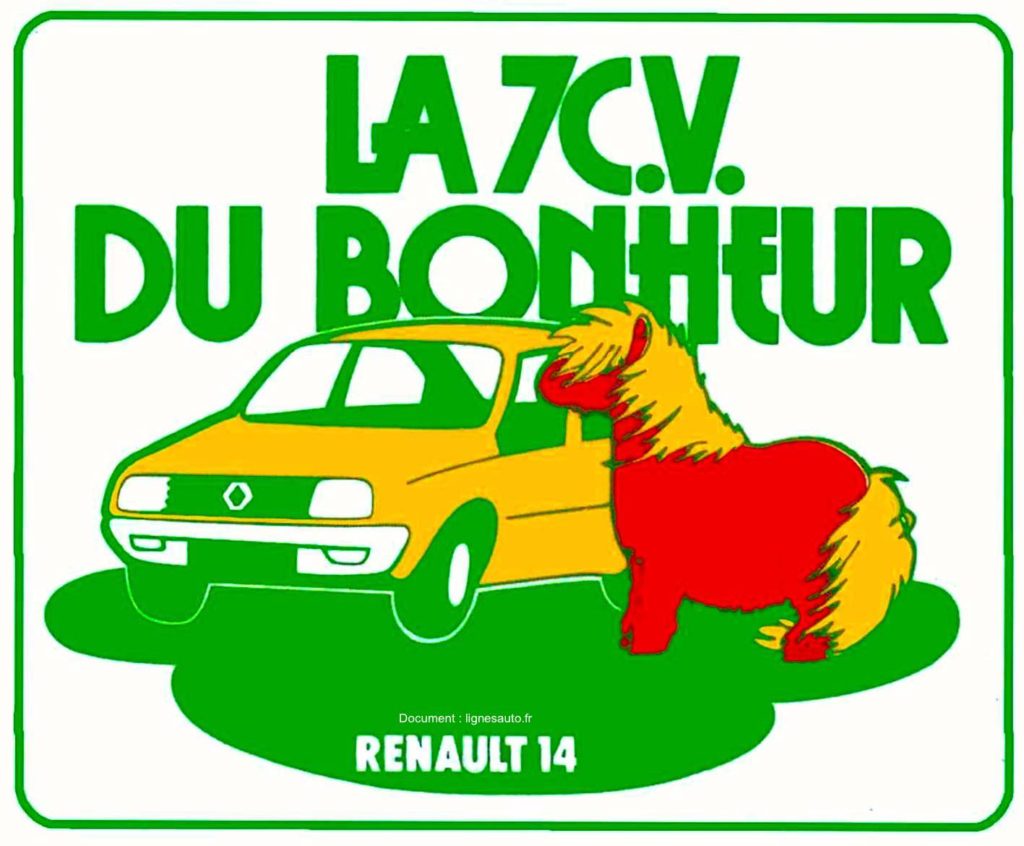
1976 was the year of Apple’s first Mac, the year when Casimir was orange, just like the public transport pass of the same name. Orange, too, were the Tefal frying pan and the Corail train… just like the Renault 14, which dared to launch in this colour alongside a more prestigious coppery shade. In 1976, the Renault 14 was initially “the 7CV of happiness” before withering into a pear shape two years later and seeing its career significantly cut short by this marketing campaign, which was, to say the least, offbeat. Or disastrous.
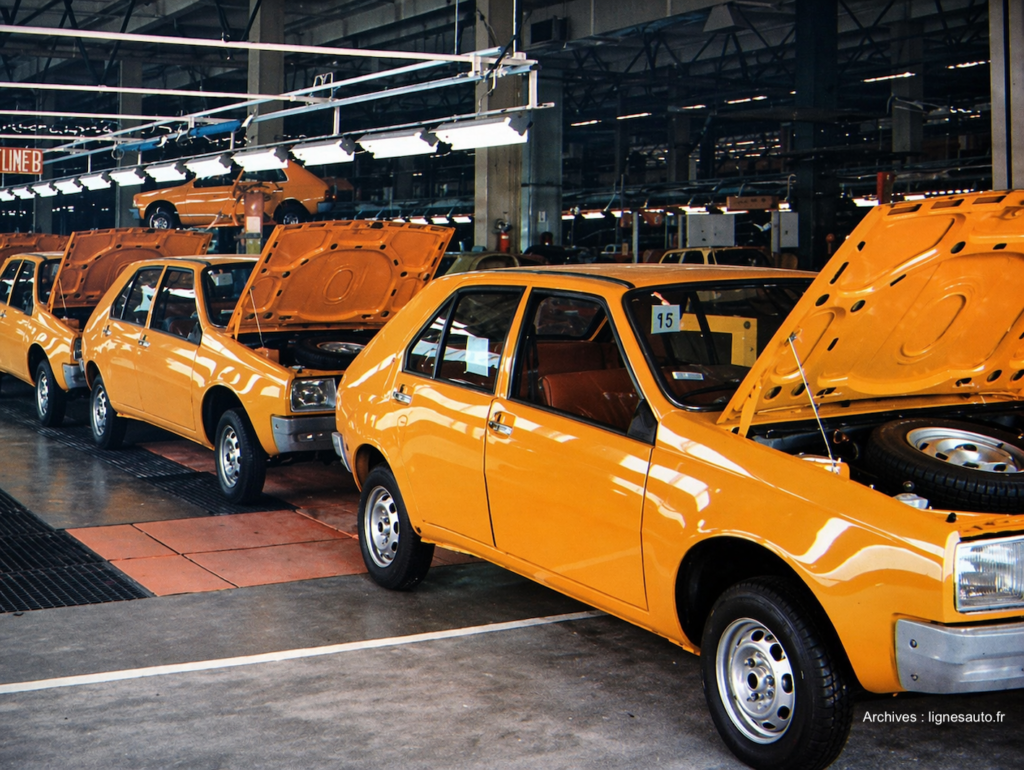
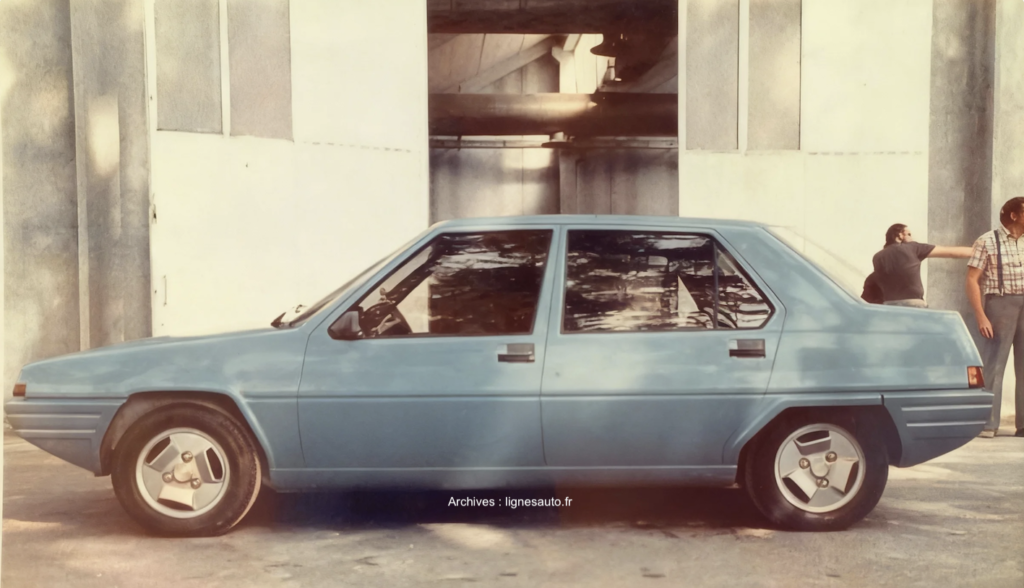
The dealership network didn’t help matters, preferring to sell the Renault 12 rather than this Peugeot-powered 14. Production of the R14 would reach nearly a million units. It was replaced by the Renault 9 in 1981, joined two years later by the Renault 11, both of which were far more conventional. Below is Marcello Gandini’s design for the Renault 9 from 1978, photographed in front of Bertone’s workshops. But that’s another story…
The author would like to thank Robert Broyer once again. Thanks to the Juchet family for making their archives available. Thanks to Renault for some of the photos published here. As these archives can sometimes take a long time to access, if you do use them, please be so kind as to cite the sources and lignesauto.fr.