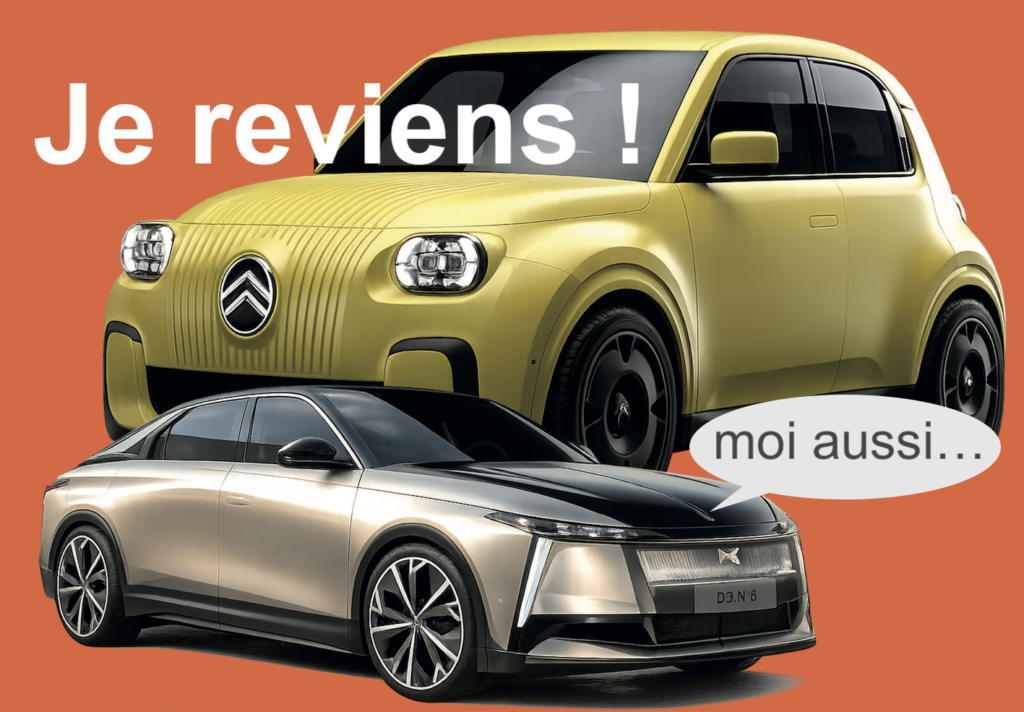
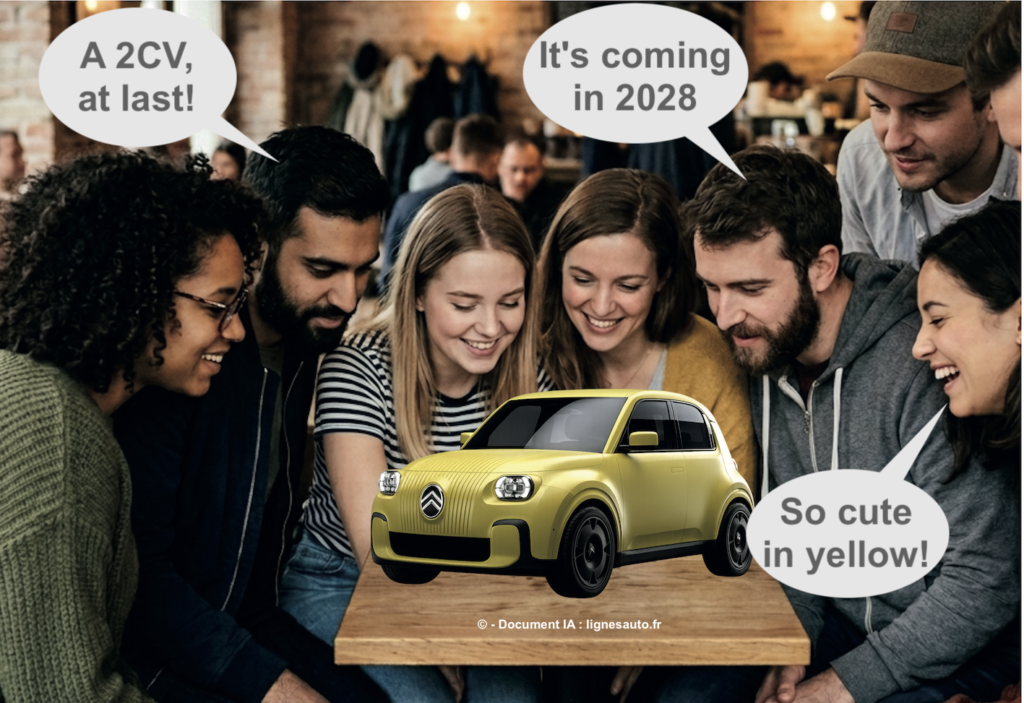
On Thursday, May 21, Stellantis announced that the DS Automobiles brand would be “led” by Citroën. The DS lineup is thus returning to the Citroën fold. We will examine later the implications of this “daughter returning to her mother’s home” after ten years of independence. The next day, Friday, May 22, Citroën confirmed the return of the 2CV in 2028 at a price under €15,000. With DS and the 2CV announced just 24 hours apart, Citroën is reclaiming the glory of the 1950s—an era defined by a lineup led by these two icons.
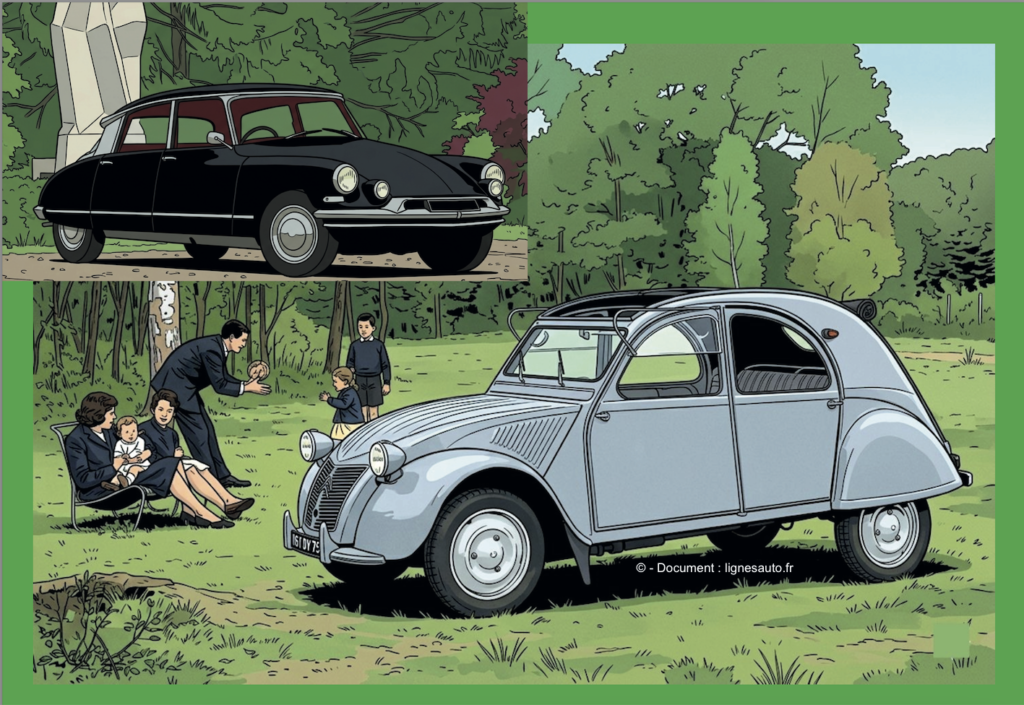
That was when Pierre Bercot, the CEO at the time mentioned below, did not hesitate to write in his book that “it was enough, and that an average car (between the 2CV and the DS, Ed.) was nothing more than a simplistic mass-market model. Why should all manufacturers produce the same car when, for example, Citroën is unable to meet the demand for the two models (2CV and DS, NDA) we have chosen and where we still have a clear path…”

75 years later, and in just two days, the brand’s latest developments have taken on a touch of history. But of course, the context is light-years away from that of the 1950s. Citroën hasn’t been acting alone for quite some time now: PSA in 1974–1976 with Peugeot, Stellantis in 2021 with… 13 sister brands that are nonetheless competitors. Since May 21 and the restructuring of the Stellantis galaxy finalized by Antonio Filosa, let’s try to understand where the double-chevron brand now stands within this galaxy.
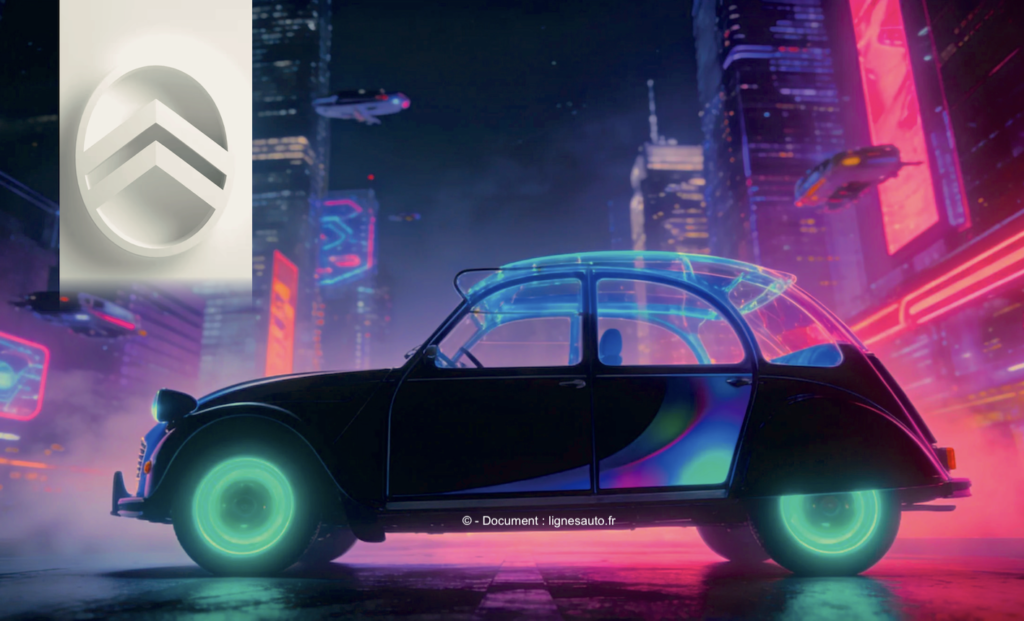
We don’t have any official answers yet, as the announcement is still fresh for all Stellantis brands, whether in the United States or Europe. But the landscape has truly changed, and there will now be a “before May 21” and an “after.” It remains to be seen whether the French brand will benefit from this new group architecture. The answers provided are based on factual information. They offer a glimpse into the new chapter for one of Stellantis’ most exciting European brands.
QUESTION #1
Where does Citroën stand now following the restructuring of the Stellantis group on May 21, 2026?
Let’s be honest: not in the best spot! But there’s an undeniable logic behind the new “organization chart” for the group’s brands. Antonio Filosa, who succeeded Carlos Tavares in 2025, decided to break away from the group’s 14 brands being treated as equals—a status that was merely nominal. Until then, the brands fit into very conventional categories, such as the Premium division, with Alfa Romeo, DS Automobiles, and Lancia, or the mainstream division, with Citroën and Fiat, while Peugeot aimed to move upmarket. Opel occupied a position between the two French brands. From now on, the importance of the brands is determined by their geographic reach and commercial weight: Peugeot, Jeep, RAM, and Fiat are the group’s four pillars.
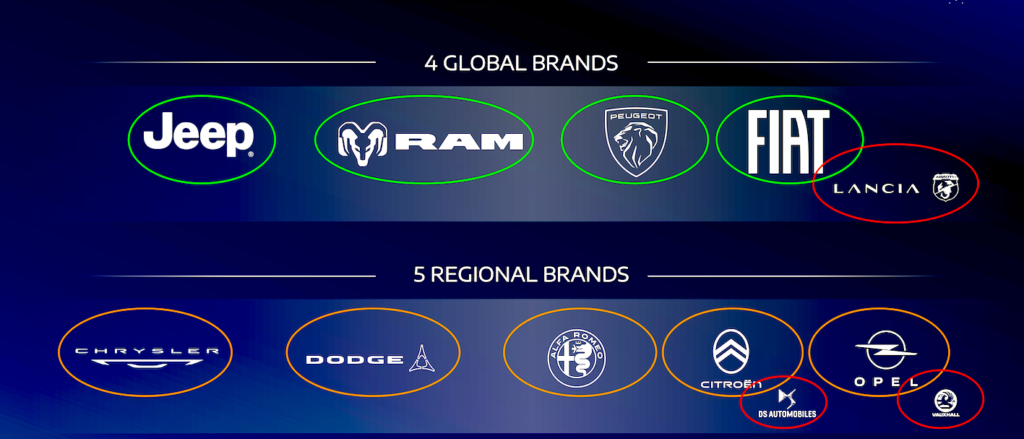
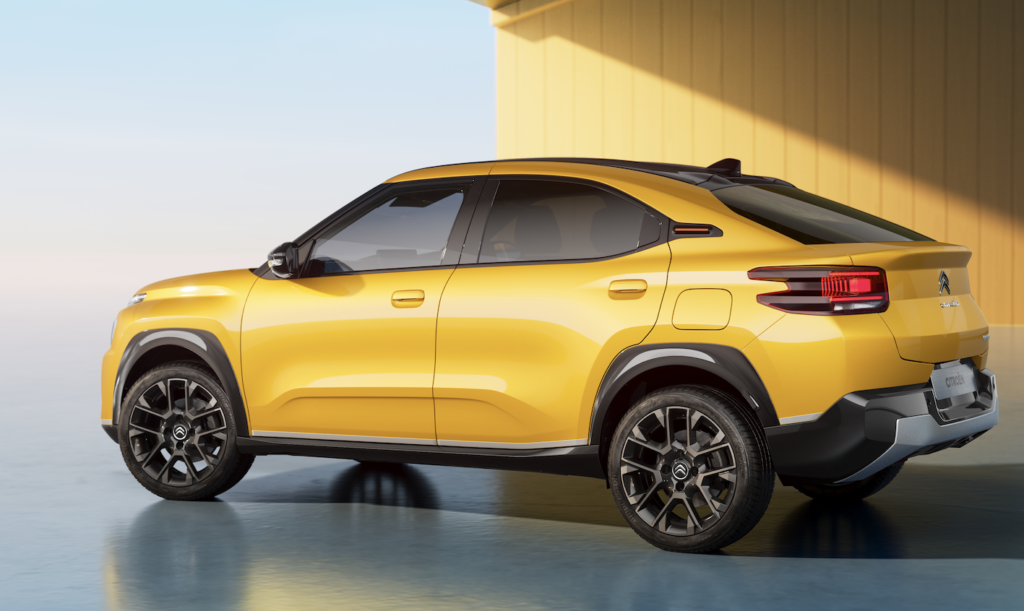
Stellantis is banking on these four global brands, which offer the greatest potential in terms of volume and profitability. Peugeot, because it is setting out to reclaim the Chinese market in partnership with Dongfeng*, and Fiat, because it has a presence in Latin America. Citroën has now been relegated to the bottom shelf, as a so-called regional brand. There, it sits alongside Chrysler, Dodge, Alfa Romeo, and Opel. Yet Citroën is also present in Latin America (see the Citroën Basalt below). So why Fiat? Well, the numbers speak for themselves: Fiat dwarfs the French brand in terms of volume. In fact, Fiat ranks ahead of ALL its cousins in the Stellantis galaxy, with just over 1.2 million models sold in 2024. Mainly… in Latin America.
*Stellantis is ushering in a new era of cooperation within the China-based DPCA joint venture to produce two Peugeot models and two Jeep models for the Chinese market and other regions
Citroën will therefore not be part of the group of four brands that will receive 70% of Stellantis’s investments in brands and products. “The five regional brands—Chrysler, Dodge, Citroën, Opel, and Alfa Romeo—will benefit from the same technologies and will emphasize their differentiation in order to better meet their customers’ expectations.” One thing is certain: the carry-over approach — which involves reusing many structural, mechanical, and other components — still has a bright future ahead of it.
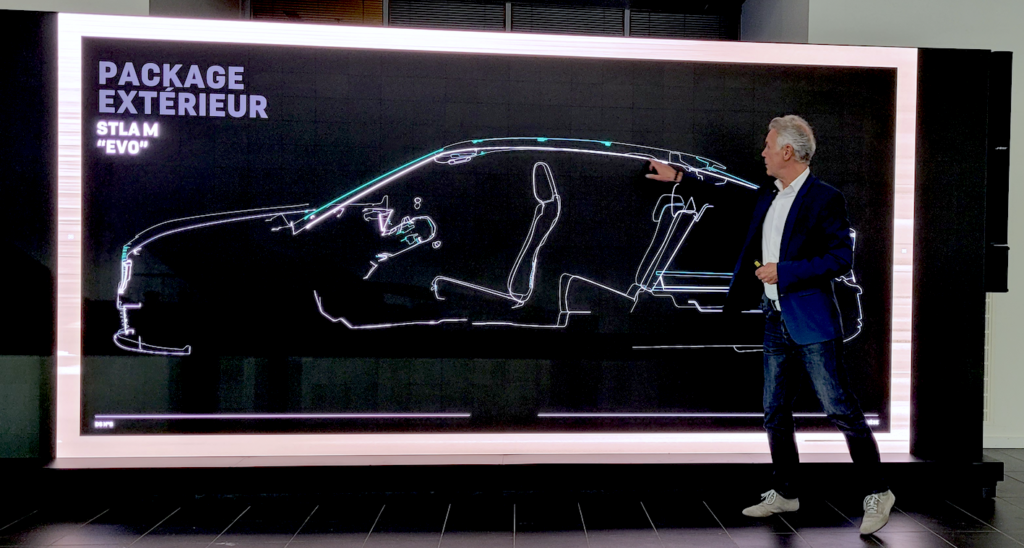
A Stellantis designer who has since left the group told me that “the scope for differentiation was quite limited and it was getting complicated. But it’s the same for all the major multi-brand groups, starting with Volkswagen. We may have gone too far with certain body styles. Initially, we had a classic, logical carry-over defined by the platform. Then we had to factor in the constraints of the structural hard points—the windshield, the side windows, the front doors… The problem was that the economic constraints were such that we had to go through with it.”
QUESTION #2
Is the return of the 2CV with the 2028 E-Car great news for Citroën?
Yes, of course, since Citroën is returning to what is still known today as the A-segment—the small car segment. Like all manufacturers on the Old Continent, Citroën has benefited from new European regulations for electric cars that are simpler and less expensive to produce: these are the M1E vehicles, which fall between quadricycles and automobiles. The irony of the story in Europe is that the PSA Group (before becoming Stellantis) was one of the segment A’s main competitors. In 2009, Citroën unveiled the DS Inside concept for the future DS3—a highly customizable, premium model. And thus more expensive and profitable. But it didn’t replace the previous model, the small, affordable, and charming C2. Then PSA dropped its Citroën C1 and Peugeot 107/108 models, which were produced jointly with Toyota.
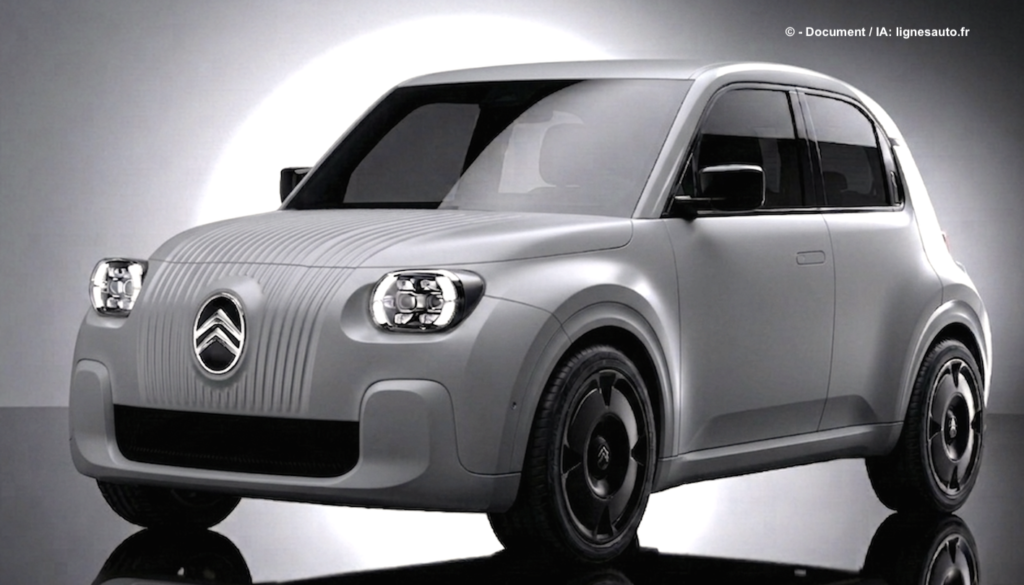
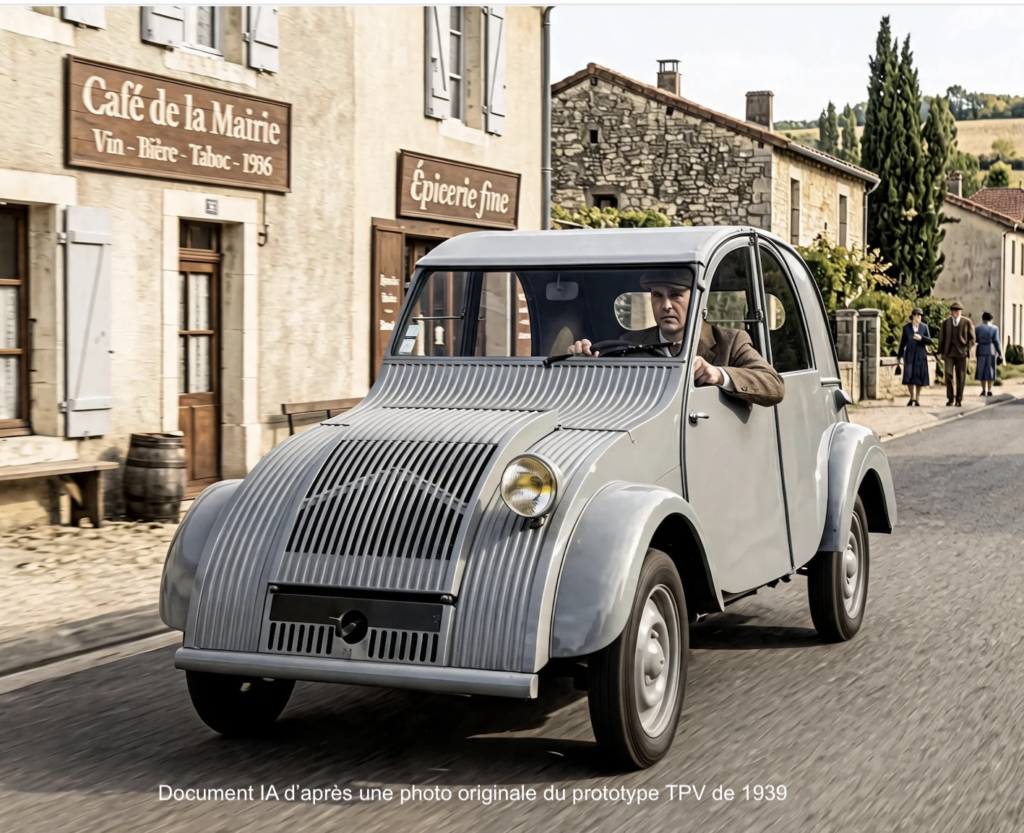
It’s a shame, especially when you consider that Renault, for its part, stuck with its Twingo. This left the field wide open for the competition. That’s how Citroën, after discontinuing the C1, found itself without an entry-level model in its lineup. The company was very late to the game with the recent C3 and its e-C3 variant, which has a short range. The E-Car project will therefore be welcome. And what stands out from the first press release announcing the 2CV is this sentence: “True to Citroën’s DNA, the ambition is clear: to imagine the icon of tomorrow while remaining faithful to the original specifications of the TPV that gave birth to the 2CV.” And we hope this refers to the “real” TPV, the one that gave rise to the 1939 2CV shown below and was never produced as is, but which pushed the concept of weight reduction and cost control to the extreme. Fireflies were even tested for a time to serve as lighting!
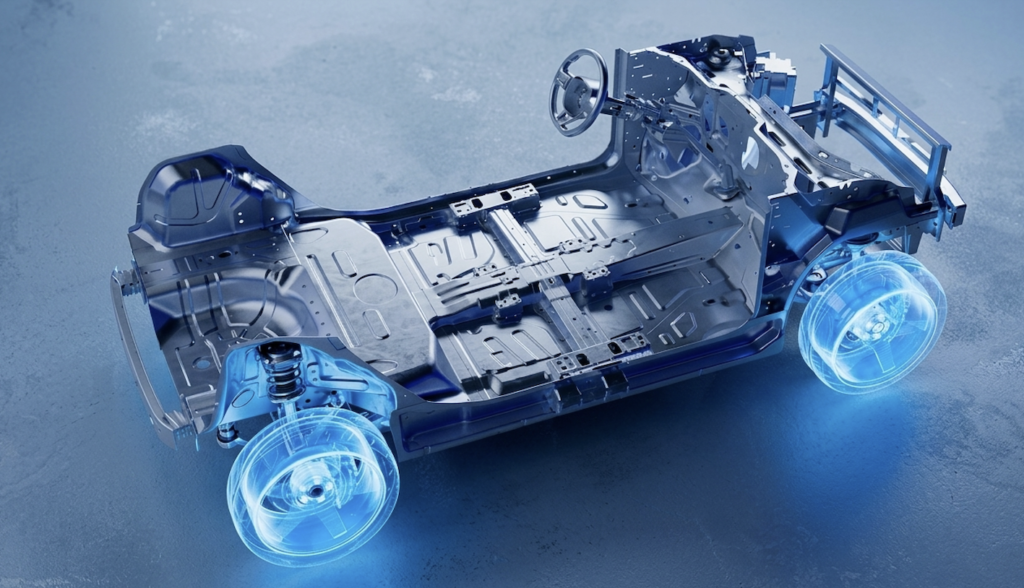
For now, no information has been leaked about the platform (below) on which the 2028 2CV will be based. This E-Car platform is reportedly not yet finalized, which we find hard to believe. Rumors point to Leapmotor’s platform. It makes perfect sense, but hasn’t been confirmed yet. Especially since the Citroën will be produced in Italy at the iconic Panda factory. And since the Panda has an inexpensive platform that can be converted into a 100% EV platform! You bet!
QUESTION #3
Is Citroën more of a competitor to Fiat than ever before with its upcoming E-Car 2CV?
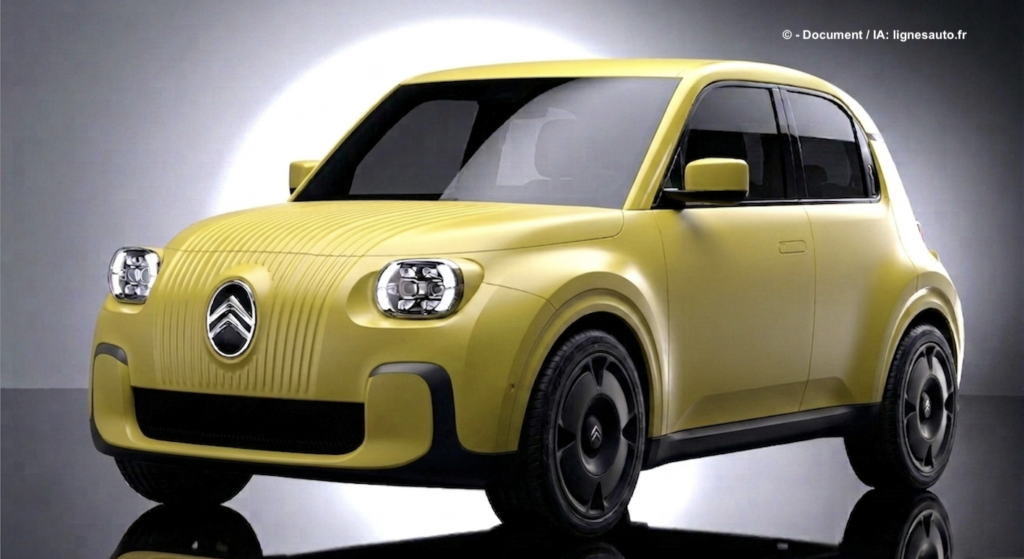
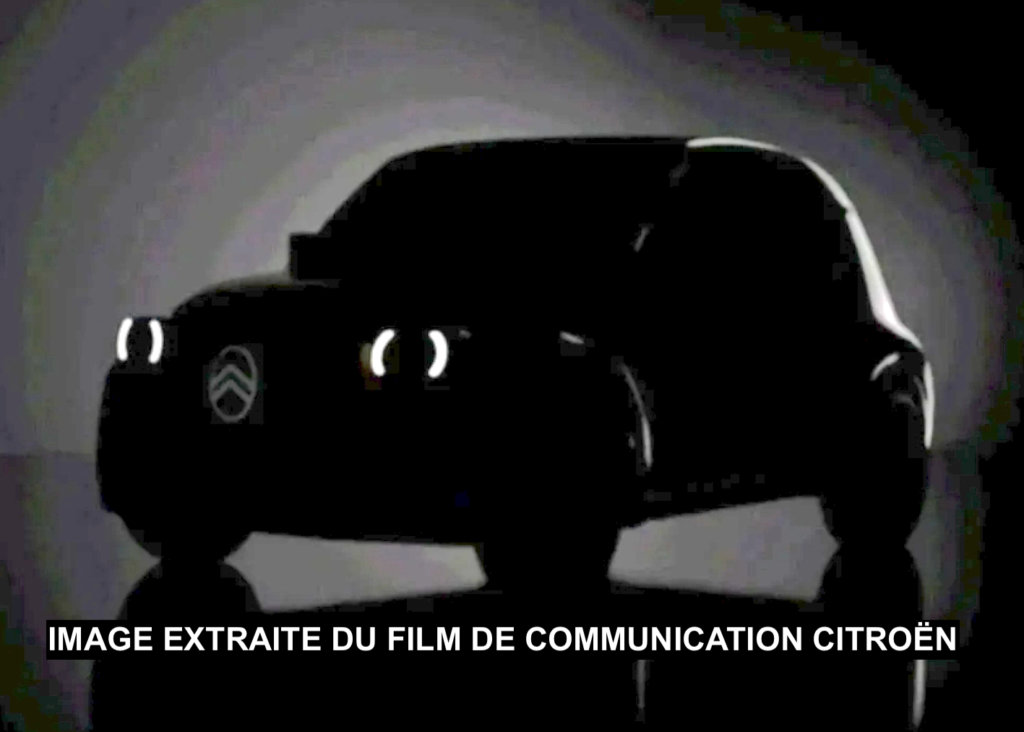
Citroën will obviously not be the only one to have “its own” E-Car. While the French automaker can count on a design that reinterprets the spirit of the 2CV, it won’t be available until 2028. But you’ll get a first glimpse of it at the Paris Motor Show in October. The illustration above is taken from a screenshot of Citroën’s (teaser) video presentation of the 2CV. Will this 2CV arrive before its rival, the Fiat Panda E-Car?
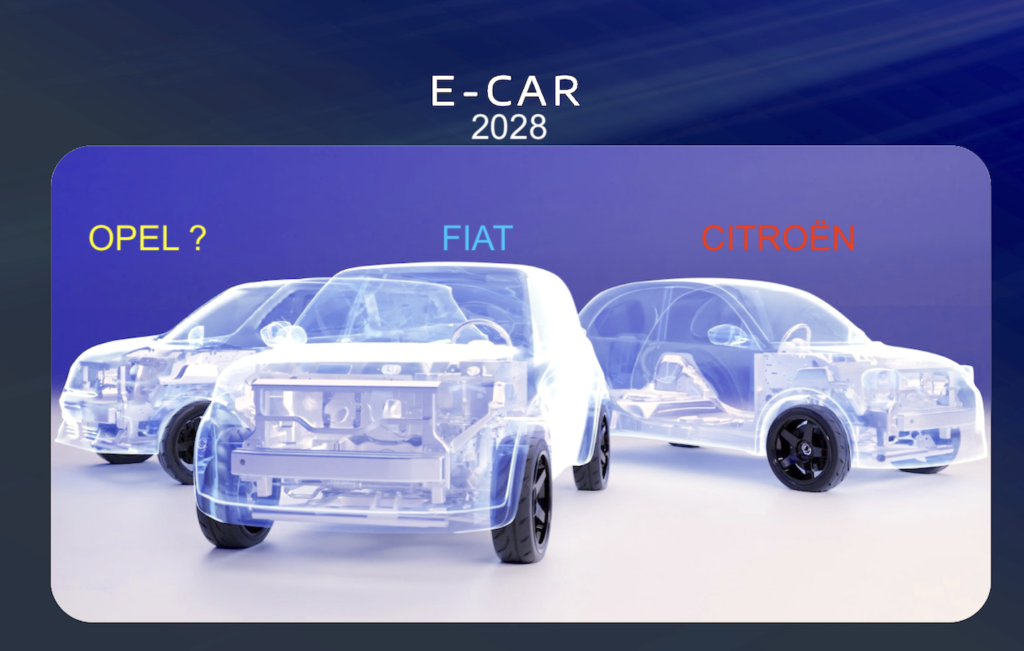
Yes, in principle, since the Fiat is slated for 2030. However, the press release on the brand reorganization—centered around the four pillars of RAM, Jeep, Peugeot, and Fiat—specifies that these brands must serve as “launchpads” (for technology, concepts, etc.). But it appears that this requirement applies only to Stellantis’ global projects…
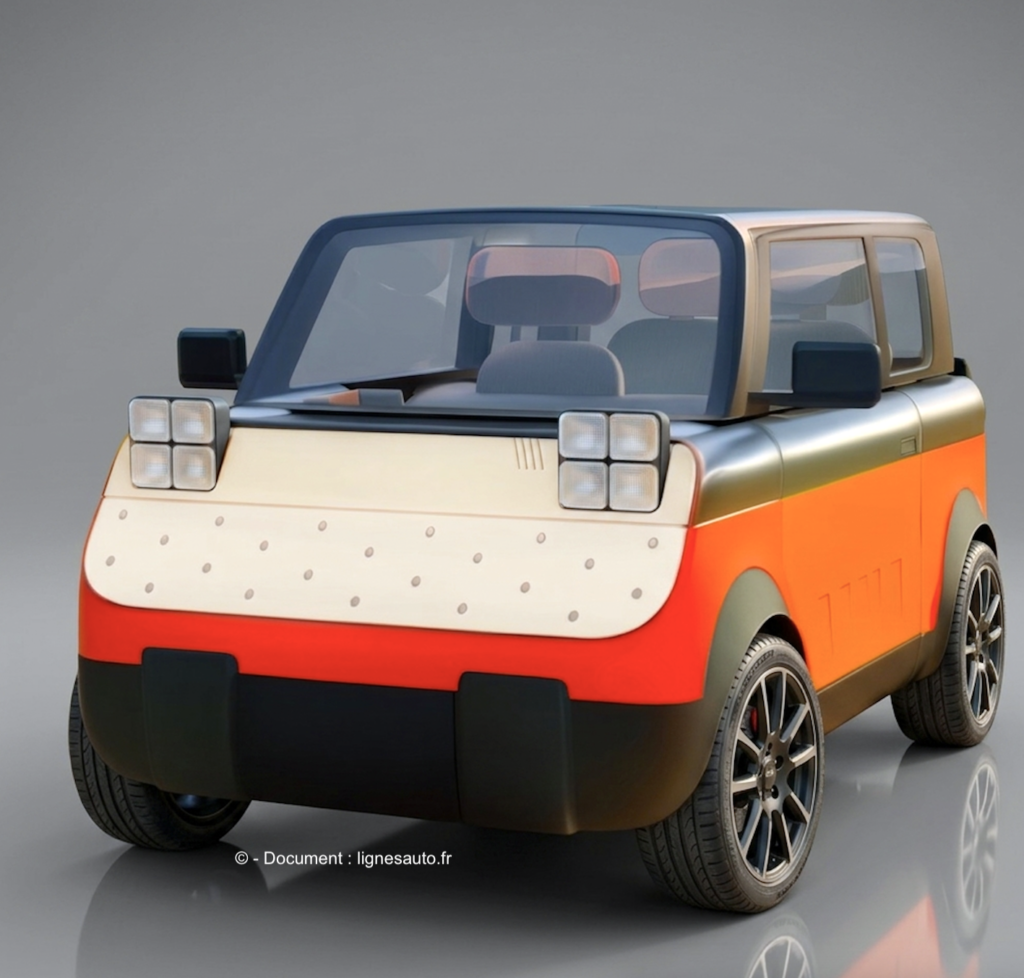
In that case, the Citroën 2CV—which is aimed exclusively at the European market—should be the first to hit the market. As for the Panda, the futuristic concept unveiled by Fiat above will be larger than shown in this illustration, conforming to the M1E regulation. This regulation allows for vehicles with a maximum length of 4.20 meters—longer than the current C3! E-Cars therefore remain true cars with no weight limit. But for them, hybridization—even mild—is out of the question, as they must be 100% electric and assembled in Europe.
QUESTION #4
Citroën will “oversee” the DS Automobiles brand. What does that mean?
For Citroën, Stellantis’ restructuring isn’t just about the future E-Car project. At the other end of the spectrum, DS is back in the spotlight! And this comes as a bit of a surprise—one that could be seen as… a heavy blow. Take a few seconds to put yourself in the shoes of Xavier Chardon, the current head of the Citroën brand, when he realized he was going to be steering DS Automobiles. A poisoned chalice or, on the contrary, a godsend? Xavier Chardon has so far done everything—and done it well—to reposition the brand, alongside his entire product, sales, marketing, and design teams, around key values: “positioning Citroën as a leader in accessible electric mobility, offering greater freedom of movement and more added value at an affordable price, while maintaining a strong identity and personality.”
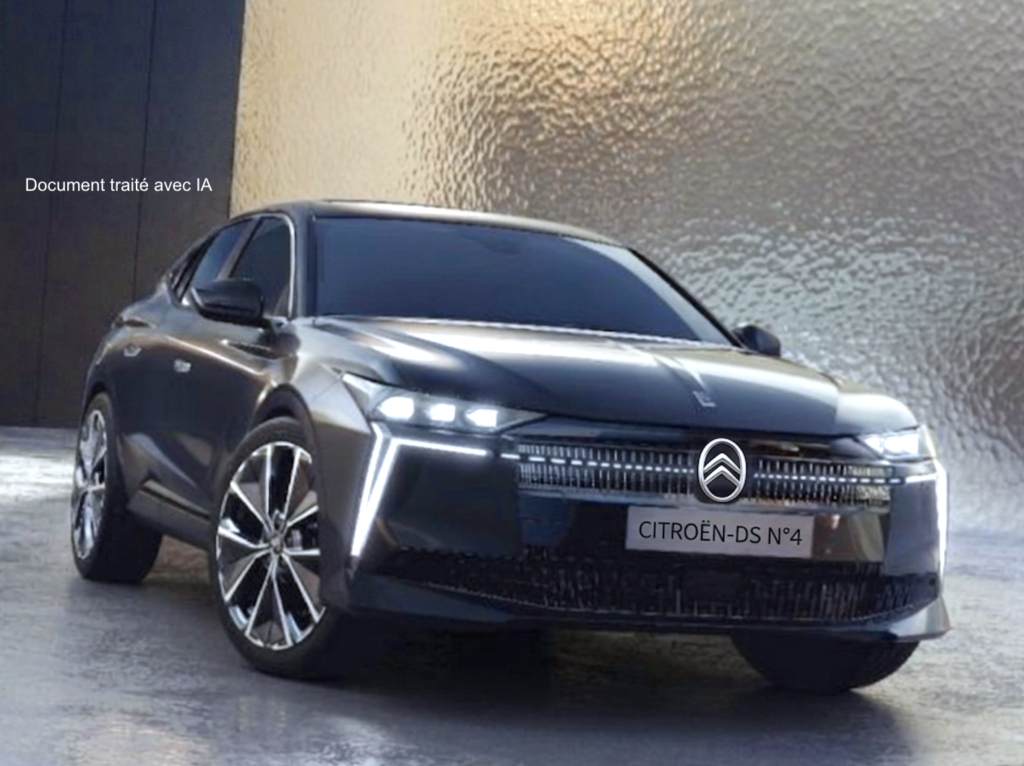
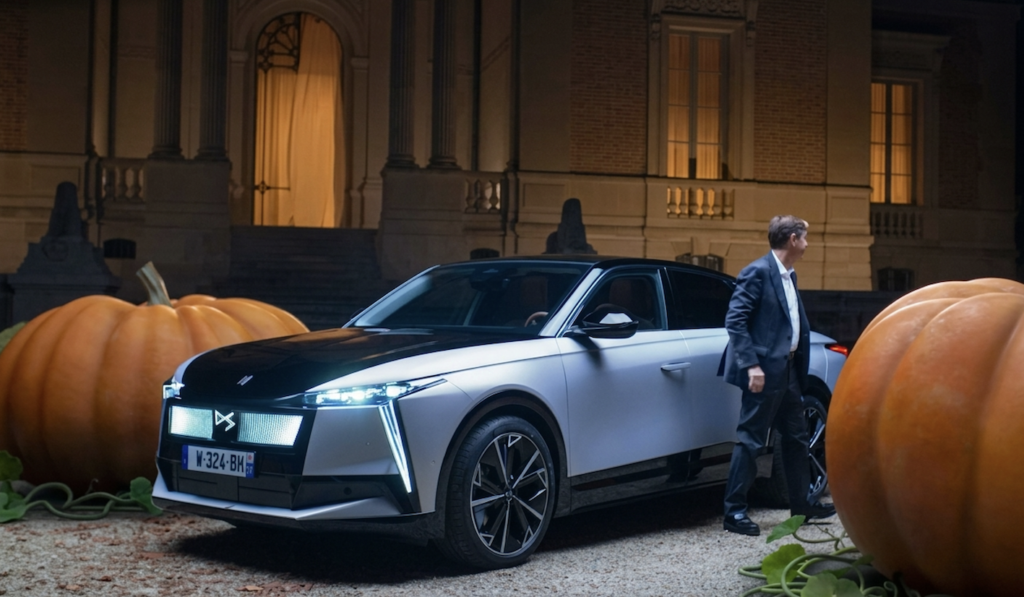
And now, as of May 21, 2026, Xavier Chardon must “steer” a brand that represents the exact opposite: the premium segment, even a sort of exclusivity and an extravagance—the term is not pejorative here—of French luxury. Are the two brands compatible? They will have to be, according to the wishes of Stellantis’s CEO. Should they keep two distinct logos, contrary to what we’re suggesting in the image above of the DS No. 4? Citroën might well find itself grappling with the same dilemma it faced when deciding where to place the DS logo—and the Citroën logo—on the first DS models (3, 4, and 5). This continued all the way up to the 2012 DS No. 9 concept car, the last Citroën in the DS lineup to feature both logos before the DS line became a brand in 2014.
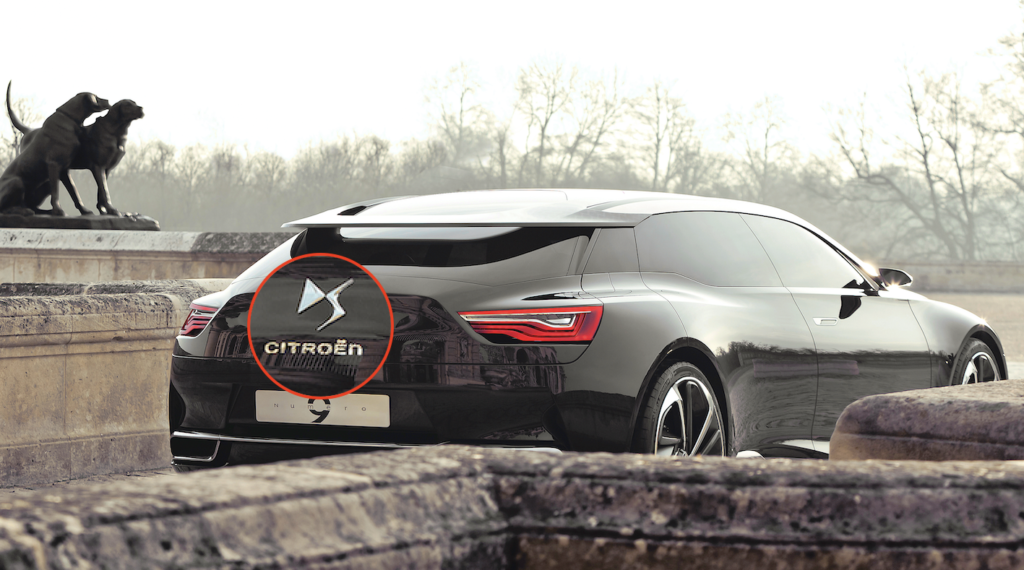
The head of design at Citroën at the time (Thierry Métroz, who would later become head of design at DS Automobiles) had created two grille designs for this prototype: one that was 100% DS and another that was 100% Citroën. Both were shipped to China, where the Citroën was unveiled in 2012. Question: What will become of the DS Automobiles design team? Will it move over to Citroën? And will its head, Thierry Métroz, follow suit or take the path of his friend of over thirty years, Jean-Pierre Ploué, who left the group last fall to pursue an active retirement? And what about Xavier Peugeot, head of the DS Automobiles brand, and all his teams and sales staff who had the pleasure of marketing products in dedicated, cozy showrooms?
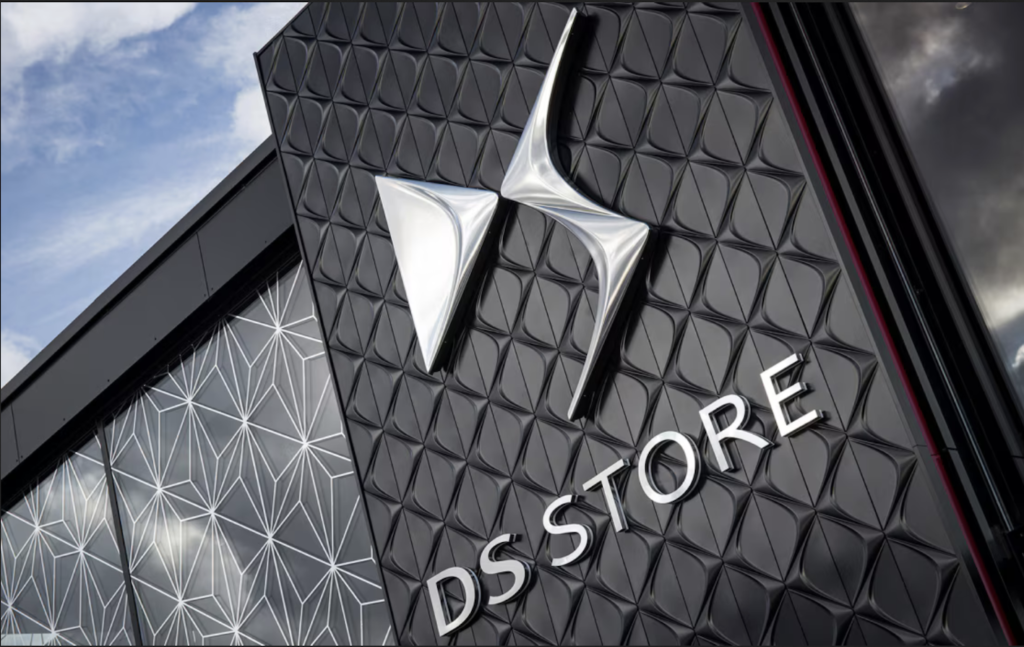
These questions remain unanswered for now, but the reorganization should move quickly. DS Automobiles is “led” by Citroën. The same will be true for Abarth and Lancia, both of which are led by Fiat. If Citroën, a so-called “regional” brand, has already been demoted in the hierarchy under its parent company Peugeot (this is just a metaphor; I don’t want to reignite the Peugeot/Citroën rivalry from the mid-1970s at PSA…), what will become of DS Automobiles, whose FaSTLAne 2030plan doesn’t even mention the product lineup!?
QUESTION #5
Will Citroën benefit from the shorter development time for new projects mandated by the new organization?
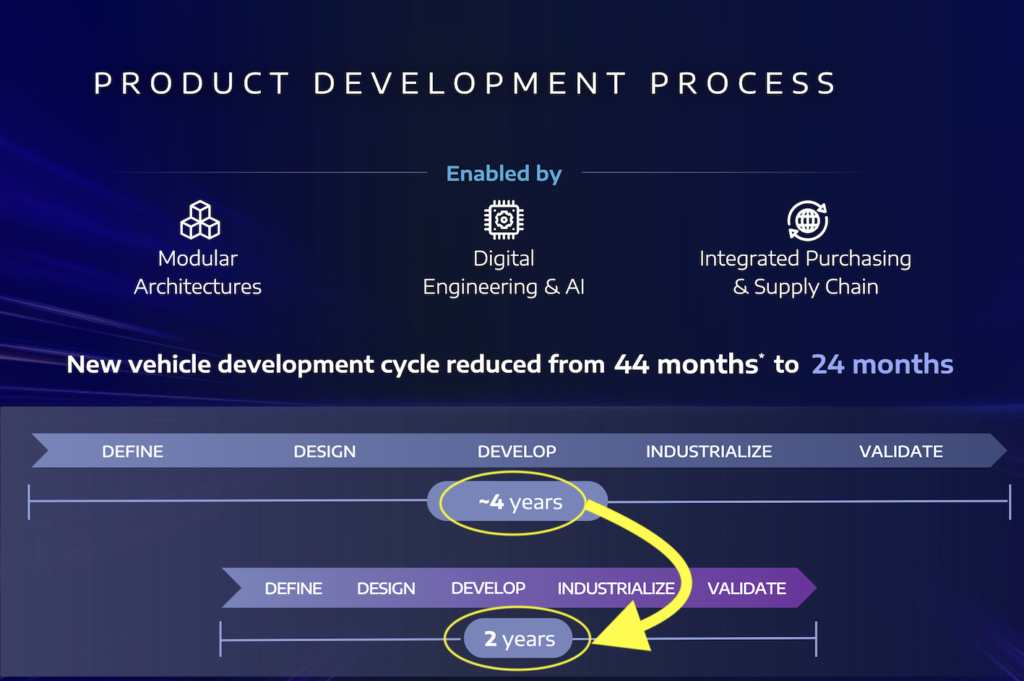
Here’s some great news announced at the May 21 conference: Thanks to its new STLA One platform, new AI tools, and partnerships, Stellantis aims to reduce its vehicle development cycle from approximately 44 months to two years. Take this figure with a grain of salt, though, as it all depends on when you kick off a program: is it in the early stages (see here: https://lignesauto.fr/?p=44357) or when everything is finalized in terms of technology and design?
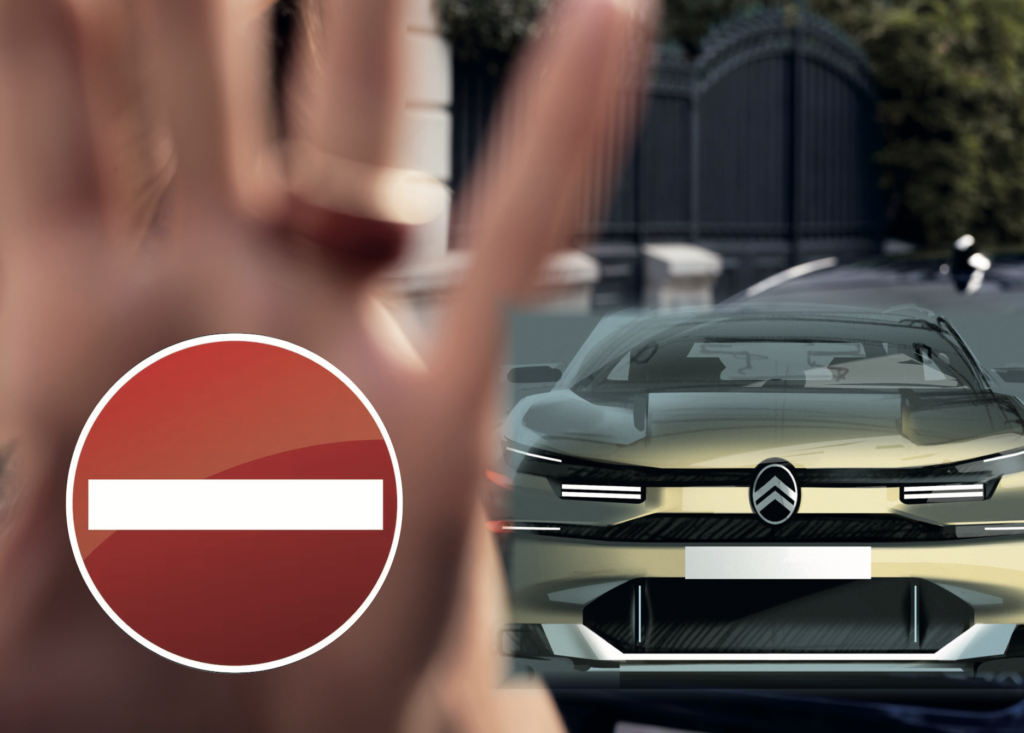
In any case, Citroën will obviously benefit from this development, especially since Citroën’s head of design, Pierre Leclercq, recently told us that “we have a project in our studios aimed at being the fastest in the group in terms of design.” He was no doubt referring to this 2CV project scheduled for release in… two years! Shortening development times, as is the case with all automotive groups, will allow each brand to improve its agility. And Citroën will undoubtedly have a few surprises in store. Let’s see if that’s possible with our final question.
QUESTION #6
What is Citroën’s product plan under its new structure within Stellantis?
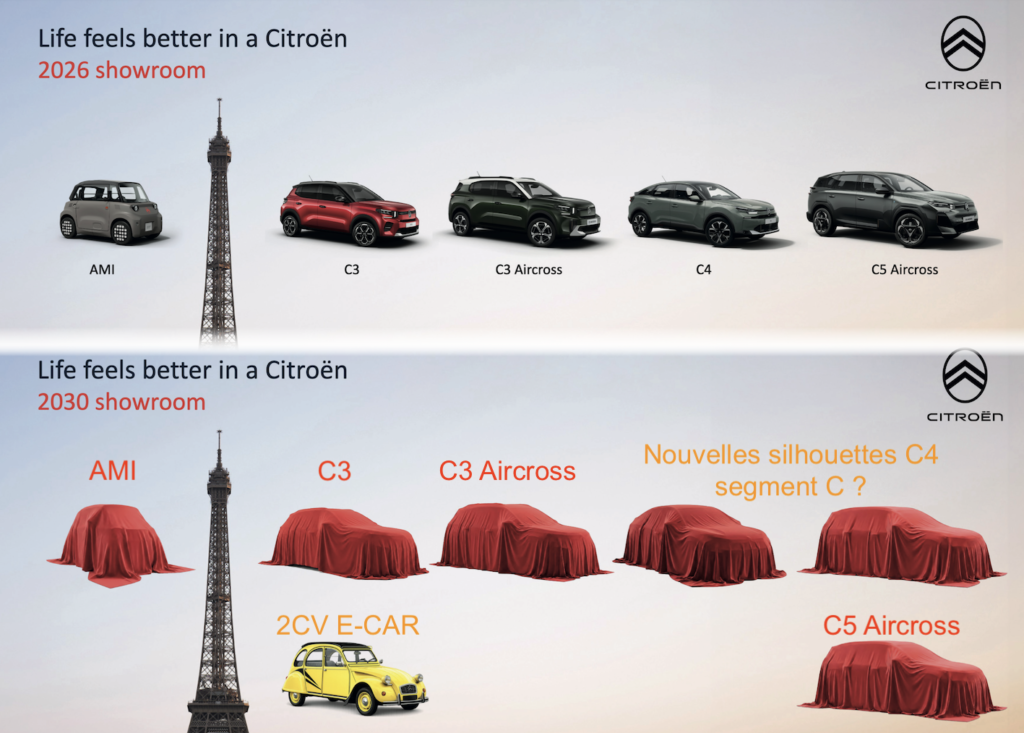
As hinted at above, the 2030 Citroën lineup will feature the all-electric 2CV and likely (to be confirmed, as it’s unofficial) two models in the C-segment. The sales potential of the C3 and C3 Aircross duo will obviously be prioritized — special editions on the horizon? — and the introduction of the 2CV at under €15,000, depending on its success, will allow the brand to push its C3 toward versions or variants with higher profitability than today’s models.
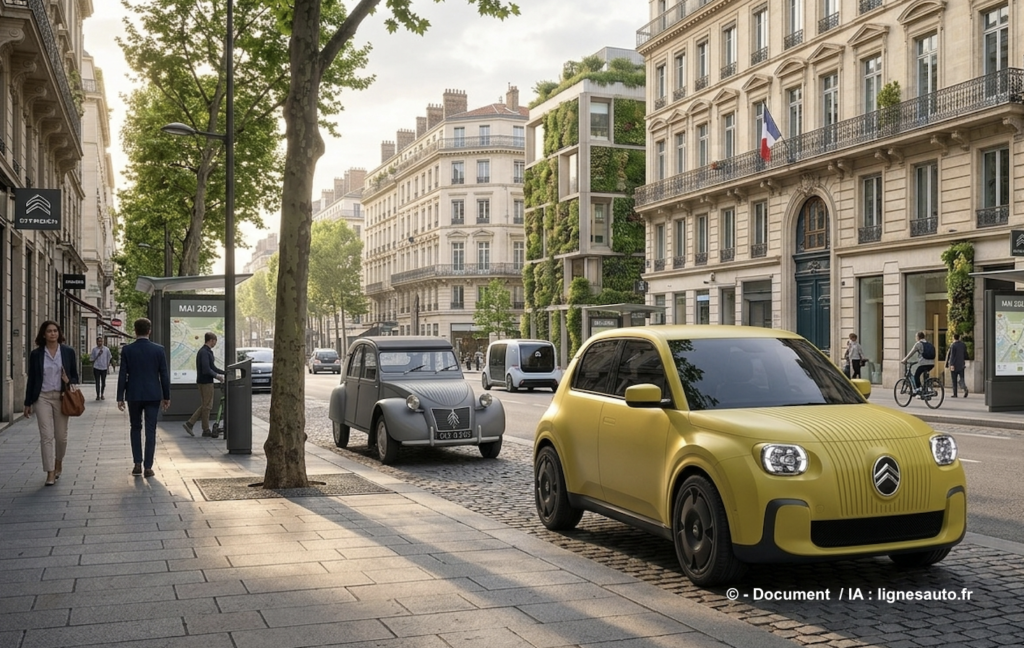
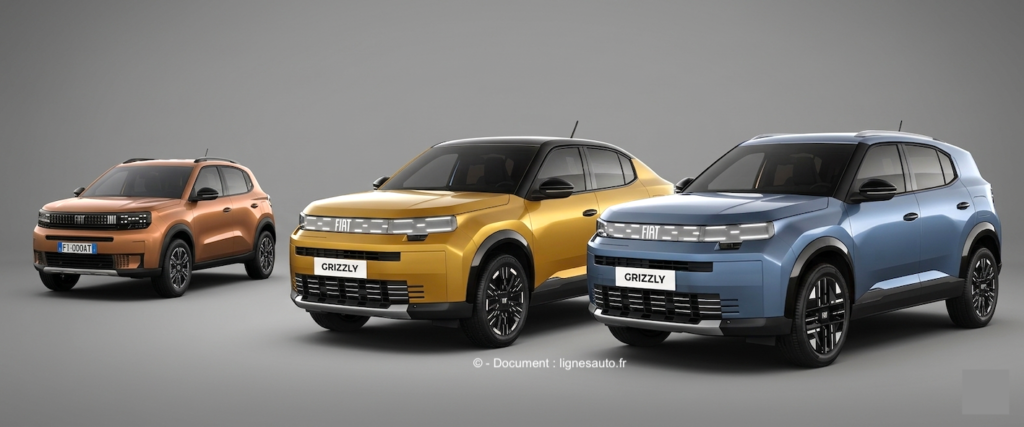
While Fiat will soon begin selling the Sportback version of its Grizzly (center, below) alongside the urban SUV variant, Citroën is reportedly still not authorized to sell its Basalt (which is also a type of C3 Sportback) in Europe, even though it is sold in Latin American countries.
One major question remains: what will become of the innovative ideas behind the Oli and Elo concept cars (below)? It’s easy to imagine that Citroën won’t miss out on the highly likely resurgence of the minivan concept, especially with the arrival of flatter battery packs that increase interior flexibility. But will Citroën be the first to bring this potential compact minivan to market?
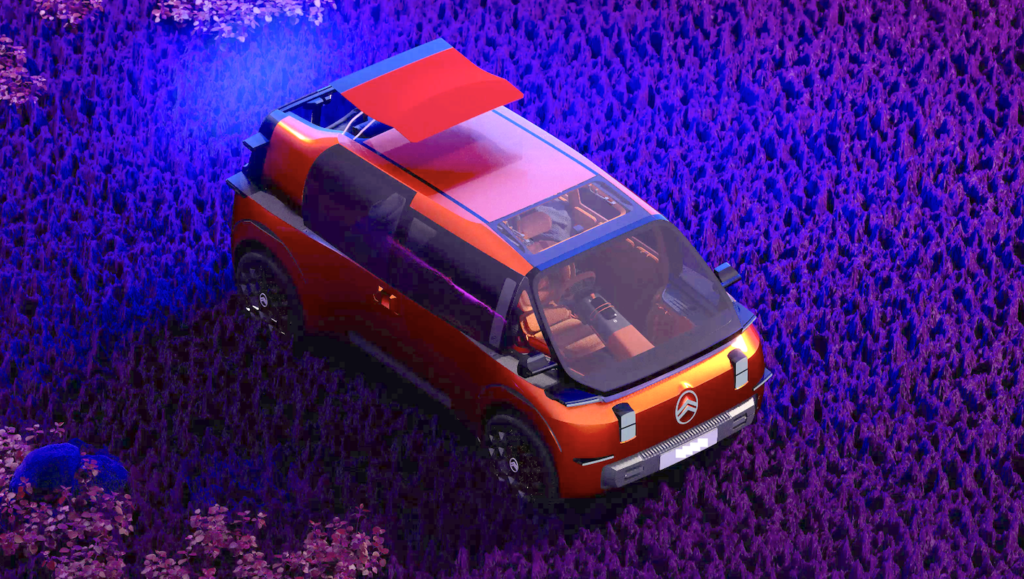
To quote the exact wording of the announcements made on Thursday, May 21, it states that the four multi-regional brands (Fiat, Peugeot, Jeep, and Ram) will be the natural first launchers of all new global programs and technologies. Will Fiat be the first in this segment of affordable minivans, or will the term “global program”—which does not apply to Citroën (given the European market for this type of vehicle)—allow the French brand to make its own moves as it sees fit?
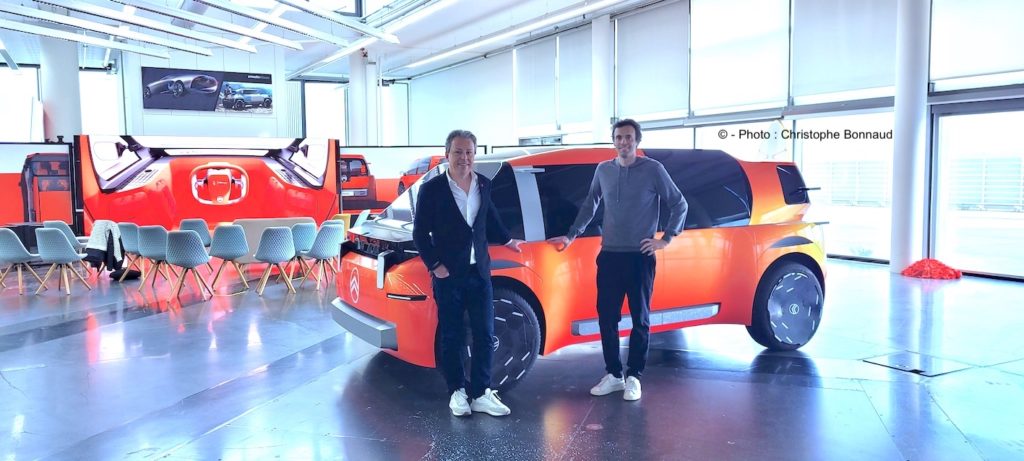
In conclusion, we are publishing below a chart presented on Thursday, May 21, during the conference, taken from the segment on the enlarged European market. It outlines the major launches planned for the next four years. Peugeot’s product lineup is the most extensive, as the Lion brand has fallen behind Renault due to the latter’s rapid refresh of the Clio and the success of the all-electric R5. The 208/2008 duo will arrive next year.
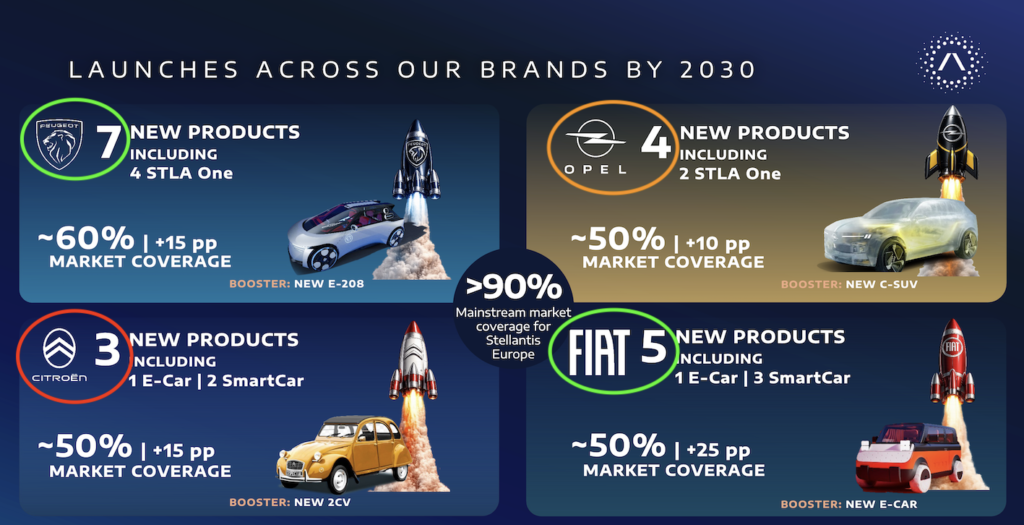
Fiat will complete its lineup with the two Grizzly models derived from the Grande Panda and based on the reimagined C3 Aircross concept. Opel will benefit from four new products during this period. And yet, the graphic for the German brand makes no mention of the E-Car, hence our legitimate question. Citroën is allocated three slots for products based on the Smart-car platform and the E-Car. Three, not one more… For now?
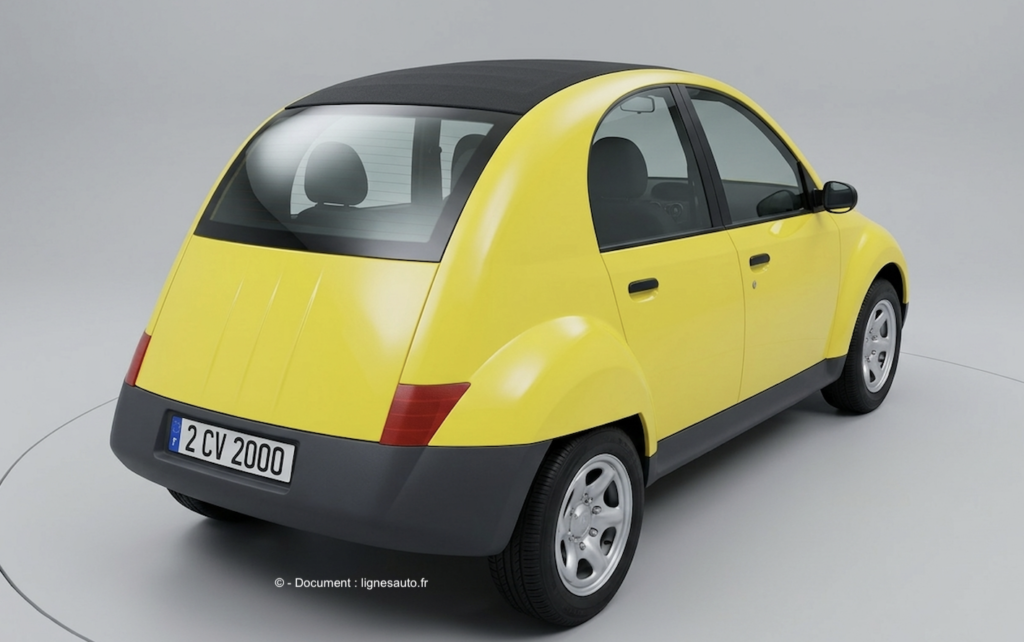
BONUS: The revival of the 2CV, conceived in 2000 by the Citroën design studio
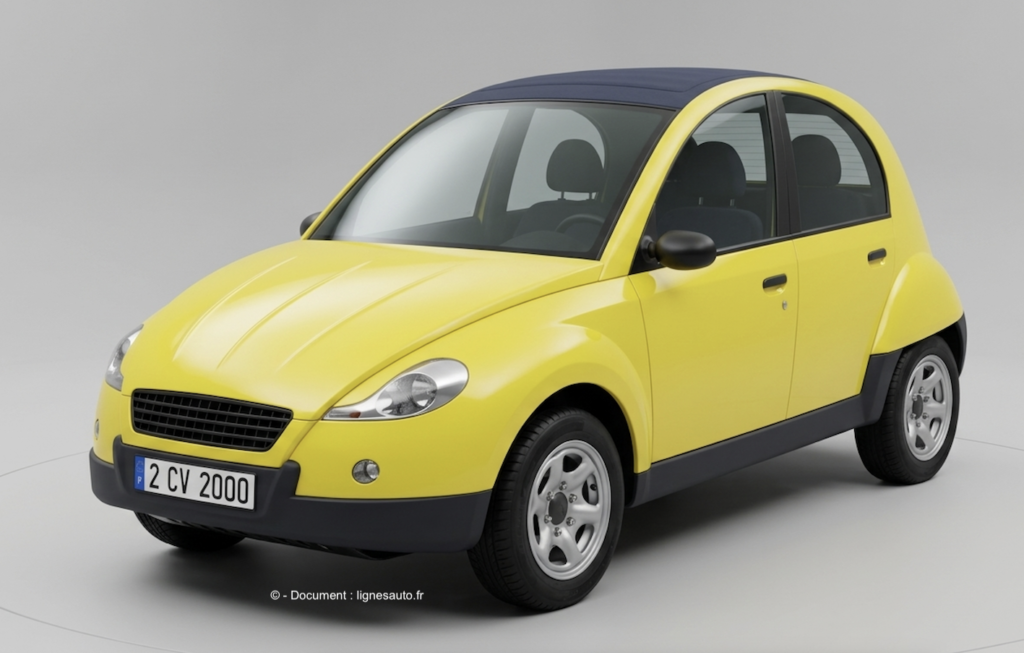
Just as Jean-Pierre PLoué had taken the helm of Citroën’s design department, the existing team—including Dan Abrasmson, Oleg Son, and Donato Coco—was working tirelessly: the 1998 C3 Lumière concept car, the 1999 C6 Lignage… Behind the scenes, the design team didn’t hesitate to defy boss Claude Satinet, who wouldn’t hear of retro design, and created a 2CV for the 2000s. Here it is painted in chick yellow, to make it less austere than its original gray. It was officially unveiled during Citroën’s centennial celebration in 2019 at La Ferté Vidame.