
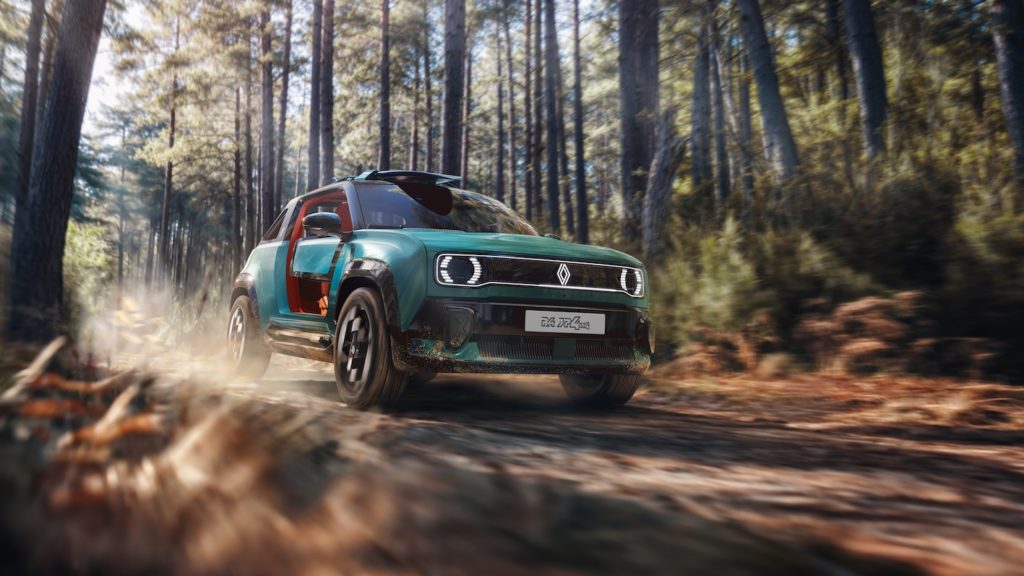
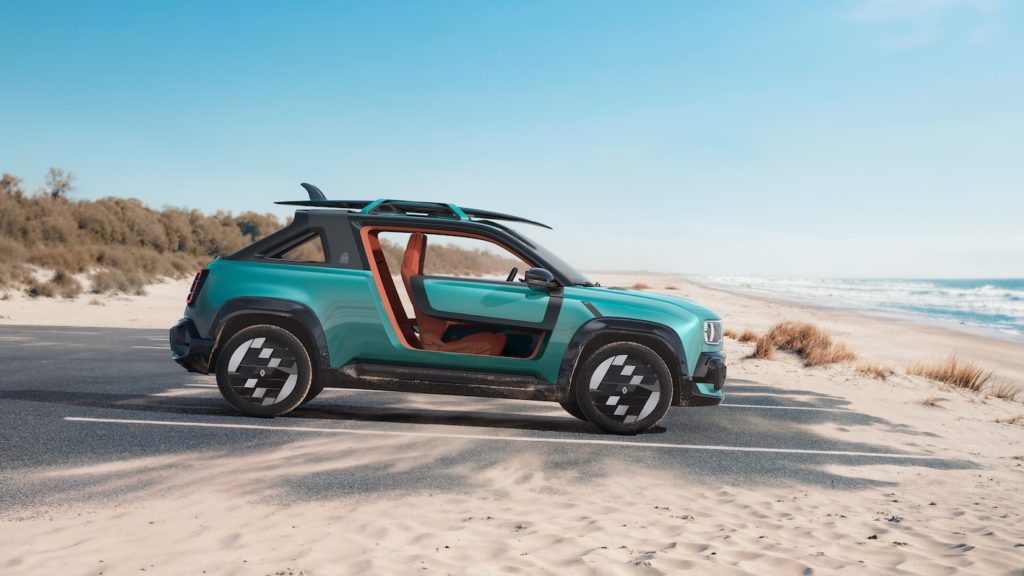
The Renault 4 JP4X4 is a concept car that certainly doesn’t hold back. It makes you want to delve into the archives of Renault and LIGNES/auto to rediscover the French manufacturer’s contemporary convertibles. The ones we know, the ones we’ve forgotten, and even some even more unusual ones. Around fifteen airy gems await you.
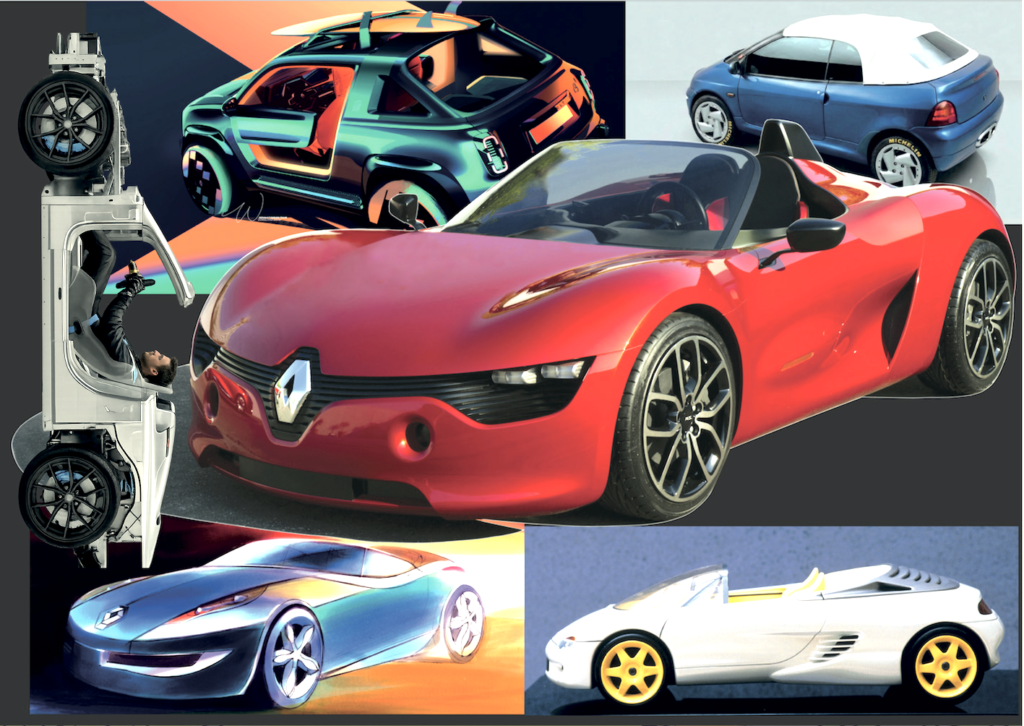
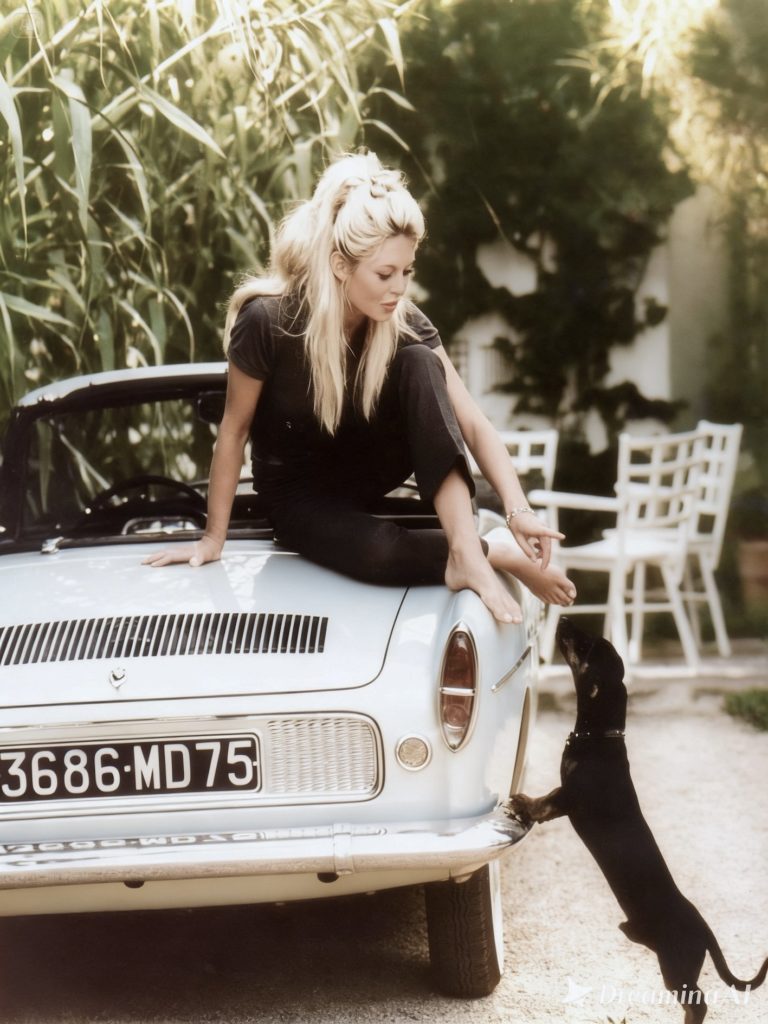
Any mention of Renault’s convertibles inevitably brings to mind the iconic photo of the late Brigitte Bardot and the Caravelle below, pictured here in 1959 in a Renault photograph. Yet it is fair to say that convertibles are not really part of the French brand’s DNA. Peugeot is more closely associated with this image of the iconic convertible. Nevertheless, Renault has no shortage of models and projects – some of them little-known – that have based their design on this open-top architecture!
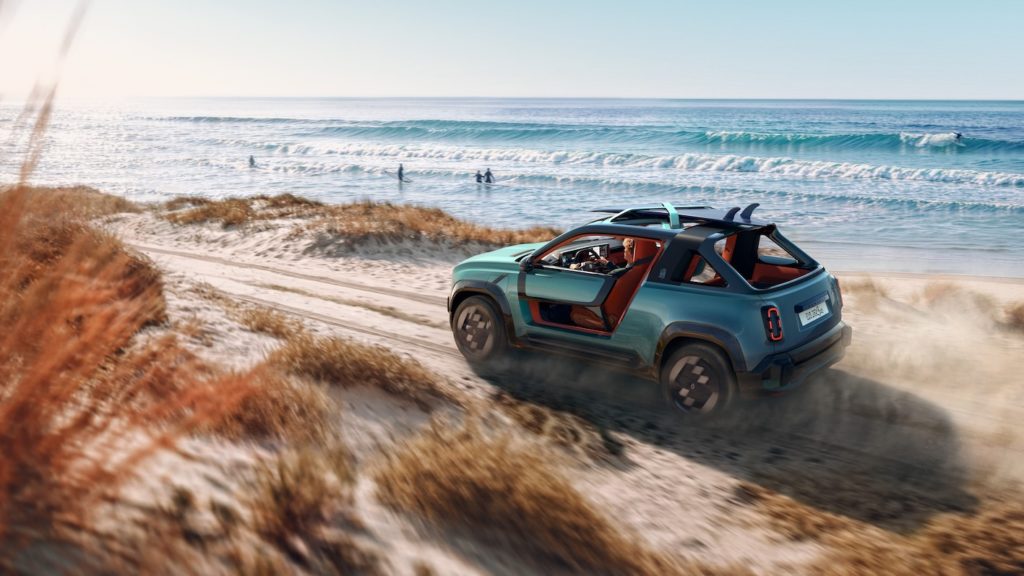
2026. The brand-new R4 JP4X4 concept car below proves this once again. The French manufacturer has already brought out a fully open-top Renault 4 Plein Air and is therefore in a perfectly legitimate position. However, it is not the latter that has been taken as a benchmark, but the R4 JP4, which was launched in 1981. The JP4 was created by the duo Patrick Fauchet and Gérard Maillard and produced by their own company, Car Système, from 1981 to 1990.
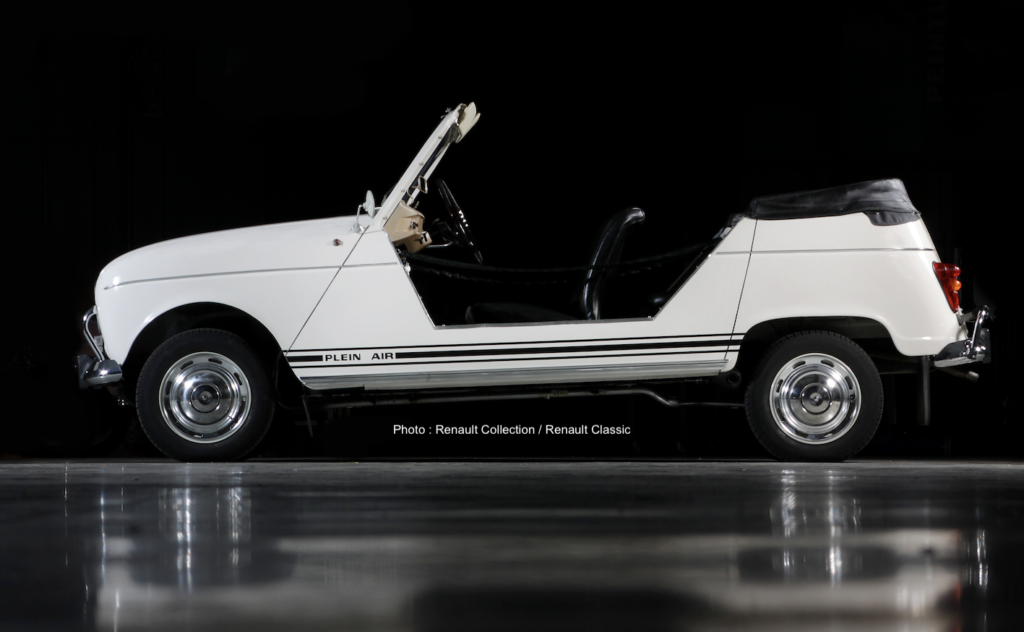
1968. Naturally, we cannot begin this brief look back at Renault’s convertibles without sharing the photo below of the R4 Plein Air, which could never be sold today. It fails to meet any of the strict crash-test standards. But it was launched in 1968, one day before a certain Citroën Méhari (!). 1968, a time when people smoked on planes, drove flat out on the roads whilst waiting for a decent motorway network to be built, and when seatbelts were simply not compulsory. We had to wait until 1973 for that. Seatbelts arrived alongside speed limits and, indeed, colour television in French homes…
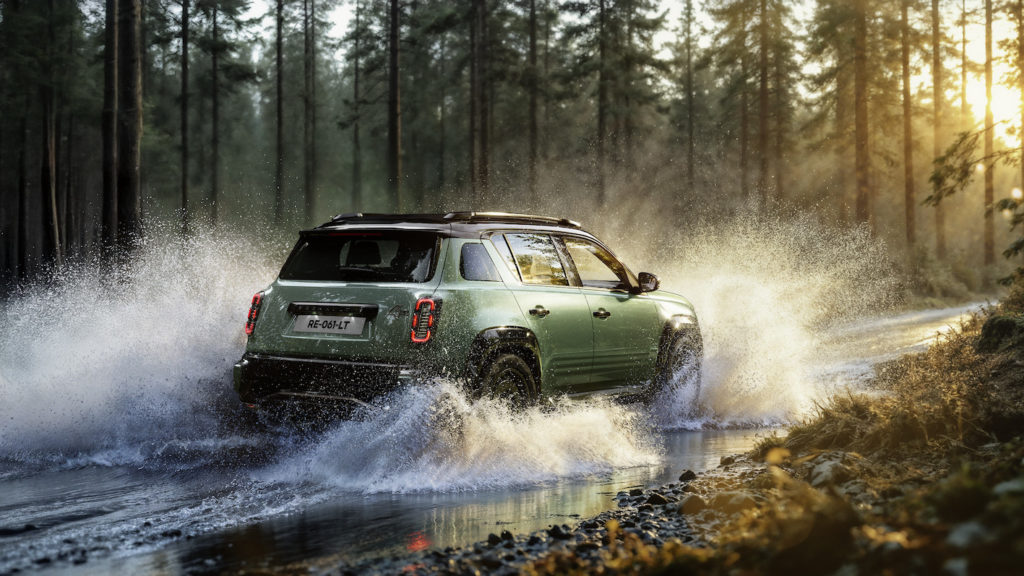
2025. A look back at the Renault 4 JP4X4 Concept: the French manufacturer clearly seems intent on bringing a 4×4 version of its model to market. It demonstrates this by unveiling the JP4x4 at the same venue – Roland Garros – exactly one year after its Savane concept car (pictured below). Next year, will Roland Garros be the setting for the unveiling of an R4 Van? Or will sales of the R4 stagnate and scupper all these plans? Let’s leave the R4 to its own devices and move on to its sisters, all of which are more or less airy…
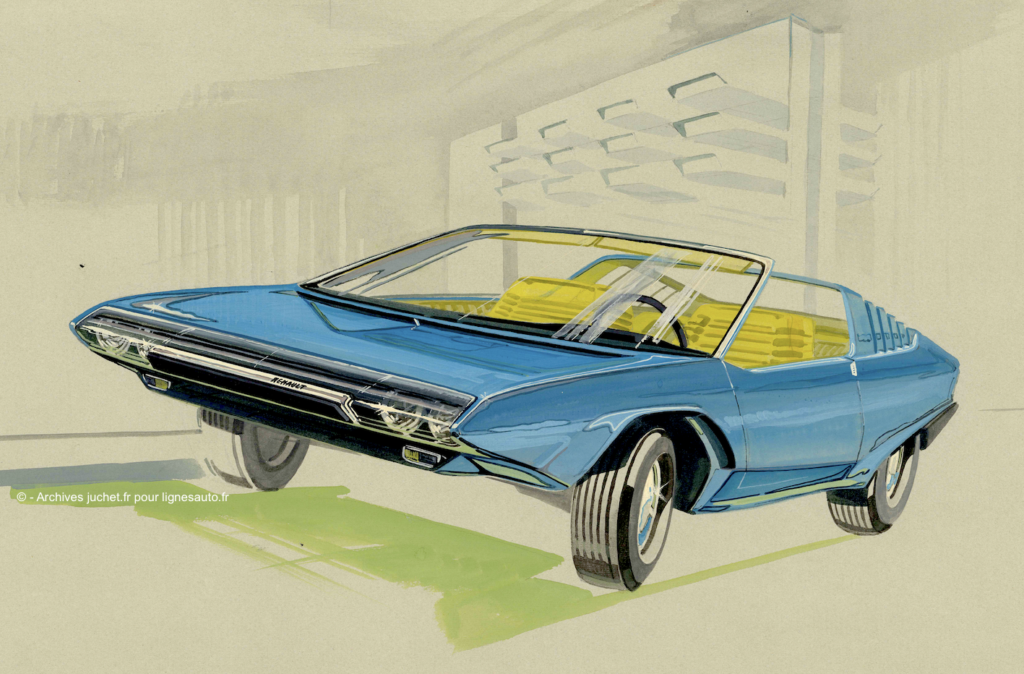
1967. Although the concept of convertibles did not always lead to concrete models in the range from the 1970s onwards, this was not for lack of attempts at some rather original and bold experiments. The head of design at the time, Gaston Juchet, worked on two projects during this period (mid-1960s to 1970s): the RAG (Renault Alpine Gordini) coupé/cabriolet and the Renault 15 and 17 duo. Despite his heavy workload, he painted the freehand sketch below on 29 October 1967. A foundation for the work that would lead him to the Renault 17.
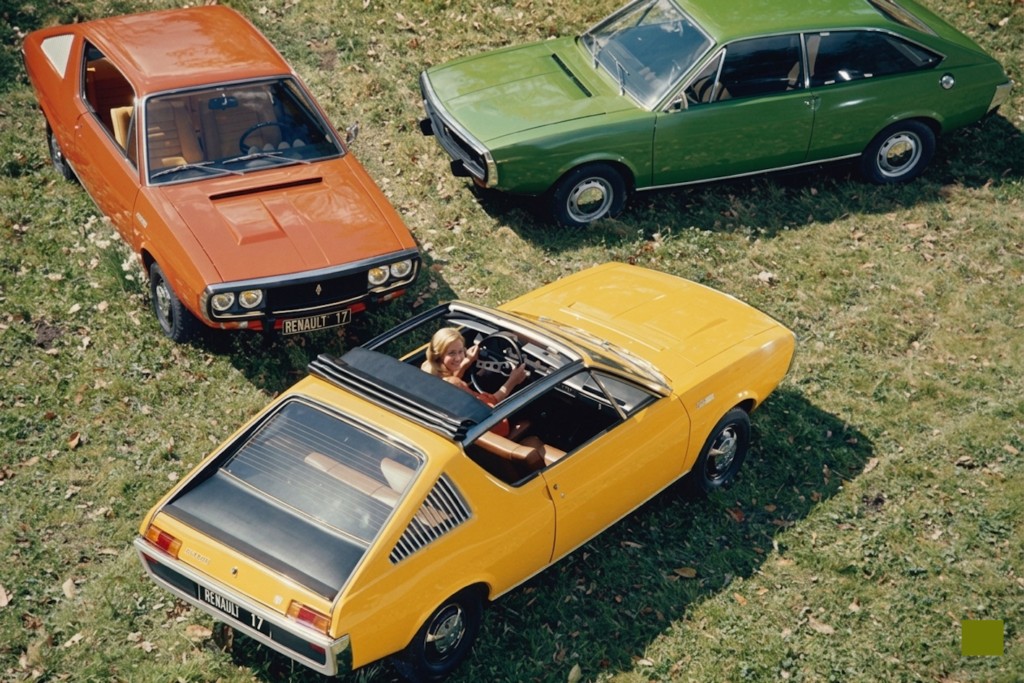
1971. Although not strictly considered a true convertible, the 1971 Renault 17 offered a rather well-designed open-top version featuring, for the winter months, a hardtop that fitted over the convertible’s sliding soft top; pictured below is the yellow model. With its fully retractable side windows, no B-pillar and a wide-open roof, this design is not unlike that of… the Renault Avantime!
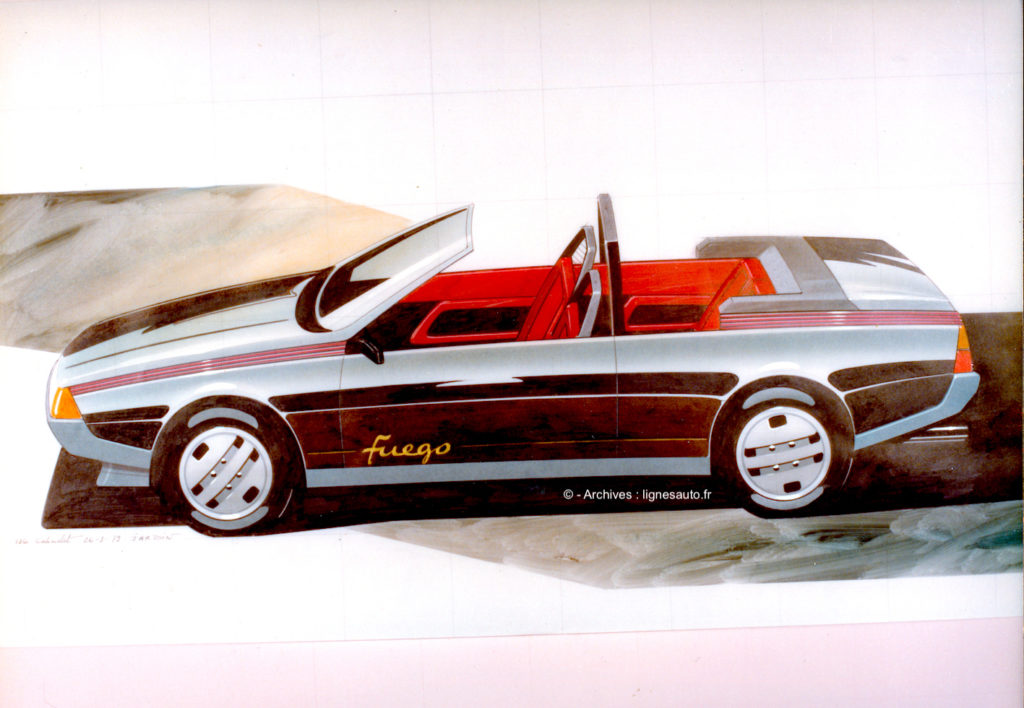
1980. Quite naturally, whilst the team led by Robert Opron was considering replacing the R15/R17 duo with the Renault Fuego, Michel Jardin, the car’s designer, put forward his own vision of a Fuego convertible, complete with a roll bar below. It is worth noting that the coachbuilder Heuliez produced its own convertible prototype, but this time without a roll bar. Neither Jardin’s official Renault convertible nor the French coachbuilder’s version ever saw the light of day.
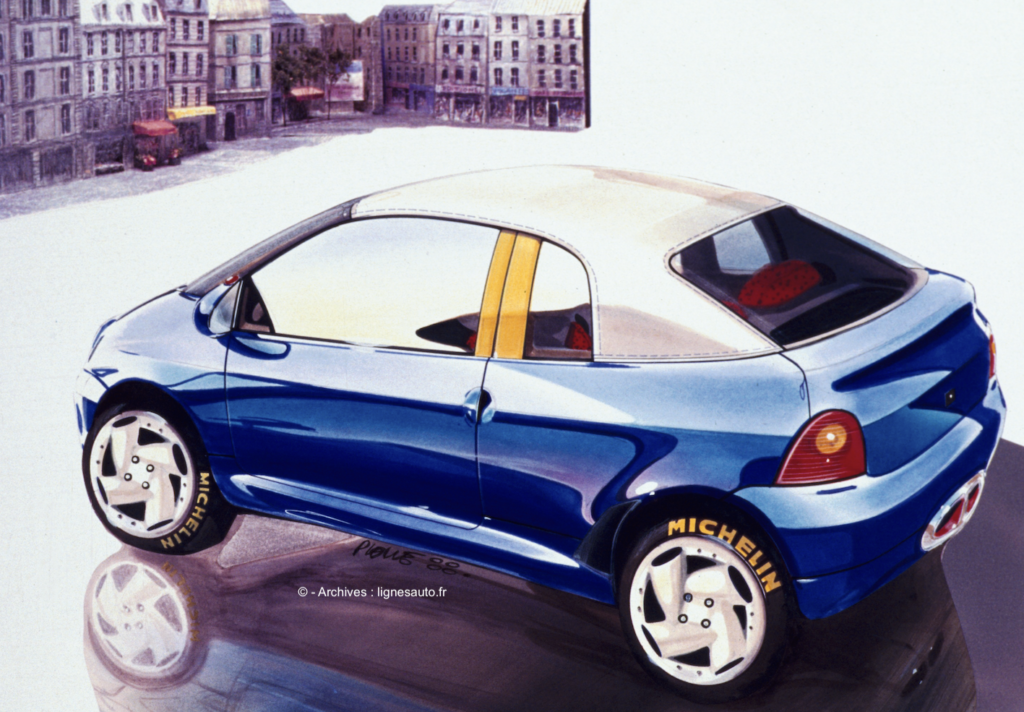
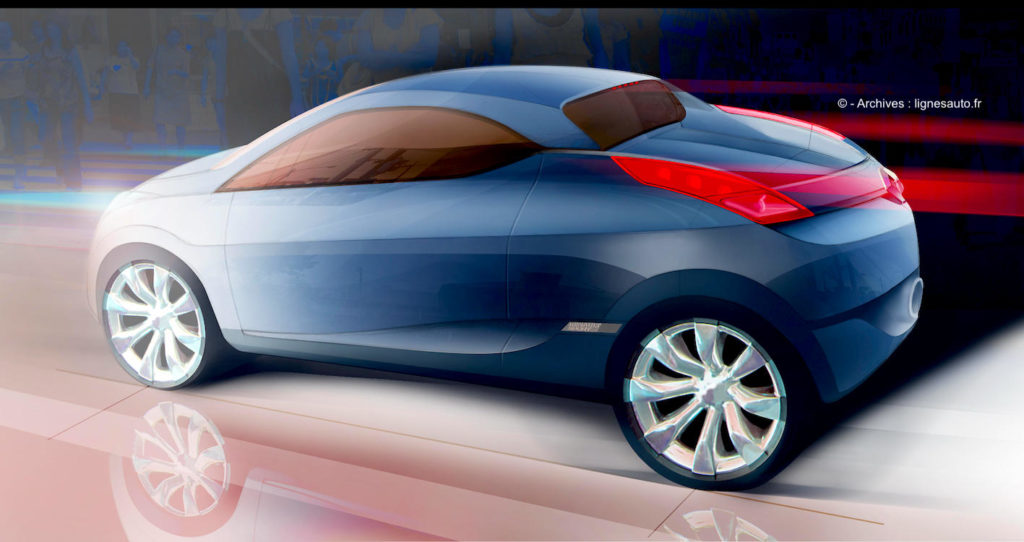
1988. The 1980s drew to a close with the Renault X06 concept: the 1993 Twingo unveiled at the 1992 Paris Motor Show. The design of this little Renault gem was largely led by Jean-Pierre Ploué, but as he was away on military service, he was assisted by his friend of thirty years, Thierry Métroz. Jean-Pierre Ploué did not merely sketch the small saloon. He devised a number of derivatives, such as an off-road Twingo, but also this delightful little gem: a Twingo convertible with a soft top below.
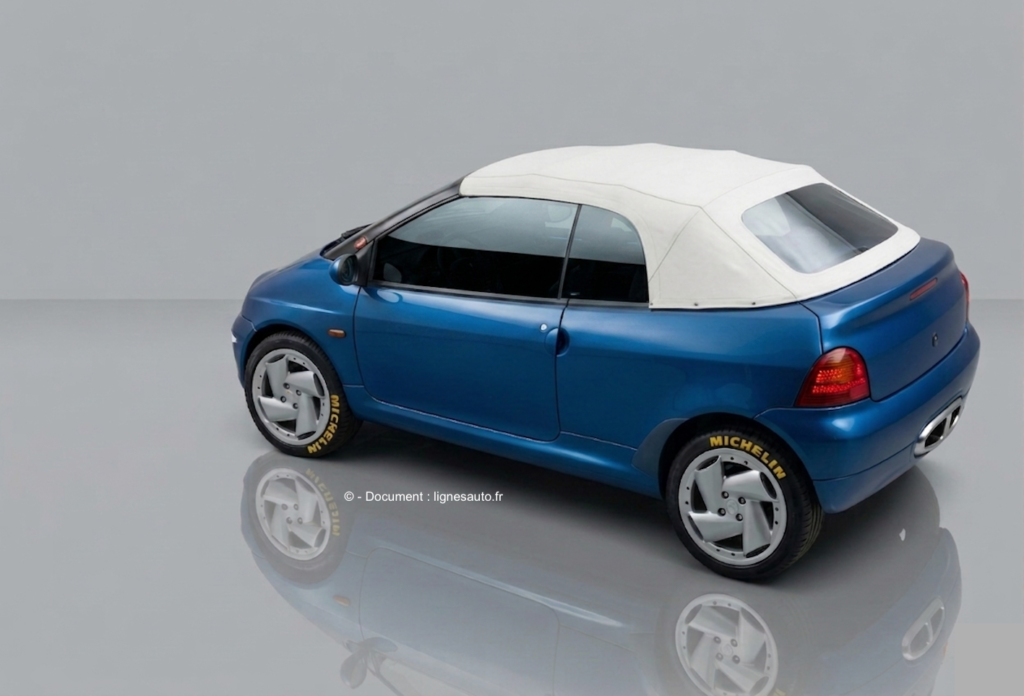
We couldn’t resist the temptation to see what his sketch would have looked like in reality (below, a digital image based on the original sketch). The convertible market wasn’t as stagnant as it is today, and one wonders whether this version would have been a success. Renault’s executives didn’t ask themselves that question, as the immediate priority was to find a viable business model for the Twingo!
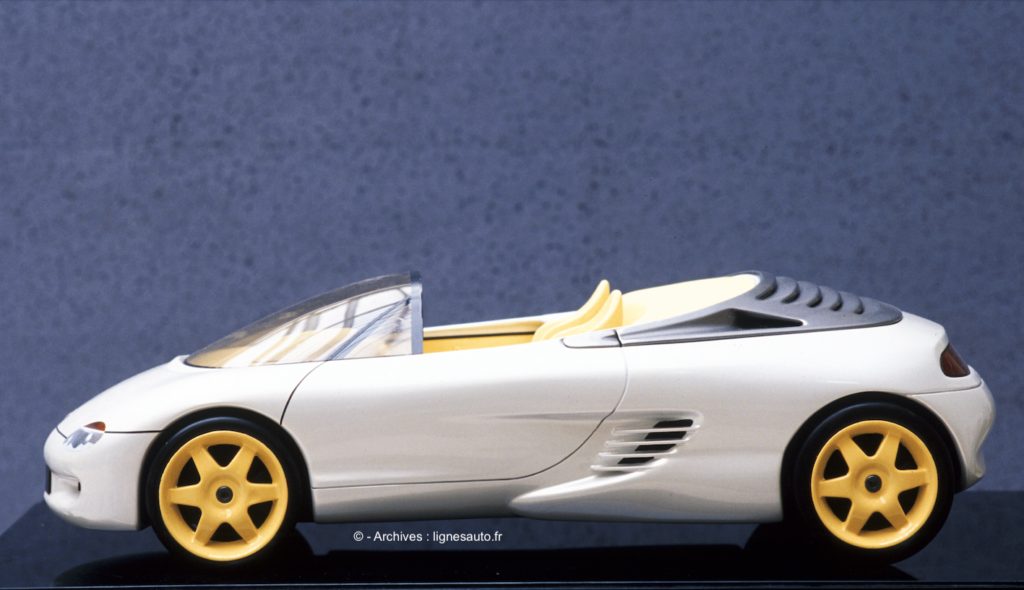
1989. The end of the 1980s also saw yet another attempt to revive the Alpine brand with the… Renault (!) W71. A small coupé unofficially known as the Alpine Renault A410 emerged from this programme, and a prototype even underwent numerous tests. The project was eventually abandoned, but one of the designers, Guy Greffier – who has since passed away – proposed this model of a convertible version at the same time. Or rather, a Speedster, shown below.
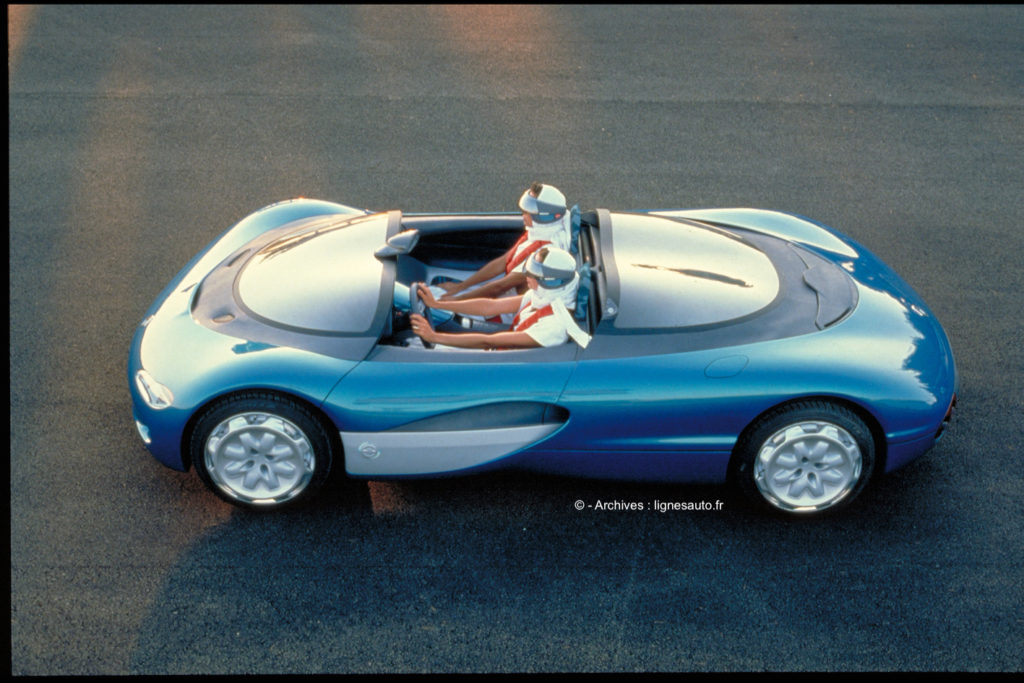
1990. With the W71 project finally shelved, the 1990s that followed would not fail to revive the idea of a new Renault Alpine. This decade provided an opportunity for Renault’s new head of industrial design, Patrick le Quément, to launch a series of landmark concept cars that would lay the foundations for a new design language for a new Renault. Leading the way: the Laguna roadster below designed by Jean-Pierre Ploué. The convertible theme was explored in a futuristic way, with the roof covering the cabin like the canopy of a fighter jet. The colour was Alpine blue, and the comments at the time all pointed in the same direction: what if this were the future Alpine?
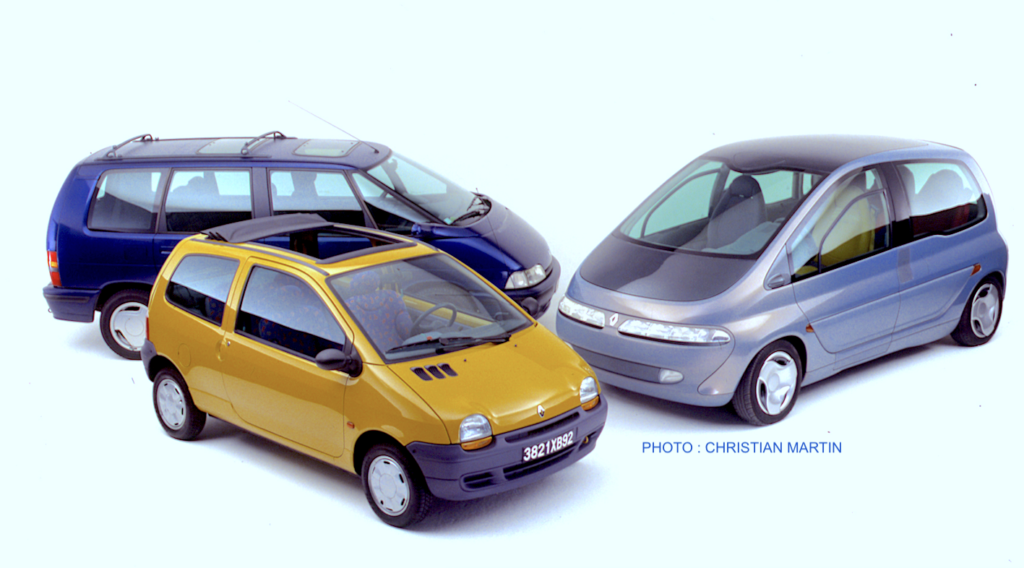
However, the concept that was originally intended to be second on Patrick le Quément’s list became the top priority from 1990 onwards and was subsequently overshadowed in part by the subsequent Scénic concept (1991). The latter paved the way for the compact MPV market, which did not yet exist at the time. Renault thus decided, with the Twingo, Scénic (production version in 1996) and Espace, to establish a presence across the entire spectrum of the MPV market (below).
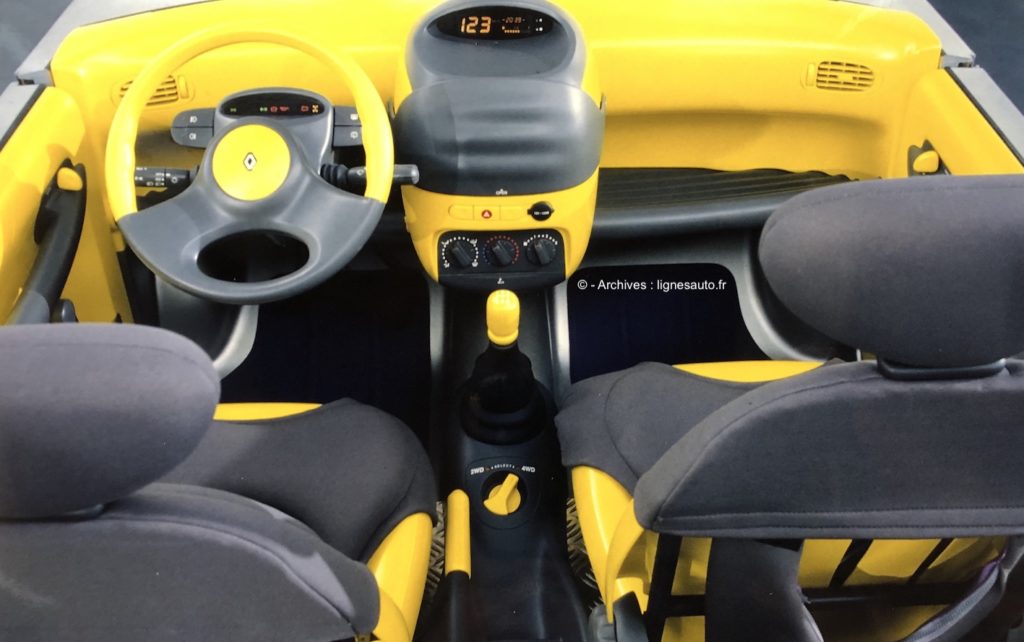
1993. Although the Twingo first appeared on the market in 1993, the design studio did not slow down its research efforts. The project for a small, affordable and lightweight vehicle, available with two- and four-wheel drive, took shape under the code name W78 and was known internally as the Ultra Léger Motorisé (below). Although the 1:1 scale model might suggest a Twingo-Jeep, this was not the case.
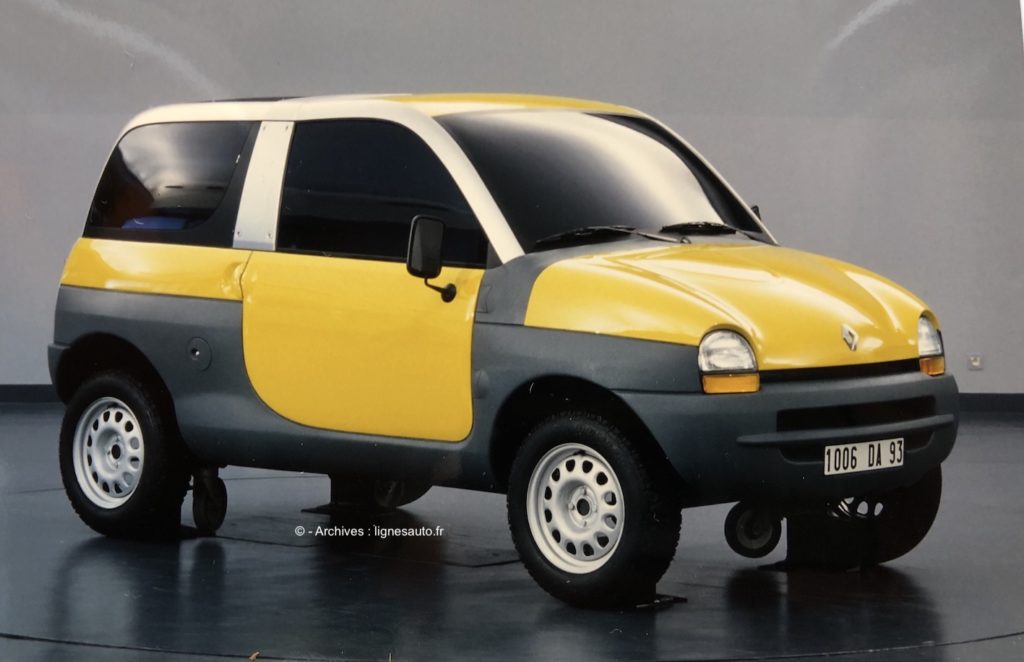
The specifications refer more to ‘a modern synthesis of the Renault 4’s practicality and what the Méhari should have been.’ The only thing it had in common with the Twingo was its single 60 hp engine. The project was launched under the direction of Yves Legal, and the design was the work of Anne Asensio. But after the design was shelved in 1994, the project was abandoned. It was dusted off in early 2000 with an off-road-style design, this time based on the Twingo (the Twingo’s doors had to be retained), but met with no more success.
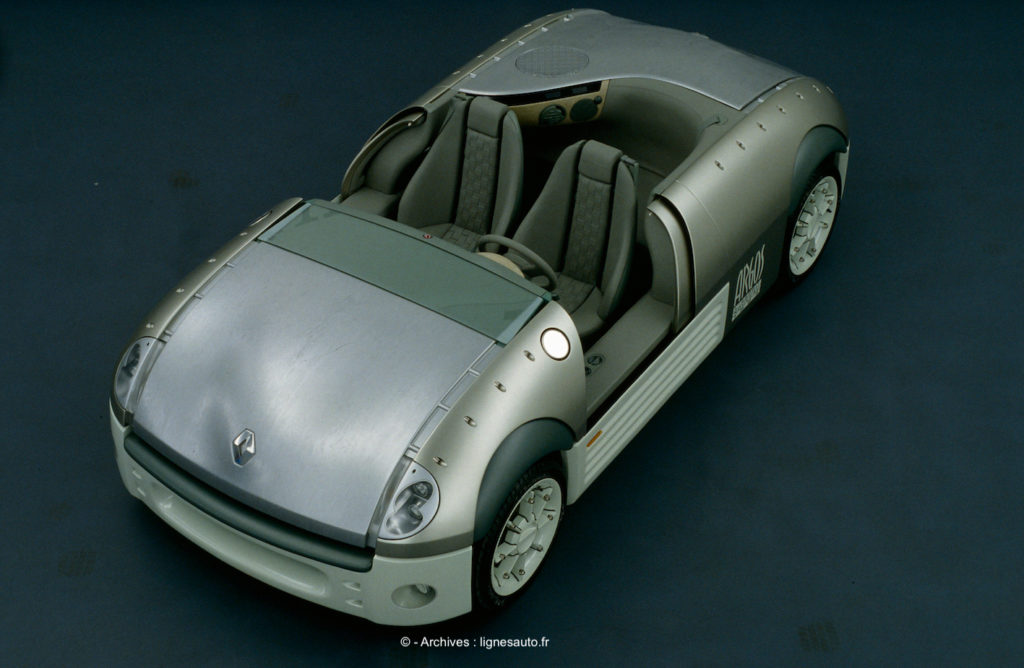
1994. The Guyancourt design centre did not, however, cease its research. In 1994, the brand unveiled a new, unique convertible: the Argos, an ‘essential’ vehicle with an asymmetrical interior, once again designed by Jean-Pierre Ploué. This concept, commissioned by Patrick le Quément (below), was a major milestone. The history of automotive design is indeed marked by a multitude of trends, some as harsh as the lacklustre biodesign, others as enchanting as Streamline. Above all, it is illuminated by a few stars, sometimes shooting stars, often timeless. Argos is one of those suns.
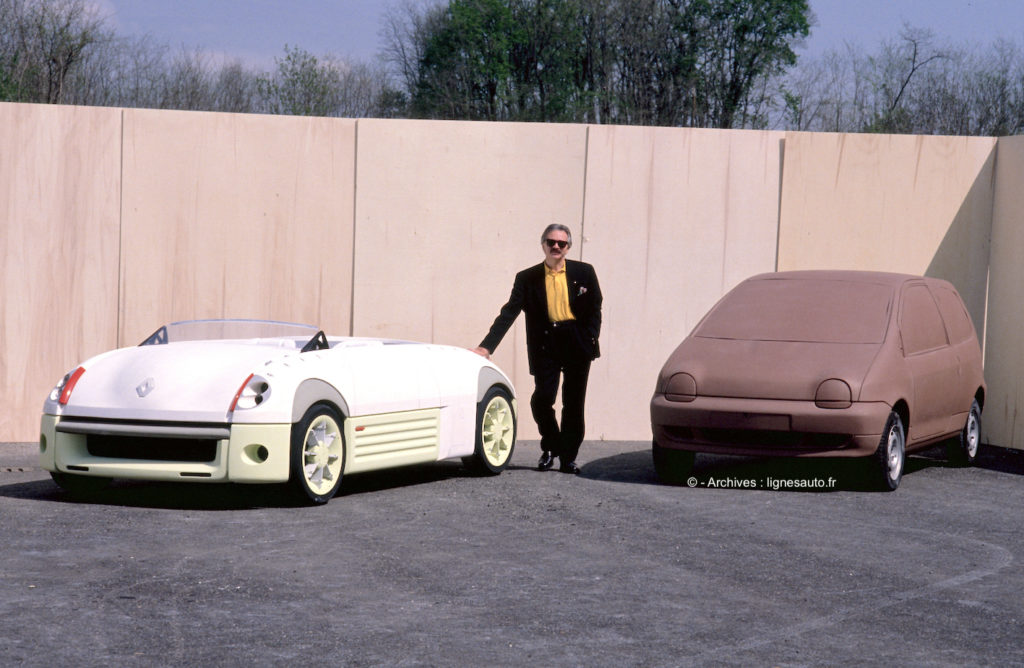
Patrick le Quément explains that he was “thinking in terms of a ‘year zero’ for design. I wanted to find a new intellectual direction for Renault’s design. Jean-Pierre Ploué’s sketch was reminiscent of architect Le Corbusier’s ‘Esprit Nouveau’. I wanted to get back to basics whilst adding very French themes such as asymmetry.” The influence of this concept car would be evident in the second-generation Clio, which hit the market in 1998. Eighteen months after the Argos was unveiled, Audi revealed its TT coupé concept, heavily influenced by the French model…
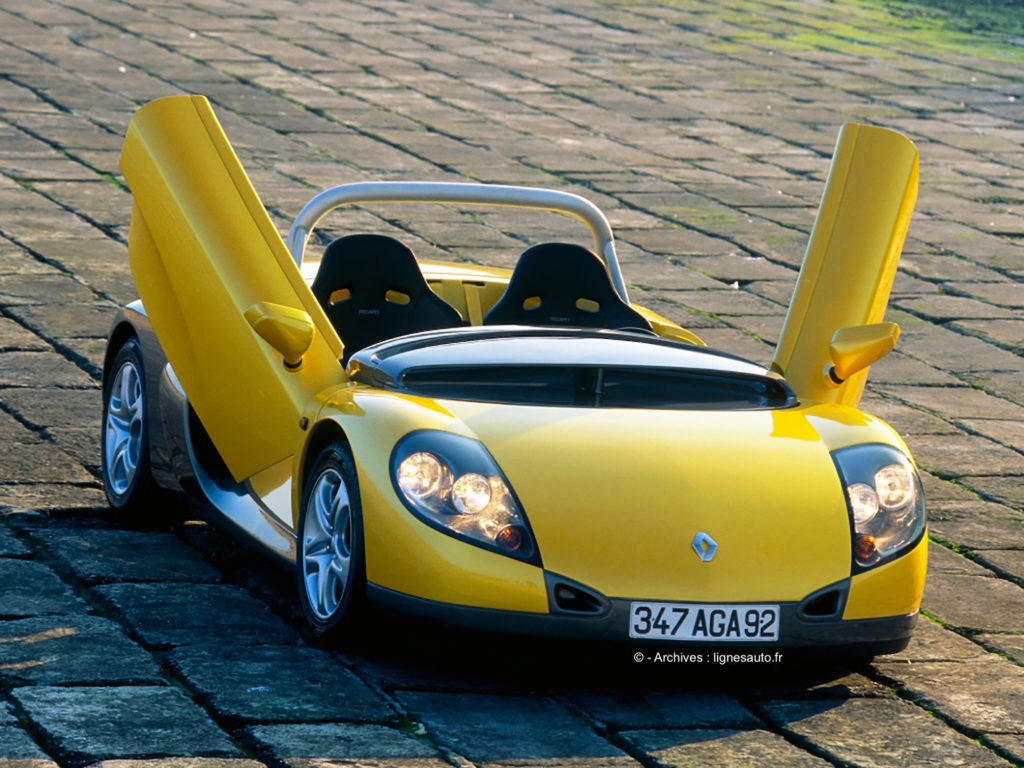
1995. Is it time for Renault’s design team to take a breather? No, not at all! In 1995, the Renault Spider made its debut. Some of the designers’ early sketches proudly bore the Alpine logo, and the initial drawings were in “Alpine blue”. However, there was to be no question of Alpine, as President Louis Schweitzer himself confirmed the demise of the Dieppe-based brand that year. The Alpine A610 was no more… The Renault logo therefore took its place on the front of the Spider below and the colour changed to yellow, very much in the Renault Sport style.
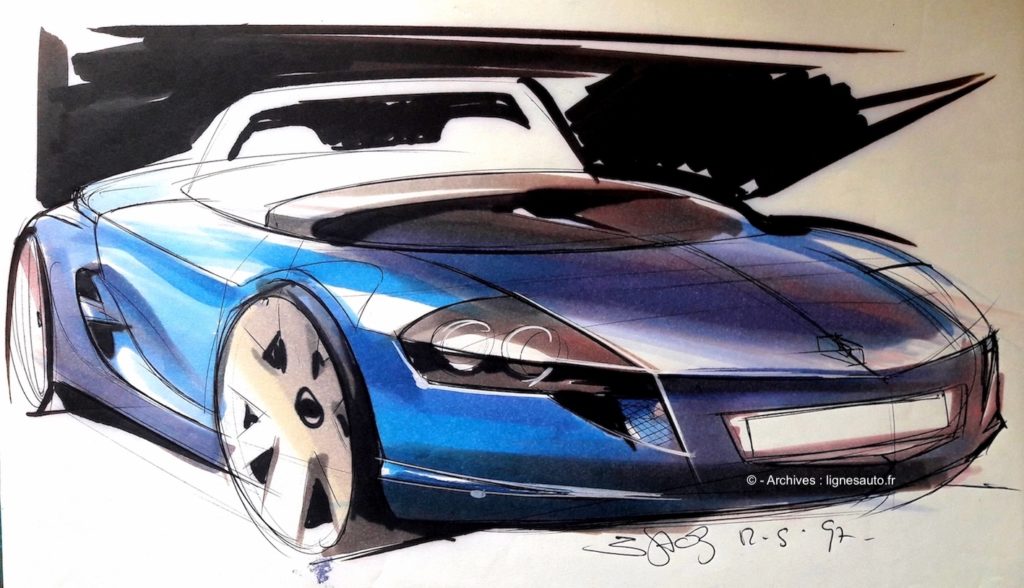
It was an instant success, even though production of this Spider, with its aluminium chassis, was fairly small-scale. Two years after its launch, there were even plans to produce a Phase 2 version of the Spider, shown below. But these plans never got beyond the drawing board. Benoît Jacob, the designer, explains that “rather than making new, identical tooling to continue production – the tooling was limited to 2,000 units – I believe it was Yves Legal who suggested taking the opportunity to create a Phase 2. That’s where this sketch came from, but in the end we didn’t make a new set of tools because production of the Spider stopped at just over 1,700 units.”
1995. Whilst Renault was focusing on the iconic, very limited-run Spider, the manufacturer’s range did not neglect mass production. For its Mégane, launched in 1995, the production department planned six variants: saloon, Scénic MPV, estate – introduced later – three-door coupé and four-door saloon. Added to this was a soft-top convertible (in yellow below) that would prove to be a landmark model. When it was updated in 2002, it was succeeded by a new model which, this time, embraced the trend for a retractable hardtop.

1998. As the Clio 2—which drew partly on the spirit of the Argos concept car—was unveiled, Renault revealed a new concept car in Geneva: the Z08, which was officially named… Zo. What animal is this? Firstly, it is worth noting that it sits between three iconic concept cars: the 1995 Initiale Paris, the Fiftie (a sort of 4CV revival designed by Benoît Jacob) in 1996, and the centenary concept, the extraordinary VelSatis, designed, like the Initiale, by the late Florian Thiercelin. The Zo, below, designed by Anne Asensio, is a more futuristic reinterpretation of the 1995 Spider, from which it borrows the chassis.
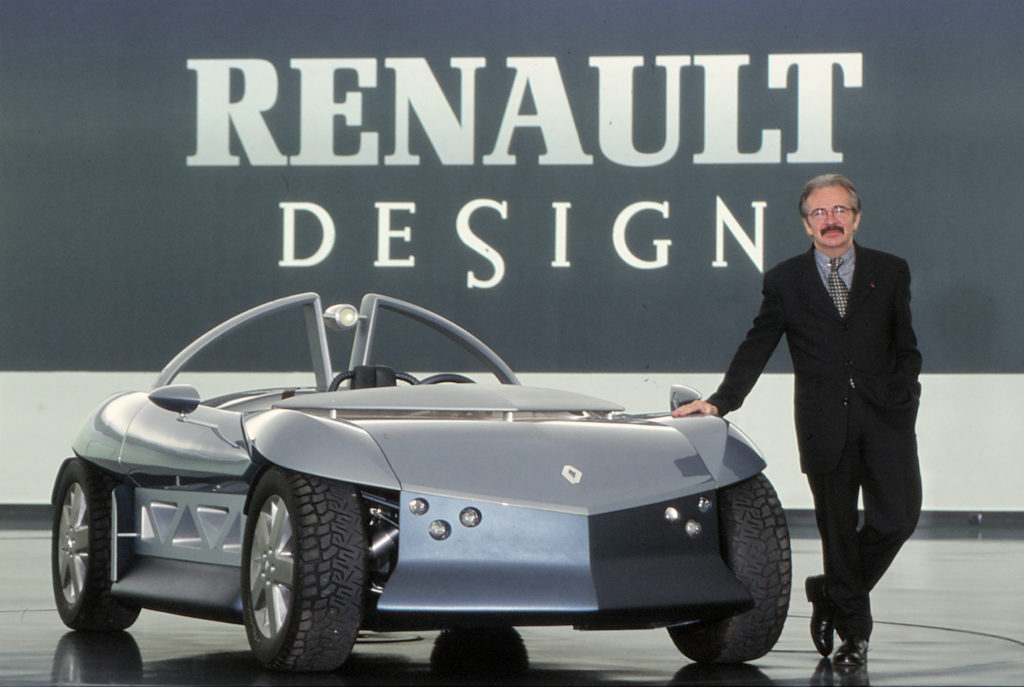
2004. Patrick le Quément wanted to breathe new life into the brand’s design. Having first explored the concept of “Touch-Design” in the cabin with the 2001 Talisman concept car, he now highlights the theme of “simplissime sensualité” with the Wind concept. Whilst the initial sketches below reflect the idea of an elegant, fairly generously proportioned speedster, the final product will be more compact. But the Wind concept below is, above all, seen internally as a balm for the brand’s soul, which, once again in 2001 with its Berlinette Z11 concept, missed the boat when it came to the revival of the Alpine brand—or at the very least, its spirit.
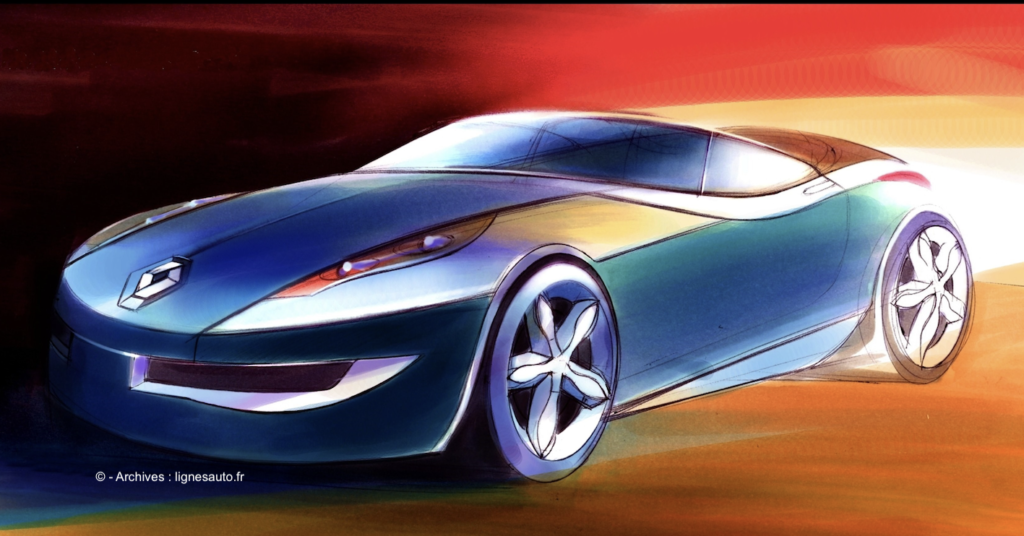
Patrick le Quément confirmed at the time that “I believe Wind would never have seen the light of day if the Berlinette Z11 had achieved its goal of reaching the market. Alpine’s revival in the early 2000s didn’t work out. It wasn’t for lack of trying! So we envisaged a car as the very thing Renault needed. For us, the idea was to design a small, affordable roadster that seemed so in line with the need to go beyond the purely functional vehicle, and to create something that truly inspires passion.“
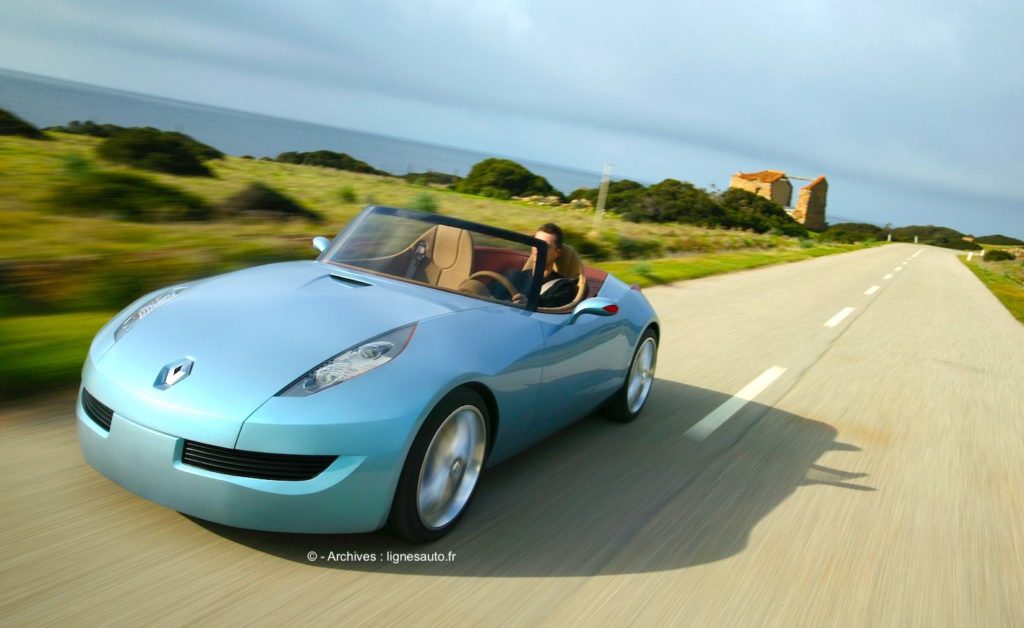
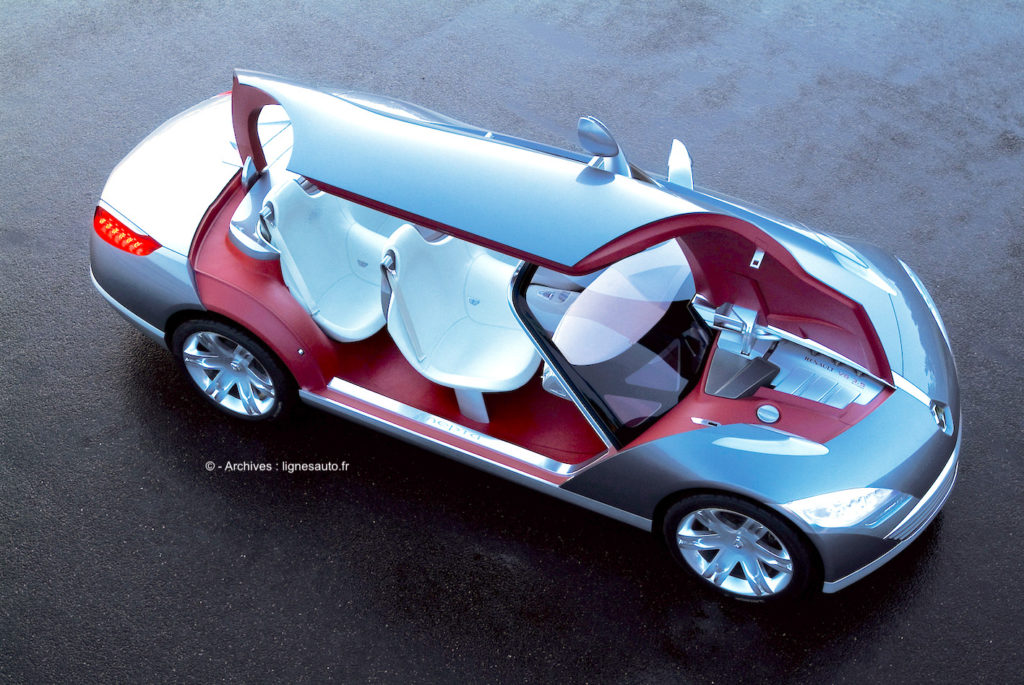
2006. It would be another two years before the convertible theme resurfaced at Renault. And even then, it was a concept car. Far more ambitious than the little Wind: the Nepta, below. “We have created a spectacular vehicle that bridges the gap between sports cars and a splendid convertible which, like sports cars, shows off its engine,” says Patrick le Quément. And what an engine: a 3.5-litre V6 boosted by twin turbos, delivering 420 bhp.
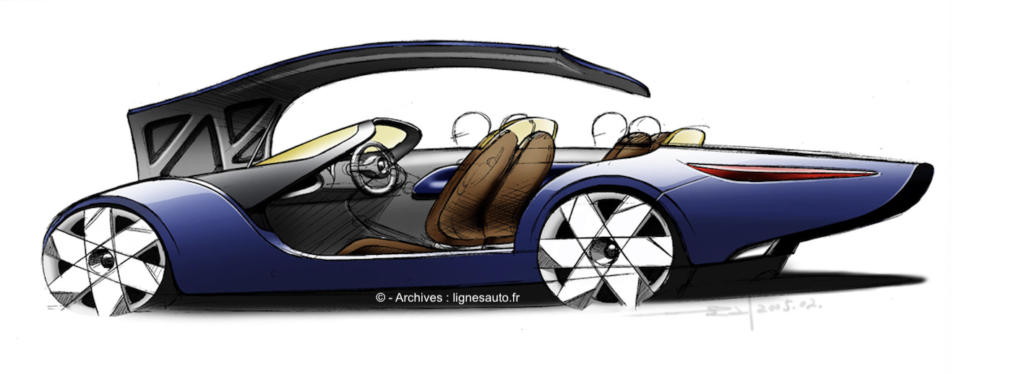
Naturally, the concept’s flamboyance stems from its two body sides, each of which incorporates half a bonnet to reveal the powertrain whenever the ‘doors’ are opened. To highlight this engine, the uniform burgundy-coloured floor covering extends into the front section. We owe this fabulous design to designers Satoshi Tanaka and Jun Okazaki.
2010. Six years after the charming Wind roadster was unveiled as a concept car, the production Wind hit the market: it was a Twingo fitted with a pivoting roof (the same principle as that of the… Ferrari California!) and seating just two. But its handling, fine-tuned by Renault-Sport, was up to the task. The public did not respond to the appeal of this charming little speedster. You can read about the origins of the W33 project here: https://lignesauto.fr/?p=42089
It had all started so well, and the work was carried out to the highest standards. The team, led by Axel Breun, head of design at Renault Sport at the time, included designers Yas Suzuki, Yohann Ory (interior design) and Massimo Barbieri (project manager). Carlos Ghosn’s insistence on retaining a carry-over from the Twingo II – which was disastrous for the proportions of such a vehicle – and the fixed two-seater layout rather than a 2+2 configuration like the Peugeot 206 CC, doomed the project from the outset. Once again, the design studio was not to blame…
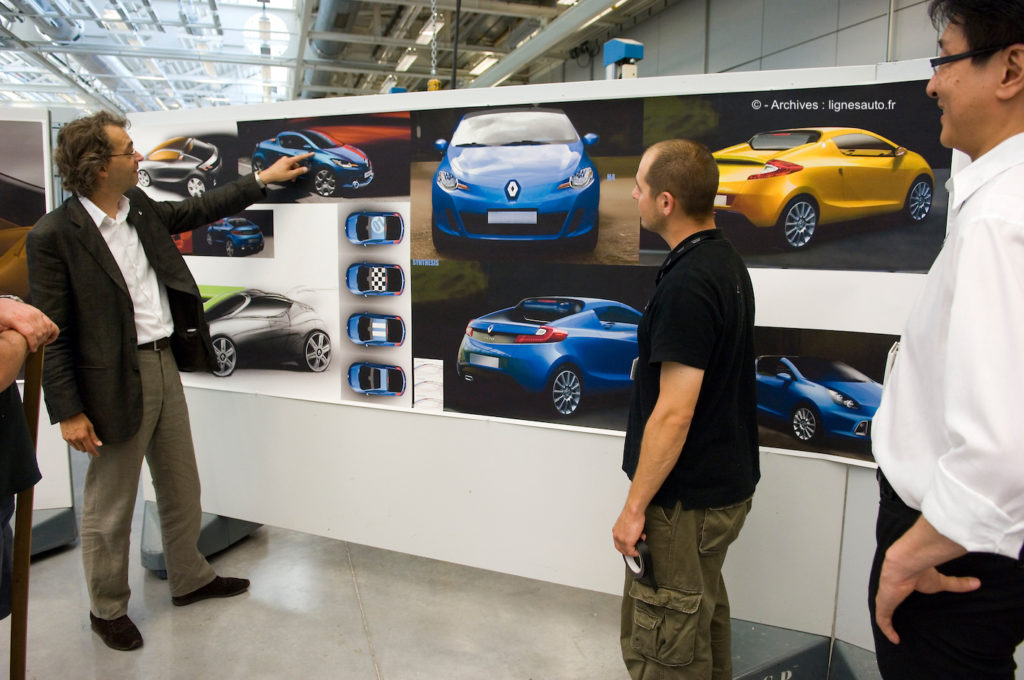
2010. Then, in 2010, when Laurens van den Acker took over as Renault’s head of design, a breath of fresh air swept through the company, as is often the case when a new leader arrives in the world of design. Like Le Quément, Laurens set in motion a plan centred on several concept cars representing all the themes of life: love, work, family, and so on. The first of these was the Z24, christened DeZir. It was not a convertible, but this motor show prototype opened up a world of possibilities, particularly for reigniting the flame of Alpine’s revival.
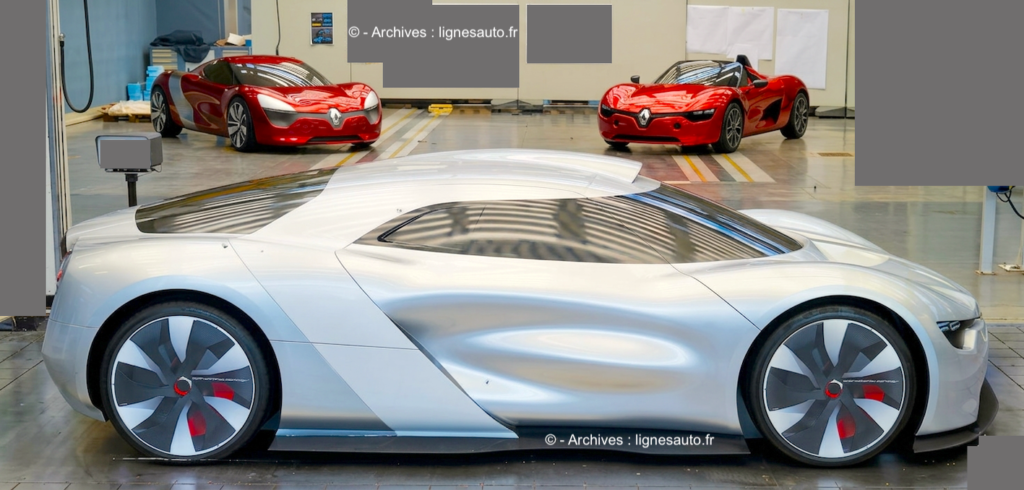
For the time being, it’s forbidden to mention the name ‘Alpine’ in the corridors of the Guyancourt design centre, on pain of being flogged. Or almost! Here, they design Renaults and Renault Sports. But the DeZir concept car was almost painted Alpine blue before being clad in a magnificent passionate red. Nevertheless, Renault and Renault Sport are working on various models capable of paving the way for genuine sports cars, such as those we saw from Renault in the mid-1990s, notably the Spider.
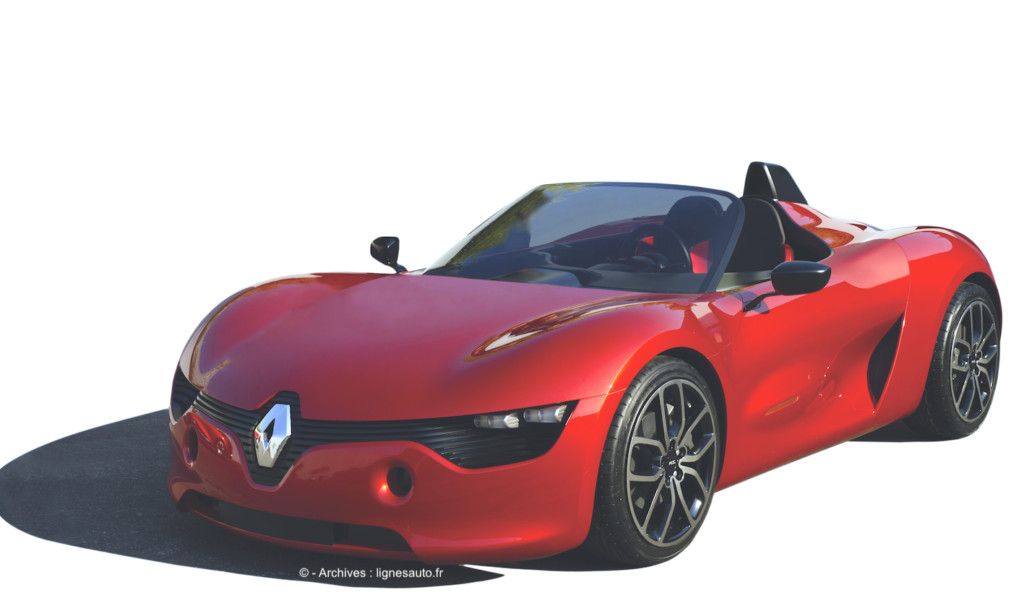
2010. The RS-1 roadster shown above and below is in this vein. It was already more or less in the pipeline when Laurens van den Acker unveiled the Renault-Alpine A110-50 concept car, which celebrated the 50th anniversary of the Berlinette in 2012. First glimmer of hope: the Alpine name was even officially mentioned in a press release about the A110-50: “Renault, and more specifically Renault Sport, are considering reviving the Alpine name, but no decision has yet been taken”
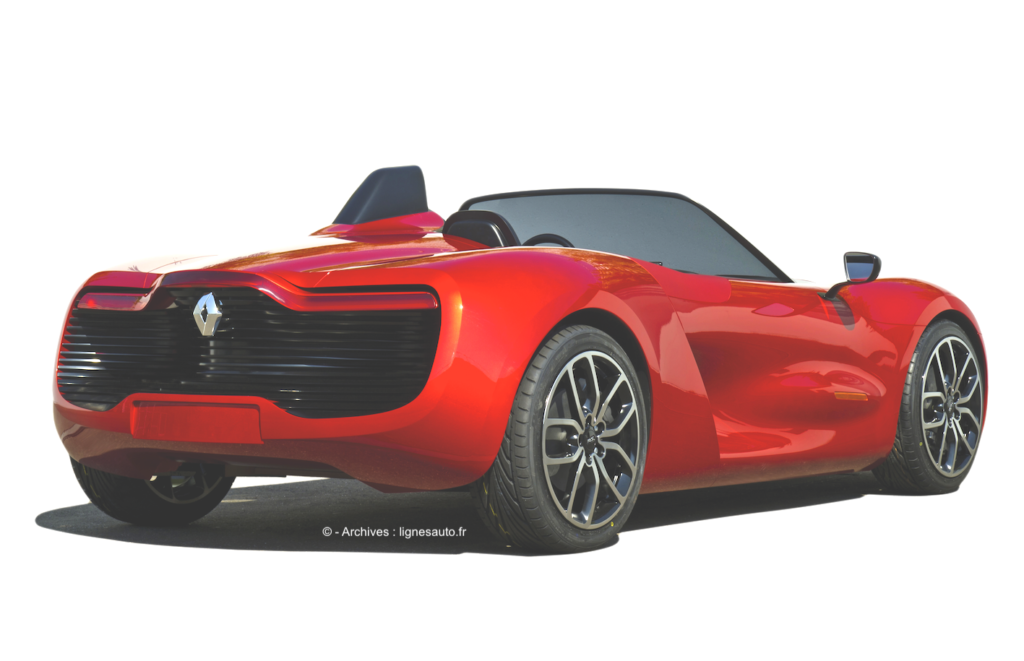
Rémi Deconinck, who was not in favour of Alpine’s return, handed over his role as director of Renault Sport to Patrice Ratti in 2010. Ratti discovered the highly advanced RS-1 roadster project pictured above in the bin. A scale model was even produced, but in agreement with Renault Sport, Laurens van den Acker’s teams reworked the styling to incorporate it into the new design philosophy devised by the head of design. The RS-1 Spider was then heavily inspired by the DeZir concept car, featuring a two-seater layout, though the passenger seat was set further back. A sturdy roll bar was positioned behind the driver’s head, and this time, unlike the 1995 Spider, the windscreen was incorporated into the model.
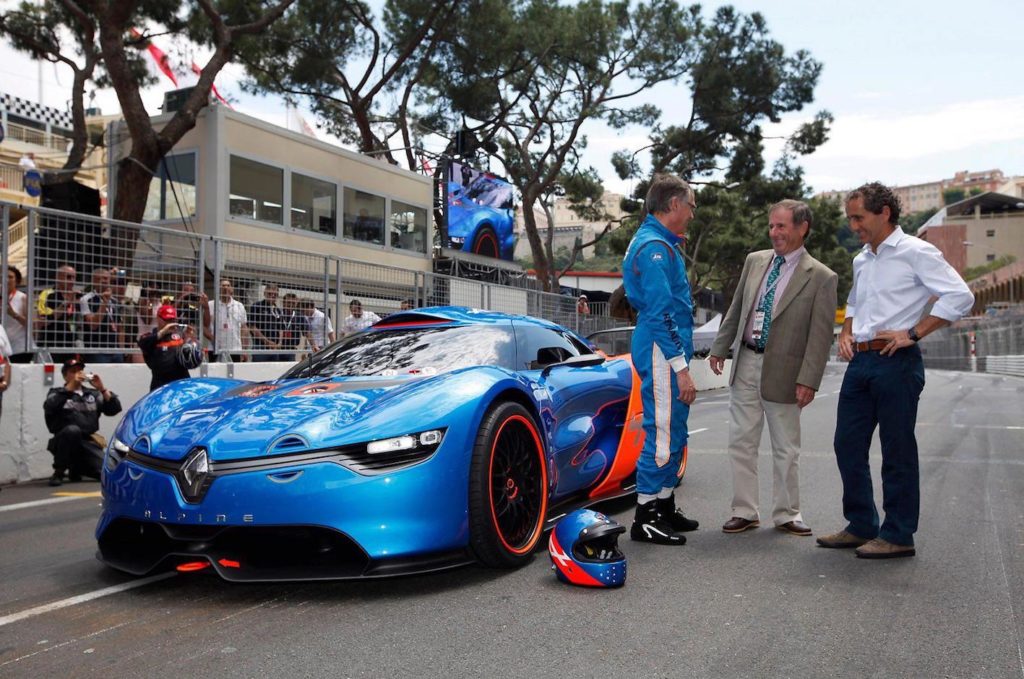
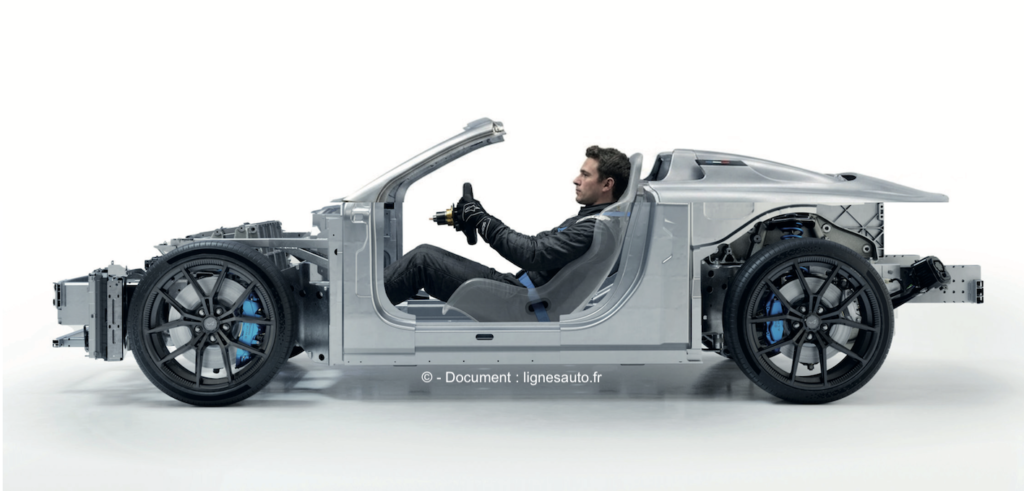
2011. The programme was then incorporated into the product plan in 2013 under the code name E-EA, in the form of a concept car set to be unveiled at the Monaco Grand Prix, and then in 2014 as the production version scheduled for the Geneva Motor Show. But by 2011, when the red model of the RS-1 spider was finalised, the situation had changed significantly. At the helm of the product, Patrick Pelata had been replaced by Carlos Tavares (pictured above), who supported the A110-50 concept car celebrating the 50th anniversary of the Berlinette. Thanks to this concept and Tavares’s backing, Carlos Ghosn gave the go-ahead for the project to revive the berlinette, known internally by the code name AS-01. It would culminate in 2017 with the new-generation Alpine A110. Unfortunately, there is no convertible version. But it’s only a matter of time, as the Alpine convertible is announced to be built on the new platform for 2027, pictured below. Convertibles are making a comeback in production models, but this time it’s Alpine…
In conclusion, this charming R4 JP4X4 concept car – which is undoubtedly less likely to go into production than its Savane sibling from last year – nevertheless heralds a new era. Or rather, it brings a breath of fresh air, which we hope will continue to blow through Renault’s design studio in Guyancourt…
THE VIDEO OF THE 2026 R4 JP4X4 CONCEPT CAR