
Numerous collaborations between private Italian design studios (Bertone, Ital Design, Pininfarina, etc.) began in the 1950s for Peugeot and Renault, and in the 1970s for Citroën. It was the golden age of transalpine carrozzeria. The product departments of French brands believed that such prestigious signatures were an asset for them.
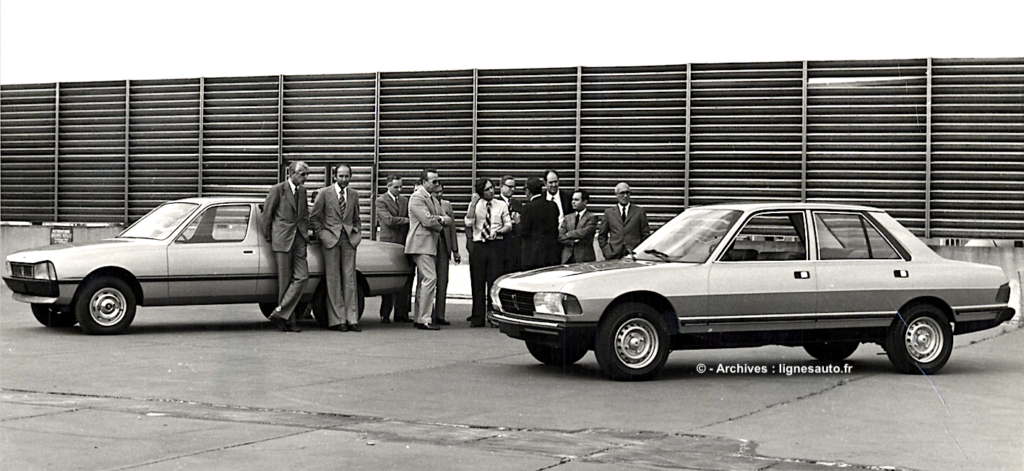
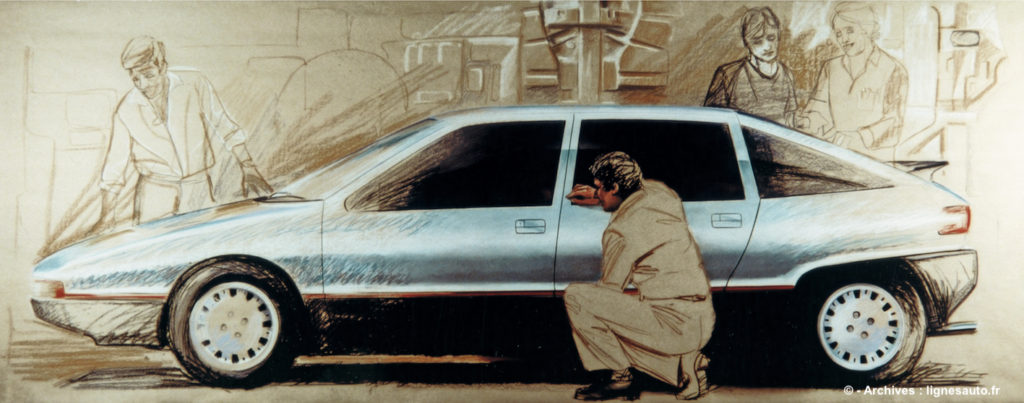
Peugeot began its collaboration with Pininfarina in 1951. Their first creation was the classically styled 403, unveiled at the same time as the Citroën DS in 1955. The DS was designed exclusively in-house, as was its successor, the CX, in 1974. Citroën then called on Italian coachbuilder Bertone (Marcello Gandini then Marc Deschamps) to work on virtually all of the brand’s programmes: the SM 4-door for an industrialisation study, the XM, ZX, Xantia, Saxo and even a BX coupé (below), which came close to going into production in the early 1980s.
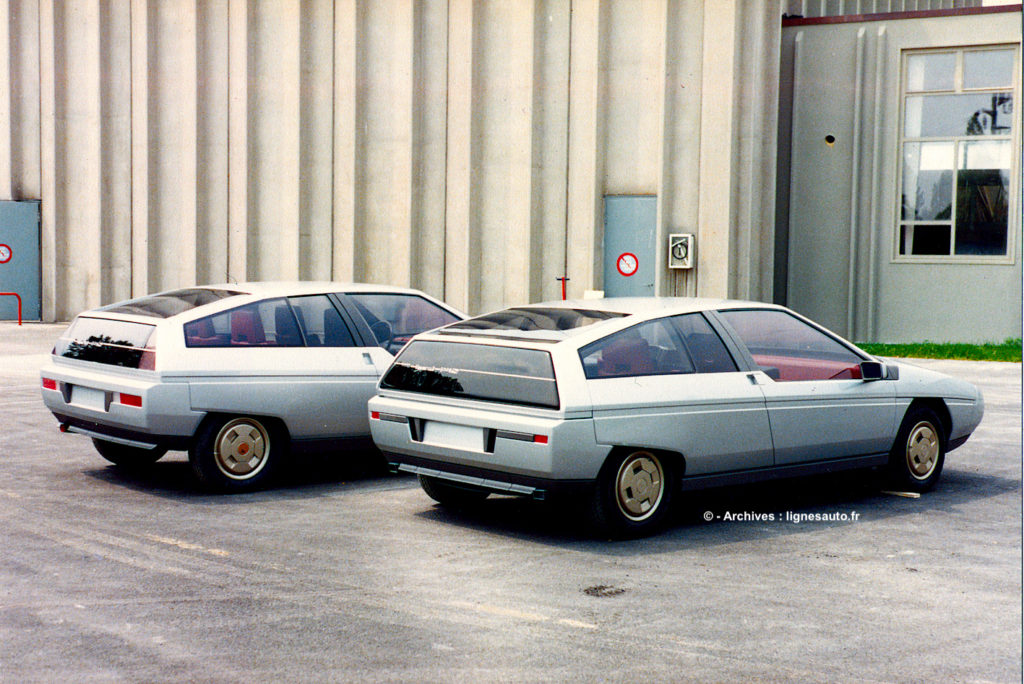
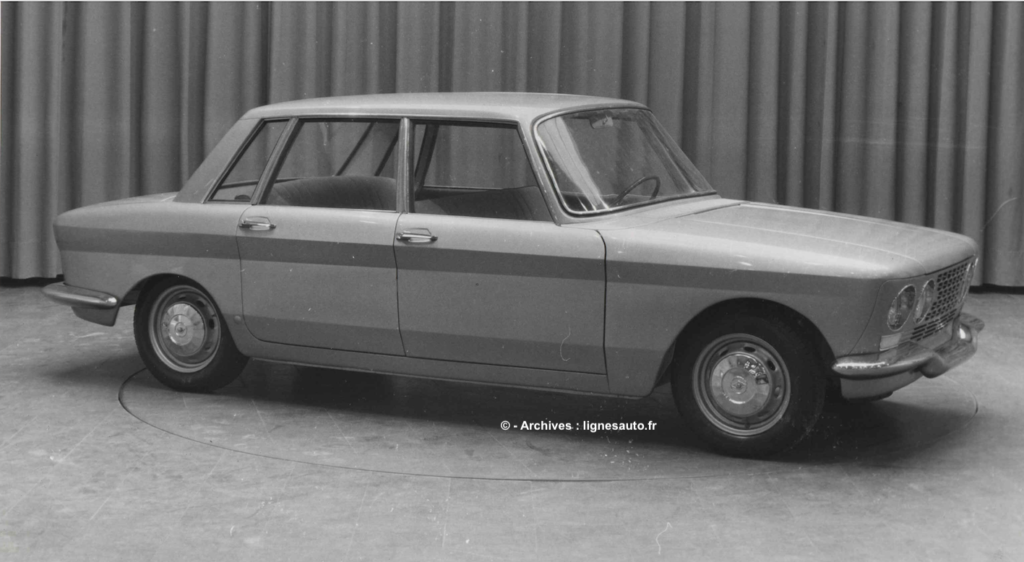
For Renault, the situation was a little more complex. Like its French competitors, the Régie Nationale des Usines Renault (Renault National Factory) began working with various Italian consultants, notably Ghia, in the 1950s (below is Ghia’s design to replace the Frégate). At the time, the design studio had only a handful of designers (around ten in fact) and, overall, they won almost all the projects. Renault’s styling sometimes called on renowned Italian designers, such as Coggiola and, much later, G-Studio, to bring its own styling models and concept cars to life.
It wasn’t until the 1970s that the Italian influence became more significant in the stylistic development of Renault’s models. It is often thought that Giorgetto Giugiaro and his company Ital Design were approached by Robert Opron, who was appointed head of design at Renault in 1975. Robert Opron was indeed the man responsible for external collaborations, and not only with Italian designers, as artists such as Mario Bellini were temporarily involved in Renault studies.
However, it was not Opron who brought Giorgetto Giugiaro into the circle of Italian consultants working on the Régie’s programmes, but Gaston Juchet, right from the design stage of the Renault 15 and 17. Giugiaro’s long-time rival, Marcello Gandini, was, on the other hand, fully endorsed by Opron. The Italian was responsible for a wide range of designs, most of which never saw the light of day. The highlight of Gandini’s collaboration with Renault was the Magnum truck (1990) and the Supercinq (1984) below – archives of Gautam Sen.

Add to that the interior of the first generation R5 Turbo (1980) and the Renault 25 (1984). This collaboration with Gandini took place in two stages: when the Italian master was head of the Bertone design studio in Caprié, near Turin, and then as a private contractor working with the Régie from 1979 onwards. This was the year Gandini left Bertone, replaced by Marc Deschamps, who had previously worked at Renault, where he had been from 1976 to 1979.
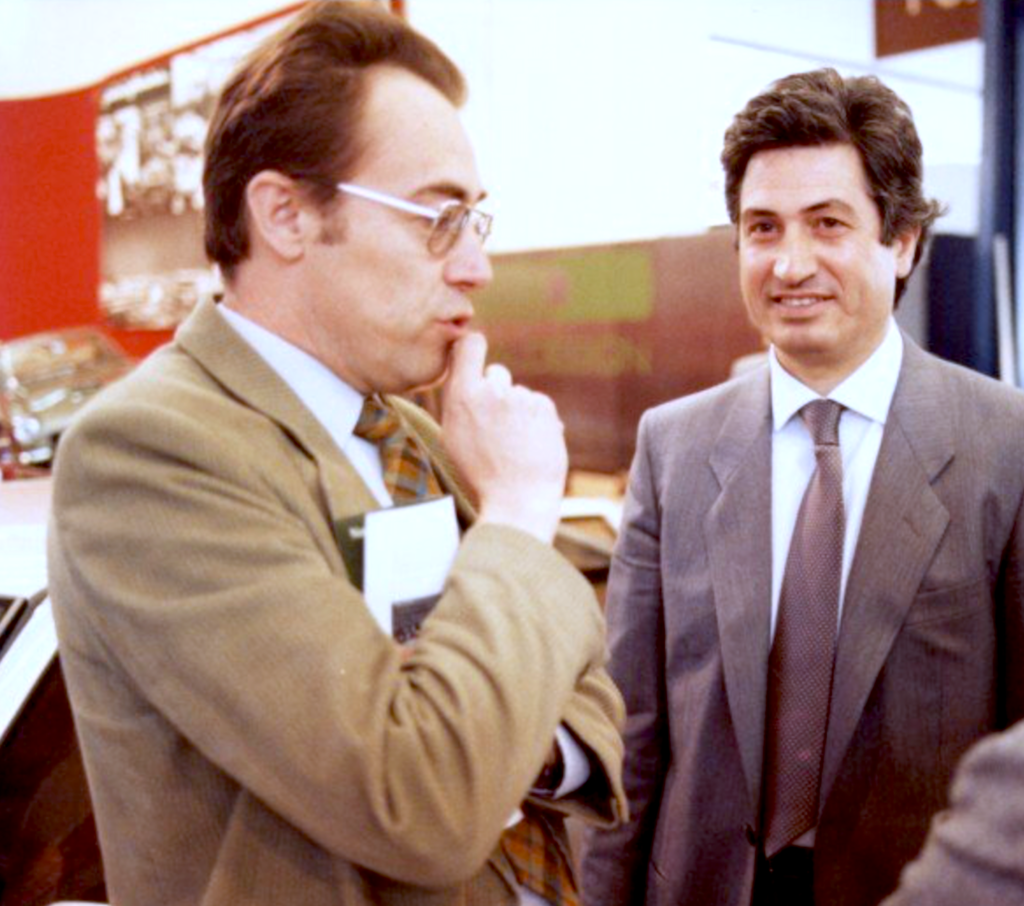
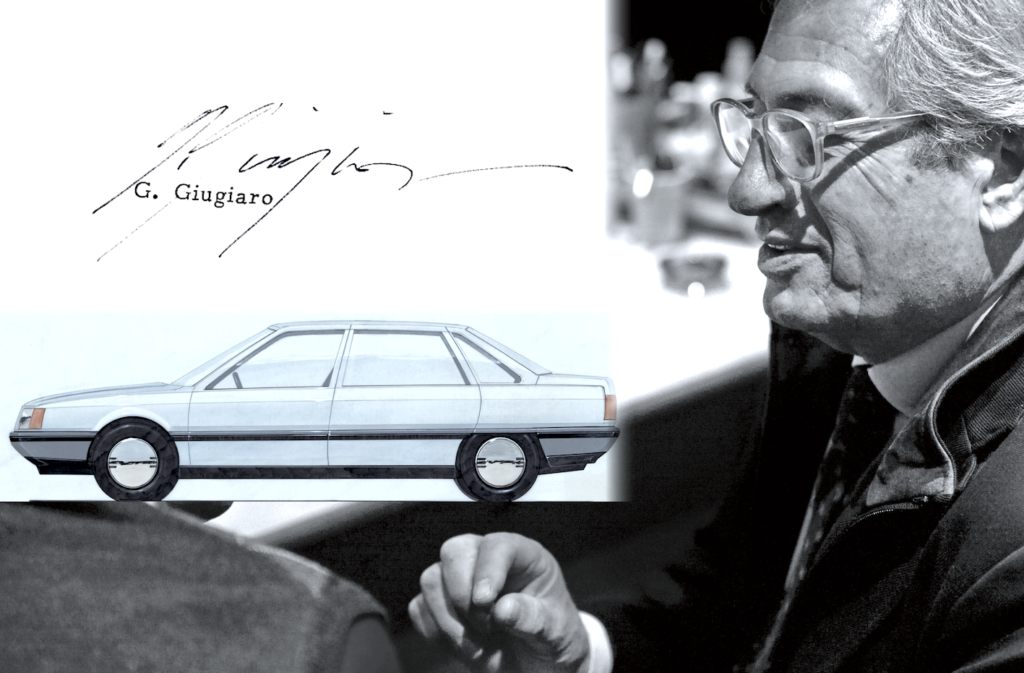
In this sprawling collaboration with Italian designers, Renault has turned to two stars of 1970s and 1980s design, including Giorgetto Giugiaro. We have just read that Giugiaro contributed to Renault’s programmes in the 1970s under the responsibility of Gaston Juchet, director of design (above left with Giugiaro).

There was therefore a period from the 1970s to the following decade when Giugiaro and Gandini successfully developed Renault styling programmes without being systematic rivals: Gandini created the Supercinq and Magnum, while Giugiaro designed the Renault 19 and 21 (above).
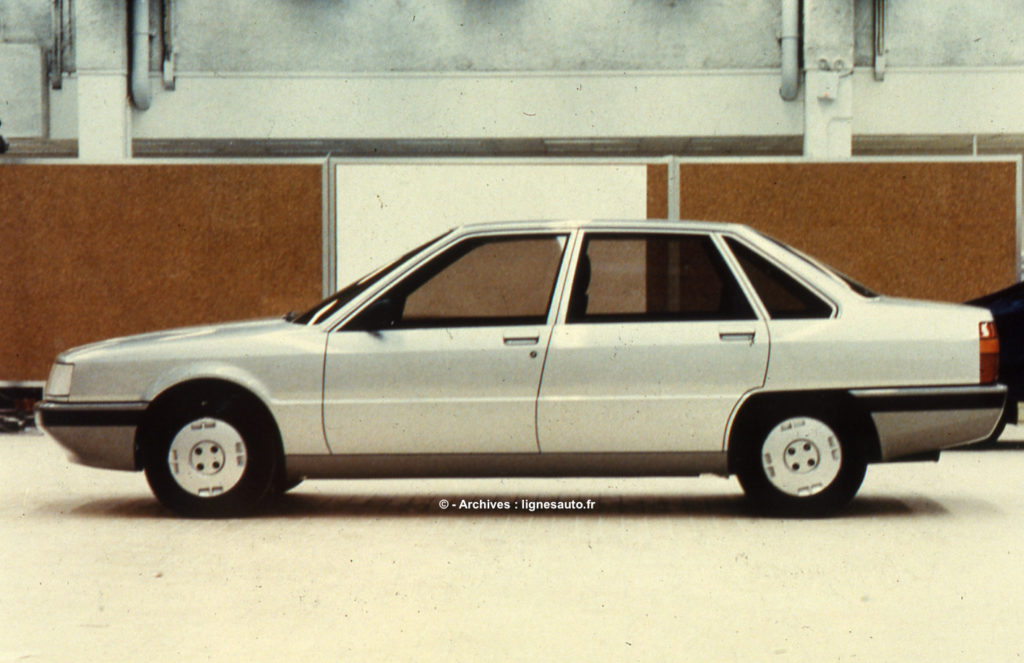
Let’s take a closer look at Giugiaro’s contribution to Renault during the 1980s. In particular, the Renault 21 (above), the first of its kind, launched in 1986, two years before the Renault 19. Ital Design achieved extraordinary fame during this period. The 1970s saw the Italian engineering and design firm design the latest successful Volkswagen models (notably the 1974 Golf), unforgettable Fiats (the 1980 Panda, below) and, above all, attract international car manufacturers such as Hyundai. Giugiaro was bankable.

In the early 1980s, twelve years after the creation of what would become Ital Design, the Italian was contacted by Robert Opron to contribute to the X48 project for the future Renault 21, intended to replace the Renault 18 launched in 1978, just two years earlier. The programme was based on a brand new platform and Renault’s designers were the first to unveil their models.
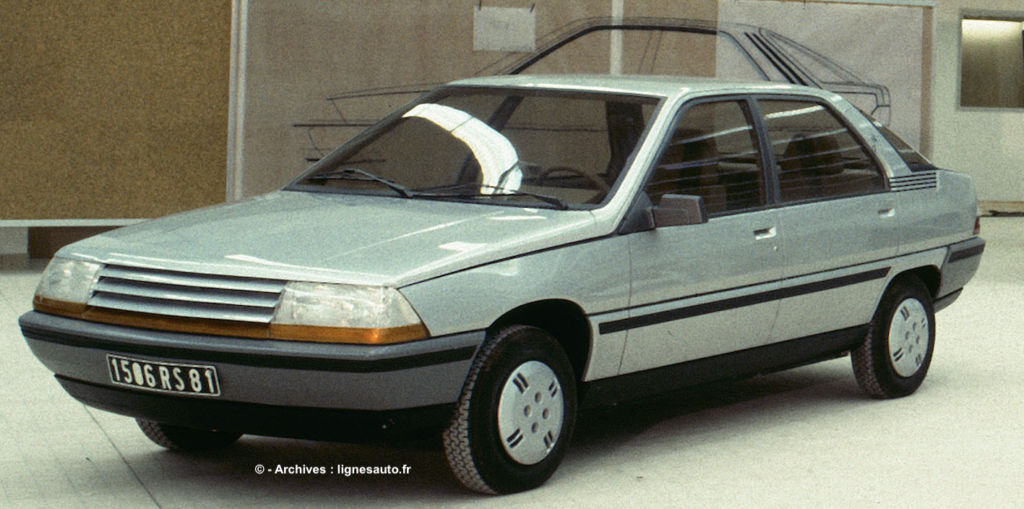
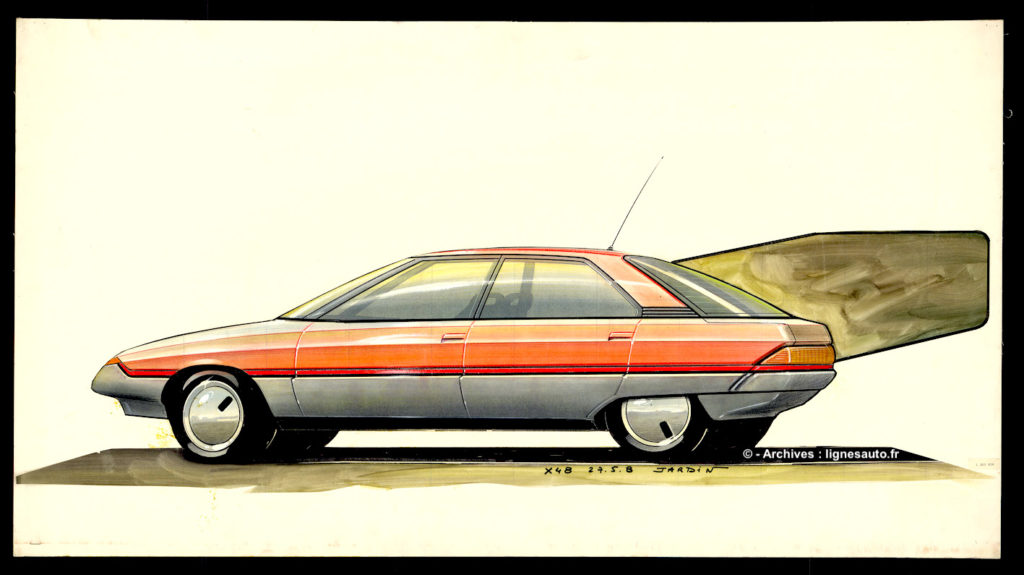
First up is Michel Jardin’s design above. The designer had just completed the Fuego coupé project, revamping the Renault 15/17 duo designed by Gaston Juchet. Jardin’s proposal was heavily influenced by his Fuego design, mixed with elements of the Renault 25, with a large bubble roof that was transformed during the design process into a three-sided glass triptych. The large R25 saloon had just been finalised at this point and would go on sale in 1984, two years before the R21.
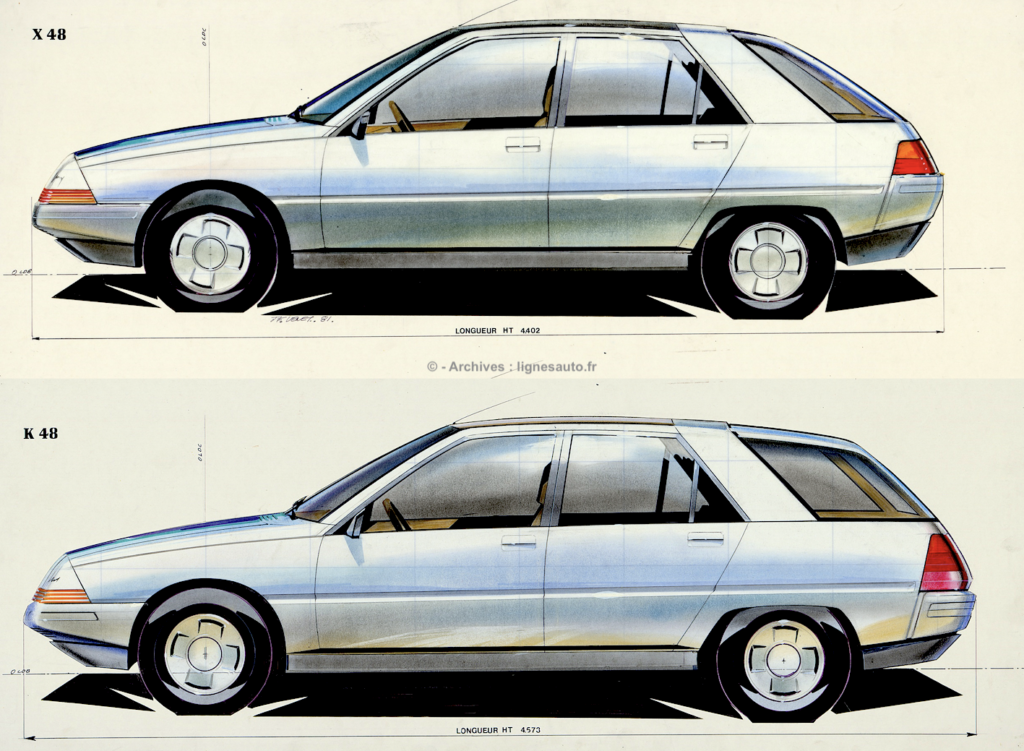
In internal competition with Michel Jardin, Jean-François Venet proposed not one but three silhouettes for the X48 programme: a two-box saloon, an estate (above) and a more traditional three-box saloon (below). The signature style of this great designer is evident in his drawings, one of which was heavily inspired by a sketch he made during the Renault 25 study, a sketch he created himself! Meanwhile, Robert Opron pushed the designers at AMC (American Motors Corporation) in the United States to come up with their own vision.
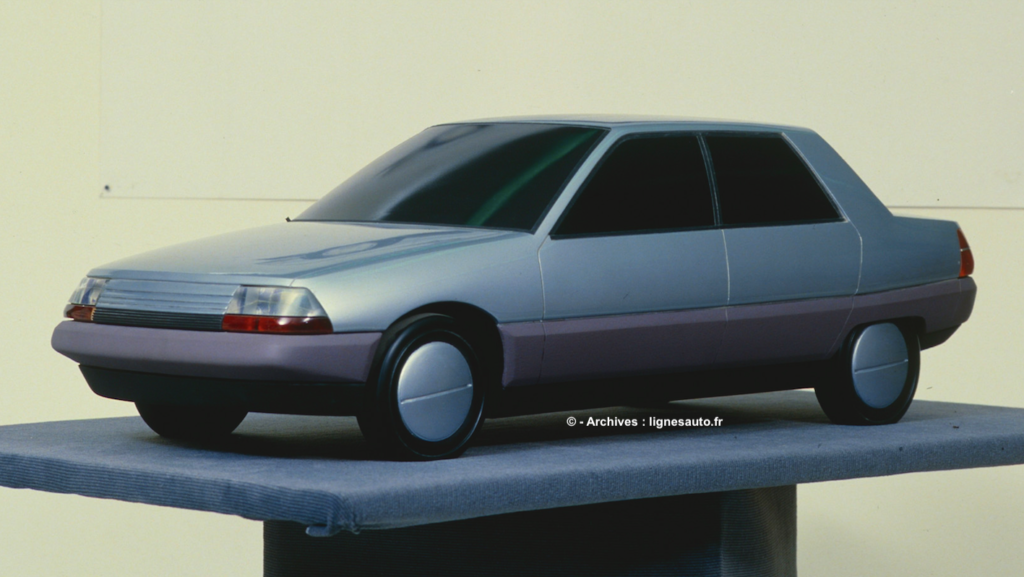
Robert Opron then set his sights on creating a satellite Renault design centre in the United States. AMC was part of the Renault group at the time. The American model was quickly rejected. That left Renault’s designs, which were soon joined by Giugiaro’s. It was the latter, shown below, that was ultimately chosen. This was a real shock internally, as all the latest Renault models had been designed in-house: the R5, R20, R30, R14, Alpine A310, R18, Fuego, R9, R11 and R25, with the exception of Gandini’s Supercinq.
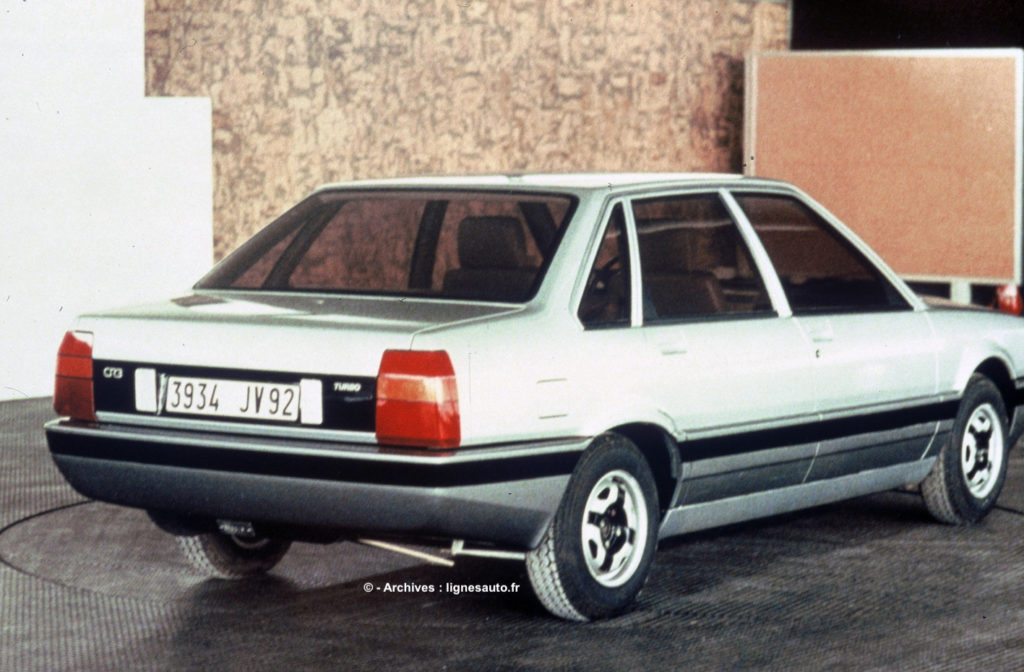
Giugiaro’s design was therefore chosen for Renault’s X48 project. Robert Opron explains why in the Bonus section at the end of this post. Chosen, but with two minor details. These details are not minor in two respects: industrially, with the engineering department imposing autoclave doors, which were not present on the Italian model, and in terms of pure design, with the redesign of the boot lid to visually widen the car, in addition to horizontal lights (below).
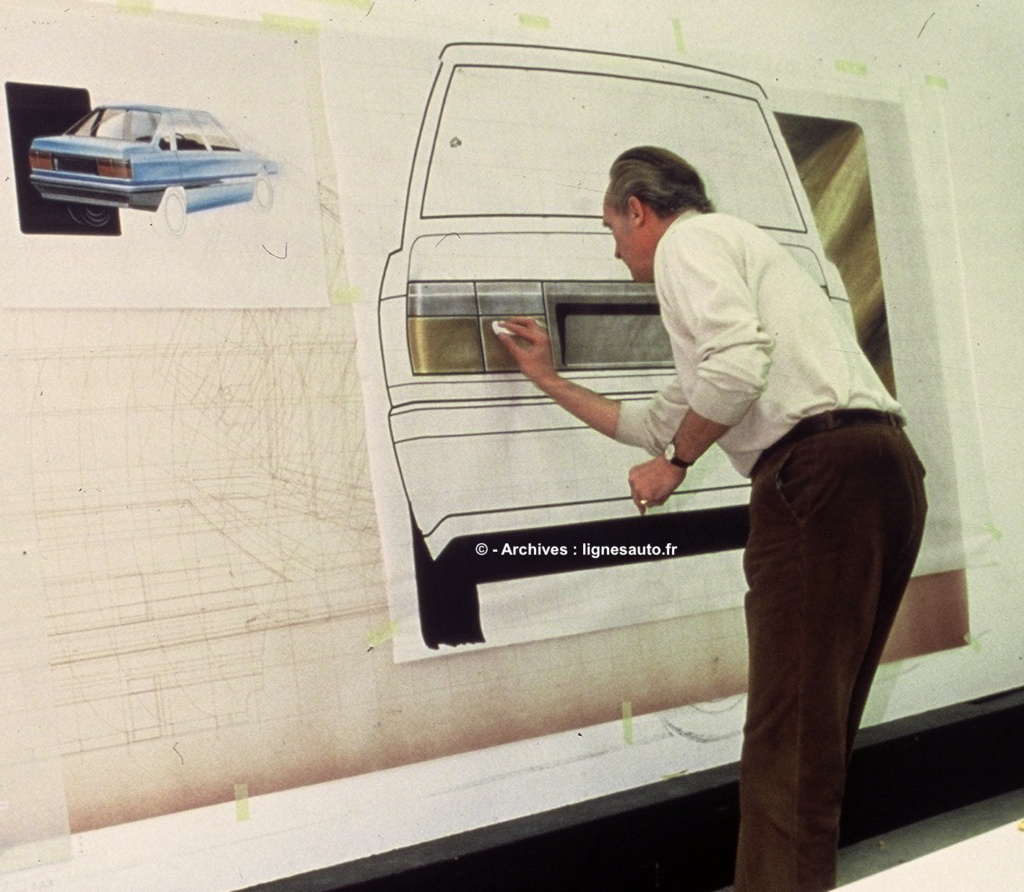
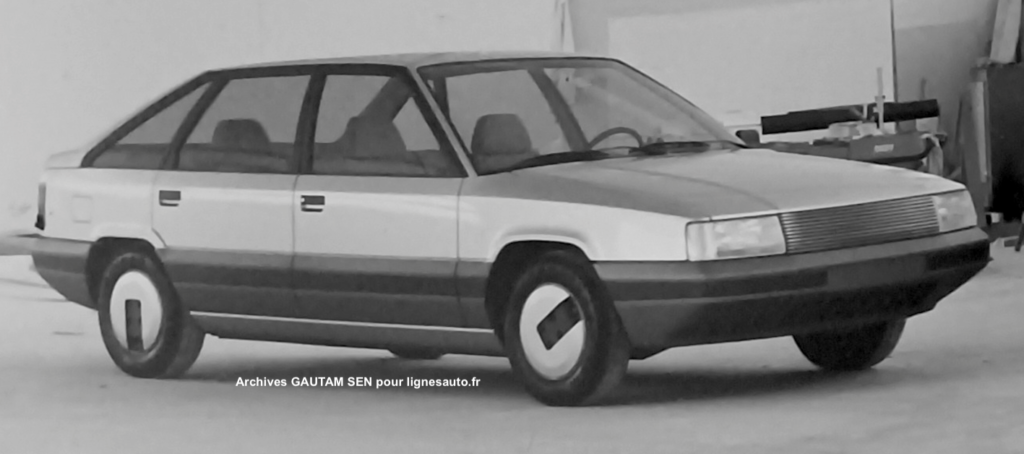
Giorgetto Giugiaro contented himself with the stylistic study of the Renault saloon, leaving the Régie to take care of its industrialisation. And of a return to specifications that were still somewhat fluctuating compared to the specifications on the Italian models. In addition to the internal design team at Renault, AMC and Giugiaro, a fourth designer joined the team working on the X48 programme: Marcello Gandini. Thanks to Gautam Sen, a leading expert on the Italian designer, we are able to show you Gandini’s proposal for the Renault 21 below. Clearly, it was produced after Giugiaro’s styling theme had been decided. The Gandini model was never taken forward.
With the Renault 21 programme now in Giorgetto Giugiaro’s hands, he expanded his influence over in-house design, still with Robert Opron’s blessing. So, while the Renault 21 was still in development, the X53 programme began to take shape. The Renault 19 was to replace the Renault 9 and 11 duo, and once again Giugiaro won the day with a design that exuded ‘perceived quality’, which was Renault’s primary objective.
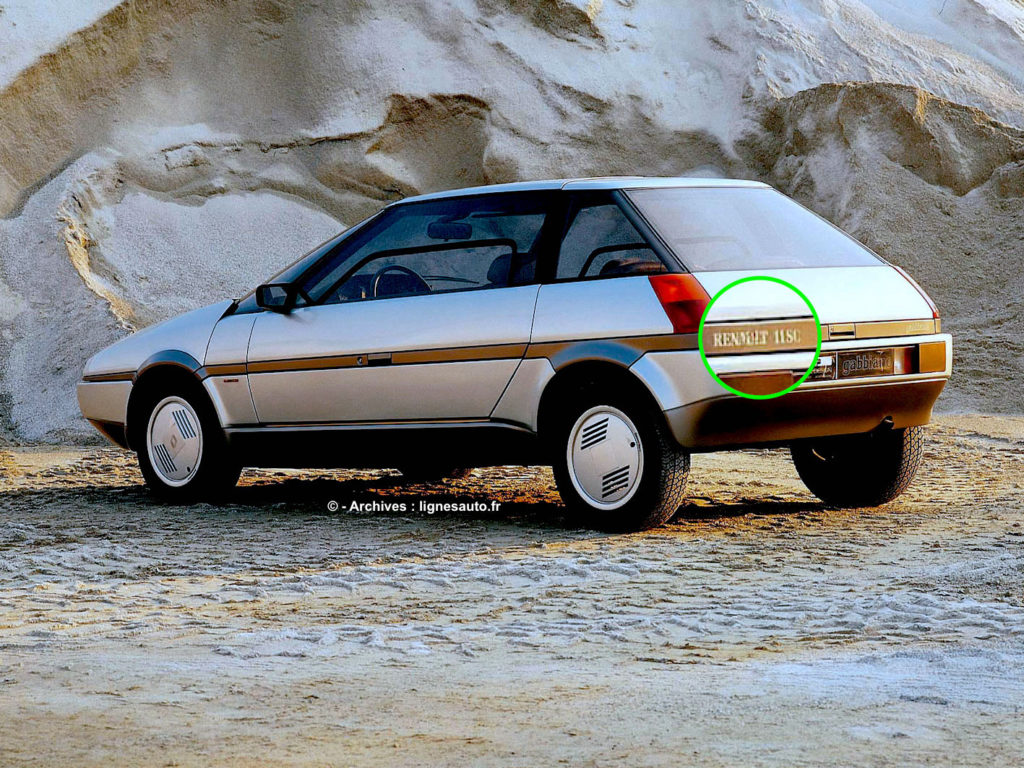
In 1983, Giugiaro wanted to thank Renault with a beautiful gift designed between the Renault 21 and Renault 19 studies: his Gabbiano concept car (above), based on the Renault 11 (called the ‘11 SC’) and unveiled at the Geneva Motor Show. After these two successes, Renault’s biggest project of the 1980s was on the horizon: the replacement of the Renault Supercinq with what would become the Clio in 1990, known as the X57 project (below, design by Jean-Pierre Ploué).
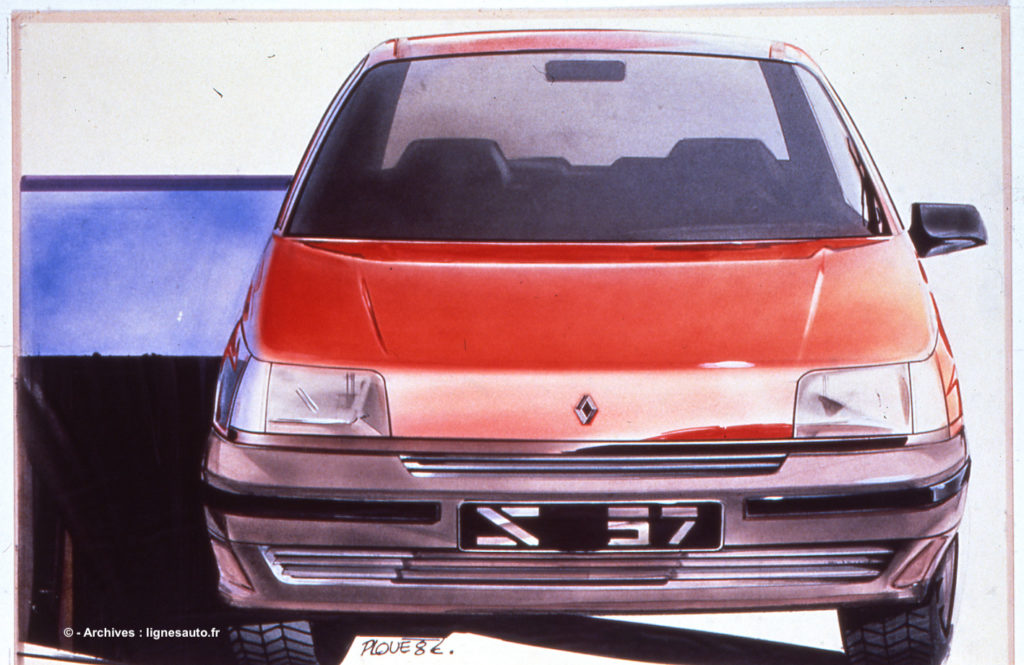
Giugiaro was confident. On the heels of two previous projects won by his teams against Renault, he became slightly arrogant about the X57 programme (the 1990 Clio). And he made a mistake that would cost him the victory. Renault’s designers regained the upper hand by designing the Clio in-house. What mistake did he make? Find out in the second part of this report, which covers the origins of the first generation Clio and features previously unpublished documents showing that the future little Renault had a formidable internal competitor even before it went on sale: the Twingo (below).
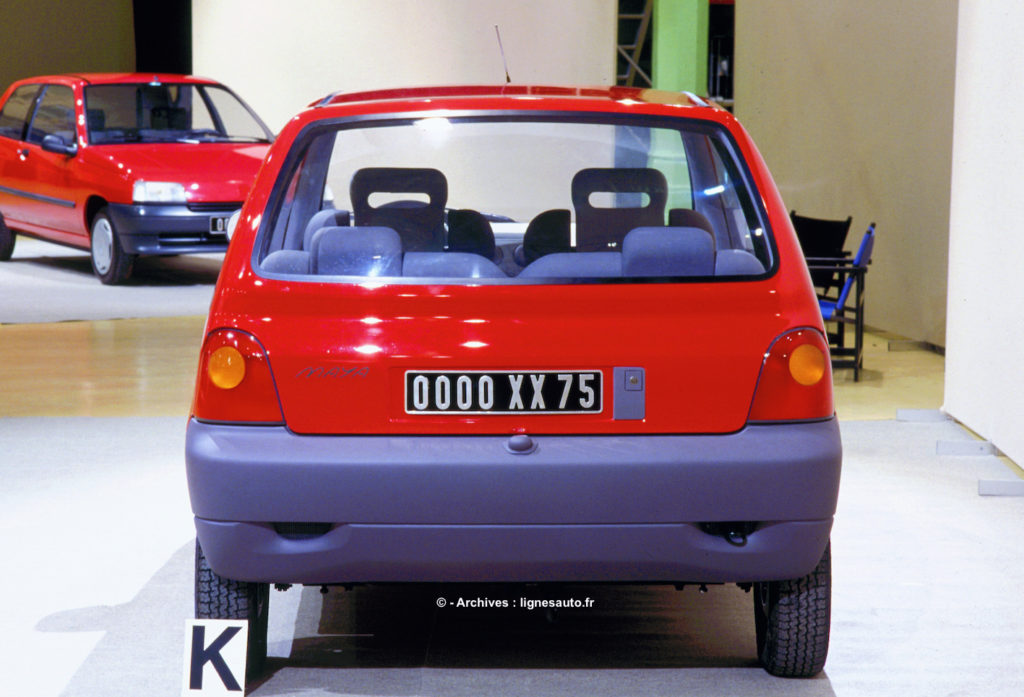
Coming soon: ‘When Giorgetto Giugiaro charmed Renault. Episode #02: the Renault Clio.’
BONUS #1: interview with Robert Opron in 1986 about the Renault 21
I had the opportunity to interview Robert Opron, Renault’s head of design in the 1980s, on several occasions. He talked about the Renault 21 X48 project after leaving Renault in January 1986.
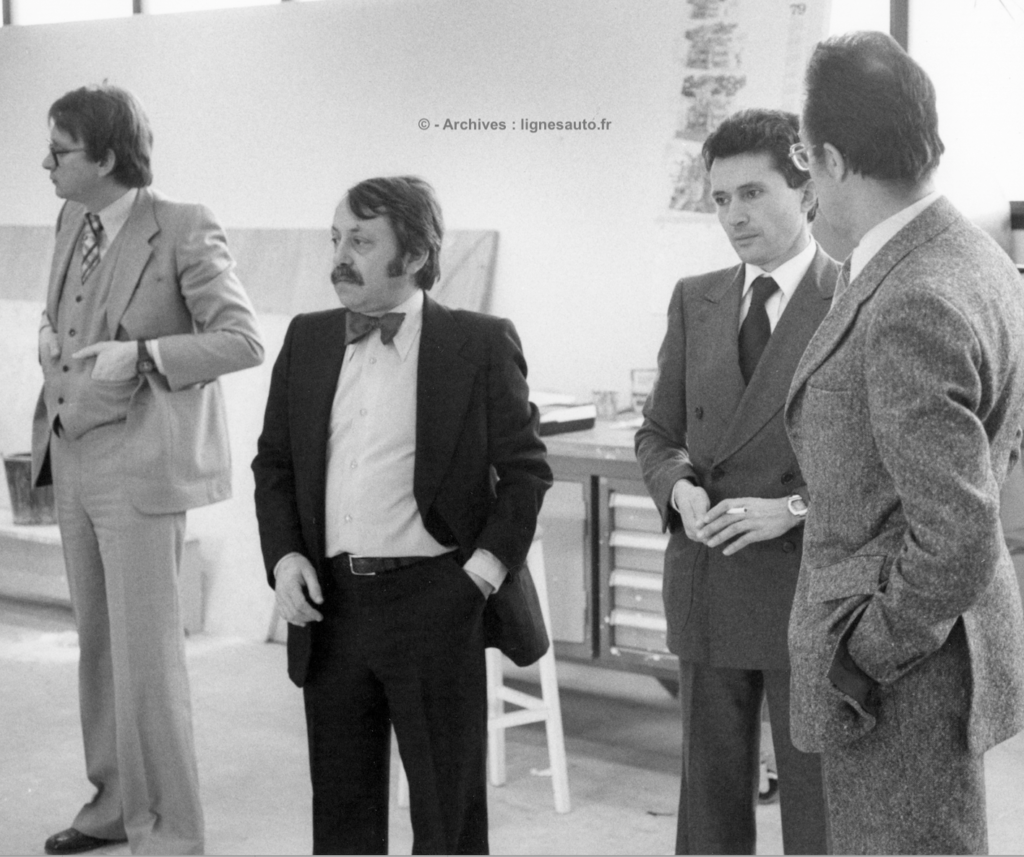
Regarding the collaboration between the manufacturer and Giorgetto Giugiaro, he explained that “I’m not sure it’s a good thing to hide it. I believe that in this day and age, we have to tell the truth. It’s not negative at all, because it’s perfectly normal for a major manufacturer to consult with external designers. The style of the Renault 21 was chosen because Giugiaro’s model best met the marketing objectives.”
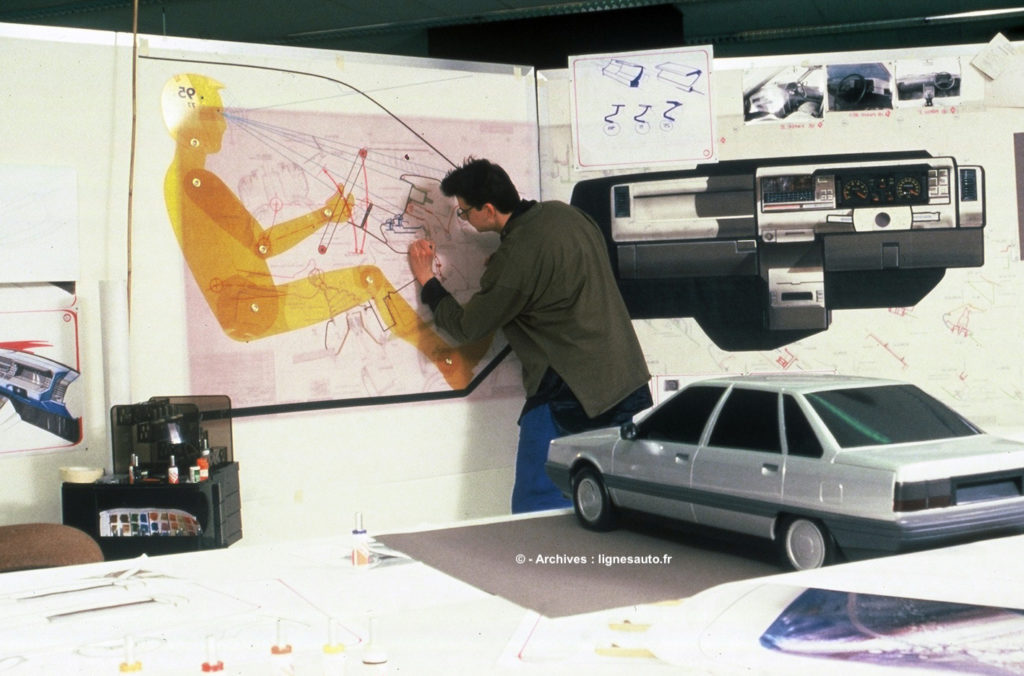
“We knew it was a mid-range vehicle and that it shouldn’t be too shocking, but rather in keeping with the three-box tradition.” But more daring designs had been proposed internally. “Yes, and there were even some very nice models (below is Michel Jardin’s), but they were always poorly received in customer tests. Personally, I’m not at all satisfied with the final choice. Some of the product team and I didn’t agree with the objectives. We were thinking of the Renault 16, a real success for the company, and we imagined that Renault’s future mid-range model should be creative and not play on tradition. It had to be innovative and inspired by the spirit in which the Renault 16 had been created. We had produced some beautiful models based on this logic, but they did not yield satisfactory results in tests, proving those who wanted tradition right.“
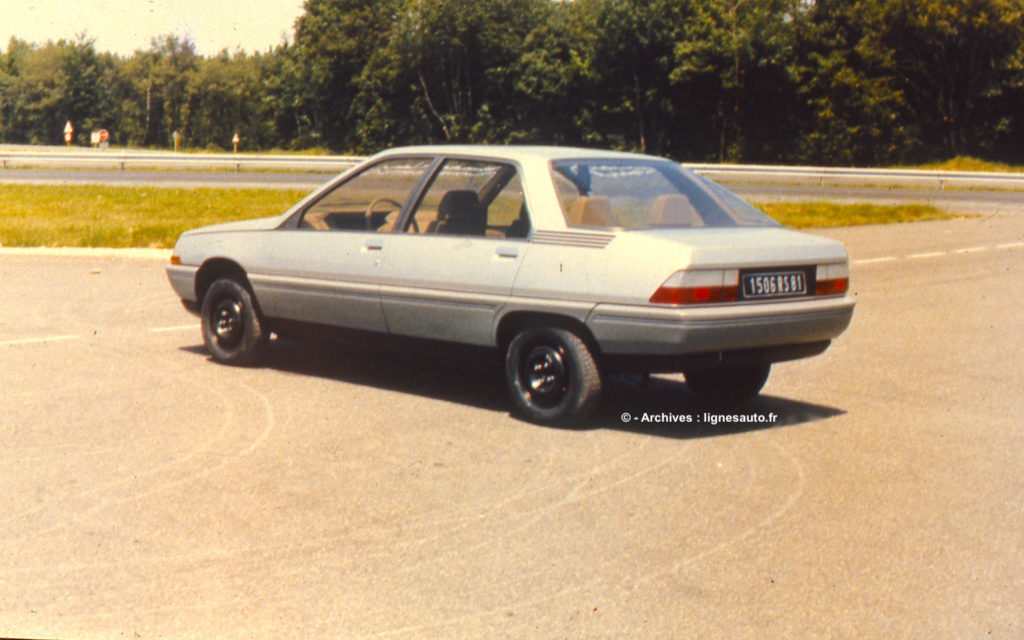
BONUS #2: the R21, originally designed as a fastback !
As we have just read, the Renault 21 X48 project was won by Giugiaro. But the work of the Renault design office was laborious. Michel Jardin, then head of one of Renault’s two design studios, reported in the conclusions of a seminar dated April 1986 that “the X48 project was launched in July 1980 on the basis of an old schedule and was affected by a change of direction in the final phase of its development. This change was not insignificant, since until July 1982, when the design was first frozen, the car was a two-box model! No fewer than nine full-scale models were actually put into competition until April 1982, when three proposals were selected for the final freeze in July. These three proposals were based on a two-box architecture. Doubts arose, and finally a new design freeze was scheduled for December 1982.
The two-box designs were still on the table, but it was Giugiaro’s three-box sedan that was chosen on that day. Michel Jardin notes in his conclusion that “the final shape of the Renault 21 was finalized in early October 1983,” three years before it went on sale. In the case of the Renault 21 program, the architectural concept between a two-box sedan and a classic trunk sedan was not clearly defined when the project was launched. Surprising! Ironically, the Renault 21 was also produced in a hatchback version, a solution that has been part of the brand’s DNA since the Renault 16.
BONUS #3: no phase advance for the R19 either
The style chosen in June 1986 for the Renault 19 X53 project was Giugiaro’s. The Italian model fought hard against the internal proposal by Jan. Michel Jardin explains that “Giugiaro’s model had to be redone to meet the specifications.” The designers tore their hair out trying to decide on the final version. Michel Jardin notes that “the chosen style had to be reinterpreted to meet the requirements of the bodywork plan. The time needed to produce plaster style models using Unisurf techniques was insufficient to achieve a perfect result. In the style workshops, it was a constant race against the deadline, to the detriment of quality.”
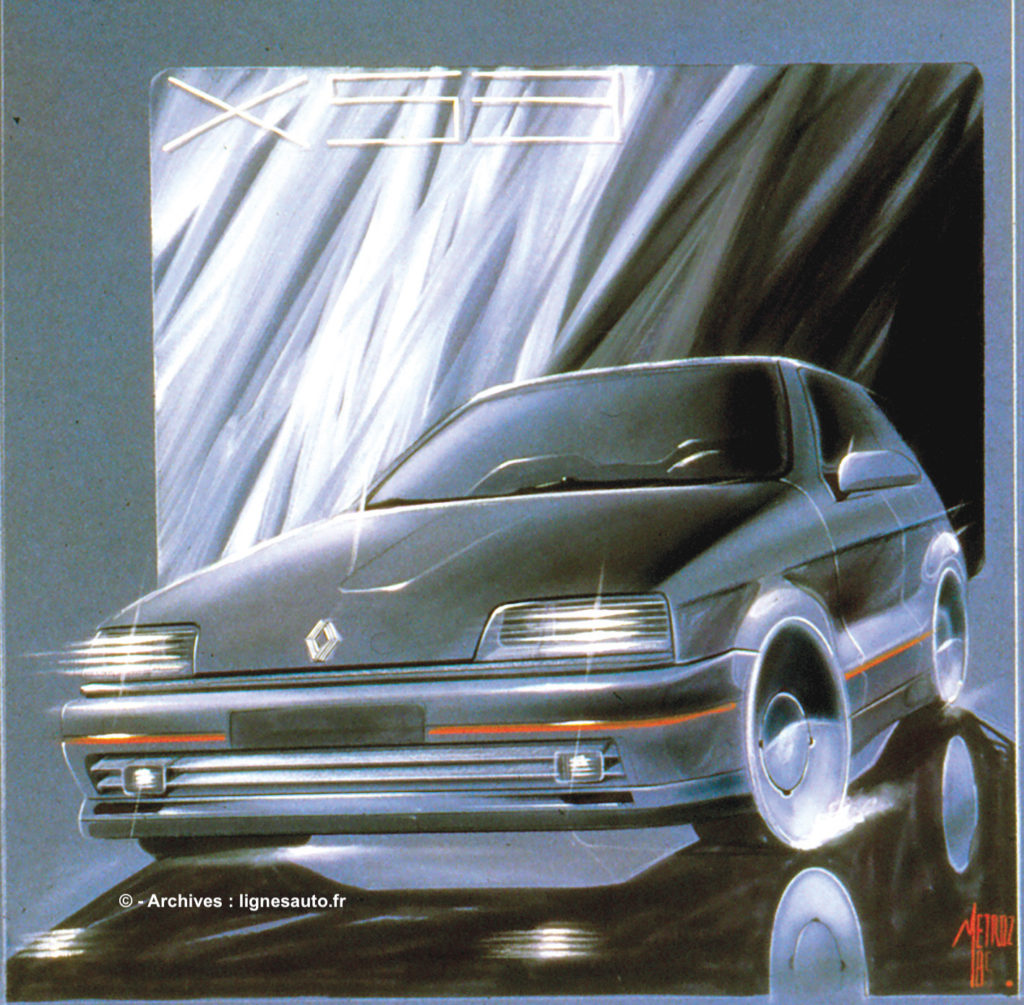
“In the design office, Unisurf designers are having trouble interpreting this digital system to define the right surfaces, especially for increasingly modeled styles. Ultimately, the Unisurf models are not faithful to the specified style, especially since last-minute changes had to be interpreted directly on the drawing due to time constraints, without going through the mock-up stage.” It is clear that choosing a style from a renowned consultant does not mean that the project requires no effort on Renault’s part! Nevertheless, the manufacturing quality of the Renault 19 marked a break with the Régie’s previous products, and this compact sedan (1988) was a real success!
Coming soon: ‘When Giorgetto Giugiaro charmed Renault. Episode #02: the Renault Clio.’
