Here is the second part of the feature on those famous twelve restored Renault models. There may well be a third part, as there are still a few models left to examine, every bit as interesting as the twelve the author has so far chosen at random! And so this provides an opportunity to continue this journey through the design archives of Renault and LIGNES/auto.
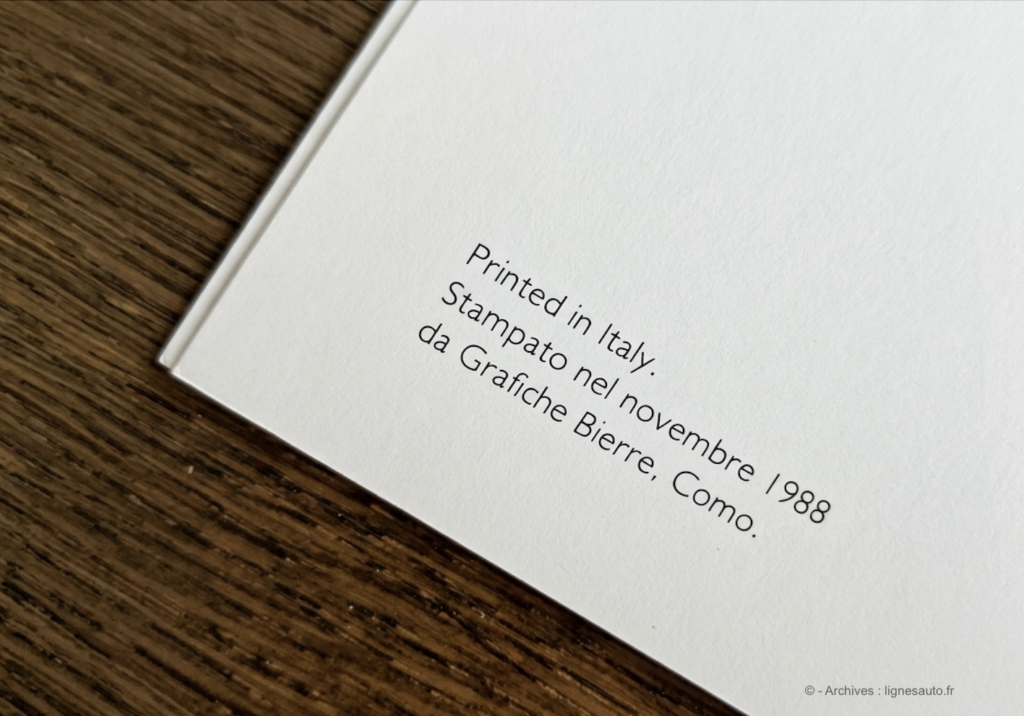
It was therefore Patrick le Quément who wrote the text for this little book, which brings together some forty designs, presented on black-and-white photo plates. Unfortunately, these photographs are of poor quality, which is typical when unearthing the past. LIGNES/auto has decided to restore them through digitisation, whilst remaining faithful to the designer’s original vision and always publishing the authentic source documents. It is worth noting that this document was published to mark the unveiling of the 1988 Mégane concept car (below).
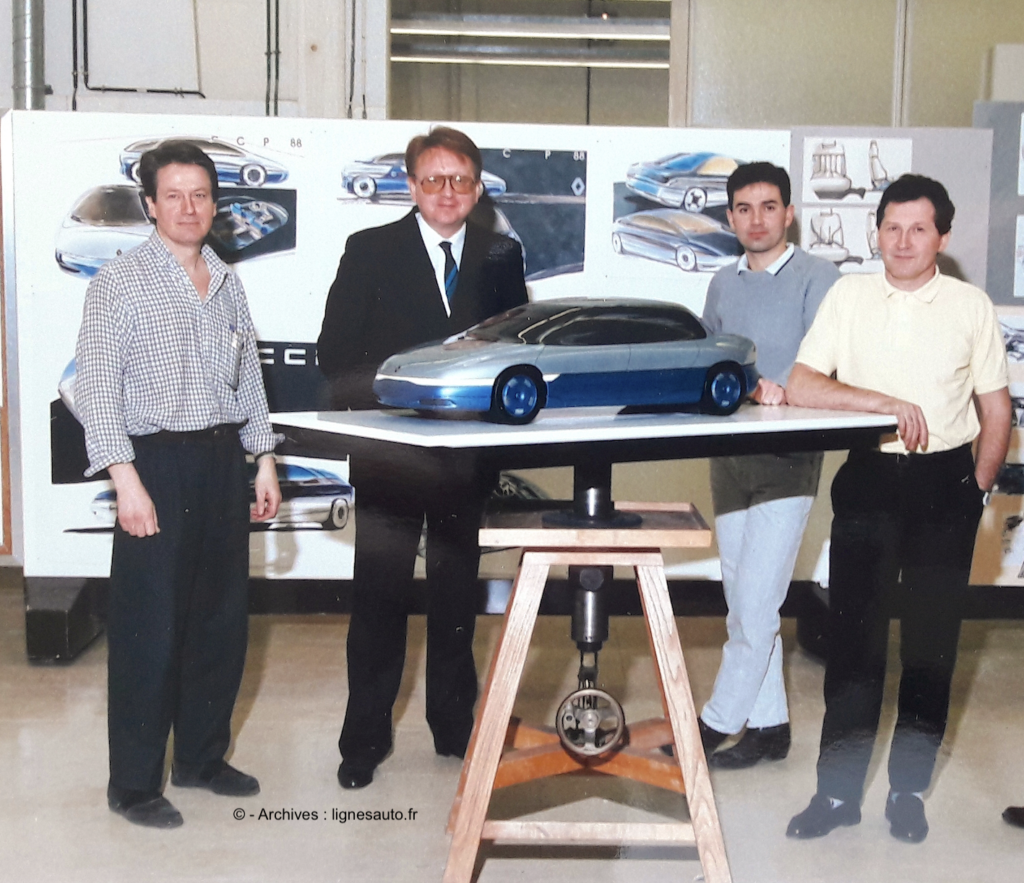
Pictured above is part of the team that worked on the Renault concept car, the last of the Gaston Juchet era before Patrick le Quément took over as head of Renault design at the very end of 1987. From left to right in front of the Mégane concept model: Michel Velay, interior designer; Jean-François Venet, then head of concept cars; Jean-Pierre Ploué; and Gérard Asensio.
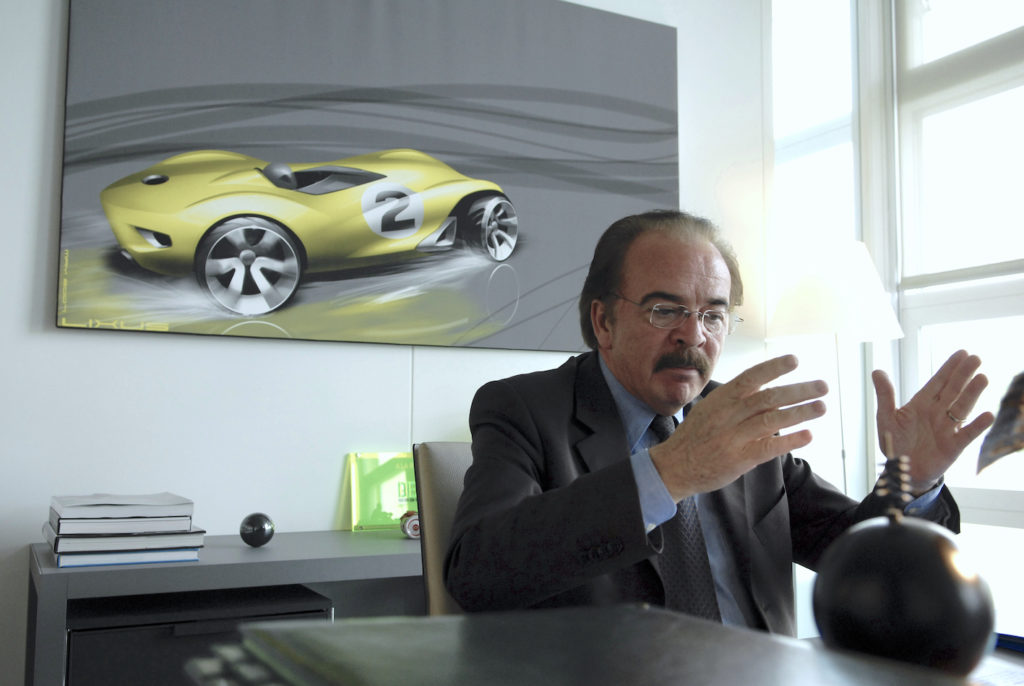
Throughout Le Quément’s text, one senses a desire on the part of Renault’s new head of design to make a case for the profession of stylist/designer with these words: “It is out of love that car designers embark on an exciting, yet often thankless, career. And it is always out of love that they persevere through both joys and disappointments. The Renault design tradition is also – and widely recognised as – one of small-engined cars.” Even though Renault attempted in 1968 to anticipate the other end of its range, as shown below.
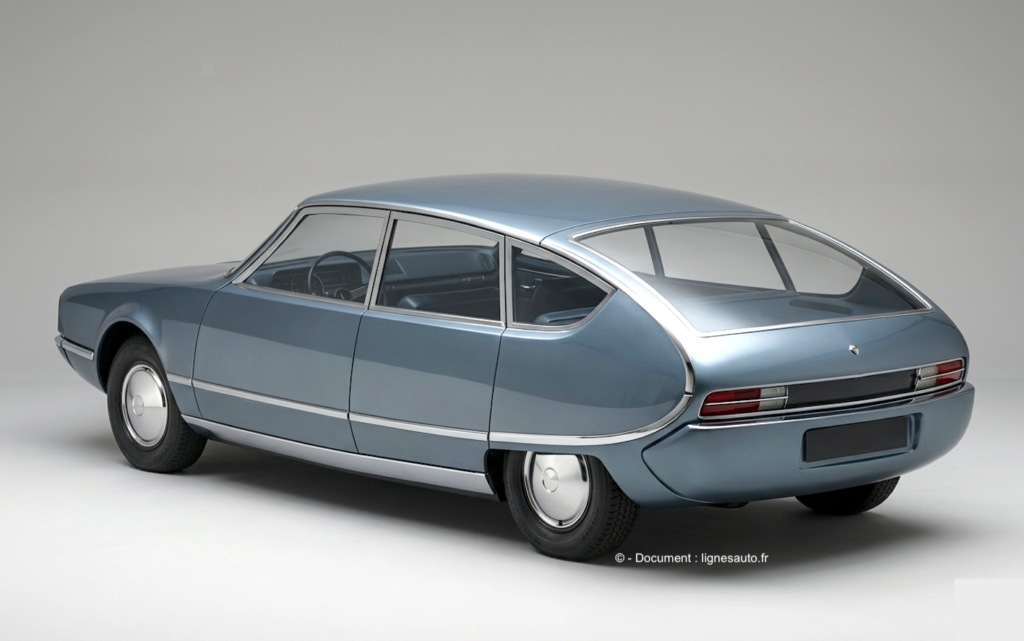
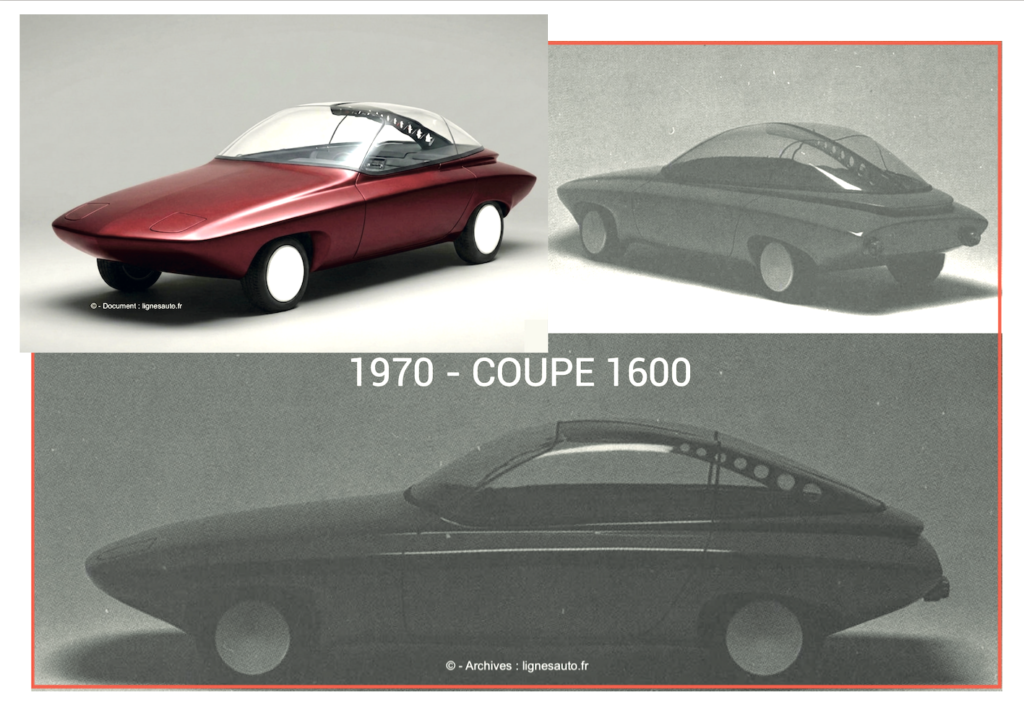
Patrick le Quément continues: “When Renault set out to create cars accessible to as many budgets as possible, it did so not by simply scaling down and downgrading its top-of-the-range models, but by offering something different, by demonstrating ingenuity in unexplored directions. By establishing new values such as functionality, with the widespread adoption of the tailgate and modular rear space.” And beyond this architectural research, which would later give rise to the Renault Espace and Twingo, the quest for a sports coupé remained a constant focus at the design studio. Let’s go back to 1970. The Renault 12 had been on the market for barely a year and the Renault 5 was still unknown.
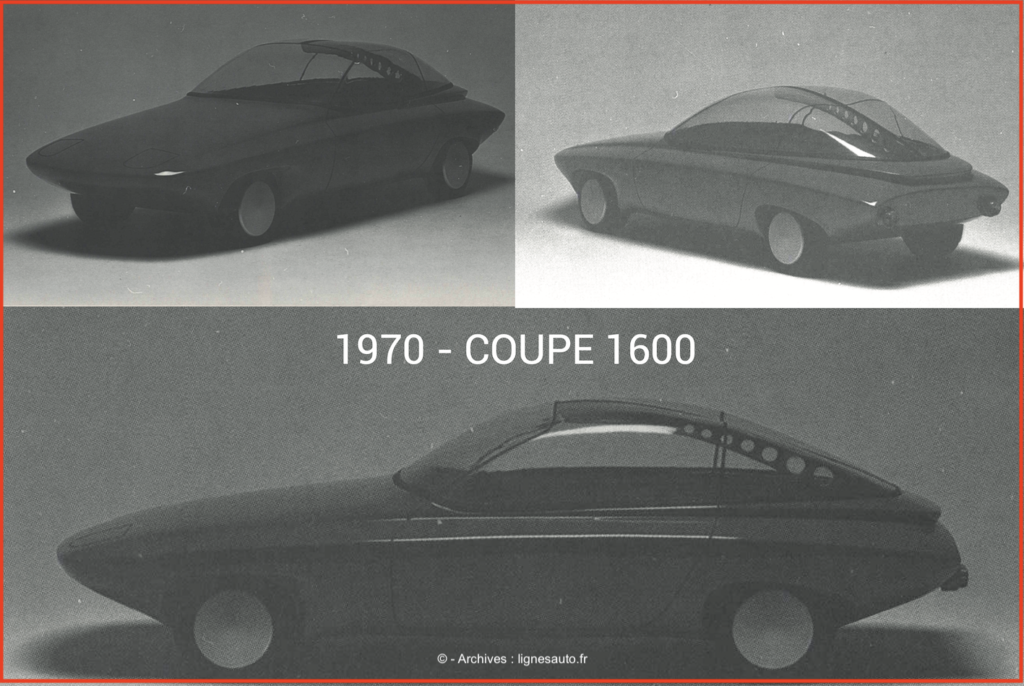
On the other hand, you can drive a rear-engined model, such as the R8 Major or S, or even the Gordini. The Renault 10 is also there to satisfy the desires of drivers loyal to rear-wheel drive. In the small design studio, Gaston Juchet’s team is therefore fully occupied with the future Renault 5, Renault 15/17 and Renault 14, amongst others. But there was always this nagging desire for a sporty model like the one described above: a coupé fitted with a ‘big’ 1600cc engine. This would have positioned it above the Renault 16 at the time.
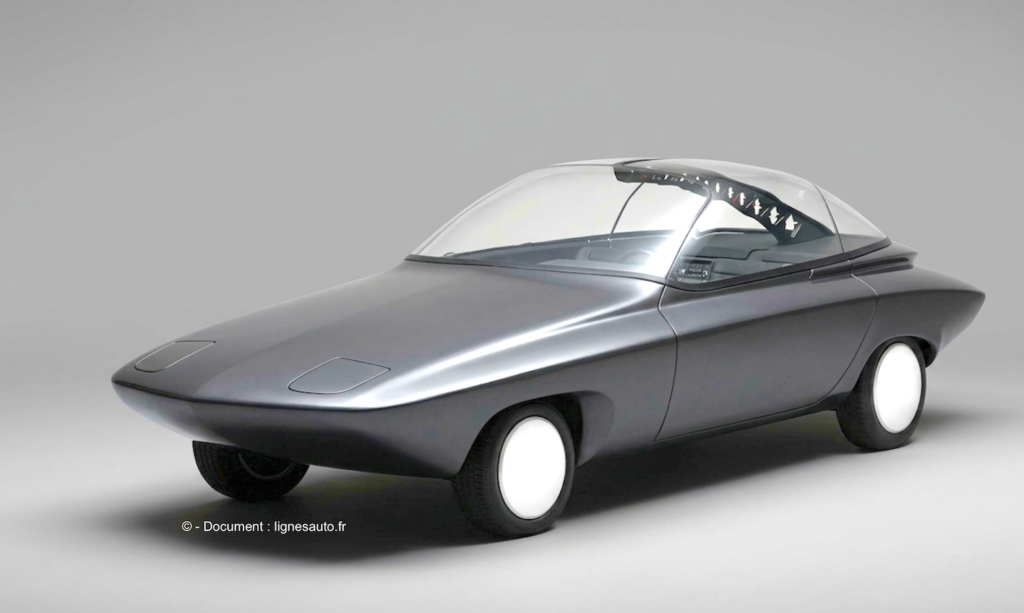
Whilst the R8/R10 models were rear-engined, this 1600 coupé was designed as a front-wheel-drive vehicle. The idea was to eventually transfer the power of the sports cars to the front axle. In 1970, when this small model was made, Citroën’s rival had just launched its front-wheel-drive, 6-cylinder SM Grand Tourisme coupé, one of the key requirements for which was precisely to understand how to transfer more power to the front wheels alone.
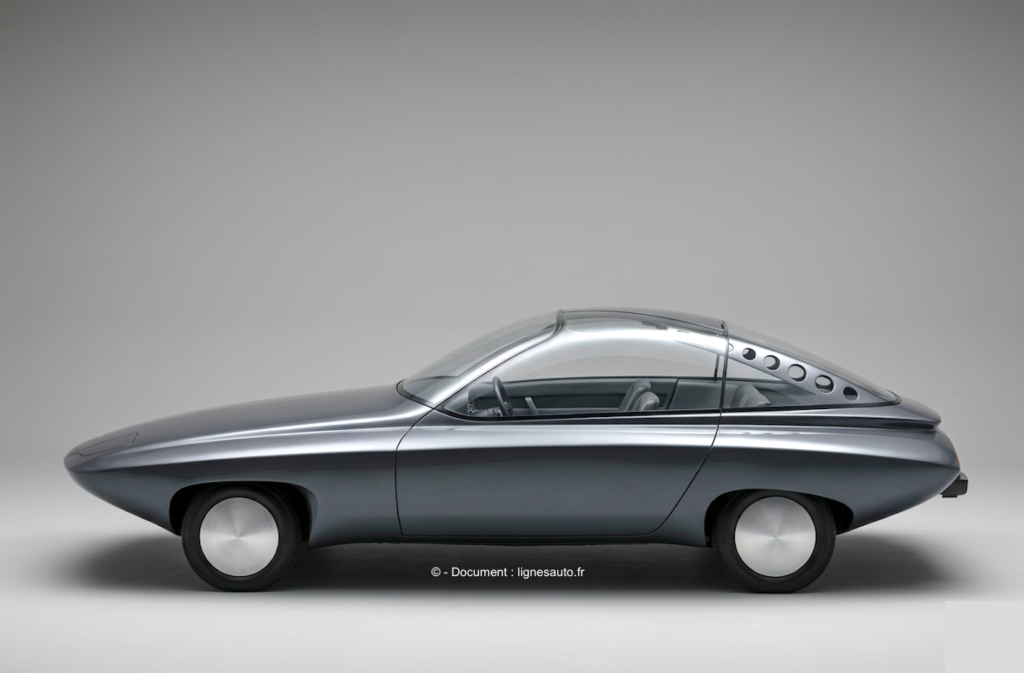
Unfortunately, this Renault 1600 coupé will remain nothing more than a 1:5 scale model. It does, however, serve to demonstrate that, beyond the usual model refresh studies, the 1970s were also a time of bold innovation! This sci-fi-worthy vehicle, with its fighter-jet-style glass cockpit, was conceived by Michel Beligond. During the same period, this designer also created the basis for the design of the Alpine A310 2+2, which was launched in 1971.
LIGNES/auto is also a bilingual Facebook page where you can keep up to date with the latest news and design trends, and browse the automotive archives: https://www.facebook.com/lignesauto/
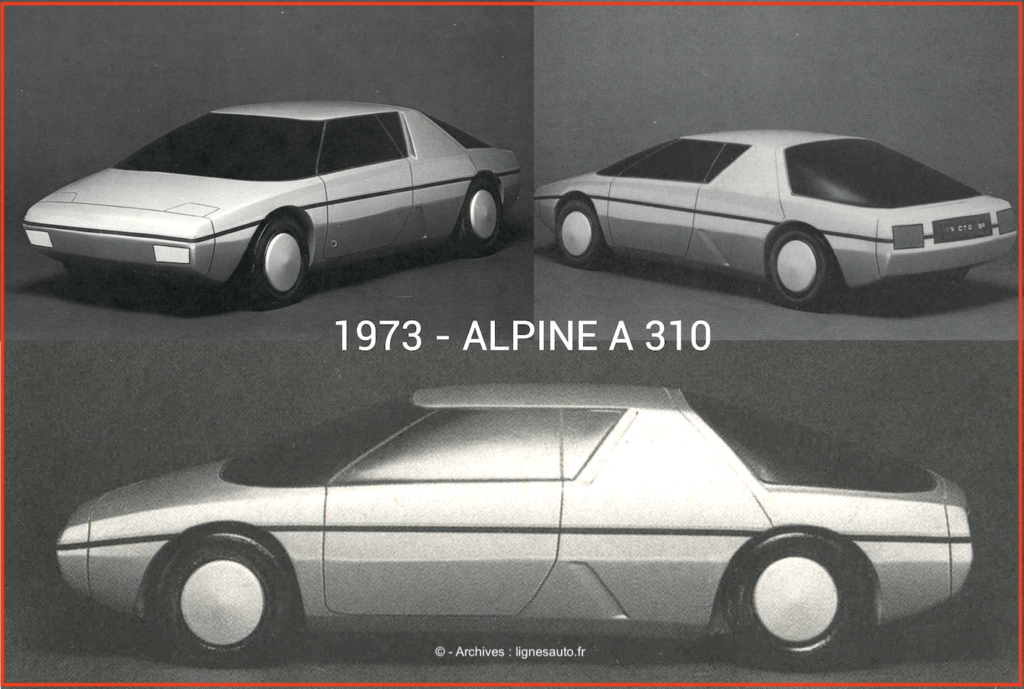
And since we’re on the subject of the A310, let’s stay in the world of sport with this other coupé, also from the Alpine range. In 1973, the year this model was produced as part of the A310’s revamp, a major programme known as NGA (Nouvelle Gamme Alpine) was launched. The Alpine A310 had been on the market for two years, and Renault envisaged creating a range comprising three models: the A110, the A310 and a more modern, yet also more affordable, car.
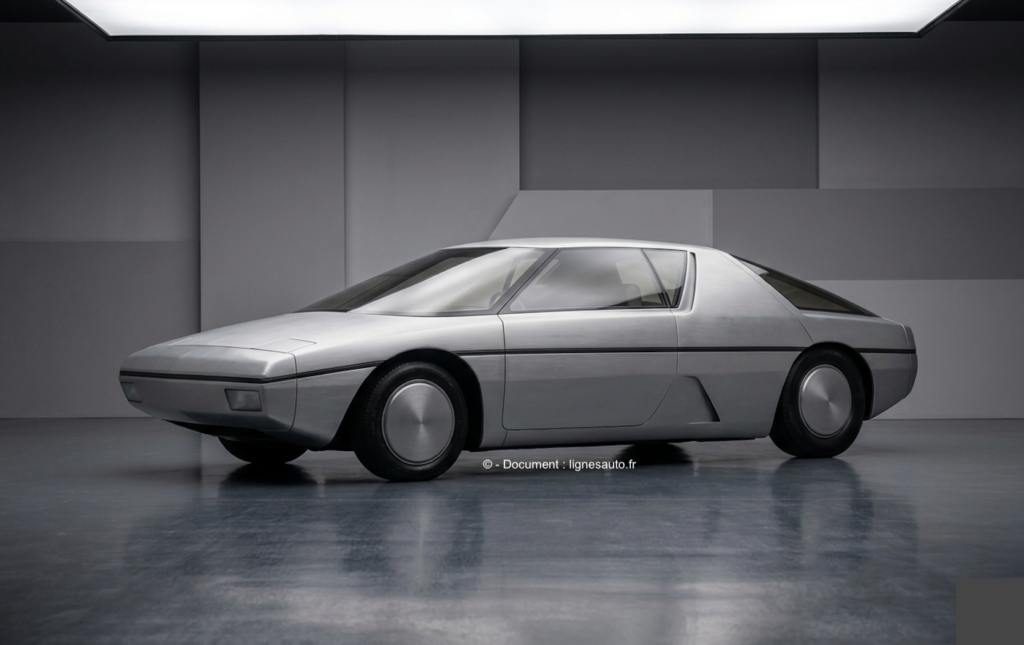
For the time being, Renault is therefore planning to revamp the A310 with this model featuring sharp, geometric lines. This is all the more surprising given that, at that time, Renault was finalising the production of its Renault 14 (1976), which was designed more for its voluminous shape than for its sharply chiselled lines! The Alpine A310 shown here is the work of Michel Jardin, and was always envisaged with a fibreglass body. Note the presence of a bubble covering the entire rear section…
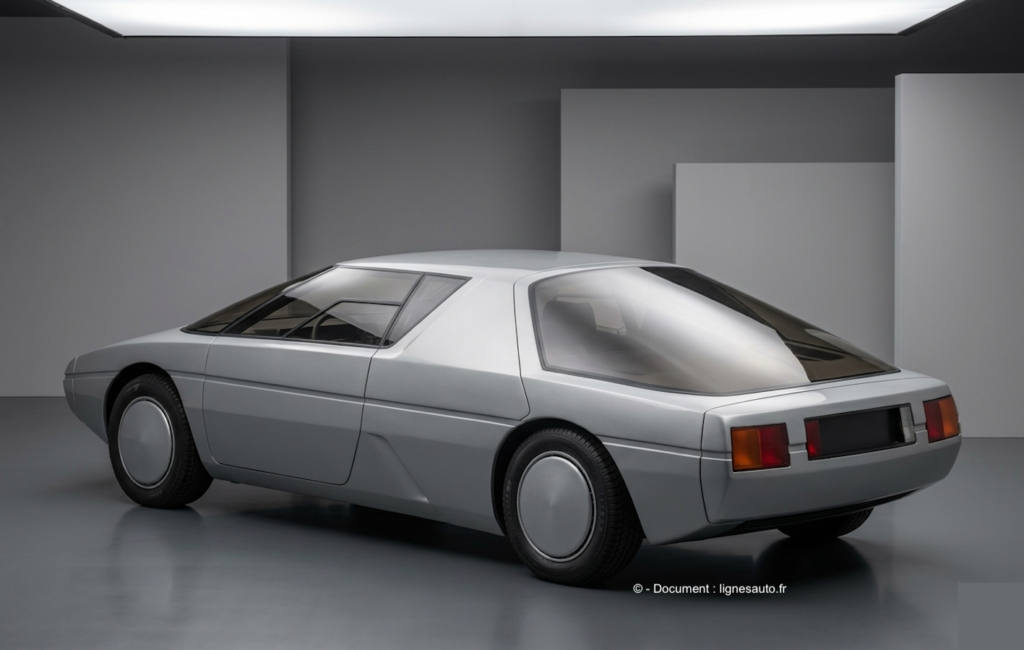
The production A310 underwent a styling update to coincide with the launch of the V6 version in 1976, whilst the NGA programme would go on to produce a whole range of sports coupés, on which Michel Jardin, Marc Deschamps, Marcello Gandini and others would work. These famous projects will soon be featured on this website. But let’s leave the world of sport for the small, smart car. The one Renault is supposed to have mastered.
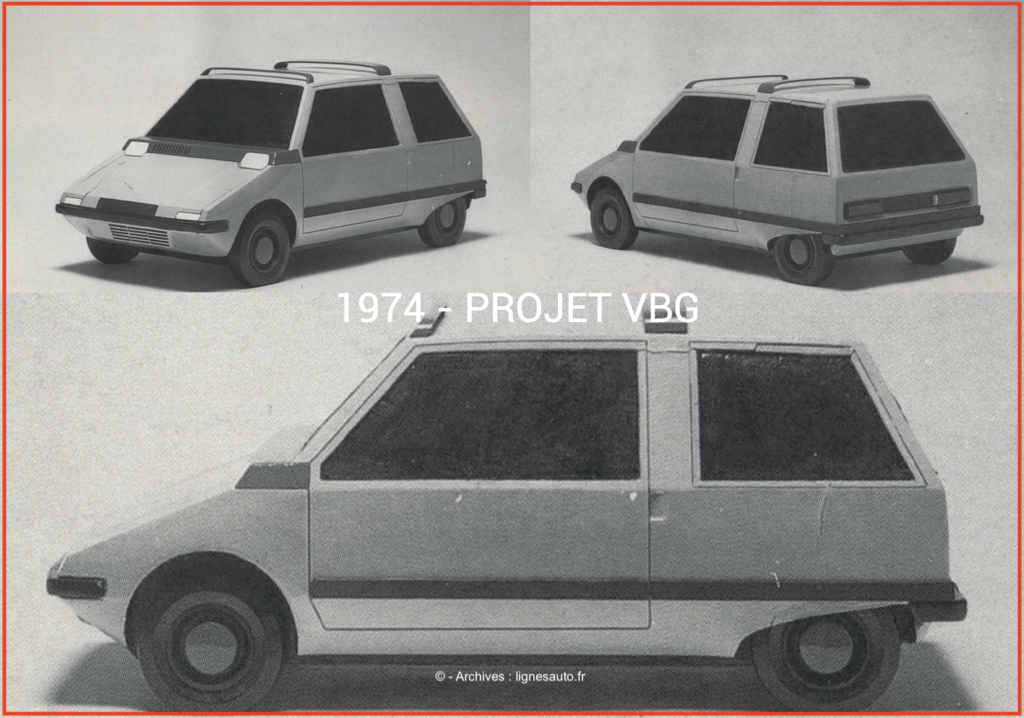
Regular visitors to this site will know that Renault’s sprawling VBG (Véhicule Bas de Gamme) programme is a particular favourite of LIGNES/auto. In the heart of the 1988 dossier, we found two pages of photographs featuring two scale models of this project. The first one above dates from 1974, the year the VBG programme was launched, which at the time aimed to create a modern small car positioned below the Renault 5.
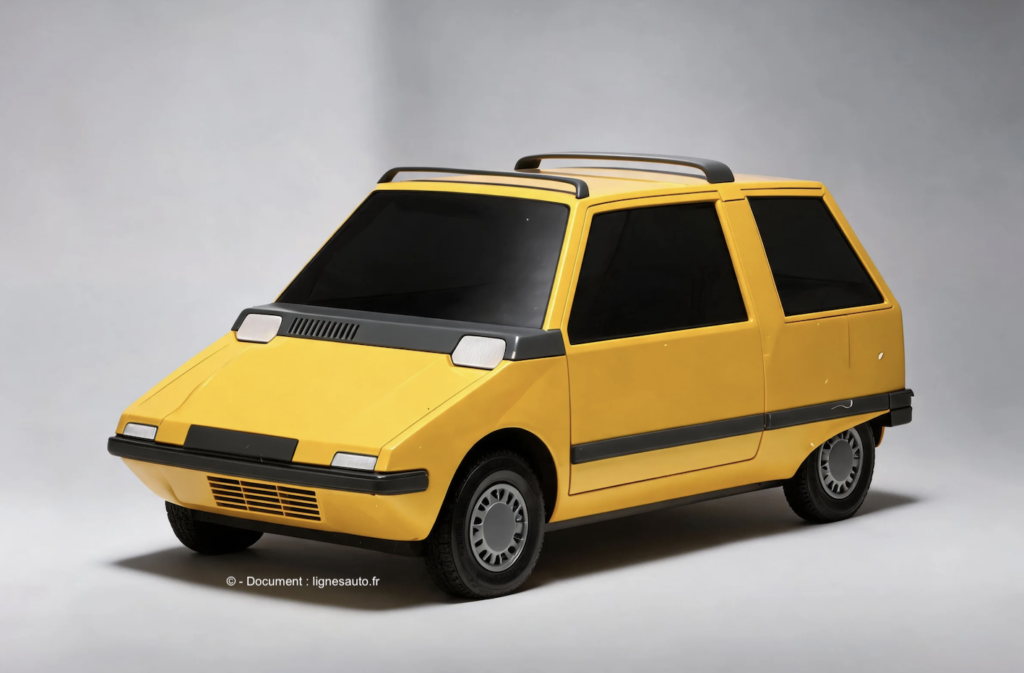
We owe this model, characterised by its headlights positioned below the windscreen, to Robert Broyer. This designer, who had recently created the Renault 12 and 14 in succession, as well as the interior of the R5, had left Renault a year earlier (1973) but continued to be consulted by the company. In particular, he presented this model and was working at the same time on a Renault 14 coupé project to be produced by Ligier. Neither of these projects would ever see the light of day.
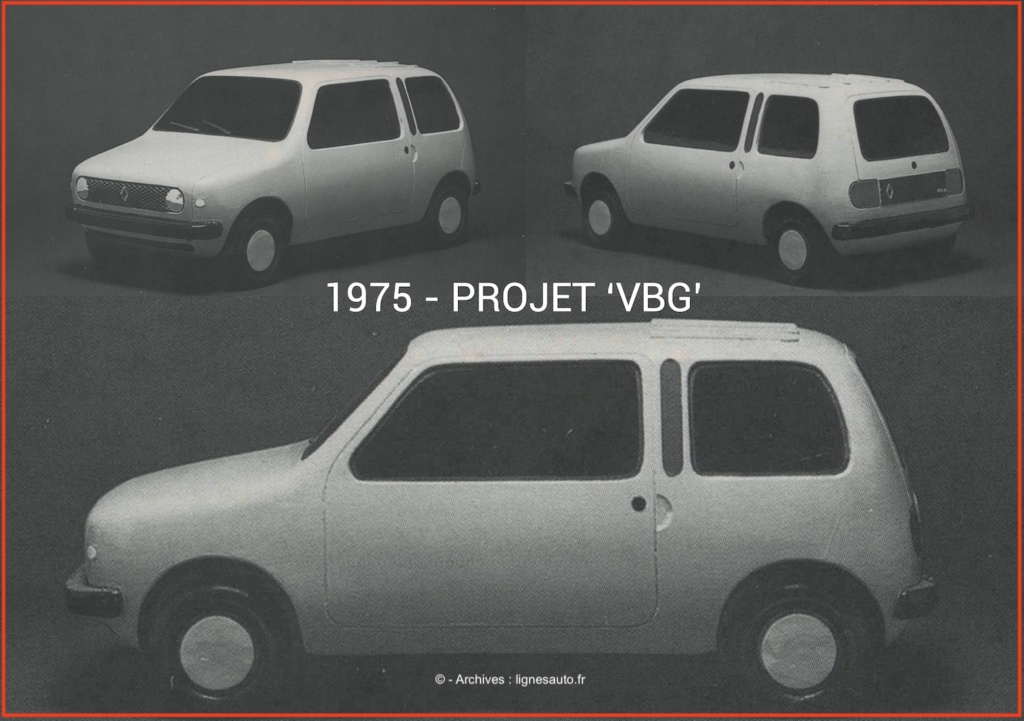
In 1975, Citroën’s head of design (Robert Opron) left the Javel-based company to join its rival, Renault. He then took charge of all design for the Renault group (including lorries), whilst Gaston Juchet remained, unofficially, the head of automotive design. Robert Opron’s approach to design involved drawing on a wide network of consultants, not limited to the automotive sector. Whilst Opron himself worked on the VBG project, he also commissioned designers and artists who were not necessarily connected to the automotive world.
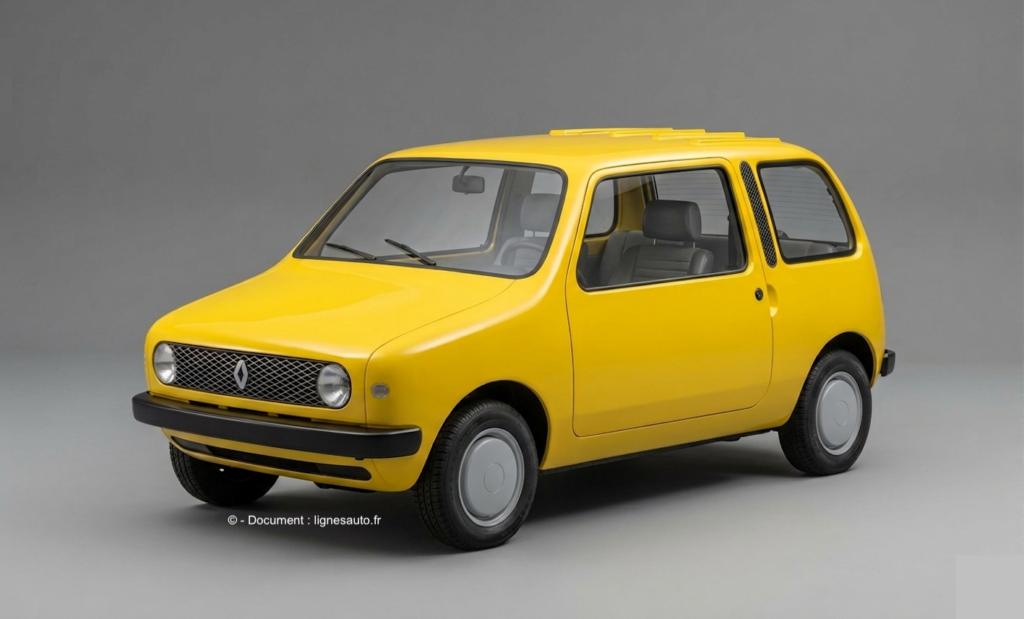
This small model, with its very ‘product-design’ aesthetic and sleek, rounded forms, offers a solution for a successor to the Renault 4. It is the work of Pham Ngoc Tuan, an artist born in Vietnam in 1929 who came to France to complete his studies. His biography notes that he also worked in the worlds of theatre, ballet and dance, whether designing costumes and sets or overseeing stage design. At Renault, Robert Opron also called upon the Italian Mario Bellini, notably for the Renault 25 project.

Following this digression into the VBG programme, we return to the early 1990s with designs in the Renault style for its sister brand: Alpine. This project was proposed as a replacement for the A310, which had been launched ten years earlier. The car that would become the GTA was to be an entirely new model, but it was criticised for being too similar in appearance to the A310. However, there were numerous design studies before the final style was finalised, such as this one by Jean-François Venet.
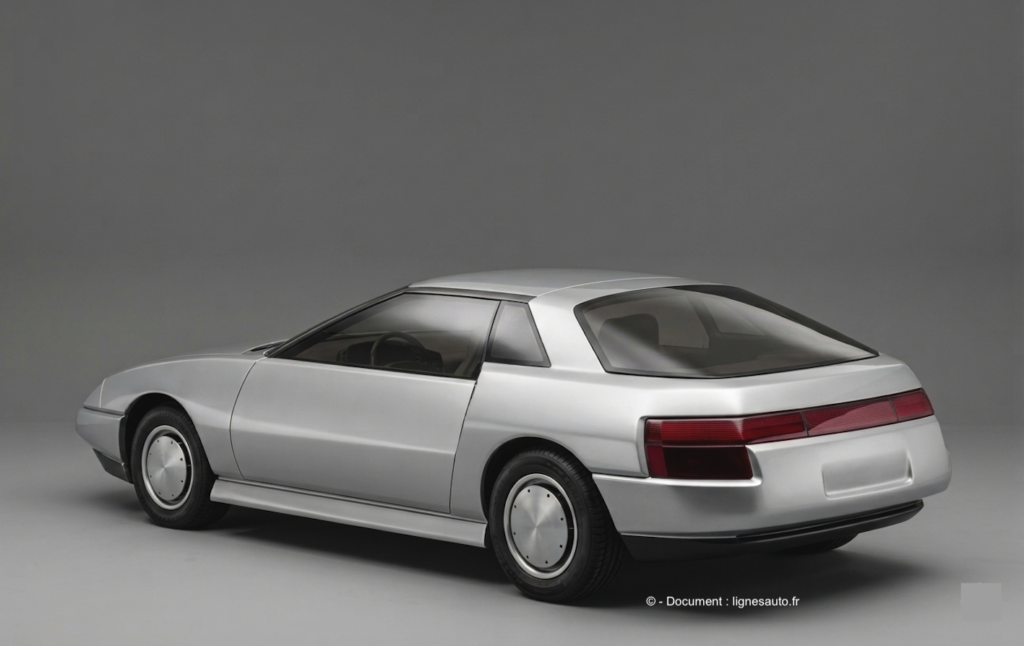
The designer was enjoying a golden period at Renault at the time. His coupé initially conveyed a sense of solidity, avoiding the frail appearance of the small saloon, in order to better compete with the German benchmarks—built from sheet metal and with a well-established reputation in the 2+2 sports car market. A large rear windscreen was offered, as on the Renault Fuego, designed by Michel Jardin, which had only just gone on sale.
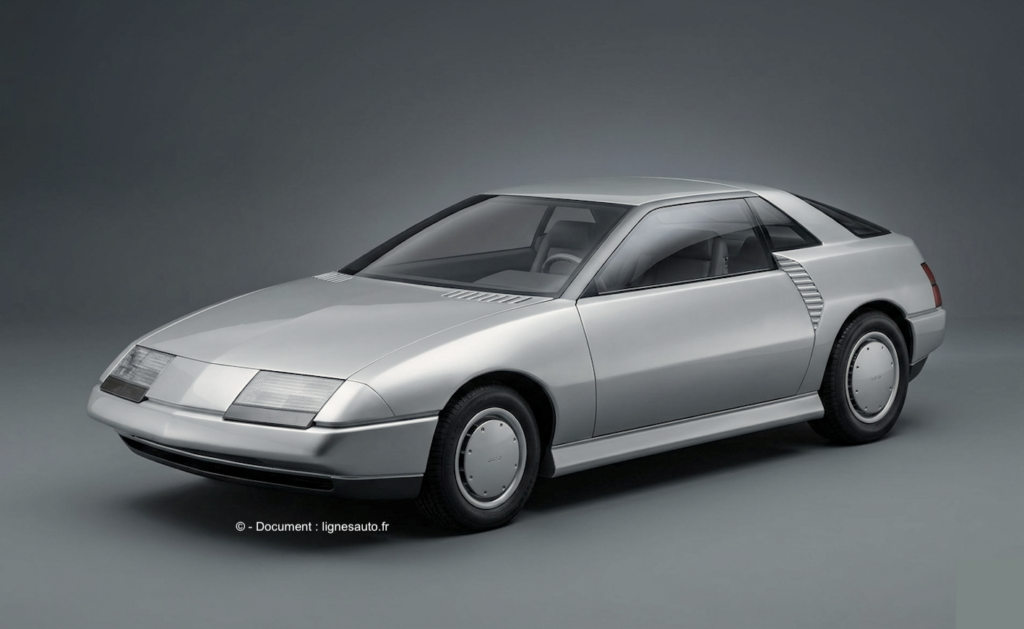
Robert Opron and Gaston Juchet led the design teams that proposed various versions of the new Alpine. Renault also called upon a number of consultants, including Heuliez to produce its models. This proposal gave designer Jean-François Venet a chance to catch his breath, as he was then in direct competition with his ‘boss’ Gaston Juchet on the X29 project for the future Renault 25 saloon… And on that programme, it was the boss who came out on top.
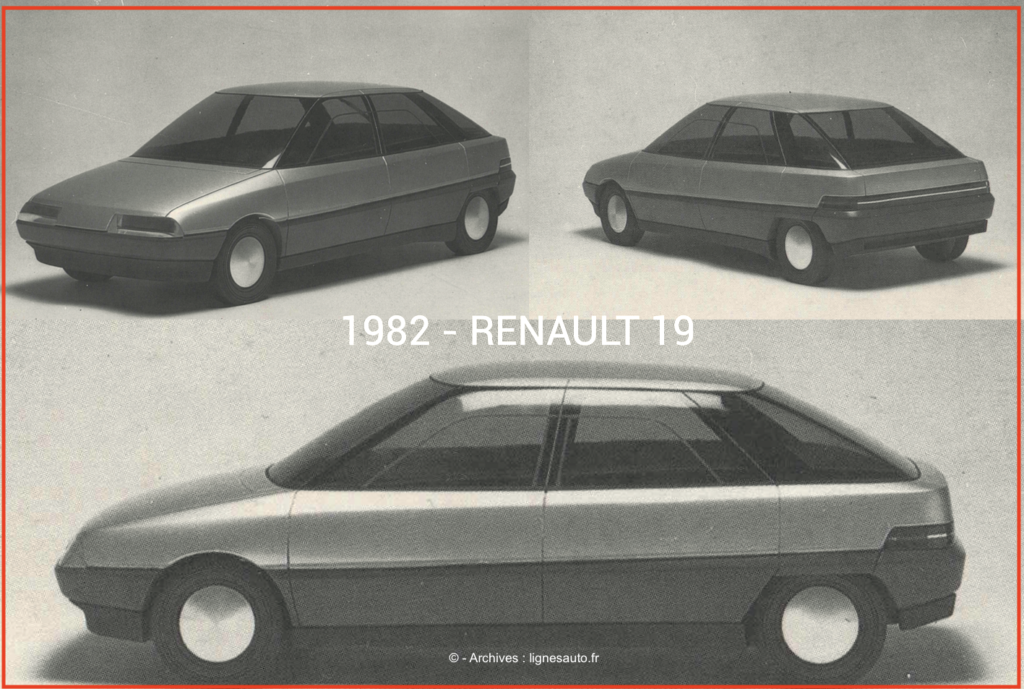
Around the same time (1982), Jean-François Venet was working on what we might today call the early stages of the project to replace the Renault 11. A new 11 would go on sale a year after this highly forward-thinking study! Here, the focus is on a theme that was all the rage in the early 1980s: aerodynamics. In 1982, Renault did indeed unveil its aerodynamic Vesta concept car, thanks to government funding aimed at designing a car consuming less than 3 l/100 km. It wasn’t until the Vesta 2 in 1987 that this target was achieved, with a figure of 1.94 l/100 km.
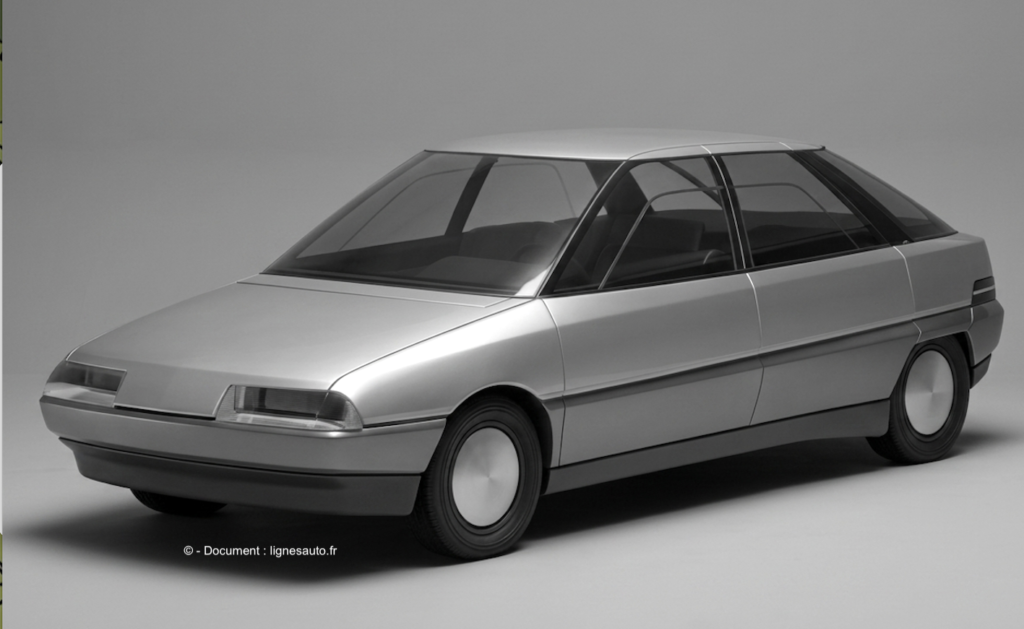
Jean-François Venet’s proposal for what would become, seven years later, the Renault 19 – ultimately designed by the consultant Giugiaro – is both highly aerodynamic and very light and airy. This model already introduces the concept of a floating roof and extensive glazing around the perimeter. The doors are self-closing, the glazing is bonded, and two hatches with small sliding windows really give the impression of a concept car.
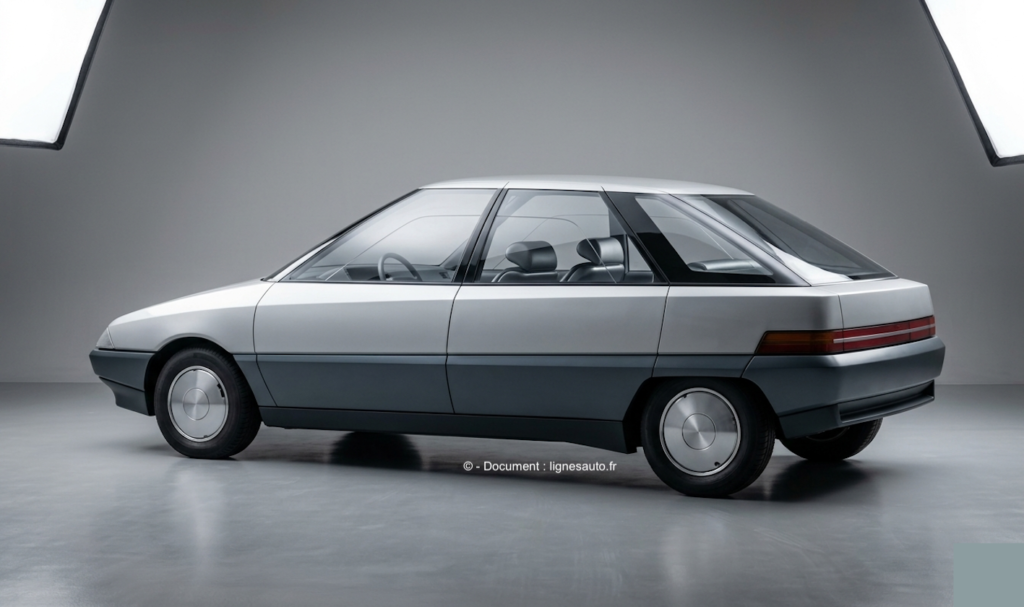
When viewed in the context of its time (the Supercinq, for example, had not yet been unveiled), this model is highly avant-garde. Above all, it establishes key elements of Renault’s future design, such as the famous ‘autoclave’ doors, which would later feature on the 1986 Renault 21 (Giugiaro again…) or the three-part rear ‘bubble’ that Jean-François Venet would propose for his Rafale project for the Renault 25 programme.
In conclusion, Patrick le Quément is quite right when he notes in his text “that this small collection of unearthed projects, when viewed alongside the models actually manufactured and sold right up until the 1980s, reveals the existence of a Renault design tradition that is quite unique, clearly defined, and at the same time extremely vibrant in the diversity of its expressions. Thanks to this tradition, the creations of Renault’s designers seem to have escaped the vagaries of fashion. Those familiar with automotive history, including the chapter on dream cars and concept cars, will be particularly struck by this, as they will not find their usual points of reference here.“