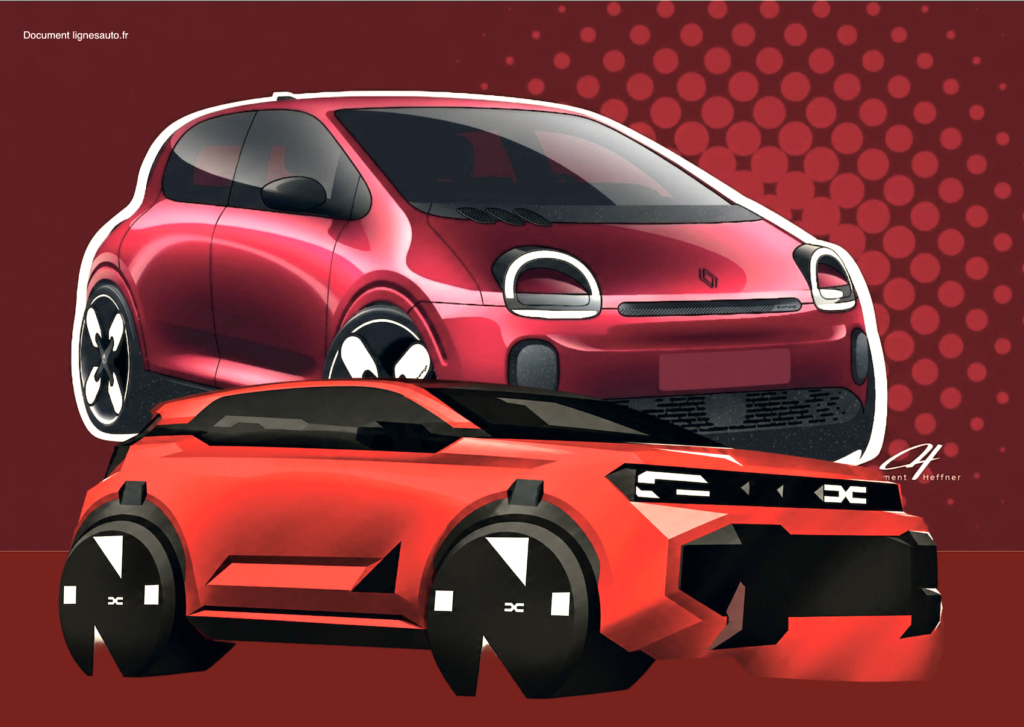
Having grown increasingly fed up with the ever-more-prevalent, pervasive and stifling practice of carry-over (the reuse of architectural, structural and equipment elements across different models within the same group), we are delighted to discover the new little Dacia Spring. For those who may have missed the story, the Renault Group is cleverly making the most of the new Twingo’s platform to benefit Dacia.
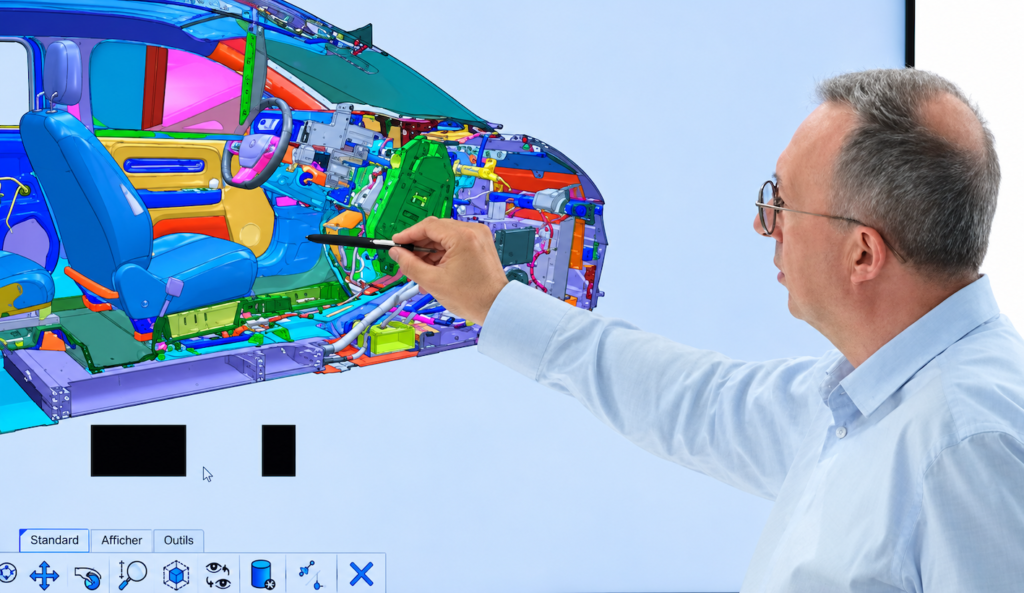
This new Dacia is the brand’s new entry-level model. This is a strategy common to major car manufacturers. It makes sense, but this carry-over has been handled subtly here. The Spring – for that is the model in question – was originally intended for the Chinese market but was eventually introduced to Europe by Ghosn. Today, this Spring has been completely revamped. It remains, of course, 100 per cent electric (with a range of 250 km), but thanks to its new platform, inherited from the Twingo, it has grown in size (7 cm longer) and, above all, features an appealing compact car design that fits seamlessly into a range dominated by SUVs.
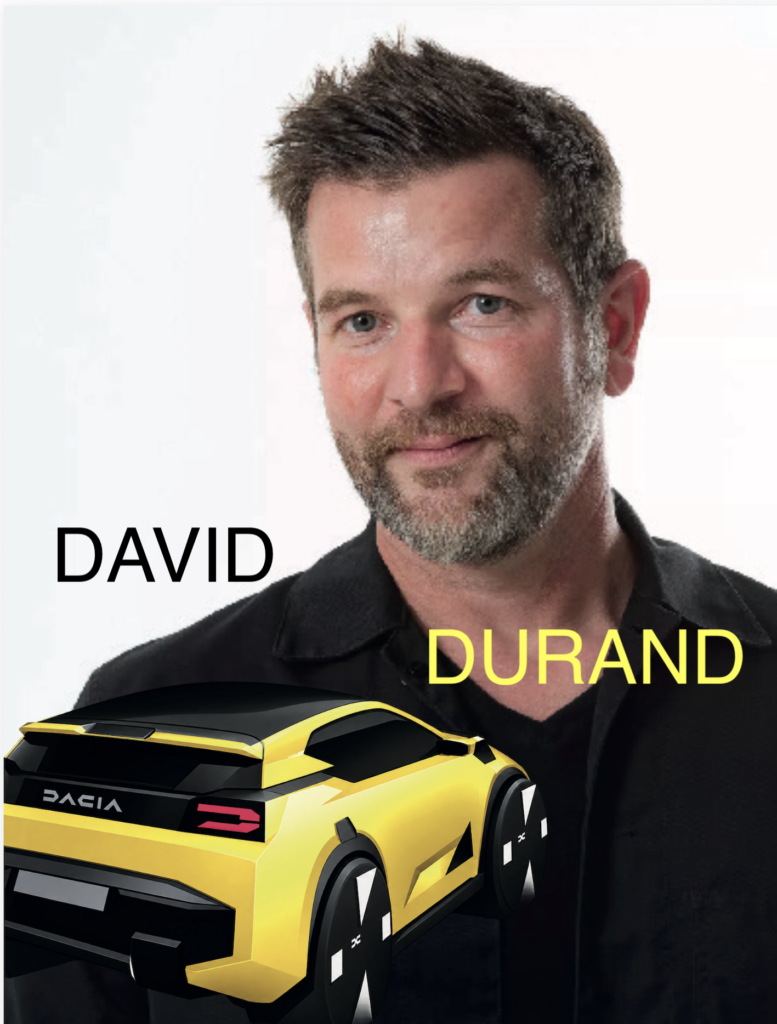
Here, we’ll focus solely on the much-talked-about carry-over, because – unlike the photos published in this post – it’s massive and has been handled exceptionally well by the engineering and design teams. It is worth noting that Dacia’s design team is led by David Durand (pictured above), a leading designer formerly with Renault and now at Dacia, who had to swallow a few bitter pills when Luca de Meo took the helm of the Renault Group in 2020.
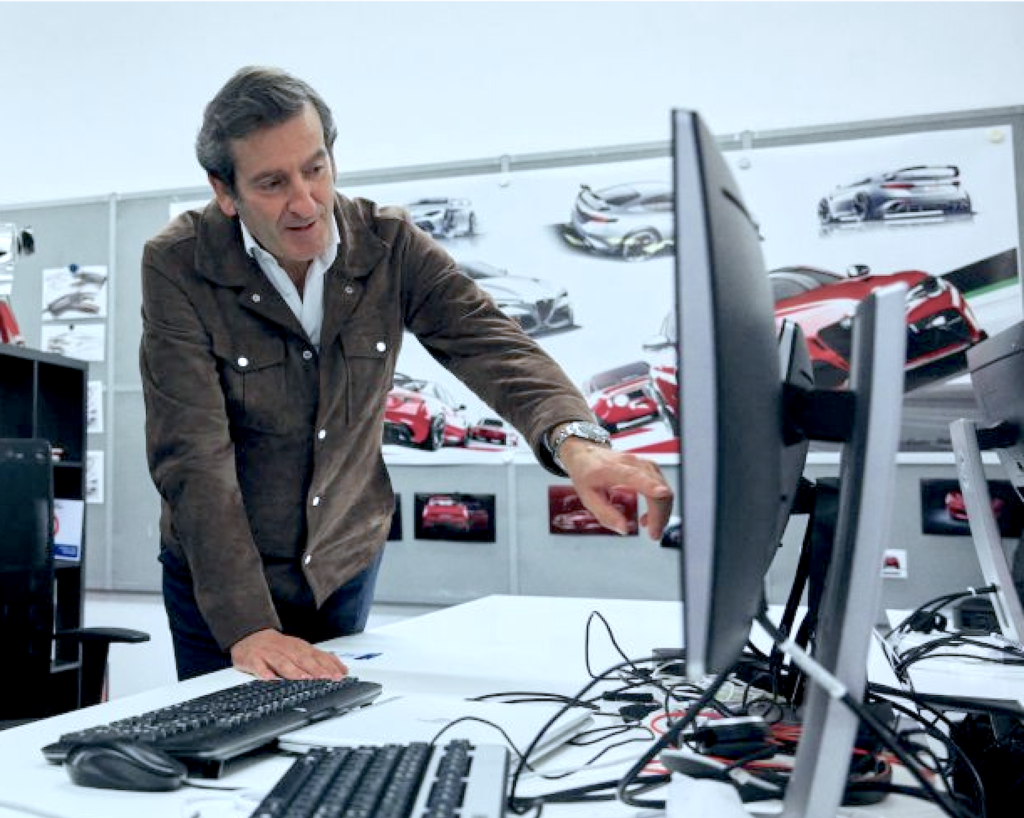
The role of head of design at Dacia then passed successively to Alejandro Mesonero-Romanos (pictured above) (November 2020–May 2021), then to Miles Nürnberger (June 2021–May 2022) and finally – as had seemed so obvious from the outset – to David Durand.
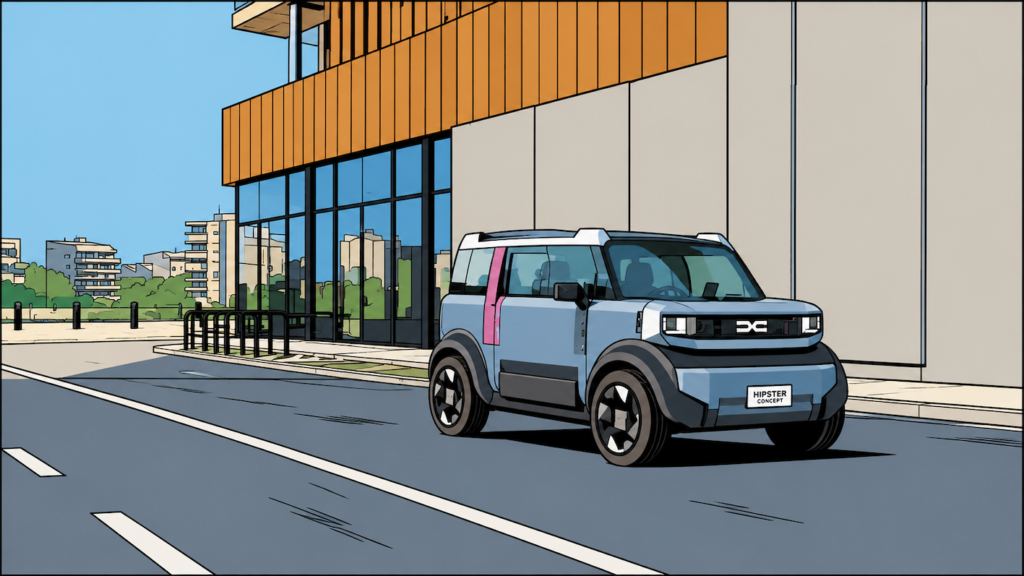
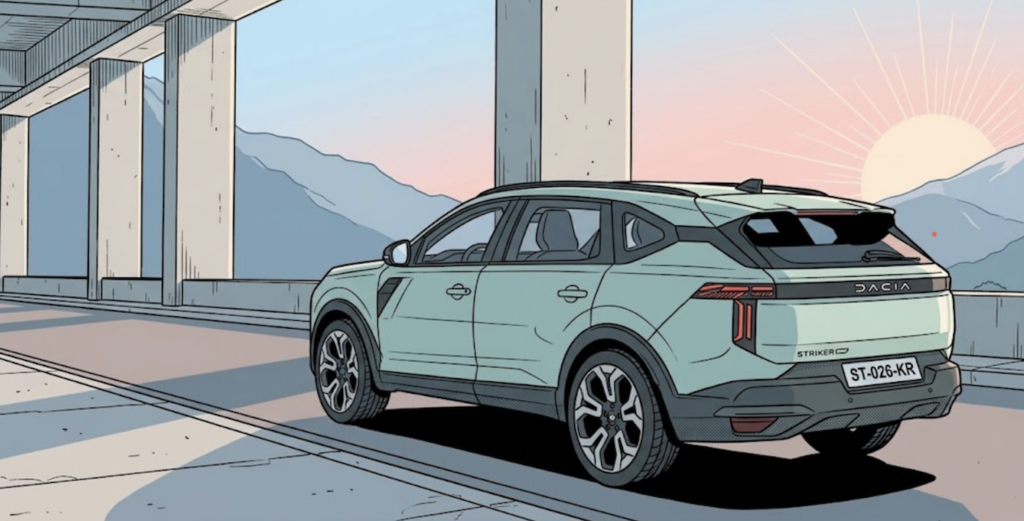
Having said that, it is worth noting that the design team – bolstered by a few recruits from rival firms – found a stack of projects on their desks one fine morning: the Bigster to finalise, the facelifts for the existing models, the little Hipster concept shown above, the design for the Dacia Dakar (Sandriders), the surprising Striker crossover project shown below, and, last but not least, the new Spring!
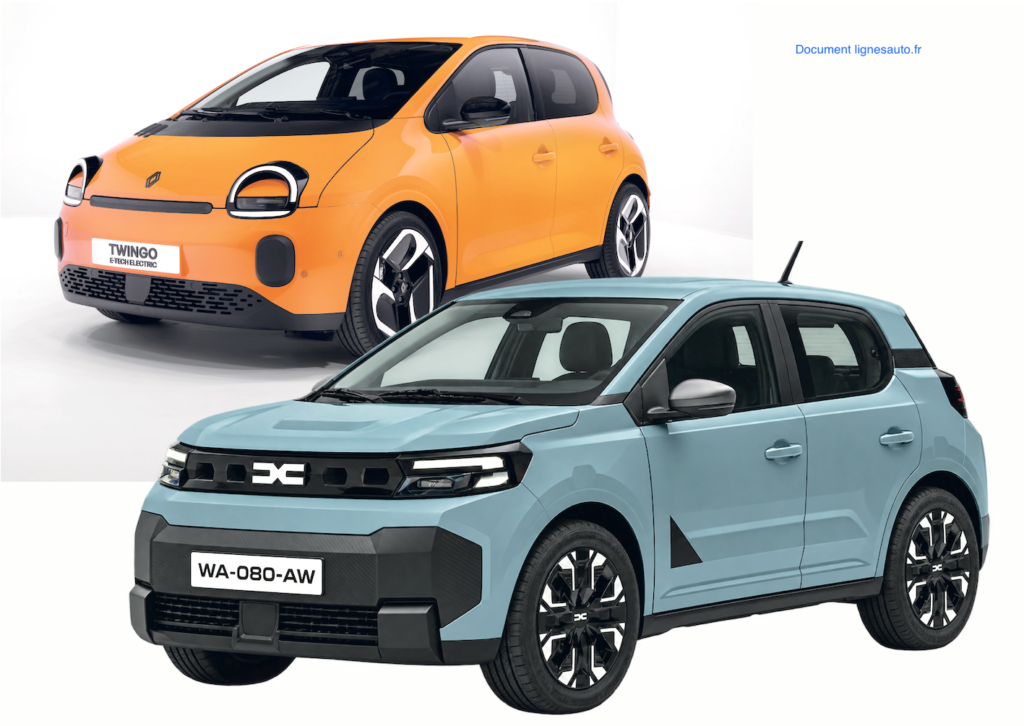
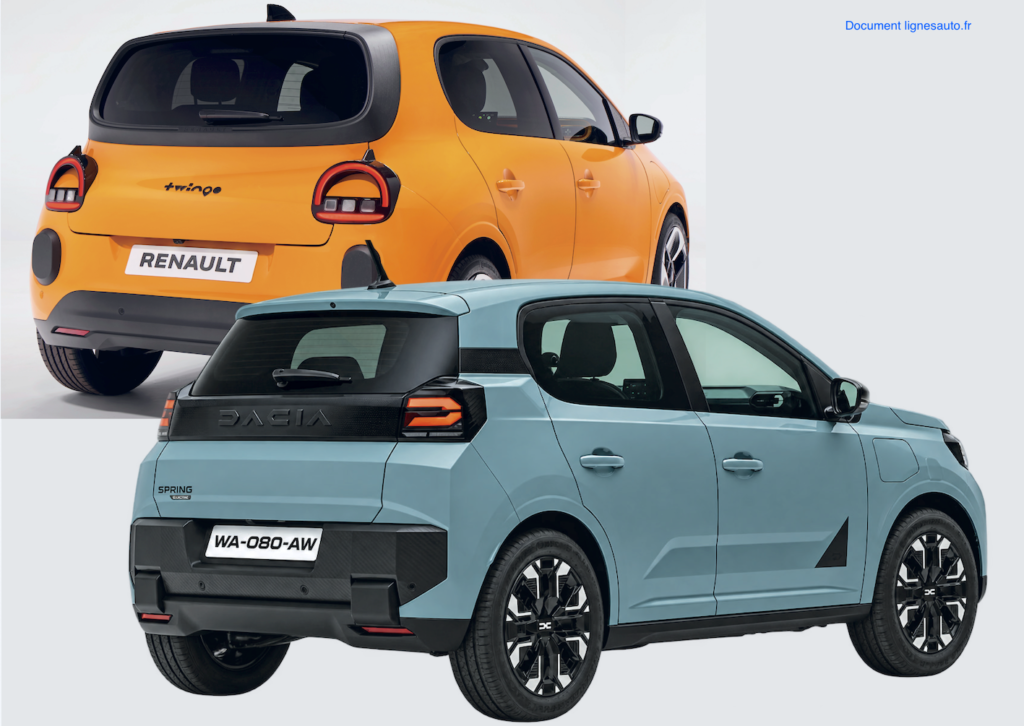
In what way is the reuse of the Twingo platform particularly well executed here? The first obvious point lies in the choice of a design architecture featuring a flat bonnet at the front, in order to reinforce the styling theme common to the Dacia range. However, as you will no doubt have noticed, the Twingo is a people carrier with no break between the windscreen and the bonnet. Viewed in profile, below, you can make out these two different architectures. The Dacia’s body side is different, as are the front wings and the bonnet, but the door structure remains the same, as does the glazing.
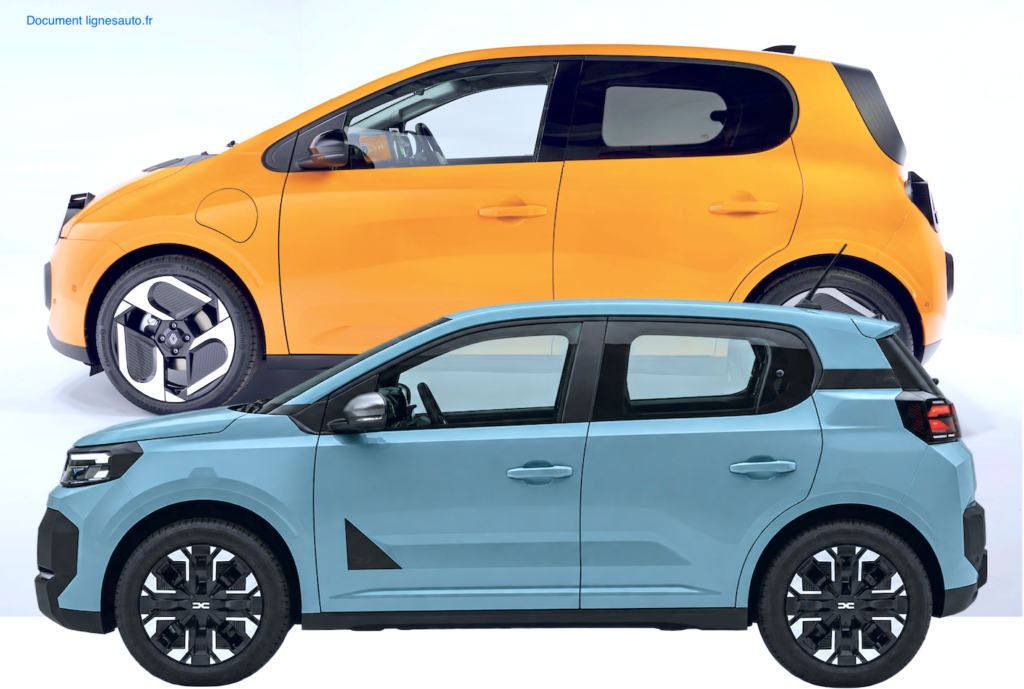
This radical approach obviously requires greater investment than a more conventional approach (moulds for the wings, bonnet, body panels, etc.), but this is also what Stellantis has achieved, for example, with the DS No. 7 and the Lancia Gamma; however, given the architectural break between the Twingo and the Spring, the effect is stunning.
Dacia has further set itself apart from its cousin, the Twingo, by giving its Spring a different upper dashboard trim. No doubt the very premature announcement of a Dacia model – derived from the Renault – whilst the latter was still in the design phase allowed the teams to factor in this future rival when designing and developing dashboard components that could be easily modified.
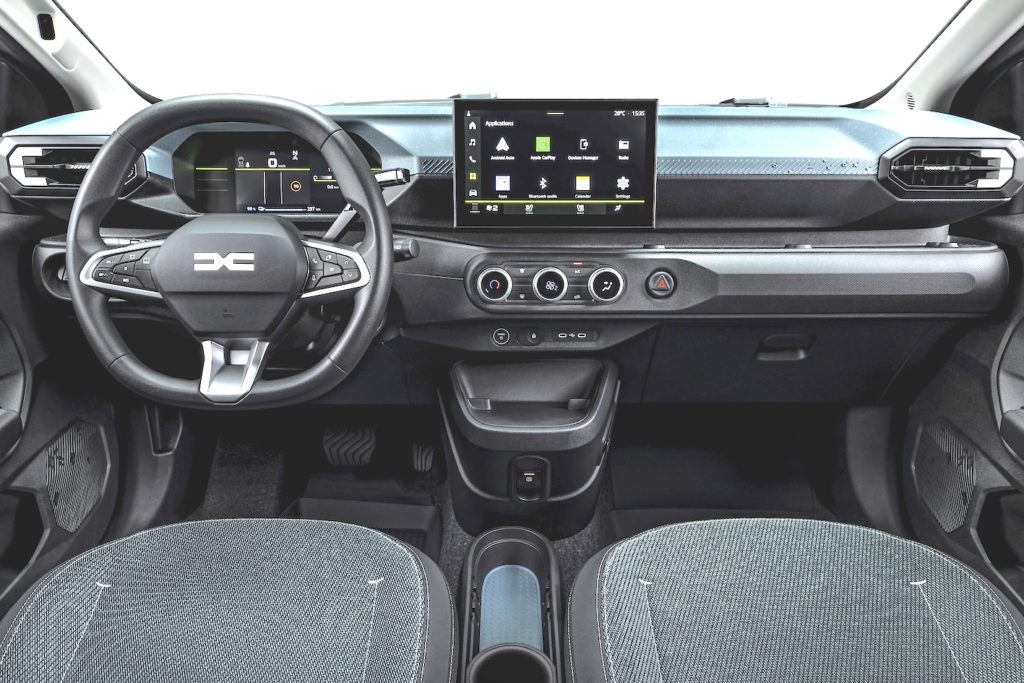
Smart investments have made this radical differentiation possible. And for an entry-level market where margins are inevitably slim, this strategy is to be commended, as is the work of the designers in achieving their goal whilst retaining Dacia’s distinctive identity. Other competing brands positioned at a higher level have not necessarily managed the inevitable transition of this so-called ‘carry-over’ quite as successfully.
Whilst the new Spring has its strengths, its production is another plus: this time it will be manufactured in Europe, in Slovenia, alongside the Twingo. No penalties on that front. It will even be eligible for the purchase incentives for electric cars introduced in many European Union countries. But we must also point out a drawback: the pitiful range of colours offered by Dacia for its new Spring…
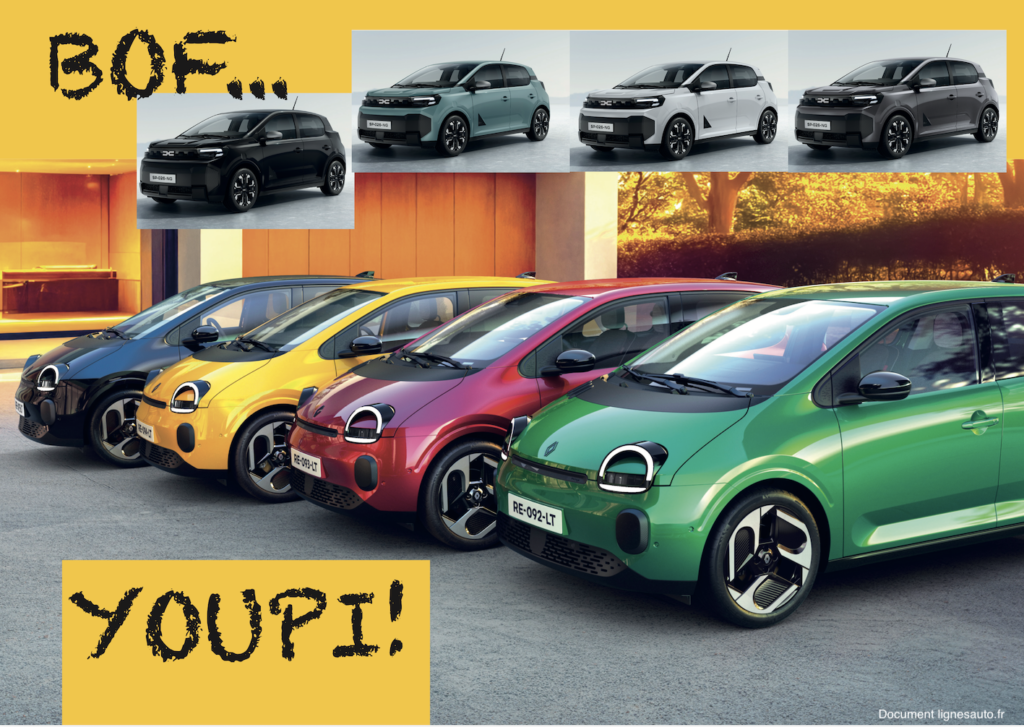
Just four colours, two fewer than the Twingo… And whilst Renault’s colour palette is a joy to behold, Dacia’s leaves a little to be desired. The manufacturer is trying to convey the message that “true to its philosophy of simplicity, the range focuses on four colours: Agave, Schist Grey, Starry Black and Glacier White. ’ On the Renault Twingo, produced in the same factory, the choice is refreshing. It would have been easy to borrow a colour or two from the Renault star. But then, the Twingo would have flexed its muscles to mark its territory. Carry-over does have its limits, after all!
THE DIMENSIONS OF THE TWO RENAULT AND DACIA MODELS IN THE A-SEGMENT
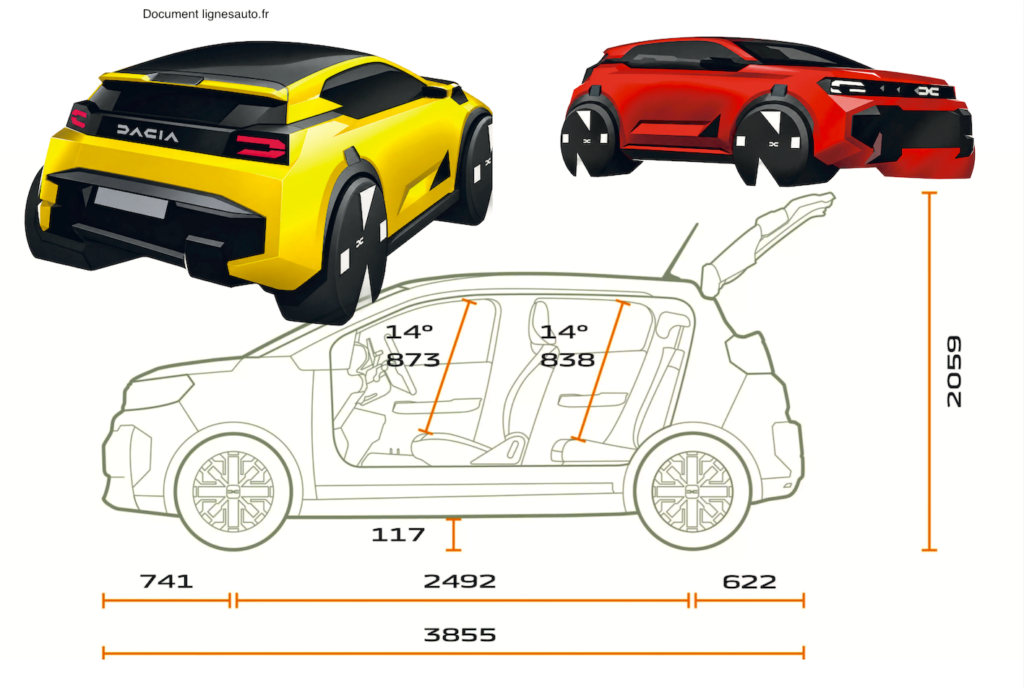
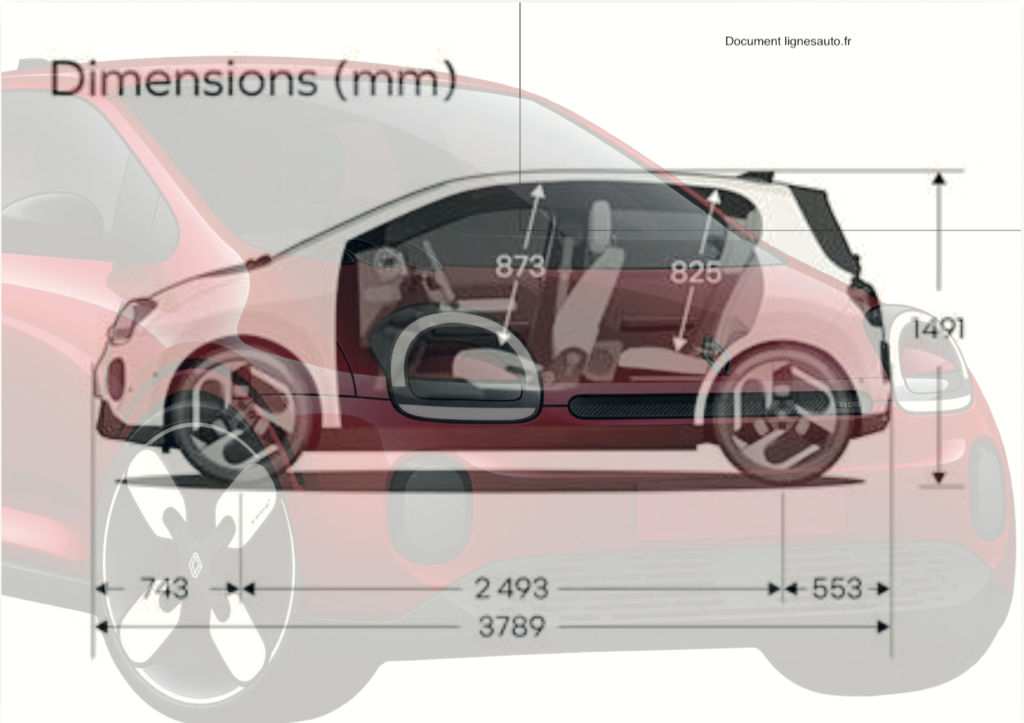
Bonus: one of the designer’s tips…
To blend the circular shape of the Twingo’s rear window with the more angular shape of the Spring’s body panel, the black trim strip has been modified so as to retain the Twingo’s windows whilst featuring a different design on the side of the body. Simple, effective and inexpensive! Very Dacia, then…